Introduction
A bedroom makeover does not need a renovation, a new furniture set, or a large budget. It needs a clear order of work. Most tired bedrooms share the same problems: flat walls, worn bedding, cold or uneven lighting, a bare floor, and too many small items competing for attention. Fix those things in the right order, and the room can feel new even when most of the furniture stays where it is.
A budget of 500 dollars is useful because it forces choices. It is enough for paint, fresh bedding, a rug, better lighting, and a few thoughtful details. It is not enough for everything at once, and that is helpful. Buying everything often leaves a room full of small, unrelated items and no single change that makes a real difference. Spend on the surfaces you see first, choose one item worth spending more on, and reuse or refresh what already works. If your room is on the small side, read Small Bedroom Ideas: The Complete Guide to Layout, Storage, Light and Style before you plan the layout.
Key takeaways
- Start with a budget plan, not a shopping list, and use the cost ladder: under 100, under 300, under 500 dollars.
- Refresh the bed wall first, then swap and layer the bedding properly.
- Add a rug and fix the lighting, then refresh one piece of furniture and hide the clutter.
- Buy used wisely: thrift decor and furniture, but never buy used bedding or mattresses.
Start With a Budget Plan, Not a Shopping List
Before you buy anything, walk through the room in daylight and again at night. Note what draws your eye first when you enter. In most bedrooms, that is the bed and the wall behind it. Next, look at the bedding, the floor beside the bed, and the lamps. Those are your high impact surfaces. Small decor on shelves and extra cushions are low impact by comparison, even though they are often the first things people buy.
Measure the wall behind the bed, the bed size, and the space beside the bed for a rug. A rug that is too small can make the whole room look unfinished, while a rug that sits under the lower part of the bed and extends beside it instantly makes the space feel planned. Check your outlets too, because lamp placement and cable length will shape your lighting choices. If you are unsure about proportions, see what size rug for a bedroom fits your bed and layout.
Set aside a small reserve, even 25 to 40 dollars, for paint supplies, hanging hardware, light bulbs, or a second coat of paint. If you rent, check first what can be repainted, removed, or reversed without losing your deposit.
The Cost Ladder: Under 100, Under 300, and Under 500 Dollars
At under 100 dollars, focus on cleaning, rearranging, and softening. Wash and remake the bed properly, remove one piece of furniture that blocks movement, clear surfaces, and fix mismatched bulb colours. Add pillow covers in a calmer colour, one plant or basket, and warm bulbs if your current bulbs feel cold or harsh. Move curtains higher if they hang too low, and make sure the bedside lamp gives enough light for reading. For a full plan, see how to refresh a bedroom in one weekend for under 100 dollars.
At under 300 dollars, add one wall change and one bedding change. Paint the wall behind the bed, or use a removable option if you rent. Replace tired sheets or add a coverlet and two pillow covers that work with the new wall colour. Add a rug beside the bed if the floor is bare, or replace a rug that is too small. This is the level where most bedrooms start to look genuinely different, because the largest surfaces have changed.
At under 500 dollars, complete the set. Keep the wall and bedding changes, then add a larger rug, a better bedside lamp, and one furniture refresh. That might be new handles on a dresser, a refreshed frame, or a thrifted nightstand that replaces a damaged one. You can also add framed art, a throw at the foot of the bed, and storage baskets that hide clutter. Keep the palette tight: one main neutral, one deeper accent, and one warm wood or brass tone, repeated in at least two places.
Idea 1: Refresh the Bed Wall First
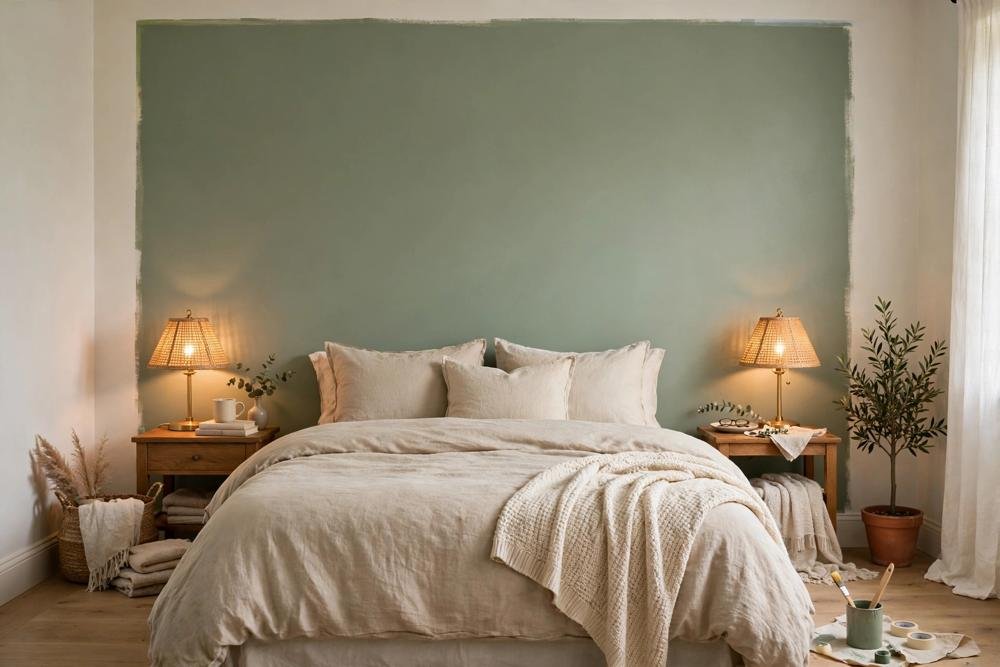
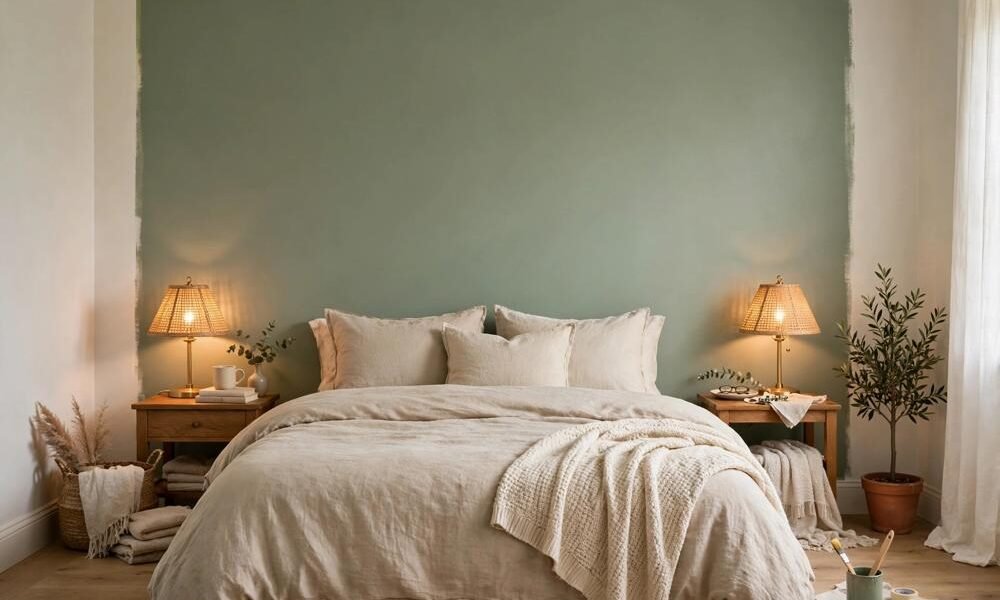
The wall behind the bed is the largest visual surface in most bedrooms, so it should be your first project. A fresh coat of paint in a warm neutral, a soft sage, or a calm greige can change the whole room in one afternoon. If you paint only one wall, choose a colour a little deeper than the other walls, not a completely different colour family. That keeps the room calm and makes the bed look intentional.
If you rent, a removable option can give a similar effect. Peel and stick wallpaper, removable panels, or a painted arch you can repaint before moving out are worth considering. Test any adhesive product on a small, hidden patch first, and check its weight and removal instructions before covering a full wall.
Keep the wall simple after painting. One large piece of art, a pair of frames, or a row of three small frames usually looks better than many small items scattered across the wall. Hang art so its centre sits at eye level when you are standing, and keep heavy frames away from directly above pillows. If you want a headboard effect without buying a new headboard, a painted arch or a set of upholstered panels can give the bed a finished backdrop at a much lower cost.
Idea 2: Swap the Bedding and Layer It Properly
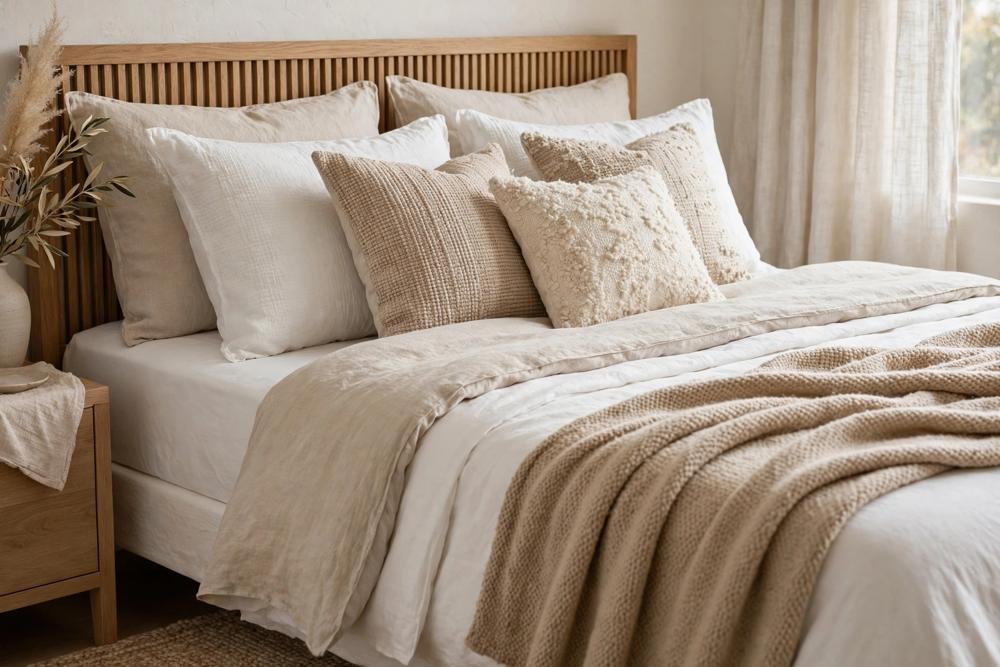
Bedding covers more visible area than almost anything else in the room, so tired sheets or a faded duvet cover can undo a new paint colour. Start with clean, well fitting sheets and a duvet cover in a calm neutral. White, cream, warm beige, or soft grey are safe bases because they work with almost any wall colour and let you change the accent later with pillow covers and a throw.
Layer bedding in a simple order: sheets, then the duvet, then a lighter quilt or coverlet folded across the lower part of the bed, and finally a throw at the foot. For pillows, keep sleeping pillows at the back, add two standard pillows in front if you like a styled look, and finish with one or two decorative cushions. More than that often ends up on the floor every night, which defeats the purpose of a calm room. Learn how to layer bedding like a hotel bed for a crisp, finished look.
Texture matters more than pattern when the budget is tight. A waffle coverlet, a linen look duvet cover, or a soft knit throw can make a plain palette feel rich. Avoid a full matching set in a loud pattern if the rest of the room is still plain, because it can dominate the space. Let one accent colour appear in the throw and one pillow cover, and keep the rest neutral.
Idea 3: Add a Rug and Fix the Lighting
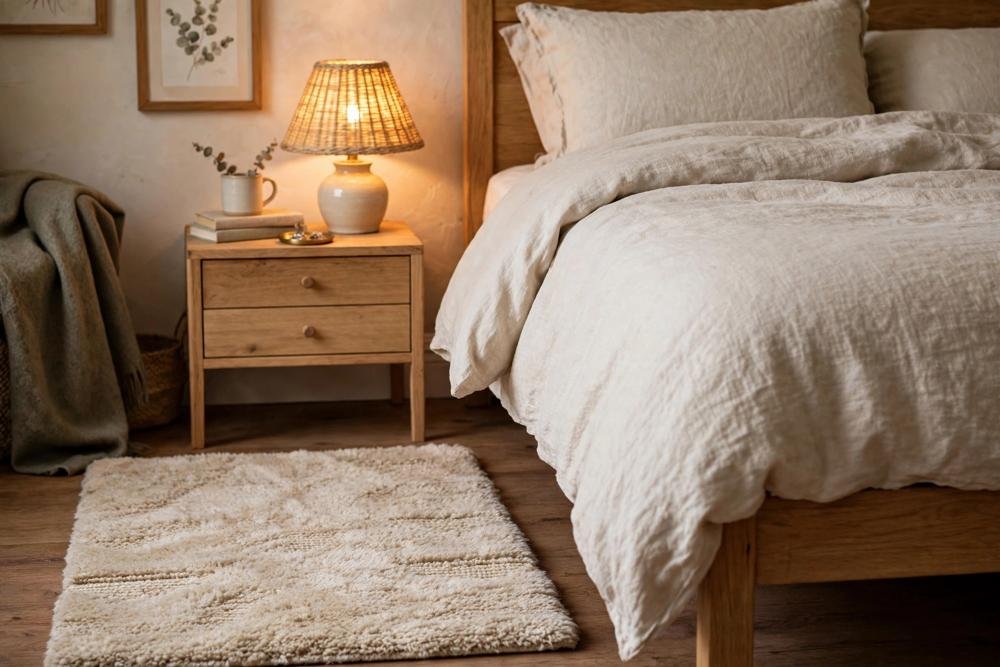
A rug and better lighting together can make a bedroom feel warm at night, which is when you use the room most. For a queen bed, a rug that extends beside the bed is usually better than a small rug floating in the middle of the floor. If a full size rug is outside the budget, two bedside runners can work well, especially in a small room. Choose a low pile rug for easy cleaning, and check that it does not catch on the door.
Lighting should be warm and layered. One overhead light alone often creates harsh shadows and makes the room feel flat. Add a bedside lamp with a warm bulb, and if you have a second nightstand, use a similar lamp so the room feels balanced. Check the bulb colour temperature on the box. Warm white is usually better for a bedroom than cool daylight white, which can make a calm room feel like an office.
Curtains also affect lighting. Sheer curtains soften daylight, while blackout curtains help with sleep and privacy. Hang curtains high and wide when possible, so the window looks larger and the room feels taller.
Idea 4: Refresh One Piece of Furniture and Hide the Clutter
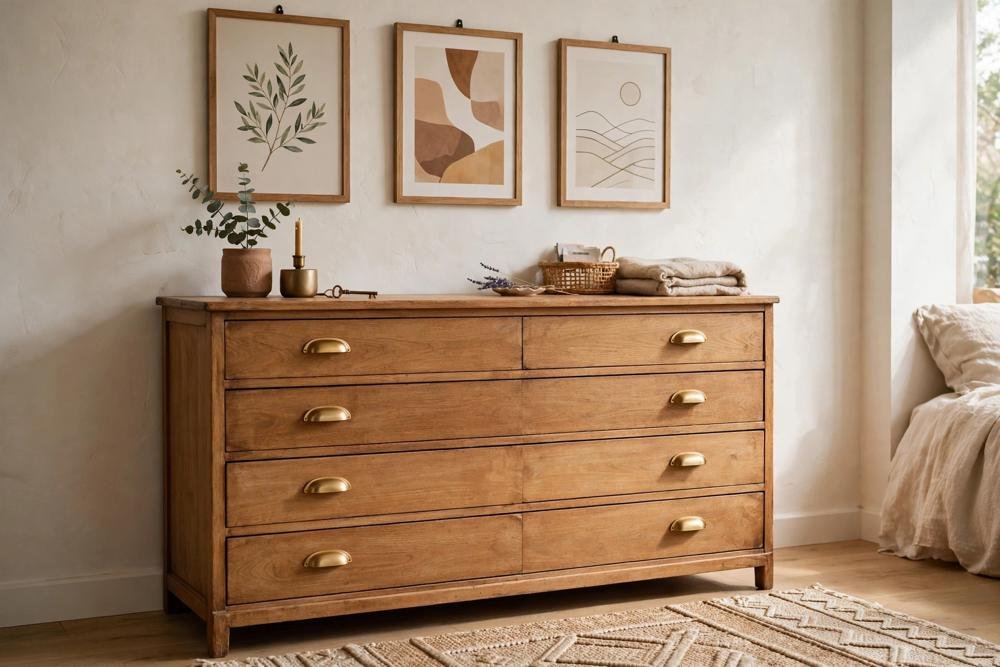
You do not need new furniture to make a bedroom feel new. Often, one refreshed piece is enough. A dresser with new handles, a nightstand with a fresh coat of paint, or a wooden chair with a simple cushion can change the tone of the room. Before you buy anything second hand, check drawers, hinges, and legs. A piece that wobbles, smells strongly, or has damaged drawer runners may cost more in time and repairs than it saves.
Use the one splurge rule here. Choose one category to spend more on, and keep the rest simple. For many people, the splurge should be bedding, because you touch it every night. For others, it might be a good lamp, a rug that will last, or a solid thrifted dresser. The splurge should solve a daily frustration, not just look good in a photo. If your lamp flickers, your rug slips, or your dresser drawers stick, fixing that problem is a better splurge than adding another decorative item.
Storage is part of the furniture refresh. Use baskets or closed boxes for chargers, books, and small accessories that gather on surfaces. Keep daily items at easy reach and seasonal items out of sight. A storage bench at the foot of the bed can hold extra blankets, but only if it does not block the walkway. In a small room, a tall chest often works better than a wide dresser, because it uses vertical space and leaves more floor clear.
Thrift and Reuse Plan: What to Buy Used and What Never to Buy Used
Thrift shops, online marketplaces, and local buy nothing groups can stretch a 500 dollar budget a long way, but they work best with a list. Buy used when the item is solid, easy to clean, and easy to repair. Good second hand finds include wooden dressers, nightstands, mirrors, picture frames, simple lamps, baskets, and solid chairs. Check for stable joints, smooth drawer movement, and clean surfaces. A coat of paint or new handles can make a plain wooden piece look intentional, especially if it matches tones already in the room.
Never buy used mattresses, pillows, or soft items that cannot be washed thoroughly. Avoid upholstered pieces with unknown stains, odours, or signs of pests, and avoid electrical items with frayed cables or damaged plugs. If you are unsure, leave it. A second hand bargain that needs professional repair or deep cleaning is not a bargain.
Reuse what you already own before you shop. A frame, lamp, basket, or throw from another room can work if the colours match, and moving furniture before buying anything new can change how the space feels without spending anything.
What to Avoid
Avoid buying a full matching furniture set on a tight budget. Matching sets can look flat, and they often force you to replace pieces that still work. Avoid too many small decorative items. Five small objects on a nightstand usually look like clutter, while one lamp, one book, and one small plant look finished. Avoid a rug that is too small for the bed, because it can make even a freshly painted room look unfinished.
Avoid painting without testing the colour in your own light. A colour that looks soft in a shop can look grey, green, or pink at home, especially in a north facing room. Test a large sample in daylight and at night, avoid cool white bulbs in a warm room, and avoid hanging art too high above the bed.
Frequently Asked Questions
Can you really make over a bedroom for under 500 dollars?
Yes, if you focus on the largest surfaces first and keep the furniture you already have. Paint, bedding, a rug, and lighting usually account for most of the visual change. The budget works best when you choose one splurge, reuse solid furniture, and avoid buying many small decorative items at the start.
What should I spend on first in a budget bedroom makeover?
Spend on the bed wall and the bedding first, because those are the surfaces you see most. Next, fix the floor beside the bed and the lighting. Small decor should come last, after the room already looks calm and finished. If you rent, check what can be reversed before you choose paint or adhesive products.
How do I make a cheap bedroom makeover look expensive?
Use a tight colour palette, repeat materials, and leave empty space. Choose one neutral base, one accent colour, and one warm wood or metal tone. Use texture instead of many patterns, hang art at the right height, and keep surfaces mostly clear. A well made bed with layered bedding often looks more expensive than a room full of new accessories.
Should I paint or buy new bedding first?
Paint first if the walls are damaged, patchy, or a colour you dislike, because bedding colours are easier to match to a new wall. Buy bedding first if the walls are already a calm neutral and the bedding is worn or uncomfortable. In either case, test the paint and bedding together in your own room light before you commit to the full set.
What should I never buy used for a bedroom?
Never buy a used mattress or used pillows, and avoid soft furnishings that cannot be washed thoroughly. Be careful with upholstered items that have stains, odours, or signs of pests, and avoid electrical items with damaged cables. Solid wood furniture, frames, mirrors, and baskets are usually safer second hand choices if they are stable and clean.
Conclusion
A bedroom makeover for under 500 dollars is not about buying the most items. It is about spending in the right order: bed wall first, bedding second, rug and lighting next, and one thoughtful furniture refresh to finish. Use the cost ladder to stop at the level that fits your budget, choose one splurge that solves a daily problem, and reuse what already works. Test paint in your own light, keep the palette tight, and give clutter a proper home.
Start with decluttering and one wall change, then live with the result for a few nights before spending the last part of the budget. A calm, well lit bedroom with fresh bedding and a clear floor will feel new long after the makeover is over.