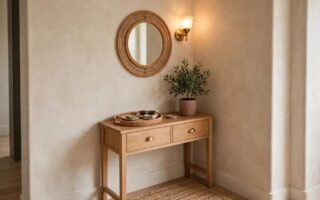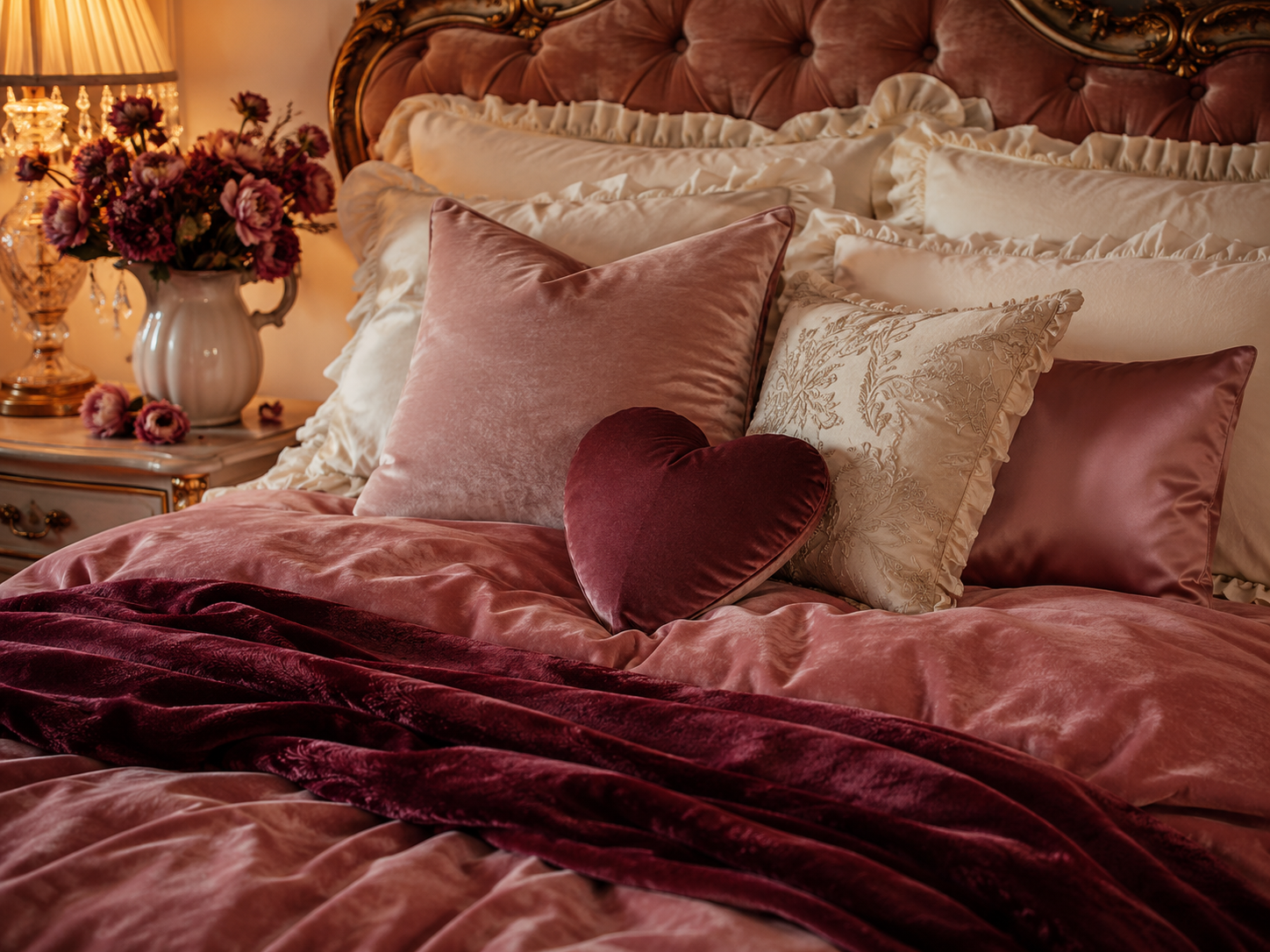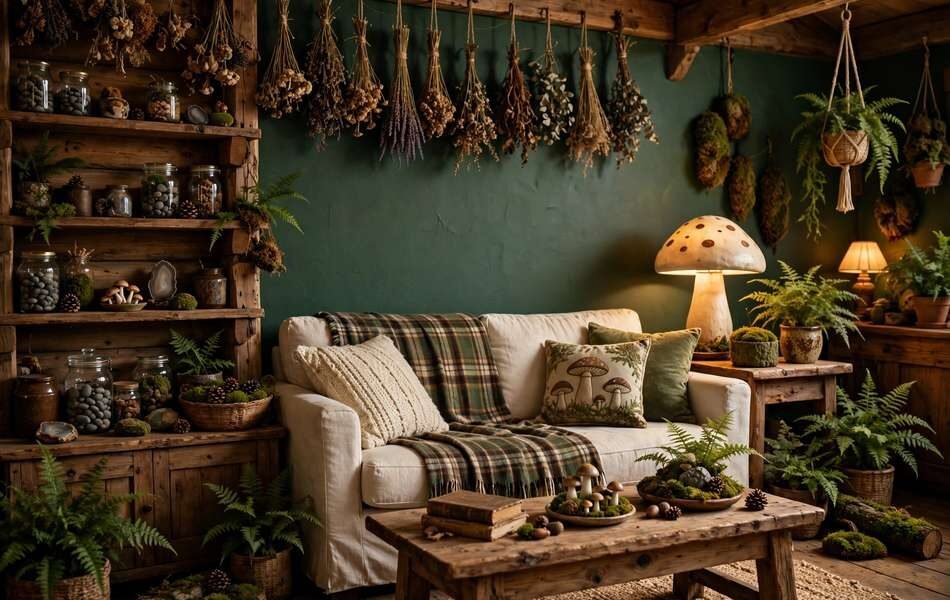
The five woodland styles differ mainly in mood, not just in colour. Forestcore is the broad, calm woodland look, cottagecore is warmer and softer, cabincore is sturdier and more rustic, goblincore is darker and more curious, and mushroomcore is the smallest, most playful accent of the group. If you want a simple rule, pick the mood you want to live with every day, then keep the palette calm and the accessories few, because a room that tries to be all five at once will feel confused.
Key takeaways
- Forestcore is the safest starting point: deep and moss green, warm wood, cream, plants, and warm light.
- Cottagecore adds softness: florals, gingham, wicker, vintage pieces, and a lighter, sunnier palette.
- Cabincore adds weight: log and plank wood, plaid, leather, stone, and a cosy, rugged feel.
- Goblincore adds curiosity: darker greens and browns, moss, stones, found objects, and a slightly wild, uneven look.
- Mushroomcore works best as one accent, such as a lamp or planter, not as a whole-room theme.
- Small rooms suit the lighter versions best, with dark green or dark wood kept to one strong element.
- Start with one style, live with it, and add a second influence only where it clearly fits.
At a glance: the five styles compared
| Style | Mood | Colours | Materials | Best room |
|---|---|---|---|---|
| Forestcore | calm and sheltered | deep green, moss green, cream, warm wood | wood, linen, wool, plants | living room, bedroom, small rooms |
| Cottagecore | soft and nostalgic | cream, sage green, pale pink, butter yellow, honey wood | wicker, cotton, linen, vintage wood, florals | bedroom, kitchen, sunny living room |
| Cabincore | warm and rugged | dark green, brown, rust, cream, black | log wood, plank, leather, plaid wool, stone | living room, den, larger bedroom |
| Goblincore | curious and wild | moss green, brown, dark green, stone grey, cream | moss, bark, stones, glass jars, found objects | study, shelf display, cosy corner |
| Mushroomcore | playful and gentle | cream, moss green, terracotta, soft red, warm wood | ceramic, wood, felt, glass | one shelf, bedside table, children’s corner, with one adult accent elsewhere |
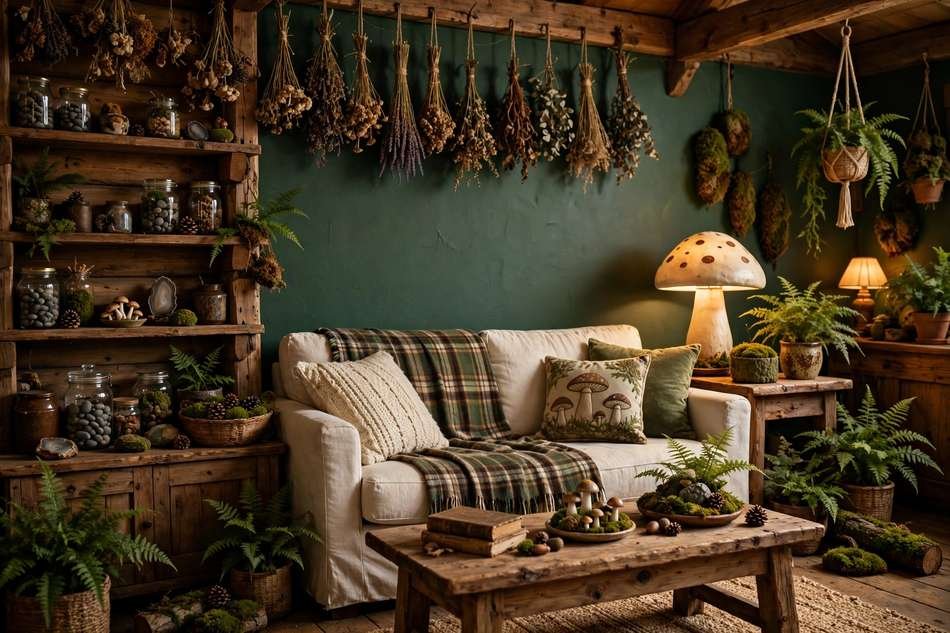
1. Forestcore: The Calm Woodland Look
Forestcore is the umbrella style for this whole series, and it is also the easiest to live with. It is built from the colours and textures of a walk in the woods: deep green, moss green, warm wood, bark, stone, and cream. Nothing in forestcore needs to be themed or literal. A green sofa, a wooden coffee table, linen curtains, a few healthy plants, and warm lamps are enough, and the room still reads clearly as forest.
The palette is the key. Use cream or soft white as the base, so the room stays bright, then add green as the main accent and wood as the warm counterpoint. In a small room, keep dark green to one strong element, such as the sofa, one accent wall, or the bedding, and keep everything else pale. Warm white bulbs matter here more than in most styles, because cool white light can make deep green look cold and flat. A mirror opposite a window helps too, by bouncing daylight into a green corner.
Forestcore suits renters well, because its light version needs no paint or drilling. Green cushion covers, a throw, wooden trays, plants, and warm lamps can change a room in an afternoon, and everything can move with you. It also suits people who like nature but do not want a costume room. If you are unsure which of the five styles to choose, start here, because forestcore gives you the calm woodland feeling without the extra rules of the other styles, and you can soften it, rugged it up, or darken it later.
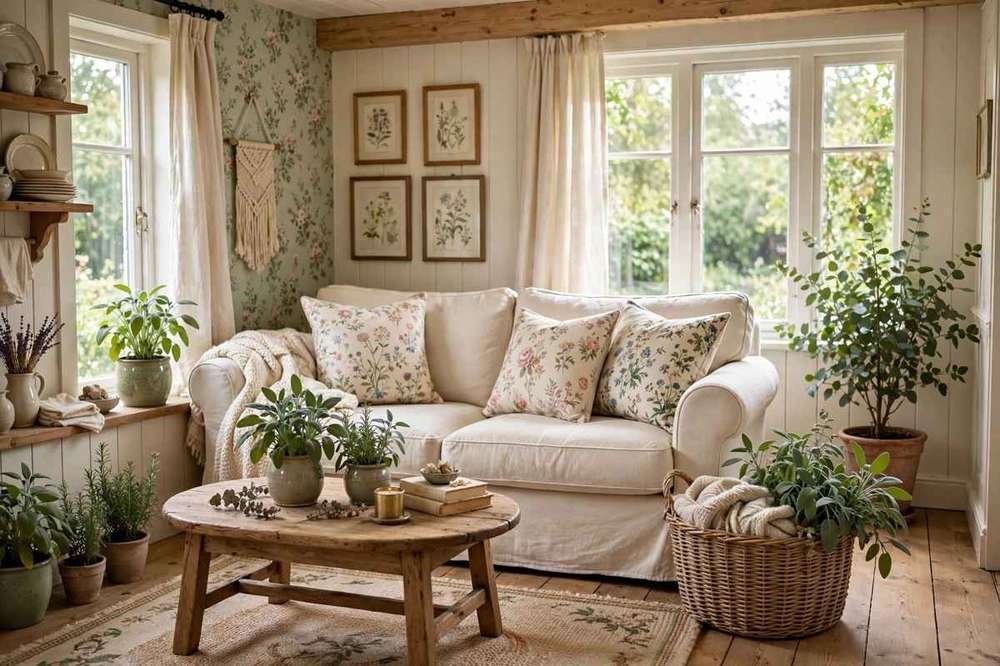
2. Cottagecore: The Softer, Sunnier Cousin
Cottagecore is forestcore made softer, lighter, and more nostalgic. Where forestcore leans deep green and wood, cottagecore leans cream, sage green, pale florals, gingham, wicker, and vintage pieces. Think of a sunny cottage garden rather than a deep forest: light curtains, a floral cushion, a wicker basket, a wooden chair with a cushion, and fresh flowers or herbs on a table.
This style works best in bright rooms, bedrooms, kitchens, and sunny living rooms. It is forgiving in a small room, because none of its main colours is very dark, and its furniture is often light in scale. A cottagecore bedroom might use sage green bedding, cream walls, a wicker basket, and a floral print, while a cottagecore kitchen might use cream cabinets, wooden boards, herbs, and a gingham tea towel. The look should feel lived in, not perfect, so a slightly worn wooden tray or a vintage jug fits better than a shiny new matching set.
Cottagecore has one trap to avoid: too many patterns at once. A floral duvet, floral curtains, floral cushions, and floral art in one room will feel busy rather than soft. Choose one floral, keep the rest plain in cream, sage, or natural linen, and let the pattern be the accent. The same rule applies to vintage pieces. One or two vintage finds give character, while a room full of them can feel like a shop. Keep the palette calm, keep the light bright, and cottagecore will feel gentle rather than fussy.
3. Cabincore: The Rugged, Cosy Cabin
Cabincore is the warmest and heaviest of the five styles, inspired by a log cabin rather than a cottage garden or a forest clearing. It uses darker wood, plank and log textures, plaid wool, leather, stone, and warm, low light. A cabincore living room might have a chunky wooden coffee table, a plaid throw, a leather chair, a stone or wood fireplace surround, and a warm lamp glowing in the evening. It should feel sheltered and sturdy, like a room built to keep winter out.
Cabincore needs more space and more light than the other styles, because dark wood and plaid can quickly make a small room feel heavy. In a small room, use cabincore as an influence, not a full theme: one wooden hero piece, a plaid throw, and warm lamps, with cream walls and pale wood elsewhere. In a larger room, you can go further, with a wooden sideboard, a plaid rug, and darker wood furniture, as long as you keep one pale element, such as cream walls or a light rug, to stop the room closing in.
This style also suits a den, a reading corner, or a larger bedroom, where its cosy, rugged mood feels right. It is less suited to a tiny, north-facing room, or to a kitchen, where heavy wood and plaid can feel impractical and hard to clean. If you love cabincore but live in a small home, borrow its warmth in one room only, and keep the rest of the home in lighter forestcore, so the cabin feeling is a treat, not a weight on every room.
4. Goblincore: The Darker, More Curious Woodland
Goblincore is the most distinctive style in this comparison, and the one most likely to be misunderstood. It is not messy for its own sake, and it is not a Halloween theme. Goblincore celebrates the wilder, smaller details of the woods: moss, bark, stones, fungi, ferns, glass jars, old books, and found objects that look interesting rather than polished. Its palette is darker and earthier than forestcore, with moss green, brown, dark green, stone grey, and cream, and its textures are rougher and more uneven.
A goblincore corner might be a shelf with a moss plant, a stone, a glass jar, a wooden box, and a trailing fern, in warm, low light. A goblincore study might use dark wood, a green desk lamp, plants on a shelf, and natural objects collected on walks, displayed simply rather than arranged like a museum. The style suits a study, a shelf display, or a cosy corner best, because its charm comes from close, curious details, not from large furniture or wall colour.
Goblincore needs restraint to work in a shared home. A single well-chosen shelf can be beautiful, while every surface covered in stones, jars, and dried material can feel cluttered and hard to clean. Keep dried material away from candles, fairy lights, and heat, and follow the safety rules in the pillar guide: check local rules before collecting anything, never take from protected land, and clean found material first. If you share your home, agree on one goblincore shelf or corner, and keep the rest of the room in calm forestcore, so curiosity has a place without taking over.
5. Mushroomcore: The Playful Accent
Mushroomcore is the smallest style in this group, and that is its strength. It is built around mushroom shapes, colours, and motifs: a mushroom lamp, a mushroom planter, a mushroom print, or a small ceramic mushroom on a shelf. Its palette is gentle, with cream, moss green, terracotta, soft red, and warm wood, and its mood is playful without being childish, as long as it is used in small doses.
The best way to use mushroomcore is as one accent in an otherwise adult room. A single mushroom lamp on a bedside table, a mushroom planter on a windowsill, or a small mushroom print in a frame can add warmth and charm. Two or three mushroom items on one shelf can work, if they are different in scale and the shelf is otherwise plain. What does not work is a room full of mushroom lamps, mushroom bedding, mushroom curtains, and mushroom ornaments, which will feel like a theme display rather than a home.
Mushroomcore pairs well with forestcore and cottagecore, because all three share moss green, cream, and warm wood. It pairs less well with cabincore, where its soft, playful shape can feel out of place next to heavy wood and plaid, and it should be kept away from goblincore displays that are already busy with found objects. If you want a mushroom accent, choose one piece you genuinely like, place it where warm light will show it off, and leave the rest of the room calm. That single piece will do more than a collection.
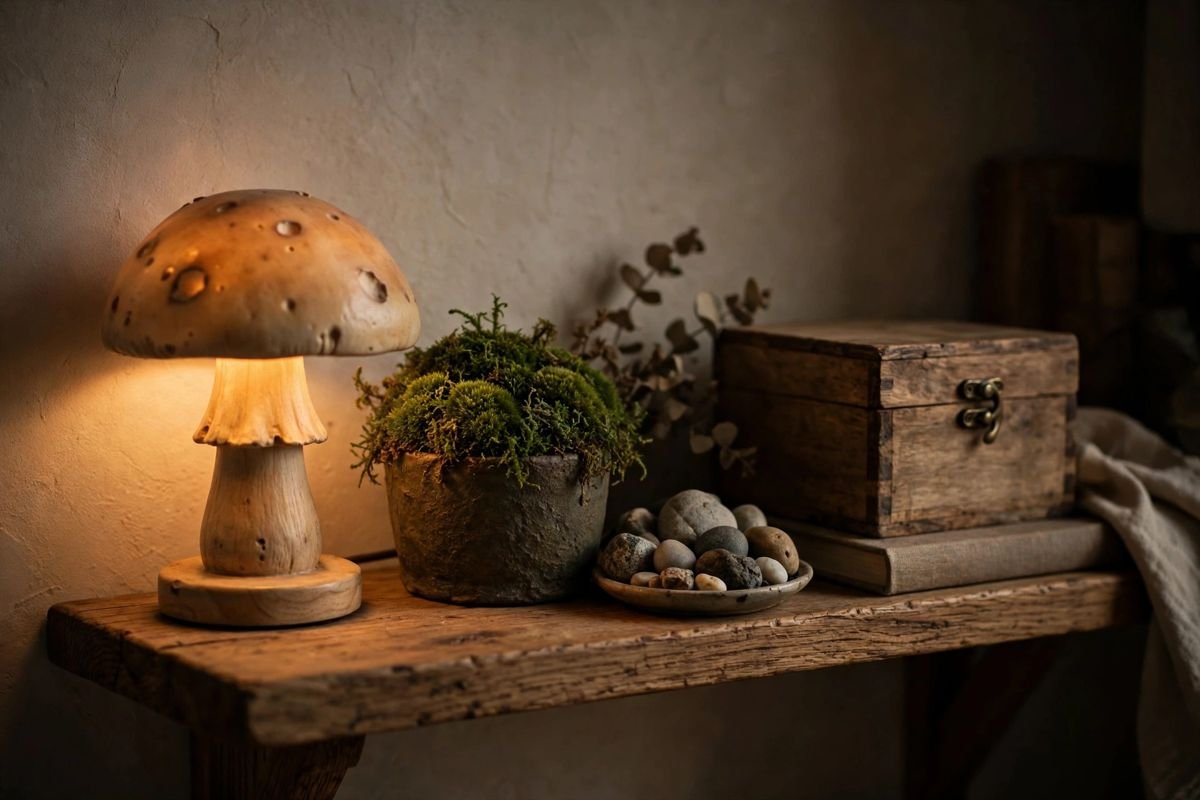
6. How to Choose: Five Questions
Choosing between these styles is easier if you answer five questions honestly, rather than copying a photo.
First, how much light does the room get? Bright, south-facing rooms can carry cottagecore, forestcore, and even a darker accent wall. Small, north-facing rooms suit misty forestcore or cottagecore best, with dark green and dark wood kept to one piece.
Second, how much space do you have? Small rooms suit forestcore and cottagecore, with light walls and furniture with visible legs. Larger rooms can carry cabincore and a goblincore study or shelf, because they have room for heavier wood and curious details.
Third, do you rent? Renters should start with forestcore or cottagecore in their light versions, using bedding, cushions, plants, and wooden accessories, with peel-and-stick wallpaper only after a test patch and landlord permission where needed. Cabincore and goblincore often need heavier furniture or wall displays, which are harder to reverse.
Fourth, what mood do you want in the evening? Calm and sheltered points to forestcore. Soft and nostalgic points to cottagecore. Warm and rugged points to cabincore. Curious and a little wild points to a goblincore corner. Playful and gentle points to one mushroomcore accent.
Fifth, what do you already own? A cream sofa and wooden furniture suit forestcore and cottagecore. A leather chair and a chunky wooden table suit cabincore. A shelf of plants and interesting objects suits goblincore. Start from what you own, add one style direction, and do not buy a full themed set at once. Add one element, live with it for a week, and then decide whether the room needs more.
7. Mixing Styles Without a Mess
Most real homes will mix a little, and that is fine, if one style leads. Choose a lead style for the room, such as forestcore, and let a second style appear in one or two places only. A forestcore living room with a cottagecore floral cushion works, because the floral is small and the palette stays green and cream. A forestcore bedroom with one mushroom lamp works, because the lamp is one accent and the rest of the room stays calm. A cottagecore kitchen with a cabincore wooden board works, because wood is shared by both styles.
What does not work is mixing at full strength. A dark cabincore sofa, a cottagecore floral curtain, a goblincore shelf full of found objects, and three mushroom lamps in one room will fight each other, even if every piece is beautiful on its own. Keep the palette to three main colours, keep patterns to one strong pattern, and keep dark or heavy elements to one per room. If a piece does not share a colour or a material with the rest of the room, it probably belongs in another room, or on a single shelf where it can be enjoyed on its own.
Safety and practicality should guide every mix. Use LED and low-heat lights near fabric and dried material, keep dried decor away from candles, fairy lights, and the stove, and follow fixture ratings in kitchens and bathrooms. In a kitchen, fresh herbs and living plants are safer than dried garlands, and in a bedroom, fabric should never touch a light bulb. A beautiful room is not worth a fire risk, and a calm room is easier to clean, to live in, and to enjoy.
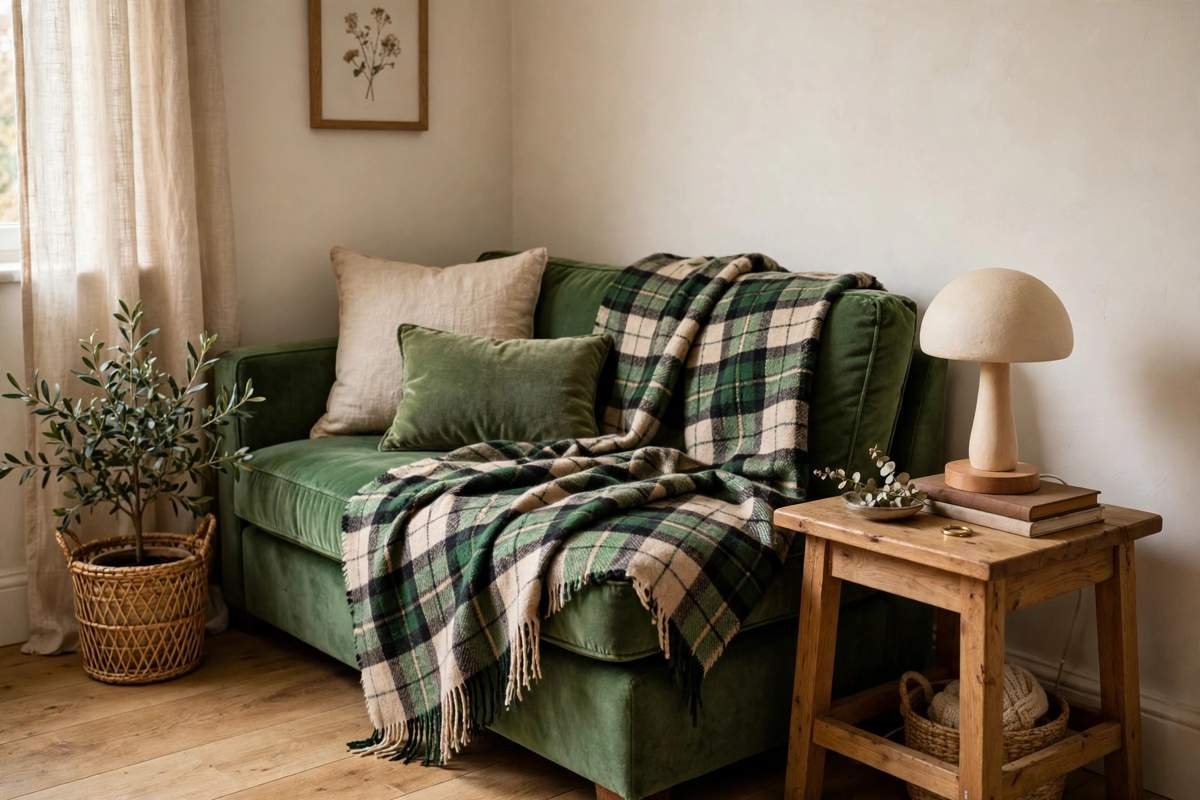
Conclusion
Forestcore, cottagecore, cabincore, goblincore, and mushroomcore are not five separate worlds, but five moods on one woodland spectrum. Forestcore is the calm centre, cottagecore softens it, cabincore weights it, goblincore darkens and curiosities it, and mushroomcore plays with it in small doses. Choose by light, space, renting rules, evening mood, and what you already own, lead with one style, and add a second influence only where it shares a colour or a material. Done that way, your home will feel like a forest you chose, not a theme you copied, and the room guides in this series will help you take each room one step further.
Related reading
- Forest Home Decor: The Complete Guide to Bringing the Woods Indoors
- Forest Themed Bedroom Ideas for Adults
- Forest Kitchen Decor Ideas Without a Remodel
Frequently Asked Questions
What is the difference between forestcore and cottagecore?
Forestcore is the broad, calm woodland look, built from deep and moss green, warm wood, cream, and plants. Cottagecore is softer, lighter, and more nostalgic, with cream, sage green, pale florals, gingham, wicker, and vintage pieces. Cottagecore suits bright, sunny rooms best, while forestcore suits both bright and darker rooms if dark green is kept to one strong element.
Is cabincore the same as cottagecore?
No. Cabincore is warmer, heavier, and more rugged, with log and plank wood, plaid wool, leather, and stone, inspired by a log cabin. Cottagecore is lighter and softer, with florals, wicker, and vintage pieces, inspired by a cottage garden. Cabincore needs more space and light, while cottagecore suits small, bright rooms.
What is goblincore in home decor?
Goblincore celebrates the wilder, smaller details of the woods, such as moss, bark, stones, fungi, ferns, and found objects, in a darker, earthier palette. It works best as a shelf display, a study, or a cosy corner, rather than a whole-room theme. Keep found objects to one shelf, keep dried material away from heat, and check local rules before collecting anything.
What is mushroomcore, and is it only for children?
Mushroomcore uses mushroom shapes, colours, and motifs, such as a mushroom lamp, planter, or print, in a gentle palette of cream, moss green, terracotta, and warm wood. It is not only for children, as long as it is used as one adult accent, such as a single lamp on a bedside table, rather than a room full of mushroom items.
Which woodland style is best for a small room?
Forestcore and cottagecore suit small rooms best, because their palettes are lighter and their furniture is often smaller in scale. Keep dark green, dark wood, and heavy plaid to one strong element, keep walls cream, and use mirrors and warm light to keep the room bright. A goblincore shelf or a single mushroom lamp can add character without taking floor space.
Can I mix forestcore, cottagecore and mushroomcore in one room?
Yes, if one style leads. Choose forestcore as the lead, add one cottagecore floral cushion or one mushroom lamp, and keep the palette to green, cream, and warm wood. Do not mix all styles at full strength, because dark wood, florals, found objects, and mushroom items together will feel confused. Add one element, live with it for a week, and then decide whether the room needs more.