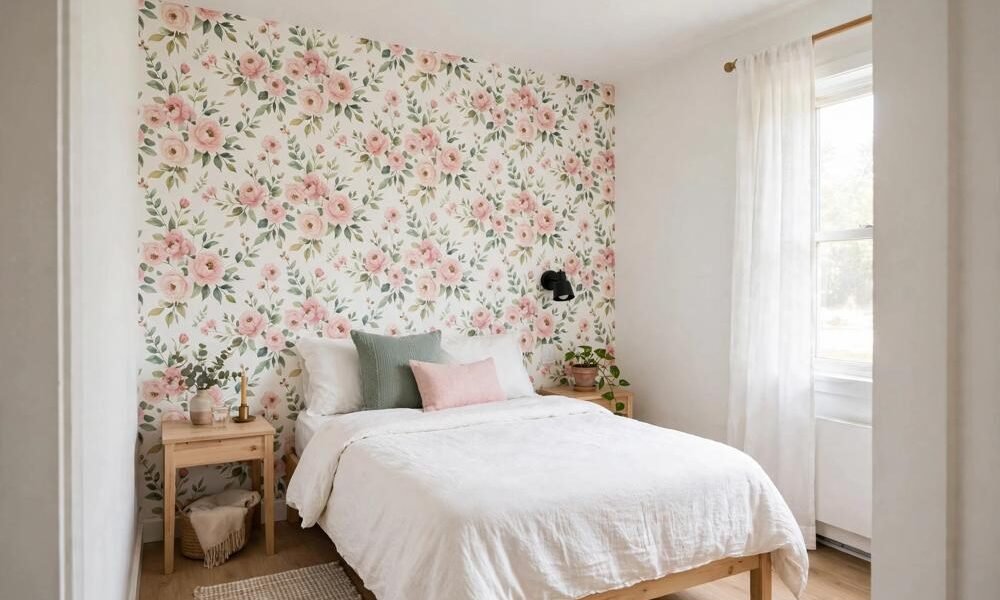
Peel and stick wallpaper is the easiest way to change a rental bedroom without paint, drilling, or a landlord dispute. It sticks with a removable adhesive, comes in rolls you cut to size, and peels off when you move, usually without damaging the wall underneath if the wall was in good condition and the paper was applied correctly. It is not magic, though: it can bubble, peel at the edges, or damage weak paint if you rush it, choose the wrong wall, or leave it up for years in a damp room.
This guide covers accent walls, headboard walls, applying without bubbles, and removing cleanly, plus what to check with your landlord and what to avoid, so a renter can use it with confidence.
Key takeaways: use one accent wall, not all four, in a small bedroom; test a small piece first, especially on textured or freshly painted walls; apply slowly from the top, smoothing as you go; keep it away from damp, heat and direct steam; and remove slowly at a low angle, with gentle heat if needed.
Idea 1: One Accent Wall That Changes the Room
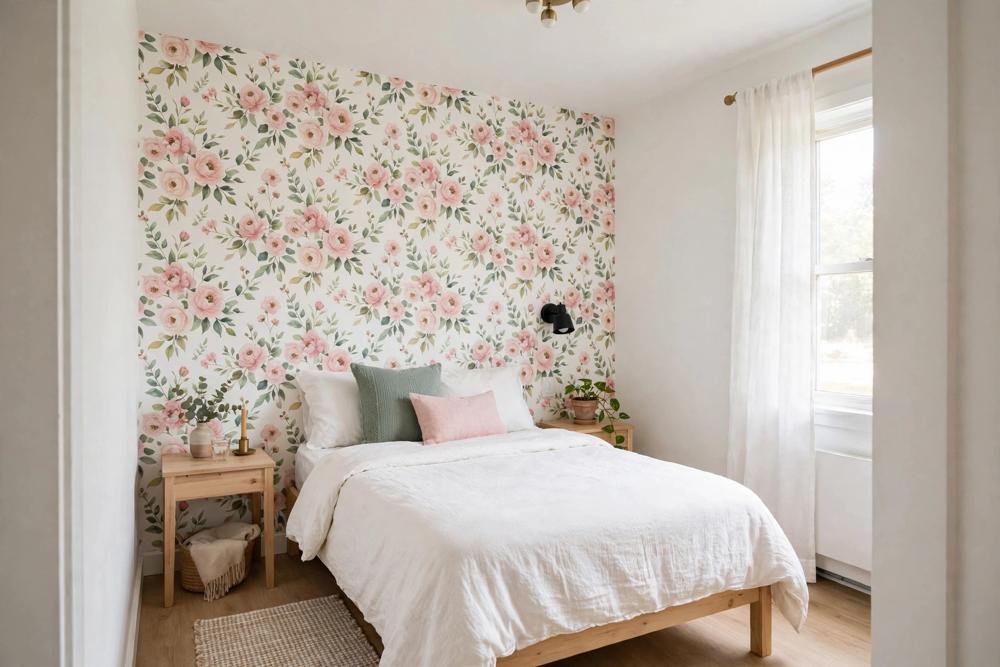
One accent wall is usually enough in a small bedroom, because it gives you colour and pattern without making the room feel smaller or busier. Choose the wall you see first when you enter, or the wall behind the bed, and leave the other walls plain. A floral, botanical, or subtle geometric pattern works well in a small room, because it adds interest without overwhelming the bed and furniture. A very large, dark, or high-contrast pattern on all four walls can make a small room feel closed in, and it will cost much more in rolls and time.
Measure the wall carefully before ordering: width times height, minus windows and doors, plus 10 percent extra for pattern matching and mistakes. Pattern repeat matters: a large pattern needs more extra paper to match across strips, while a small pattern or a plain texture needs less. Order all rolls from the same batch if possible, because colour can vary slightly between batches, and a batch difference will show on one wall.
Choose a paper rated for removable use, and check reviews for renter use specifically, not just for looks. Some papers stick very well but are hard to remove, others peel easily but lift at the edges in humidity. A paper with a medium adhesive, a smooth backing, and a washable surface is usually the best compromise for a bedroom.
Idea 2: Applying Without Bubbles or Crooked Strips
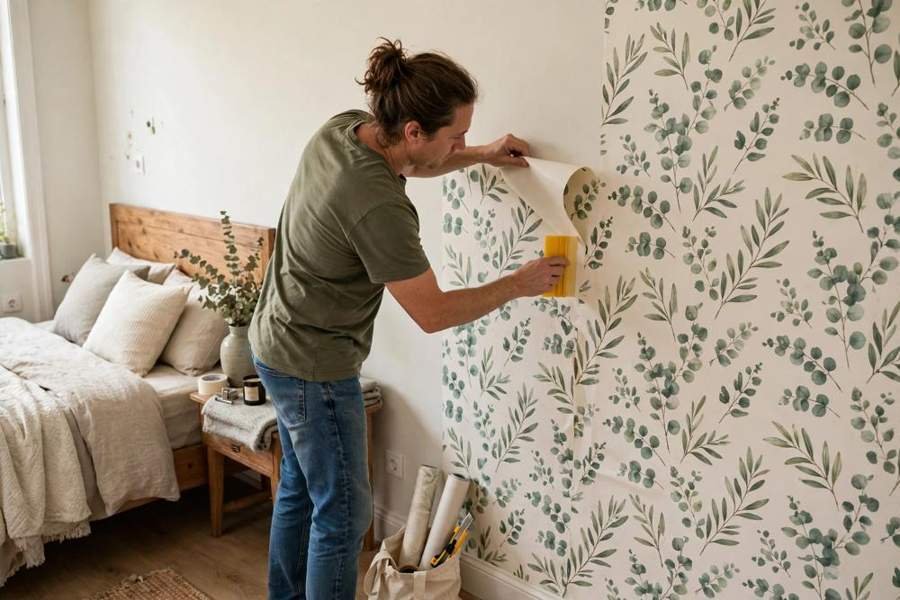
Applying peel and stick wallpaper well is slow work, and rushing is the main cause of bubbles and crooked strips. Start with a clean, dry, smooth wall: wipe dust, fill small holes, and let any filler or paint dry fully, at least 2 to 4 weeks for fresh paint, because fresh paint can peel with the paper. Do not apply over textured walls, peeling paint, or damp walls, because the paper will not stick evenly and removal can damage the surface.
Mark a vertical line with a level, not just by eye, for the first strip, because the first strip sets the line for the whole wall. Peel back only 20 to 30 centimetres of backing at the top, stick the top, smooth down with a plastic smoother or a credit card wrapped in cloth, and peel more backing as you go down, smoothing in the centre first, then out to the edges. This pushes air out, rather than trapping it. If a bubble appears, lift the paper gently back to the bubble and re-smooth, rather than pricking it, which can leave a mark.
Match the pattern at eye level, not at the ceiling, because that is where you will notice a mismatch. Overlap or butt joints according to the product instructions: most peel and stick papers butt together, edge to edge, without overlap, so the seam is invisible. Trim excess at the top and bottom with a sharp craft knife and a straight edge, after the strip is fully smoothed, and change the blade often so it cuts cleanly rather than tearing.
Work with a second person if the wall is tall or the paper is wide, because one person holding the top while the other smooths down is much easier than doing it alone on a ladder.
Idea 3: Headboard Walls and Small Areas
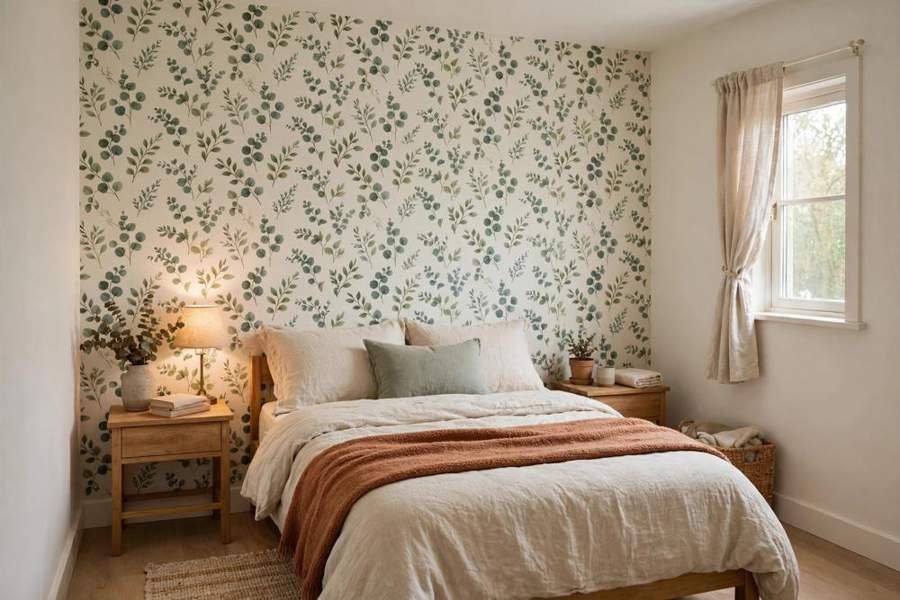
A headboard wall, the wall behind the bed, is the best place for peel and stick wallpaper in a small bedroom, because the bed anchors the pattern and you need only one wall’s worth of paper. It creates a focal point without a headboard, or it enhances a simple headboard, and it is easy to remove when you move, because it is one wall, not the whole room.
You can also use peel and stick wallpaper in small areas: inside an alcove, on a wardrobe door, on a drawer front, or as a framed panel, rather than a full wall. A framed panel, paper stuck to a board and hung with removable hooks, gives you the look with even less risk, because it does not touch the wall at all. This is a good option if your landlord does not allow wallpaper, or if your walls are textured and paper will not stick well.
Keep the rest of the room calm when you use a patterned headboard wall: plain bedding, plain curtains, and one or two colours picked from the paper, rather than competing patterns. A busy headboard wall plus busy bedding plus busy curtains will make a small room feel chaotic, even if each piece looks good alone.
If the bed is against the headboard wall, leave a small gap between the bed and the wall, or use a headboard that protects the paper, because rubbing from the bed can wear the paper at the bottom over time. Check the paper behind the bed once a month for lifting edges, and press them back down before dust gets under them.
Idea 4: Removing Cleanly When You Move Out
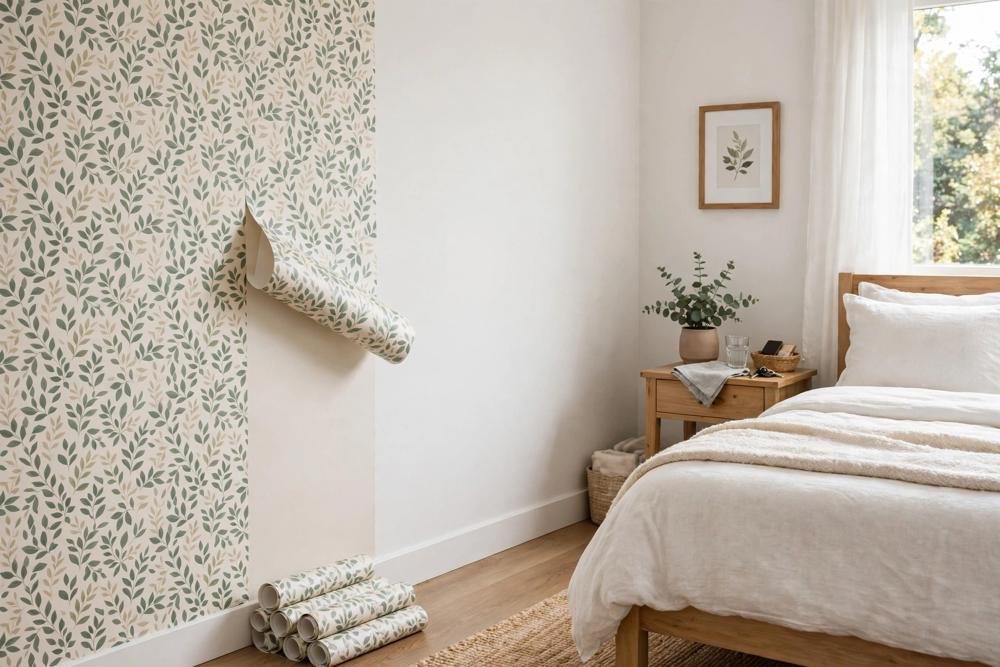
Removing peel and stick wallpaper cleanly is mostly about patience and angle. Start at a top corner, peel slowly down at a low angle, close to the wall, rather than pulling straight out, which can lift paint. If a section resists, warm it gently with a hair dryer on low, for a few seconds, to soften the adhesive, then peel again. Do not use a heat gun on high, or steam, which can damage paint and plaster.
Work in strips, in the reverse order you applied them, and keep the removed paper flat or rolled, not crumpled, so it does not stick to itself and to furniture. After removal, wipe the wall with a damp cloth to remove adhesive residue, and check for paint lifting, especially at corners and around switches. Small paint touch-ups are normal and cheaper than a full repaint, but if large areas of paint come off, the wall may have had weak paint, moisture, or fresh paint that had not cured before the paper was applied.
Take photos before you apply and after you remove, for your landlord and for your deposit record. Keep the product name and batch, and keep a spare roll or a sample, so you can show what was used if there is a dispute. Check your tenancy agreement before applying: some agreements allow removable wallpaper, some require permission, and some forbid any wall covering. Getting permission in writing, even by email, protects your deposit.
If you are unsure, test a small piece in a hidden area, such as behind a wardrobe, for a week, then remove it and check the wall. A test that damages paint in a hidden area is much better than damage on the main accent wall.
What to Avoid
Do not apply peel and stick wallpaper over textured walls, peeling paint, fresh paint less than 2 to 4 weeks old, or damp walls, because it will not stick well and removal can damage the surface. Do not paper all four walls in a small bedroom, because it can feel smaller and cost much more. Do not rush application, because bubbles and crooked strips are hard to fix once the paper is fully stuck. Do not use it in a bathroom or a very humid room without checking that the product is rated for humidity. And do not apply it without checking your tenancy agreement, because even removable paper can be a deposit issue if permission was not given.
FAQs
Is peel and stick wallpaper safe for rental walls?
Usually yes, if the wall is smooth, dry, and the paint is in good condition and fully cured, and you remove it slowly at a low angle. Test a small hidden area first, and get landlord permission in writing if your agreement requires it.
How long does peel and stick wallpaper last in a bedroom?
In a dry bedroom, 1 to 3 years is common, sometimes longer. Humidity, heat, and direct sun can shorten its life and cause edges to lift. Check edges once a month and press them back down early.
Can I apply peel and stick wallpaper on textured walls?
Not well. Light texture may work with a thicker paper, but heavy texture, orange peel, or knockdown texture will show through and prevent even adhesion. Use a framed panel instead if your walls are heavily textured.
How do I remove peel and stick wallpaper without damaging paint?
Peel slowly from a top corner, at a low angle close to the wall, warming stubborn sections gently with a hair dryer on low. Wipe residue with a damp cloth after removal, and touch up small paint spots if needed.
Do I need permission from my landlord for peel and stick wallpaper?
Check your tenancy agreement. Some allow removable wallpaper, some require written permission, some forbid it. Getting permission by email protects your deposit, even if the paper is marketed as removable.
Can I reuse peel and stick wallpaper after removing it?
Usually no, or only once, with reduced adhesion. The adhesive weakens after removal, and the paper can stretch or tear. Plan to buy new paper for a new room, rather than reusing old strips.
Conclusion
Peel and stick wallpaper is a renter-friendly way to change a bedroom, if you use it wisely: one accent or headboard wall, a smooth dry wall, slow careful application, and slow removal at a low angle. Test first, measure with extra for pattern matching, keep the rest of the room calm, and get landlord permission in writing when needed. Done that way, you get colour and pattern without paint, without drilling, and without a deposit dispute when you move out.