Introduction
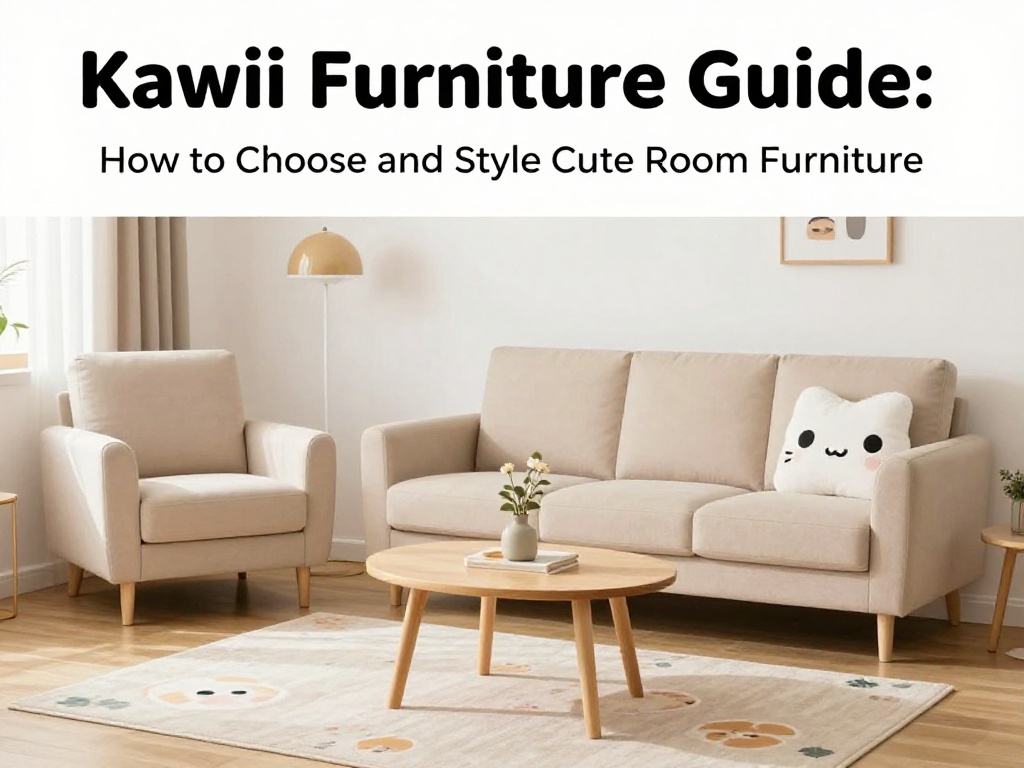
Everything else in a kawaii room can be changed in an afternoon. The bedding, the wall art, the accessories, the lighting — swap them out and the room transforms overnight. But furniture is different. It is the bones of the room. Get it right and everything layers beautifully on top. Get it wrong and no amount of plushies or fairy lights will fix the underlying structure.
The good news is that kawaii furniture follows a surprisingly clear logic. Once you understand what makes a piece of furniture kawaii — or fundamentally incompatible with the aesthetic — every shopping decision becomes much simpler.
This guide covers every furniture category in a kawaii room: beds and headboards, desks and chairs, dressers and storage, shelving, seating, and the smaller furniture pieces that complete the look. For each one, you will find out exactly what to look for, what to avoid, where to buy it, and roughly what to expect to pay.
Whether you are furnishing a kawaii room from scratch or upgrading pieces one at a time, this is the furniture guide you need.
🔗 Planning your full room? Read our complete kawaii room decor guide for the full picture before you start furniture shopping.
What Makes Furniture Kawaii? The Core Principles
Before going category by category, it helps to understand the design language of kawaii furniture — because it is consistent across every piece and every price point.
Rounded Edges and Soft Silhouettes
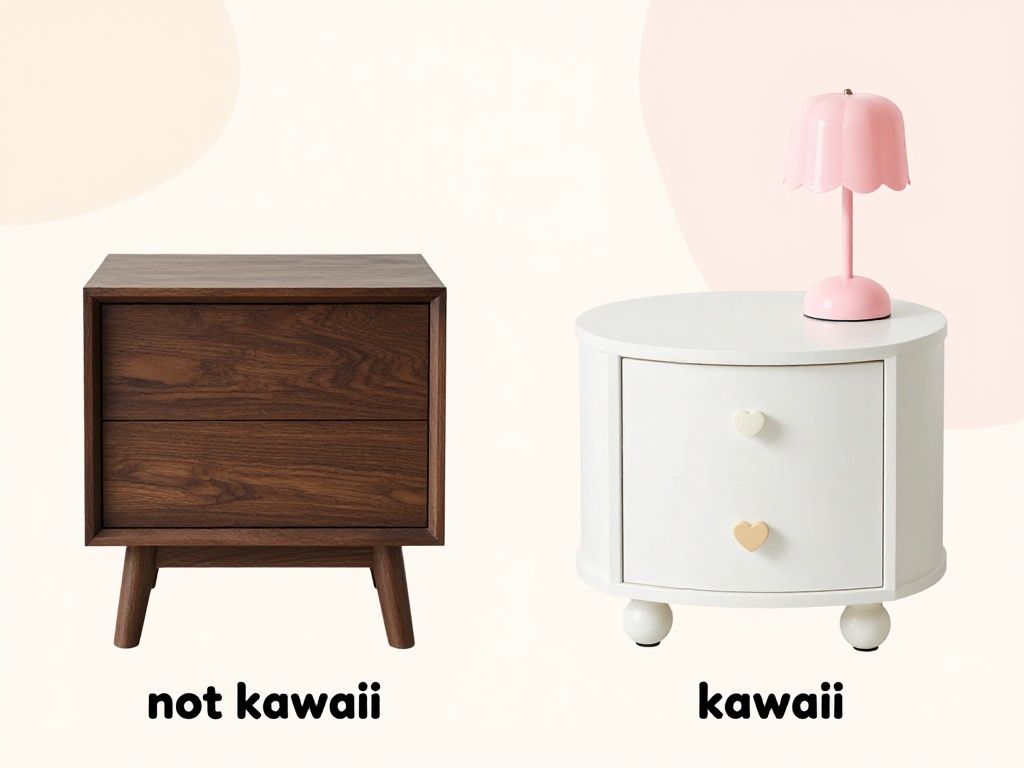
This is the single most important characteristic of kawaii furniture. Sharp corners, angular frames, and geometric minimalism are fundamentally at odds with the kawaii aesthetic. Every piece of kawaii furniture — from the bed frame to the desk chair — should have soft, rounded edges and gentle curves that feel approachable rather than austere.
When you are shopping and you cannot decide whether a piece fits, look at its silhouette. If it looks sharp and angular, it belongs to a different aesthetic. If its lines are soft and its corners are rounded, it is kawaii-compatible.
Light Colours and Pastel Finishes
Kawaii furniture is almost never dark. Dark wood, matte black, and charcoal grey are the territory of Scandinavian minimalism, dark academia, and industrial aesthetics — none of which sit comfortably alongside the kawaii palette.
Kawaii furniture finishes fall into three categories:
White — the most versatile and most popular kawaii furniture colour. White keeps the room feeling light, airy, and bright while letting the pastel accessories and soft furnishings provide the colour.
Pastel finishes — mint green, blush pink, lavender, and baby blue furniture pieces work beautifully as statement items in an otherwise white-furniture room. A mint green dresser, a pink velvet chair, or a lavender wardrobe can become the focal point of the room.
Natural light wood — pale beech, birch, or oak in an unfinished or lightly lacquered state has a warmth and naturalness that can work in kawaii rooms, particularly those with a softer, more cottagecore-influenced take on the aesthetic. Avoid dark stains entirely.
Small to Medium Scale
Kawaii rooms tend to work better with furniture that is appropriately sized rather than oversized. Large, imposing furniture pieces make a room feel serious and formal — the opposite of kawaii. Compact, neatly proportioned pieces keep the room feeling playful and personal.
This does not mean everything needs to be tiny — a full-size bed is obviously practical — but avoiding unnecessarily large or heavy-looking furniture keeps the kawaii atmosphere intact.
Character Details and Playful Elements
The most distinctly kawaii furniture pieces go one step further than simply being white and rounded — they incorporate playful design details. Cat-shaped drawer handles, heart-cut-outs in a headboard, star-shaped hooks on a wall unit, or a desk with a built-in mirror framed in rounded acrylic are all examples of furniture that actively participates in the kawaii aesthetic rather than simply not disrupting it.
These pieces tend to be found at specialist kawaii retailers, on Etsy from independent makers, or in the more playful ranges from mainstream homeware brands.
You can also use our free tool Micro Renovation Ideas
The Kawaii Bed: Your Room’s Centrepiece
The bed is the largest piece of furniture in any bedroom and the one that sets the visual tone for everything else. In a kawaii room, the bed is also the primary display surface for plushies, cushions, and layered soft furnishings — so the frame and headboard need to support that layering rather than compete with it.
The Best Bed Frames for a Kawaii Room
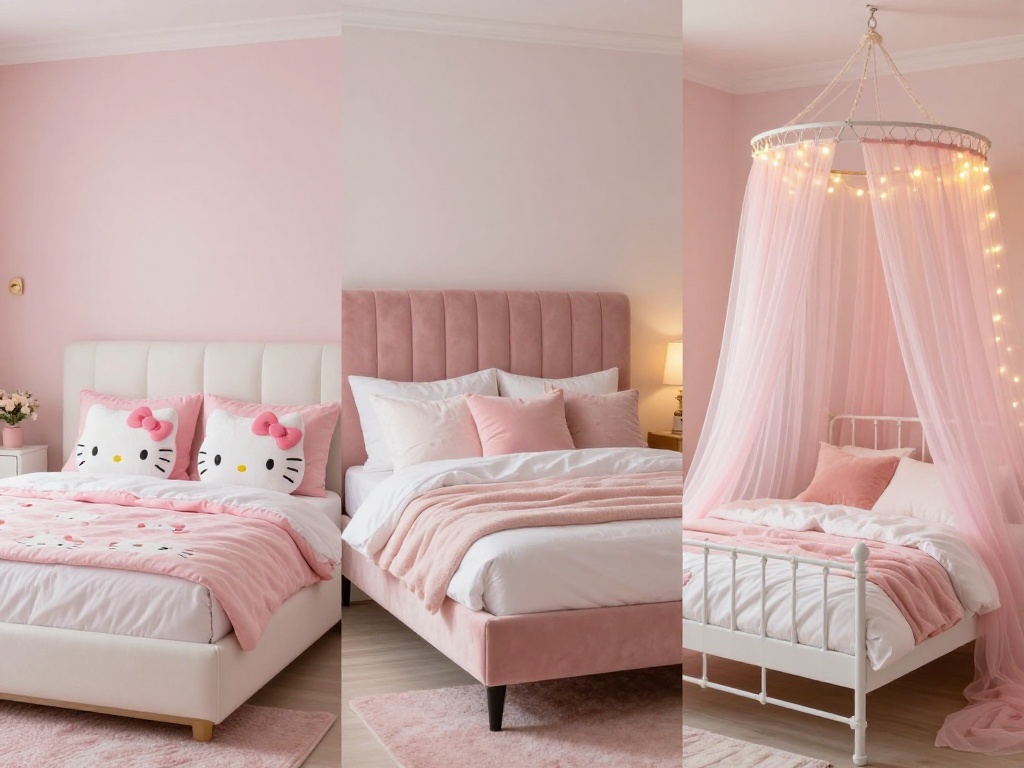
The white platform bed The white platform bed is the most universally effective bed choice for a kawaii room. Low to the ground, clean lines with softened edges, and a simple profile that disappears behind layered kawaii bedding — it works at every budget level and in every size kawaii room.
Look for platform beds with a slightly upholstered or padded top rail on the headboard rather than a completely bare wooden frame. The softness of padding adds a kawaii quality that a hard wooden frame lacks.
The upholstered bed in pastel velvet An upholstered bed frame — particularly one with a tall, padded headboard in blush pink, white, or mint green velvet — is one of the most glamorous kawaii furniture choices. The softness of the velvet, the warmth of the colour, and the generous proportions of a tall headboard create a bed that feels genuinely luxurious and deeply kawaii.
This style works best in larger kawaii rooms where the headboard has space to make a statement without overwhelming the rest of the furniture.
The canopy bed A white metal or wooden canopy bed — particularly when dressed with sheer white or pastel pink tulle curtains — is arguably the most iconic kawaii bedroom furniture choice. The canopy creates an enclosed, dream-like quality that perfectly captures the fairy-tale spirit of the aesthetic.
Canopy beds work in rooms of almost any size. In smaller rooms, keep the canopy fabric lightweight and sheer so it does not visually shrink the space.
The daybed A white metal or wooden daybed — designed to function as both a sofa and a bed — is a popular choice for smaller kawaii rooms or studio spaces. Dressed with a combination of standard bedding and throw cushions, a daybed can function as a comfortable seating area during the day and a cosy sleep space at night.
What to Avoid
Dark wood bed frames, metal frames in black or gunmetal, and any frame with sharp, aggressive angular design. Upholstered beds in grey or beige — while popular in other aesthetics — clash with the kawaii palette and should be avoided.
Price Range
White platform beds: £120–£400. Pastel velvet upholstered beds: £200–£600. White canopy beds: £150–£500. Daybeds: £100–£350.
Where to Buy
IKEA (HEMNES and MALM ranges in white work well), Wayfair (wide selection of upholstered beds in pastel colours), Etsy (for character-detail bed frames from independent makers), Amazon (for budget platform and canopy options).
You can also read Kawaii Room Accessories: Every Cute Detail You Need
Kawaii Desks and Study Furniture
For anyone who studies, works, or creates from their kawaii room, the desk is a second centrepiece — a room within a room that deserves as much attention as the bed.
Choosing a Kawaii Desk
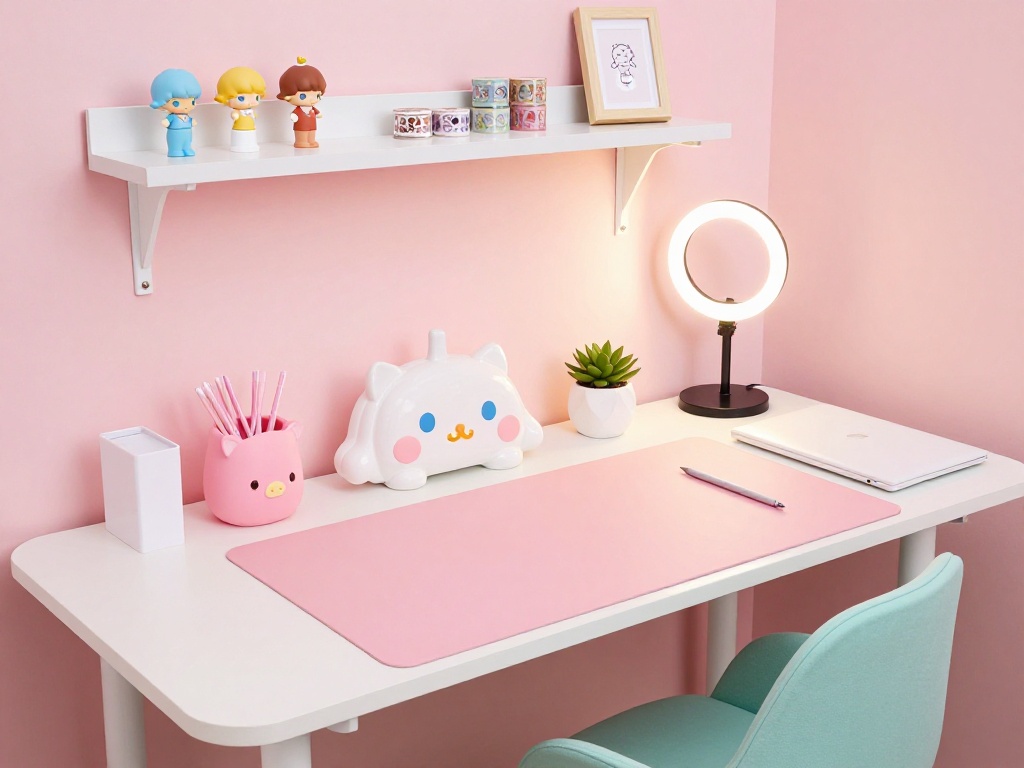
The white writing desk A simple, white-finished writing desk with clean lines and rounded legs is the most versatile kawaii desk choice. It is neutral enough to let your kawaii desk accessories and stationery do the visual work while keeping the overall look cohesive.
Look for desks with at least one drawer for storing items out of sight — keeping the desktop itself as a clean, curated display surface is easier when there is somewhere to hide the less photogenic necessities.
The vanity desk A white or pink vanity desk — one with a built-in mirror and small storage compartments — doubles as both a study space and a dressing table, making it particularly practical in smaller kawaii rooms. The mirror element is very much in keeping with the kawaii aesthetic and the compact proportions of most vanity desks make them a good fit for rooms where space is limited.
The floating desk A wall-mounted floating desk in white takes up no floor space and creates a minimal, airy look that keeps a small kawaii room from feeling cluttered. Pair with a wall-mounted shelf above it for storage and display.
Character detail desks Some specialist kawaii retailers and Etsy sellers offer desks with built-in kawaii details — heart-shaped cutouts, pastel painted drawer fronts, or character-shaped handles. These pieces make a stronger kawaii statement but come at a higher price point.
The Kawaii Desk Chair
The desk chair is one of the most underestimated elements of a kawaii room setup. A wrong chair — particularly a standard black mesh office chair — can break the aesthetic entirely regardless of how good everything else looks.
The egg chair — a rounded, enclosed egg or bubble chair in white, pink, or mint is one of the most dramatically kawaii seating choices available. Both hanging and floor-standing versions exist. These chairs are a significant investment (£150–£400) but they transform the aesthetic of a room immediately.
The pastel velvet accent chair — a small, rounded accent chair in blush pink, mint, or lavender velvet gives the desk area a glamorous, grown-up kawaii quality. Works particularly well as a reading or dressing table chair.
The white or pastel office chair — for a more practical option, a standard ergonomic office chair in white, pink, or pastel upholstery is widely available and keeps the desk area functional without breaking the kawaii palette.
What to avoid: Black mesh office chairs, industrial-style metal stools, and any chair with a harsh, angular silhouette.
Price Range
White writing desks: £80–£250. Vanity desks: £100–£300. Egg chairs: £150–£400. Pastel velvet accent chairs: £80–£200.
You can also read How to Decorate a Kawaii Room: The Complete Guide
Kawaii Dressers, Wardrobes and Storage Furniture
Storage furniture is where a lot of kawaii rooms fall apart — because it is easy to prioritise the visual pieces (bed, desk, wall art) and buy the first available wardrobe or dresser without thinking about how it fits the aesthetic.
Kawaii Dressers and Chests of Drawers
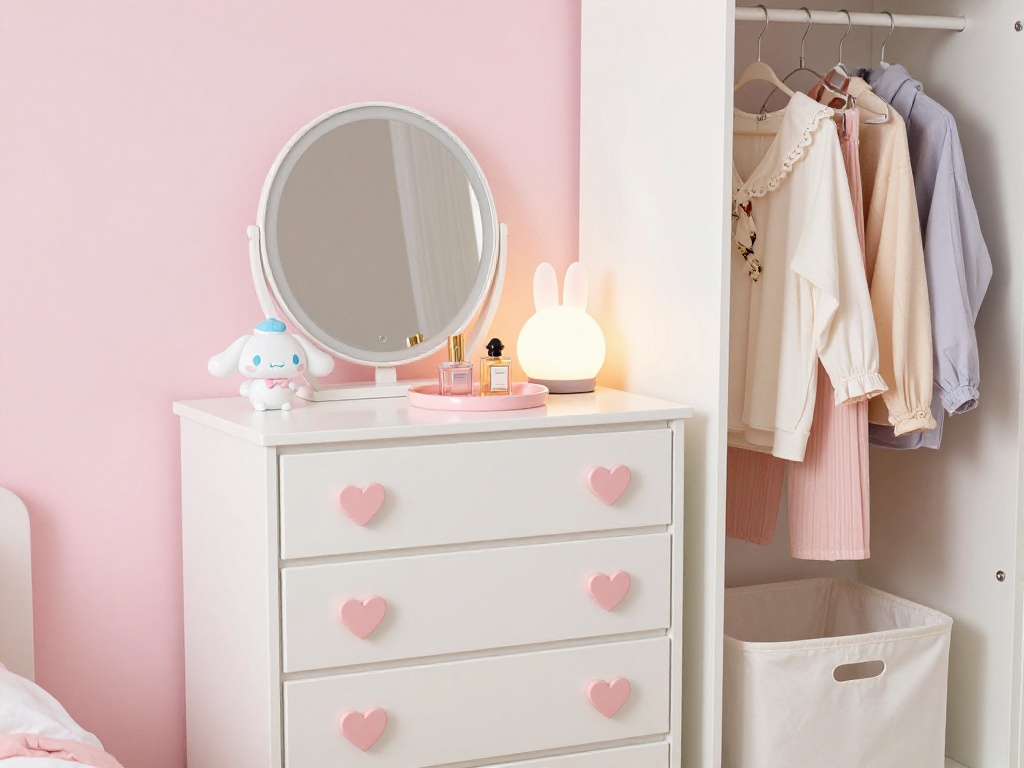
The dresser in a kawaii room is both a functional storage piece and a display surface. The top of the dresser is prime kawaii real estate — for a mirror, a collection of figurines, a kawaii lamp, and beauty or accessory storage in character-shaped containers.
What to look for: White or pastel finish, rounded drawer handles (brass in a simple curved shape, or pastel resin in a character shape), a clean top surface with room for display items.
IKEA options that work: The HEMNES dresser in white is a reliable, affordable base. Upgrade the standard hardware to pastel or character-shaped handles from Etsy (typically £1–£3 per handle) and the piece immediately feels more kawaii.
Statement dressers: Some specialist homeware retailers and Etsy makers offer dressers with painted kawaii details, decoupage character prints on drawer fronts, or built-in mirror tops with decorative frames. These are more expensive but function as genuine statement pieces.
Kawaii Wardrobes
A full wardrobe is usually the largest single piece of furniture in a bedroom and choosing the wrong one is one of the most common mistakes in kawaii room decoration.
Best options: A white sliding door wardrobe — particularly one with mirror panel doors — keeps the room feeling bright and spacious while fitting the kawaii palette. The mirror doors also serve a practical function and add the reflective quality that kawaii rooms benefit from.
For smaller rooms, a white open wardrobe or clothes rail with a pastel fabric cover keeps the look cohesive without the bulk of a full wardrobe.
What to avoid: Dark wood wardrobes, brown-toned furniture in any form, and wardrobes with overly ornate or baroque detailing that belongs to different design eras.
Kawaii Bedside Tables
The bedside table sits directly beside the bed and is one of the most photographed surfaces in any kawaii room — it holds the kawaii lamp, a plushie or two, a small plant, and whatever book or journal is currently being read.
Look for: a small white or pastel rounded table with one or two drawers, a simple acrylic or white resin side table with a curved profile, or a small white cube shelf unit used as a nightstand.
Price Range White dressers: £80–£200 (IKEA), £200–£500 (specialist). White wardrobes: £150–£400. Bedside tables: £30–£120.
You can also read Baddie Room Ideas & Y2K Aesthetic Bedroom: The Complete Guide
Kawaii Shelving and Display Furniture
Shelving in a kawaii room serves a dual purpose — storage and display — and choosing the right shelving is essential for creating the layered, curated look that defines the aesthetic.
Floating Wall Shelves
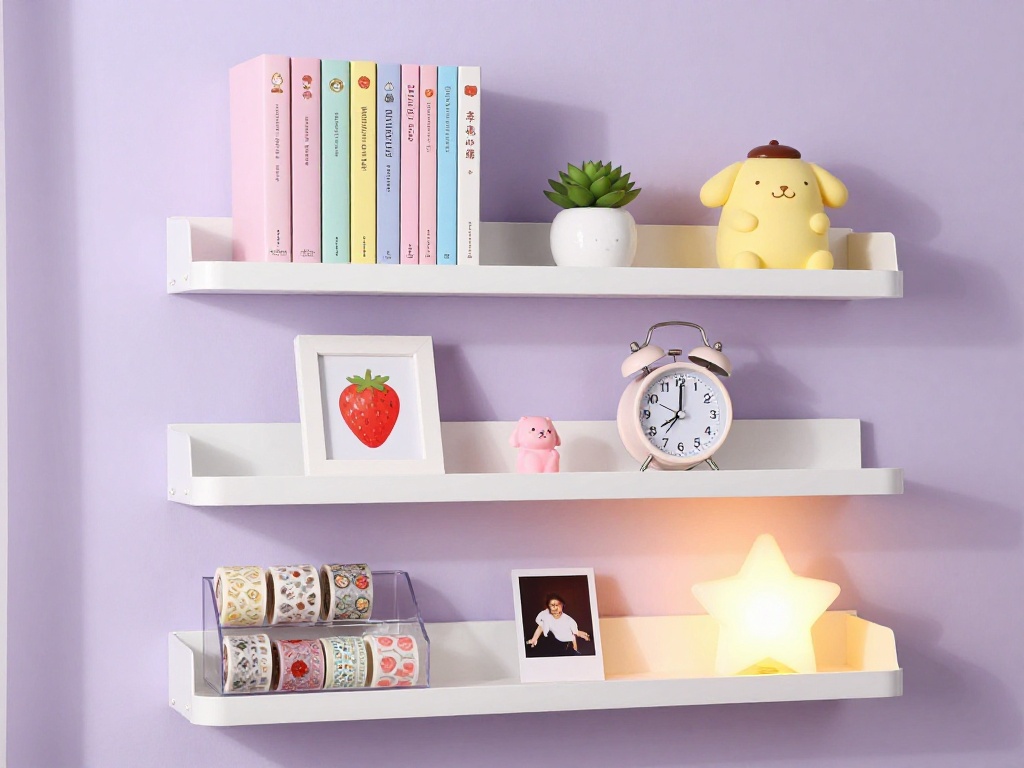
White floating shelves are the most versatile and most used shelving choice in kawaii rooms. They take up no floor space, can be arranged in any configuration, and provide the perfect surface for displaying a kawaii collection — figurines, small plants, framed photos, plushies, books arranged by colour, and small decorative objects.
Best arrangement: A staggered grouping of three to five shelves of different lengths on one wall, arranged asymmetrically. This looks more intentional and interesting than a uniform grid.
What to put on them: Mix heights — a taller item (a lamp or a larger figurine), a medium item (a small plant or framed print), and a smaller item (a miniature plushie or a small container) on each shelf creates visual rhythm.
Cube Storage Units
A white cube storage unit — such as the IKEA KALLAX — can function as both a room divider and a display piece in a kawaii room. Fill alternate cubes with fabric storage baskets in pastel colours and use the remaining cubes as open display space for books, figurines, and accessories.
Miniature Furniture and Display Cases
One of the more distinctive elements of kawaii room furniture is the presence of miniature — or miniature-scale — furniture pieces used purely for display. A tiny wooden table with a miniature tea set, a doll-sized chair used as a prop on a shelf, or a glass display case for a Nendoroid or Figma figure collection are all kawaii furniture elements that exist purely for the joy of looking at them.
These pieces are found at specialist kawaii and anime merchandise retailers, Japanese lifestyle stores, and on Etsy and eBay.
You can also read Blush Pink & Rose Bedroom Decor: The Complete Romantic Guide
Kawaii Seating: Beyond the Desk Chair
In a kawaii room, seating is not just functional — it is a decorating statement. The right additional seating piece adds character, warmth, and a second focal point beyond the bed.
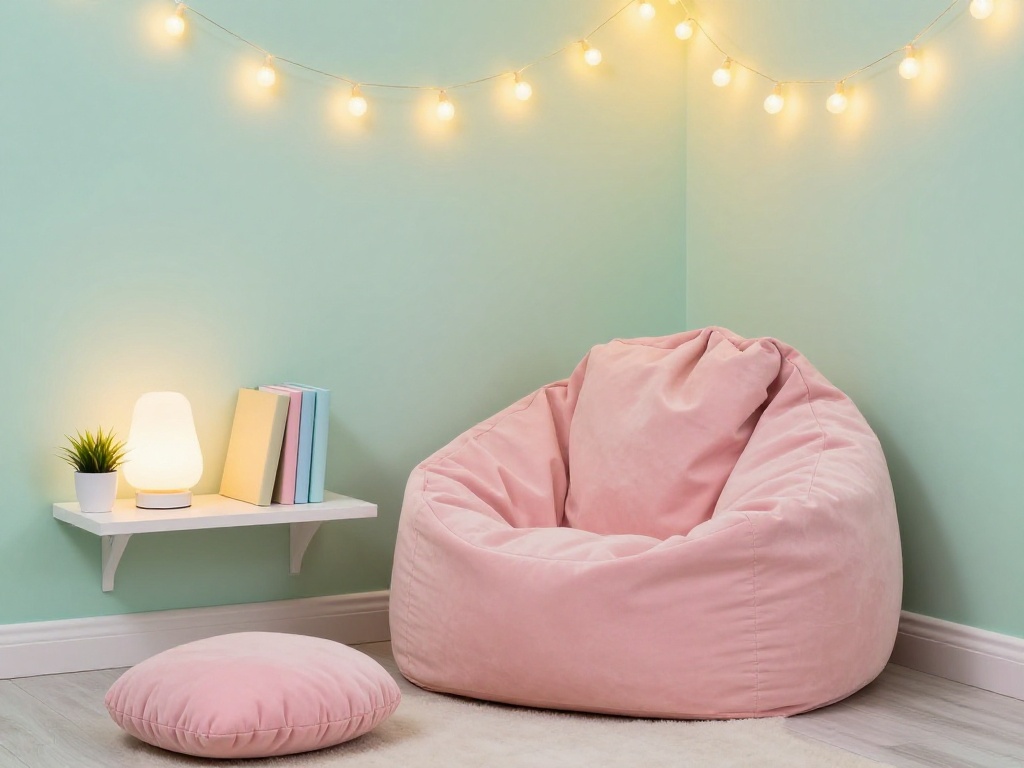
The Bean Bag
A large, round bean bag in a pastel colour or a character print is one of the most popular kawaii seating choices — particularly for younger kawaii rooms or gaming setups. Look for bean bags with a velvet or faux fur cover in pink, mint, or lavender. Giant stuffed animal bean bags (a large plushie that doubles as seating) are a distinctly kawaii take on this form.
The Floor Cushion
Oversized floor cushions in kawaii prints or pastel velvet work beautifully in smaller rooms where a full chair is impractical. They can be stacked against the wall when not in use, arranged around a low coffee table for a floor-seating setup, or placed in a reading corner with a small bookshelf.
The Accent Chair
A small upholstered accent chair — in blush pink, mint, or white — placed in a corner of the room with a small side table and a lamp creates a dedicated reading or relaxation nook that adds a grown-up, considered quality to the kawaii room without losing any of its sweetness.
The Hanging Chair
A hanging egg or pod chair — in white or pastel wicker, or in a fabric version in pink or mint — is one of the most dramatic single furniture choices for a kawaii room. It adds a fairy-tale, dream-like quality that photographs beautifully and functions as a genuine relaxation space.
Price Range Bean bags: £30–£100. Oversized floor cushions: £20–£60. Accent chairs: £80–£250. Hanging chairs: £100–£350.
You can also read Romantic Bedroom Lighting: The Complete Candles, Fairy Lights & Ambience Guide
Kawaii Furniture: Complete Shopping Reference
Use this as your quick-reference guide when shopping for kawaii furniture:
| Furniture Piece | Best Style for Kawaii | Finish to Choose | Avoid | Budget Range |
|---|---|---|---|---|
| Bed frame | Platform, upholstered, or canopy | White, blush pink, or mint velvet | Dark wood, black metal | £120–£600 |
| Headboard | Padded, tufted, or canopy | White, blush pink velvet | Sharp wood or metal frame | Included in bed |
| Wardrobe | Sliding door or open rail | White with mirror panels | Dark wood, ornate baroque | £150–£400 |
| Dresser | Simple with rounded handles | White or pastel with character handles | Dark or brown finishes | £80–£500 |
| Desk | Writing desk or vanity desk | White, pale pink | Dark wood, industrial metal | £80–£300 |
| Desk chair | Egg chair or pastel velvet | Pink, mint, white | Black mesh office chair | £80–£400 |
| Bedside table | Small rounded table or cube | White or pastel | Heavy dark wood | £30–£120 |
| Shelving | Floating shelves or cube unit | White | Dark metal, industrial | £20–£150 |
| Extra seating | Bean bag, accent chair, floor cushion | Pastel velvet or character print | Sharp angular chairs | £30–£350 |
Final Thoughts
Kawaii furniture is not about finding pieces that are covered in character prints or overtly childlike in their design — though those pieces absolutely have their place. It is about understanding the underlying design language of the aesthetic — soft, rounded, light, playful — and applying that language to every furniture decision you make.
Start with the bed. Then the desk. Then storage. Then shelving and seating. Build the furniture layer by layer and let the accessories, lighting, and soft furnishings fill in the personality once the structural pieces are in place.
A room with great furniture and average accessories will always look better than a room with great accessories and furniture that fights the aesthetic. Get the foundations right and everything else becomes easy.
🔗 Once your furniture is sorted, explore our How to Decorate a Kawaii Room for all the accessories, bedding, lighting, and wall art you need to complete the look.