Introduction
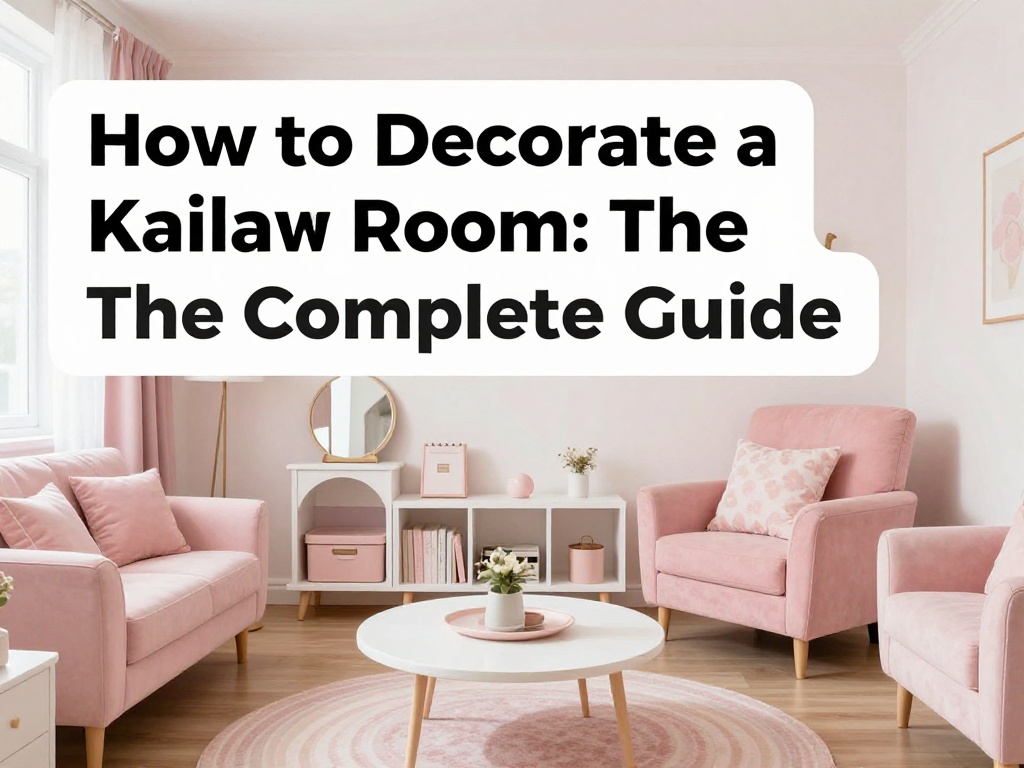
There is a reason kawaii rooms stop you mid-scroll every single time.
Whether it is the softness of the pastel colour palette, the abundance of plushies piled on a perfectly made bed, or the warm glow of a heart-shaped lamp on a meticulously organised desk — a kawaii room has a quality that no other aesthetic quite replicates. It feels like walking into a hug.
Kawaii (かわいい) is a Japanese word meaning “cute” — but as a design aesthetic, it is far more nuanced than that single word suggests. It is a philosophy of joyfulness, of choosing things that make your heart flutter, of building a space that feels genuinely personal and warm rather than cold or styled for appearances.
The good news is that a kawaii room is one of the most achievable aesthetics to create. You do not need a huge budget, a large space, or an interior design background. You need a clear vision, the right colour palette, and an understanding of the core elements that make a room feel authentically kawaii rather than just vaguely pink.
This guide covers everything — from colour palette and furniture to wall décor, bedding, lighting, desk setup, and the finishing accessories that pull the whole look together. By the end, you will have a complete roadmap for your own kawaii room.
What Is the Kawaii Aesthetic?
Before decorating, it helps to understand what kawaii actually means as a design language — because it is more specific than “cute things in a pink room.”
The kawaii aesthetic has several defining characteristics that appear across every kawaii room, regardless of the specific colour palette or theme chosen:
Softness over sharpness. Kawaii design avoids hard edges, dark contrasts, and anything that feels harsh or aggressive. Rounded shapes, soft textures, and gentle colour transitions are the visual vocabulary of the style.
Playfulness as a priority. A kawaii room is not trying to look sophisticated or mature. It celebrates childlike wonder, imagination, and the unashamed love of things that make you smile — plushies, character prints, whimsical lamps, and cute stationery are all welcome.
Personal expression through collections. Kawaii rooms are never generic. They reflect the specific interests of the person living in them — whether that is a love of Sanrio characters, Studio Ghibli, boba tea, cats, strawberries, or pastel clouds. The collection aspect is central.
Functionality hidden in cuteness. One of the most charming features of kawaii room decor is that even practical items — storage boxes, cable tidies, desk organisers — are chosen for their cuteness rather than their neutrality.
Understanding these principles means every decorating decision you make will feel cohesive and intentional rather than random.
Step 1: The Kawaii Room Colour Palette
Colour is the single most important decision in a kawaii room. Get this right and every other element will fall into place naturally. Get it wrong and the room will feel confused regardless of how good the individual pieces are.
The Core Kawaii Palette
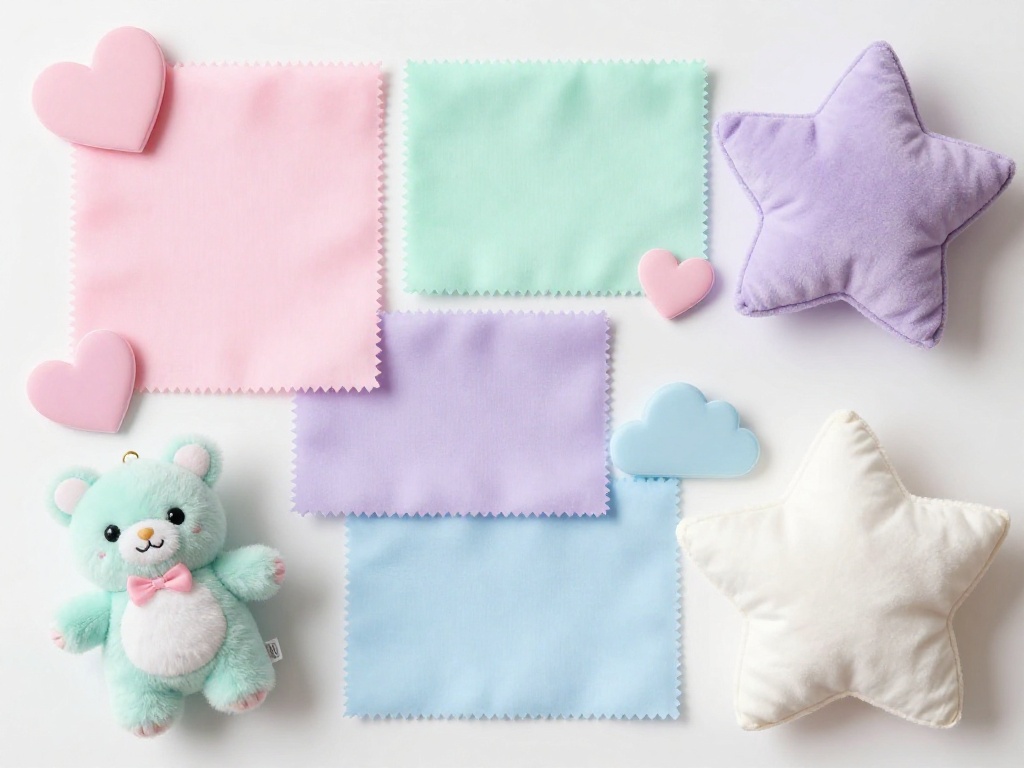
The kawaii colour palette is built on pastels — but not all pastels work equally well. The most authentically kawaii colours share two qualities: they are soft without being washed out, and they are warm without being intense.
The essential kawaii colours:
- Pastel pink — the cornerstone of the kawaii palette. From the palest blush to a slightly deeper bubblegum pink, this is the most universally recognised kawaii colour
- Mint green — the perfect complement to pastel pink. Fresh, clean, and sweet without competing
- Lavender — soft purple adds depth to an otherwise very warm palette
- Baby blue — for a cooler, slightly more serene kawaii room
- Warm white and cream — the neutrals that let pastels breathe without turning the room cold
Accent colours used sparingly:
- Soft yellow (like buttercream or lemon)
- Peach and coral
- Lilac
What to avoid: Grey, beige, or any colour with significant brown undertones will fight the kawaii aesthetic. These colours read as mature and restrained — the opposite of what kawaii is trying to achieve. Bright, saturated neons also clash with the softness of the aesthetic unless used very sparingly as single accent points.
Applying Colour to Your Room
Walls: Pastel pink, lavender, mint green, or baby blue. If you cannot paint (renting), white walls work beautifully as a canvas — the kawaii colour comes from everything else. Removable wallpaper in kawaii patterns is a renter-friendly alternative.
Large furniture: White is the most versatile base colour for kawaii furniture. It keeps the room feeling light and lets the pastel accessories do the talking.
Soft furnishings: This is where you layer your pastel colours — pink duvet, mint cushions, lavender throw. Mix the colours from your palette rather than matching everything to one shade.
Step 2: Kawaii Furniture
Furniture sets the structure of the room and the choices you make here determine how easy it is to layer the kawaii aesthetic on top.
What to Look For in Kawaii Furniture
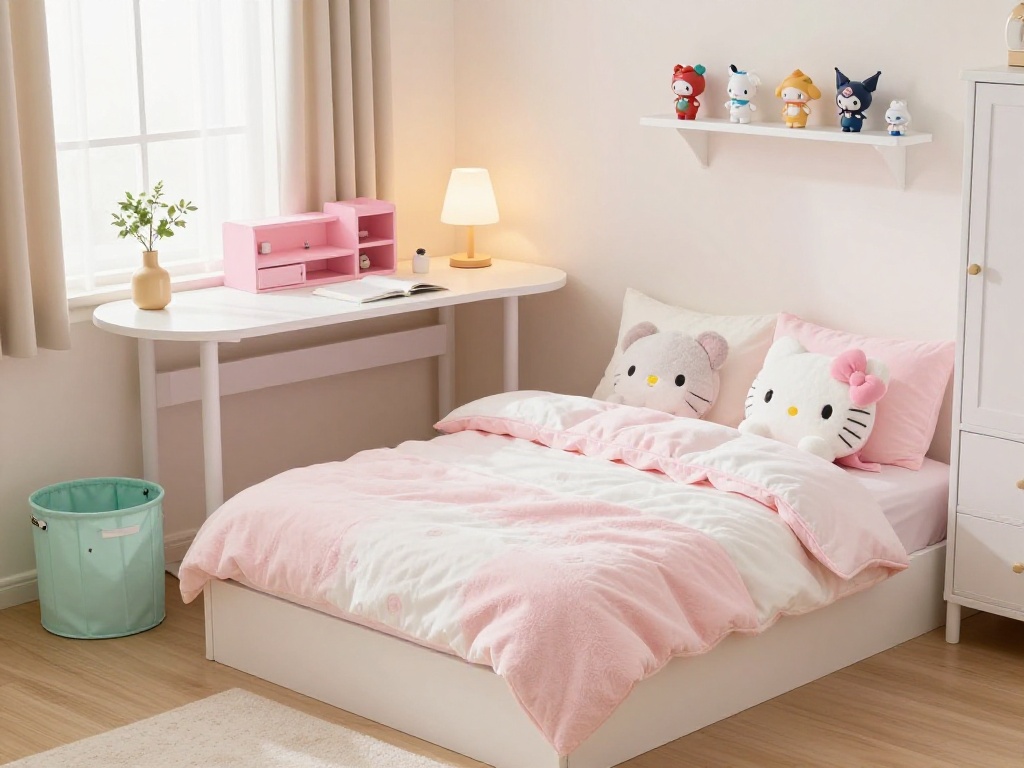
Rounded edges and soft silhouettes. The sharp angles of minimalist or industrial furniture are fundamentally at odds with kawaii design. Look for furniture with curved corners, rounded legs, and soft overall shapes.
White or pastel finishes. White is the default for kawaii furniture — it is neutral enough to let accessories shine while keeping the room feeling bright and airy. Pastel pink, mint, or lavender furniture pieces work beautifully as statement items.
Low and approachable proportions. Kawaii rooms tend to feel better with lower furniture — platform beds, low dressers, and compact pieces that make the room feel cosy rather than formal.
The Kawaii Bed
The bed is the centrepiece of any kawaii bedroom and deserves the most attention.
A white platform bed or a low upholstered bed in white or blush pink is the most universally effective base for a kawaii bedroom. The headboard should be simple — a padded upholstered headboard in white, pink, or cream works perfectly.
Alternatively, a canopy bed — particularly one with a simple white frame and sheer curtains or a tulle canopy in pink or white — is one of the most dramatically kawaii furniture choices available. The canopy adds a fairy-tale quality that perfectly encapsulates the aesthetic.
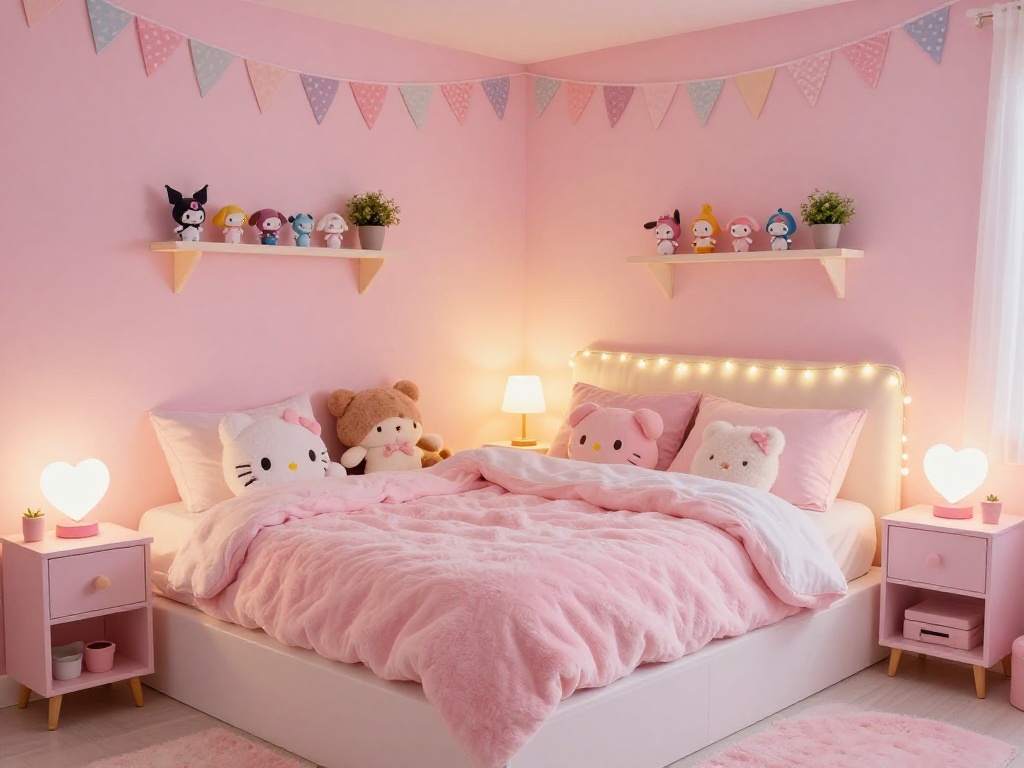
Layer the bed heavily with a fluffy duvet in a kawaii print, multiple plushie animals arranged across the pillows, and a knit or faux fur throw in a complementary pastel.
Kawaii Desk Setup
For anyone who uses their kawaii room as a workspace or study space, the desk is just as important as the bed. Look for:
A white or pastel desk with clean lines and rounded corners. Avoid dark wood, glass, or metal — these materials belong to different aesthetics. A small vanity desk with a built-in mirror works beautifully in a kawaii bedroom.
Pair the desk with a pastel or white desk chair — ideally one with a rounded back and soft upholstery. Egg-shaped chairs and bucket chairs in pink, white, or mint are particularly popular in kawaii room setups.
Kawaii Storage Solutions
Storage in a kawaii room should never be an afterthought. Every storage piece is an opportunity to add to the aesthetic.
Look for: pastel coloured fabric storage baskets, stackable acrylic drawers in clear or pastel tones, kawaii character-shaped storage boxes, and floating white shelves for displaying collections.
You can also visit What’s Your Decor Style? to choose your style
Step 3: Kawaii Wall Decor
After the colour palette, the walls are the biggest visual surface in the room and the most powerful opportunity to communicate the kawaii aesthetic clearly.
Kawaii Wall Art and Prints
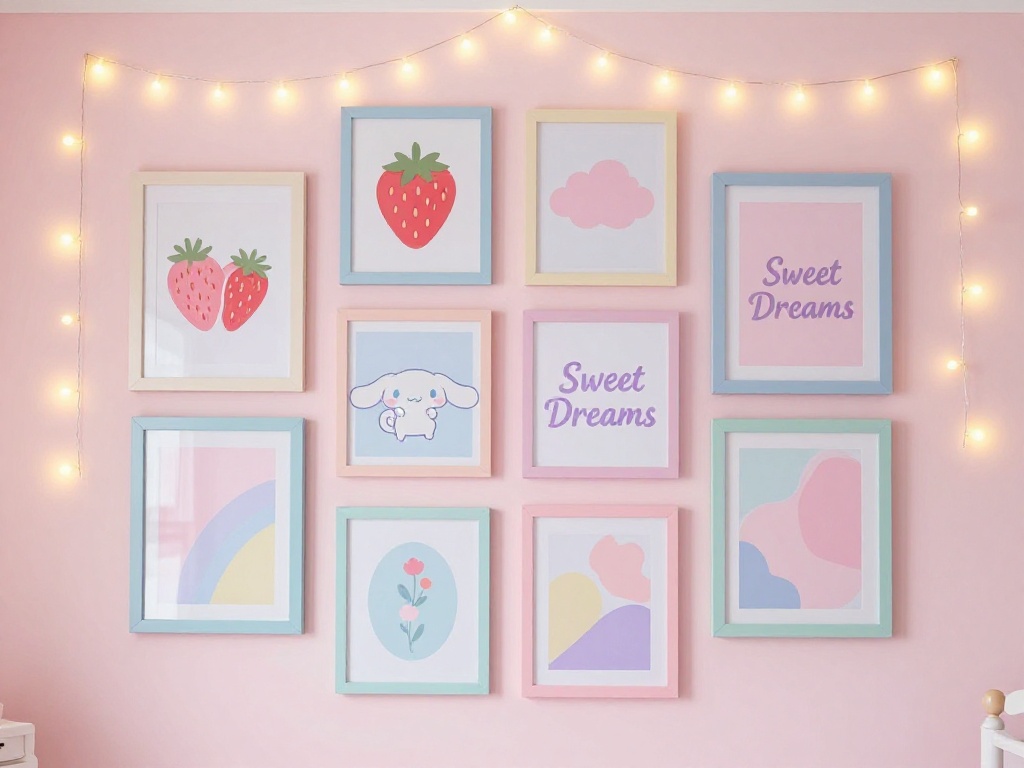
Art prints are the foundation of kawaii wall decor. The most effective prints for a kawaii room fall into a few clear categories:
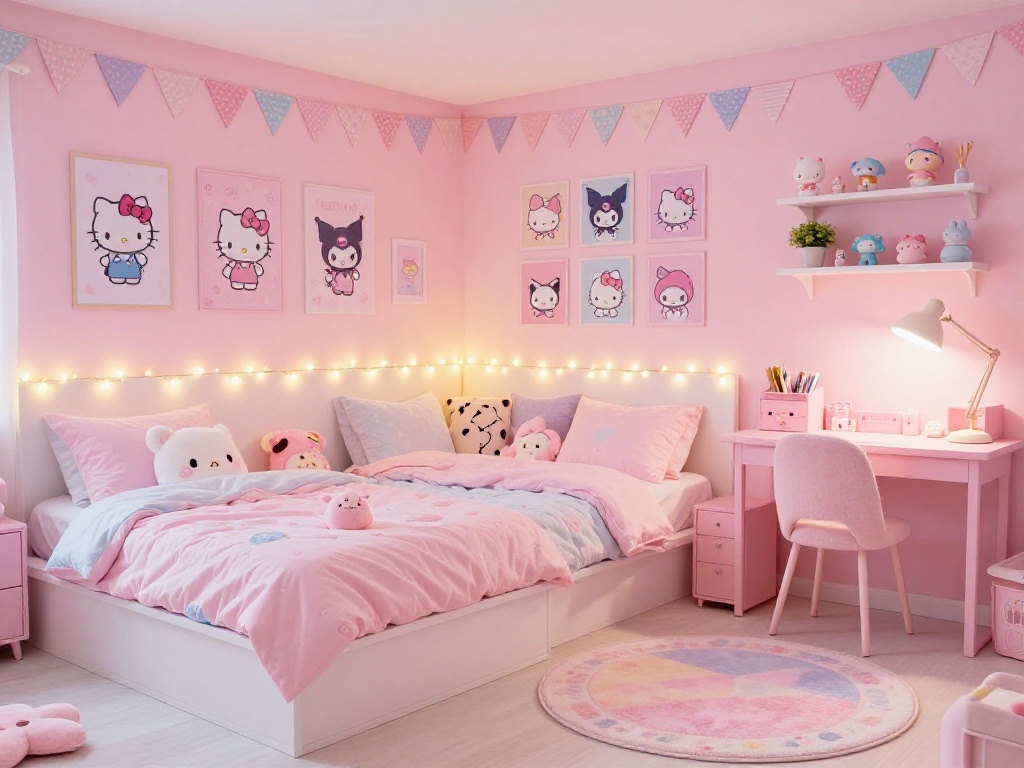
Character prints — Sanrio characters (Hello Kitty, Cinnamoroll, My Melody, Kuromi, Pompompurin), Studio Ghibli characters, or original kawaii illustration art. These are the most immediately recognisable as kawaii and the easiest to find.
Food kawaii prints — cute illustrated strawberries, boba tea cups, sushi, macarons, and ice cream cones in a kawaii chibi style. These are hugely popular in kawaii rooms and add a playful, colourful energy.
Cloud and sky prints — pastel clouds, rainbows, moons, and stars in soft illustrated styles. These are perfect as background prints behind character pieces.
Typography prints — short, sweet phrases in a cute handwritten or rounded font, in pastel colours on a white background.
How to Arrange Wall Art in a Kawaii Room
The gallery wall — group five to nine prints in a mix of sizes, arranged in a loose grid or organic cluster above the bed or desk. Mix character prints, food prints, and simple colour-block frames for variety.
The symmetrical duo — two matching prints in identical frames, one on each side of a mirror or above the headboard. Clean, balanced, and very effective.
The floating shelf display — rather than hanging everything, use floating shelves to display a mix of framed prints leaned against the wall alongside 3D accessories like figurines, small plants, and plushies. This creates a layered, dimensional look.
Other Kawaii Wall Decor Elements
Wall stickers and decals — removable kawaii wall decals (stars, hearts, clouds, character outlines) are perfect for renters and work beautifully as fillers between larger prints.
Washi tape art — sections of wall decorated with washi tape in pastel patterns, used to create frames, borders, or geometric shapes around art prints.
Fairy lights and LED strips — string lights draped above the headboard, framing a gallery wall, or running along a shelf create a warm, glowing halo effect that is central to the kawaii room aesthetic. Shaped fairy lights — stars, hearts, clouds, or cherry blossoms — are particularly popular.
Hanging decorations — paper stars, pom-poms, and fabric banners in pastel colours hung from the ceiling or across the wall add dimension and movement to the room.
Step 4: Kawaii Bedding
Bedding covers the largest surface in a kawaii bedroom and sets the tone for the entire room. Getting the bedding right is one of the most cost-effective single changes you can make.
What to Look For
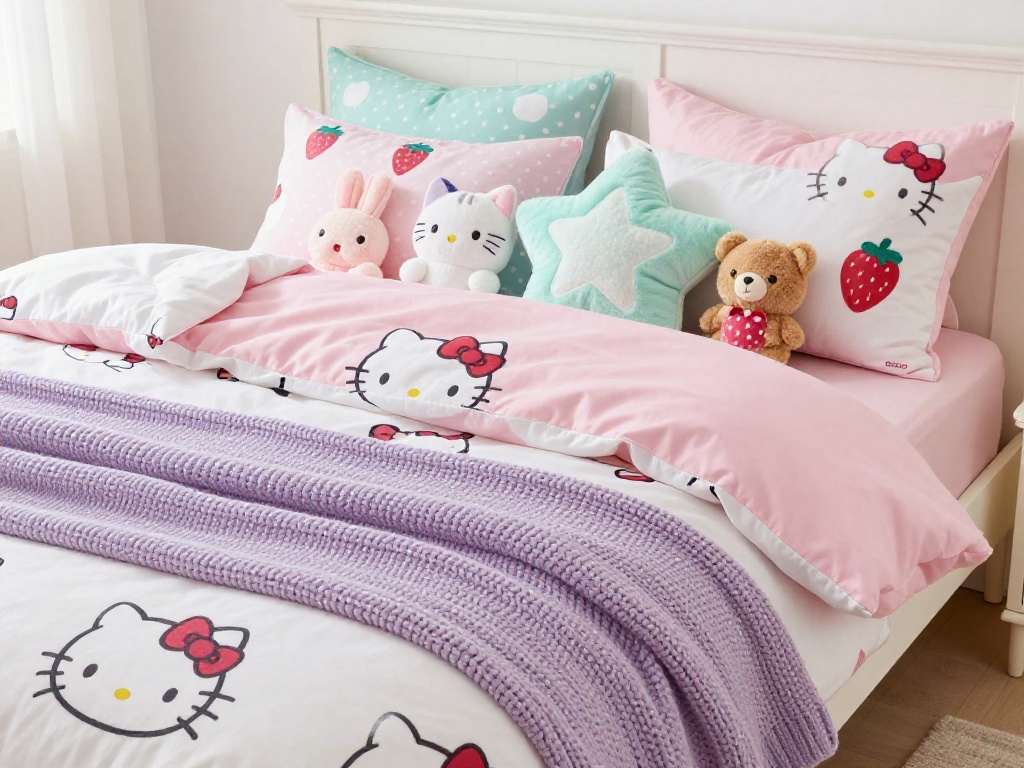
Character prints — Hello Kitty, My Melody, Cinnamoroll, Pompompurin, Kuromi, and Pochacco all have official and licensed bedding ranges. These are the most immediately kawaii bedding choice.
Kawaii food prints — strawberries, cherries, boba tea, cake slices, and other cute food illustrations on a white or pastel background.
Pastel geometric or floral — for a more subtle kawaii bedding option, soft pastel patterns (polka dots, small florals, gingham in pink or mint) work beautifully as a base layer when the room already has strong kawaii character elsewhere.
Layering the Kawaii Bed
The fully layered kawaii bed is one of the most recognisable elements of the aesthetic. Build it in layers:
Base: A fitted sheet in solid white or your main pastel colour. Middle: A duvet or comforter in your chosen kawaii print — this is the hero piece. Top layers: A chunky knit throw or faux fur blanket draped across the foot of the bed in a complementary pastel. Pillows: Mix standard pillowcases in a coordinating print with decorative cushions — at least three to five, in different sizes and shapes. Include at least one character-shaped cushion (a cat, strawberry, or star shape). Plushies: Arrange plush toys across the pillows and headboard. There is no such thing as too many plushies in a kawaii room.
Step 5: Kawaii Lighting
Lighting transforms a kawaii room from daytime cute to nighttime magical. The right lighting setup creates a warm, glowing atmosphere that is central to the aesthetic.
The Kawaii Lighting Stack
Ambient lighting — your main room light. Replace a harsh overhead fluorescent or cool-toned bulb with a warm white LED bulb (2700K colour temperature) immediately makes any room feel warmer and more kawaii. A ceiling light with a white or pastel shade is preferable to an exposed bulb.
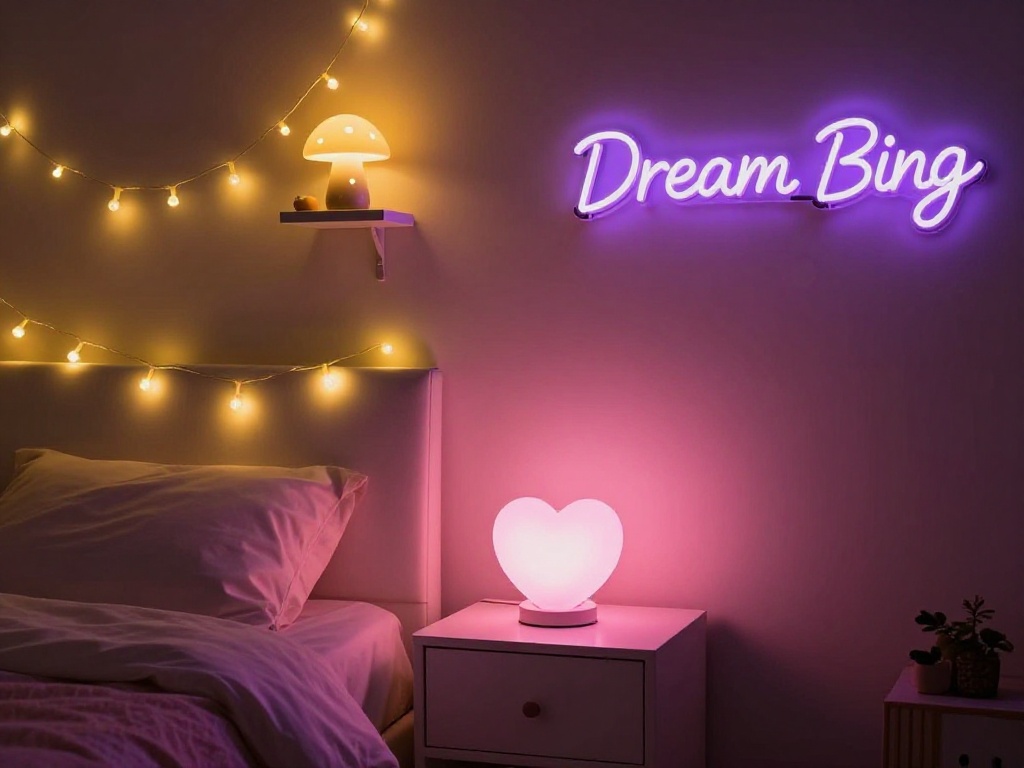
Fairy lights — the most essential kawaii lighting element. Warm white globe fairy lights draped above the headboard, along a shelf, or framing a gallery wall create the signature kawaii room glow. Star-shaped, heart-shaped, and cherry blossom fairy lights add extra cuteness.
Colour-changing LED strip lights — placed behind the bed headboard, under a desk, or along a shelf, LED strips add a soft halo glow that photographs beautifully and creates a cosy atmosphere. Set them to a warm pink or soft purple for the most kawaii effect.
Character and shaped lamps — a kawaii bedside or desk lamp in a character or shape (a heart lamp, a mushroom lamp, a cloud lamp, a bunny lamp) is one of the most effective single accessories for establishing the aesthetic immediately. These lamps are widely available on Amazon and Etsy from £15 upwards.
Neon signs — a small LED neon sign in a kawaii phrase (“Sweet Dreams,” “Be Kind,” a star or heart shape) adds a playful glow and works as both a light source and a wall decoration.
Step 6: Kawaii Desk Decor and Accessories
For students and anyone who works from their kawaii room, the desk setup is a room within a room — and it deserves the same attention as the rest of the space.
The Kawaii Desk Essentials
Desk mat — a large pastel desk mat (pink, mint, or lavender) in a kawaii print anchors the desk setup and protects the surface. Look for designs featuring kawaii food, characters, or pastel patterns.
Desk organiser — a kawaii character-shaped or pastel-coloured desk organiser for pens, scissors, and stationery keeps the desk functional without sacrificing cuteness. Boba-shaped, cat-shaped, and cloud-shaped organisers are all popular choices.
Monitor stand or riser — a white or pastel acrylic monitor stand raises your screen to eye level and creates storage underneath. Look for ones with small organisers or drawers built in.
Kawaii stationery — pastel pens, character-print notebooks, washi tape collections, and kawaii sticky note pads are both functional and decorative. Display them in a kawaii holder on the desk rather than hiding them in a drawer.
Small plants — a tiny succulent, a cactus in a kawaii character pot, or a small potted plant in a pastel ceramic adds life and freshness to the desk without taking up much space.
Step 7: Kawaii Storage and Organisation
One of the most impressive qualities of a truly well-decorated kawaii room is that it manages to look abundant and curated at the same time — never chaotic. The secret is kawaii-specific storage.
Clear acrylic organisers — stackable clear drawers on a dresser or desk display the contents while keeping everything tidy. Fill them with stationery, accessories, or beauty products for a colourful, organised display.
Pastel fabric baskets — large fabric storage baskets in pastel colours hide laundry, spare blankets, or bulky items while adding to the colour palette.
Character storage boxes — small kawaii character-themed boxes for jewellery, hair accessories, or small collectibles sit on shelves as decorative items that happen to be functional.
Floating shelves — three to five floating white shelves arranged in a staggered grid are the most versatile storage and display solution in a kawaii room. Use them for a combination of books (spines facing out in colour order), figurines, small plants, and framed photos.
You can also read 80s Room Aesthetic: How to Nail the Perfect Retro Vibe
Final Touches: Making Your Kawaii Room Feel Complete
The last layer of a kawaii room is the smallest details — the things you notice on second and third look that make the room feel genuinely personal and complete.
A kawaii rug — a large, plush rug in a pastel colour or kawaii print anchors the room and adds warmth underfoot. Round rugs are particularly popular in kawaii rooms for their soft, non-angular shape.
Bunting and garlands — paper or fabric bunting in pastel colours or kawaii character prints strung above the bed or across a window adds a festive, celebratory energy.
A plushie collection — beyond the bed, plushies on shelves, on the desk, and in fabric baskets throughout the room create the sense of abundance that defines the kawaii aesthetic. There are no rules about which characters or animals — only that they make you smile.
Scent — a kawaii room should smell as good as it looks. A wax melt burner or reed diffuser in a sweet, gentle scent (vanilla, cherry blossom, or bubblegum) in a kawaii-shaped ceramic completes the sensory experience.
A polaroid wall — printed photographs of friends, travel memories, and kawaii moments pinned or strung on a wall with pastel clips adds a deeply personal, irreplaceable element to the room that no amount of shopping can replicate.
Final Thoughts
A kawaii room is one of the most personal and joyful spaces you can create. It is not about following a strict set of rules — it is about choosing the things that make you genuinely happy and surrounding yourself with them in a thoughtful, layered way.
Start with colour. Build the furniture around it. Layer in the bedding, the lighting, the wall art, and the accessories one step at a time. And do not rush the plushie collection — that part takes years, and that is exactly the point.
Your kawaii room should grow with you, reflect you, and make you smile every single time you walk through the door.
That is what kawaii is for.