Introduction
Every gothic room begins and ends with its furniture.
The wall colour can be changed in a weekend. The accessories can be swapped out on a whim. The lighting can be upgraded gradually. But the furniture is the architecture of the room — the bones around which everything else is built. Get the furniture right and the gothic aesthetic falls into place naturally. Get it wrong and no amount of candles, skulls, or velvet throws will fix the underlying problem.
Gothic furniture is one of the most specific and most historically rich furniture categories available. It draws from over a thousand years of design tradition — from the carved oak of medieval great halls through the elaborate mahogany of Victorian parlours to the sleek, dark drama of contemporary gothic interiors. Each era has contributed specific pieces, specific silhouettes, and specific materials that together form the vocabulary of gothic furniture design.
This guide covers every furniture category, every room, and every budget level — from genuine antique finds to affordable modern alternatives that capture the gothic aesthetic without the antique price tag. Whether you are furnishing a gothic bedroom from scratch, adding one statement piece to an existing living room, or building out a complete gothic home over time, this is the reference guide you need.
🔗 Need the bigger picture first? Read our complete goth home decorating guide before diving into specific furniture categories and Gothic Home Decor Ideas: How to Create a Dark, Elegant Home
What Makes Furniture Gothic? The Core Principles
Before going category by category, understanding the design language of gothic furniture makes every shopping decision more straightforward.
Dark Wood and Dark Finishes
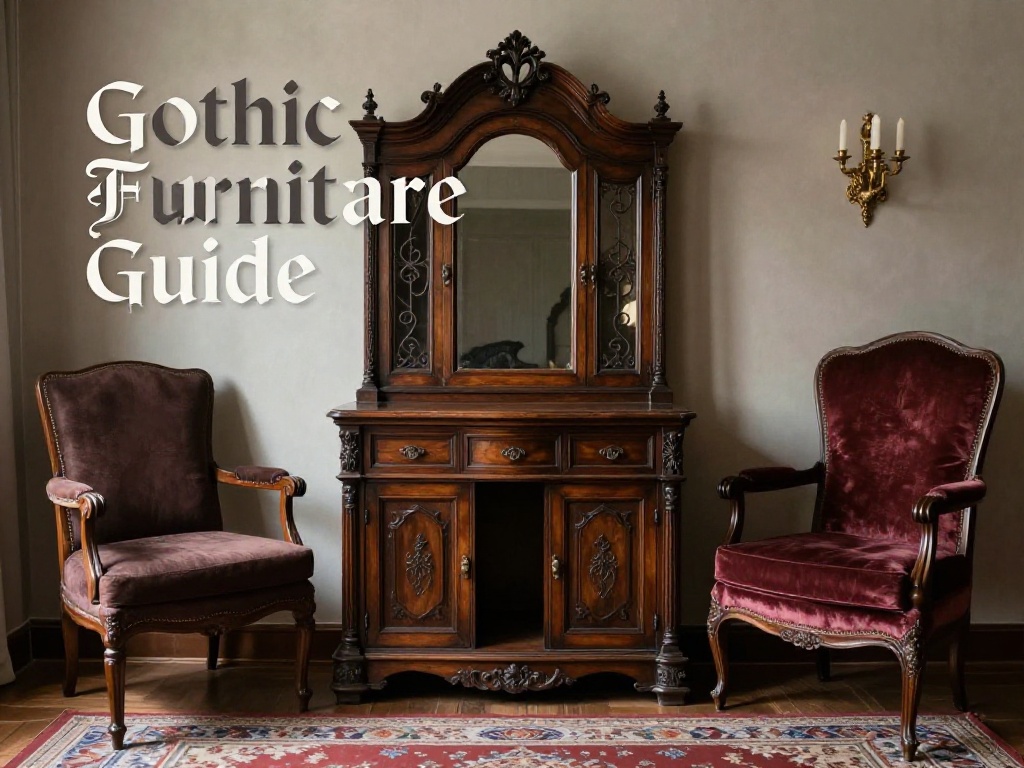
Dark hardwoods such as mahogany and walnut are the classic materials for gothic furniture — their deep, warm tones reference the furniture of Victorian manor houses and medieval halls directly. Beyond natural dark wood, painted furniture in matte black, deep charcoal, or forest green achieves the gothic quality in more affordable pieces.
The finish matters as much as the colour. Matte and satin finishes read as gothic — they absorb light rather than reflecting it and create the non-reflective quality of aged wood. High-gloss finishes belong to other aesthetics. Distressed and aged finishes — intentional marks, slight imperfections, visible grain — are more gothic than pristine, factory-new surfaces.
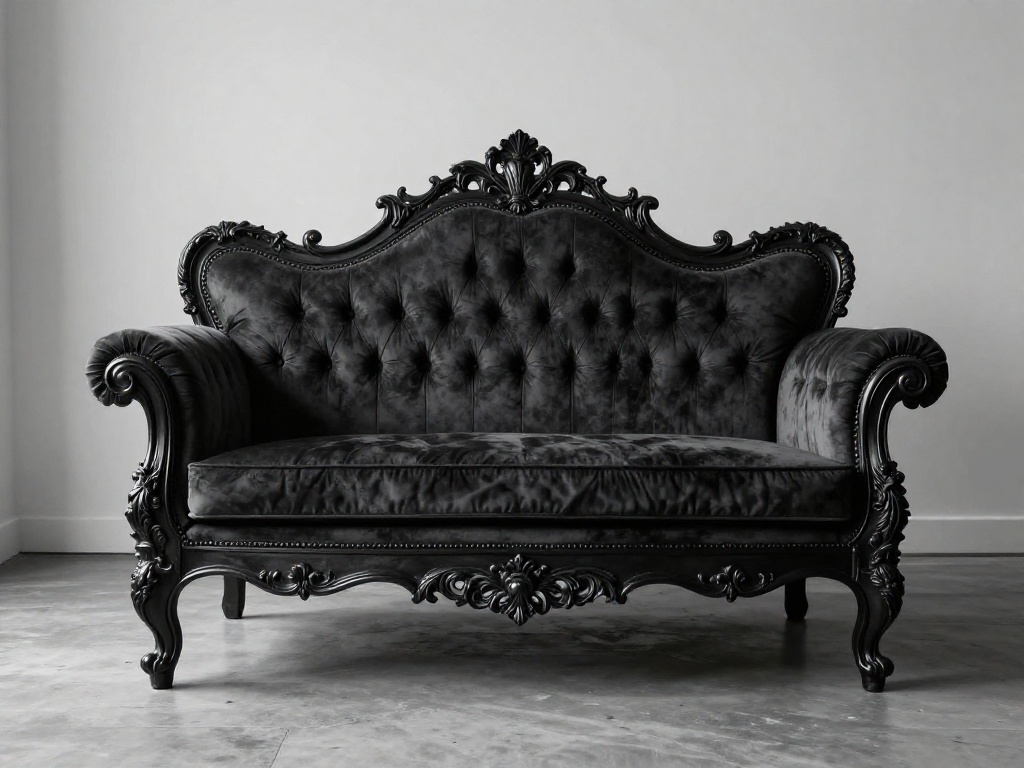
Ornate Details and Carved Elements
Gothic furniture is never plain. Carved details on headboards and bed frames, ornate hardware on dressers and wardrobes, turned legs on tables and chairs, and decorative moulding on cabinet doors and drawer fronts all contribute to the period-appropriate quality that defines the aesthetic.
The level of ornamentation varies by sub-style — Victorian gothic is the most elaborately ornamented, modern gothic the most restrained — but even the cleanest gothic furniture piece has at least one detail that references the decorative tradition of the aesthetic.
Substantial Proportions
Gothic furniture is not delicate or minimal. It has weight and presence — it occupies space deliberately and commands attention. A gothic bed frame should dominate its wall. A gothic dining table should fill its room. A gothic wardrobe should feel like an architectural element rather than a storage box.
This does not mean every piece needs to be enormous — a small gothic side table can be perfectly proportioned — but it should feel solid and intentional rather than lightweight or temporary.
You can also use our Free Renovation Tool for you styling.
Historical Silhouettes
The silhouettes most associated with gothic furniture reference specific historical design periods:
Gothic arch shapes — pointed arches on headboards, cabinet doors, mirror frames, and decorative elements. References medieval cathedral architecture directly.
Cabriole and turned legs — curved or turned wooden legs on chairs, tables, and case furniture. References 18th and 19th century furniture design.
High-backed forms — tall headboards, high-backed dining chairs, and tall case furniture. Creates the sense of enclosure and throne-like authority that gothic design values.
Four-poster and canopy structures — beds and occasionally chairs with vertical posts and overhead structures. Creates an enclosed, private quality within the larger room.
Gothic Bedroom Furniture
Bed Frames
The bed is the most important piece of gothic bedroom furniture and the one worth investing most heavily in.
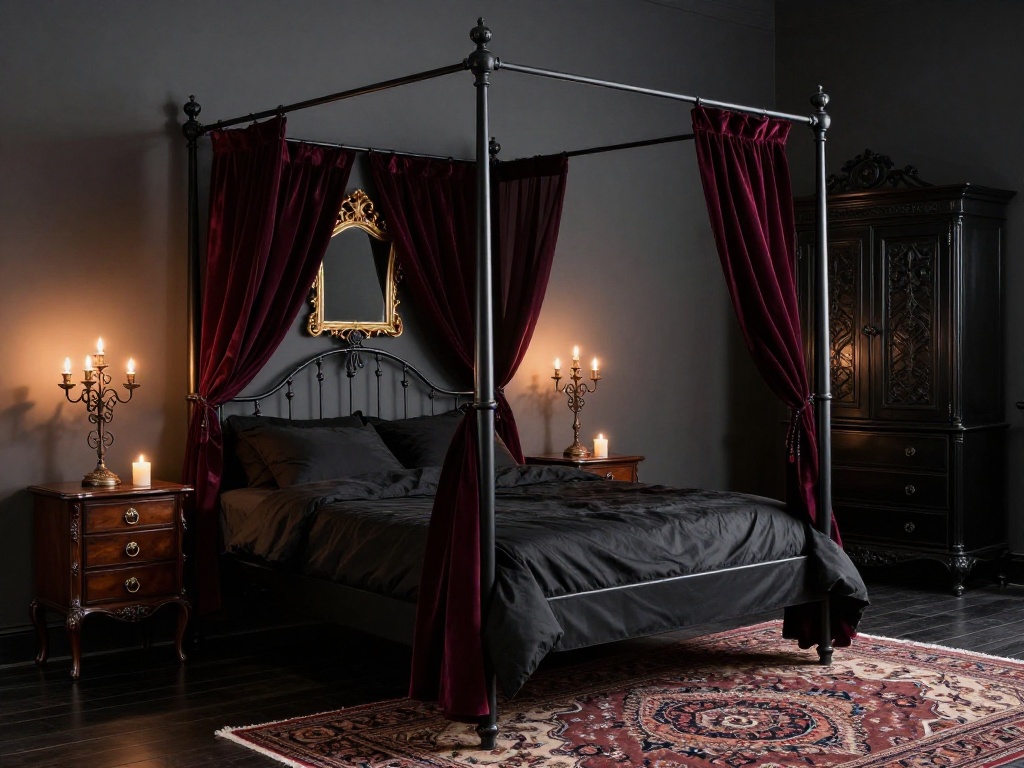
The four-poster canopy bed is the most dramatically gothic furniture choice available. A four-poster bed with heavy drapes is a classic choice, creating a sense of drama and enclosure. Look for frames in dark walnut, mahogany-effect wood, or black metal. The canopy can be dressed with velvet, sheer fabric, or left bare depending on your sub-style. Black metal four-poster frames are the most affordable option (£150–£400) and work particularly well in modern gothic and industrial gothic rooms. Dark wood carved frames are more expensive (£400–£1,200) but create the most historically authentic atmosphere.
The upholstered platform bed in dark velvet — a low platform bed with a tall, deeply tufted headboard in black, burgundy, or forest green velvet. This is the most accessible and most versatile gothic bed choice — it works across all sub-styles, is available at most price points, and is genuinely comfortable as an everyday sleeping surface. A black tufted bed creates a gothic feel that’s dramatic without being overwhelming.
The gothic arch headboard — a headboard with a pointed gothic arch top in black metal or dark wood. These are more affordable than full four-poster frames (£80–£250) and create a strong gothic statement while maintaining a relatively contemporary overall silhouette.
The carved dark wood frame — an ornate bed frame with carved headboard details in dark mahogany or walnut. These are the most period-authentic gothic bedroom furniture pieces. New versions are available from specialist retailers; genuine antique versions appear regularly on eBay and at auction at surprisingly affordable prices.
Price ranges:
- Gothic arch headboard: £80–£250
- Platform bed with velvet headboard: £200–£600
- Black metal four-poster: £150–£400
- Dark wood carved four-poster: £400–£1,500+
- Genuine antique carved bed (eBay/auction): £100–£500
Gothic Bedroom Storage
The dark wood wardrobe or armoire — a freestanding wardrobe with carved or panelled doors in dark walnut, mahogany, or painted black. The armoire format (with full-length doors and a slightly ornate silhouette) is more gothic than standard sliding door wardrobes. Genuine Victorian wardrobes appear regularly second-hand at very reasonable prices; modern reproductions are available from several furniture retailers.
The gothic dresser — a chest of drawers in dark wood or painted black with ornate brass or iron hardware. The hardware makes as much difference as the base furniture here — upgrading the handles and drawer pulls on an otherwise plain dresser is the fastest route to gothic bedroom storage.
The bedside table — a small dark wood or black side table with a carved leg detail, a single drawer, and enough surface space for a lamp, a book, and a candle. Avoid flat-pack MDF nightstands in any form — the material reads as cheap regardless of how it is painted.
You can also read Cozy Farmhouse Bedroom Ideas
Gothic Living Room Furniture
Sofas and Seating
The Chesterfield sofa is the most historically gothic upholstered furniture form — its deep button tufting, rolled arms, and substantial proportions reference Victorian furniture traditions directly. In black leather it is dramatic and slightly dangerous. In deep burgundy or forest green velvet it is rich and romantic. In dark grey chenille it is the most liveable everyday version.
The velvet sofa in a jewel tone — a contemporary sofa form in a period-appropriate fabric. Deep emerald, midnight blue, or rich plum velvet on a sofa with dark wood or black metal legs creates a gothic living room centrepiece that is also genuinely comfortable.
The wingback chair — a high-backed armchair with wings extending from the back alongside the head, traditionally upholstered in leather or rich fabric. The wingback chair has an inherently throne-like quality that makes it one of the most gothic seating choices available. A pair of wingback chairs in dark leather or velvet flanking a fireplace creates one of the most classically gothic living room compositions.
The chaise longue — a reclining upholstered day-bed in velvet or silk, with a carved or cabriole-legged frame. A chaise longue adds a touch of Victorian elegance and creates a specific quality of romantic leisure that other seating forms cannot replicate.
You can also read Dark Elegant Bedroom Ideas That Feel Cozy and Romantic
Coffee and Side Tables
A dark wood coffee table with carved details — ornate carved legs, dark walnut or mahogany surface, and substantial proportions. Antique versions are available on eBay at surprisingly low prices; modern reproductions from retailers like Wayfair are more affordable still.
A glass-topped table with wrought iron base — the transparency of the glass contrasts effectively with the dark iron base and lets a decorative rug beneath remain visible.
A marble-topped side table — a small round side table with a dark marble or stone top and a black or brass metal base. These are widely available on Amazon and from homeware retailers at very accessible price points.
Gothic Display and Storage Furniture
Floor-to-ceiling bookshelves in dark wood — the library aesthetic is central to gothic design and bookshelves are the furniture piece that most directly creates it. Dark wood shelves filled with dark-spined books, displayed objects, candles, and meaningful accessories create the intellectual depth that defines the gothic home. IKEA’s BILLY range in black-brown, fitted with panel doors from the OXBERG range, creates an affordable dark wood bookshelf system.
A dark wood sideboard or credenza — a low, wide storage piece in dark wood with ornate hardware. Used in dining rooms and living rooms as a surface for displaying candles, flowers, decanters, and meaningful objects. Antique versions — particularly Victorian mahogany sideboards — are one of the best-value gothic furniture purchases available, appearing regularly at auction and on eBay at well below their replacement cost.
A drinks cabinet or cocktail cabinet — a freestanding drinks cabinet in dark wood with glass doors, showing a collection of decanters and glasses inside. Both functional and deeply gothic in its reference to Victorian entertaining culture.
You can also read Eighties Home Décor: The Complete Room-by-Room Style Guide
Gothic Dining Room Furniture
The Dining Table
A dark wood refectory table — a long, solid table in dark oak or walnut with simple turned or trestle legs. This form references the great hall tables of medieval monasteries and manor houses and creates the most dramatically gothic dining room atmosphere. These are available new from specialist furniture makers and are increasingly found second-hand as the fashion for dark dining furniture grows.
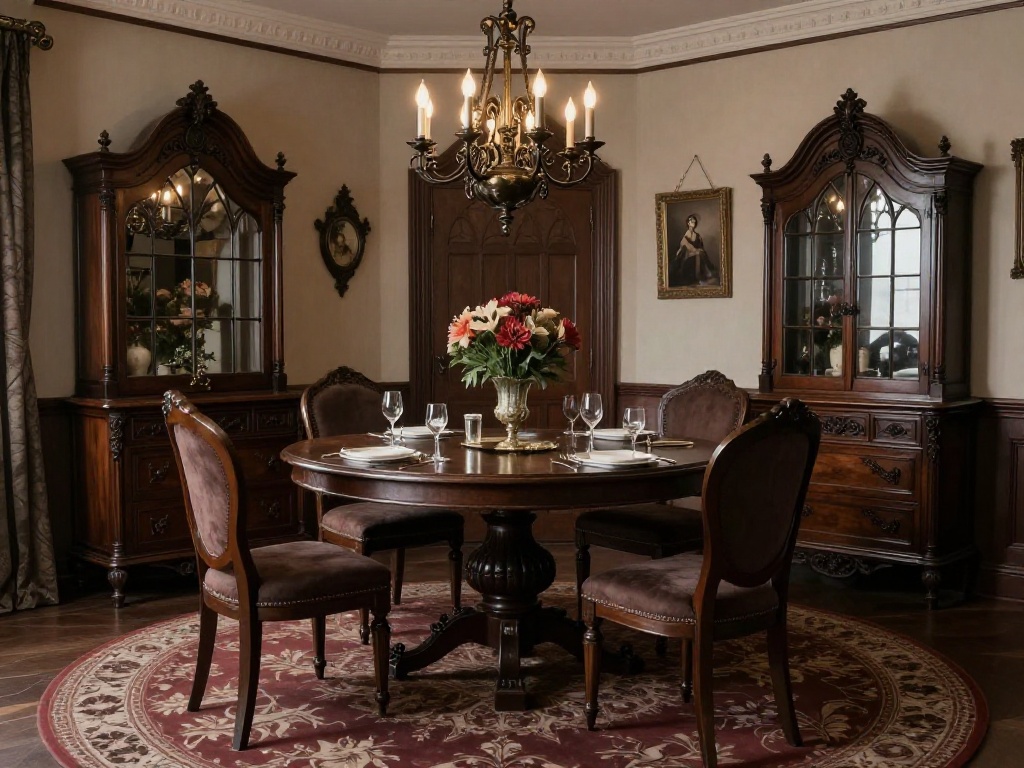
A round dark wood pedestal table — for smaller dining rooms, a round table on a central pedestal base in dark walnut or mahogany creates an intimate gothic atmosphere. The pedestal base adds an ornate quality that four-legged tables lack.
Gothic Dining Chairs
High-backed carved wood chairs with velvet upholstered seats in deep jewel tones create a gothic throne-like dining atmosphere. These are the most period-authentic gothic dining chair choice and are available from specialist furniture retailers and occasionally from antique sources.
Velvet dining chairs without carved wood — upholstered dining chairs in deep jewel-toned velvet with dark wood or black metal frames. More contemporary in silhouette but equally rich in material quality. Available from Wayfair, Amazon, and IKEA (with velvet seat pad additions).
Black metal dining chairs with leather seats — for industrial and modern gothic dining rooms, black powder-coated metal frames with dark leather or faux leather seats create a clean, architectural gothic quality.
You can also read Gothic Bathroom Decor: The Complete Guide to Dark, Dramatic Elegance
Gothic Home Office Furniture
The home office or study is the room in the gothic home most naturally suited to the aesthetic — because the gothic tradition values intellectual life, the accumulation of knowledge, and the quality of focused thought.
The Gothic Desk
A dark wood writing desk — ideally with a leather or felt top surface, drawers on at least one side, and turned or carved leg details. This is the desk of a Victorian scholar or a gothic novelist and it sets the intellectual tone of the study immediately. Antique versions — particularly Victorian and Edwardian writing desks — are widely available second-hand at very reasonable prices.
A secretary desk or bureau — a fold-down writing surface that opens from a cabinet, with pigeonholes and small drawers inside. When closed it reads as an ornate cabinet; when open it becomes a fully functional writing desk. The most gothic study furniture piece available for smaller spaces.
A standing desk in dark wood — for contemporary gothic home offices, a standing desk with a dark walnut or ebony surface and black metal frame maintains the gothic colour palette within a functional modern format.
You can also read Minimalist Room Ideas That Feel Cozy, Calm & Beautiful in 2026
The Gothic Desk Chair
A leather executive chair in dark brown or black — a traditional leather desk chair with a high back, padded arms, and a swivel base. The leather quality ages beautifully and creates an increasingly gothic patina over years of use. Second-hand versions from office clearances are often excellent quality at very low prices.
A wooden chair with a cushioned seat — a wooden desk chair in dark oak or walnut with a cushioned seat in velvet or leather. More period-appropriate than a modern executive chair but less ergonomic for long working sessions.
You can also read Guest Bedroom Ideas
Gothic Furniture: Materials Guide
Understanding the specific materials of gothic furniture helps identify genuine quality pieces and distinguish them from poor-quality reproductions.
Wood
Genuine dark hardwood — mahogany, walnut, and ebony are the most gothic wood choices. Their natural colour, grain, and weight create a quality that no MDF or particle board alternative can replicate. Source genuine hardwood pieces from antique dealers, auction houses, and eBay rather than from flat-pack furniture retailers.
Painted wood — solid wood painted in matte black, dark forest green, or charcoal. The paint finish is only as good as the underlying material — solid wood holds paint differently from MDF and the result is noticeably better quality.
MDF and particle board — the most affordable but least authentic gothic furniture material. Acceptable for painted pieces at a distance but lacking the weight, grain, and aging quality of genuine wood. Use for starter pieces while saving for genuine wood replacements.
Metals
Wrought iron — the most gothic metal. Heavy, dark, and slightly rough in texture, with a hand-forged quality that mass-produced steel lacks. Genuine wrought iron furniture is increasingly rare; cast iron and steel with a wrought iron finish are the practical alternatives.
Antique brass — warm, aged, and deeply period-appropriate. Appears primarily in hardware (handles, drawer pulls, candlestick holders) rather than as a structural material. The aged quality of genuine antique brass is more gothic than polished new brass — look for pieces with natural patina rather than bright finish.
Matte black steel — the most contemporary gothic metal choice. Clean, consistent, and widely available in modern furniture. Less historically authentic than wrought iron but more accessible and more versatile.
Fabrics
Velvet — velvet upholstery adds a touch of opulence and comfort and is the defining fabric of gothic upholstered furniture. Deep jewel-toned velvet on sofas, chairs, and headboards creates the richest gothic furniture aesthetic. Look for high pile velvet rather than crushed or thin velvet for the most authentic quality.
Leather and faux leather — dark brown and black leather on sofas, chairs, and desk chairs ages beautifully and creates an increasingly gothic quality over time. The cracking and patina of aged leather is more gothic than pristine new leather.
Brocade and jacquard — patterned fabrics with raised designs in gold, silver, or contrasting colours on a dark base. Used on cushions, throws, and occasionally as upholstery on accent chairs and dining chairs.
You can also use our Free Styling and Decoration Tool for Decor ideas.
Where to Source Gothic Furniture
New Gothic Furniture
Wayfair — the single most comprehensive online source for new gothic furniture. Wide selection of dark wood furniture, velvet upholstered pieces, gothic bed frames, and ornate tables at mid-range prices. Search terms: “dark wood bed frame,” “velvet Chesterfield sofa,” “gothic dining chair,” “dark wood sideboard.”
Amazon — good for gothic bed frames, upholstered headboards, dark furniture pieces, and accessories. Quality varies widely so read reviews carefully. Best for: bed frames under £300, side tables, display shelves, and smaller furniture pieces.
IKEA — excellent base furniture in dark finishes that can be transformed with hardware upgrades and styling. Best gothically compatible ranges: HEMNES (dark stain), KALLAX (black-brown), PAX wardrobe in black-brown.
Specialist gothic furniture retailers — several UK and US retailers specialise in gothic, Victorian, and dark furniture. Search “gothic furniture UK” or “Victorian furniture retailer” for current options. These retailers carry pieces unavailable from mainstream sources at higher price points.
Second-Hand Gothic Furniture
eBay — the single best source for genuine antique gothic furniture at accessible prices. Victorian homes were built and designed to show off wealth with grand fireplaces and ornate mouldings — the furniture from that era appears regularly on eBay at well below retail cost for reproductions. Search: “Victorian mahogany wardrobe,” “antique chesterfield sofa,” “carved oak bed frame,” “mahogany sideboard.”
Local auction houses — check invaluable.com and the-saleroom.com for local auction listings. Victorian and Edwardian furniture frequently appears in house clearance auctions at very low starting prices. Attending in person is more effective than bidding online.
Facebook Marketplace and Gumtree — for larger pieces that are expensive to ship, local second-hand platforms often have genuine antique furniture at very low prices from house clearances.
Antique dealers and markets — higher prices than auctions but curated quality and the ability to inspect pieces in person. Particularly good for smaller gothic furniture pieces: side tables, chairs, mirrors, and decorative cabinets.
Gothic Furniture on a Budget: Priority Order
If you are building a gothic home gradually and need to prioritise your furniture investments, here is the order that delivers the highest impact per pound spent:
1. The bed frame — the most visible piece of furniture in the most personal room. A gothic bed frame transforms the bedroom more completely than any other single purchase.
2. The sofa — the centrepiece of the living room and the piece your guests notice first. A deep jewel-toned velvet sofa is the single most impactful gothic living room purchase.
3. Bookshelves — dark wood bookshelves filled with books create the gothic intellectual atmosphere at relatively low cost, particularly if sourced second-hand.
4. Hardware upgrades — replacing the handles and drawer pulls on existing furniture with antique brass or black iron alternatives costs very little and makes an immediate difference across every room.
5. A statement chair — a wingback chair, a leather armchair, or a velvet accent chair in a corner of the living room or bedroom adds gothic character without requiring a complete furniture replacement.
Final Thoughts
Gothic furniture is the investment that pays dividends across years and decades rather than seasons. A genuine Victorian mahogany wardrobe, a Chesterfield sofa in black leather, a carved four-poster bed — these are pieces that do not date, do not depreciate, and become more gothic rather than less so with every passing year.
Start with the bed. It is the piece you spend the most time near and the one with the highest single impact on the atmosphere of your home. Then the sofa. Then the bookshelves. Add hardware upgrades to everything else in the meantime — they cost almost nothing and make a visible difference immediately.
The gothic home is built slowly, deliberately, and with genuine attention to the quality of every piece. That is what makes it so different from every other aesthetic — and so much more rewarding to live in.
🔗 See how your gothic furniture works in each room — read our gothic living room guide, gothic bedroom guide, gothic kitchen and dining guide, and the complete goth home decorating guide.