Introduction
The living room is the room that says the most about you before you have said a single word.
It is the first room guests enter. The room where you spend the most waking hours. The room that sets the tone for everything else in the home. And if you are drawn to dark, dramatic, romantic interiors — if you find beauty in shadows, in velvet, in candlelight, in the rich depth of jewel tones and ornate details — then the gothic living room is not just an aesthetic choice. It is a statement of identity.
Gothic living room decor is having a significant revival in 2025, driven by a growing appetite for interiors that have genuine personality and historical depth — a direct reaction to years of beige minimalism and all-white Scandi spaces. The modern gothic living room is not about Halloween props or cartoonish darkness. It is about the sophisticated, layered, deeply atmospheric quality that comes from combining the right colours, textures, furniture, and lighting into something that feels genuinely compelling to be inside.
This guide covers every element of gothic living room design — from colour palette and furniture through to wall decor, lighting, accessories, and the specific details that separate a room that merely looks dark from one that feels genuinely gothic.
🔗 Building a fully gothic home? Read our complete goth home decorating guide for the full picture across every room.
What Makes a Living Room Feel Gothic?
Before getting into specific elements, it helps to understand the underlying principles that make a space feel authentically gothic rather than simply dark.
Drama through contrast. Gothic rooms are not uniformly dark — they use contrast to create drama. A deep burgundy sofa against a charcoal wall. A gold chandelier catching candlelight in a dark room. A cream marble fireplace surround against near-black walls. The interplay between light and shadow, between ornate and restrained, between warm and cool, is what creates gothic atmosphere.
Historical depth. Gothic design draws from a thousand years of architectural and decorative tradition — medieval cathedrals, Victorian manor houses, Baroque excess, and the romantic revival of the 19th century. A gothic living room feels like it has existed for a long time, or could have. Every piece should feel like it has history, even if it is newly bought.
Texture as atmosphere. Gothic rooms are tactile — velvet, brocade, leather, stone, dark wood, and wrought iron all contribute to the physical quality of the space. A room that looks gothic but feels smooth and generic fails the test.
Light used deliberately. Gothic rooms control light rather than maximise it. Heavy curtains, layered lamplight, candles, and dramatic chandeliers all create pools of warm light in a predominantly dark space. The effect is intimate rather than oppressive.
Gothic Living Room Sub-Styles
Just as with gothic bedroom decor, the gothic living room aesthetic encompasses several distinct interpretations. Choosing one gives your room a coherent identity.
Victorian Gothic
The most theatrical and historically grounded interpretation. Carved dark wood furniture, deep crimson and black colour palette, heavy brocade curtains with pelmets, ornate gilt-framed mirrors, and the general atmosphere of a Victorian parlour in a grand manor house. Feels like: a Bram Stoker novel, a pre-Raphaelite painting, a country house with secrets.
Modern Gothic
The most accessible and contemporary version — taking the colour palette, texture choices, and dramatic lighting of classical gothic design and applying them with a cleaner, more minimal hand. Dark walls, statement furniture in bold shapes, carefully chosen accessories rather than maximalist accumulation. Feels like: a high-end boutique hotel, an editorial interior shoot, gothic sensibility filtered through contemporary design.
Romantic Gothic
The most emotionally warm interpretation, sitting at the intersection of gothic and romantic aesthetics. Deep jewel tones, velvet everywhere, candlelight, dried florals, and a quality of passionate melancholy. This sub-style overlaps with the coquette aesthetic in its love of rich textures and romantic excess, but grounds it in darker, more shadowed territory.
Industrial Gothic
The most masculine and architecturally focused version, drawing from industrial design as much as gothic tradition. Exposed brick, concrete, black ironwork, Edison bulb lighting, and a palette of black, grey, and rust. More raw and less ornate than Victorian gothic but equally atmospheric.
You can also read Dark Elegant Bedroom Ideas That Feel Cozy and Romantic
Gothic Living Room Colour Palette
Colour is the foundation of gothic living room design. The right palette sets the entire mood before a single piece of furniture is in place.
The Classic Gothic Palette — Black, Burgundy, and Gold
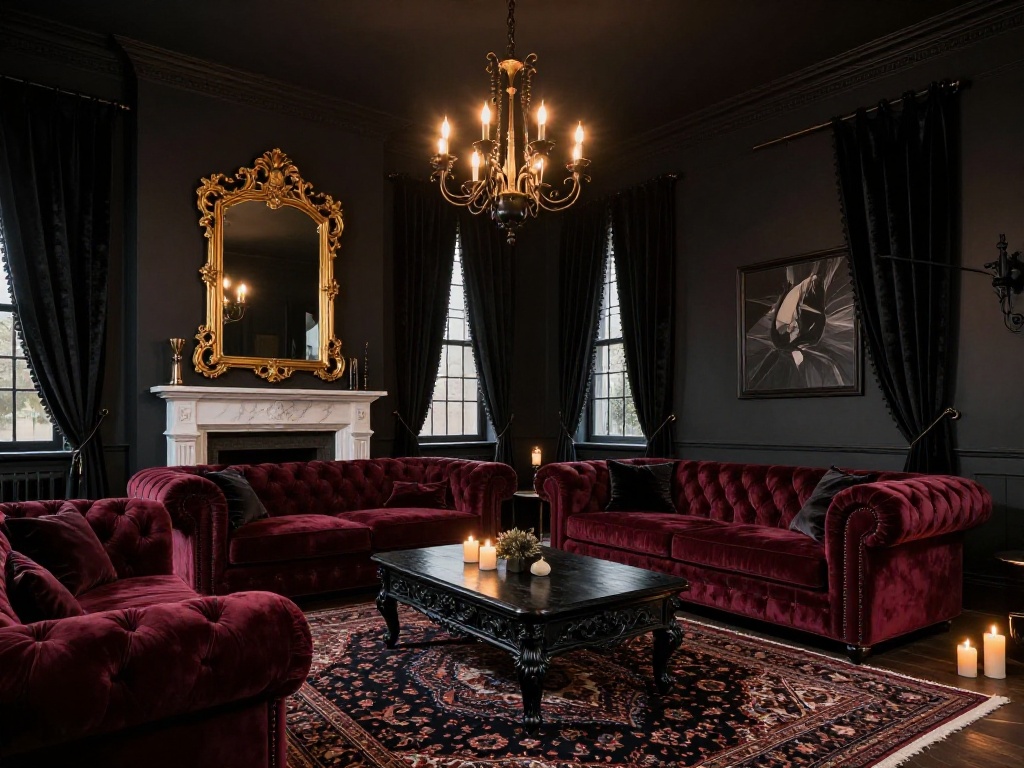
The most immediately recognisable gothic colour combination. Near-black or deep charcoal walls provide the dramatic backdrop. Deep burgundy appears in upholstery, curtains, and soft furnishings. Gold — warm, aged antique gold rather than cold modern metallics — appears in light fittings, mirror frames, picture frames, and hardware. The result is rich, theatrical, and undeniably gothic.
The Jewel Tone Gothic Palette — Emerald, Sapphire, and Deep Plum
A more colourful interpretation that moves beyond black as the dominant tone. Deep emerald green walls with black and gold accents, or midnight navy with burgundy and brass, or deep plum with forest green and copper. These palettes feel sophisticated and less obviously “gothic” at first glance but carry the same depth and drama.
The Monochrome Gothic Palette — Black, White, and Marble
The most modern and minimal gothic palette. All-black or very dark grey walls with white architectural details — cornicing, skirting boards, fireplace surround. White marble surfaces, black ironwork, and silver or chrome metallic accents. This palette achieves gothic drama through contrast and restraint rather than richness and accumulation.
You can also read Minimalist Room Ideas That Feel Cozy, Calm & Beautiful in 2026
The Warm Gothic Palette — Walnut, Burgundy, and Amber
The most liveable gothic palette for everyday use. Deep warm brown walls (walnut tones rather than black), burgundy and forest green in soft furnishings, amber and gold in lighting and accessories. This palette feels genuinely warm and cosy while maintaining the depth and seriousness that gothic design requires.
Gothic Living Room Furniture
The furniture in a gothic living room sets the architectural and material tone of the space. Every piece should feel substantial, period-appropriate, and chosen for its contribution to the overall atmosphere.
The Sofa
The sofa is the centrepiece of any living room and in a gothic space it carries the most visual weight.
The Chesterfield sofa is the most quintessentially gothic upholstered furniture choice. Its deep button-tufted upholstery, rolled arms, and substantial proportions reference Victorian furniture directly and work in every gothic sub-style. In black leather for a dramatic, almost dangerous quality. In deep burgundy velvet for richness and romance. In dark forest green for a more unusual, slightly moody sophistication.
A velvet sofa in a jewel tone — a deep emerald, sapphire, or plum velvet sofa with carved or turned wooden legs in walnut or black is a strong gothic statement that is also genuinely comfortable and practical for everyday living.
A dark upholstered sectional — for larger gothic living rooms or those who prefer modern proportions, a dark grey or black upholstered sectional with clean lines but dark colour works within the modern gothic palette.
You can also read 80s Room Aesthetic Ideas
Coffee Table and Side Tables
A carved dark wood coffee table with ornate legs and surface detailing — the baroque or gothic-revival furniture style referenced here is widely available in antique shops and from specialist furniture retailers.
A glass-topped coffee table with a dark metal or wrought iron base — the transparency of the glass creates an interesting contrast with the dark base and lets the rug beneath remain visible, adding depth to the room.
Marble-topped side tables — small round side tables with a marble top and brass or black metal base add the geological, ancient quality that gothic design values.
Shelving and Display Units
Floor-to-ceiling dark wood bookshelves — filled with dark-spined books, skulls, candles, ceramic ornaments, and meaningful objects — create the library-within-a-living-room quality that is central to the gothic aesthetic. A gothic living room that also functions as a library is one of the most richly realised interpretations of the style.
The Fireplace
If your living room has a fireplace, it is the automatic focal point of a gothic space. Lean into it completely — a dark marble or slate surround, a carved wooden mantelpiece in dark wood or painted black, and the mantel itself used as a display surface for candelabras, a large mirror, dried florals, and meaningful objects.
If you do not have a working fireplace, a decorative electric fireplace in a gothic surround achieves much of the same visual effect.
Gothic Living Room Wall Decor
The walls of a gothic living room are where the aesthetic communicates most directly.
Dark Walls — The Non-Negotiable Starting Point
Dark walls are the foundation of gothic living room design. This is the single most impactful change you can make. The specific colour matters less than the depth — forest green, deep burgundy, near-black charcoal, and midnight navy all work equally well depending on your chosen sub-style.
For renters or those not ready to commit to dark walls on all four sides: a single dark feature wall behind the sofa or fireplace achieves most of the visual impact while keeping the room more accessible. Dark wallpaper — particularly patterns with gothic architectural motifs, damask prints, or moody botanical designs — on a single wall is another effective option.
The Mirror Wall
A large ornate mirror — or a grouping of three to five antique-style mirrors in ornate frames of different sizes — on one wall is one of the most effective gothic living room wall treatments. Mirrors serve three purposes simultaneously: they reflect light (critical in a dark room), they add the sense of depth and mystery that gothic design values, and they provide visual interest without adding colour that might disrupt the palette.
Art and Wall Decor
Dark oil painting reproductions — richly coloured landscape paintings, portrait paintings in the old master style, and still life paintings with candles, skulls, and dark botanicals in heavy gold or dark wood frames.
Gothic architectural prints — detailed engravings or illustrations of gothic cathedrals, arched windows, medieval stonework, or Victorian architectural drawings in antique frames.
Taxidermy and natural history displays — antlers mounted on a plaque, a framed insect collection in a Victorian specimen frame, or a skull displayed under a glass dome add the gothic natural history quality that appears throughout the aesthetic.
Tapestries — a large wall tapestry in a medieval or dark floral design covers significant wall space and adds texture and warmth that flat art cannot provide.
Curtains
Floor-length curtains in heavy fabric — black velvet, deep burgundy brocade, or forest green chenille — with a formal pelmet or rod-pocket heading are one of the most dramatic architectural changes available in a gothic living room. They frame the windows with the same quality as stage curtains and create the enclosed, theatrical feeling that is central to the gothic atmosphere.
You can also use our Free Renovation Tool for you styling.
Gothic Living Room Lighting
Lighting in a gothic living room is perhaps more important than in any other aesthetic because the dark colour palette requires deliberate, layered light sources to remain liveable rather than oppressive.
The Chandelier
A chandelier is the signature overhead light fitting of a gothic living room. Look for: wrought iron chandeliers with candle-style bulbs, black metal chandeliers with crystal or glass drops, ornate gilded chandeliers with multiple arms, or Gothic revival-style chandeliers with pointed arch detailing. The chandelier does not need to be large — even a modest wrought iron candle-style chandelier in a smaller room creates immediate gothic atmosphere.
Candelabras and Candles
Candles are non-negotiable in a gothic living room. Pillar candles on tall wrought iron candelabras, taper candles in ornate brass or black iron candlestick holders, and LED candles arranged in groupings on the mantelpiece and coffee table all contribute to the layered, warm light that gothic rooms require.
For safety and practicality, LED candles with a realistic flame effect are widely available and virtually indistinguishable from real candles in photographs and in person.
Floor and Table Lamps
A pair of tall floor lamps with dark fabric shades on either side of the sofa provide warm ambient light at standing height. Table lamps with stained glass shades — in deep jewel tones — cast coloured light that transforms the atmosphere of the room. Gothic lantern-style table lamps in black wrought iron provide warm directional light with a period-appropriate silhouette.
Fireplace as Light Source
If you have a working fireplace, using it regularly is the most dramatically effective gothic lighting choice available. The flickering, warm, directional light of a real fire creates an atmosphere that no electric light source can fully replicate.
Gothic Living Room Accessories
The accessories complete the gothic living room and give it the specific, personal quality that separates a styled space from a genuine one.
Books
A visible, substantial book collection is one of the most important gothic living room accessories. Dark-spined books arranged on shelves, stacked on the coffee table, and displayed on side tables contribute both to the visual atmosphere and to the sense that this is a space where serious, interesting thinking happens. The gothic living room is a reading room as much as a social space.
Skulls and Gothic Ornaments
A carefully chosen skull — ceramic, resin, or genuine — displayed on a shelf or mantelpiece. Ravens and crow figures. Gargoyle bookends. Apothecary bottles filled with dark liquids or dried herbs. Gothic clock with ornate dark casing. Each of these contributes to the atmosphere without tipping the room into Halloween territory — the key is restraint and quality. One excellent skull on a well-curated shelf reads as sophisticated. Twenty cheap plastic skulls reads as a costume party.
Dark Florals and Botanicals
Black roses in a tall dark ceramic vase. Dried dahlias in deep burgundy. A large arrangement of dried pampas grass in matte black. Trailing dried hops or eucalyptus along a bookshelf. Dark botanicals add the organic, living quality that balances the harder architectural and metallic elements of the gothic living room.
The Coffee Table Styling
The gothic coffee table is a curated display surface. A large art book with a dark cover opened to a striking image. A cluster of candles at different heights in a grouping of brass and wrought iron holders. A dark ceramic bowl containing polished black stones or small crystals. A single dramatic bloom in a small dark vase. A decorative box with an ornate lid for remotes and small items. Nothing should be on the coffee table that does not contribute to the atmosphere.
Rugs
A large Persian or Oriental rug in deep jewel tones — burgundy, navy, forest green, and gold — anchors the seating area and adds the warmth and historical depth that hard floors alone cannot provide. The slightly worn, aged quality of a genuine vintage rug is more gothic than a pristine new reproduction. Source from eBay, antique markets, and charity shops for the most authentic options at the best prices.
Dark Home Decor: Making Gothic Work in a Modern Home
The gothic living room does not have to be an all-or-nothing commitment. Here is how to introduce gothic elements into a contemporary home without creating a space that feels theatrical or dated:
Start with one dark wall. A single feature wall in deep charcoal, forest green, or midnight navy behind the sofa creates immediate drama without committing every surface to darkness. Everything else can remain lighter while the dark wall anchors the room in the gothic palette.
Invest in one statement furniture piece. A deep burgundy velvet Chesterfield sofa, a carved dark wood coffee table, or a black wrought iron chandelier changes the atmosphere of an otherwise neutral room more than any number of smaller accessories.
Layer in the textiles. Black velvet cushions, a dark brocade throw, and heavy curtains in a jewel tone can transform an existing living room without changing a single piece of furniture.
Choose the right lighting. Switching overhead LED lighting for warm-toned bulbs, adding a floor lamp with a dark shade, and placing candles on the mantelpiece costs almost nothing and makes an immediate difference to the atmosphere of any room.
Add the accessories slowly. A large ornate mirror, a skull ornament, a dark botanical arrangement, and a meaningful art print — added one at a time over several weeks — build the gothic atmosphere organically without the room ever feeling suddenly or artificially changed.
Where to Shop for Gothic Living Room Decor
Amazon — chandeliers, LED candles, skull ornaments, dark velvet cushions, black velvet curtains, gothic clock designs, wrought iron candle holders, and dark botanical prints. The most accessible source for affordable gothic living room essentials.
Etsy — for handmade and artisanal gothic pieces: custom candelabras, original gothic art prints, handmade ceramic skulls, taxidermy-inspired displays, and unique ornamental pieces unavailable elsewhere.
eBay and antique markets — for genuine vintage and antique pieces: Persian rugs, ornate mirrors, Victorian oil paintings, antique candlesticks, carved wood furniture, and objects with genuine history.
Wayfair — for furniture: velvet Chesterfield sofas, dark wood coffee tables, gothic-inspired chandeliers, and floor lamps in appropriate styles.
Charity shops and thrift stores — for dark-spined books, ceramic ornaments, brass candlesticks, picture frames, and occasional furniture finds at very low prices.
Final Thoughts
A gothic living room is one of the most rewarding spaces to create — because it commits to a vision fully and unapologetically. It does not hedge or compromise. It says, clearly and without apology, that the people who live here find beauty in darkness, depth in history, and warmth in shadow.
Getting it right takes time. The dark wall goes up first. Then the chandelier. Then the sofa. Then the curtains. Then the books and the candles and the mirrors accumulate over months and years until the room has the specific gravity and atmosphere that only comes from genuine investment.
Start with colour. The dark wall is the foundation. Everything builds from there.
🔗 For the full gothic home picture, read our goth home decorating guide.