Introduction
There is a reason the 80s room aesthetic keeps coming back.
Scroll through Pinterest or TikTok for five minutes and you will find thousands of bedrooms, living rooms, and studio apartments soaked in neon, geometric patterns, pastel colour blocks, and that unmistakable electric energy that only one decade ever truly owned.
The 80s aesthetic is not just nostalgia. It is a visual language — one that communicates boldness, personality, and a complete refusal to be boring. And unlike many retro aesthetics, it is surprisingly achievable without spending a fortune or gutting your entire room.
But there is a difference between a room that genuinely captures the 80s aesthetic and one that just has a neon sign on a white wall and calls it retro. The real 80s room aesthetic is layered, specific, and deeply intentional — even when it looks like chaos.
This guide breaks down exactly what that aesthetic is, what elements create it, and how to build it in your own space from scratch — whether you are starting a full bedroom makeover or just want to add some retro energy to what you already have.
🔗 Want the historical deep-dive first? Read our guide on what a real 1980s bedroom actually looked like before you start decorating.
What Is the 80s Room Aesthetic?
The 80s room aesthetic is a design style inspired by the visual culture of the 1980s — but interpreted through a modern eye. It draws from several overlapping influences that all peaked in that decade:
Memphis Design — the Italian design movement that championed bold geometric shapes, clashing colours, and abstract patterns. This is the backbone of the 80s aesthetic.
New Wave and synth-pop culture — the visual world of bands like Duran Duran, Depeche Mode, and Talking Heads, which used neon, geometric graphics, and futuristic imagery in their album art, music videos, and merchandise.
Miami Vice and 80s television — the pastel colour palette popularised by the TV show Miami Vice (1984) became enormously influential in interior design. Pale pink, seafoam green, and powder blue entered the domestic colour vocabulary directly from that show.
Arcade and video game culture — pixel graphics, neon on dark backgrounds, and the electric energy of the early gaming era fed directly into the aesthetic of 80s bedrooms, particularly for teenagers.
The modern 80s room aesthetic takes these influences and edits them — keeping the most visually compelling elements while making them liveable in a 2020s home.
The Core Elements of an 80s Aesthetic Room
There are six elements that, used together, create an unmistakably 80s aesthetic in any room. You do not need all six at maximum intensity — but understanding each one lets you decide how far to push the look.
1. Colour: Bold, Layered, and Never Neutral
Colour is the foundation of the 80s room aesthetic. The palette has three distinct layers that work together:
Base colours (walls, large furniture): dusty rose, powder blue, pale mint, warm cream, or deep teal. These are the canvas.
Mid-layer colours (bedding, rugs, curtains): mauve, burgundy, cobalt blue, forest green, or warm terracotta. These add depth without competing with the base.
Accent colours (accessories, art, lighting): hot pink, electric blue, acid yellow, neon green, and bright orange. These are used sparingly — they are the punctuation, not the sentence.
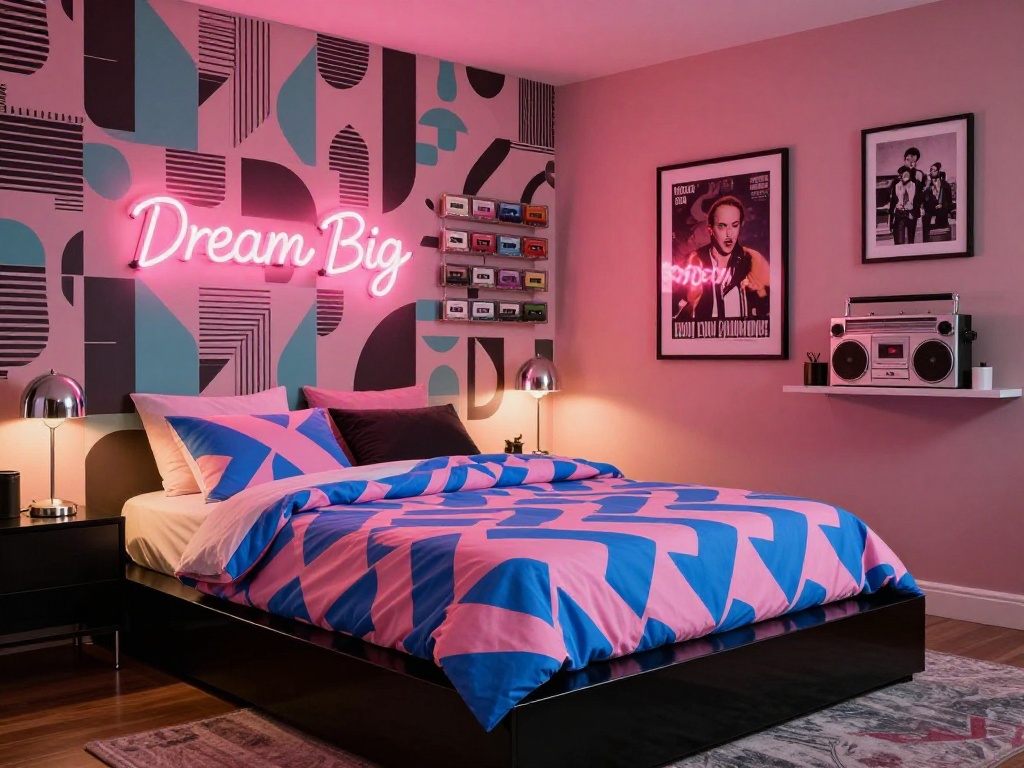
The mistake most people make with the 80s aesthetic is going too heavy on the neon. In a real 80s room, neon was the accent — not the base. A dusty rose room with mauve bedding and a single neon sign is far more authentically 80s than a white room with neon everywhere.
2. Pattern: Geometric, Bold, and Layered
Pattern is where the 80s aesthetic becomes instantly recognisable. The patterns associated with the decade fall into several distinct categories:
- Memphis Design geometrics: triangles, squiggles, dots, and abstract shapes in contrasting colours
- Zigzag and chevron: particularly in bedding, rugs, and curtains
- Abstract art deco: bold diagonal lines, fan shapes, and stepped forms
- Grid and checked: often in black and white, used as a grounding pattern
The key to using pattern in an 80s aesthetic room is layering — combining two or three patterns in complementary colours rather than relying on a single statement print. A geometric wallpaper behind a zigzag duvet with a solid colour cushion is more authentically 80s than any single pattern used alone.
You can also check the tool free to find your decor style Micro Renovation Ideas — Free Tool
3. Texture: Glossy, Velvet, and Chrome
The 80s had strong feelings about texture. Specifically:
High-gloss lacquered surfaces on furniture, cabinet doors, and accessories were considered modern and aspirational. White gloss was the default modern choice; black gloss was more dramatic.
Velvet and chenille upholstery on sofas, headboards, and cushions added tactile luxury.
Chrome and brass metalwork on lamps, curtain rails, picture frames, and furniture legs introduced a gleaming, reflective quality that played with the decade’s love of light and reflection.
Mirrored surfaces — on furniture, wardrobe doors, and decorative accessories — extended the room visually and amplified the drama of the colours and patterns around them.
4. Lighting: Warm, Layered, and Neon-Accented
Lighting in an 80s aesthetic room is never harsh or clinical. It is warm, layered, and atmospheric.
The neon sign has become shorthand for the entire decade — and while it is a genuinely authentic element, it works best as one layer within a broader lighting scheme rather than as the sole light source.
A fully realised 80s room lighting setup includes a warm ambient source (a floor lamp or table lamp with a fabric shade), task lighting (a desk lamp or reading lamp in chrome or brass), and accent lighting (a neon sign, string lights, or a coloured bulb in a lamp) working together.
5. Wall Treatment: Never Leave a Wall Bare
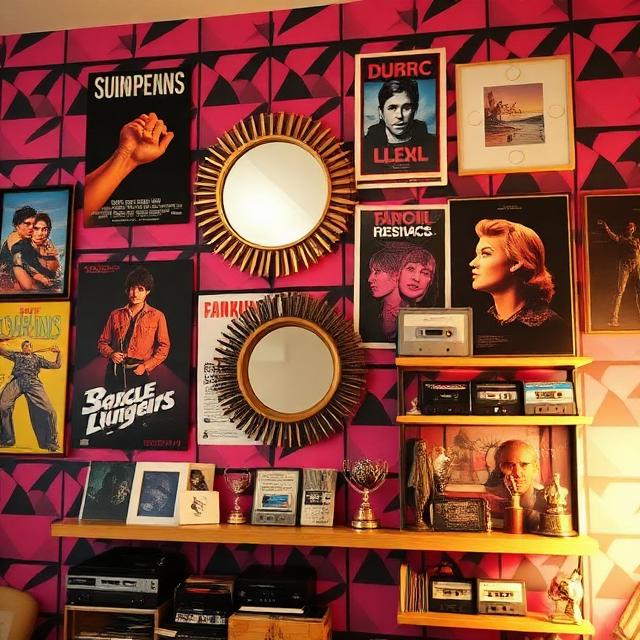
The 80s aesthetic is fundamentally incompatible with empty walls. The walls in an 80s room are busy — intentionally so.
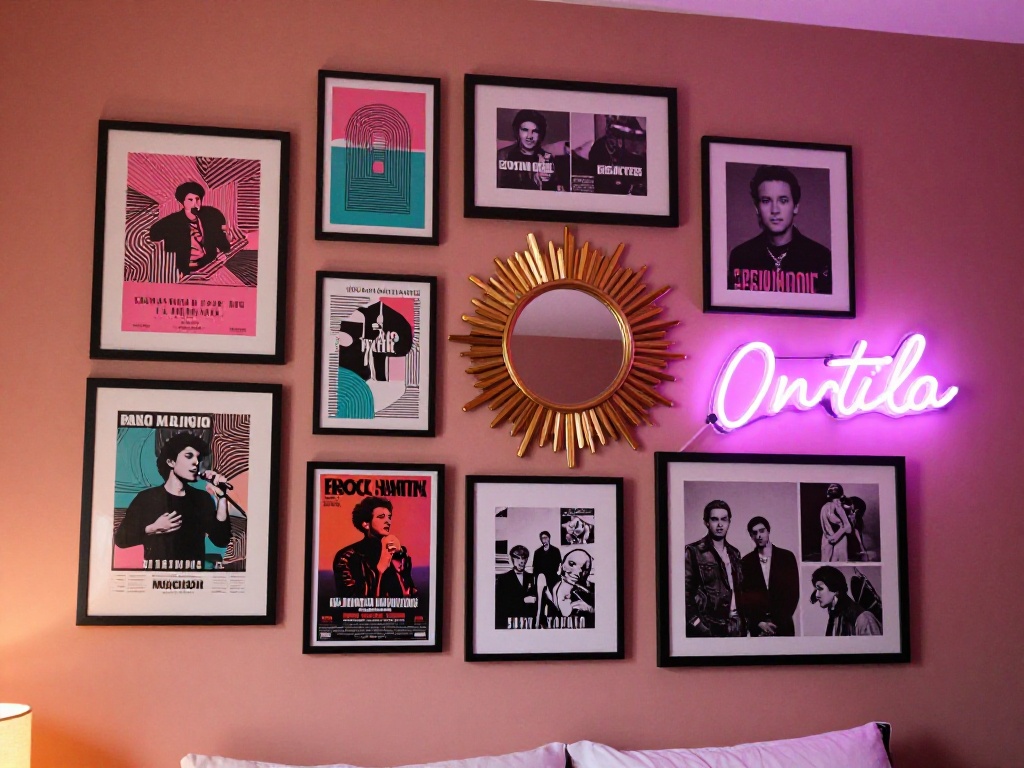
Options for wall treatment include geometric or Memphis Design wallpaper on all four walls or a bold feature wall, a gallery wall of framed posters and prints, mirrors clustered together, or a combination of all three.
The poster wall is perhaps the most iconic wall treatment associated with the 80s bedroom aesthetic specifically. Concert posters, movie posters, and abstract art prints — either framed for a modern take or unframed for a more authentic period feel — covering every available inch of wall space is the most direct route to the aesthetic.
6. Props and Accessories: The Details That Seal It
The accessories are what transform a room that has the right colours and patterns into something that genuinely feels 80s. The most impactful props for the 80s room aesthetic include:
- Cassette tapes displayed in a wall rack or clear acrylic case
- A working or decorative boombox on a shelf
- Retro video game cartridges or a vintage console on display
- A rotary or push-button telephone in a bold colour
- VHS tapes in a purpose-built rack
- Polaroid photos pinned or strung on a wall
- A lava lamp on the nightstand or desk
None of these items needs to be expensive — most can be found in charity shops, on eBay, or on Etsy for very little. But their presence in a room is instantly transformative.
You can also check the tool free to find your decor style What’s Your Decor Style? Take the Quiz
80s Aesthetic Colour Palette Deep Dive
Because colour is so central to the 80s room aesthetic, it is worth going deeper on exactly which combinations work — and which ones miss the mark.
Combinations That Work
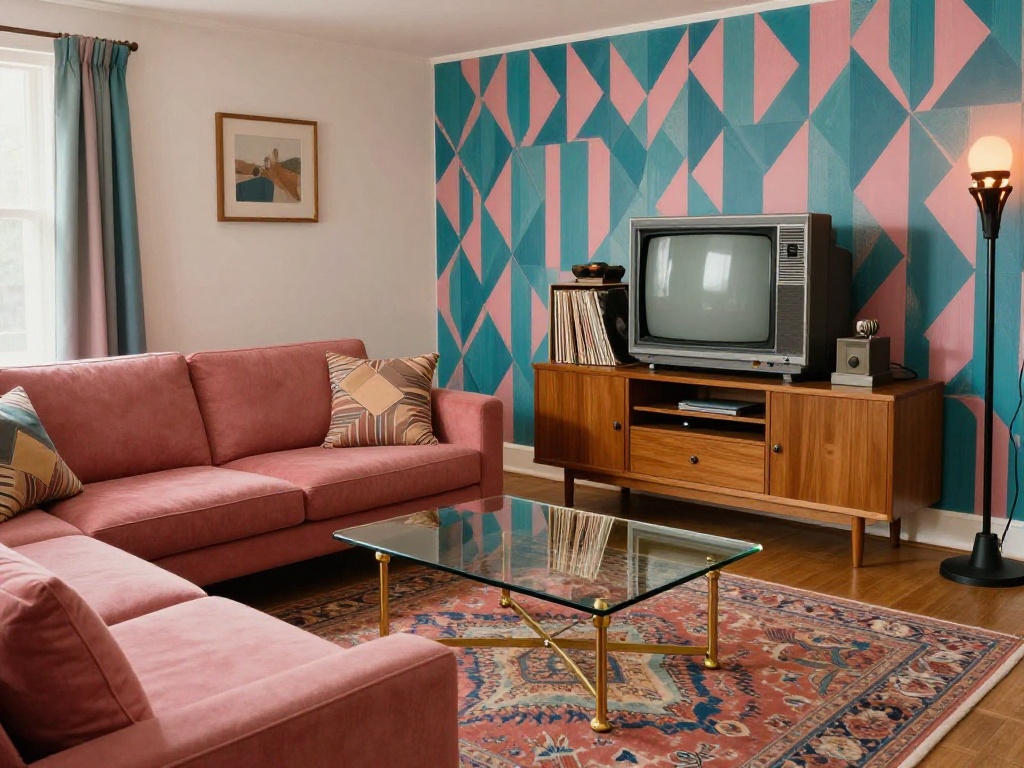
Dusty rose + teal + gold The most classically 80s combination. Dusty rose on the walls, teal in soft furnishings, and gold in hardware and accessories creates a warm, glamorous feel that reads immediately as the decade.
Black + hot pink + white The high-energy, graphic version of the 80s palette. Particularly effective in a bedroom or home office. Think black walls, hot pink accessories and neon, white furniture.
Powder blue + mauve + chrome The softer, more sophisticated 80s palette. Less obvious than the neon-heavy versions but deeply authentic. Chrome accents keep it feeling sharp.
Cream + burgundy + forest green The country-influenced 80s palette — less commonly recreated but equally authentic. Think floral wallpaper, dark wood furniture, and a well-chosen Persian-style rug.
Combinations to Avoid
All neon on white — looks like a children’s party rather than the 80s. Neon needs a base colour to work against.
Grey + rose gold — this is 2010s “millennial pink,” not 80s. The 80s never did grey as a base colour.
Minimalist with a single 80s prop — one cassette tape on a white shelf does not an 80s aesthetic room make. The aesthetic requires commitment to layering.
Wall Art and Poster Ideas for the 80s Bedroom Aesthetic
Getting the wall art right is one of the highest-impact decisions in an 80s aesthetic room. Here are the best approaches:
The full poster wall Cover an entire wall — or all four walls — in concert and movie posters. Mix sizes, leave some overlap, and do not overthink the arrangement. The deliberate imperfection of an unframed poster wall is central to the teenage 80s bedroom aesthetic.
The curated gallery wall Frame your prints in matching or complementary frames — black, white, or brass — and arrange them in a grid or salon-style grouping. This gives you the visual density of a poster wall with a more polished, grown-up finish.
The Memphis Design print wall Large format abstract prints in the Memphis Design style — bold shapes, primary and secondary colours, geometric patterns — hung as a grouping of three to five prints creates an immediately 80s feel without requiring any wallpaper.
The mixed mirror wall Group three to five mirrors of different sizes and shapes — sunburst, rectangular, round, ornate-framed — together on one wall. This is one of the most authentically 80s wall treatments available and works particularly well in bedrooms and living rooms.
What to actually put on your walls:
- Concert posters from 80s acts (even reproductions)
- Abstract geometric art prints in the Memphis Design style
- Black and white photography with bold graphic frames
- Neon signs (best used as one element within a gallery wall rather than alone)
- Vintage film posters from 80s movies
Lighting for the 80s Retro Vibe
Lighting can make or break the 80s room aesthetic. Here is exactly how to layer it correctly.
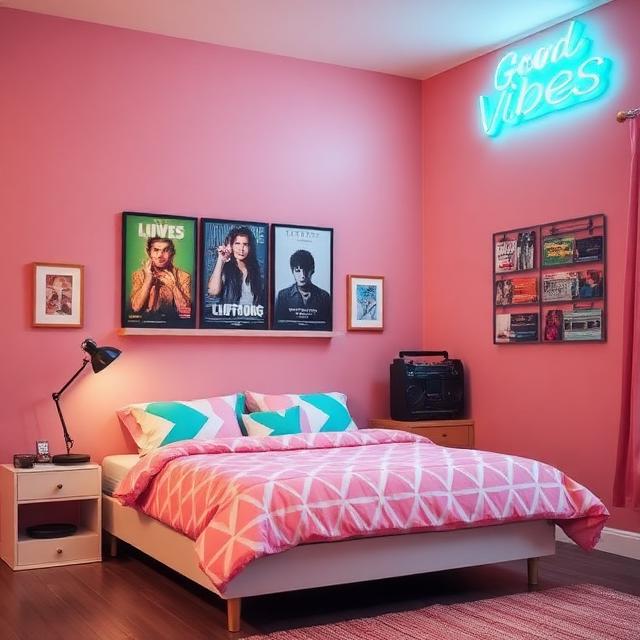
The neon sign The single most iconic lighting element of the 80s bedroom aesthetic. Choose a phrase or shape that feels personal — a favourite quote, a simple shape, or something abstract. Mount it on a dark wall or behind the bed as a headboard accent for maximum impact.
The lava lamp Genuinely popular in the 80s (originally a 1960s invention that had its second moment in the 80s), a lava lamp on a nightstand or desk adds warm, moving light and an unmistakably retro prop value. They are cheap, readily available, and surprisingly effective.
The floor lamp A tall floor lamp with a fabric drum shade — in a solid bold colour — gives warm ambient light and a period-appropriate silhouette. Brass or chrome base preferred.
The desk or table lamp A chrome or brass adjustable desk lamp gives the 80s home office or bedroom desk a sharp, functional-looking light source. The classic Anglepoise or a similar adjustable arm lamp is the right shape.
String lights Not fairy lights — specifically warm-toned round globe string lights or exposed Edison bulbs on a copper wire. These work beautifully behind a headboard or along a shelf and add a warm, atmospheric glow that photographs extremely well.
80s Room Aesthetic vs 90s Room Aesthetic: What Is the Difference?
These two aesthetics are often confused — particularly by younger audiences recreating them for the first time. Here is a clear breakdown:
| Element | 80s Room Aesthetic | 90s Room Aesthetic |
|---|---|---|
| Colour palette | Dusty rose, teal, mauve, neon accents | Purple, orange, lime green, primary colours |
| Pattern | Memphis Design geometrics, zigzag | Plaid, tie-dye, abstract blob shapes |
| Furniture | Gloss lacquer, mirrored surfaces, chrome | Wood veneer, beanbags, inflatable furniture |
| Wall art | Concert posters, abstract prints, mirrors | Band posters, CD covers, magazine pages |
| Lighting | Neon signs, lava lamps, brass floor lamps | Black lights, lava lamps, string fairy lights |
| Technology props | Boombox, cassette tapes, VHS, rotary phone | CD player, Game Boy, desktop computer |
| Overall feel | Glamorous maximalism, electric, bold | Grunge-influenced, casual, DIY |
The 80s aesthetic leans glamorous and geometric. The 90s aesthetic leans casual and graphic. Mixing them can work — but knowing which decade you are going for first keeps the result looking intentional.
How to Create an 80s Room Aesthetic on a Budget
You do not need to spend a lot of money to achieve a convincing 80s room aesthetic. Here is a budget-conscious approach that prioritises the highest-impact changes first:
Under £50 / $60: Start with a pot of paint in dusty rose, powder blue, or teal and repaint one feature wall. Add a small neon sign (widely available on Amazon and Etsy for £20–£30). Print and frame three Memphis Design-inspired posters (free to download, cheap to print at a local print shop).
Under £150 / $180: Add a geometric patterned duvet cover and matching pillowcases, a brass or chrome table lamp, and a cassette tape wall rack. Source a working or decorative boombox from a charity shop or eBay.
Under £300 / $360: Commission a full feature wall of geometric wallpaper. Add a velvet cushion collection in bold colours. Pick up a lava lamp and a push-button telephone in a bold colour. Start building a framed poster gallery wall with five to seven prints.
Final Thoughts
The 80s room aesthetic endures because it stands for something that most modern interior design has moved away from: the idea that a room should have personality, energy, and a point of view.
Whether you go all-in with geometric wallpaper and a full poster wall, or simply add a neon sign, a cassette rack, and a brass lamp to an otherwise modern room, the 80s aesthetic is one of the most rewarding retro styles to work with. It is generous — it rewards commitment but also responds well to restraint.
The one rule? Do not go half-hearted. The 80s never did anything halfway, and its aesthetic does not work that way either. Pick the elements that excite you, commit to them properly, and build a room with genuine character.
Because in the 80s, your room said something about who you were. It still can.
🔗 Ready to take it further? Explore our complete 80s bedroom ideas guide for more inspiration, product picks, and room transformation ideas.