Introduction
Some rooms are designed to impress. Others are designed to be lived in.
The chill room belongs firmly to the second category — and it is arguably the most important room design goal of all. Because a room that makes you feel genuinely relaxed, genuinely at ease, genuinely yourself is worth more than any technically perfect, Instagram-staged space that you tiptoe around rather than settle into.
But “chill” is not one thing. The cool neutrals and minimal furniture of a zen-influenced chill room are very different from the vivid, immersive psychedelic decor of a room that stimulates rather than quiets. And both of those are very different from the galactic aesthetic — a room that creates the feeling of floating in deep space, where light and darkness work together to produce something genuinely otherworldly.
What unites them is intention. All three are spaces designed with a clear sense of how they should feel — and that intentionality is what creates the “chill” quality, regardless of whether the palette is cream and white or electric purple and deep black.
This guide covers all three aesthetic directions — chill room decor, psychedelic and trippy room design, and the galactic aesthetic — with specific guidance on how to create each one, what elements are essential, and how they can overlap and combine.
🔗 Already drawn to the darker, more immersive aesthetic? Read our Pastel Rugs: How to Choose the Perfect Colourful Rug for Your Room for the full space-themed treatment, or our Romantic Bedding Guide for a rawer take on the immersive aesthetic.
Part 1: Chill Room Ideas — Creating a Space That Truly Relaxes
What Is the Chill Aesthetic Room?
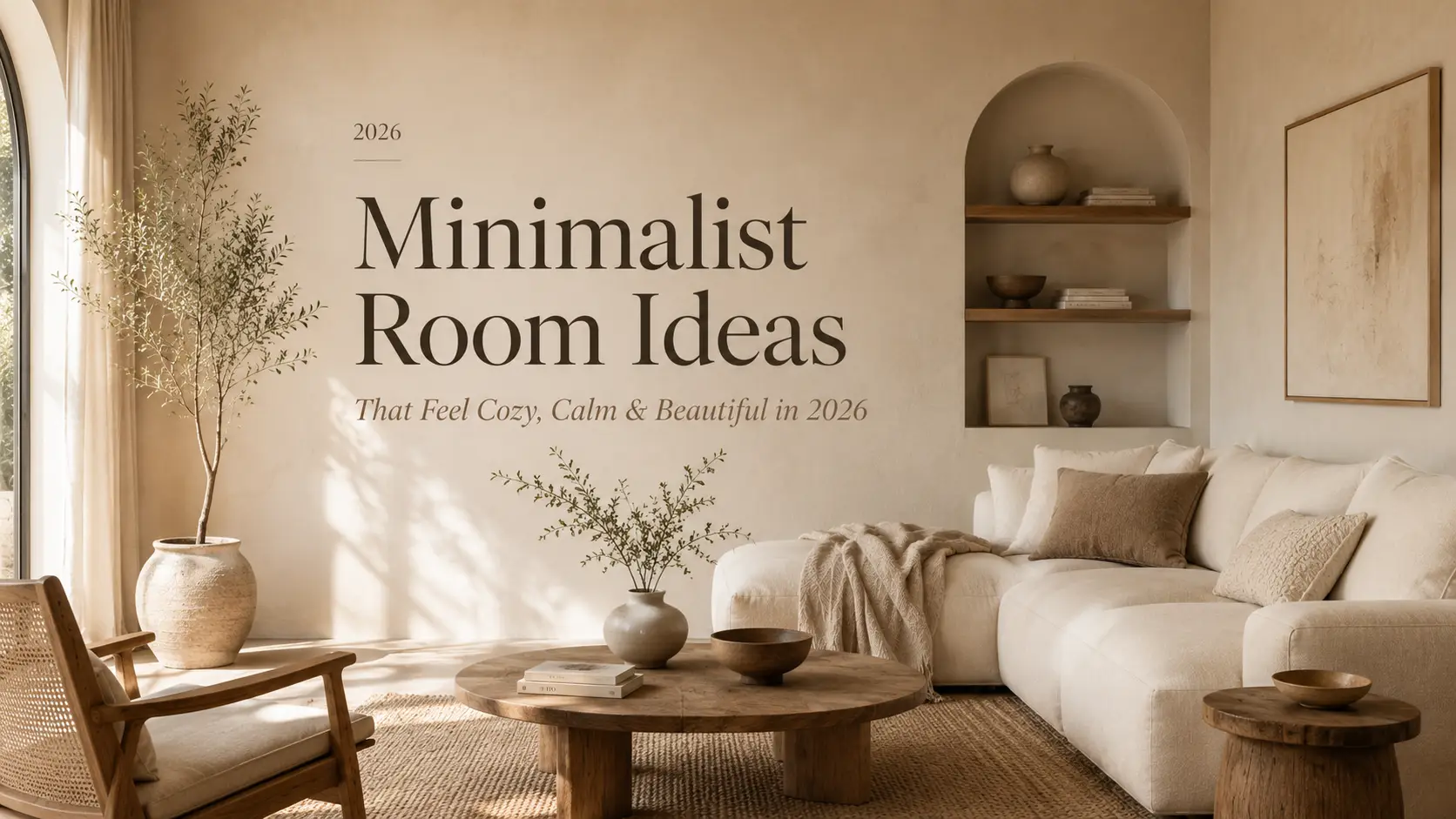
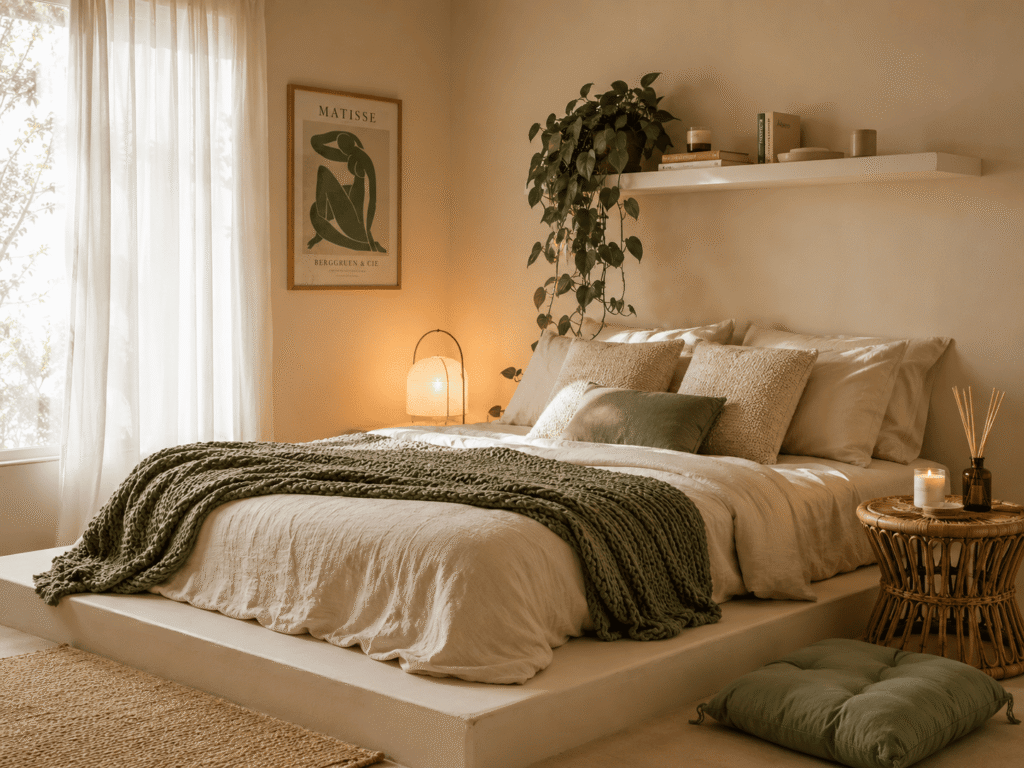
The chill aesthetic room is characterised by soft, neutral colour palettes, minimalistic furniture, and plush textures that invite comfort and calm. Key elements like warm lighting, natural materials, and personalised décor create a soothing environment where less is more, helping to declutter both the room and the mind.
This is the starting point — but the chill aesthetic goes further than simply “neutral and tidy.” The most effective chill rooms have a specific quality that is harder to define: they feel like somewhere you can exhale. The furniture is soft and low. The lighting is warm and never harsh. The textures are layered and tactile. And there is enough personalisation to feel like you, specifically, belong there.
The Chill Room Colour Palette
Soft, muted tones like sage greens, soft greys, pastels, and warm neutrals create the foundation of a chill room aesthetic.
Warm cream and ivory — the most universally chill base colour. Not clinical white but the warm cream of linen and natural cotton. These tones reflect light warmly and make any room feel immediately more relaxed.
Sage green — one of the most calming and most popular chill room colours. Sage has enough colour to feel intentional rather than neutral but is muted enough to be genuinely relaxing. It references nature, plants, and the outdoors — all associations that support the chill atmosphere.
Warm grey and greige — the bridge between warm and cool. A warm grey with brown or yellow undertones (greige) creates depth without drama. Works particularly well in bedrooms and studio spaces.
Dusty blue and powder blue — cool and calming without being cold. Blue is genuinely physiologically calming — it lowers heart rate slightly and creates a sense of spaciousness. Dusty or powder blue versions have the warmth needed to avoid feeling clinical.
Terracotta and warm sand — the earthier end of the chill palette. These warm, natural tones reference the outdoors and natural materials. They work particularly well in boho-influenced chill rooms.
Essential Chill Room Elements
Soft, layered bedding and textiles. Invest in soft, high-quality bedding in calming colours — white, cream, or light blue. Layer with throws and cushions in complementary textures. The physical softness of the textiles is central to the chill feeling — a room that looks calm but feels scratchy or stiff fails the test.
Warm, dimmable lighting. Use warm, dimmable lighting from bedside lamps instead of harsh overhead lights that feel clinical. A room lit by warm, low lamps feels fundamentally different from the same room lit by a bright overhead fixture. A smart bulb dimmer is one of the most cost-effective chill room purchases available.
Plants and natural materials. Plants bring oxygen, movement, and the quality of the natural world into a room in a way that no decoration can replicate. A trailing pothos on a shelf, a large monstera in a corner, or a small succulent collection on a windowsill — the specific plant matters less than the presence of something living and growing.
Minimal clutter. Add minimal decor like a few plants, simple artwork, or a cosy reading chair in the corner. The chill room is not a maximalist space — every object should earn its presence. This does not mean bare minimalism; it means thoughtful selection. A shelf with six meaningful objects feels chill; the same shelf with thirty random items feels chaotic.
A dedicated relaxation zone. Even in a bedroom, a chill room benefits from a specific spot for relaxation beyond the bed — a floor cushion, a bean bag, a small armchair with a throw, a reading nook. This zone signals to your brain that the space is for rest rather than productivity.
Scent. A chill room should smell good. A reed diffuser or wax melt burner in a calming scent — lavender, eucalyptus, vanilla, chamomile — adds to the sensory quality of the space in a way that only scent can. The olfactory system is the most directly connected to the brain’s relaxation response.
You can also read Gothic Home Decor on a Budget: The Complete Affordable Dark Aesthetic Guide
Chill Room Ideas for Small Spaces
The chill aesthetic works particularly well in small spaces because its emphasis on reducing clutter and creating warmth addresses the exact challenges that small rooms present.
Use the floor. Large floor cushions, low furniture, and a big soft rug make a small room feel more spacious by keeping visual weight low. A room where everything is at floor level feels larger than one with tall furniture at standing height.
Maximise natural light. Sheer curtains rather than heavy blinds. A large mirror opposite the window. Light-coloured walls that reflect rather than absorb light.
Choose multifunctional furniture. A storage ottoman that functions as a coffee table and a seat. A bed with under-bed storage that removes the need for a dresser. Built-in shelving rather than freestanding units.
Create one strong focal point. In a small room, one considered statement piece — a large plant, a gallery wall, a statement lamp — works better than multiple small competing elements.
Part 2: Psychedelic Decor — The Immersive, Sensory Room
What Is Psychedelic Room Decor?
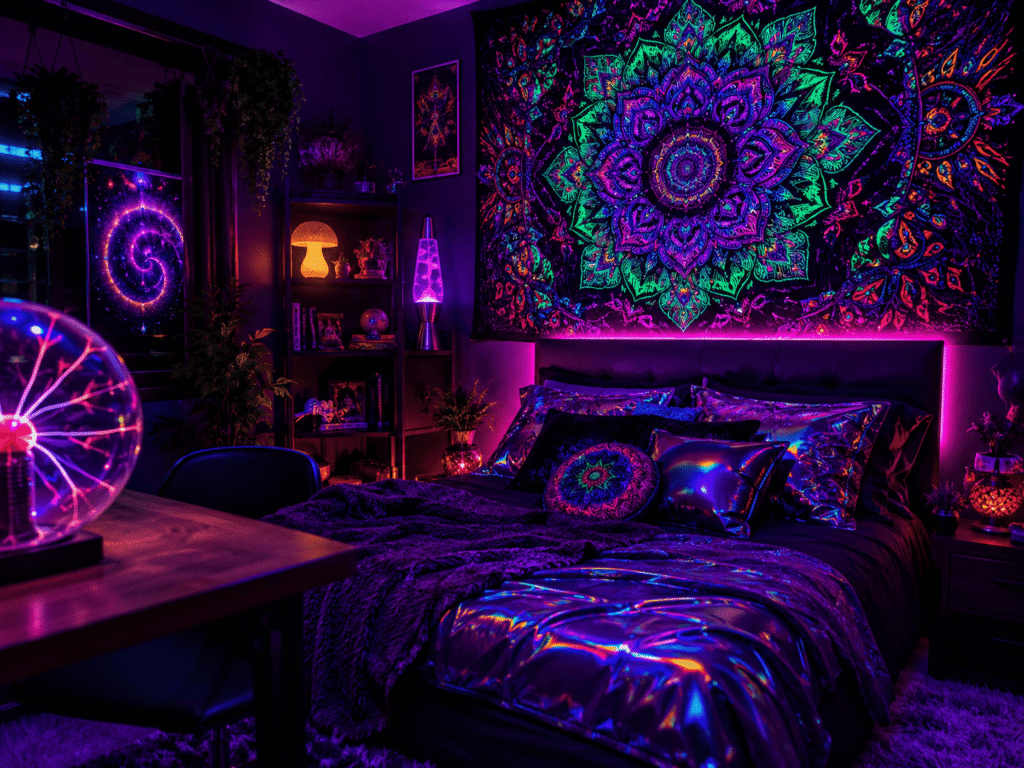
Psychedelic decor is the most visually intense of all aesthetic room styles. Popular patterns and motifs include holographic textures, groovy topographies, and a mixture of surreal motives including mushrooms, aliens, and kaleidoscopic patterns and shapes.
Where the chill room seeks to quieten visual stimulation, psychedelic decor deliberately amplifies it — creating rooms that feel immersive, slightly disorienting, and genuinely unlike any other aesthetic. The goal is a space that stimulates the senses rather than calms them, that makes you feel as though you have stepped into another dimension rather than another room.
Despite its intensity, psychedelic decor shares something important with the chill room: it is deeply intentional. A well-executed psychedelic room is not random or chaotic — it is a controlled, deliberate immersive environment where every element contributes to a unified sensory experience.
The Psychedelic Room Colour Palette
The psychedelic palette is the most vivid in aesthetic room design:
Neon and UV-reactive colours — electric pink, acid green, electric purple, vivid orange, and UV-reactive whites and yellows that glow under blacklight. These are the signature colours of the psychedelic aesthetic and are the colours most associated with it visually.
Deep, immersive darks as backgrounds — deep purple, midnight black, and dark navy as base colours against which the vivid neon accents read most dramatically. A neon pink element against a black wall creates a completely different effect from the same element against a white wall.
Rainbow and gradient effects — the prismatic quality of light through a prism, the shifting colours of holographic materials, and the rainbow shimmer of iridescent surfaces are all central to the psychedelic palette.
Essential Psychedelic Decor Elements
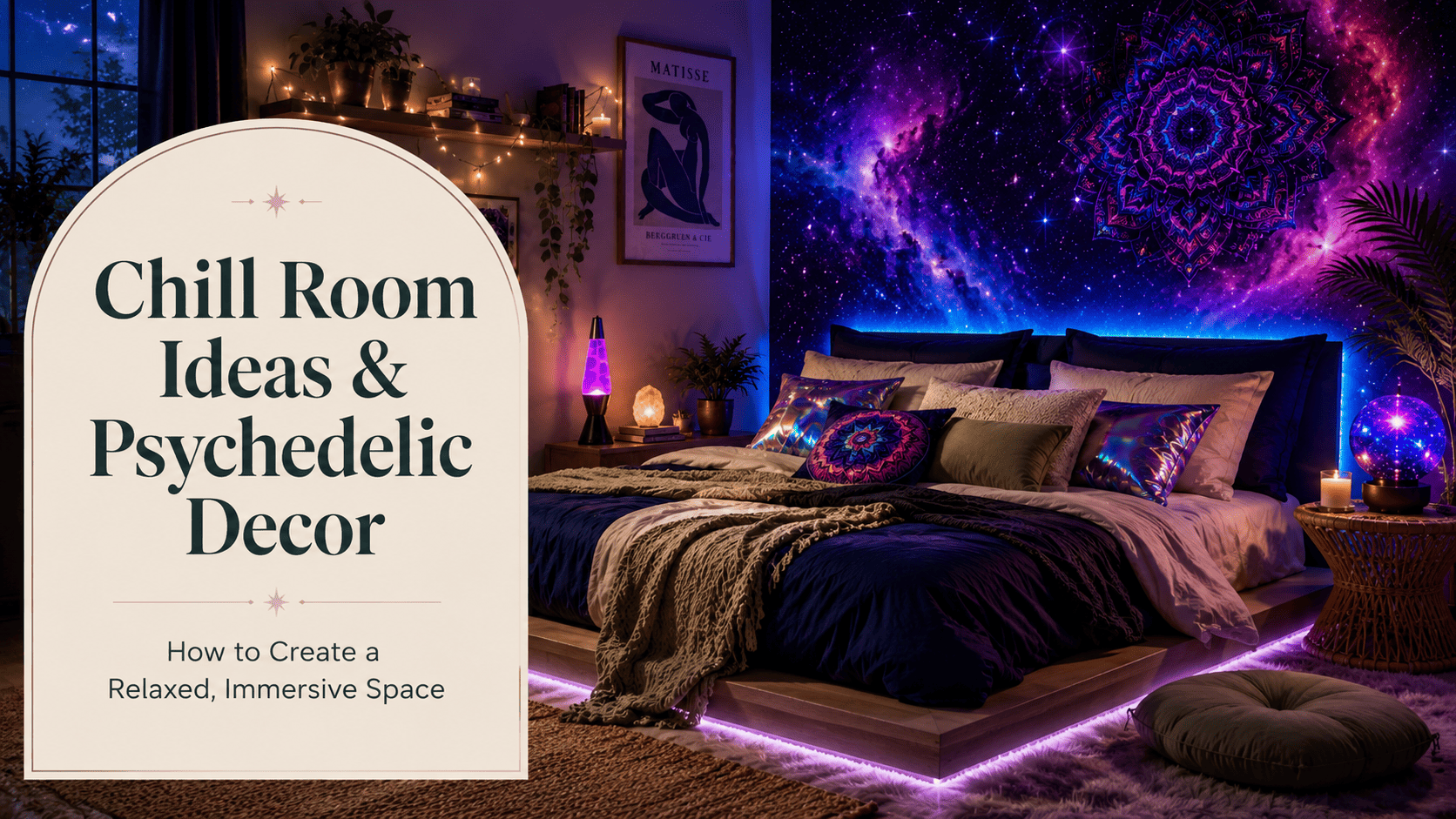
Tapestries — the most affordable and most transformative single psychedelic room element. A large blacklight or UV-reactive tapestry covering an entire wall creates the most dramatic transformation available. Trippy wall collages are the perfect and affordable alternative wall decor item to add plenty of interest to bedroom walls. Look for: mandala designs in vivid colours, kaleidoscopic abstract patterns, galaxy and nebula imagery, mushroom and nature-surreal designs, and psychedelic geometric patterns.
UV blacklights — the defining lighting technology of the psychedelic room. UV blacklights make UV-reactive paint, posters, fabric, and accessories glow vividly in the dark while appearing relatively muted in daylight. A room with blacklight appears completely different with the lights on versus off — this transformation quality is central to the psychedelic aesthetic.
LED colour-changing lighting — colour-changing LED strip lights, smart bulbs, and RGB lamps allow the room to shift between multiple colour atmospheres. Set them to cycle slowly through the full colour spectrum for the most psychedelic effect, or hold on a single vivid colour for a more controlled atmosphere.
Holographic and iridescent surfaces — cushions, wall art, and accessories in holographic or iridescent materials that shift colour with viewing angle. These references the visual quality of prisms and light diffraction that is central to psychedelic visual culture.
Surreal and trippy wall art — kaleidoscopic art prints, UV-reactive posters, mushroom and nature-surreal illustrations, mandala art, and abstract psychedelic prints. These work both as individual framed pieces and as part of a wall collage arrangement.
Mushroom decor — the mushroom has become one of the defining motifs of psychedelic and trippy room aesthetics. Mushroom lamps, mushroom figurines, mushroom print tapestries, and mushroom-shaped accessories all contribute to the surreal, nature-psychedelic quality of the aesthetic.
Lava lamps and plasma balls — two genuinely retro items that have found a natural home in the psychedelic room. The hypnotic movement of a lava lamp and the responsive lightning of a plasma ball both create the kind of slow, meditative visual interest that the psychedelic room specialises in.
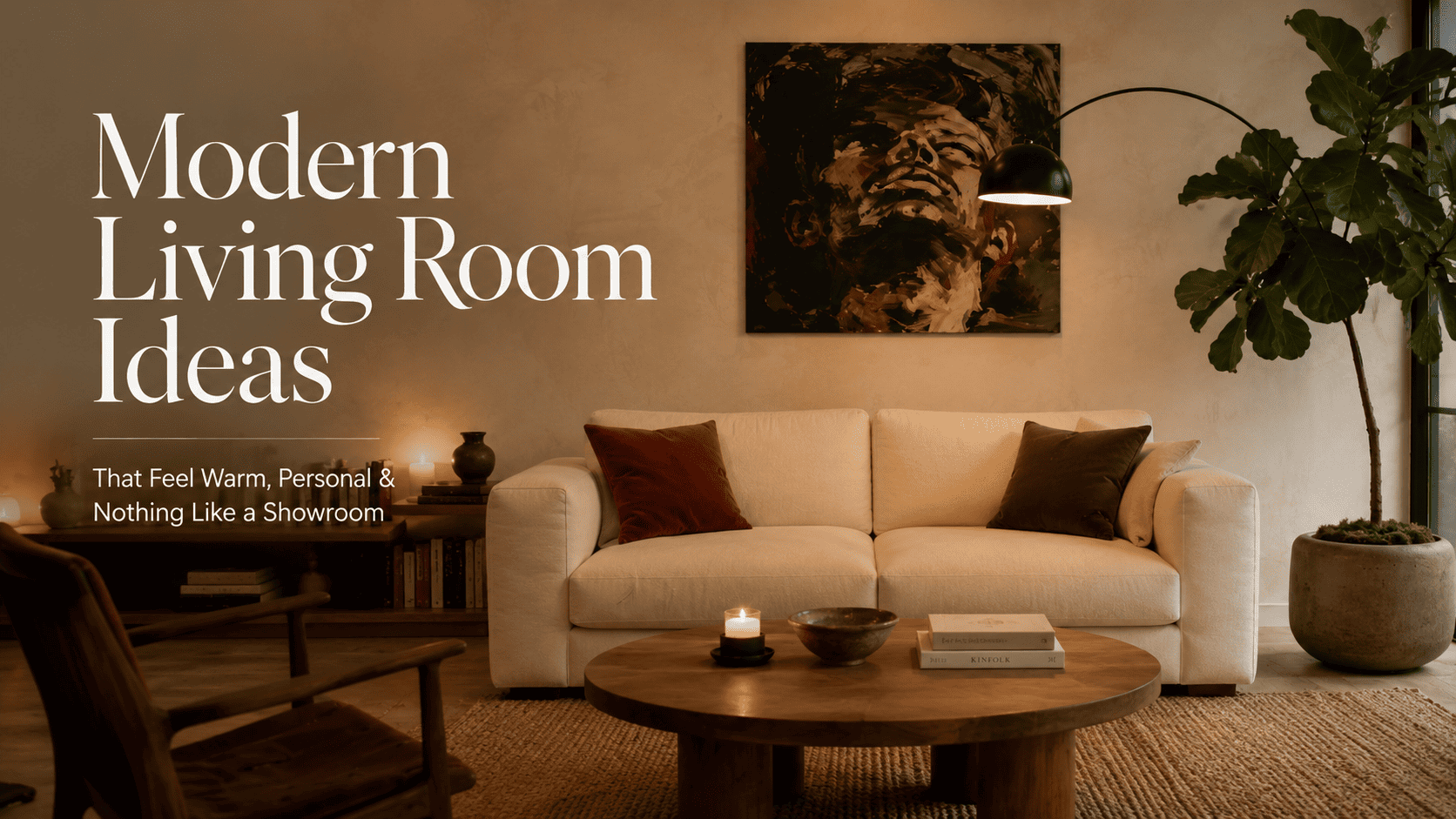
You can also read Modern Living Room Ideas That Feel Warm, Personal and Nothing Like a Showroom
Psychedelic Decor Sub-Styles
Classic hippie/psychedelic — the 1960s and 70s reference. Mandala tapestries, tie-dye fabric, peace signs, Grateful Dead and Jefferson Airplane era visual culture. Warm, slightly earthy colours alongside the vivid elements. This version is the most historically grounded.
Modern psychedelic/trippy — the contemporary internet-era version. More digital and neon than the hippie original, referencing vaporwave, glitch art, and internet surrealism. UV blacklights, holographic surfaces, and digital art prints are central.
Mushroom core — the nature-surreal sub-style. Mushrooms as both a literal motif (mushroom lamps, mushroom prints, mushroom-shaped accessories) and a symbolic reference to foraging, natural psychedelia, and the surreal quality of fungal growth. More earthy and organic than the neon-heavy versions.
Dreamcore/Weirdcore — the most unsettling sub-style, referencing the specific visual language of internet liminal spaces, surreal stock photography, and the dreamlike quality of places that feel slightly wrong. Desaturated colours, unexpected juxtapositions, and a deliberate sense of being somewhere familiar but fundamentally altered.
Part 3: The Galactic Room — Space as Atmosphere
The Galactic Room as a Chill and Psychedelic Space
The galactic room sits at the intersection of chill room design and psychedelic decor — and it is the most accessible version of both. It takes the immersive quality of psychedelic decor (the feeling of being somewhere else entirely) and delivers it through a specific and universally compelling subject: outer space.
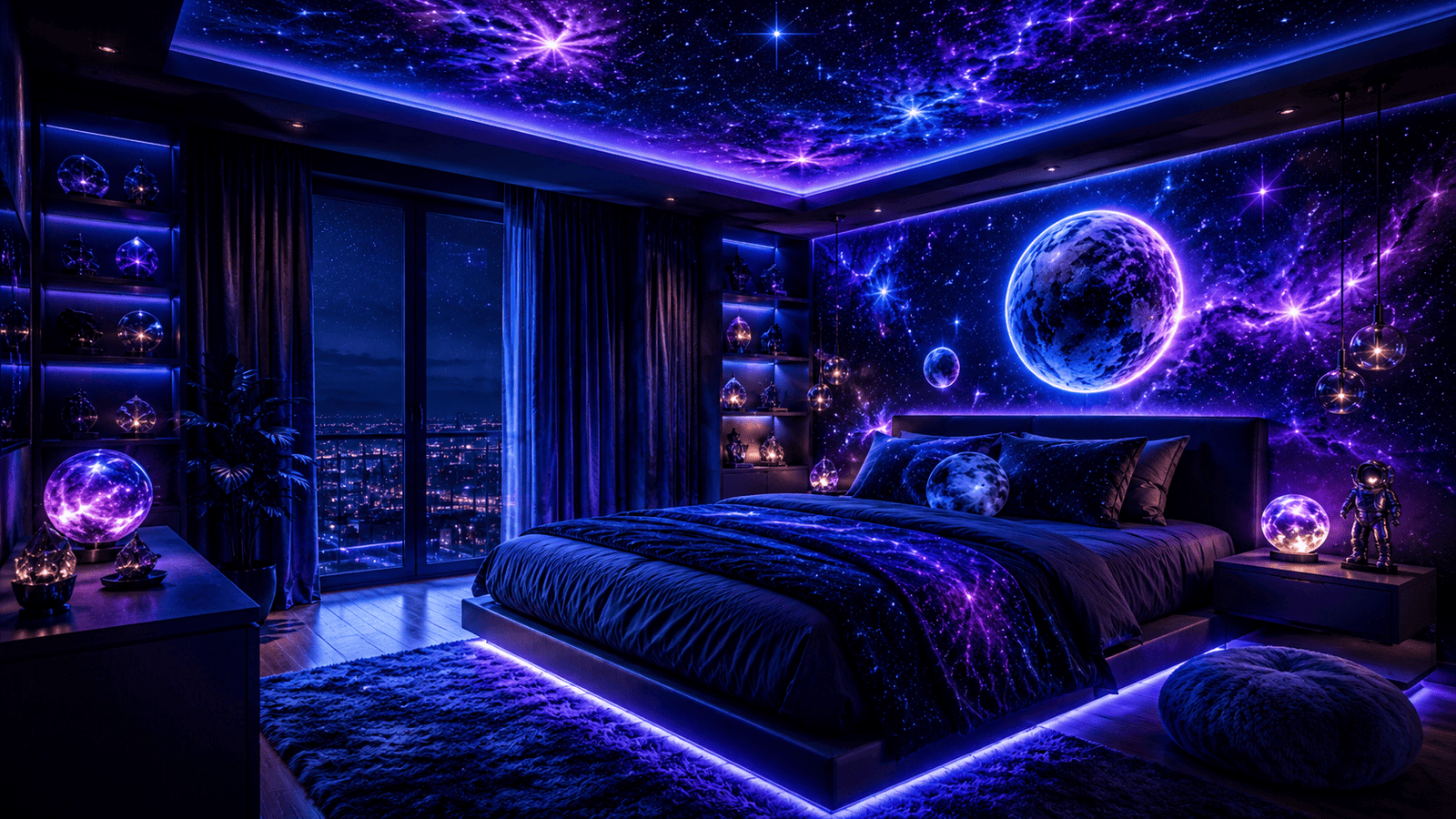
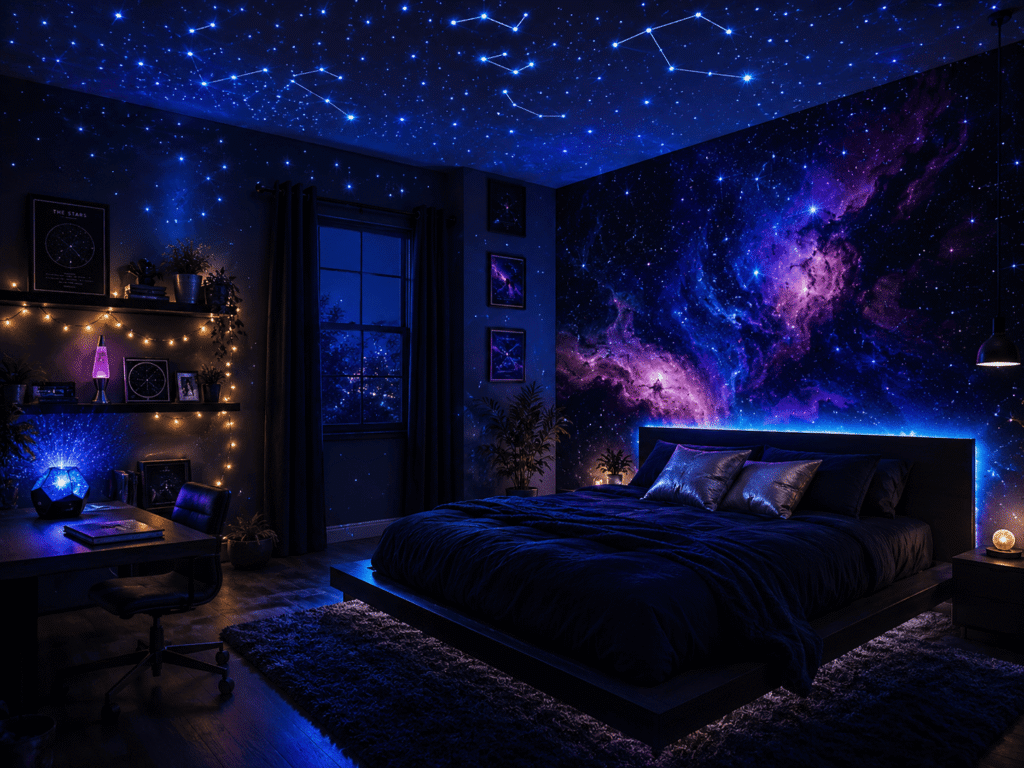
A great galactic room makes you feel genuinely different when you are inside it. The star projector turns the ceiling into a moving night sky. The LED strips pulse in deep blue and purple. The dark walls recede, creating the illusion of depth and distance. You are no longer in a bedroom — you are floating in something vast and beautiful.
Creating the Galactic Chill Room
The galactic room is particularly effective as a chill space because the specific quality of star-field lighting — dark, quiet, slowly moving — is genuinely calming rather than stimulating. Unlike the vivid, rapidly cycling colours of a psychedelic room, a galactic room’s lighting creates a meditative, slightly hypnotic atmosphere that actively supports relaxation.
Dark walls as the sky. Midnight navy, deep charcoal, or true black on all four walls. The walls need to be dark for the star projector and LED lighting to read effectively. Dark walls in a room with good blackout curtains create a genuinely immersive cave-like quality.
A quality star projector. The star projector is the most important single purchase in a galactic room. Choose a model that projects multiple star colours (white, blue, and gold stars together create the most realistic night sky effect), allows speed control of the star movement, and covers the full ceiling and upper walls rather than just a small area.
Galaxy or nebula wall mural. A photorealistic galaxy or nebula mural on one wall — particularly behind the bed — creates a permanent visual anchor for the space. These are available as peel-and-stick wallpaper (renter-friendly) or traditional wallpaper in multiple sizes.
Deep blue and purple LED strips. Behind the headboard, under the bed frame, and along shelves. These create the ambient glow of a distant nebula and enhance the overall space atmosphere.
Constellation glow stars on the ceiling. High-quality glow-in-the-dark stars arranged in actual constellation patterns on the ceiling, charged during the day and glowing softly at night. These add a permanent star-field effect that works even without the projector running.
Yu can also read Small Living Room Ideas That Make Your Space Feel Twice as Big and Ten Times More Beautiful
Art Hoe Aesthetic Room Ideas: The Creative Chill Space
The art hoe aesthetic sits in a different but related space to chill room design — it is the room of a person who is actively creating rather than passively relaxing, but who values the same qualities of intentionality, personal expression, and visual interest that define the chill room.
What Is the Art Hoe Aesthetic?
The art hoe aesthetic is defined by a love of art, creativity, and the visual culture of museums, galleries, and art education. It references:
Museum culture — postcards from art exhibitions, reproduced prints of famous artworks, artist-signed posters, and the general visual language of museum gift shops and student art rooms.
Art supplies as decoration — brushes in a ceramic jar, sketchbooks left open, tubes of paint arranged by colour, washi tape collections, and the general presence of creative materials as both functional and decorative objects.
Colour theory and colour play — art hoe rooms often have a more deliberately colour-considered quality than other aesthetic rooms, because the person living there has studied or is interested in how colours work together.
Natural and classical art references — botanical illustrations, classical sculpture photography, Renaissance art prints, and the specific visual aesthetic of art history education.
Art Hoe Chill Room Elements
A gallery wall of art prints — the defining feature of any art hoe room. Mix museum postcard reproductions of famous artworks, prints from independent artists, your own drawings or paintings, and photographs. The gallery wall should feel like an active, evolving collection rather than a fixed, curated display.
Art supplies on display — a cup of brushes on the desk, a colour-sorted pencil collection, washi tape samples stuck along the edge of a shelf, sketchbooks stacked with pages visible. These make the room feel like a place where real creative work happens.
Plants throughout — particularly botanical-reference plants that connect to art history (ferns, vines, tropical leaves) and dried flower arrangements that reference the still life tradition in painting.
Warm, diffused lighting — good natural light during the day (essential for artwork appreciation) and warm lamp lighting in the evening. Art hoe rooms should feel bright and studio-like by day, warm and intimate by night.
A mix of colour — more colour-saturated than a pure chill room but more considered than a psychedelic room. The art hoe colour palette tends toward warm primary and secondary colours in their more muted, paint-tube versions — cobalt blue, burnt sienna, yellow ochre — alongside natural tones.
You can also read Cozy Farmhouse Bedroom Ideas That Feel Like a Warm Hug Every Single Morning
Combining the Three Aesthetics: The Ultimate Chill Room
The most interesting chill rooms draw from all three aesthetic directions simultaneously — taking the calm, warm intentionality of the chill aesthetic, the immersive visual interest of psychedelic elements, and the creative expression of the art hoe approach.
The chill layer: Warm lighting, soft textures, plants, minimal clutter. The foundation that makes the room genuinely relaxing.
The psychedelic layer: One UV blacklight tapestry or a star projector. One lava lamp. One holographic or iridescent cushion. These elements create visual interest and a sense of being somewhere special without overwhelming the calm quality of the base.
The art hoe layer: A gallery wall with personal and found art. Art supplies on the desk. A few carefully chosen prints that reflect genuine personal taste.
The result is a room that is calm and warm enough to genuinely relax in, visually interesting enough to hold your attention, and personal enough to feel entirely yours.
Where to Shop
For chill room essentials: IKEA (linen bedding, simple furniture, affordable plants and pots), Amazon (dimmer smart bulbs, reed diffusers, floor cushions, simple rugs), H&M Home (seasonal chill-aesthetic textiles in sage and cream), charity shops (plants for propagation, simple furniture, ceramic accessories).
For psychedelic decor: Etsy (UV-reactive tapestries, trippy art prints, mushroom accessories, handmade psychedelic decor), Amazon (LED strip lights, blacklights, lava lamps, plasma balls, star projectors), specialist head shops and alternative retailers (UV blacklight posters, genuine psychedelic art).
For galactic room essentials: Amazon (star and galaxy projectors, deep space bedding, LED strip lights in blue and purple, glow-in-the-dark ceiling stars), Etsy (galaxy mural wallpaper, handmade cosmic accessories, space-themed art prints), Wayfair (galaxy-print bedding, dark furniture).
For art hoe aesthetic: Etsy (independent artist prints, handmade ceramic accessories, botanical prints), museum gift shops and online museum stores (genuine art postcard collections, reproduction prints), art supply stores (supplies as decoration), charity shops and second-hand book shops (art books displayed spine-out, vintage frames).