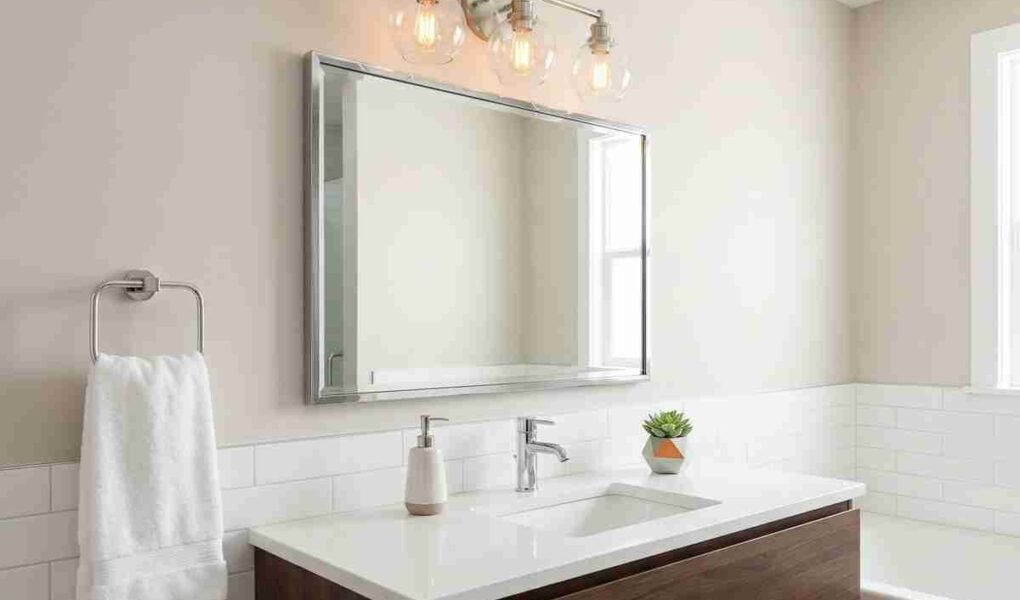
Most bathroom lighting mistakes are not about choosing the wrong fixture. They are about mounting the right fixture in the wrong place — and vanity light height is where this happens most consistently. A light mounted two inches too low casts shadows upward across the face in exactly the way that makes makeup application unreliable and morning grooming genuinely frustrating. A light mounted too high stops illuminating the face altogether and starts illuminating the ceiling instead. The fixture itself is often perfectly good. The placement undoes it.
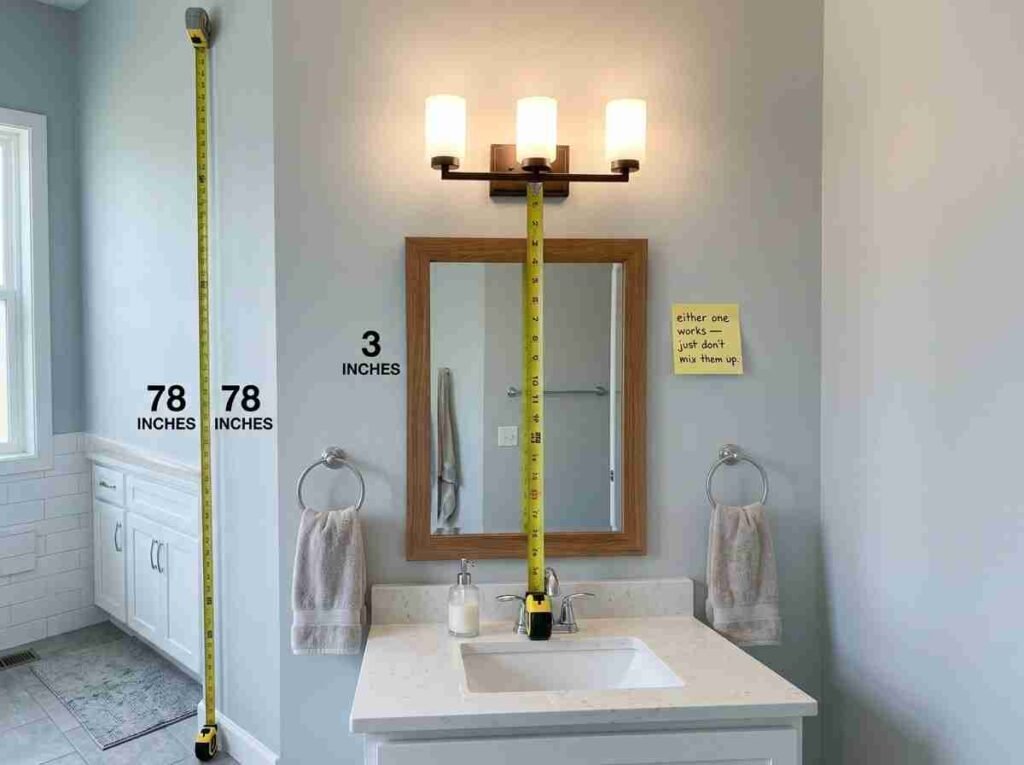
The standard height for a vanity light is 78 inches from the floor to the centre of the fixture — roughly 3 inches above the top of the mirror it sits above. That number is where every installation starts, and for a bathroom with a standard 8-foot ceiling and an average-sized mirror, it is also where most installations finish. The figure comes from average adult eye level and the goal of even, flattering light across the face rather than light that comes from above or below it.
What makes vanity light height more complicated than a single number is that several real variables change the answer depending on the specific bathroom. Ceiling height shifts the calculation. The distinction between measuring from the floor versus measuring from the mirror top is a genuine source of confusion that produces wrong results when it goes unclarified. Sconces flanking a mirror follow completely different placement logic from a bar light centred above it. And ADA-compliant installations have their own specific requirements on top of everything else.
This guide works through all of it — the standard, the variables, the floor versus mirror distinction, the ceiling height adjustments, the sconce versus bar light difference, and a complete FAQ covering the exact phrasing of every vanity light height question people actually search for.
78 inches from the floor to the centre of the fixture is the most widely cited standard height for a vanity light. This figure is based on average adult eye level and the goal of even, flattering illumination across the face when standing at the sink — not too harsh and overhead, not too low and shadow-casting.
In relation to the mirror specifically, this typically places the fixture’s centre point about 3 inches above the top edge of the mirror or medicine cabinet. This is the relationship worth understanding clearly, since it’s the detail that lets you adjust correctly when your specific mirror size doesn’t match whatever example a generic height chart might be based on.
Measurement Point
Standard Height
From the floor to fixture centre
78 inches
Above the top of the mirror
Approximately 3 inches
Ceiling height this standard assumes
8 feet (96 inches)
Floor Height vs. Mirror Height — The Distinction That Causes the Most Confusion
This is the single most common point of confusion in vanity light planning, and it’s worth being completely clear about before measuring anything.
Measuring from the floor gives you an absolute height that works regardless of mirror size or position — useful when you’re planning electrical rough-in before the mirror itself has even been chosen or installed.
Measuring from the top of the mirror gives you a height that’s directly proportional to your specific mirror, which matters because mirrors vary considerably in size from one bathroom to the next. A vanity light positioned a fixed distance above the mirror will always look balanced regardless of how tall or short that particular mirror happens to be, whereas a fixed floor measurement can look slightly off if the mirror itself is unusually tall or short.
The practical approach most designers actually use: start with the mirror height measurement (roughly 3 inches above the top of the mirror) as the primary planning reference, then double-check that the resulting floor height falls reasonably close to the 78-inch standard. If your mirror is a non-standard size, prioritise the mirror-relative measurement over the fixed floor measurement, since this is what determines how visually balanced the final installation actually looks.
Adjusting for Different Ceiling Heights
The 78-inch standard assumes a typical 8-foot ceiling. Taller or shorter ceilings call for a proportional adjustment.
For an 8-foot ceiling (96 inches): The standard 78-inch height applies directly without adjustment, since this is the baseline the figure was originally calculated for.
For a 9-foot ceiling (108 inches): Many designers raise the fixture slightly, often to somewhere in the 80 to 82 inch range, to maintain a similar proportional relationship between the light, the mirror, and the increased overall ceiling height, though the exact adjustment depends partly on the specific mirror size being used.
For a 10-foot ceiling (120 inches): A further proportional increase is generally appropriate, though by this point the mirror-relative measurement (consistently around 3 inches above the mirror) becomes the more reliable planning reference than the floor measurement, since taller ceilings can make a purely floor-based number feel disconnected from the rest of the room’s proportions.
The mirror-relative rule scales more reliably than the floor measurement across different ceiling heights. Regardless of whether your ceiling is 8, 9, or 10 feet, positioning the fixture roughly 3 inches above the top of the mirror consistently produces a balanced, well-proportioned result, which is why many electricians and designers treat it as the more dependable rule of thumb compared to a single fixed floor number.
Sconce Height vs. Bar Light Height
The type of fixture you’re installing affects not just the height calculation but also the basic approach to placement.
Single Bar Light (Centred Above the Mirror)
A single bar-style fixture, centred horizontally above the mirror, follows the standard height guidance directly: roughly 3 inches above the top of the mirror, or approximately 78 inches from the floor on a standard 8-foot ceiling.
Wall Sconces (Flanking the Mirror)
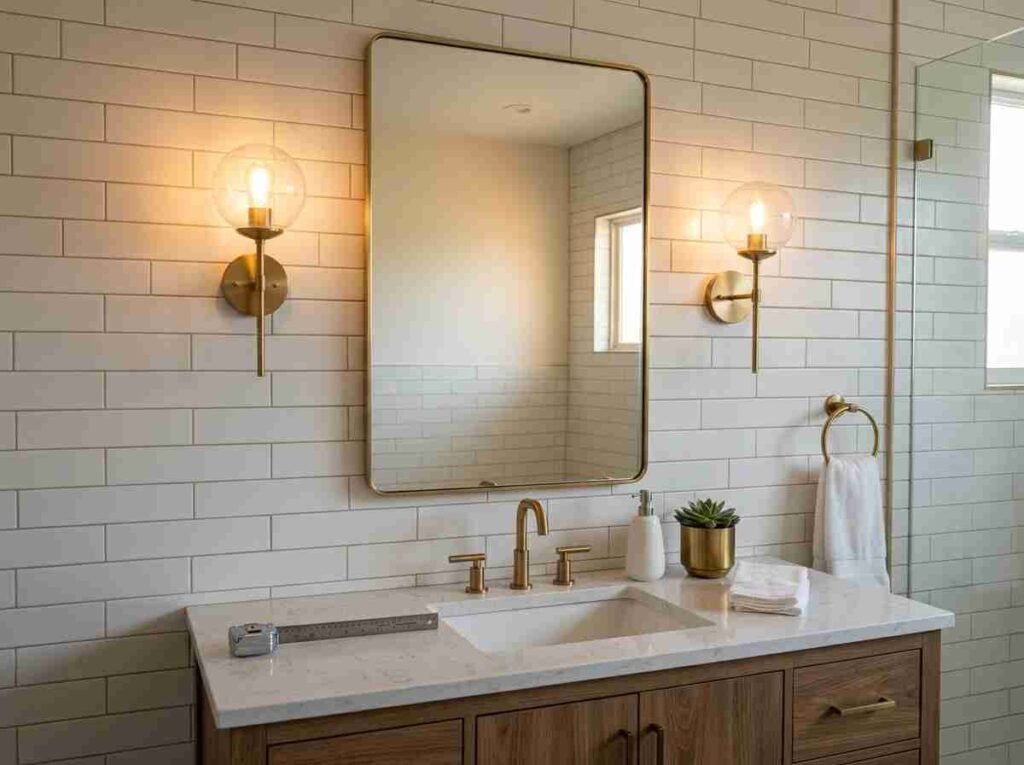
Sconces mounted on either side of the mirror, rather than above it, follow a different placement logic entirely, since their height is typically set relative to eye level rather than relative to the top of the mirror.
Standard sconce height is generally centred at roughly 60 to 65 inches from the floor, positioning the centre of the light fixture at approximately eye level for an average adult standing at the sink. This places the light source where it most effectively illuminates the face evenly from both sides, avoiding the harsh downward shadows that overhead-only lighting can create.
Horizontal spacing matters as much as height for sconces. Beyond the vertical placement, sconces are typically positioned roughly 28 to 36 inches apart on centre, wide enough to flank a standard mirror without crowding it, and far enough apart to provide genuinely even side lighting rather than both fixtures effectively lighting the same narrow area.
For bathrooms designed to meet ADA (Americans with Disabilities Act) accessibility standards, lighting placement carries additional considerations beyond standard residential guidance.
ADA accessibility standards focus primarily on switch and control height rather than specifying a single mandated fixture height for vanity lighting itself, meaning standard vanity light height guidance generally still applies to the fixture’s position, while light switches and any accessible controls need to be mounted within ADA-compliant reach ranges, typically no higher than 48 inches from the floor for forward reach.
For commercial or public bathroom installations specifically, always confirm current local code requirements with a licensed electrician or accessibility consultant, since ADA and related accessibility requirements can vary by jurisdiction and by whether the space is residential or commercial.
Vanity Light Rough-In Height (For New Construction or Major Renovation)
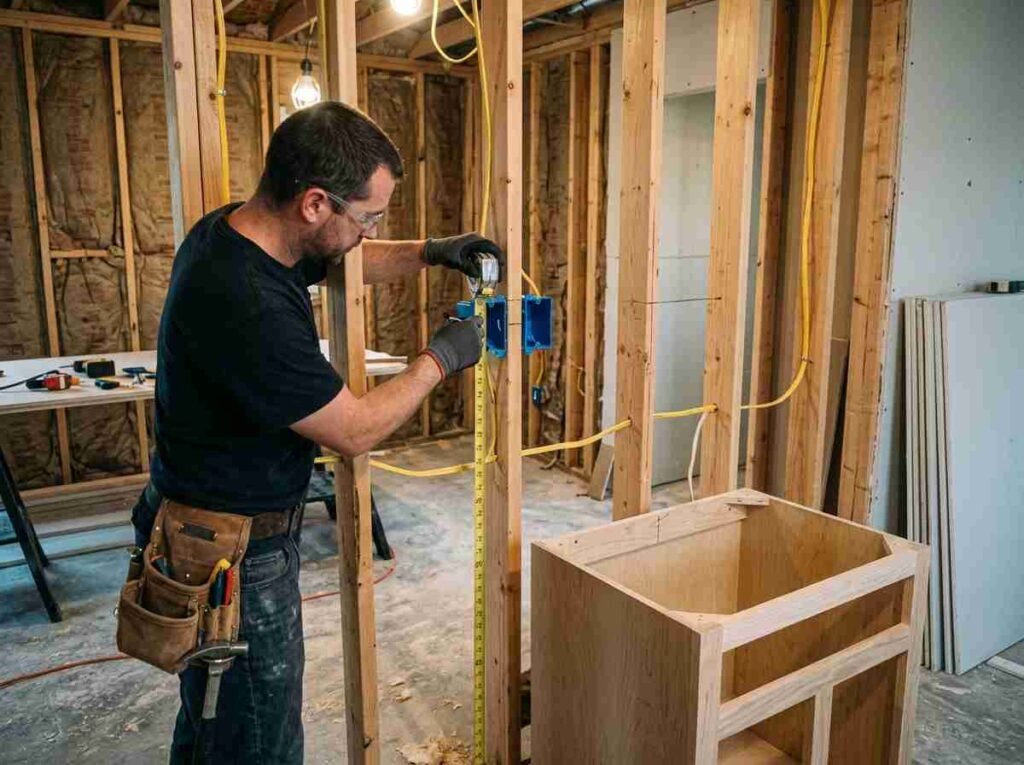
If you’re planning electrical work before the mirror or vanity has been finalised, the rough-in box height — where the electrical junction box itself is mounted in the wall — needs to be set in advance.
Plan the rough-in box at approximately 78 inches from the finished floor as the default standard, which assumes a typical 8-foot ceiling and a roughly average mirror size. If the mirror size or ceiling height is already known and significantly different from average, adjust the rough-in height accordingly using the same proportional logic described above, since moving an electrical box after walls are finished is considerably more disruptive than getting the rough-in measurement right the first time.
Q: What is the standard height for a vanity light?
A: The standard height for a vanity light is 78 inches from the floor to the centre of the fixture, which typically places it about 3 inches above the top of the mirror or medicine cabinet. This figure is based on a standard 8-foot ceiling and assumes a roughly average-sized mirror; taller ceilings or non-standard mirror sizes call for a proportional adjustment, usually using the mirror-relative measurement as the more reliable reference point.
Q: Should I measure vanity light height from the floor or from the mirror?
A: Both measurements describe a correct installation, but they serve slightly different purposes. Measuring from the floor (typically 78 inches) is useful for planning electrical rough-in before a mirror has been chosen. Measuring from the top of the mirror (typically about 3 inches above it) is more reliable for the finished, visually balanced result, since it automatically adjusts to whatever specific mirror size is actually being used, unlike a fixed floor measurement.
Q: How does ceiling height affect vanity light placement?
A: The 78-inch standard height assumes a typical 8-foot ceiling. On a 9-foot ceiling, many designers raise the fixture slightly, often to around 80 to 82 inches, to maintain proportional balance with the taller room. On a 10-foot ceiling, a further increase is generally appropriate, though the mirror-relative measurement (roughly 3 inches above the mirror) tends to remain the more dependable planning reference across all ceiling heights, since it scales naturally with the room’s proportions in a way a single fixed floor number doesn’t.
Q: What height should wall sconces be mounted at beside a bathroom mirror?
A: Wall sconces flanking a mirror are typically centred at roughly 60 to 65 inches from the floor, positioning the light source at approximately eye level for an average adult standing at the sink. This differs from the height used for a single bar light centred above the mirror, since sconces are placed relative to eye level rather than relative to the top of the mirror. Sconces are also generally spaced 28 to 36 inches apart on centre to provide even lighting across the face from both sides.
Q: What is the rough-in height for a vanity light box in new construction?
A: For new construction or a major renovation where the electrical box needs to be set before the mirror and vanity are finalised, plan the rough-in height at approximately 78 inches from the finished floor as the standard default. This assumes a typical 8-foot ceiling and an average mirror size; if either is known to be significantly different in advance, adjust the rough-in height proportionally rather than defaulting to the standard figure, since relocating an electrical box after the walls are finished is considerably more disruptive than planning correctly from the start.
Q: Are there ADA requirements for vanity light height specifically?
A: ADA accessibility standards focus primarily on the reach range for switches and controls rather than mandating a specific height for the light fixture itself, with accessible switches typically required to be mounted no higher than 48 inches from the floor. Standard vanity light fixture height guidance generally still applies to the light itself in ADA-compliant bathrooms, but local code requirements can vary, particularly for commercial or public installations, so confirming with a licensed electrician familiar with current local requirements is always worthwhile for any accessibility-focused project.
Sufian Ahmed
Home decor enthusiast and founder of astheticdecor.com. Passionate about helping people create beautiful, personalised aesthetic rooms on any budget. Covering romantic, dark academia, kawaii, gothic, coquette and every aesthetic in between.