Introduction
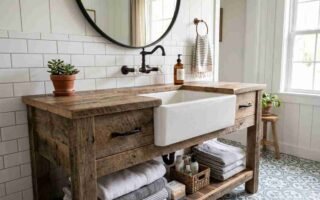
Walk into a farmhouse bathroom that feels genuinely right — not just styled to look farmhouse, but actually warm and grounded and unhurried in a way that most bathrooms are not — and there is a reasonable chance the sink is doing most of that work. Not the tiles, not the paint colour, not the accessories. The sink itself, with its exposed front panel sitting proud of the cabinet face rather than hiding behind it, is the single material choice that changes the whole character of the room.
The farm sink, also called an apron-front sink, originated in working farmhouse kitchens where its deep, wide basin was a practical necessity for heavy daily use. What has happened since is that the same exposed-front silhouette has moved into bathrooms, where it brings a weight and warmth and sense of permanence that a standard undermount or drop-in sink simply does not. A bathroom with a farm sink looks like a room someone made a real decision about. Everything else in it can be relatively simple and the room still reads as considered.
Using a farm sink in a bathroom does require one specific thing that a standard sink does not — the vanity cabinet itself has to be designed or modified to accommodate the apron’s exposed front panel, since a standard cabinet will not fit one without modification. That is the practical starting point, and this guide covers it properly alongside the material options, the single versus double configurations, and the styling choices that make the rest of the bathroom match the sink’s character rather than working against it.
🔗 Building a complete farmhouse or rustic bathroom? Read our DIY rustic bathroom vanity guide and our best wood for bathroom vanity guide for more.
What Defines a Farm Sink
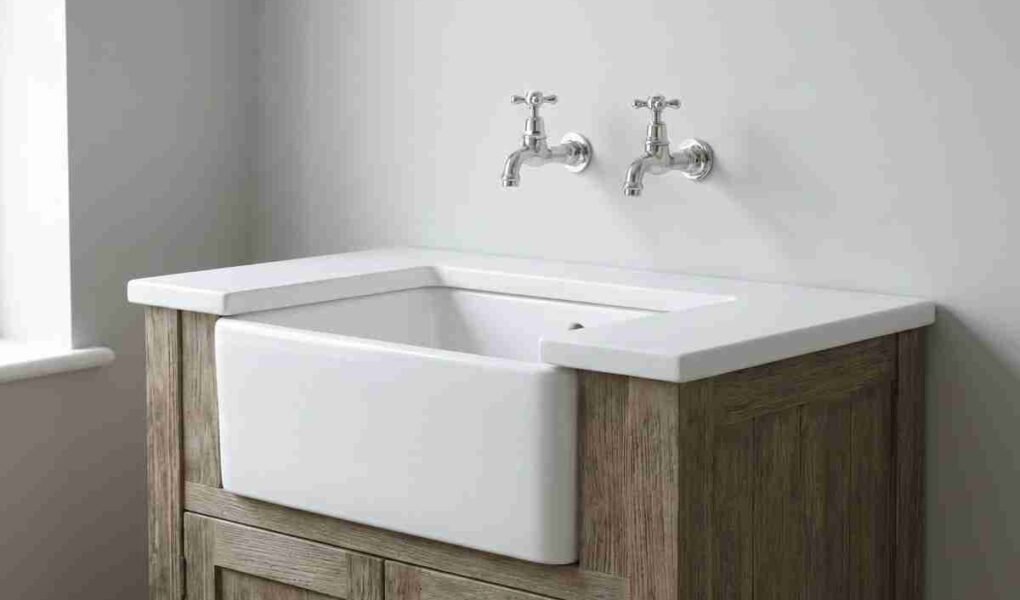
The apron front is the single defining feature. Unlike an undermount sink, which sits entirely beneath the countertop with its edges hidden, or a drop-in sink, which sits within a cutout with a visible rim around its top edge, a farm sink’s front panel extends downward past the countertop edge and remains fully visible, becoming a genuine design feature of the vanity rather than a hidden fixture.
The basin itself tends to be deeper and more substantial than a standard bathroom sink, even in the smaller bathroom-scaled versions of the style, reflecting the farm sink’s practical farmhouse kitchen origins.
The overall impression is one of solidity and warmth. A farm sink reads as a considered, characterful choice rather than a purely functional fixture, which is exactly why it has become such a popular feature in farmhouse, rustic, and country-style bathrooms specifically.
You can also read Dark Olive Green House With Black Trim: The Complete Colour and Style Guide
Vanity Modifications Needed for a Farm Sink
This is the most practically important part of planning a farm sink bathroom vanity, since the exposed apron front genuinely changes how the cabinet itself needs to be built or selected.
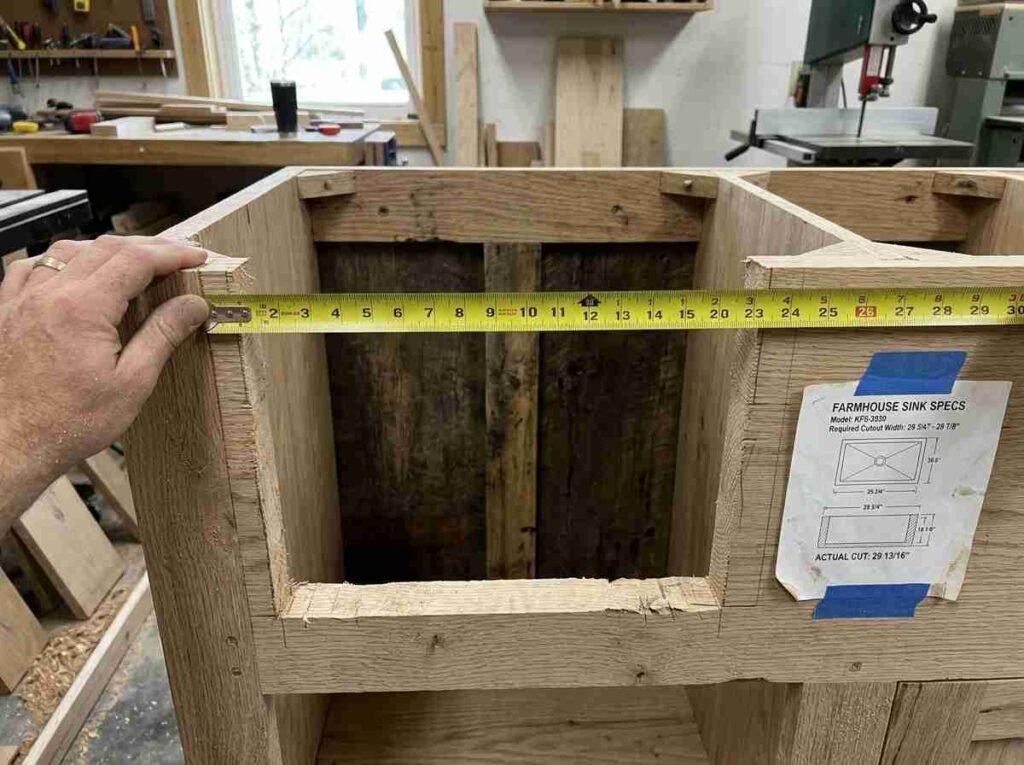
The cabinet front needs a cutout or open section for the sink’s apron. A vanity designed specifically for a farm sink will have a section of the cabinet face removed or omitted entirely where the sink’s front panel sits, allowing the apron to project forward as intended. A standard vanity cabinet, without this modification, simply won’t accommodate the sink’s front panel correctly.
Purpose-built farm sink vanities are the simplest solution. Many manufacturers now produce vanity cabinets specifically designed and pre-cut for farm sink installation, removing the need for any custom modification and ensuring the proportions between cabinet and sink are correctly matched from the outset.
Custom or DIY cabinets require careful measurement before construction. If building or converting a vanity yourself, the cabinet’s front cutout needs to be measured and cut to match the specific sink’s dimensions precisely, ideally with the actual sink in hand during construction rather than working from manufacturer specifications alone, since slight variations between sink models are common.
Countertop support needs particular attention. Because a farm sink’s weight is partially supported by the front apron rather than entirely by the countertop above, the cabinet structure beneath needs to provide genuine support along the full depth of the sink, not just at its rear edge where a standard undermount sink would typically be supported.
You can also read Solid Wood Makeup Vanity: The Complete Buying Guide
Material Options for a Bathroom Farm Sink
Fireclay. The most popular material for farm sinks in both kitchens and bathrooms, fireclay is fired at extremely high temperatures, producing a dense, glass-like, non-porous surface that resists staining, scratching, and chipping exceptionally well. Its smooth, slightly glossy white or cream finish is the look most people picture when they think of a classic farmhouse sink.
Cast iron with enamel coating. Extremely durable and long-lasting, cast iron sinks with a baked enamel finish offer similar stain resistance to fireclay with a slightly heavier, more substantial feel, available in white as well as a range of colours.
Copper. A warmer, more rustic material option, copper farm sinks develop a natural patina over time that many people specifically seek out for its aged, characterful appearance. Copper requires somewhat more maintenance than fireclay or cast iron to manage tarnishing, depending on the desired finish.
Stone composite. A more contemporary material option, stone composite (often a blend of natural stone particles and resin) offers good durability with a more matte, textured surface than the glossy finish typical of fireclay, suiting a more modern farmhouse aesthetic.
Single vs. Double Farm Sink Configurations
Single farm sink. The more common and more space-efficient choice, suiting most standard bathroom vanities and working particularly well in a powder room, guest bathroom, or any space where a single user is the norm.
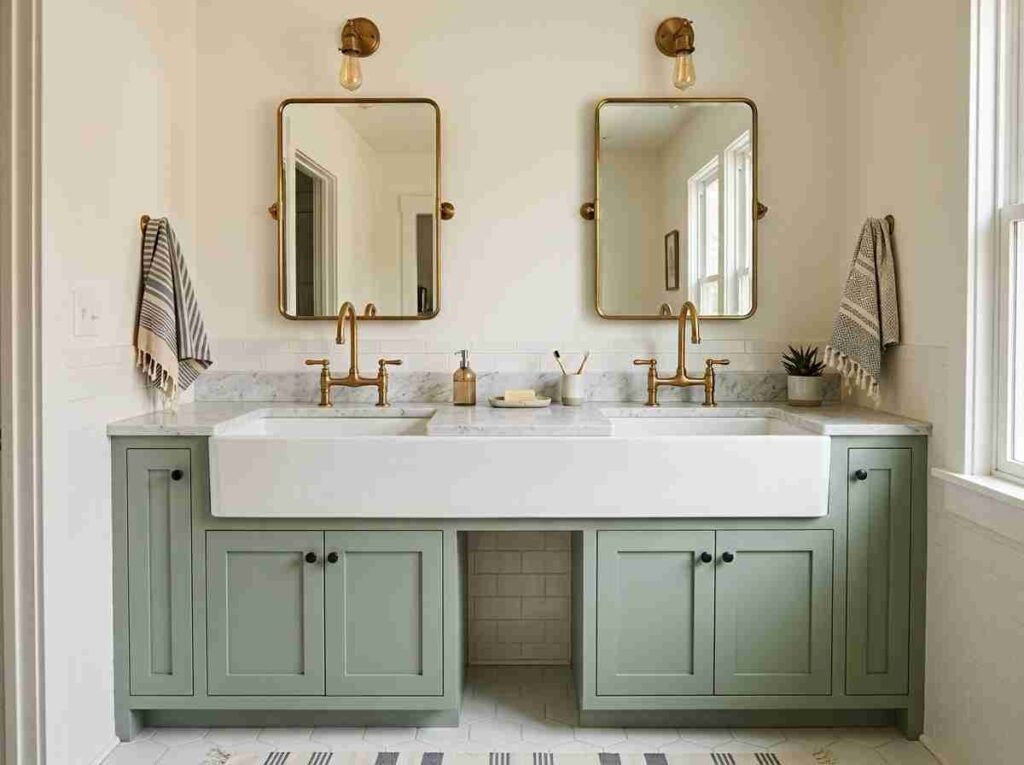
Double farm sink. Less common but increasingly available, a double farm sink configuration, typically built into a wider vanity (60 inches or more), suits a shared primary bathroom where two people regularly need sink access at the same time. The double configuration requires a correspondingly wider apron-front cutout in the cabinet and proportionally more substantial cabinet support beneath.
The width consideration matters more here than with standard sinks. Since a farm sink’s apron is a fixed visual width that can’t be adjusted the way a smaller undermount sink’s positioning sometimes can, getting the vanity width right relative to the chosen sink size matters more for the finished look than it does with most other sink styles.
You can also read Antique Style Bathroom Vanity: The Complete Buying and DIY Guide
Styling a Farm Sink Bathroom Vanity
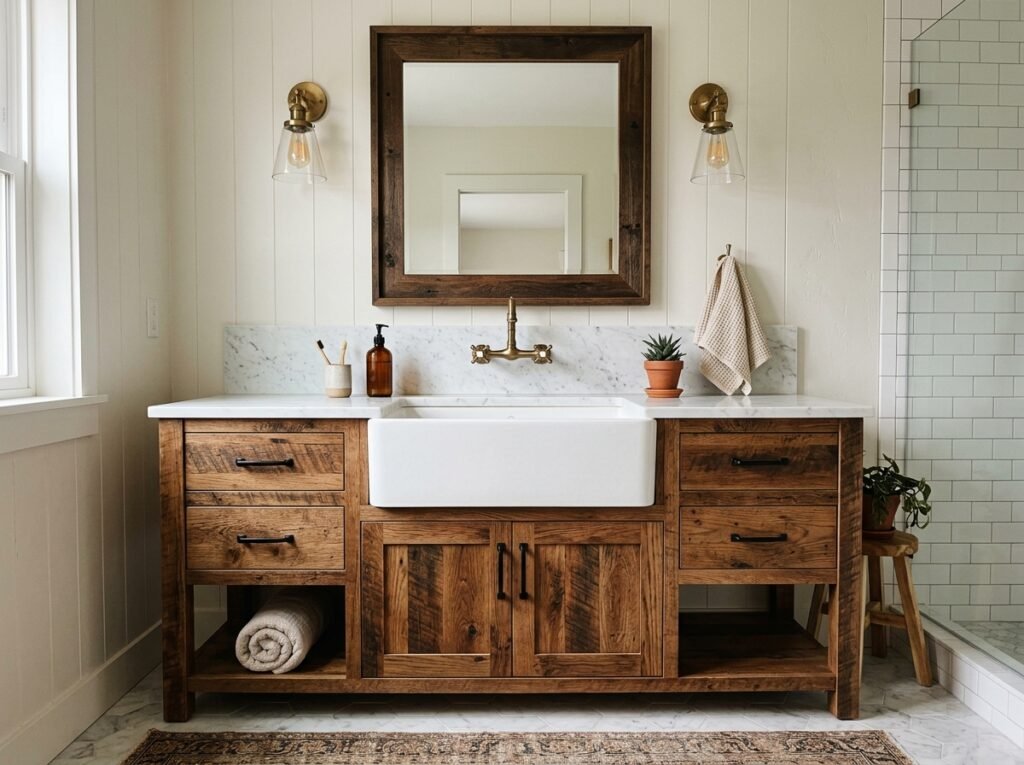
Pair with warm, natural cabinet materials. Wood tones — oak, walnut, painted shaker-style cabinetry in soft farmhouse colours like sage, cream, or soft blue — all complement a farm sink’s character far more naturally than a sleek, high-gloss modern cabinet finish would.
Choose hardware and fixtures that match the era the look references. Brass, oil-rubbed bronze, or matte black taps and cabinet hardware all suit the farmhouse and rustic styles a farm sink naturally evokes, far more convincingly than bright chrome.
Use natural textiles and accessories to reinforce the look. Linen towels, woven baskets for storage, and simple ceramic accessories all extend the farm sink’s character into the rest of the vanity styling, rather than letting the sink stand alone as the only characterful element in an otherwise generic bathroom.
Consider open shelving beneath or beside the vanity. Exposed storage — baskets, folded towels, stacked jars — suits the practical, slightly utilitarian honesty of the farmhouse aesthetic that a farm sink represents, continuing the same visual language beyond the sink itself.
You can also read Bedroom Sets With a Vanity: What to Look For
Frequently Asked Questions
Q: What is the difference between a farm sink and a regular bathroom sink?
A: A farm sink, also called an apron-front sink, has a front panel that extends downward past the countertop edge and remains fully visible, rather than being hidden beneath the counter the way an undermount sink is, or sitting within a cutout with only a thin rim visible the way a drop-in sink does. This exposed apron is both the sink’s defining visual feature and the reason it requires a specifically designed or modified vanity cabinet to accommodate it properly.
Q: Do I need a special vanity for a farm sink?
A: Yes, generally. The vanity cabinet needs a section of its front face cut away or omitted entirely to allow the sink’s apron to sit forward as intended, which a standard, unmodified vanity cabinet won’t accommodate. Many manufacturers now sell vanity cabinets specifically designed and pre-cut for farm sink installation, which is the simplest route, though a custom or DIY cabinet can also be built to fit a specific sink with careful measurement beforehand.
Q: What material is best for a bathroom farm sink?
A: Fireclay is the most popular choice, offering a dense, non-porous, glass-like surface that resists staining and scratching while delivering the classic smooth white or cream farmhouse look. Cast iron with an enamel coating offers similarly strong durability with a slightly heavier feel and a wider range of available colours. Copper is a warmer, more rustic option that develops a natural patina over time, while stone composite suits a more contemporary, matte-finished take on the farmhouse aesthetic.
Q: Can I get a double farm sink for a shared bathroom?
A: Yes, double farm sink configurations are available, typically built into a wider vanity of 60 inches or more, with two separate basins sharing a single continuous apron front. This configuration requires a correspondingly wide cutout in the cabinet face and proportionally stronger cabinet support beneath, since getting the vanity width correctly matched to the sink’s fixed apron width matters significantly for the finished look.
Q: What style of bathroom suits a farm sink best?
A: Farmhouse, rustic, and country-style bathrooms are the most natural fit, since the farm sink’s exposed apron and substantial, practical character directly reference the same aesthetic. Pairing the sink with warm wood or painted shaker-style cabinetry, brass or matte black hardware, and natural textiles like linen towels and woven baskets reinforces the look consistently throughout the rest of the vanity and bathroom.