Introduction
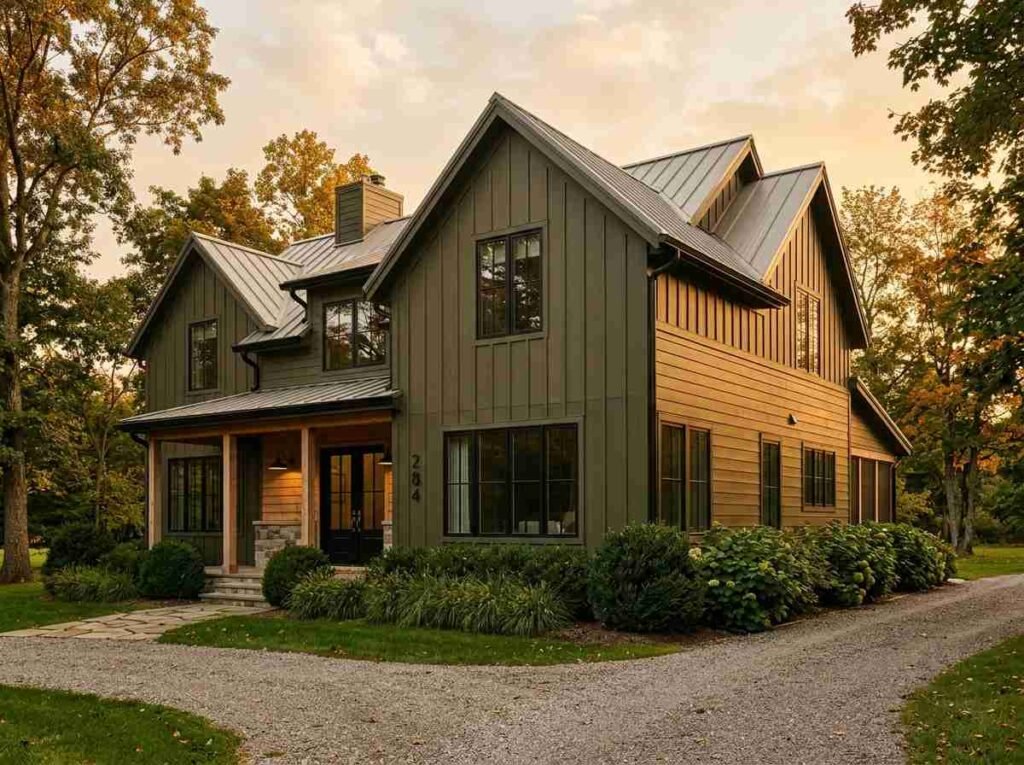
Dark olive green with black trim keeps appearing on house after house across Pinterest, real estate listings, and new build developments — and the reason it has not faded the way most exterior colour trends eventually do is that it solves a specific problem most bold colours create. It reads as confident without being aggressive. It makes a house look considered and intentional from the street without demanding that every neighbour notice it. And it ages well in a way that brighter, more saturated colours rarely manage.
The concern most people have before choosing it — that dark olive green with black trim might be too bold, too dark, or too much of a statement for their specific house — is understandable and almost never borne out in practice. Olive green has a naturally muted, warm undertone that gives it a grounded, settled quality compared to cooler or more saturated greens. It does not shout. It anchors. And black trim, rather than intensifying the darkness of the main colour, actually gives the overall exterior more clarity and crispness than softer trim choices typically do.
What does require genuine thought — before any paint is ordered or any contractor is hired — is which specific shade of olive green suits your house’s style, proportions, and surrounding materials, and which accent and door colours complete the combination rather than fighting it. The gap between a dark olive green exterior that stops people in their tracks for the right reasons and one that looks slightly off is almost entirely in those decisions. This guide covers all of them.
🔗 Working on your whole home’s exterior? Read our L-shaped outdoor kitchen ideas guide and our economy home decor guide for more.
Why Olive Green Works Where Other Dark Greens Don’t
Unlike other dark shades of green, olive green carries a particularly muted or warm undertone, which gives it a more mature colour profile compared to cooler, more saturated greens like emerald or hunter green. That warmth is the entire reason it pairs so easily with such a wide range of trim and accent colours — a cooler, bluer dark green can feel sterile or even slightly clinical against black trim, while olive’s warmth keeps the combination feeling grounded and natural rather than stark.
This is also why olive green works convincingly across such a wide range of house styles — modern farmhouse, craftsman, ranch, rustic cabin, and even Tudor homes given a modern reinterpretation — in a way that more saturated greens often can’t stretch to cover.
The Best Dark Olive Green Paint Shades
Specific, named paint colours worth knowing before a trip to the paint store:
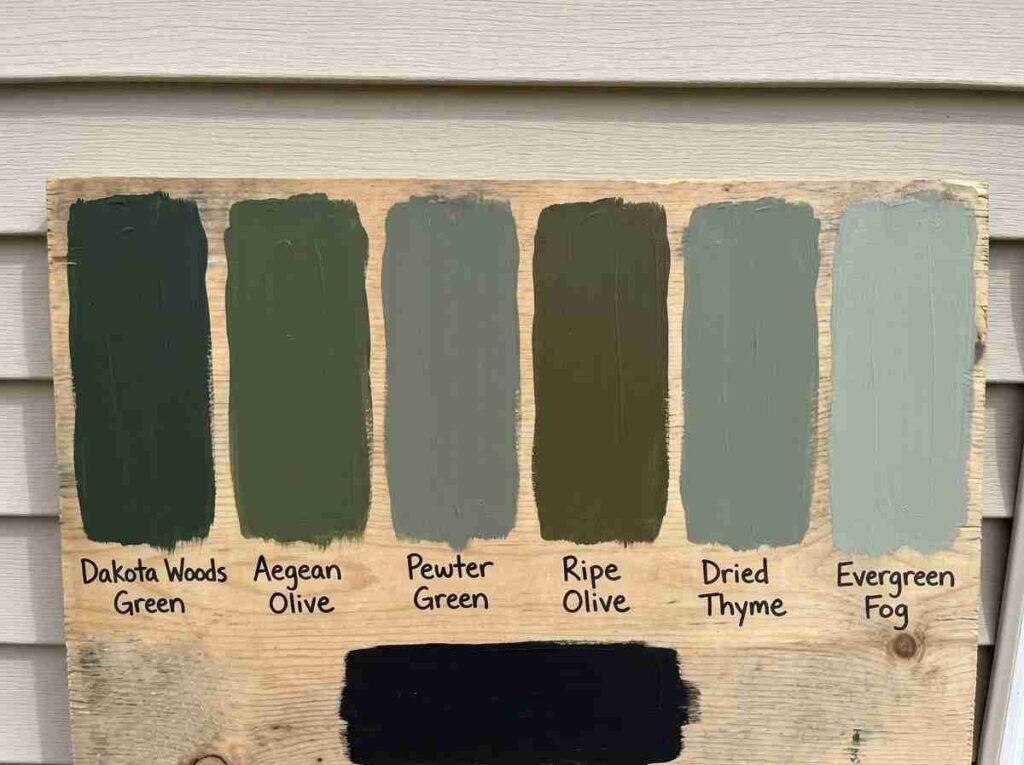
Benjamin Moore Dakota Woods Green — a deeply saturated, rich olive ideal for a genuinely dark, moody exterior palette. One of the most frequently recommended shades for anyone wanting maximum drama from the green itself.
Benjamin Moore Aegean Olive — a deep, breathtaking shade that works particularly well on contemporary designs with striking geometry and sharp architectural lines.
Benjamin Moore Pewter Green — a softer, more rustic-leaning olive that pairs beautifully with natural wood accents and stone, without sacrificing the depth that makes olive green distinctive.
Sherwin Williams Ripe Olive — frequently mentioned alongside Dakota Woods Green as one of the genuinely best dark olive choices, with a slightly different warmth balance worth comparing in person against your own siding sample.
Sherwin Williams Dried Thyme — a gray-green with noticeable khaki undertones, slightly less deep than the darkest olive options, but particularly effective when paired generously with natural materials like stone and wood.
Sherwin Williams Evergreen Fog — a more muted, soft green with grey undertones, ideal as a slightly gentler main body colour for anyone wanting the olive green family without the most intense saturation.
Farrow & Ball Duck Green — another strong option specifically noted alongside the Benjamin Moore and Sherwin Williams choices above as a genuinely good dark olive exterior colour.
For trim specifically: Sherwin Williams Tricorn Black is one of the deepest, truest black paint colours available and is consistently recommended as the trim partner for the darkest olive body colours, where maximum contrast is the goal.
You can also read Drapes for Dining Room: The Complete Guide
Pairing Colours by House Style
This is the section most exterior colour guides skip — matching the specific olive-and-black combination to the architectural style it will actually sit on.
Modern Farmhouse
The most popular pairing right now. Olive green siding with crisp black trim around windows and along the roofline creates the clean, structured contrast that defines the modern farmhouse look. White Dove or a similarly crisp white can substitute for black on the trim itself while keeping black reserved for window frames, gutters, and the front door, giving a slightly softer but equally clean result.
Best accent additions: Black metal house numbers and light fixtures, a natural wood front door left unpainted for contrast, simple horizontal lap siding.
Craftsman and Bungalow
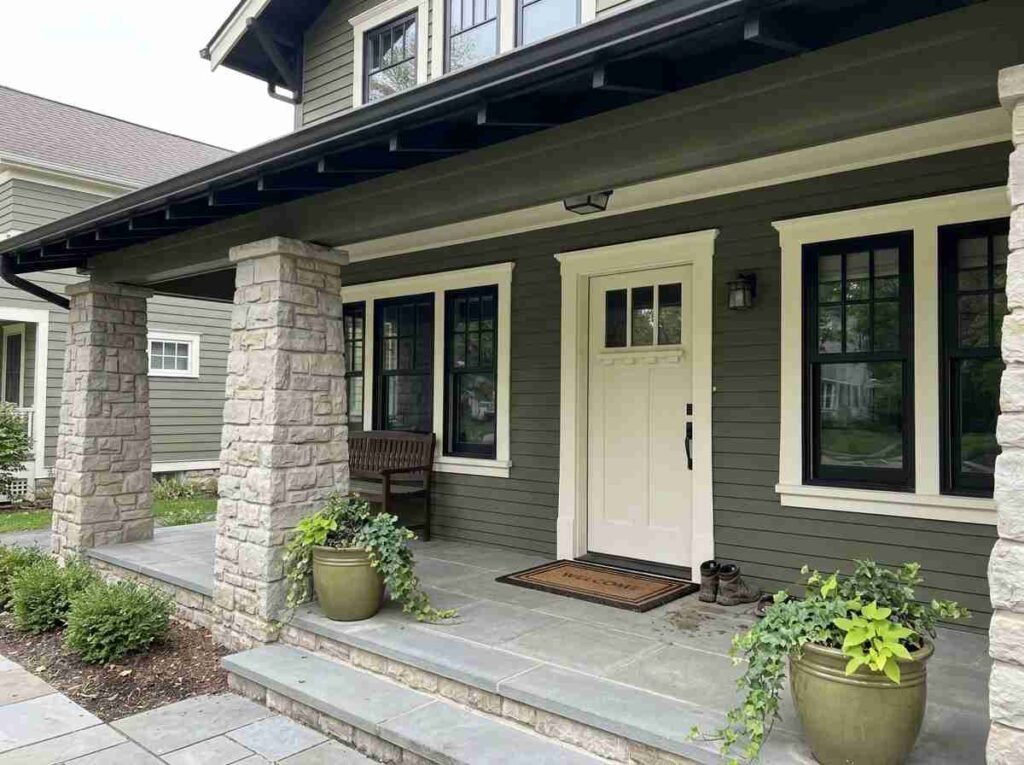
Olive green pairs naturally with the heavier, more textured detailing craftsman homes are known for. Thick white or cream trim around windows adds emphasis and depth against the dark green field colour, while exposed rafter tails and porch columns can be left in a natural wood tone or painted to match the black trim for a more unified, monochromatic look.
Best accent additions: Stone porch columns or a stone foundation, a deep red or black front door, exposed wood brackets left natural.
Rustic and Cabin-Style
A deeper, more forest-leaning olive paired with matte black trim creates cozy mountain vibes, and the darker palette helps a home blend naturally with surrounding trees rather than standing out against them. This combination also hides dirt and weathers better than lighter colours, which matters meaningfully for homes in wooded, dusty, or high-traffic rural settings.
Best accent additions: A stone chimney, copper gutters left unpainted (which develop a beautiful green patina over time that echoes the siding), unstained natural wood elements left to weather alongside the paint.
Contemporary and Modern
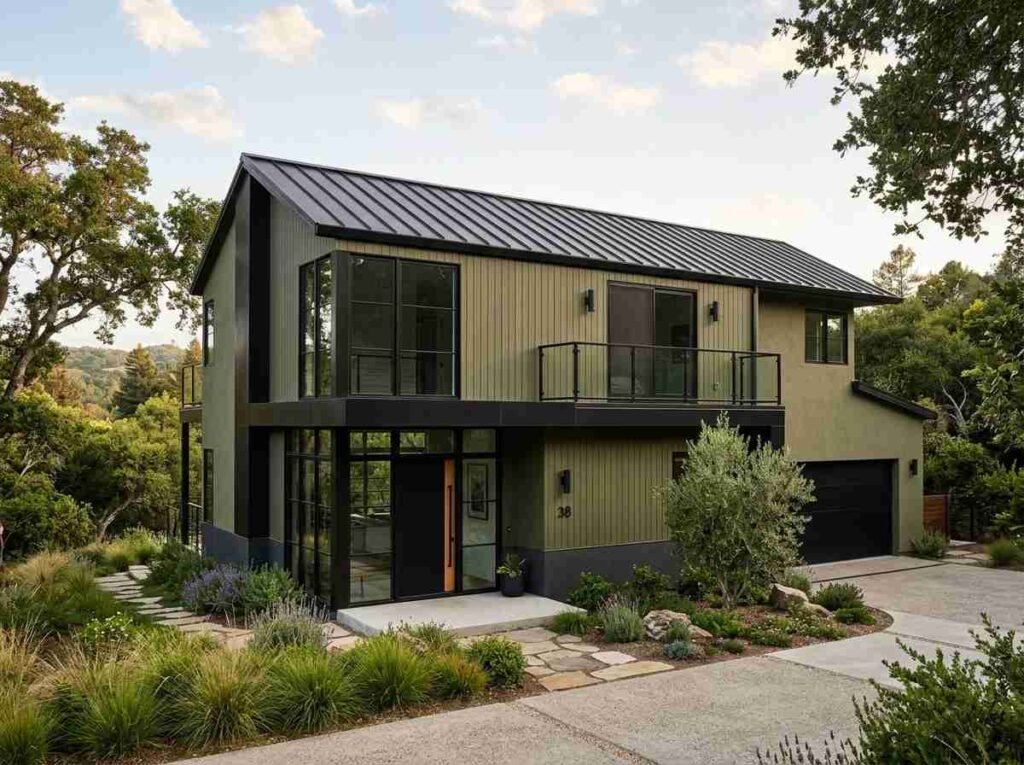
For homes with striking geometry and sharp architectural lines, a deeper olive paired with glossy (rather than matte) black trim adds another dimension through the contrast in finish, not just colour. Large black-framed windows against olive siding create a strong indoor-outdoor visual connection, and the black frames tend to visually disappear from inside the home while making a bold, high-end architectural statement from the street.
Best accent additions: Large black-framed windows, iron or modern matte-black lighting fixtures, minimal additional colour beyond the olive and black themselves.
Tudor-Style Reinterpretation
Tudor homes traditionally lean on brown, white, and cream palettes, which makes dark olive green a genuinely refreshing, modern reinterpretation of the style rather than a clash with it. The existing half-timbering and steep rooflines that define Tudor architecture pair surprisingly well with olive’s natural, earthy quality.
Best accent additions: Vibrant red brick left exposed for striking contrast, dark gray roofing that echoes rather than competes with the olive siding tone.
You can also read DIY Rustic Bathroom Vanity: How to Build or Fake the Look
What to Know Before You Paint — The Practical Considerations
Check Your HOA Rules First
This is the single most important step almost no inspiration-focused guide mentions clearly. A significant proportion of homes in the US are governed by homeowners association covenants, and many require Architectural Review Board approval for any exterior colour change, often limiting choices to a pre-approved palette of swatches. In designated historic districts, a separate Certificate of Appropriateness from the local preservation commission may also be required.
Always submit paint chips and a written colour description to your HOA or relevant board before ordering materials. Retroactive enforcement after a colour change has already happened can require repainting at the homeowner’s own expense — a costly and entirely avoidable mistake.
Understand How Dark Colours Behave in Sunlight
Dark colours, including dark olive green, tend to fade faster than lighter ones under prolonged sun exposure, and they also absorb more solar heat, which is worth factoring into both the paint quality chosen and the climate the home sits in. Higher-quality 100% acrylic exterior paints from major manufacturers are formulated specifically to resist this fading better than budget alternatives, and the cost difference is almost always worth it on a project this size.
Protective measures worth considering for high-exposure homes: ceramic coatings for longer-lasting gloss retention, or simply choosing a slightly less saturated olive shade (like Evergreen Fog or Dried Thyme rather than the deepest, most intense options) in climates with particularly intense, consistent sun exposure.
Consider Fiber Cement as a Lower-Maintenance Alternative to Paint
Rather than painting existing siding, some modern fiber cement siding products are now manufactured pre-finished in dark olive green tones, eliminating the ongoing maintenance and repainting cycle entirely while still achieving the same striking exterior aesthetic. This is a meaningfully larger upfront investment than paint, but worth knowing about for anyone planning a full siding replacement rather than a repaint of existing material.
The Olive Green and Black Combination, Explained Simply
For anyone still deciding whether this combination suits their specific home, the underlying logic is straightforward:
Olive green is forgiving because of its warmth. Its muted, slightly warm undertone means it rarely clashes with existing brick, stone, or wood elements already present on a home, which is one of the main reasons it works across so many different architectural styles without requiring other major material changes.
Black trim provides definition without competing for attention. Black trim outlines architectural features — windows, gutters, rooflines — almost like a blueprint come to life, drawing the eye to the shape of the house itself rather than introducing a second colour that needs to be balanced against the green.
Neutral accent colours create harmony; bold accent colours create drama. Gray, beige, and white trim or accent details alongside dark olive green create a balanced, harmonious look suited to most neighbourhoods and architectural styles. Black and red accents create a more striking, contrasting look for homeowners specifically wanting the boldest version of this colour story.
You can also read Curtain Ideas for a Small Dining Room — The Complete Guide 2026
Frequently Asked Questions
Q: What colours go with a dark olive green house?
A: Black is the most popular and most striking trim partner, creating sharp architectural definition against the green. White and cream trim offer a softer, more classic farmhouse look. Gray, beige, and tan work well as neutral, harmonious accent colours for a balanced overall exterior. For a bolder, more dramatic look, red accents (a front door, shutters) pair strikingly with dark olive green, and navy blue or dark brown can also work well depending on the specific shade of olive chosen.
Q: Will a dark olive green house with black trim fade quickly in the sun?
A: Dark colours generally fade faster than lighter ones under sustained sun exposure, and dark olive green is no exception. Using a high-quality 100% acrylic exterior paint significantly slows this process compared to budget paint options, and additional protective measures like ceramic coatings can extend the colour’s lifespan further. For homes in particularly intense, sun-exposed climates, choosing a slightly less saturated olive shade rather than the very darkest options can also reduce how noticeable any fading becomes over time.
Q: Do I need permission to paint my house dark olive green?
A: Possibly, depending on where you live. Many homes are governed by homeowners association rules that require Architectural Review Board approval for exterior colour changes, often limiting choices to a pre-approved set of colour swatches. Homes in designated historic districts may also require a Certificate of Appropriateness from a local preservation commission. Always check your specific HOA covenants or local historic district rules and submit paint samples for approval before ordering materials, since retroactive enforcement can require repainting at your own expense.
Q: What house styles work best with dark olive green and black trim?
A: Modern farmhouse and craftsman homes are currently the most popular pairing, where olive green siding with crisp black or white trim creates clean, structured contrast. Rustic and cabin-style homes benefit from a deeper, more forest-leaning olive that helps the house blend naturally into wooded surroundings. Contemporary homes with strong architectural lines pair well with glossy black trim and large black-framed windows. Even traditionally brown-and-cream Tudor-style homes can be given a fresh, modern reinterpretation using dark olive green as a departure from their typical palette.
Q: What is a good alternative to painting if I want a dark olive green exterior?
A: Pre-finished fiber cement siding products are available in dark olive green tones and eliminate the ongoing maintenance and repainting cycle that comes with traditional painted siding. This represents a larger upfront cost than painting existing siding but can be a worthwhile option for anyone already planning a full siding replacement, since it delivers the same striking aesthetic with significantly less long-term upkeep.