Introduction
Gothic home decor is not one thing.
It never has been. The gothic aesthetic has always been a broad church — a family of related sensibilities united by a love of darkness, depth, and the beauty of things that most mainstream design would consider too dramatic, too unusual, or too much. But within that family there are very distinct personalities.
The person who loves pastel goth home decor is not decorating the same room as someone drawn to vintage goth. The boho goth home is a fundamentally different space from a glam goth interior. Each sub-style has its own colour palette, its own furniture vocabulary, its own accessories, and its own emotional register — and understanding which one resonates with you is the most important decision you can make before spending a single penny on dark home decor.
This guide goes deep on four of the most distinctive goth aesthetic home decor sub-styles: pastel goth, boho goth, glam goth, and vintage goth. For each one you will find the colour palette, the furniture choices, the wall decor, the accessories, and practical advice on how to create it — whether you are starting from scratch or adding sub-style-specific elements to an existing gothic space.
🔗 New to gothic home decor? Read our complete goth home decorating guide first for the broader picture before diving into sub-styles.
Why Sub-Styles Matter in Gothic Home Decor
The most common mistake people make when approaching gothic home decor is treating it as a single monolithic aesthetic. They search “goth home decor,” see a mixture of Victorian manor houses, pastel skull accessories, boho macramé alongside dark crystals, and glam black-and-gold living rooms all appearing together — and feel confused about which direction to go.
The confusion comes from not recognising that all of these are different sub-styles within the same broad aesthetic family. Each one shares the gothic commitment to darkness, drama, and non-mainstream sensibility — but expresses those values through very different visual languages.
Choosing your sub-style first means every subsequent decision becomes easier. The colour palette, the furniture, the accessories — all of it falls into place once you know which version of gothic you are building toward.
Sub-Style 1: Pastel Goth Home Decor
What Is Pastel Goth?
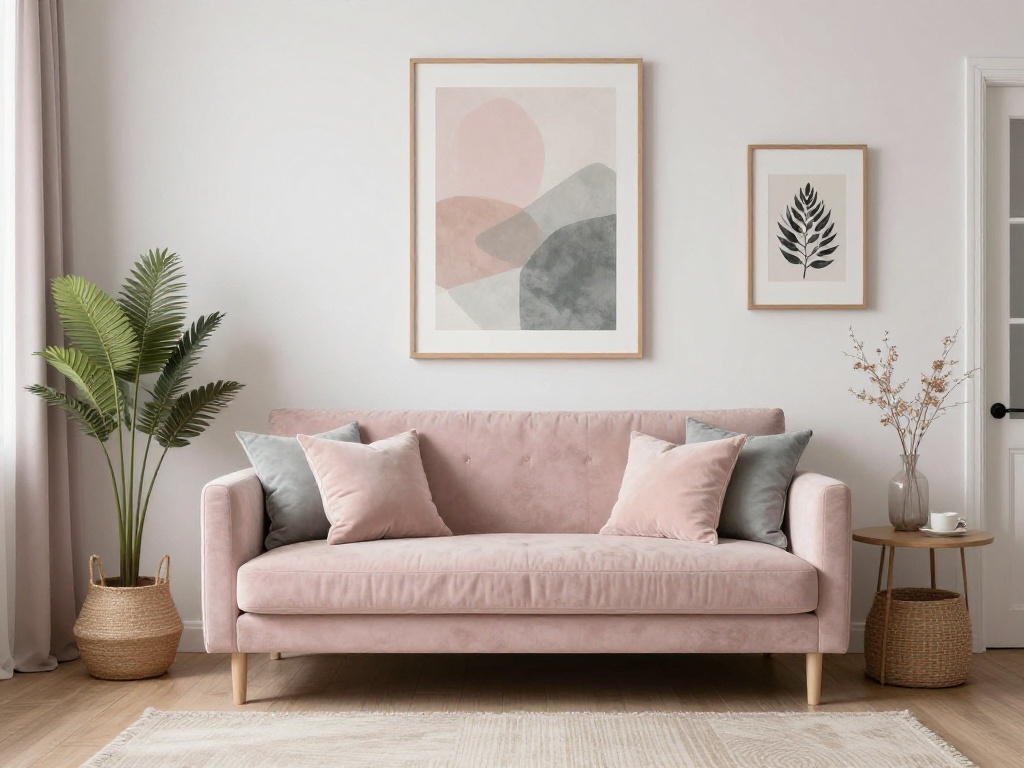
Pastel goth is the most visually surprising of the gothic sub-styles — because it takes the darkest of aesthetics and infuses it with the softest of colour palettes. The result is something genuinely distinctive: rooms that feel simultaneously sweet and unsettling, feminine and slightly sinister, playful and dark.
The aesthetic emerged from internet subculture — particularly Tumblr and later Instagram — as a deliberate subversion of both the all-black gothic aesthetic and the all-pink kawaii aesthetic. It refuses to choose between the two, combining pastel colours with gothic motifs and creating something that belongs fully to neither tradition.
Pastel Goth Colour Palette
The pastel goth palette has two layers that work in deliberate tension:
The pastel base: Lavender, mint green, pale pink, baby blue, and soft lilac. These are the primary colours of the walls, large furniture pieces, and bedding. They create the sweet, dreamy atmosphere that the “pastel” half of the aesthetic requires.
The dark accents: Black, deep purple, and dark charcoal appear in furniture details, accessories, and accent pieces. A black bed frame against pale pink walls. Black lace curtains against a mint green background. Dark purple accessories in a predominantly lavender room.
The key to pastel goth balance is maintaining roughly a 70/30 split — 70% pastel, 30% dark. Tip too far toward the pastel and the gothic element disappears. Tip too far toward the dark and the pastel quality is lost.
You can also use our Free Renovation Tool for your styling.
Pastel Goth Furniture and Room Elements
Bed frame: A black metal frame — simple, slightly industrial — against pale pink or lavender walls creates the most direct pastel goth contrast. Alternatively, a white carved wooden bed frame with black hardware.
Bedding: Pastel duvet covers with gothic print details — crescent moons in lavender, bats in soft pink, skull motifs in mint green. Layer with a black velvet throw draped across the foot for the dark counterpoint.
Wall decor: Pastel-toned art prints featuring gothic subjects — a pastel pink skull surrounded by flowers, a lavender galaxy with constellation details, a mint green witchy illustration. Combine with black lace wall hangings, a coffin-shaped mirror in black with a pastel interior, and fairy lights in pastel colours rather than warm white.
Accessories: Pastel-coloured crystals (rose quartz, amethyst, selenite) displayed on black iron or dark wood shelving. Pastel skull ornaments. Pink or lavender candles in black iron holders. A pastel chandelier with black metalwork. Mushroom lamps in soft tones.
Lighting: Pastel LED strip lights (lavender or pink) rather than the deep purple typically associated with gothic rooms. Fairy lights in pastel colours. A small pastel neon sign — a bat, a crescent moon, or a short gothic phrase in mint or pink.
You can also read Minimalist Room Ideas That Feel Cozy, Calm & Beautiful in 2026
Who Pastel Goth Is For
Pastel goth home decor works best for people who are drawn to the gothic aesthetic but find all-dark rooms oppressive or impractical, those who want a space that feels both feminine and edgy, and anyone who appreciates the specific energy of apparent contradictions — sweet things with dark edges, soft colours housing dark motifs.
It also crosses over naturally with the kawaii aesthetic — if you love kawaii but want something with more darkness and edge, pastel goth is the natural direction.
Sub-Style 2: Boho Goth Home Decor
What Is Boho Goth?
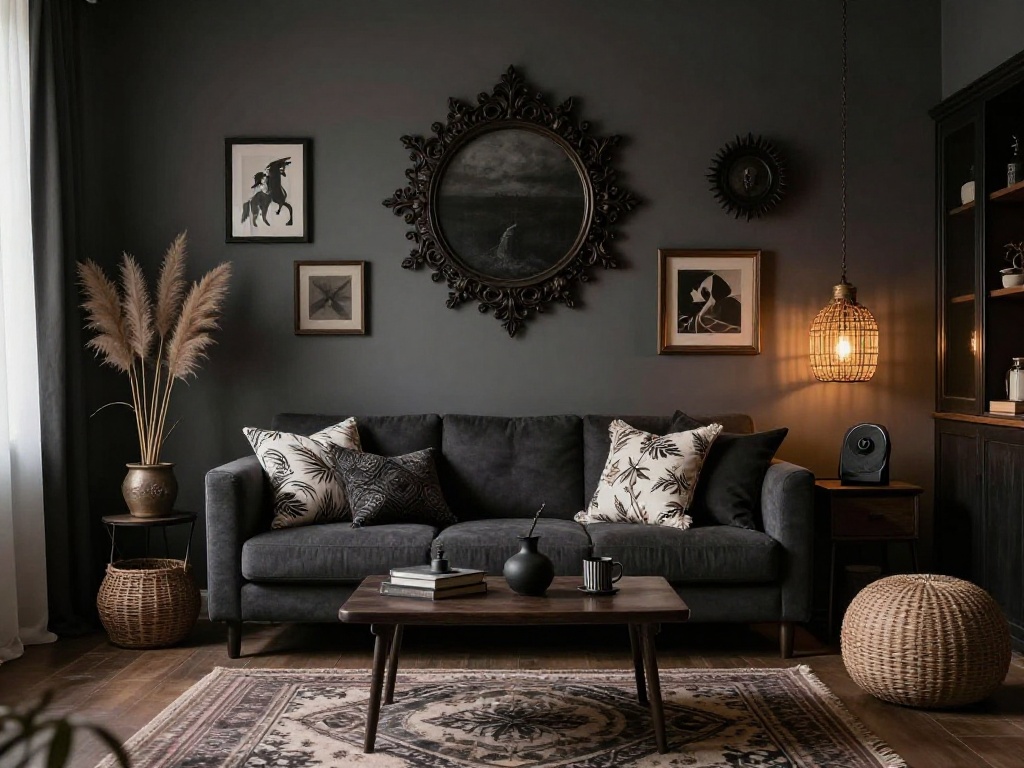
Boho goth sits at the intersection of the gothic aesthetic and bohemian design — and it is perhaps the most liveable and most versatile of the gothic sub-styles. Where Victorian gothic can feel theatrical and classical gothic can feel heavy, boho goth has an earthy, organic warmth that makes it genuinely comfortable to live in while maintaining the darkness and mysticism that gothic design requires.
The boho goth home draws from both traditions equally: the gothic contribution is the dark palette, the crystal collections, the candles, the mystical symbolism, and the connection to the occult and witchcraft traditions. The bohemian contribution is the macramé, the rattan and wicker, the layered textiles, the abundance of plants, and the relaxed, free-spirited approach to arrangement.
The result feels like the home of a witch who also travels extensively, collects meaningful objects from many different places, and prioritises warmth and comfort alongside atmosphere and mystery.
Boho Goth Colour Palette
The boho goth palette is warmer and more earthy than any other gothic sub-style:
Deep, warm earth tones as the base: Terracotta, warm rust, deep olive, and warm brown rather than the cool black of classical gothic. These colours ground the space in the natural, earthy quality of the bohemian tradition.
Dark accents: Deep forest green, burgundy, and dark plum as accent colours. These maintain the gothic depth without tipping the palette into cold or austere territory.
Natural neutrals throughout: Cream, warm white, and natural linen tones in soft furnishings and layered textiles. These provide the breathing space that a boho room needs between its richer, darker elements.
Gold and brass metallics: Warm, slightly tarnished gold and aged brass in candle holders, mirror frames, lamp bases, and hardware. These connect to both the bohemian love of warm metallics and the gothic tradition of ornate golden details.
Boho Goth Furniture and Room Elements
Furniture: Rattan and wicker pieces alongside dark wood. A rattan headboard on a bed with dark jewel-toned bedding. A wicker side table beside a deep green velvet sofa. Natural materials softened by rich textiles create the boho goth tension perfectly.
Textiles: This is where boho goth most directly expresses its character. Layer multiple textiles of different textures — a velvet throw over a woven cotton sofa cover, a macramé wall hanging above a tapestry, kilim rugs layered over a natural jute base rug. The abundance and variety of textiles is the most distinctive boho element.
Plants: Plants are non-negotiable in a boho goth home — they provide the living, growing quality that pure gothic design can lack. Trailing pothos, large monstera plants, hanging succulents in dark ceramic pots, and dried botanical bundles of lavender, sage, and eucalyptus hanging from the ceiling or a wooden beam.
Crystals and magical objects: A significant crystal collection displayed throughout the home — on shelves, windowsills, and altar surfaces. Amethyst, obsidian, labradorite, and black tourmaline are particularly boho goth crystal choices. Alongside them: tarot decks on display, incense burners, mortar and pestle for herbs, and meaningful found natural objects.
Macramé: A large macramé wall hanging in natural cream cotton above the bed or sofa is the single most distinctly bohemian element available and works beautifully in a boho goth context when accompanied by dark accessories. Look for macramé incorporating dark beads, feathers, or semi-precious stones for a more gothic quality.
Lighting: Layered warm light from multiple sources — a rattan pendant light, brass floor lamps, clusters of candles, and warm fairy lights draped through plant displays. No harsh overhead lighting. The boho goth home at night should feel like candlelight filtered through natural materials.
Who Boho Goth Is For
Boho goth home decor works best for people who are drawn to the witchy and occult elements of gothic design but find all-dark rooms cold or unwelcoming, those who love plants and natural materials alongside darker aesthetic elements, and anyone who wants a gothic home that also feels genuinely warm, cosy, and comfortable for everyday living.
It overlaps significantly with the witchy bedroom aesthetic — the boho goth home is essentially what happens when the witchy bedroom expands to fill an entire house.
Sub-Style 3: Glam Goth Home Decor
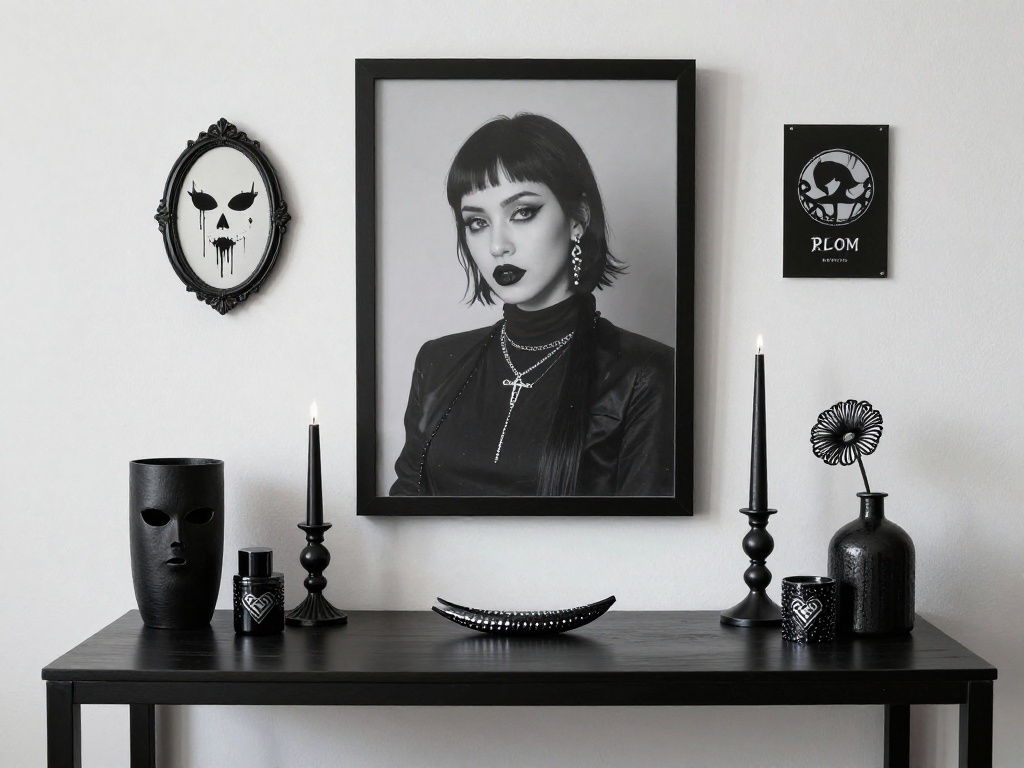
What Is Glam Goth?
Glam goth is the most luxurious and the most visually dramatic of all the gothic sub-styles. It takes the gothic commitment to darkness and drama and amplifies it through the lens of Hollywood glamour, maximalist luxury, and the conviction that more is always more when more is beautiful.
Where boho goth is earthy and organic, glam goth is polished and theatrical. Where pastel goth is soft and playful, glam goth is bold and unapologetic. This is the gothic sub-style for people who want their home to feel like a film set — specifically a very expensive, slightly decadent film set where champagne is always being poured and the lighting is always perfect.
The visual references for glam goth home decor include Old Hollywood glamour, the maximalist interiors of Versailles, the theatrical excess of David LaChapelle’s photography, and the specific black-and-gold aesthetic that has appeared in luxury hotel design for decades.
Glam Goth Colour Palette
The glam goth palette is built on the most dramatic colour combinations in the gothic family:
Black and gold: The most iconic glam goth combination. Deep black walls or wallpaper with gold light fittings, gold mirror frames, gold hardware, and gold accessories. This palette feels unambiguously luxurious and creates maximum visual impact.
Black and silver: A cooler, slightly more modern alternative to black and gold. Chrome, mirror, and silver metallic accents against a dark background create a sleek, editorial quality.
Deep jewel tones with gold: Midnight navy or deep emerald green walls with rich gold accessories and warm amber lighting. This combination has the depth of classical gothic with the luxurious quality of glam without being as stark as pure black and gold.
Black and pink: A more unexpected glam goth combination. Deep black as the base with hot pink or deep rose as the accent — in velvet cushions, artwork, and accessories. This combination has a rock star energy that is distinctly glam goth.
Glam Goth Furniture and Room Elements
The sofa: A large, deeply tufted sofa in black velvet with gold legs is the ultimate glam goth centrepiece. Alternatively, a deep jewel-toned velvet sofa (midnight blue, deep emerald, or rich burgundy) with gold or chrome metalwork.
Mirrors: Glam goth uses mirrors more extensively than any other gothic sub-style. A large baroque-framed floor mirror leaned against the wall. A gallery of ornate gold mirrors clustered together. Mirrored furniture surfaces — a mirrored side table, mirrored wardrobe doors, a mirrored dresser. The reflections multiply the candlelight and create a sense of infinite depth and luxury.
Chandeliers: The chandelier in a glam goth room is a statement piece in its own right — large, ornate, and impossible to ignore. Crystal drop chandeliers in black or gold frames, multi-arm candelabra-style chandeliers in wrought gold, or contemporary geometric chandeliers in matte black with warm bulbs all work within the glam goth vocabulary.
Velvet everywhere: Velvet is the defining fabric of glam goth. Velvet sofa, velvet curtains, velvet cushions, velvet headboard, velvet ottomans. The richness and light-absorbing quality of velvet creates exactly the tactile luxury that glam goth requires.
Gold accessories: Gold candlestick holders, gold-framed art prints, gold ornamental objects, gold hardware on every piece of furniture. The gold should be warm and slightly aged rather than cool and bright — antique gold rather than polished chrome.
Wall treatments: Black or deep jewel-toned wallpaper with a damask, geometric, or floral pattern in a tonal or slightly contrasting shade adds depth and texture to the walls without competing with the gold accessories. A gallery wall of gold-framed mirrors and dark oil painting reproductions on a black wall is one of the most effective single glam goth wall treatments available.
Who Glam Goth Is For
Glam goth home decor works best for people who love gothic aesthetics but also love luxury, drama, and maximalist excess, those who find classical gothic rooms too austere or restrained, and anyone who wants a home that makes an immediate, powerful visual statement.
It also appeals to fans of dark academia decor who want more glamour and less scholarly restraint in their dark aesthetic rooms.
Sub-Style 4: Vintage Goth Home Decor
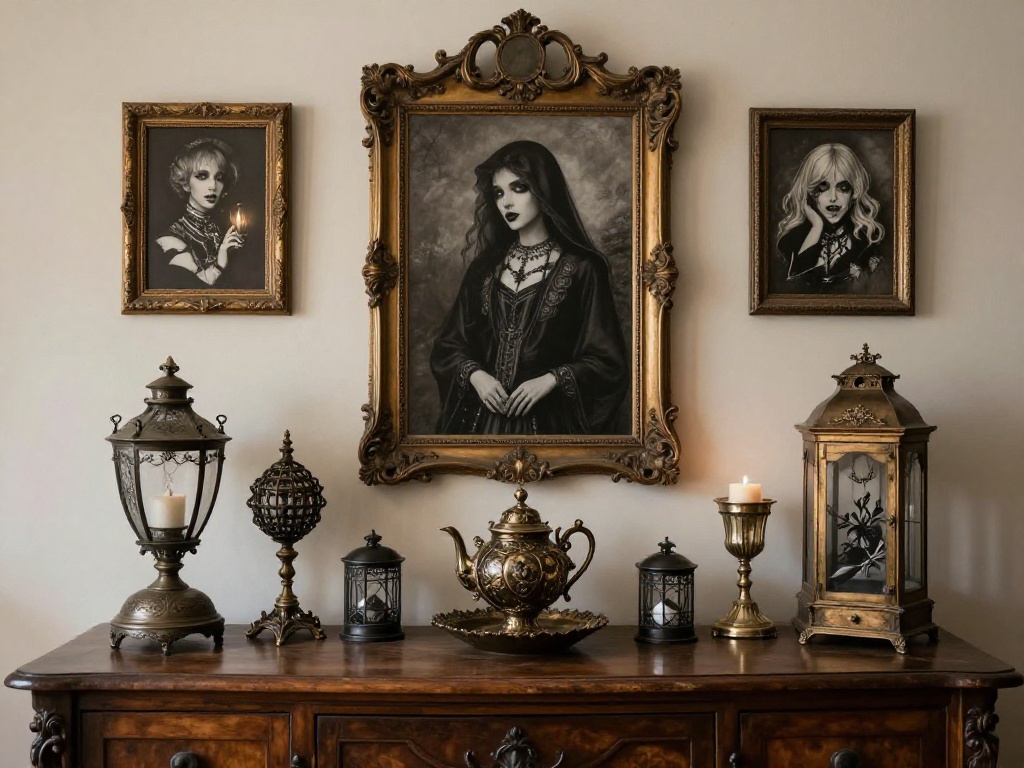
What Is Vintage Goth?
Vintage goth is the most historically grounded and the most authentically gothic of all the sub-styles — because it draws not from contemporary internet aesthetics or modern design trends but directly from the source material of gothic history. Victorian architecture, Edwardian interiors, the dark romanticism of the 19th century, and the genuine antique objects that were made in that era.
The vintage goth home does not look like it was recently decorated in a gothic style. It looks like it has always been this way — accumulated over decades, filled with genuine antique pieces, and saturated with the specific quality of age and history that no reproduction can quite replicate.
It is the most time-intensive and often the most expensive gothic sub-style to create authentically — but it is also the most genuinely distinctive and the most resistant to trends, because it is built on real objects with real history rather than contemporary aesthetic choices.
Vintage Goth Colour Palette
The vintage goth palette references the specific colours of Victorian and Edwardian interiors:
Deep Prussian blue and slate: Victorian rooms frequently used deep blue tones — slightly dusty and slightly grey — that feel both formal and melancholy. This is very different from the bright navy of contemporary interiors.
Faded burgundy and dusty rose: Victorian red tones, aged and slightly faded. Not the vivid crimson of classic gothic but a more muted, time-worn version.
Dark olive and sage: The specific greens of Victorian wallpaper — earthy, slightly yellowish, and distinctly of their era.
Aged cream and warm ivory: The natural colour of aged paper, old lace, and unbleached cotton. Appears in soft furnishings, curtains, and as the neutral backdrop for darker architectural elements.
Brown-toned wood and walnut: The dark, warm wood tones of genuine Victorian and Edwardian furniture — mahogany, walnut, and aged oak.
Vintage Goth Furniture and Room Elements
Genuine antique furniture: The single most important element of vintage goth home decor is the use of genuine vintage and antique pieces rather than reproductions. Victorian mahogany dressers, Edwardian side tables, genuine antique mirrors with foxed glass, original brass candlesticks — these objects carry the specific quality of age that makes vintage goth feel authentic rather than costumed.
Source from: eBay (the single best source for affordable antique furniture), local auction houses (often dramatically cheaper than antique shops), estate sales, and antique markets.
Victorian wallpaper patterns: Original or reproduction Victorian wallpaper — in deep floral, paisley, or geometric patterns in the specific Victorian palette described above — is the most dramatically effective single change available in a vintage goth room. Several specialist wallpaper companies produce high-quality reproductions of genuine Victorian patterns.
Antique oil paintings and prints: Original Victorian oil paintings — available at auction and on eBay for surprisingly affordable prices — add a quality of authentic history that no reproduction can replicate. Dark landscape paintings, portrait paintings in heavy gilded frames, and Victorian botanical illustrations in their original frames are all excellent choices.
Antique textiles: Genuine Victorian and Edwardian textiles — lace curtains, brocade table covers, embroidered cushions — found in antique shops and charity shops add the specific quality of aged fabric that distinguishes vintage goth from simply old-looking decor.
Books: A genuine collection of Victorian and Edwardian books — their spines carrying the specific faded gold lettering and dark cloth binding of the era — displayed on dark wood bookshelves is one of the most powerfully evocative vintage goth elements available. These are widely available in charity shops and at book markets for very little.
Clocks and scientific instruments: Antique mantel clocks in bronze or brass, Victorian scientific instruments (barometers, compasses, magnifying glasses, telescopes), and genuine antique curios add the specific quality of intellectual interest and historical depth that vintage goth requires.
Who Vintage Goth Is For
Vintage goth home decor works best for people who are genuinely interested in history and who find reproductions and contemporary interpretations of historical styles less satisfying than the genuine article, those with the patience to source authentic pieces rather than buying everything new, and anyone who wants a gothic home that feels like it belongs to a specific era rather than to the contemporary aesthetic landscape.
It overlaps most directly with dark academia decor — the two aesthetics share a love of genuine antique objects, dark wood furniture, and the accumulated quality of intellectual and historical depth.
Comparing the Four Sub-Styles
| Element | Pastel Goth | Boho Goth | Glam Goth | Vintage Goth |
|---|---|---|---|---|
| Base colour | Lavender, pink, mint | Terracotta, rust, olive | Black, deep jewel tones | Prussian blue, dusty burgundy |
| Accent colour | Black, dark purple | Burgundy, forest green | Gold, silver | Aged cream, warm ivory |
| Key fabric | Lace, soft velvet | Macramé, woven cotton | Rich velvet, brocade | Aged lace, antique brocade |
| Key furniture | Black metal frame | Rattan, dark wood | Tufted velvet sofa | Genuine antique pieces |
| Key accessory | Pastel skull, crystal | Crystals, dried herbs | Gold mirror, chandelier | Antique clock, oil painting |
| Key light | Pastel fairy lights | Candles, warm layers | Crystal chandelier | Candlelight, antique lamps |
| Budget level | Low–medium | Low–medium | Medium–high | Low (if thrifted) |
| Closest aesthetic | Kawaii + gothic | Witchy + boho | Dark luxury | Dark academia |
Mixing Sub-Styles: What Works and What Doesn’t
The four sub-styles are not mutually exclusive — many of the best goth aesthetic home decor spaces draw from two sub-styles simultaneously. Here is what works well in combination:
Vintage goth + boho goth — this is perhaps the most natural combination. Genuine antique furniture (vintage goth) combined with crystal collections, plants, and layered natural textiles (boho goth) creates a space that feels both historically grounded and warmly organic. Many witchy home aesthetics are essentially this combination.
Pastel goth + glam goth — taking the pastel goth palette and applying it with the maximalist luxury approach of glam goth. Pale pink velvet sofa with gold legs. Lavender walls with crystal chandeliers. This combination has a specific quality — simultaneously delicate and excessive — that is genuinely distinctive.
What does not work well: Vintage goth + pastel goth. The aged, historical quality of vintage goth is fundamentally disrupted by the contemporary internet-aesthetic energy of pastel goth. Similarly, boho goth + glam goth tends to produce spaces where the relaxed organic quality of boho and the polished theatrical quality of glam work against each other.
Where to Shop for Each Sub-Style
Pastel Goth: Etsy (best for pastel skull accessories, black lace items, pastel gothic art prints), Amazon (LED strips in pastel colours, pastel neon signs, mushroom lamps), Hot Topic and alternative retailers (for genuinely gothic-themed accessories in unusual colours).
Boho Goth: Etsy (macramé, crystal collections, handmade ceramic objects, dried botanical bundles), charity shops and thrift stores (for rattan and wicker furniture, vintage textiles, ceramic pots), Amazon (crystal starter sets, rattan pendant lights, macramé wall hangings).
Glam Goth: Wayfair (tufted velvet sofas, crystal chandeliers, ornate mirrors), Amazon (gold candlestick holders, velvet cushions, baroque-style picture frames), antique markets (for genuine ornate mirrors and gold-framed art), Etsy (for handmade luxury gothic accessories).
Vintage Goth: eBay (the single best source — search “Victorian furniture,” “antique oil painting,” “brass candlesticks,” “antique clock”), local auction houses (check invaluable.com for local auction listings), charity shops (for genuine antique books, textiles, and small decorative objects), antique markets and car boot sales.
Final Thoughts
The goth aesthetic home decor landscape is far richer and more varied than most people realise — and finding your specific sub-style is the difference between a room that feels genuinely yours and one that feels like a costume.
Pastel goth for the person who wants darkness softened by sweetness. Boho goth for the person who wants warmth and nature alongside mystery and magic. Glam goth for the person who wants darkness expressed through unapologetic luxury. Vintage goth for the person who finds beauty in genuine age and history.
Each one is a complete world. Each one rewards commitment. And each one is a more interesting place to live than anything beige.
🔗 For the full gothic home picture, read our goth home decorating guide. For your gothic living room, visit our gothic living room decor guide.