Introduction
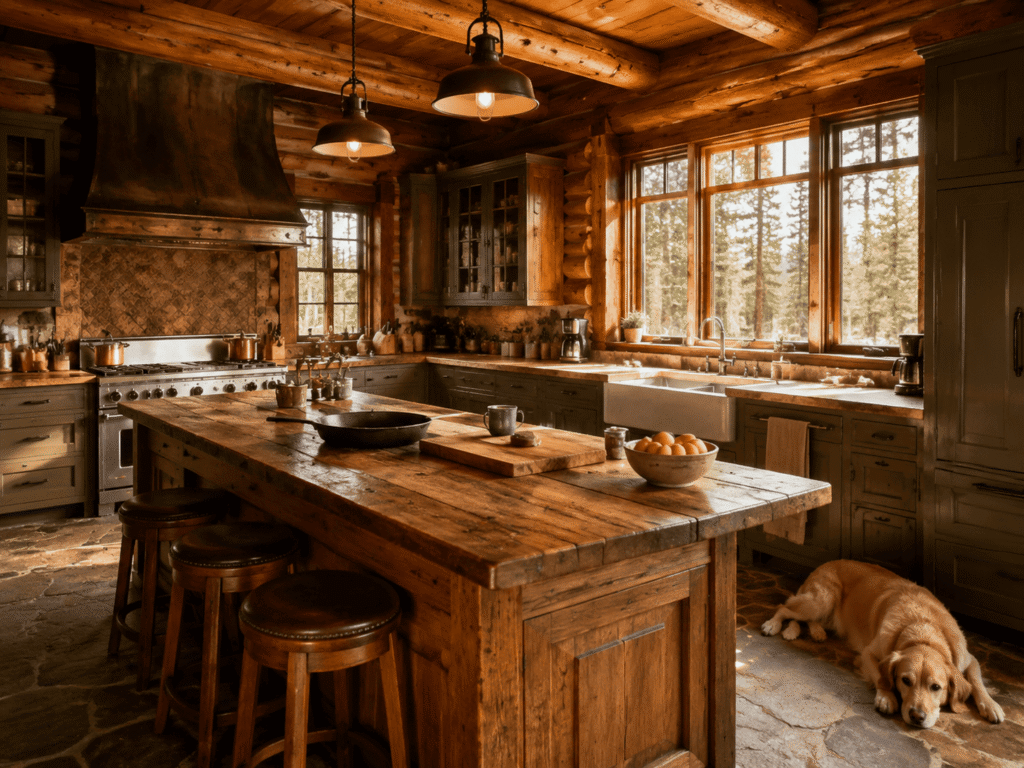
There is a specific quality that the best log home kitchens share — a quality that no amount of money or styling can manufacture in a conventional house. It is the quality of warmth that comes from walls that were once living trees, from the smell of wood that never fully leaves, from the way afternoon light moves through the logs and creates shadows that change with every hour of the day.
Rustic kitchens continue to align with 2026 design trends that prioritize warm, earthy palettes, organic materials, and personalized craftsmanship — reinforcing the appeal of natural wood, stone accents, and textured finishes in kitchen design.
A log home kitchen is not just a room where food gets made. It is — more than almost any other kitchen style — the heart of the home. The place where people gather not because the layout is convenient but because the room itself is genuinely compelling. Because it feels like somewhere worth being.
This guide covers everything you need to design a log home kitchen that honours the character of the structure it sits in while working beautifully as a modern, functional cooking space. Whether you are building from scratch, renovating an existing log home, or simply wanting to bring log home warmth into a conventional kitchen, the ideas, materials, and design principles here apply.
🔗 Interested in rustic kitchen styling? Read our Florida Outdoor Kitchen Ideas and our Small Kitchen Remodel Ideas: 20 Budget-Friendly Transformations (Before & After) for more.
Why Log Home Kitchens Are Different
Before getting into specific design ideas, it helps to understand what makes a log home kitchen genuinely different from any other kitchen style — because these differences shape every design decision.
The walls are the architecture. In a log home, the walls themselves — their texture, colour, and scale — are the dominant design element. Your kitchen does not need to compete with the logs or overpower them. It needs to work with them.
Natural materials feel correct; manufactured ones feel wrong. A sleek handleless kitchen with high-gloss lacquer cabinets placed against log walls creates a jarring dissonance that no amount of styling resolves. Log home kitchens work best when every material in them references the natural world — wood, stone, metal, ceramic.
Scale matters differently. Log homes often have high ceilings, exposed beams, and a generous proportional quality. Kitchen elements that look right in scale with conventional 8-foot ceilings can look small and mean against 12-foot log walls.
The kitchen is usually open to the main living space. Most log homes feature open-plan main floors where the kitchen flows directly into the living and dining areas. This means your kitchen design is always visible from across the room — it needs to hold up to that scrutiny and contribute to the overall atmosphere rather than sitting apart from it.
The 6 Core Log Home Kitchen Design Styles
1. Classic Rustic — The Original Log Home Kitchen
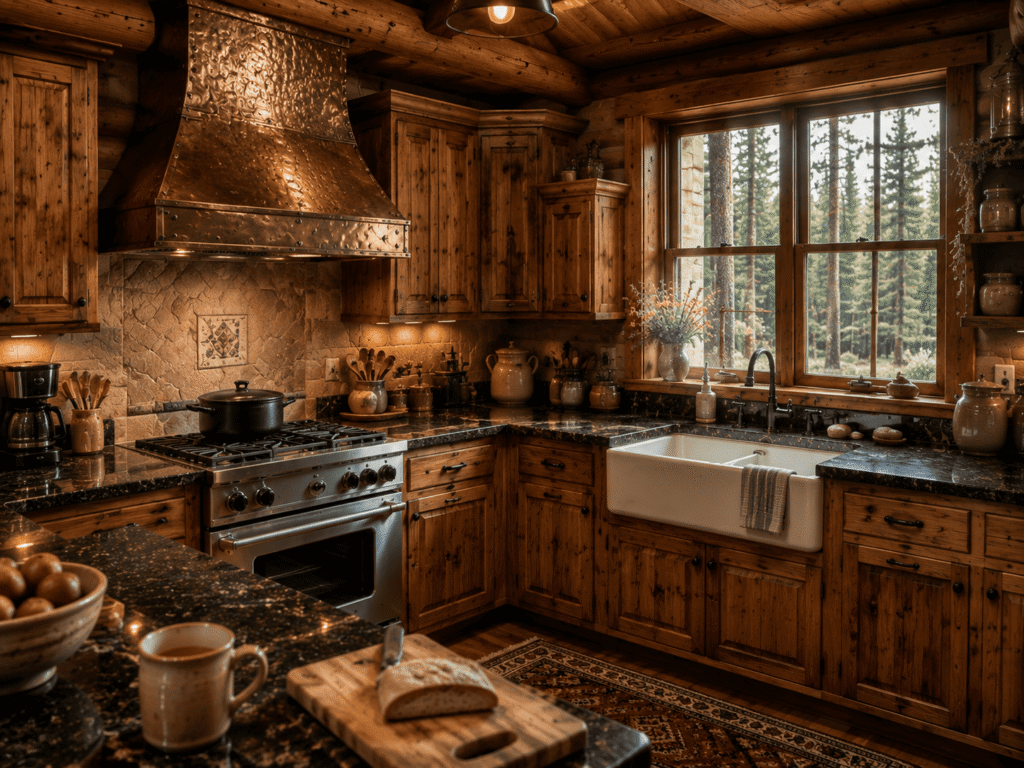
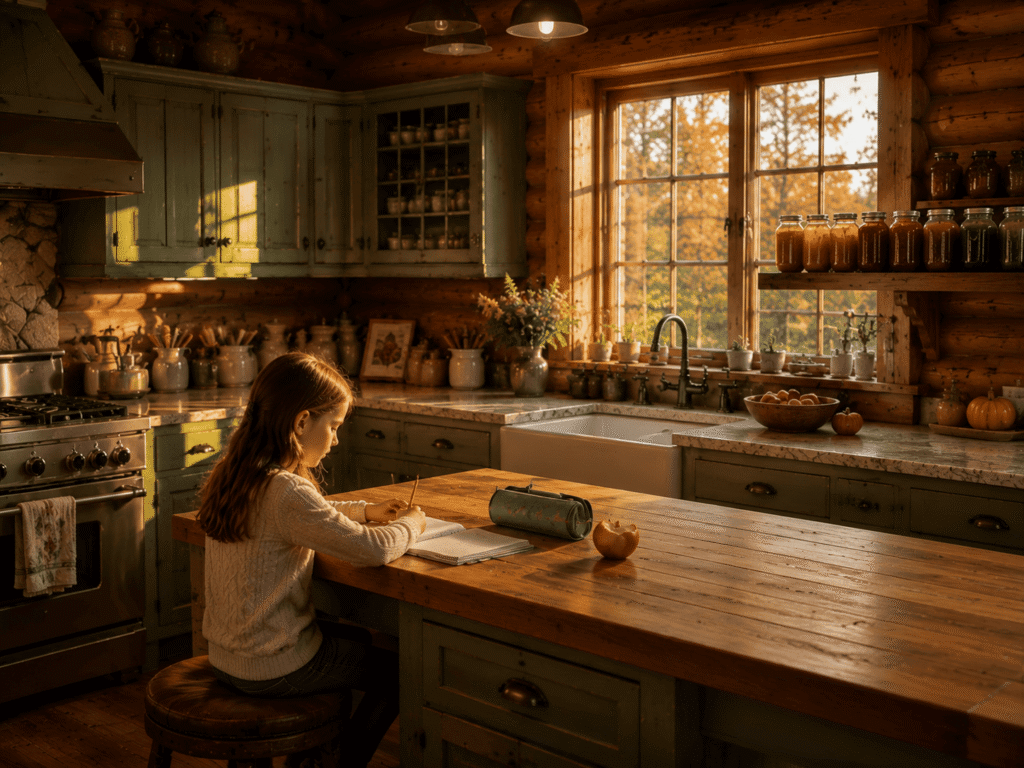
The most authentic and most enduring log home kitchen style. Every element references historical craft and natural materials — knotty wood cabinets, stone countertops, a farmhouse sink, hand-forged iron hardware, and exposed log walls as the backdrop.
Key elements:
- Knotty alder, hickory, or pine cabinets — distressed or hand-finished
- Granite or soapstone countertops in dark, earthy tones
- Farmhouse or apron-front sink in white ceramic or copper
- Hand-forged iron or aged bronze hardware
- Stone tile or wide-plank hardwood flooring
- Open shelving displaying cast iron, stoneware, and wooden utensils
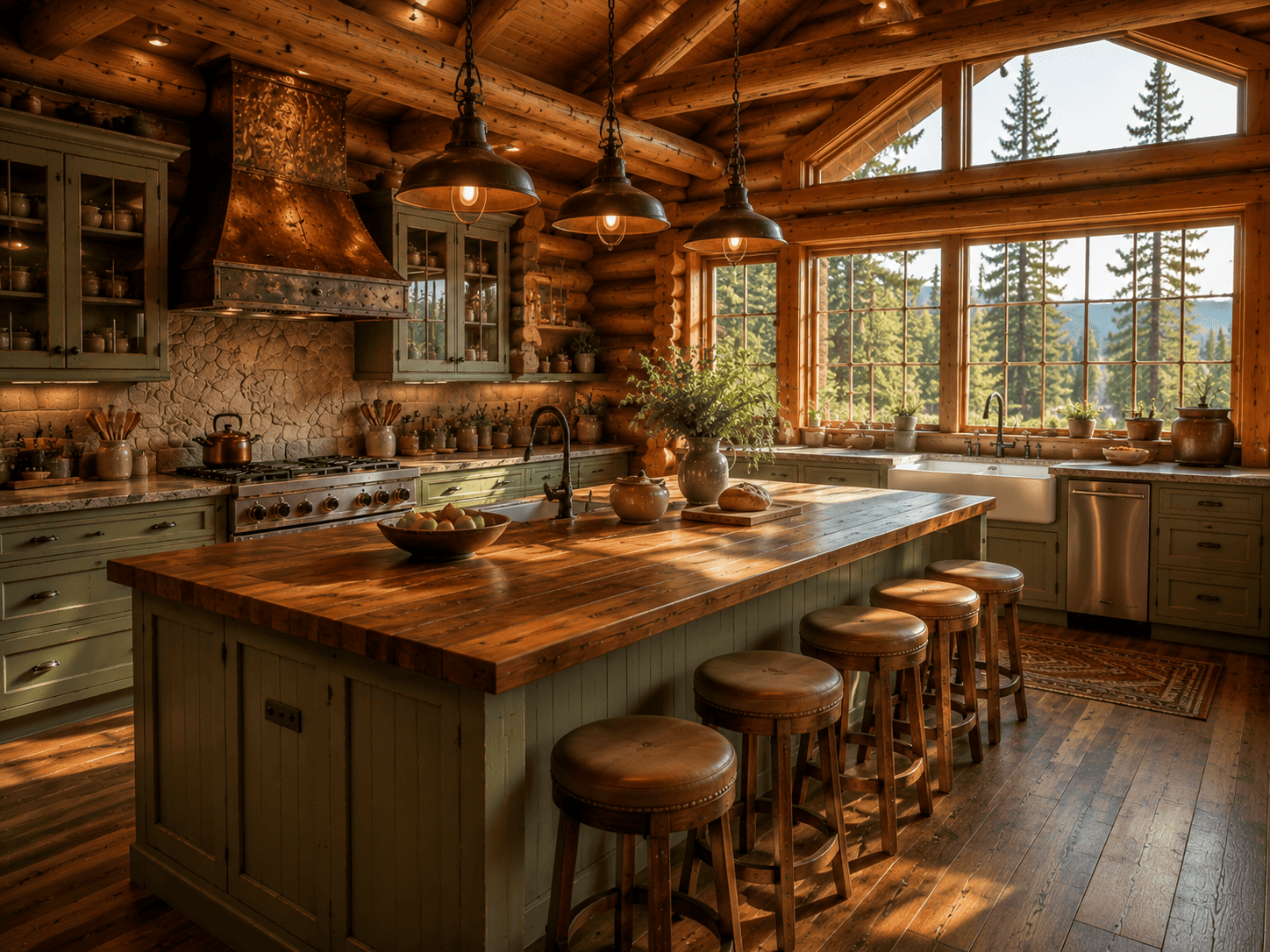
- Copper or iron pendant lights above the island
The colour palette: Deep walnut browns, warm ambers, forest green, stone grey, cream
The most inspiring log home kitchens are marked by organic elements like black granite countertops, hand-made drawer pulls and copper accents, including a hand-hammered vent hood, light fixtures and farmhouse sink.
You can also use our Free Renovation Tool
2. Modern Rustic — The Best of Both Worlds
The modern rustic log home kitchen is the most popular style for new builds and renovations in 2026. It takes the warmth and authenticity of classic rustic design and combines it with the clean lines, functional efficiency, and contemporary materials of modern kitchen design.
Key elements:
- Clean-lined cabinets in a natural wood finish — oak, walnut, or white oak rather than knotty pine
- Quartz or porcelain countertops in a stone-effect pattern
- Integrated appliances for a cleaner visual line
- A mix of open shelving and closed storage
- Aged brass or matte black hardware — the bridge between rustic and contemporary
- Large-format stone tile flooring
- A statement kitchen island in a contrasting material or colour
Pairing rustic elements with lighter counters, backsplashes, or metals like aged brass or matte black creates the contrast and balance that defines modern rustic kitchen design in 2026.
The colour palette: White oak, warm cream, aged brass, slate grey, soft white
3. Mountain Lodge — Dramatic and Grand
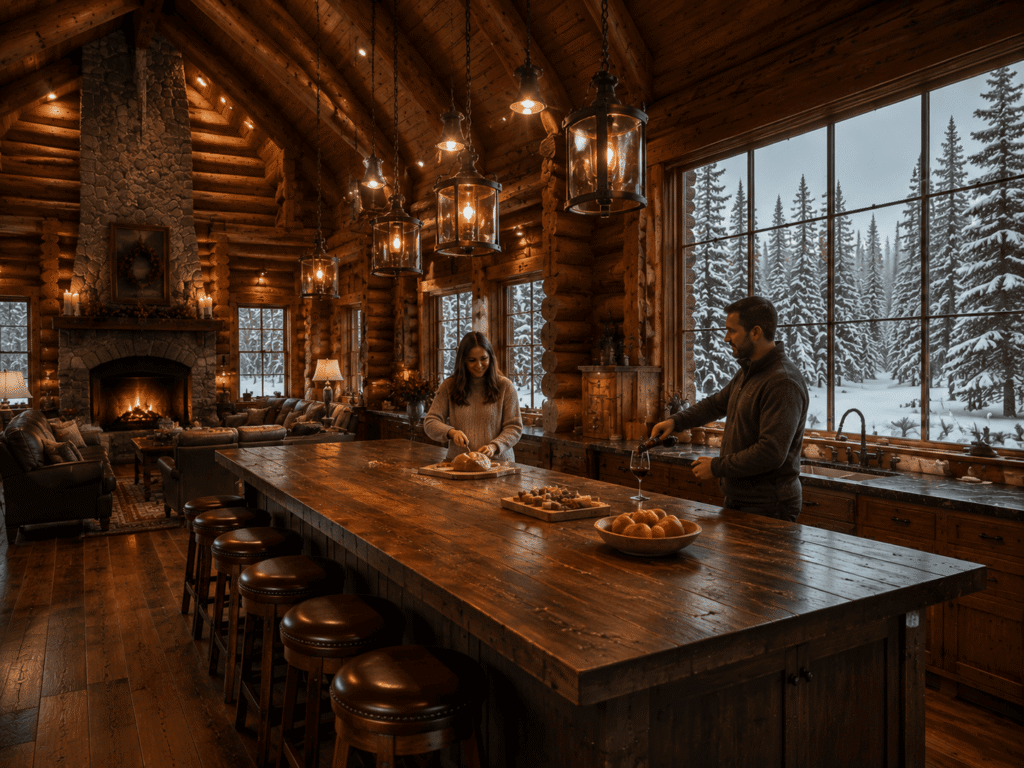
The mountain lodge log home kitchen is designed for scale — for the large, high-ceilinged log homes in mountain regions where the views are dramatic, the entertaining is frequent, and the kitchen needs to function as a professional cooking space as much as a beautiful one.
Key elements:
- A large central island — often 8–10 feet long — as the room’s social and functional centrepiece
- Double wall ovens and professional-grade range
- Stone floor-to-ceiling backsplash behind the range
- Exposed beam ceiling continuing the log home’s structural vocabulary
- Multiple pendant lights above the island — usually three or five
- A butler’s pantry or scullery kitchen adjacent for storage and prep
- A generous dining area integrated into the kitchen space
The kitchen’s massive central island is ideal for the casual get-togethers that log home owners love to host — providing space for preparation, serving buffet-style meals, and gathering around for conversation.
You can also read Small Kitchen Ideas: 35 Space-Saving Designs That Feel Bigger Than They Are
4. Cottage and Small Log Cabin Kitchen
Not all log home kitchens are grand. Small log cabins — weekend retreats, lakeside cottages, mountain escapes — often have compact kitchens that need to be both functional and beautiful in a limited footprint.
The design principles for small log cabin kitchens are slightly different from larger ones:
Key elements:
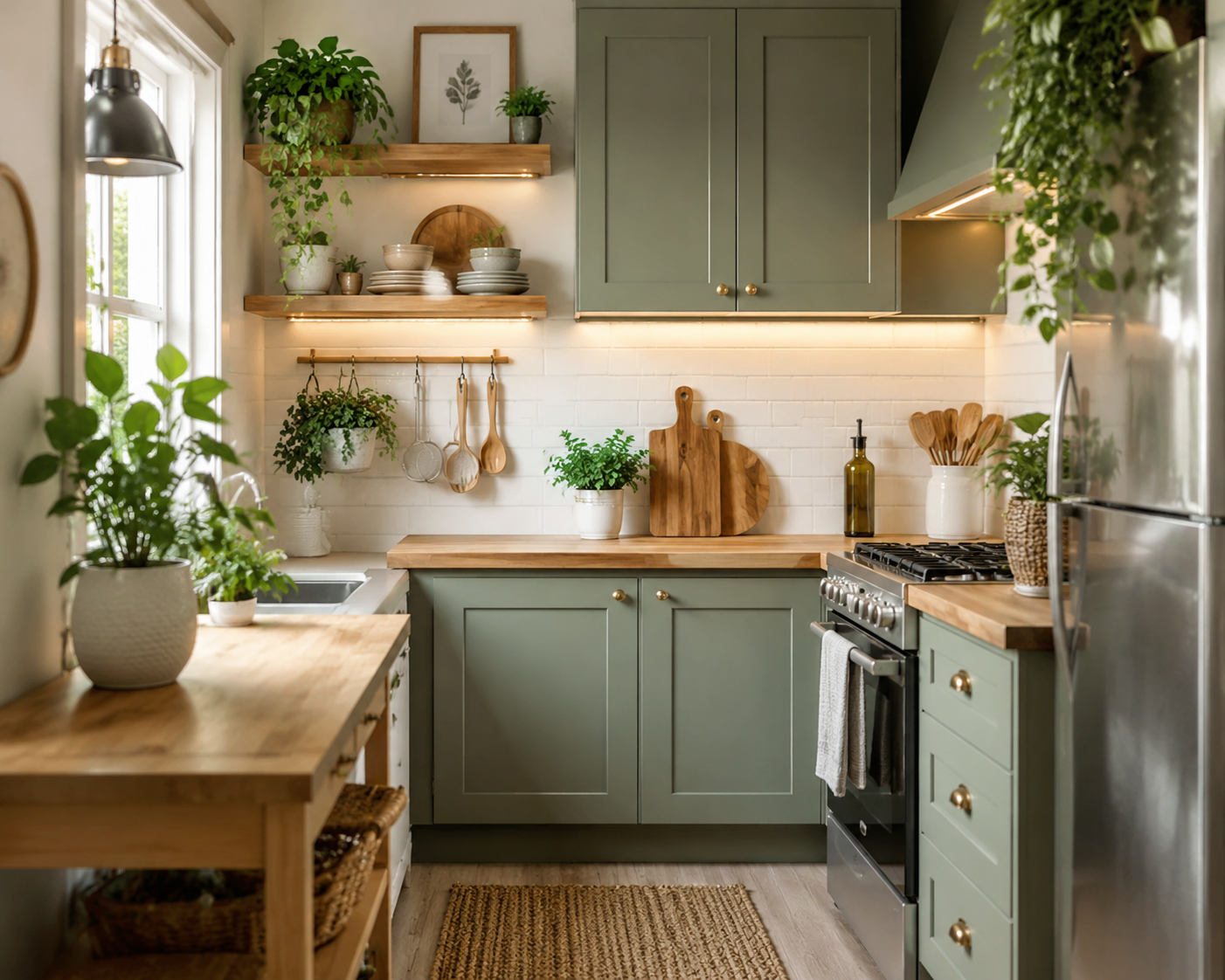
- Light-coloured cabinets to prevent the small space feeling cave-like — cream, pale sage, soft white
- Open shelving to avoid the visual weight of upper cabinet doors in a confined space
- A compact island or breakfast bar on wheels rather than a fixed large island
- Maximise vertical storage — floor-to-ceiling cabinets that work with the log home’s high ceiling
- Light countertops — white marble-effect, pale granite, or butcher block in a lighter wood
- A large window or glass door to borrow light and view from outside
The key tension in small log cabin kitchens: The logs naturally make the space feel darker and more enclosed. Every design decision should counter this by adding light — through colour, reflective surfaces, good lighting, and maximising natural light.
5. Farmhouse Log Home Kitchen
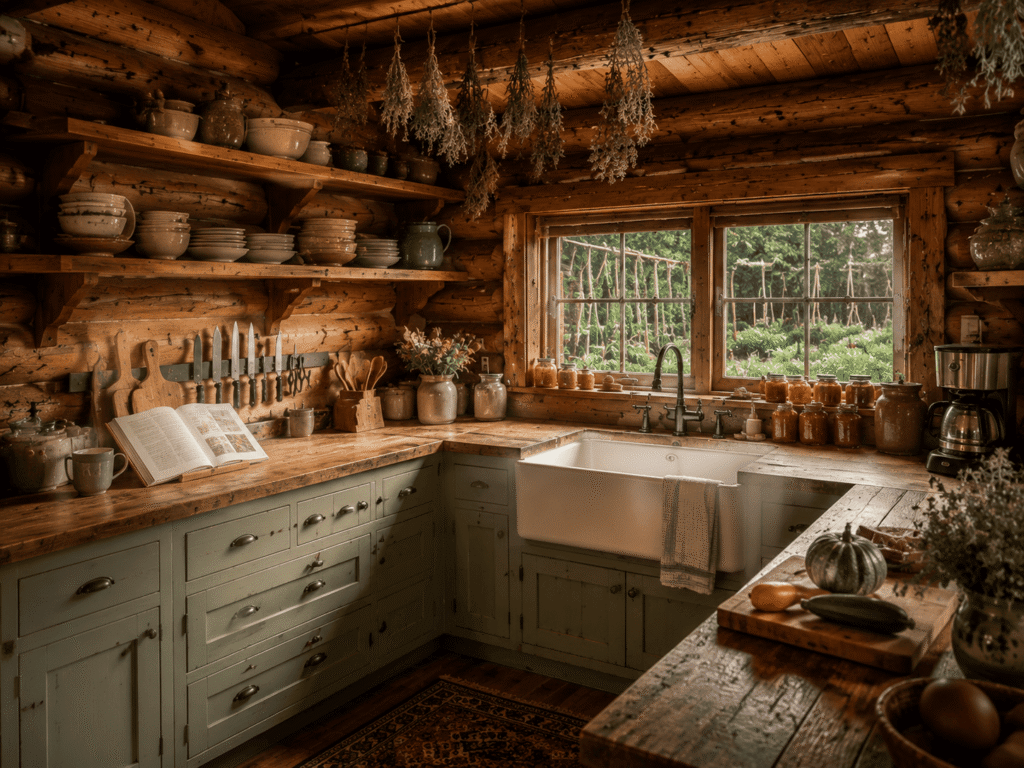
The farmhouse style sits naturally within the log home aesthetic — both share a love of natural materials, handcrafted details, and the specific warmth of spaces that have been built to last and to live in rather than to impress.
Key elements:
- Shaker-style cabinets in a muted farmhouse colour — sage green, dusty blue, warm cream
- A Belfast or farmhouse apron sink
- Butcher block or reclaimed wood worktops
- Open shelving displaying vintage crockery, preserving jars, and well-used cookbooks
- A rag rug or runner on the floor
- Dried herbs hanging from the ceiling or a wooden rack
- A vintage-style range or Aga as the cooking centrepiece
You can also read Small Kitchen Decor Ideas: 25 Ways to Make Your Tiny Kitchen Look Stunning
6. Contemporary Log Home Kitchen
The most surprising and increasingly popular approach — a fully contemporary kitchen placed within a log home, using the contrast between the raw natural walls and the clean modern kitchen as a deliberate and dramatic design statement.
Key elements:
- Handleless cabinets in a crisp white or deep navy
- A waterfall island in white quartz
- Integrated appliances invisible behind cabinet fronts
- Polished concrete or large-format porcelain flooring
- Minimal hardware — everything clean-lined and restrained
- The logs left completely raw and visible as the deliberate contrast element
- Simple geometric pendant lights rather than rustic ones
This style works best when it is fully committed. Half-contemporary, half-rustic creates confusion. The contemporary log home kitchen is powerful precisely because the contrast is complete and intentional.
Log Home Kitchen Materials — What Works Best
Cabinets
Best wood species for log home kitchen cabinets:
Distressed, knotty-alder Kraftmaid cabinets and three-quarter-inch solid hickory floors are among the most popular choices for log home kitchens, creating a cohesive rustic character throughout.
- Knotty alder — the most popular choice for classic rustic log home kitchens. Warm amber-brown tones, visible knots that add character, takes stain beautifully.
- Hickory — the most characterful and most varied. Strong grain pattern, warm tones, extremely hard and durable.
- White oak — the best choice for modern rustic kitchens. Cleaner grain than knotty species, works beautifully with contemporary hardware and countertops.
- Walnut — the most luxurious choice. Deep, rich brown tones that work magnificently against lighter log walls.
- Painted cabinets — cream, sage green, or dusty blue painted cabinets work beautifully in farmhouse and cottage log home kitchens, providing a light counterpoint to the dark wood of the logs.
Countertops
- Granite — the most durable and most appropriate natural stone for a log home kitchen. Heat resistant, scratch resistant, and its natural variation in pattern and colour references the organic quality of the logs.
- Soapstone — a beautiful choice for a classic rustic kitchen. Naturally dark, develops a patina with use, very heat resistant.
- Butcher block — warm, natural, and deeply appropriate in a log home. Requires maintenance but is highly repairable — scratch and burn marks can be sanded out and re-oiled.
- Quartz in a stone effect — the best low-maintenance option for a log home kitchen. Choose a pattern with warm undertones rather than cool grey to complement the wood.
Flooring
- Wide-plank hardwood — the most natural and most beautiful choice. Oak, hickory, or reclaimed pine in a wide format (5 inches or wider) that references the scale of the logs.
- Stone tile — slate, travertine, or limestone in a natural finish. Cool underfoot in summer, beautiful year-round, extremely durable.
- Concrete — works well in modern rustic and contemporary log home kitchens. Warm grey tones complement natural wood beautifully.
Log Home Kitchen Colours — The 2026 Palette
Warm, earthy colour palettes — from rich browns to soft clay and deep greens — elevate rustic kitchens beyond traditional neutrals in 2026.
Colours that work against log walls:
- Cream and warm white — the most versatile, makes the space feel lighter without fighting the logs
- Sage green — brings the outside in, beautiful with warm wood tones
- Dusty blue — a surprising but beautiful contrast with amber log walls
- Forest green — dramatic and rich, works in larger log home kitchens
- Deep charcoal — for contemporary log home kitchens where maximum contrast is the goal
- Warm terracotta — earthy and natural, references the log home’s organic aesthetic
Colours to avoid:
- Bright white — too stark and cold against warm log walls
- Cool grey — fights rather than complements the warmth of natural wood
- Highly saturated bright colours — overwhelm the logs rather than complementing them
You can also read Best Bedroom Ideas
Log Home Kitchen Lighting
Lighting is one of the most important and most commonly underfunded elements of a log home kitchen design. The natural darkness of log walls means that layered, warm lighting is not optional — it is essential.
Layer 1 — Task lighting: Under-cabinet LED strips illuminate work surfaces clearly. Essential in a log home kitchen where the dark walls absorb rather than reflect light.
Layer 2 — Pendant lighting: Above the island or peninsula. In a log home kitchen, pendants should be substantial — small pendants look lost against log walls. Copper, iron, or aged brass finishes are the most appropriate materials.
Layer 3 — Ambient lighting: Recessed lighting or surface-mounted fixtures in the ceiling. Use warm white bulbs (2700K) throughout — cool white bulbs fight the warmth of the wood and create an uncomfortable dissonance.
Layer 4 — Accent lighting: Inside glass-fronted cabinet doors, under floating shelves, or on the top of cabinets directed upward toward the log ceiling. This accent layer reveals the texture and character of the logs most beautifully.
You can also read Living Room Ideas
2026 Log Home Kitchen Trends
As a former log home company owner and interior designer, the most compelling rustic kitchens in 2026 incorporate reclaimed wood accents, layered textures, natural stone, and warm earth-inspired palettes — creating kitchens that feel grounded, functional, and welcoming for everyday living.
Trend 1 — The soft kitchen. Log home kitchens in 2026 are moving toward what designers are calling the “soft kitchen” — warmer, more tactile, more personal. Less showroom, more lived-in. Martha Stewart’s legacy wood cabinetry is cited as the inspiration for this direction — an organic, grounded kitchen escape that uses natural materials as a foundation for a deeply personal space.
Trend 2 — Naked wood cabinets. Paint-free, varnish-free wood cabinets in their natural state — oiled and waxed but otherwise untreated — are increasingly popular in log home kitchens. The raw, honest quality of natural wood cabinets feels completely appropriate in a log home context.
Trend 3 — Contrast between rustic and contemporary. The most talked-about log home kitchens in 2026 pair completely rustic log walls with one or two deliberately contemporary elements — a waterfall quartz island, integrated appliances, or a sleek range hood.
Trend 4 — Hidden storage and concealed function. Kitchen design in 2026 emphasises concealed layouts where coffee stations disappear, appliances move only when needed, and storage fills every gap without becoming visible — nothing feels added on, yet everything has a place. This trend applies in log home kitchens too — particularly in open-plan spaces where a visual clutter of appliances and utensils disrupts the calm of the natural materials.
You can also read Florida Outdoor Kitchen Ideas: The Complete 2026 Guide
Frequently Asked Questions — Log Home Kitchen Ideas
Q: What style of kitchen cabinets looks best in a log home?
A: Natural wood cabinets in knotty alder, hickory, or white oak are the most authentic choice for a classic log home kitchen. For a modern rustic look, clean-lined cabinets in a natural oak finish work beautifully. For farmhouse and cottage log home kitchens, painted shaker cabinets in cream, sage green, or dusty blue provide a beautiful light contrast to dark log walls. Avoid high-gloss finishes and highly contemporary door styles in traditional log homes — the dissonance with the natural log walls is jarring.
Q: What countertops work best in a log home kitchen?
A: Granite is the most popular and most durable choice — it is heat resistant, scratch resistant, and its natural variation references the organic quality of the logs. Dark granite (black, dark grey, or deep green) is the most traditional choice. Butcher block is the warmest and most natural option. Quartz in a stone-effect pattern is the best low-maintenance alternative. Avoid pure white countertops — they fight the warmth of the log walls. Choose countertops with warm undertones rather than cool grey ones.
Q: How do you modernise a log home kitchen without losing its character?
A: The most effective approach is adding one or two contemporary elements as deliberate contrast rather than replacing all the rustic elements. A contemporary quartz island against rustic log walls. Clean-lined white oak cabinets with aged brass hardware. Integrated appliances behind cabinet fronts. The key is contrast — not replacement. Keep the log walls completely exposed and unaltered, and let them do the work of grounding the space in its natural character.
Q: What colour should I paint kitchen cabinets in a log home?
A: Sage green is the most popular and most successful choice in 2026 — it references the natural world and works beautifully with amber log walls. Warm cream and ivory work in every log home kitchen style. Dusty blue is a surprising but consistently beautiful choice. Forest green is striking in larger kitchens. Avoid bright white (too cold), cool grey (fights the wood), and highly saturated colours that compete with the logs.
Q: How do you make a small log cabin kitchen feel bigger?
A: Use lighter cabinet colours — cream or pale sage rather than dark wood. Replace some or all upper cabinet doors with open shelving. Maximise natural light with a large window or glass door if possible. Use a light countertop — pale granite, white marble-effect quartz, or lighter butcher block. Add under-cabinet lighting to illuminate the work surface and prevent the dark log walls from making the space feel cave-like. A large mirror or mirrored backsplash panel doubles the perceived depth of a small log cabin kitchen.
Q: What lighting works best in a log home kitchen?
A: Layered warm lighting is essential in a log home kitchen because dark log walls absorb rather than reflect light. Use warm white bulbs (2700K) throughout — cool white fights the warmth of the wood. Above the island, use substantial pendant lights in copper, iron, or aged brass. Under cabinets, install LED strip lights for task lighting. Consider accent lighting on top of cabinets directed at the ceiling to reveal the log texture at night.
Q: What flooring is best for a log home kitchen?
A: Wide-plank hardwood — oak, hickory, or reclaimed pine in planks 5 inches or wider — is the most natural and most beautiful choice. Stone tile in slate, travertine, or limestone is extremely durable and beautiful. Both are significantly more appropriate in a log home kitchen than laminate or vinyl, which look obviously manufactured against natural log walls.
Q: Can you have an island in a log cabin kitchen?
A: Yes — and a kitchen island is one of the most valuable additions in a log home kitchen because it creates the social gathering point that log home entertaining culture requires. In a smaller log cabin kitchen, use a rolling butcher block trolley that can be moved when floor space is needed. In a larger log home kitchen, a fixed island in a contrasting material — dark walnut against cream cabinets, a quartz waterfall against rustic wood — creates a beautiful and functional centrepiece.
🔗 Explore related styles — read our small log cabin kitchen ideas guide, our modern log cabin kitchen ideas guide, and our rustic farmhouse kitchen island ideas guide for more.