Introduction
The most common problem with flower home decor ideas is not choosing the wrong flowers. It is using them in a way that adds visual noise to a room rather than warmth — multiple small arrangements scattered across surfaces, artificial flowers that read as fake from across the room, or dried arrangements left in place until they become dusty rather than decorative. When flower decor works well, it feels like part of the room’s composition. When it does not, it feels like something that was placed somewhere because there was space.
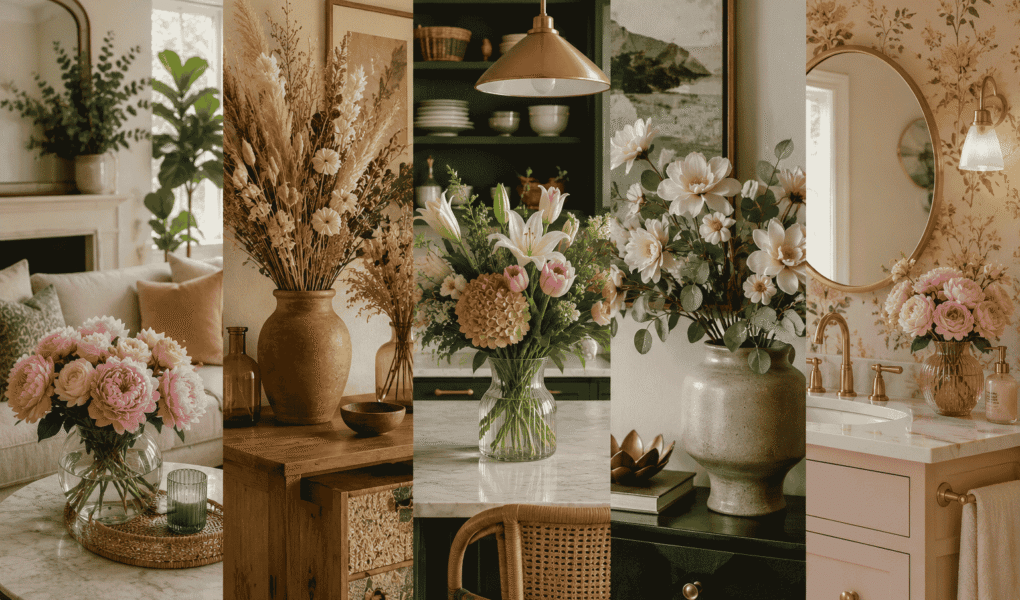
Flower home decor ideas that genuinely improve a room share a few consistent qualities: restraint in placement, considered choice between fresh, dried, and artificial depending on the specific use case, and a botanical approach that treats flowers as structural elements of a room’s visual composition rather than decorative afterthoughts. This guide covers all three types honestly — including where each one makes the most sense — alongside specific room-by-room placement ideas and the flower wall trend done properly for a living room rather than overdone.
You can also use our Free Rug Size Calculator
🔗 Continue building your home decor — read our economy home decor guide and our Retro Console Table Ideas for more.
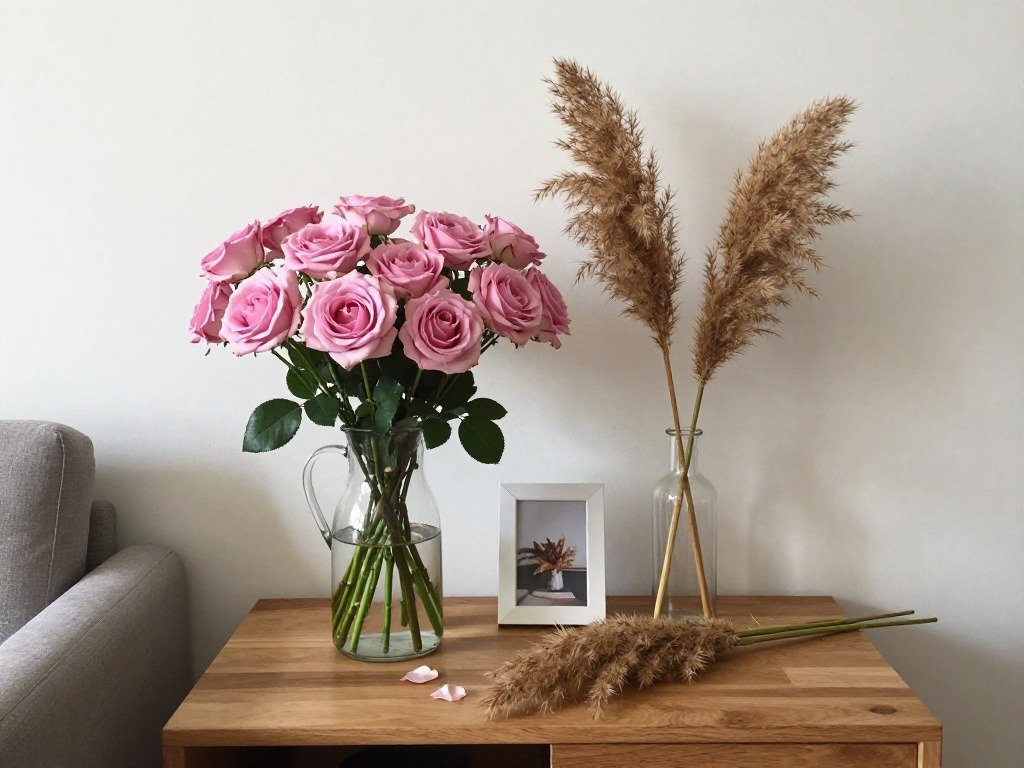
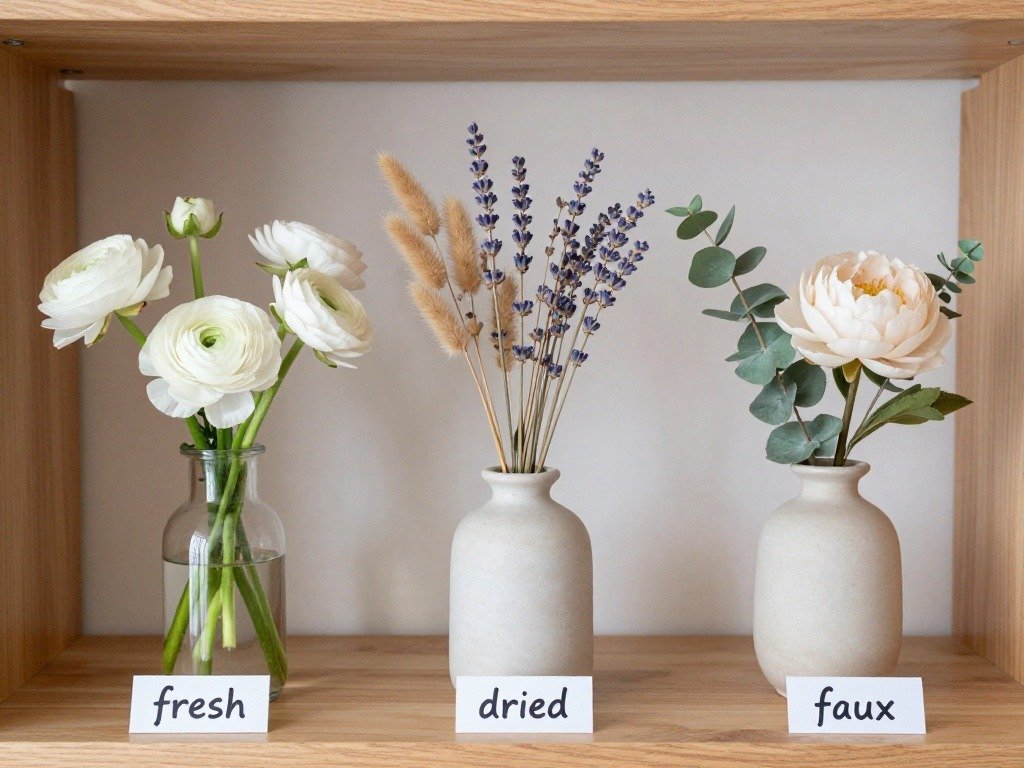
Fresh vs Dried vs Artificial Flowers — The Honest Comparison
Before any styling advice, the most useful thing this guide can offer is an honest, practical comparison of your three real options.
Fresh Flowers
The case for fresh: Nothing replicates the colour saturation, fragrance, and subtle imperfection of real flowers. A vase of fresh flowers changes the smell of a room, not just its appearance — and that sensory layer is something neither dried nor artificial alternatives can offer.
The honest downside: Cost adds up over time, they require regular water changes and stem trimming, they wilt within days to two weeks depending on the variety, and they are genuinely impractical in very warm climates or for people who travel frequently. Fresh garden roses, for example, commonly run $35–$45 per dozen at a market — a cost that becomes significant if you want fresh flowers in the home year-round.
Best for: Special occasions, weekly self-care rituals, dining tables for entertaining, and anyone who genuinely enjoys the small ceremony of buying and arranging fresh stems.
Dried Flowers
The case for dried: Dried flowers and grasses offer genuine organic texture and a soft, faded colour palette that fresh flowers cannot replicate — and they last for months or even years with zero maintenance. They have become one of the defining textures of boho, cottagecore, and dark academia interiors specifically because of this faded, time-worn quality.
The honest downside: Dried arrangements collect dust over time and need an occasional gentle shake or light vacuum with a brush attachment. Colours fade further over very long periods, particularly in direct sunlight. They cannot be “refreshed” the way fresh flowers can — once the look has faded too far, they need replacing.
Best for: Low-maintenance permanent decor, boho and rustic aesthetics, bedrooms and shelves where you want colour and texture without any upkeep at all.
Artificial Flowers
The case for artificial: The quality of artificial flowers has improved enormously — modern faux florals in silk or high-grade polyester can be genuinely difficult to distinguish from real blooms at a normal viewing distance. They require zero water, zero maintenance beyond occasional dusting, never wilt, and are a one-time cost rather than a recurring one. Good artificial flowers are more of an investment upfront, but they give years of enjoyment in exchange.
The honest downside: Cheap artificial flowers look cheap — stiff petals, unnatural colour saturation, and a uniform plastic sheen are the most common giveaways. They carry no fragrance. And even the best faux flowers occasionally fail the close-inspection test, even if they pass the across-the-room test easily.
Best for: Spaces with poor natural light where real plants and flowers struggle, households with pet or pollen concerns, high or hard-to-reach placements, and anyone wanting a permanent, fuss-free arrangement.
The Honest Verdict
You do not have to choose only one. Mixing artificial and real flowers in the same arrangement is a widely used professional trick — it creates a fuller, longer-lasting display while reducing the ongoing cost of replacing an entirely fresh bouquet. A common approach: use a high-quality artificial greenery base to fill out an arrangement, then add a few fresh stems on top for genuine colour and fragrance, replacing only the fresh portion as needed.
You can also read Coquette Room Aesthetic & Romantic Bedroom Ideas: The Complete Guide
Room-by-Room Flower Home Decor Ideas
Living Room
The living room benefits from the largest and most generous flower arrangement in the home, since it is the room most often seen by guests and the room where you spend the most waking hours.
- A large vase of fresh seasonal flowers or a substantial dried arrangement on the coffee table or console table as the room’s central organic feature
- Trailing dried pampas grass or bunny tail grass in a tall floor vase in an empty corner — fills vertical space without any furniture cost
- A single dramatic stem (a large dried palm leaf, a branch of dried eucalyptus) in a floor-standing vase beside the sofa
- Small bud vases with single fresh stems scattered across a shelf for a low-cost, low-commitment refresh
Flower wall decor for the living room: When floor and table space is limited, or when you want a genuine focal point behind a sofa or above a console table, taking the flowers vertical onto the wall is one of the most effective living room flower decor ideas available. A few approaches worth knowing:
- Paper flower wall decor — large handcrafted paper flowers, typically 8 to 20 inches across, arranged in a cluster or cascading pattern directly on the wall. Originally popular for weddings and parties, paper flowers have crossed over into permanent living room decor because they are inexpensive, weightless to hang, and available in almost any colour palette to match a room’s existing scheme. A cluster of 5 to 9 paper flowers in graduated sizes, mounted with removable adhesive dots, creates a striking and completely renter-friendly accent wall feature.
- Crochet flower room decor — handmade crochet flowers, either as a single hanging garland or mounted individually in a scattered cluster, bring a soft, textile-based alternative to paper or silk. This is one of the more distinctly cosy and handmade-feeling flower wall options, and it pairs particularly well with cottagecore, kawaii, and danish pastel rooms where a slightly imperfect, hand-crafted texture is part of the appeal. Crochet flowers can be made at home with basic crochet skills or bought ready-made from Etsy sellers.
- Pressed and dried flower wall art — flowers pressed flat and framed, either individually or grouped in a small gallery arrangement, bring genuine flowers onto the wall in their most permanent form. This is the most “real flower” feeling option of the wall-based choices, since the flowers are not artificial reproductions but actual dried botanical material.
- Faux flower wall panels — pre-made panels of silk or polyester flowers, usually 16×24 inches or similar, designed to be mounted edge-to-edge for a fuller “flower wall” backdrop effect. These give the most saturated, full-coverage look of any option here, though they read as more decorative-statement than the quieter paper or crochet alternatives.
Bedroom
Flowers in the bedroom should lean soft, calming, and low-maintenance — this is not the room to manage demanding fresh arrangements that need daily attention.
- A small bedside vase with one or two fresh stems, replaced weekly — a tiny ritual that makes the room feel cared for
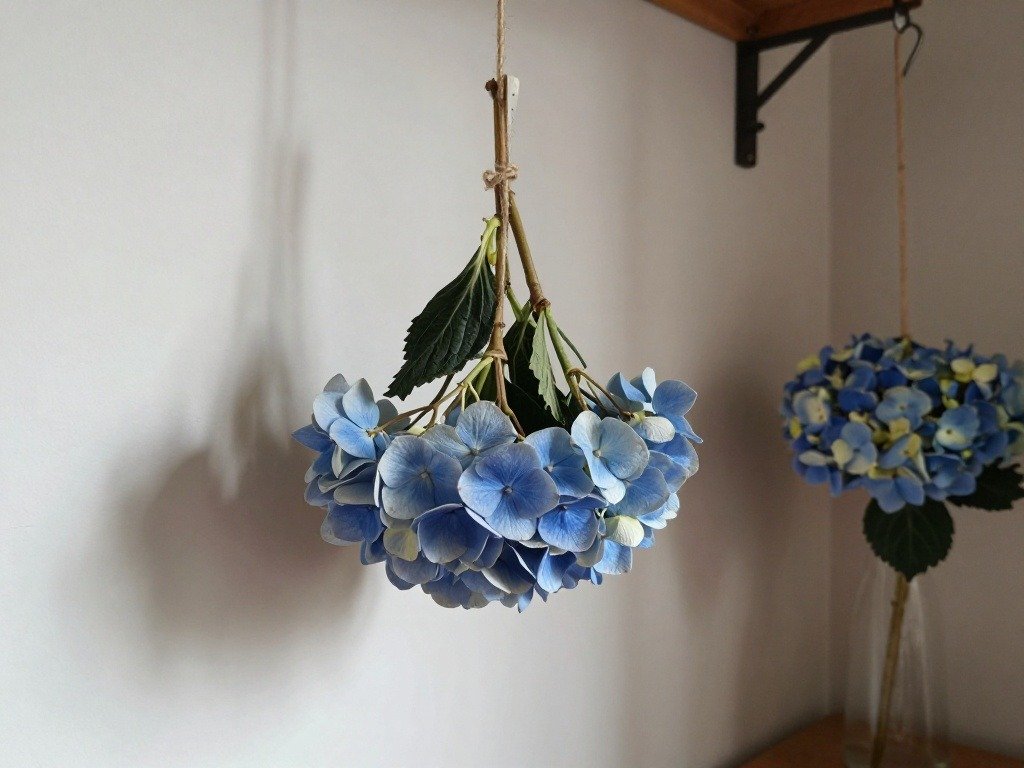
- A dried flower bunch hanging upside down from a hook or beam — both decorative while drying and decorative once finished
- Dried lavender in a small dish on the nightstand, which also brings a gentle calming scent
- Avoid strongly fragranced fresh flowers (lilies especially) directly beside the bed — the scent can be overwhelming at close range overnight
Kitchen
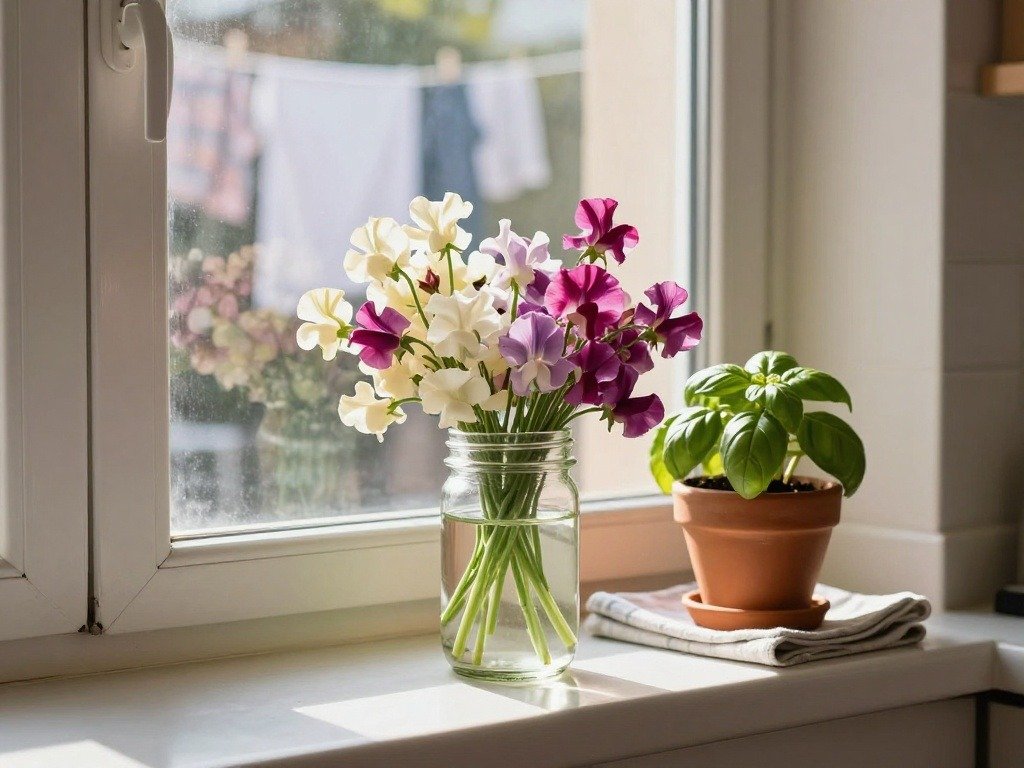
The kitchen window sill is one of the most naturally rewarding flower decor spots in the home, since it already gets good light and daily attention.
- Fresh flowers in a jam jar or small jug on the windowsill — informal, low-cost, and easily refreshed when stems wilt
- A small pot of fresh herbs alongside flowers for a combined decorative-and-practical windowsill display
- Dried flowers in a hanging bunch are impractical near a cooking area where steam and grease will settle on them — reserve dried arrangements for kitchens with good separation from the hob
Bathroom
- A small artificial or dried arrangement is the most practical choice — humidity from showers and baths will shorten the life of fresh flowers and accelerate degradation of delicate dried stems
- A single sturdy fresh flower (a single rose, a tulip) in a small bud vase on the vanity works well for a special-occasion refresh, even if it is not a permanent fixture
- Eucalyptus — fresh or dried — hung from the showerhead releases a gentle scent as it steams, and is one of the few flower decor ideas genuinely improved by bathroom humidity
Entryway
- A statement arrangement on a console table is one of the highest-impact flower placements in the entire home, since it is the very first thing anyone sees on entering
- Choose a more resilient option here — dried or artificial — if the entryway gets significant direct sun through a front door window, which will fade fresh flowers within a day or two
Dining Table
- Keep arrangements low enough that guests can see and speak to each other across the table — this is the single most common styling mistake with dining table flowers
- Fresh flowers are worth the investment here specifically, since the dining table is where flowers are most appreciated up close and where fragrance adds genuine atmosphere to a meal
- For everyday use rather than special occasions, a small dried or artificial centrepiece avoids the cost of replacing fresh flowers multiple times a week
You can also read Baddie Room Ideas & Y2K Aesthetic Bedroom: The Complete Guide
Flower Home Decor by Aesthetic
| Aesthetic | Best Flower Choice | Best Vessel |
|---|---|---|
| Romantic | Fresh roses, peonies, dried baby’s breath | Glass bud vases, vintage milk glass |
| Dark academia | Dried botanicals, dried eucalyptus, dark dried roses | Dark glass or brass vessels |
| Boho | Dried pampas grass, dried bunny tail, dried lavender | Woven baskets, terracotta, ceramic |
| Cottagecore | Fresh wildflowers, garden-cut blooms, mismatched stems | Mason jars, mismatched vintage jugs |
| Danish pastel | Soft pastel-toned dried or fresh stems (dried hydrangea, pale roses) | Simple ceramic in matching pastel tones |
| Coquette | Fresh pink roses, dried pink peonies, ribbon-tied bunches | Vintage glass, ribbon-wrapped vases |
| Japandi / minimalist | A single stem, ikebana-style arrangements | Simple ceramic or stoneware bud vase |
| Maximalist | Mixed fresh and dried in abundant, overflowing arrangements | Large statement vases, brass urns |
Budget-Friendly Flower Home Decor Tips
Flower decor is consistently one of the cheapest ways to refresh a room — but a few small habits make the difference between flowers that look thoughtfully placed and flowers that look like an afterthought.
Buy what is in season: Seasonal fresh flowers are always significantly cheaper than out-of-season imports, and they naturally coordinate with the colours of the time of year — pastels in spring, brights in summer, warm oranges and yellows in autumn, deep reds in winter.
Mix real and faux to stretch your budget: Use a base of affordable faux greenery to bulk out an arrangement, then add just two or three fresh stems on top. You get the visual fullness of a large bouquet while only paying for and replacing a handful of fresh flowers.
Repurpose what is already in your kitchen: A jam jar, a wine bottle, an old glass milk bottle — these consistently look better with flowers in them than a brand-new purchased vase, and they cost nothing.
Dry your own flowers instead of buying dried ones: Hanging a bunch of fresh flowers upside down in a dry, dark spot for two to three weeks produces a dried arrangement for free, using flowers you have already bought and enjoyed fresh.
Group small and cheap rather than buying one large bouquet: Three small bud vases with two or three stems each, placed along a shelf or windowsill, often look more considered and more interesting than one large arrangement in a single vase — and the smaller stems are usually the most affordable ones at the shop.
You can also read Galactic Room & Galaxy Bedroom Ideas: How to Design a Cosmic Space
Frequently Asked Questions
Q: Are artificial flowers worth it for home decor?
A: For most homes, yes — particularly for permanent fixtures like an entryway console or a high shelf that is awkward to refresh regularly. High-quality artificial flowers in silk or premium polyester are difficult to distinguish from real blooms at normal viewing distance and require zero ongoing cost once purchased. The trade-off is the upfront cost is higher than a single bunch of fresh flowers, and they lack fragrance entirely. Many people find the best solution is a mix — artificial greenery as a permanent base with fresh stems added and refreshed for special occasions.
Q: How do I make dried flowers at home?
A: Hang a small bunch of fresh flowers upside down, individually or in small groups secured with string or a rubber band, in a dry, dark, well-ventilated spot away from direct sunlight. Most flowers take two to three weeks to fully dry. Hydrangeas, lavender, roses, and most grasses dry particularly well using this method. Avoid drying flowers in humid rooms like bathrooms, as moisture will cause mould rather than drying.
Q: Where should I put flowers in my home for the best effect?
A: The entryway console table and the living room coffee table are the two highest-impact placements, since they are the spots most consistently seen by both you and any visitors. A kitchen windowsill is the most naturally rewarding everyday placement because it already receives good light and regular attention. Avoid placing fresh flowers directly in strong, direct afternoon sun, which will shorten their life significantly, and avoid placing delicate dried arrangements in steamy kitchens or bathrooms.
Q: Do fresh flowers actually improve mood or air quality at home?
A: Many people report that having fresh flowers around genuinely lifts their mood, and the simple daily ritual of trimming stems and changing water is, for some, a small but meaningful act of self-care. The air quality benefits of cut flowers specifically are minimal compared to living potted plants, but the psychological and aesthetic benefits of fresh flowers in the home are widely reported and are a large part of why they remain popular despite the ongoing cost.
Q: How long do dried flower arrangements actually last?
A: A well-dried arrangement kept out of direct sunlight and excess humidity can look good for one to three years before the colour fades too far or the stems become too brittle. Direct sun exposure is the single biggest factor that shortens a dried arrangement’s life, bleaching colour out within months rather than years. A light dusting every few weeks, or a gentle pass with a hairdryer on the cool setting, keeps dried arrangements looking fresher for longer.
Q: How do I make a flower wall in my living room without spending a lot?
A: Paper flowers are the most affordable and most beginner-friendly way to create a flower wall effect in a living room. A cluster of 5 to 9 paper flowers in graduated sizes, mounted with removable adhesive dots in a loose cascading arrangement above a sofa or console table, typically costs under $30 in total and requires no special skill to assemble — most come pre-shaped or fold flat from card stock. Crochet flowers are a similarly affordable option if you already crochet, or can be bought handmade from Etsy for a softer, textile alternative to paper. Both options are completely removable and renter-friendly, since they rely on adhesive dots or string rather than nails or permanent fixings.
Q: Are crochet flowers a good choice for room decor?
A: Yes, particularly for cottagecore, kawaii, and danish pastel style rooms where a soft, handmade texture suits the overall aesthetic. Crochet flowers bring a distinctly cosy and personal quality that paper and silk flowers do not replicate, since the slight irregularity of handmade stitching reads as intentional rather than imperfect. They work well as a single hanging garland along a shelf edge, scattered individually across a wall in a loose cluster, or grouped into a small wreath. The main practical consideration is dust — like any soft textile decor, crochet flowers benefit from an occasional gentle shake or light vacuum with a brush attachment to stay looking fresh.