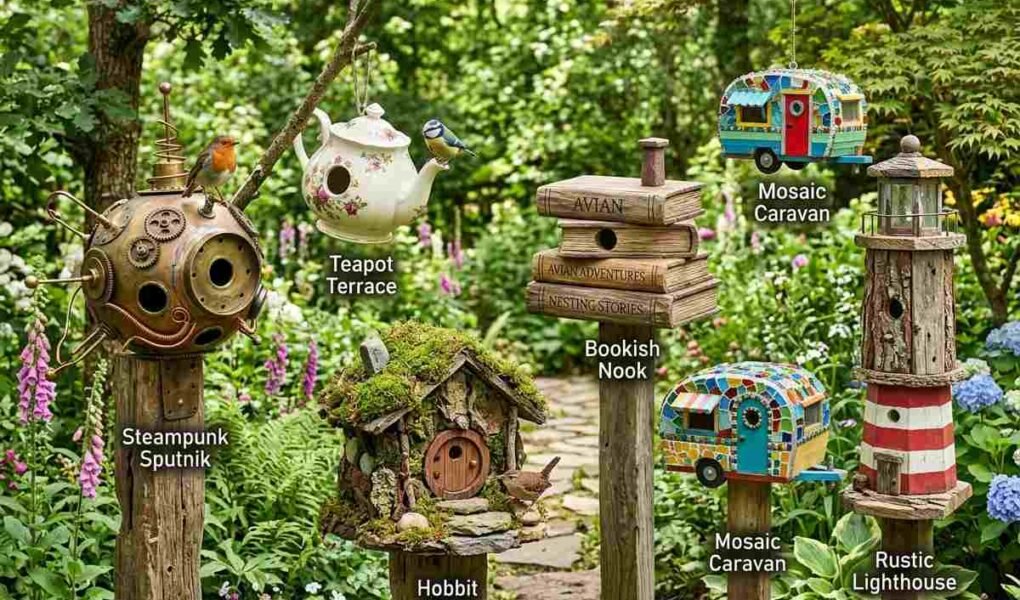
A birdhouse is one of those garden additions that seems simple until you start actually looking at what is available — and then the range of what people have built, painted, repurposed, and created becomes genuinely surprising. A teapot mounted in a small wooden frame. A pallet wood structure covered in wine corks. A cedar house that ages to silver-grey over seasons and eventually looks like it grew there. A miniature version of a vintage camper, hand-painted, mounted on a fence post. A birdhouse can express your unique personality while also being functional — and birdwatching itself has become one of the most popular and relaxing backyard hobbies available, something that can be done anywhere, including your own garden.
The practical reality worth knowing upfront: there is a meaningful difference between a decorative birdhouse used as garden art and a functional nesting box designed to actually house birds safely. Most decorative birdhouses are not actually suitable for birds to nest inside — if a birdhouse is being used purely as garden decor, it is safer to block off any entry holes to prevent birds from attempting to nest in a structure that may have incorrect hole dimensions, no drainage, or inadequate ventilation. This guide covers both: the decorative birdhouse ideas that genuinely elevate a garden’s character, and the functional nesting box considerations for anyone who wants to actually attract and support birds in their garden.
You can also use our Free Renovation Tool for Decoration style
The Distinction That Matters — Decorative vs Functional
Before choosing or building any birdhouse, it is worth being clear about which of these two categories you are working toward, since the requirements are genuinely different.
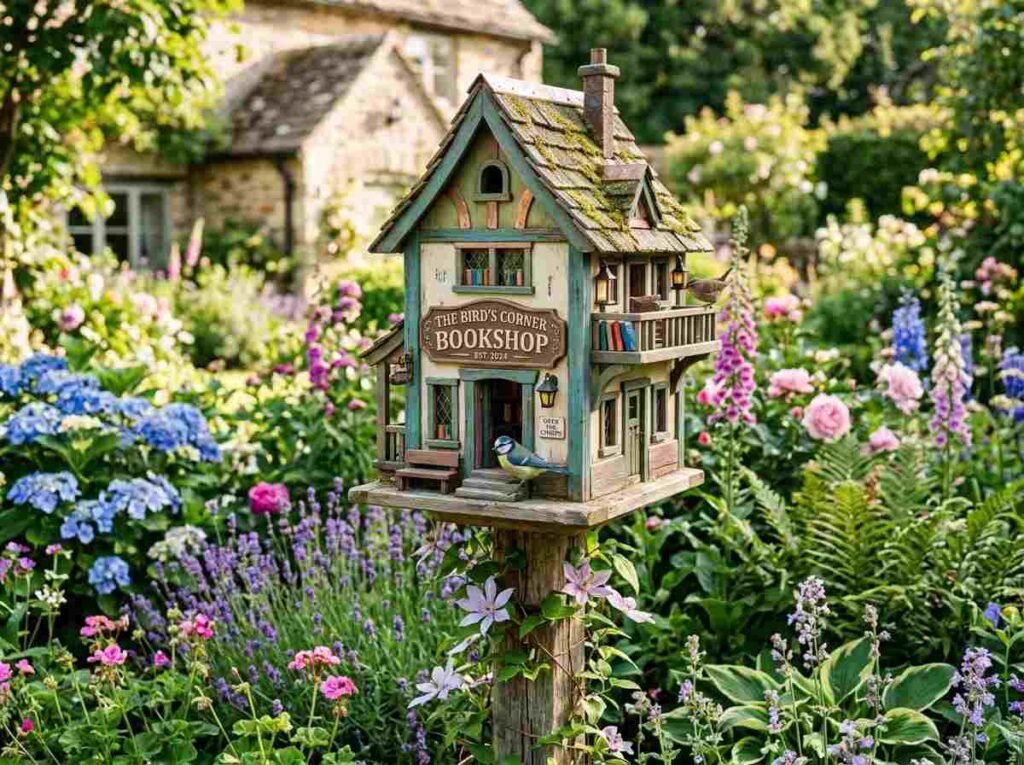
A decorative birdhouse is garden art — it adds character, visual interest, and personality to a fence, garden wall, or outdoor space, and its primary purpose is aesthetic. If a birdhouse is purely decorative, blocking off entry holes prevents birds from attempting to nest in a structure that might not be safe for them.
A functional nesting box is designed to actually house birds safely — it needs the correct entry hole size for the target species, adequate ventilation and drainage, no perch on the front (perches help predators, not birds), and the ability to be opened for seasonal cleaning. There is a serious shortage of natural nesting cavities for native songbirds due to habitat loss, making well-designed nesting boxes a genuinely valuable addition to any garden.
The two are not mutually exclusive — a well-designed nesting box can be beautiful — but the most elaborate, decorative birdhouse designs are usually better treated as garden art than as homes for birds.
Decorative Birdhouse Ideas by Style
Rustic and Reclaimed
The most versatile style, suiting almost any garden from cottage to farmhouse to woodland. Repurposing old knobs, candlesticks, and other salvaged items into birdhouse accessories creates what one designer calls “birdtiques” — each one distinctive, characterful, and made almost entirely from a junk pile and a little imagination.
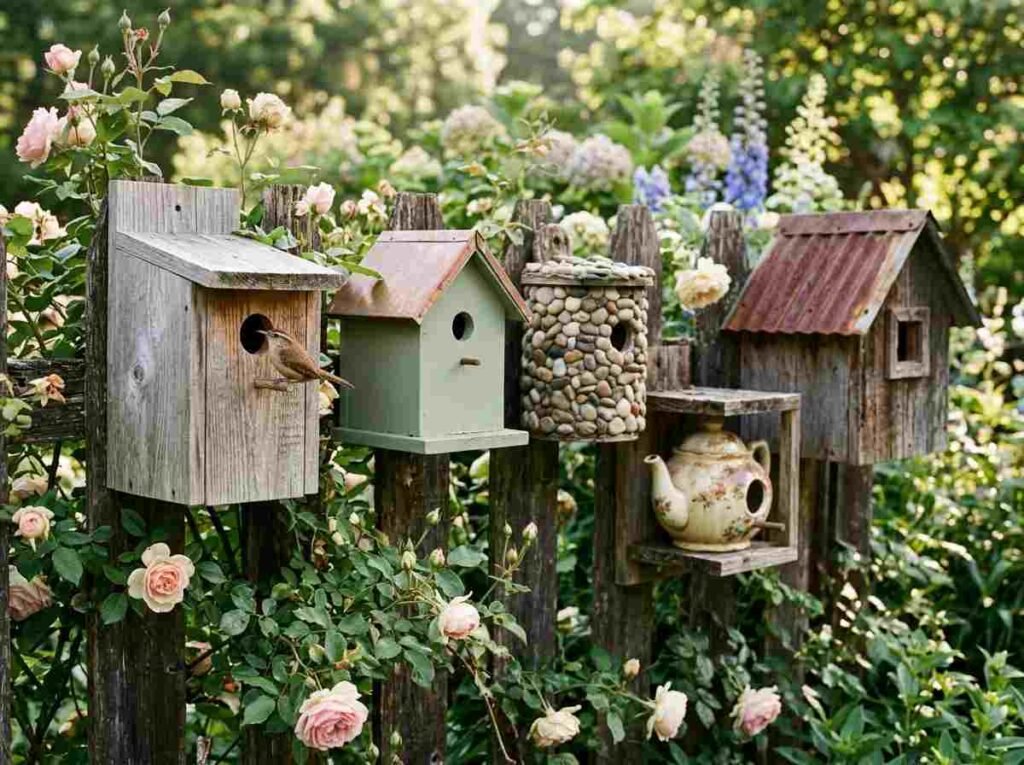
Reclaimed barnwood birdhouses — built from weathered, grey-toned timber with corrugated metal or slate chip roofs — suit rustic and farmhouse garden styles particularly well, and have the specific quality of looking as though they have always been part of the garden rather than recently installed. The blend of weathered wood and repurposed metal offers a crafty, handmade look that fits perfectly in rustic gardens or creative backyard spaces.
Cottage and Whimsical
A teapot birdhouse brings a storybook feeling to any garden — a floral porcelain teapot mounted inside a small wooden frame with a pitched roof acts as the nesting chamber, the soft pastel colours and delicate botanical patterns charming against brick or wooden surfaces. This idea blends vintage kitchenware with outdoor decor in a playful way that suits cottage gardens, patios, and balconies where small whimsical details make the space feel warm and imaginative.
Other cottage-style approaches include birdhouses painted in soft botanical colours — sage green, dusty rose, powder blue — with hand-painted flower details, or miniature versions of architectural structures: a tiny Victorian house, a small thatched cottage, a scaled-down Georgian facade. Creative birdhouse designs available as kits include scale models of vintage campers, Western-style saloons, treehouse structures with pine cone decor and rough-hewn ladders.
Modern and Minimalist
A simple cedar or pine box with clean lines, a flat or gently pitched roof, and no decorative embellishment can be one of the most elegant birdhouse designs available — particularly when mounted in a group of three or five at staggered heights on a garden wall. Cedar in particular has the quality of ageing beautifully, gradually silvering over seasons until it looks like a considered, architectural feature of the garden rather than something that was recently installed.
A simple oval shape under a classic roof, combined with natural wood tones, creates an elegant design that camouflages naturally into a treescape while still providing safe nesting.
Upcycled and Eco-Friendly
Birdhouses made from recycled wine corks present a layered, log cabin design — the rustic cork texture pairs with a dark gabled roof and base, creating something secure and genuinely distinctive. Coconut shells, old boots, salvaged window frames, and even vintage tin cans have all been repurposed into functional and beautiful birdhouse designs — the unifying quality of the best ones being that the material was chosen deliberately for what it adds rather than simply because it was available.
You can also read Bedroom Ideas for Decoration
DIY Birdhouse Ideas — Where to Start
Start With an Unfinished Kit
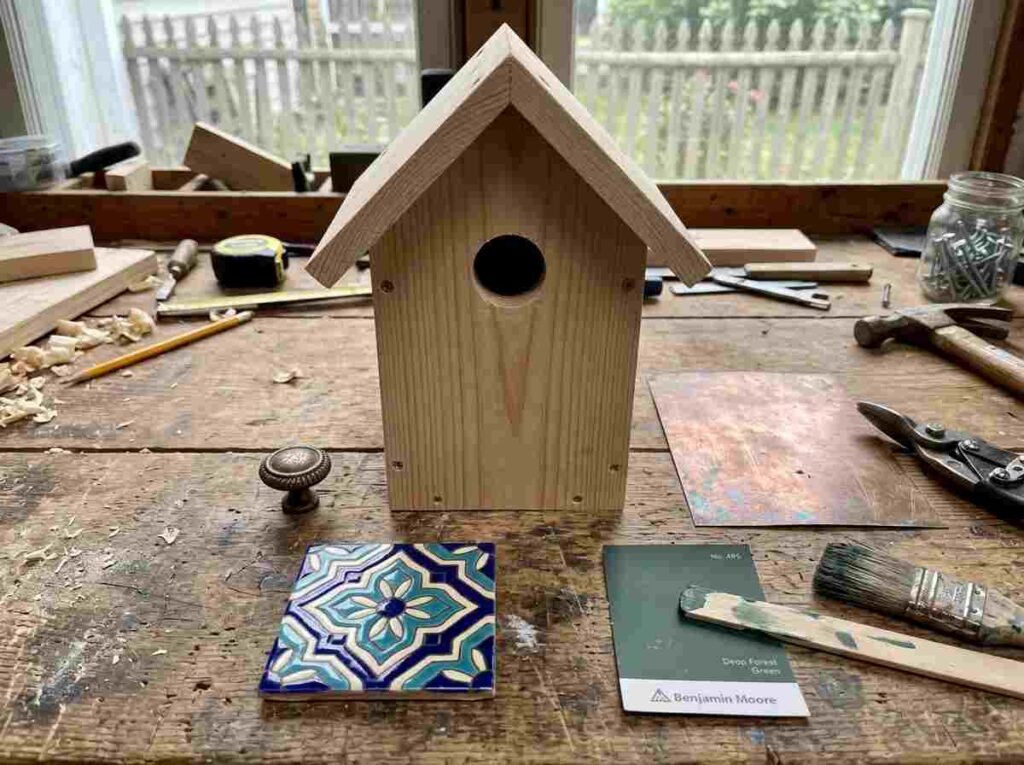
Unfinished birdhouse kits are available from Etsy sellers, craft stores, and garden centres, typically priced between $10 and $30, allowing complete creative control over the final design. This is the most approachable starting point for a creative birdhouse project — the structural work is already done, and the entire focus can go into the decorative choices.
Think of each DIY birdhouse as having four elements that make it distinctive: the base, the roof, the perches, and the predator guards. Each of these can be customised depending on available supplies — old coat hooks, ceiling light canopies, tree branches, and discarded candleholders all make interesting base elements.
Pallet Wood Birdhouse
Pallet wood birdhouses are a great project to involve children with — deliberately rough pallet planks add character and lots of wonky areas that make each house unique, and one pallet is enough to make several houses in different shapes and sizes. A pallet wood birdhouse requires only basic sawing, some wood screws, and a drill for the entry hole — one of the most accessible DIY birdhouse builds available.
Painting and Surface Decoration
Birdhouse painting techniques range from simple base colours through to stencilled designs, decoupage with maps or botanical prints, sea glass embedded in chalk paint, and hand-painted miniature details that turn a basic kit into something genuinely artistic. The key practical consideration is using exterior-rated paint or varnish that will hold up to weather exposure — interior craft paints will begin peeling within one season outdoors regardless of how beautifully they are applied.
Grouping and Display — Making Birdhouses a Garden Feature
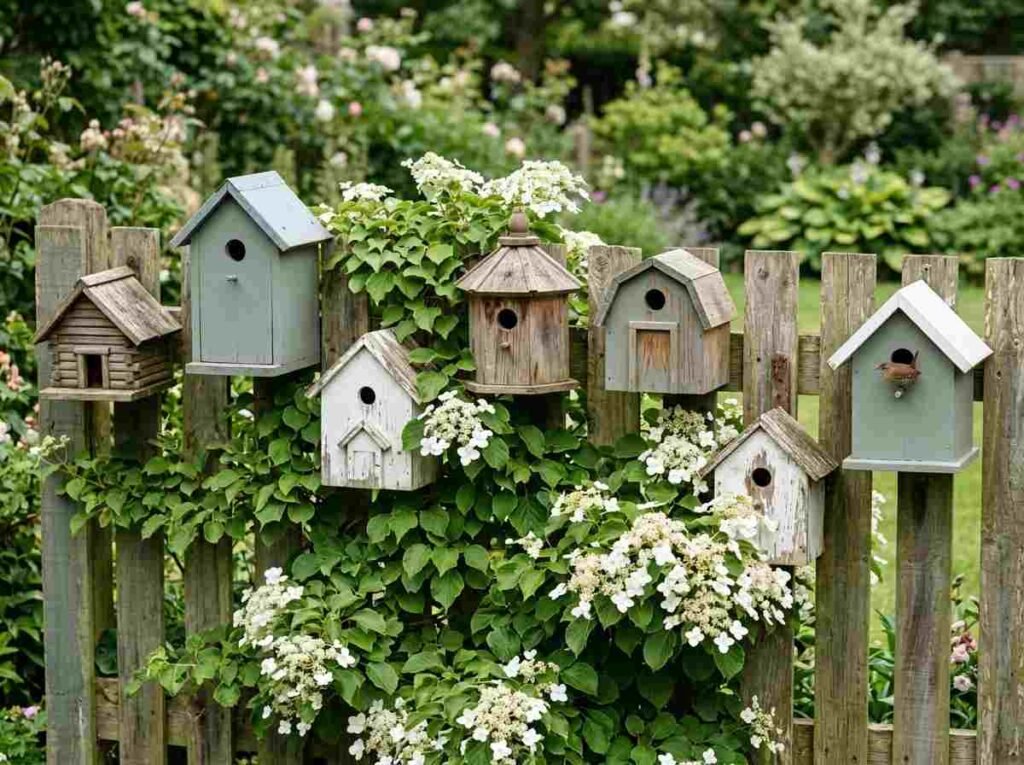
A single birdhouse is a garden accessory. A group of five or seven birdhouses, varied in style but connected by colour palette or material, becomes a genuine garden feature — a focal point with genuine visual weight.
Grouping birdhouses together and creating collections is one of the most effective tips for displaying garden art — a birdhouse village on a garden fence, for instance, creates an entirely different visual impression than individual houses scattered across the garden.
Height variation matters. Mounting birdhouses at three or four different heights — some at eye level, some above, one or two lower — creates a more natural, considered arrangement than a single horizontal row all at the same height.
Material consistency holds the group together. A collection of birdhouses can vary enormously in design and colour while still reading as a cohesive group if they share a consistent material — all cedar, all reclaimed wood, all with copper roof elements — or a consistent colour palette even if the individual designs differ.
You can also read all guides for decorating Exterior portion of home
Functional Nesting Box Guidance
For anyone who wants to genuinely attract birds to nest in a garden structure rather than simply add decorative birdhouses as garden art, a few specific considerations determine whether birds actually use the box.
Entry hole size is the most critical dimension. Different bird species require different entry hole sizes — a 28mm hole suits blue tits and coal tits, a 32mm hole suits great tits and tree sparrows, and a 45mm hole suits starlings. An incorrectly sized hole can prevent the target species from entering or allow larger predators in.
No perch on the front. While sweet in appearance, perches give predators a leg up on stealing eggs and disrupting a nest — it is always better to remove perches from purchased birdhouses if the intention is to actually have birds nest inside.
Ventilation and drainage. A functional nesting box needs small holes drilled in the floor for drainage and small gaps near the roof for ventilation — without these, the interior becomes too damp or too hot for successful nesting.
Placement and height. Nesting boxes should generally be mounted facing between north and east to avoid overheating from direct afternoon sun, at a height of at least 1.5 to 3 metres from the ground depending on the target species, and in a position where the approach flight path to the entry hole is clear rather than obstructed by dense foliage.
Annual cleaning. A nesting box used by birds needs to be opened and cleaned out each autumn after the nesting season has ended — old nesting material can harbour parasites that reduce nesting success in subsequent seasons.
Frequently Asked Questions
Q: What is the difference between a decorative birdhouse and a functional nesting box?
A: A decorative birdhouse is garden art — it adds visual character to a fence or garden wall but is not specifically designed for birds to nest in safely. A functional nesting box is built with the correct entry hole size for the target species, proper drainage, ventilation, no front perch, and the ability to be opened for cleaning. The two serve different purposes, and the most elaborate decorative designs are usually better treated as art rather than as homes for birds.
Q: What wood is best for a DIY birdhouse?
A: Cedar is the most consistently recommended wood for both functional nesting boxes and decorative birdhouses, being naturally rot-resistant, long-lasting outdoors, and ageing attractively to a silver-grey over time. Pine and untreated plywood both work well for decorative birdhouses that will be painted or sealed. Avoid treated timber for any birdhouse that birds may use, as the preservative chemicals can be harmful.
Q: How do I make a decorative birdhouse last outdoors?
A: The most important step is sealing or painting the exterior with a product specifically rated for outdoor use — exterior paint, exterior wood stain, or a weather-resistant varnish — and reapplying it every season or two as the finish weathers. Mounting the birdhouse so it does not sit directly on a damp surface, and ensuring the roof overhang is adequate to shed rain away from the entry hole and walls, both significantly extend the life of any outdoor birdhouse.
Q: What direction should a birdhouse face?
A: Nesting boxes intended to actually house birds should face between north and east — this avoids the overheating that can result from direct afternoon sun on a south or west-facing box, which can be lethal to eggs and young chicks in warm weather. Decorative birdhouses face whichever direction suits the garden display.
Q: Can I put multiple birdhouses close together?
A: For decorative purposes, grouping birdhouses closely together creates a stronger visual feature and is perfectly fine. For functional nesting boxes, most territorial species prefer at least 10 to 15 metres between boxes — placing functional nesting boxes too close together can result in fighting between pairs and reduced nesting success. A collection of closely grouped birdhouses used as garden art should ideally have their entry holes blocked to prevent birds attempting to nest in an arrangement that would create territorial conflict.
