Outdoor pallet projects have an unfortunate reputation for producing one of two results: something genuinely useful and characterful that gets used for years, or something that sits damp in the garden for three weeks and quietly falls apart. The difference between the two outcomes is almost entirely in the choosing rather than the making — finding the right pallet, understanding which projects suit pallet wood’s natural qualities, and knowing which ones ask too much of a material that was designed for shipping freight rather than outdoor living.
The good news is that the projects in the first category — the ones that actually work — are numerous, genuinely affordable, and capable of producing results that look considerably more considered than their materials cost. Outdoor pallet furniture, vertical planters, raised garden beds, and bar structures have all been done badly thousands of times on Pinterest. They have also been done beautifully by people who understood which pallets to use, how to prepare the wood, and which projects were worth the effort.
This guide covers both: the projects most worth doing, the preparation steps that determine whether the result holds up, and the practical guidance on sourcing and selecting pallets that most DIY roundups skip entirely.
🔗 More outdoor living ideas — read our Decorative Metal Panels: Ideas for Every Room and our home greenhouse ideas guide for more.
Choosing the Right Pallet — The Step That Determines Everything
Before any project, the pallet itself is the decision that determines whether the finished result holds up for years or begins failing within a season.
Look for the IPPC stamp. Every internationally shipped pallet carries an IPPC (International Plant Protection Convention) stamp that indicates how the wood was treated. Look for pallets marked HT (heat treated) — these are safe for DIY projects. Avoid pallets marked MB, which indicates methyl bromide treatment, a chemical fumigant that makes the wood unsafe for use in a home or garden environment. This is the single most important check to make before picking up any pallet.
Choose pallets with tight, uncracked boards. Pallets are built for utility, not beauty, and quality varies enormously between units. Look for boards that are consistent in width, free from significant cracks or splits, and still firmly attached to the runner boards beneath. Loose boards, severe warping, or dark staining that suggests moisture damage are all signs of a pallet that will not hold up as furniture or outdoor structure.
Where to find them. Local businesses, small warehouses, construction sites, and newspaper companies often have pallets they are happy to give away. Online marketplaces frequently list free pallets, and hardware stores usually have a supply available as well. Garden centres, furniture warehouses, and tile suppliers tend to have the best quality pallets, since the goods they receive require more careful packaging than raw construction materials.
Prepare the wood properly before building. Pallet wood straight from a warehouse needs sanding — often significant sanding — to remove splinters, rough edges, and surface contamination before it becomes comfortable outdoor furniture. A random orbital sander makes this considerably faster than hand sanding. Once sanded, a coat of outdoor wood stain or a weather-resistant sealant is not optional: untreated pallet wood outdoors will grey, crack, and begin to degrade within one season in most climates.
Project 1 — The Pallet Sofa
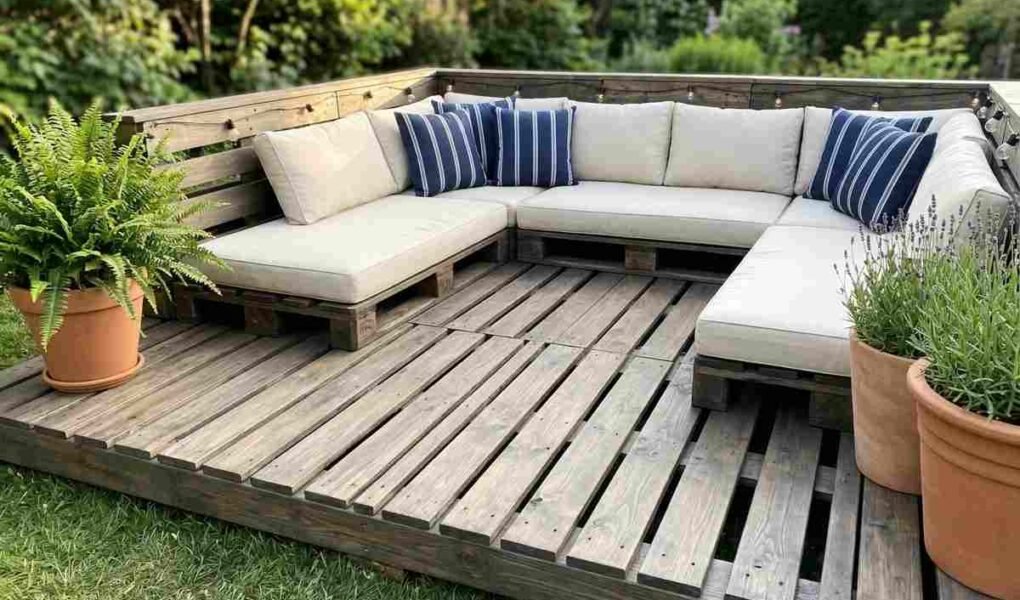
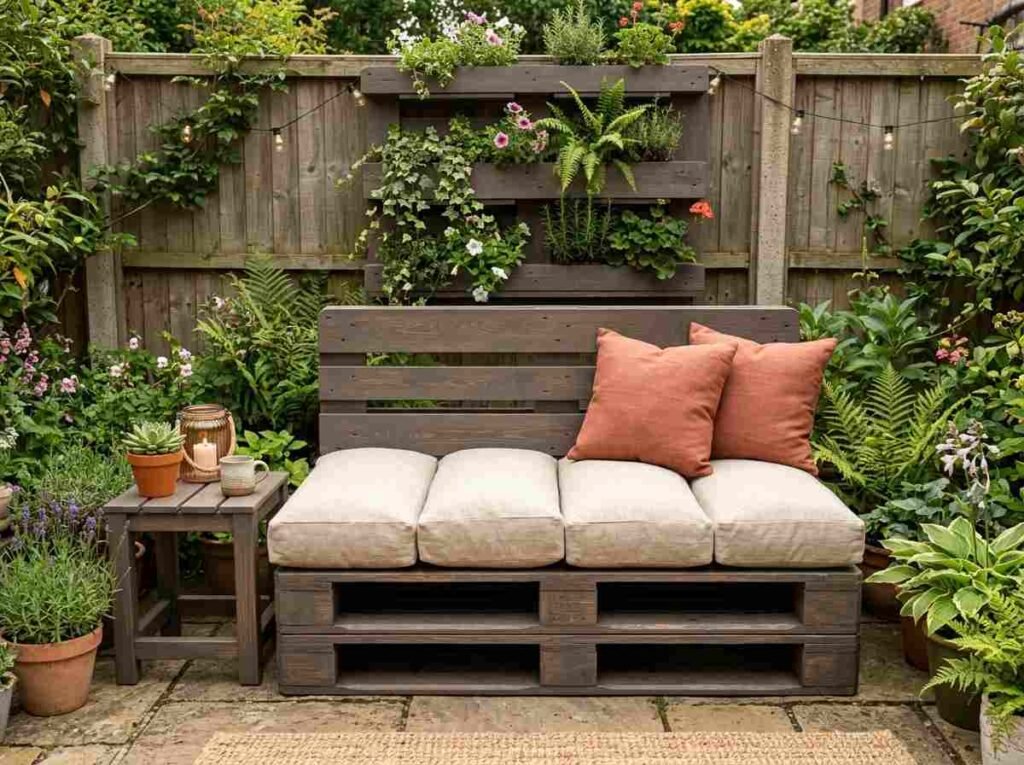
The outdoor pallet sofa is the most ambitious project on this list and also the one that produces the most dramatic result. Done well, a pallet sofa with good outdoor cushions looks like a piece of garden furniture that cost significantly more than the pallets and cushions combined.
What you need. Three pallets of identical size — two stacked flat to form the seat base, one standing upright behind them as the backrest, secured to the lower stack with wood screws. Outdoor cushions specifically sized to fit standard pallet dimensions (typically 80x120cm) are widely available and sold specifically for pallet furniture.
The key decisions. Stacking two pallets flat gives a seat height of roughly 30-35cm, which is lower than a standard sofa — comfortable for a relaxed outdoor setting but worth testing before committing to the full build. The backrest pallet should be secured firmly and at a slight angle rather than perfectly vertical for genuine comfort. Colorful cushions can add significant flair to pallet seating — outdoor cushion sets designed specifically for pallet dimensions make the difference between furniture that looks assembled and furniture that looks bought.
You can also use our Free Renovation Tool
Project 2 — Raised Garden Beds
Pallet raised garden beds enhance soil quality and drainage, ideal for small garden corners and vegetable growing. This is genuinely one of the most practical pallet projects available — a raised bed built from pallet timber is functional from day one, requires almost no finishing work beyond the basic construction, and will last several seasons with minimal maintenance.
The straightforward approach. Disassemble two or three pallets by removing the boards from the runner frames, then use those boards to construct a simple rectangular raised bed frame, secured at the corners with timber stakes driven into the ground. This produces a raised bed with sides roughly 20-25cm high — sufficient for most vegetables, herbs, and annual flowers.
Lining matters. The interior of any raised bed made from pallet timber should be lined with landscape fabric before filling with soil. This prevents soil from leaching out between board gaps, extends the life of the wood by reducing its direct contact with damp soil, and makes the whole structure perform more like a purpose-built raised bed.
Project 3 — Vertical Pallet Planter
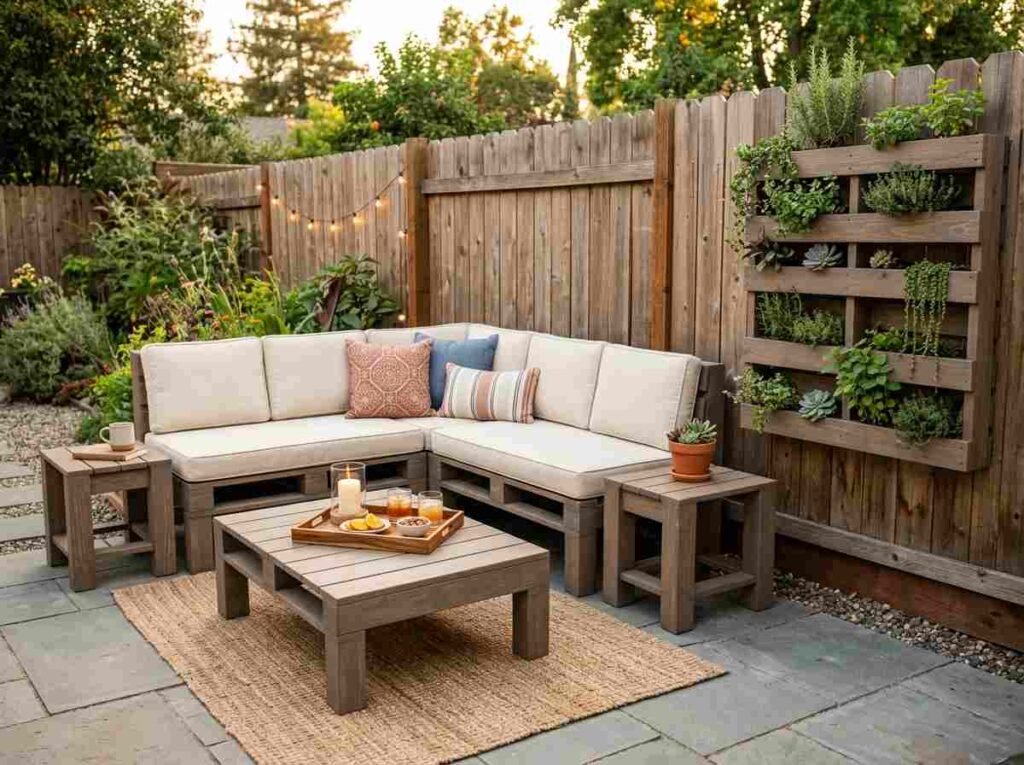
The vertical pallet planter — a single pallet stood upright against a fence or wall, its gaps filled with compost and planted with trailing or compact plants — is the fastest pallet project to complete and one of the most visually effective.
The approach. Flip a pallet upright and add planks from another pallet to the undersides of the alternate horizontal gaps, creating pockets that can be lined with landscape fabric and filled with compost and small plants. This is ideal for introducing herbs or trailing plants to a small space, and can either lean against a fence or be mounted to a wall.
Plant selection matters more than the structure. Trailing plants — nasturtiums, trailing petunias, lobelia, creeping thyme — suit the vertical format far better than upright-growing plants that need the support of the structure itself. Herbs work particularly well in a kitchen garden context. Succulents suit a drier, sunnier position. The planter will need more frequent watering than conventional pots since the shallow soil depth dries out faster, particularly in warm weather.
Project 4 — The Pallet Bar
An outdoor bar built from pallets can be a pricey investment bought new, but building one from pallets keeps you in complete control of the shape, size, and cost — though it requires more planning than simpler projects, since considerations include the number of shelves, whether a foot rail is wanted, and whether wheels would make it more practical to move between kitchen and patio.
The structure. Two pallets standing upright side by side, secured to each other and to a back panel, form the basic bar structure. A third pallet laid flat across the top, cut to size if needed, creates the bar surface. Additional boards from a fourth pallet can be used to create shelving behind the bar or a foot rail along the base.
Finishing makes the difference. A bar structure needs a more robust finish than a planter or even a sofa — the top surface in particular benefits from several coats of exterior-grade varnish or a waterproof bar-top finish, since it will face spills, glasses, and direct weather exposure that most other pallet furniture doesn’t.
Project 5 — Pallet Coffee Table
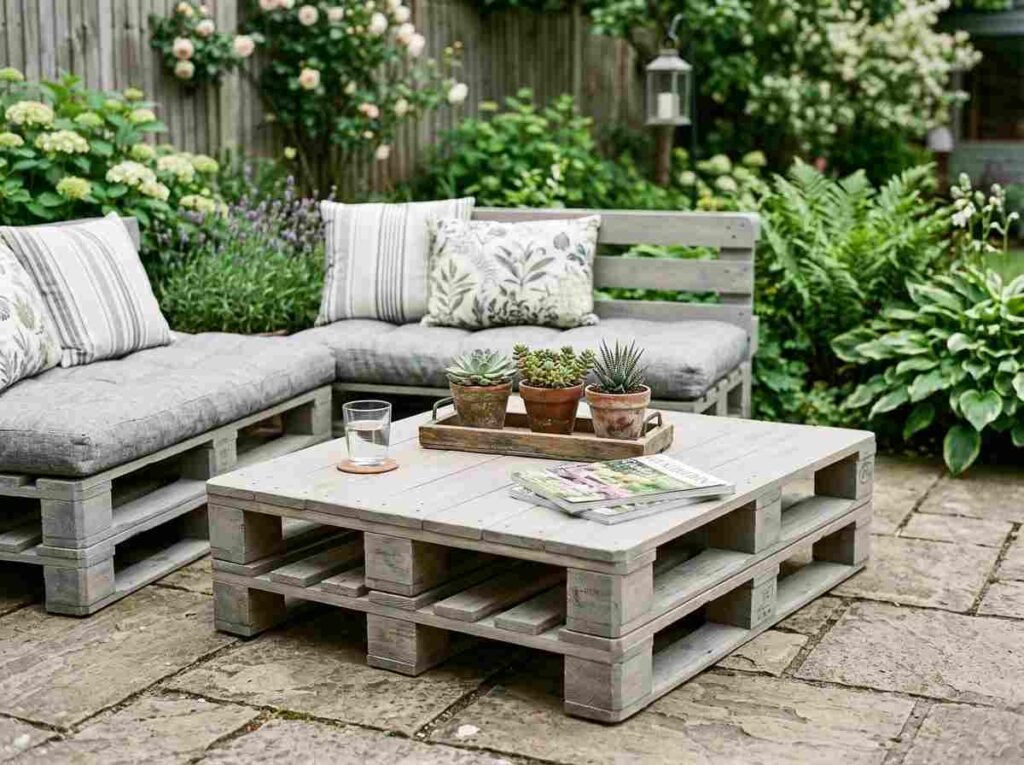
A relatively easy pallet table can be made with just two pallets — one as the base, one as the table surface — with paint splashed on and planters set on top to create the perfect level surface for glasses, books, and more.
The pallet coffee table is the most beginner-accessible furniture project on this list — it requires almost no cutting, the joinery is straightforward, and a single additional pallet is often all the material needed. The finished result sits low to the ground, which suits a relaxed outdoor seating arrangement well, and can be moved or rearranged easily since it requires no fixing to the ground or fence.
Adding wheels makes it significantly more practical. Attaching wheels allows the coffee table to be moved wherever it is needed — from the porch to the patio or garden, or even inside if an extra surface is needed. Heavy-duty locking castor wheels rated for outdoor use are widely available and make a pallet coffee table a genuinely versatile piece rather than a fixed garden feature.
You can also style your space according to your own choice with our free tool
Project 6 — Pallet Compost Bin
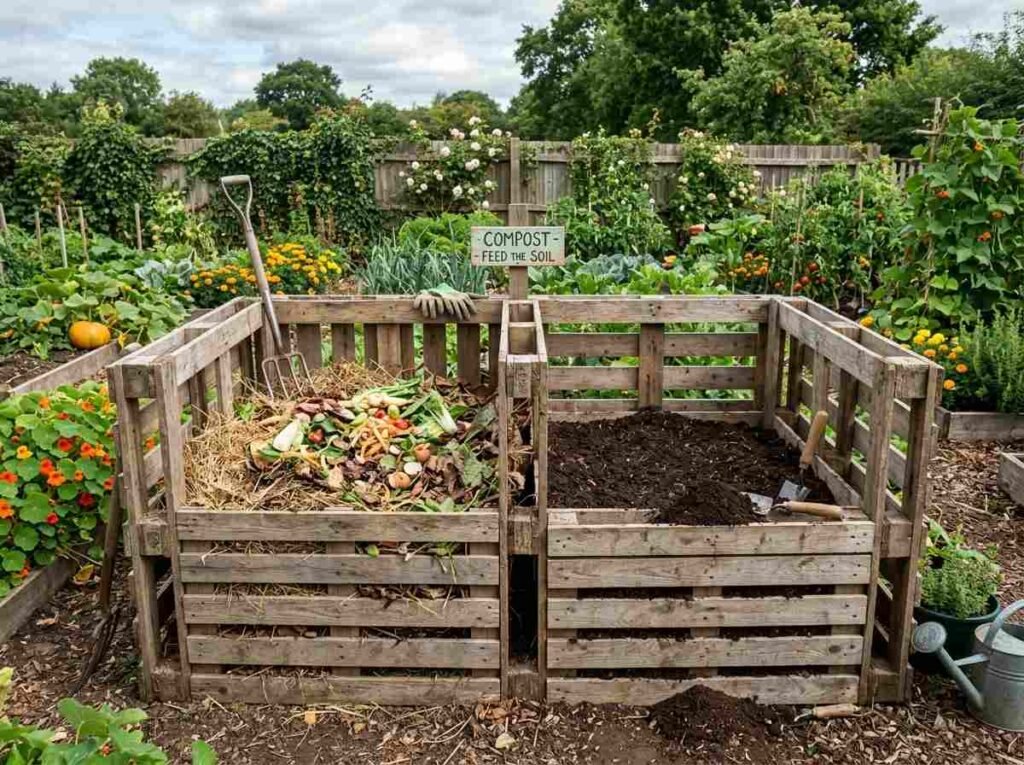
Repurposing wood pallets into a compost bin is an eco-friendly activity that suits the material perfectly — three pallets are enough for a single-unit bin, and any number can be tailored to make a bin of the right size. Composting food scraps and yard trimmings can reduce material waste by approximately 30 percent, turning what would otherwise go to a landfill into nutrient-rich matter for the garden.
This is the pallet project that requires the least preparation and finishing of any on this list — a compost bin does not need to look beautiful, and the rough, unfinished character of pallet timber is genuinely appropriate for the application. Three pallets stood upright in a U-shape and secured at the corners with wire or screws creates a fully functional compost enclosure, with the natural gaps between the boards providing the aeration a healthy compost pile requires.
Frequently Asked Questions
Q: Are outdoor pallet projects actually worth the effort?
A: The honest answer is that some are and some are not. Vertical planters, raised garden beds, compost bins, and coffee tables are all genuinely worth the time — they are fast to build, practical in daily use, and hold up well when the preparation is done properly. A full pallet sofa requires more time and a greater material investment in cushions, but the visual result justifies the effort. Projects that require extensive disassembly and re-cutting of pallet boards — complex dining tables, structures requiring precision joinery — are generally not worth doing in pallet wood when better materials are available at modest cost.
Q: How do I know if a pallet is safe to use?
A: Check the IPPC stamp on the pallet’s runner board. Pallets marked HT (heat treated) are safe for DIY projects. Pallets marked MB (methyl bromide) have been chemically treated and should be avoided for any use that brings people, pets, or food plants into regular contact with the wood. Pallets with no stamp at all, or with stamps that are damaged and illegible, should also be avoided.
Q: How do I stop pallet wood rotting outdoors?
A: Sand the wood thoroughly to remove surface roughness and open the grain, then apply a quality exterior wood stain, outdoor paint, or weather-resistant sealant before the finished piece goes outside. This initial treatment is the most important step. Reapply the sealant or stain every one to two seasons depending on how exposed the piece is to rain and direct sun. Raising furniture off the ground on feet or castor wheels rather than letting it sit directly on damp paving or soil also meaningfully extends the life of outdoor pallet furniture.
Q: Where can I find free pallets?
A: Local businesses, small warehouses, construction sites, garden centres, tile suppliers, and furniture warehouses are all reliable sources of free or very cheap pallets. Online marketplaces frequently list free pallets from businesses looking to dispose of them. Hardware stores usually have a supply available for collection. The best-quality free pallets tend to come from businesses receiving goods in protective packaging — garden centres and furniture warehouses rather than construction sites, where the pallets may be damaged or particularly rough.
Q: What is the best first pallet project for a beginner?
A: The vertical pallet planter is the best starting point — it requires no cutting, minimal tools, and almost no joinery, and the result is visually effective from the first season. A pallet coffee table is the best first furniture project, since it requires only two pallets, minimal preparation, and produces a genuinely useful piece without demanding precision woodworking skills.