Introduction
The 1980s did not do things halfway. When it came to home décor, the decade threw out every rule of restraint and replaced it with something far more exciting — bold colour, dramatic patterns, luxurious textures, and an unapologetic love of excess.
And now it is back.
Interior designers across the UK and US are reporting a full-scale revival of eighties home décor, driven by a generation that grew up in those interiors and a younger audience discovering the look for the first time through TikTok, Pinterest, and vintage shopping.
But recreating the 80s home look is not as simple as buying a neon sign and calling it done. The real eighties home had a very specific design logic — room by room, piece by piece — and understanding that logic is what separates an authentic-feeling space from a costume party.
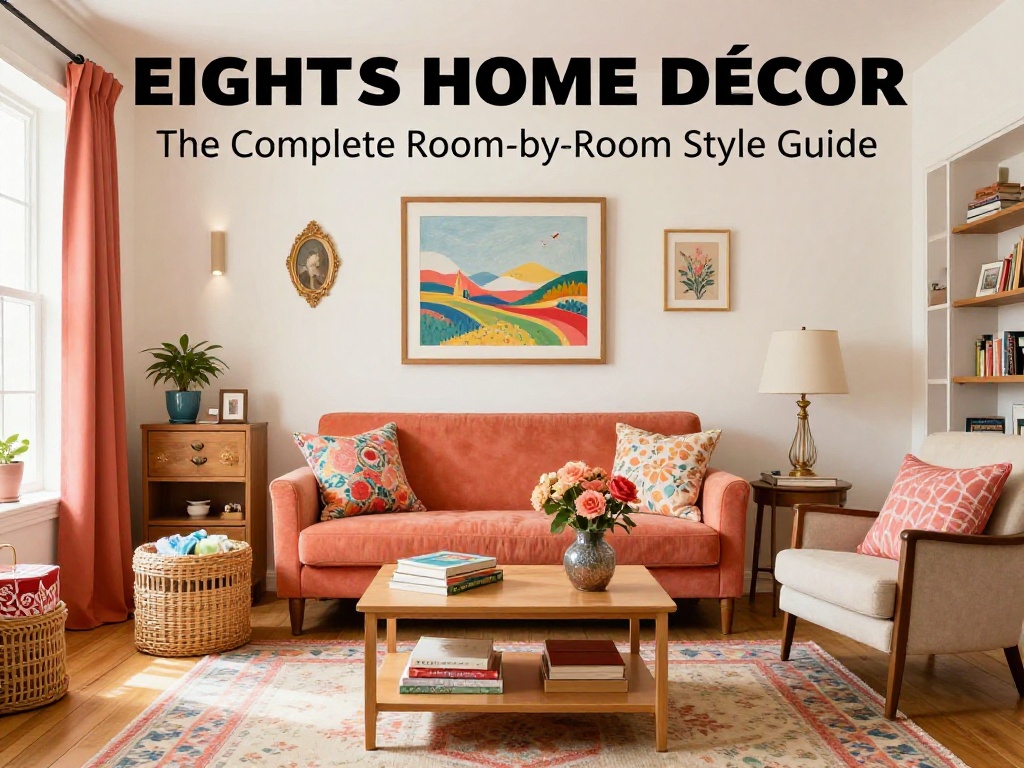
This guide covers every room. From the living room to the bedroom, kitchen to hallway, here is exactly how to bring eighties home décor into your space in a way that feels intentional, stylish, and genuinely true to the era.
🔗Focusing on just the bedroom? Read our dedicated 80s bedroom ideas guide for the full breakdown.
What Defined 1980s Interior Design?
Before going room by room, it helps to understand the design principles that ran through every corner of the 80s home.
Memphis Design was everywhere. The Memphis Group — an Italian design collective founded in 1981 — became the defining aesthetic movement of the decade. Their signature: bold geometric shapes, clashing colours, abstract patterns, and a playful rejection of “good taste.” You saw Memphis Design on wallpaper, upholstery, kitchen tiles, and accessories throughout the 80s home.
Maximalism was the default setting. The 1970s had been earthy and restrained. The 80s responded with volume — more colour, more pattern, more stuff. A room that looked “finished” in the 80s would look overwhelmingly busy to a minimalist eye today. That density was the point.
Luxury was performed, not implied. Mirrored surfaces, brass fixtures, lacquered finishes, and velvet upholstery signalled affluence loudly. The 80s home did not whisper its ambitions — it announced them.
Technology was part of the décor. Stereo systems, VCRs, large televisions, and home computers were displayed proudly as statements of modernity and prosperity, not hidden away in cabinets.
These four principles show up in every room. Keep them in mind as we go through the house.
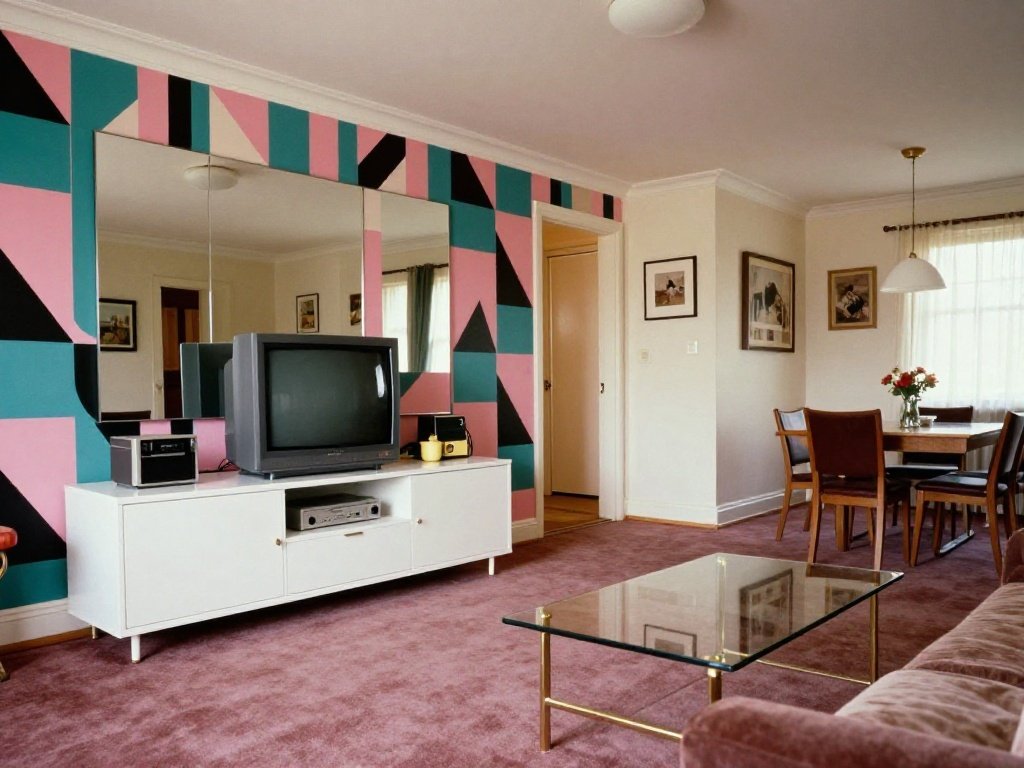
Eighties Living Room Décor Ideas
The living room was the showpiece of the 80s home — the room where design ambitions were expressed most loudly.
The Sofa
The centrepiece of any 80s living room was a large, deeply cushioned sofa — often in a bold solid colour (dusty rose, teal, burgundy, or royal blue) or in an abstract geometric print. Modular sectional sofas were enormously popular, particularly in L or U-shapes that dominated the room.
Velvet and chenille upholstery were considered luxury choices. Leather — particularly in black or cream — appeared in more masculine or corporate-influenced interiors.
The Entertainment Unit
The freestanding entertainment centre was the focal point of the 80s living room in the way a fireplace might be in a Victorian home. These large wooden or lacquered units housed the television, VCR, stereo receiver, record player, and cassette deck — all displayed behind glass doors or on open shelves alongside a curated collection of VHS tapes and vinyl records.
Colour and Pattern
Living room walls in the 80s were rarely plain. Bold wallpaper — in geometric, floral, or abstract patterns — was standard. Where walls were painted, colour was still expected: burgundy, forest green, navy, dusty rose, and warm terracotta were all popular choices.
Carpets were thick and patterned — floral, geometric, or a plain deep pile in a bold colour. Glass-topped coffee tables with brass or chrome bases were near-universal.
Lighting
Floor lamps with large fabric shades, torchière lamps (tall floor lamps that directed light upward), and table lamps with ceramic bases were all common. Track lighting — a row of adjustable spotlights mounted on a ceiling rail — was considered modern and aspirational.
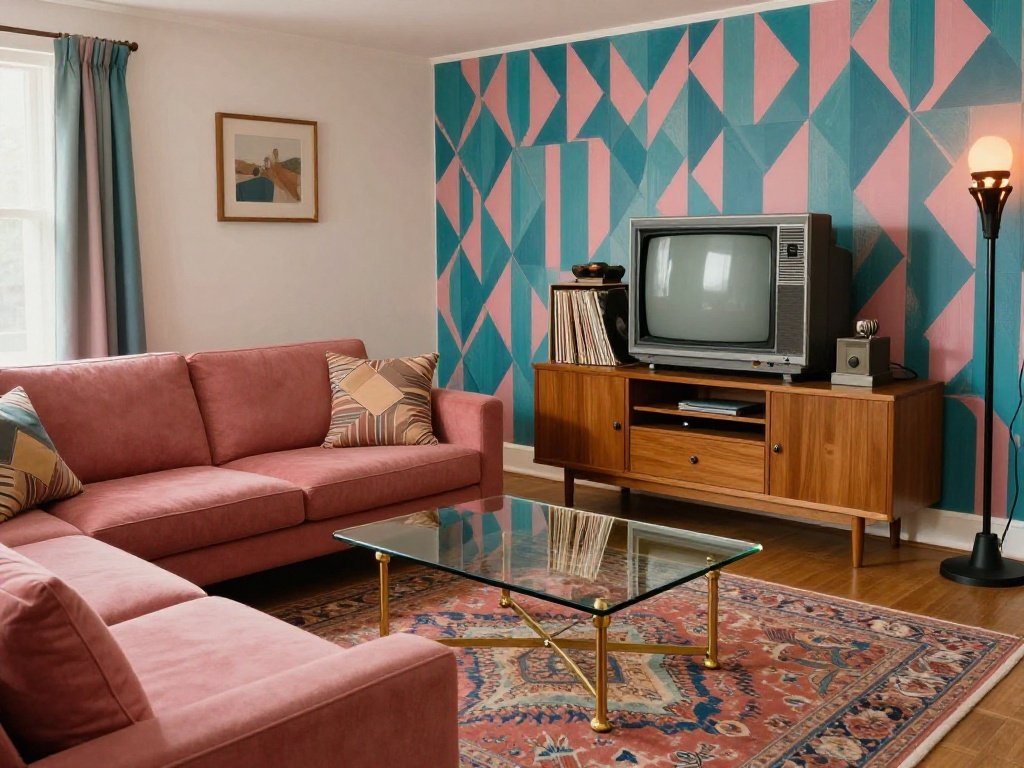
80s Bedroom Décor
The bedroom was the most personal expression of 80s design — and also the most maximalist. Geometric wallpaper covered all four walls, mirrored furniture reflected the bold colours back at you, and every available surface held something worth displaying.
Key elements of authentic 80s bedroom décor include the waterbed with its mirrored wooden headboard, high-gloss lacquered dressers, thick patterned carpet, and walls covered in posters, mirrors, and open shelving.
The real 80s bedroom colour palette — dusty rose, mauve, powder blue, teal, and neon accents — was far more layered and nuanced than today’s retro interpretations suggest.
🔗 We have an entire guide dedicated to this. Read our full article on what a real 1980s bedroom looked like for the complete picture — colours, furniture, wall décor, technology, and how to recreate it today.
80s Kitchen and Dining Room Décor
The kitchen was perhaps the most time-stamped room in the 80s home. The design choices made here scream the decade louder than anywhere else.
Kitchen Colours
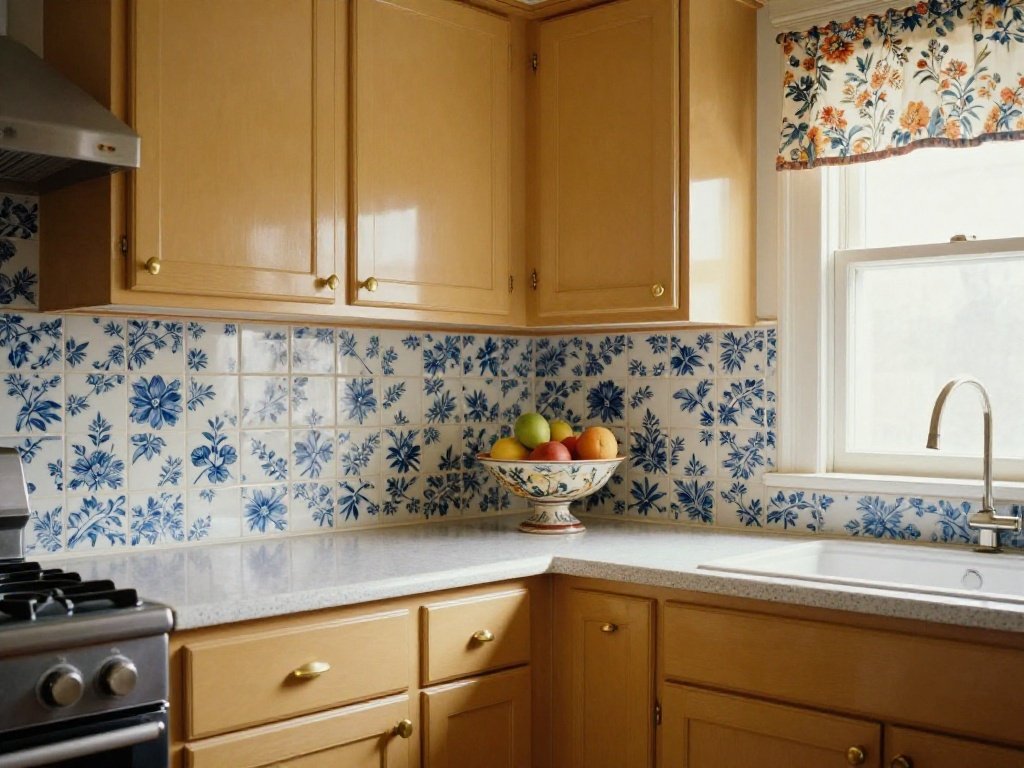
The 80s kitchen moved away from the harvest gold and avocado green of the 1970s and into a new set of equally distinctive colours. Almond (a warm off-white), country blue, burgundy, and mauve were enormously popular cabinet colours. High-gloss white cabinets with chrome or brass handles were the modern aspirational choice.
Tiles and Surfaces
Ceramic wall tiles in bold patterns — particularly country-style florals, geometric borders, and abstract prints in blue and white — covered kitchen backsplashes from countertop to ceiling. Countertops were typically in laminate (Formica) with a solid colour or subtle speckled pattern.
The Dining Room
Formal dining rooms were still very much a feature of 80s homes — the open-plan kitchen-diner was not yet standard. Dining sets typically featured dark wood (mahogany, walnut, or oak) with ladder-back or Windsor-style chairs. A chandelier above the table — often in brass with glass droplets — was considered essential.
For the modern home, you can capture the 80s dining room feel with a bold patterned rug under the table, a brass or gold chandelier, and dark wood furniture against a deep-coloured feature wall.
You can also check the tool free to find your decor style What’s Your Decor Style? Take the Quiz
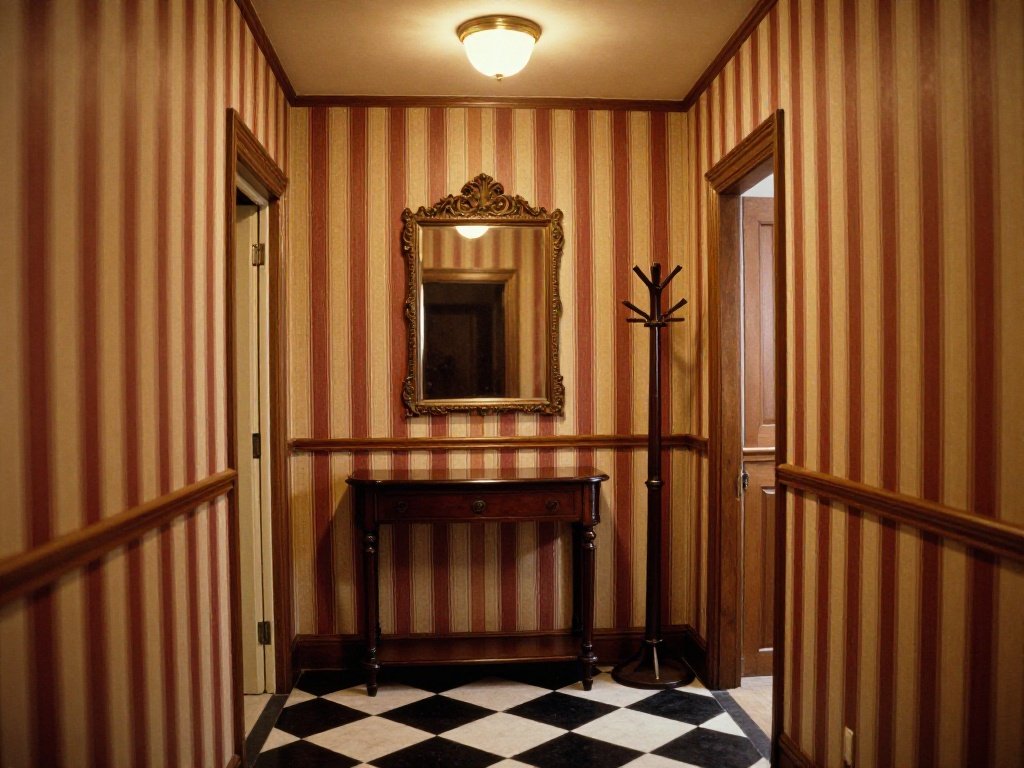
80s Hallway and Entryway Décor
The hallway was the first impression of the 80s home and was treated accordingly. This was not a transitional space — it was a designed space.
Wallpaper
The hallway was almost always wallpapered, often in a more formal pattern than the living room — think dado rail dividing a striped lower half from a floral or geometric upper half. Two-tone colour schemes (cream and burgundy, white and navy, or beige and forest green) were standard.
The Dado Rail
The dado rail — a wooden moulding running horizontally around the room at hip height — was one of the defining architectural features of the 80s home. Below the rail, walls were often painted in a deeper tone or covered in a complementary wallpaper. Above it, a lighter pattern or paint colour continued to the ceiling.
Flooring and Furniture
Hall floors were typically tiled (in terracotta, black and white chequerboard, or plain cream ceramic) or carpeted in a hardwearing pattern. A console table or hall stand — in dark wood with a mirror above it — was a near-universal feature. Coat hooks or a freestanding coat rack completed the look.
80s Home Office and Study
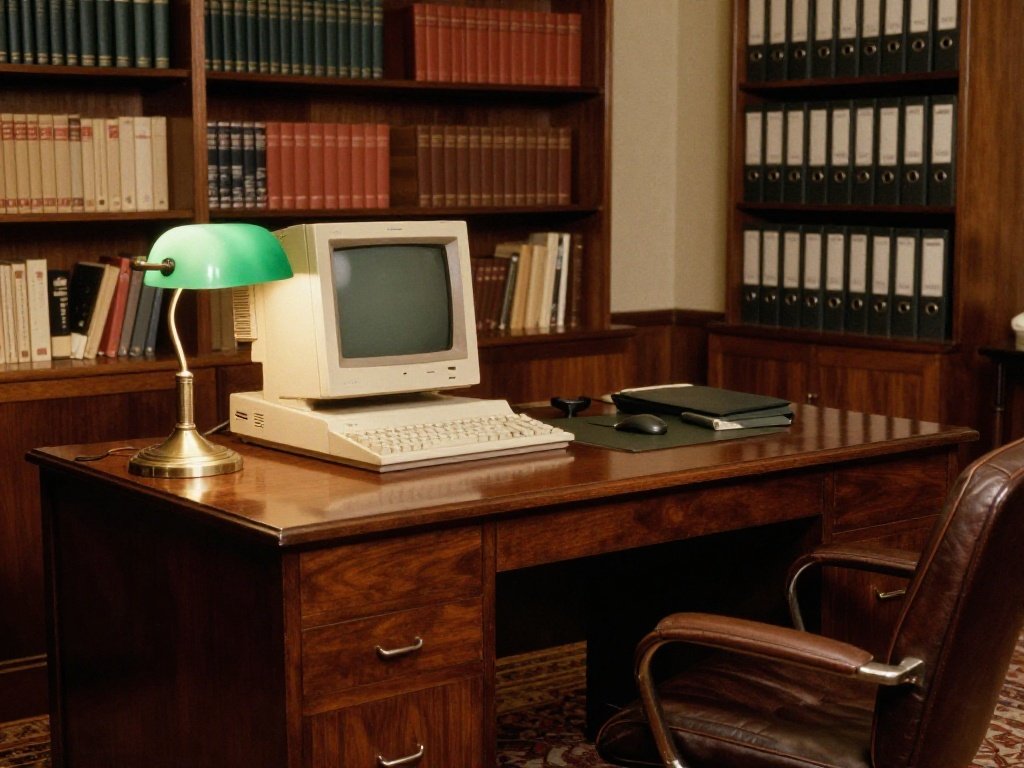
By the mid-1980s, the home computer had arrived — and with it, a new room entered the domestic vocabulary: the home office or study.
The 80s home office was not the sleek, minimal workspace of today. It was a proper room, designed to look serious and professional. Heavy dark wood desks — often in mahogany or teak — with matching bookcases lined with books, lever arch files, and displayed ornaments were standard.
The arrival of the personal computer (the Commodore 64, BBC Micro, and Apple Macintosh all launched in this decade) created a new focal point on the desk. Early computer setups were displayed prominently — the technology was expensive and having one was a statement.
Lighting was functional: adjustable desk lamps in brushed chrome or brass were popular, often with a green glass shade for a more traditional look.
80s Home Accessories and Finishing Touches
No eighties home was complete without the right accessories. These were the details that tied every room together and gave the 80s home its distinctive texture.
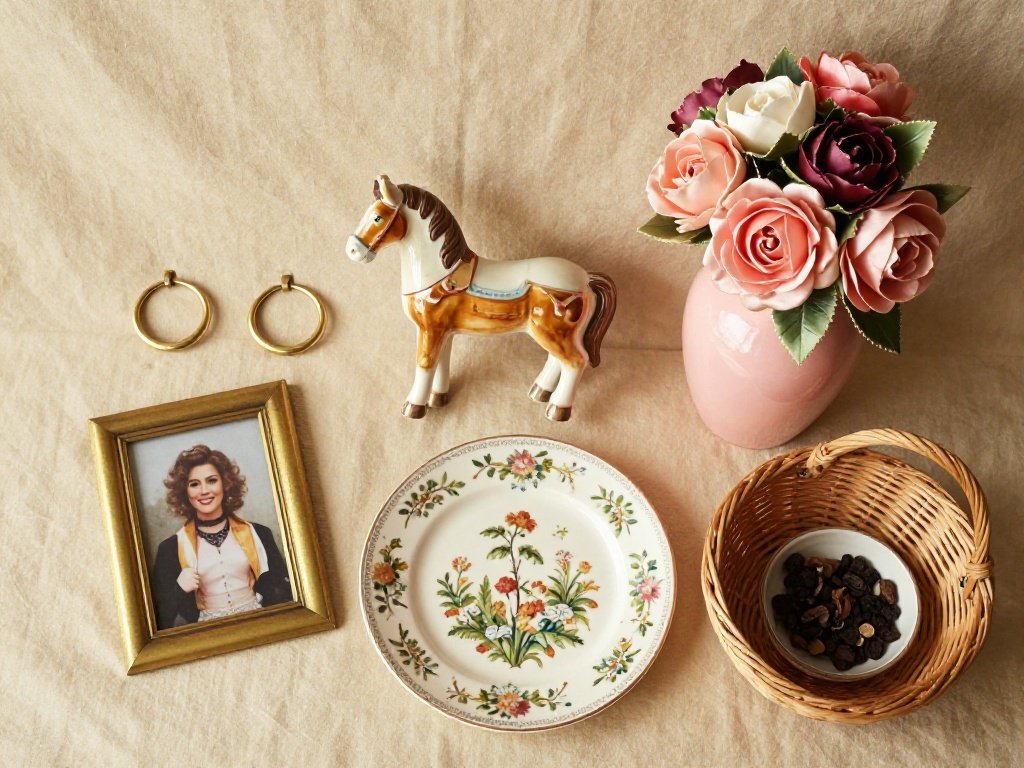
Brass and chrome fixtures Curtain rails, door handles, light switch plates, lamp bases, photo frames, and mirror frames — all in brass or polished chrome. Brass in particular was ubiquitous and is one of the fastest ways to signal the decade in a modern home.
Silk and dried flower arrangements Silk flower arrangements in large ceramic vases were found in living rooms, hallways, and dining rooms throughout the 80s. Dried pampas grass, dried wheat, and potpourri in ceramic bowls were also standard accessories.
Ceramic ornaments and figurines Decorative ceramics — figurines, animal sculptures, decorative plates displayed on walls — were collected and displayed on shelves, mantelpieces, and console tables.
Wicker and rattan Wicker baskets, rattan furniture pieces (particularly in conservatories and sun rooms), and wicker-framed mirrors added a natural contrast to the decade’s shinier tendencies.
Heavy curtains with pelmets Floor-length curtains in heavy fabric — velvet, brocade, or thick cotton — with a formal pelmet (a decorative valance board above the curtain) were standard in living rooms and master bedrooms. Tie-back curtains with brass or rope tiebacks were particularly popular.
You can also check the tool free to find your decor style Micro Renovation Ideas — Free Tool
How to Mix Eighties Home Décor With Modern Interiors
Very few people want to recreate a full 80s home from front door to back garden. The most wearable approach is to take the best elements of eighties home décor and layer them into a modern space without the room feeling like a time capsule.
Here is how to do it well:
Pick one statement piece per room. A bold Memphis Design rug in the living room, a lacquered sideboard in the dining room, or a geometric wallpaper feature wall in the hallway — one strong 80s piece is all a modern room needs to feel intentionally retro rather than accidentally dated.
Use brass as your hardware finish. Switching door handles, curtain rails, light fittings, and cabinet hardware to brass is one of the lowest-effort, highest-impact ways to bring 80s energy into a contemporary home without touching a single wall.
Embrace bold colour in soft furnishings. You do not need to paint your walls dusty rose to get the 80s feel. A teal velvet sofa, a geometric cushion collection in pink and black, or a mauve bedroom throw achieves the same effect with far less commitment.
Bring back the entertainment unit. A freestanding media unit that proudly displays your television, speakers, and collected media rather than hiding them behind doors is one of the most authentically 80s things you can do in a modern living room — and it is genuinely practical too.
Layer your lighting. The 80s home was never lit by a single overhead ceiling light. Use a combination of floor lamps, table lamps, and directional spotlights to create the layered, warm-toned lighting that defined the decade.
Final Thoughts
Eighties home décor is bold, specific, and entirely committed to its own vision of what a home should feel like. It is not subtle, and it was never meant to be.
What makes the 80s home revival so compelling right now is that it offers a direct antidote to years of minimalist, neutral, “quiet luxury” interiors. The 80s home was a personality — loud, warm, maximalist, and deeply personal.
You do not have to go all in. But adding even a few authentic touches of eighties home décor — the brass fixtures, the geometric wallpaper, the bold sofa, the displayed technology — can transform a modern interior into something with genuine character and warmth.
Because in the 1980s, a home was not a backdrop. It was a statement.
Start with the bedroom: our full 80s bedroom ideas guide covers everything from colour palettes to furniture, accessories, and product picks.