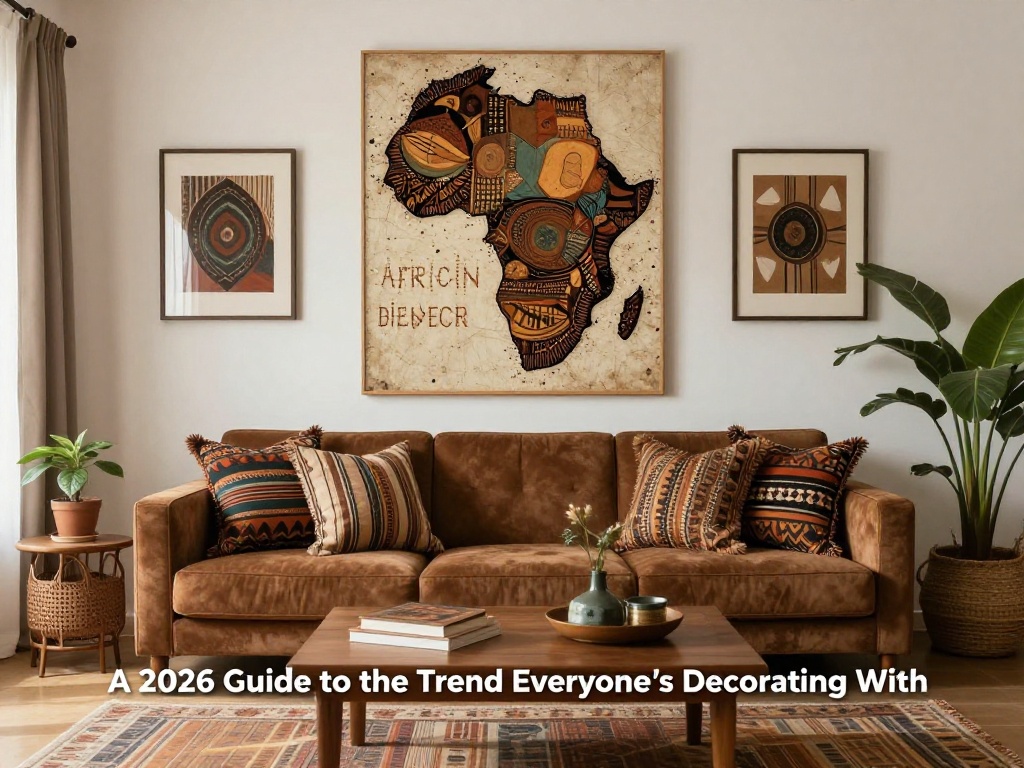
The whole interior design world is having a moment with African home decor, and it’s not slowing down. Pinterest searches for “afrobohemian home decor” jumped 220% in the last year, mudcloth pillows have become the most-pinned textile of 2026, and beaded curtains and rattan accents are everywhere. African decoration for home isn’t a niche trend anymore — it’s mainstream, and it’s beautiful.
This guide walks you through what African home decor actually means in 2026, how to bring it into your space, and the simplest ways to start — whether you have $50 or $500 to spend.
What “African home decor” really means
African home decor is less a single style and more a rich design language drawn from many cultures and regions across the continent — Moroccan, Malian, Ghanaian, Kenyan, South African, and dozens more. Each has its own materials, textiles, patterns, and color stories.
Warm, earth-derived palettes — terracotta, ochre, deep brown, cream, indigo, and one or two saturated accent colors.
Bold pattern — geometric prints, mudcloth markings, kuba cloth motifs, and tribal weaves used confidently as anchor pieces.
Texture, always — layered rugs, chunky textiles, woven wall art. African decoration rewards the eye for slowing down and looking closely.
The current 2026 expression of this is sometimes called Afrohemian (or Afrobohemian) — a softer, layered version that blends African pieces with global bohemian, scandi, and modern influences for a curated, lived-in feel.
The five elements of African home decor
If you’re starting fresh, these are the five categories to focus on. Add even two or three thoughtfully and a room transforms.
1. Textiles
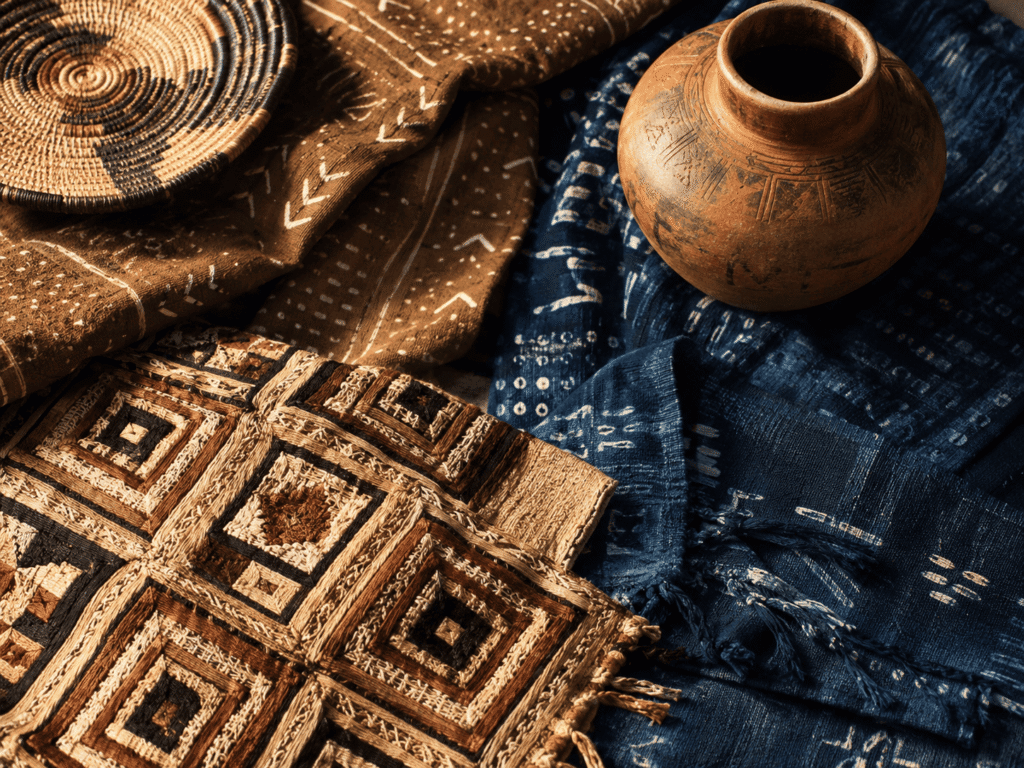
Mudcloth (bògòlanfini) is the showstopper — handwoven Malian cotton dyed with fermented mud and traditional geometric markings. Kuba cloth from the Democratic Republic of Congo brings the most visually striking patterns in the world. Even one mudcloth pillow on a neutral sofa changes the entire room.
2. Baskets and woven goods
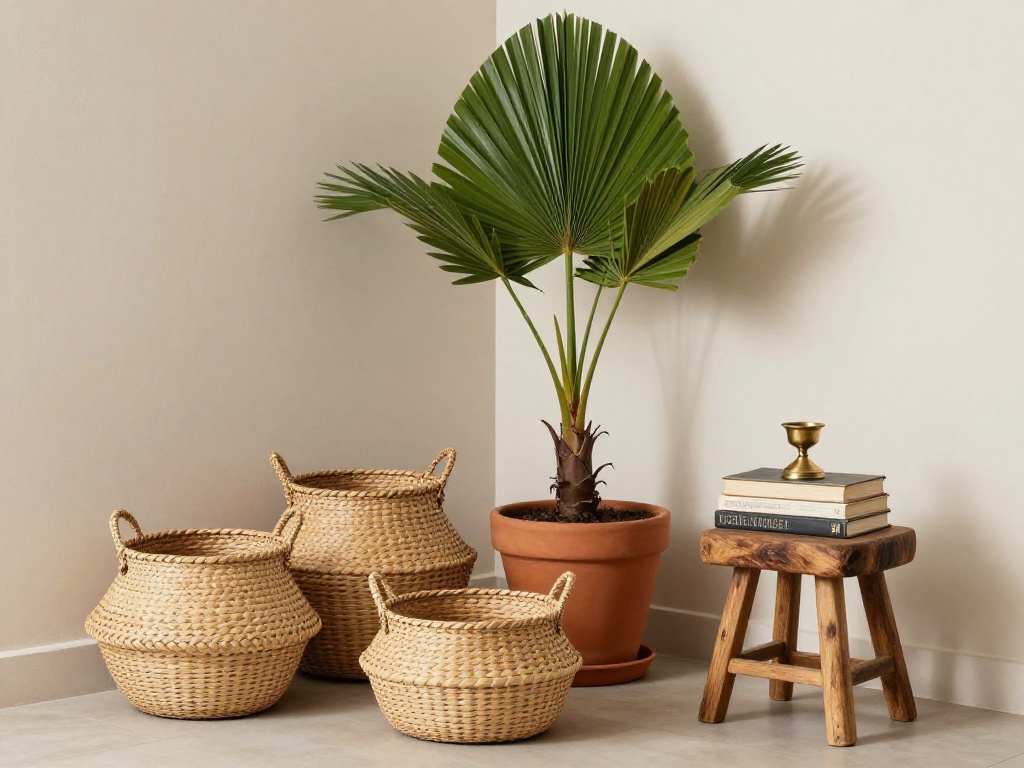
Hand-woven baskets from Ghana, Senegal, or Rwanda double as wall art and practical storage. Group three in different sizes on a wall, or use them as planters, laundry hampers, and side-table organizers.
3. Carved wood
Hand-carved stools, side tables, and figurative sculptures are the heirloom pieces of African decor. A single Senufo or Ashanti stool used as a side table anchors a whole corner.
4. Earth-tone walls and accents
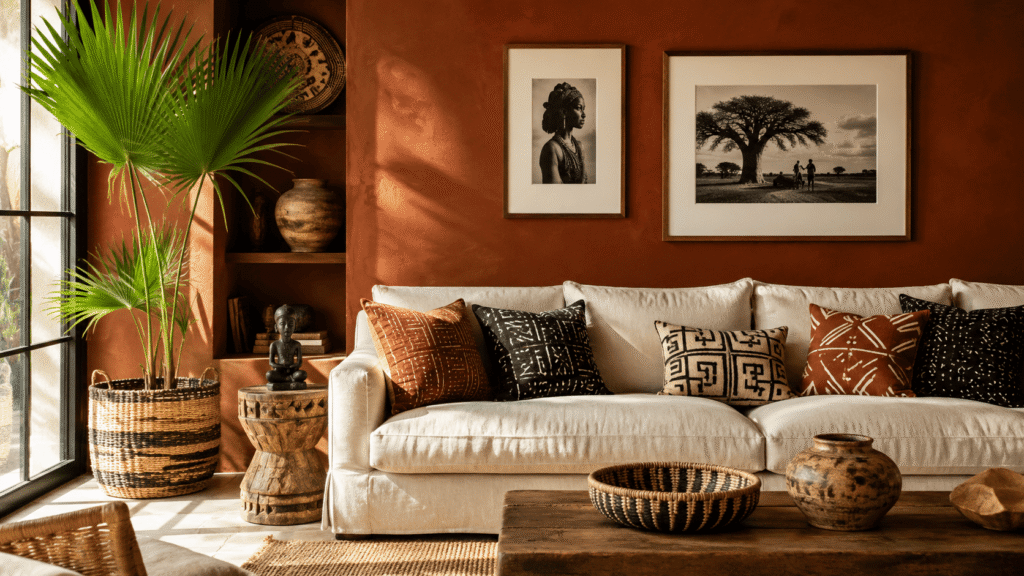
Terracotta, deep ochre, warm clay, and limewash textures all complement African pieces beautifully. The 2026 paint colors of the year — Behr Hidden Gem (red-brown) and Sherwin-Williams Universal Khaki (warm tan) — were practically made for this aesthetic.
5. Living elements
Tall fan palms, monstera, snake plants, and dried grasses bring the warmth of the continent indoors. Always in clay, terracotta, or woven baskets — never plastic pots.
Not sure how to put it all together? Our free Micro-Renovation Studio includes Afrohemian as a style option — it gives you ideas tailored to Afrohemian style for your specific room and budget, in about two minutes.
African home decor, room by room
Living room
Start with one mudcloth or kuba cloth pillow set on a neutral sofa, layer a jute base rug with a smaller patterned rug on top, and add one tall plant in a woven basket. A hand-carved stool as a side table is the final touch.
Bedroom
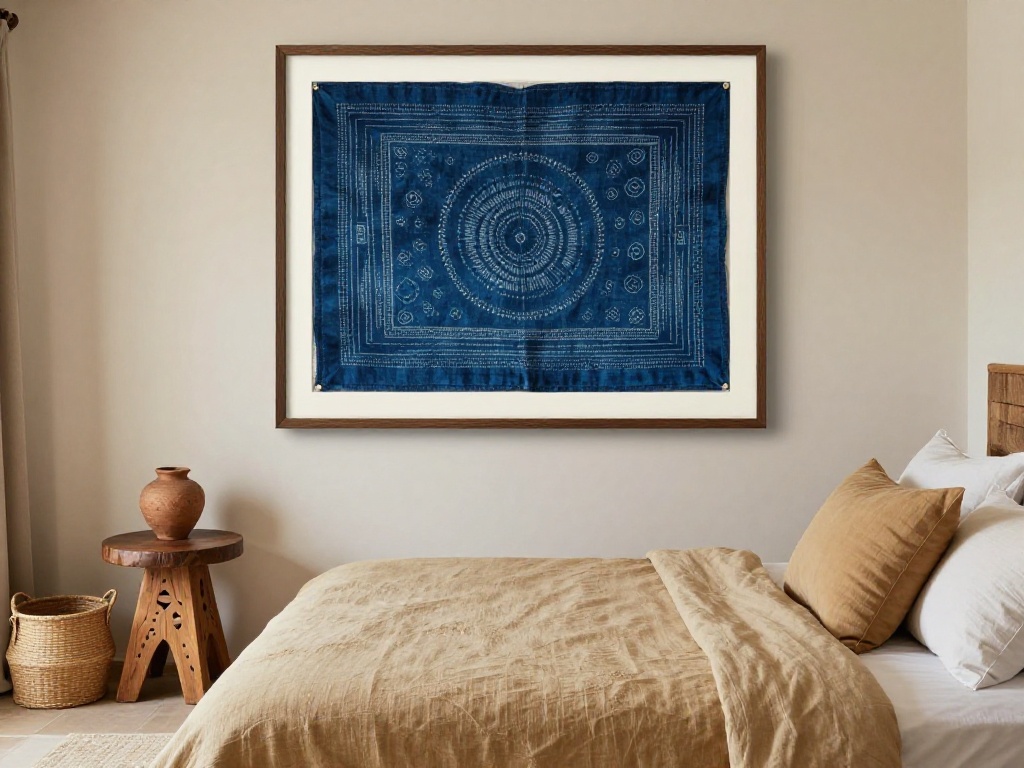
A textile wall hanging above the bed instead of a painting. Linen bedding in warm cream or terracotta. A single carved wood side table with a small clay lamp.
Dining
A hand-thrown ceramic centerpiece, a runner in an African print, woven place mats, and brass candlesticks. The brass and clay combination is unbeatable.
Entryway
A single carved bench, a tall basket for keys or umbrellas, and a small framed textile above. First impression, sorted.
African Home Decor: A 2026 Guide to the Trend Everyone’s Decorating With
Authentic vs. appreciative — the line that matters
A quick honest note: African home decor is rooted in real, living cultures with deep meaning behind specific patterns and objects. The way to do this well is simple — buy directly from African artisans whenever you can.
Marketplaces like 54kibo, Mbare, Africanmod, Luangisa, and Etsy’s African artisan section connect you with makers across the continent. The pieces cost what they should, the money reaches the people who made them, and your home tells a real story instead of a generic one.
Avoid mass-produced “African-inspired” pieces from big-box retailers — they’re usually copies that flatten meaningful design into wallpaper. The handmade alternatives are often the same price or cheaper.
How to start — three simple budgets
Under $50: One mudcloth pillow cover from an Etsy artisan, one small woven basket for the bathroom, a clay vessel grouping of three on a shelf. Instant impact, no commitment.
Under $150: Add a layered jute + kilim rug combo, one hand-carved bookend or small sculpture, and a framed African textile or photograph as wall art.
Under $400: Add a hand-carved Senufo stool or Ashanti side table, two tall plants in matching woven baskets, and re-paint one wall in a deep earth tone like terracotta or warm ochre.
A few common mistakes to skip
Don’t theme a room. African decor at its best is layered with other influences — Scandinavian, vintage, modern, bohemian — for a curated, lived-in feel rather than a museum exhibit.
Don’t display sacred or ceremonial objects (especially masks) as ironic wall art. If you don’t know what an object means, take a minute to learn before bringing it home.
Don’t go monotone. The most beautiful African-inspired homes mix warm earth tones with one cool counterpoint (a deep indigo, a sage green) and plenty of negative space.
Bring it into your home this weekend
African home decor rewards the patient and the curious — it’s not a style you complete in one shopping trip, but one you grow over years.
If you’re not sure where to start, getyour personalized refresh plan from our free Micro-Renovation Studio — pick your room, your budget, and Afrohemian as your style, and you’ll get five tailored, high-impact ideas for bringing African decoration for home into your space. You can even download the plan as a PDF to take with you when you shop.
Your room is one weekend away from telling a richer story.
Sufian Ahmed
Home decor enthusiast and founder of astheticdecor.com. Passionate about helping people create beautiful, personalised aesthetic rooms on any budget. Covering romantic, dark academia, kawaii, gothic, coquette and every aesthetic in between.