Introduction
A vase is one of the most underestimated decorating decisions in any room.
It is small. It is relatively inexpensive. It sits in the corner of a shelf or on the corner of a desk and it is easy to overlook — until you choose one that is exactly right for your aesthetic, and suddenly it becomes one of the most personality-filled objects in the entire space.
The right vase does three things simultaneously: it holds flowers or botanicals, it adds colour and shape to a surface, and it communicates something about the person who lives there. A daisy vase on a danish pastel bedroom shelf tells a completely different story from a dark ceramic vase on a dark academia desk or a sculptural smiley face vase on an art hoe windowsill. Each one is a character statement as much as a decorative object.
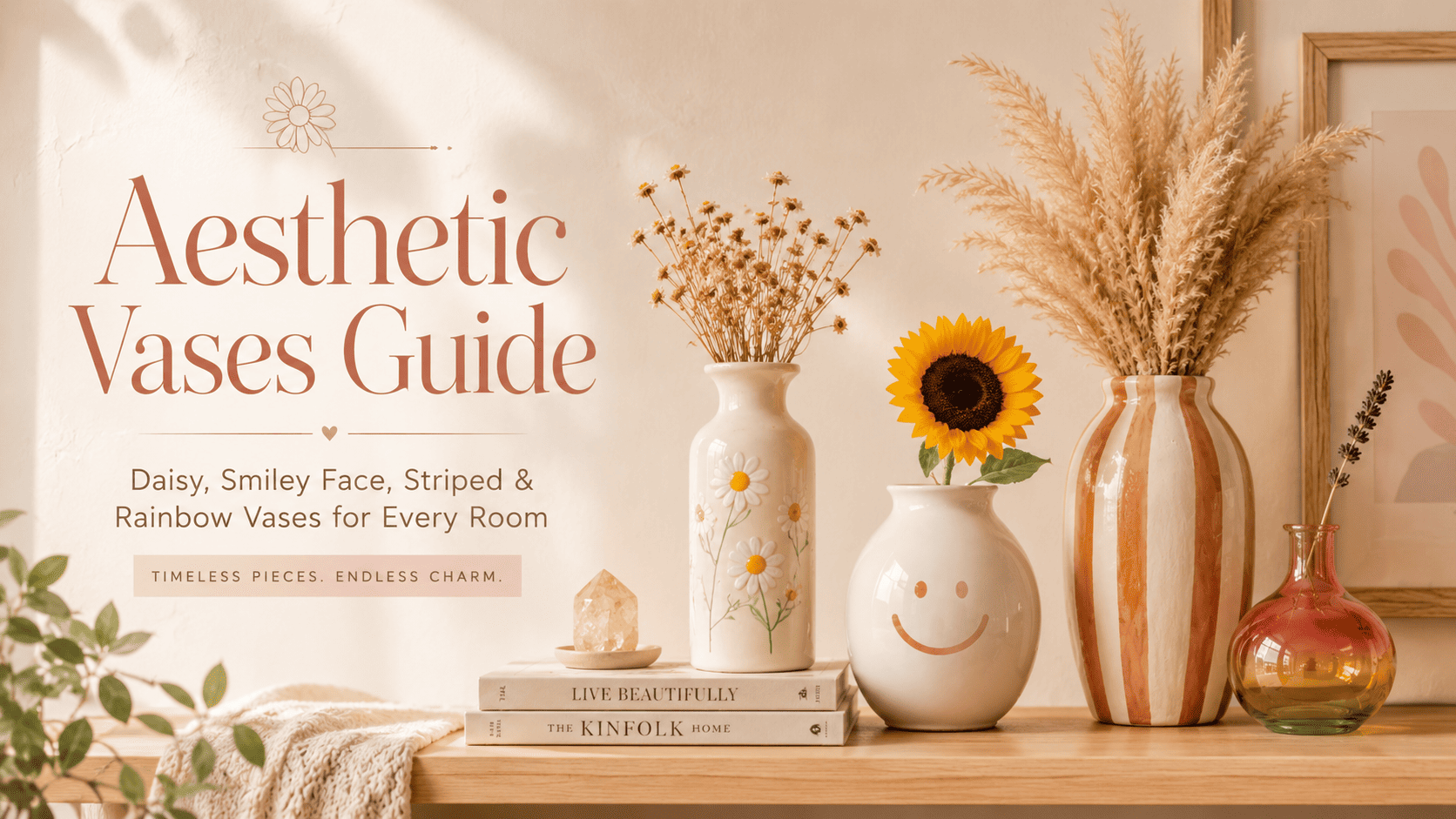
This guide covers the full spectrum of aesthetic vases — daisy vases, smiley face vases, striped vases, rainbow vases, and hydroponic flower pots — with practical guidance on what each type looks like, which aesthetics it works with, how to style it, and where to find the best versions at every price point.
🔗 Styling a full aesthetic shelf display? Read our kawaii room decor and our aesthetic clocks and desk accessories guide for the full picture.
Why Vases Matter in Aesthetic Room Design
The right vase can create a sense of calm, add energy, or make a room feel more inviting — and vase decor trends for 2025 bring bolder, more expressive designs, colourful glassware, and earthy artisan-crafted finishes.
In aesthetic room design specifically, the vase has an additional function beyond its traditional decorative role. It is an opportunity for a specific kind of personality expression — a piece that says something about the specific aesthetic direction of the room in a way that larger furniture pieces cannot. You can change the entire feeling of a shelf display by swapping one vase for another. You cannot do the same with a bed frame.
The key insight in aesthetic vase selection is this: sometimes the vase is the main event — sculptural vases can stand alone as decor even when empty. When you add flowers, keep them simple so the vessel still gets attention. The best aesthetic vases work beautifully empty and become even better with the right botanical inside them.
How to Style Vases on Shelves
Before getting into specific vase types, the fundamental principles of vase styling apply to every choice:
Group in odd numbers. Grouping vases of different heights and textures creates a dynamic yet cohesive look. Three vases together — one tall, one medium, one small — reads better than two or four. The asymmetry of odd numbers creates visual interest that even groupings cannot achieve.
Vary the height. A group of three vases at exactly the same height has no visual energy. A group of three vases in significantly different heights creates the kind of dynamic composition that makes a shelf display feel genuinely styled.
Match the vase to the botanical. A single large stem in a tall narrow vase. A loose cluster of dried grasses in a wide-mouthed ceramic. A single daisy in a small bud vase. The proportion of botanical to vase is as important as either element in isolation.
Use empty vases confidently. Not every vase needs to contain something. An empty sculptural vase displayed alone on a shelf is a legitimate decorating choice — particularly for smiley face vases, rainbow vases, and other aesthetically distinctive pieces where the vase itself is the focal point.
The Daisy Vase: Playful, Fresh, and Instantly Charming
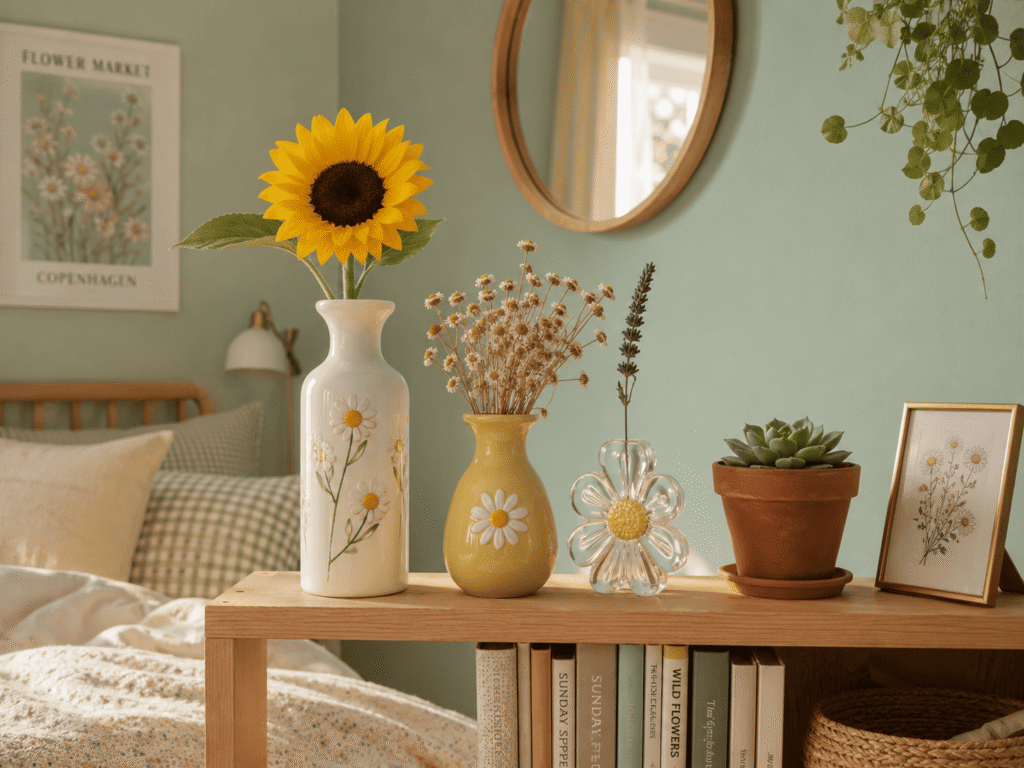
The daisy vase is one of the most distinctive and most immediately joyful aesthetic vase choices available. Whether it takes the form of a ceramic vase with a daisy embossed or printed on its surface, a vase shaped to resemble a daisy flower, or a daisy-motif glass vase with floral pattern details, the daisy aesthetic brings a specific quality of fresh, uncomplicated happiness to any surface it occupies.
Why the Daisy Works
The daisy is the most universally positive floral motif in aesthetic room design. Unlike roses (romantic but slightly formal) or peonies (lush but complicated), the daisy is simply cheerful. It belongs to the same visual family as the smiley face and the sunflower — uncomplicated positivity expressed through a simple, graphic form.
In the current aesthetic landscape, the daisy appears throughout danish pastel, cottagecore, indie, kawaii, and Y2K aesthetics — which means a daisy vase is one of the most broadly compatible aesthetic decorating choices available. It works in a bedroom, on a desk, in a bathroom, in a kitchen — wherever it sits, it adds a note of fresh, natural brightness.
Types of Daisy Vases
Ceramic daisy vases — the most popular format. White or cream ceramic with a hand-painted or embossed daisy motif. These have a slightly handmade quality that aligns perfectly with the cottagecore and danish pastel aesthetics.
Daisy-shaped vases — vases moulded into the actual shape of a daisy flower, with the opening at the flower’s centre. These are sculptural pieces as much as functional vases. Available in ceramic, glass, and resin in various colours.
Daisy-print glass vases — clear or coloured glass with daisy pattern details, etched, printed, or sandblasted onto the surface. The transparency of the glass creates a different quality from ceramic — lighter and more contemporary.
Yellow daisy vases — solid yellow ceramic or glass vases that reference the daisy’s most iconic colour. These add a sunny warmth to shelf displays and work beautifully in cottagecore, danish pastel, and indie rooms.
What to Put in a Daisy Vase
A daisy vase works best with botanicals that share its fresh, uncomplicated quality. Real daisies are the obvious choice — and a single daisy in a small daisy-motif bud vase is one of the most charming shelf displays available. Beyond daisies: dried lavender, dried chamomile, small wildflowers, baby’s breath, dried grasses, or a single sunflower all share the daisy vase’s spirit.
Best aesthetics: Danish pastel, kawaii, cottagecore, indie, soft girl, light academia.
You can also use our Free Renovation Tool for Styling and Decoration.
The Smiley Face Vase: The Happiest Object in Any Room
The smiley face vase is the aesthetic room equivalent of wearing something that makes you smile when you put it on. It is deliberately playful, deliberately cheerful, and completely unapologetic about being both. It belongs to the broader trend of “dopamine decor” — objects chosen specifically because they generate a positive emotional response every time you look at them.
The Appeal of the Smiley Face Vase
The smiley face motif has deep roots in both 1970s pop culture and 1990s/Y2K design, which gives the smiley face vase an interesting generational resonance — it means something slightly different to someone who grew up with 90s smiley culture than to someone discovering it through contemporary aesthetic content, but it generates the same basic response in both cases: it makes you smile back.
The vase collection includes curvy danish pastel vases alongside the classic smiley face emoji vase — and this combination is not accidental. The smiley face vase belongs to the same playful, personality-forward decorating tradition as the daisy rug, the tomato rug, and the mushroom lamp.
Types of Smiley Face Vases
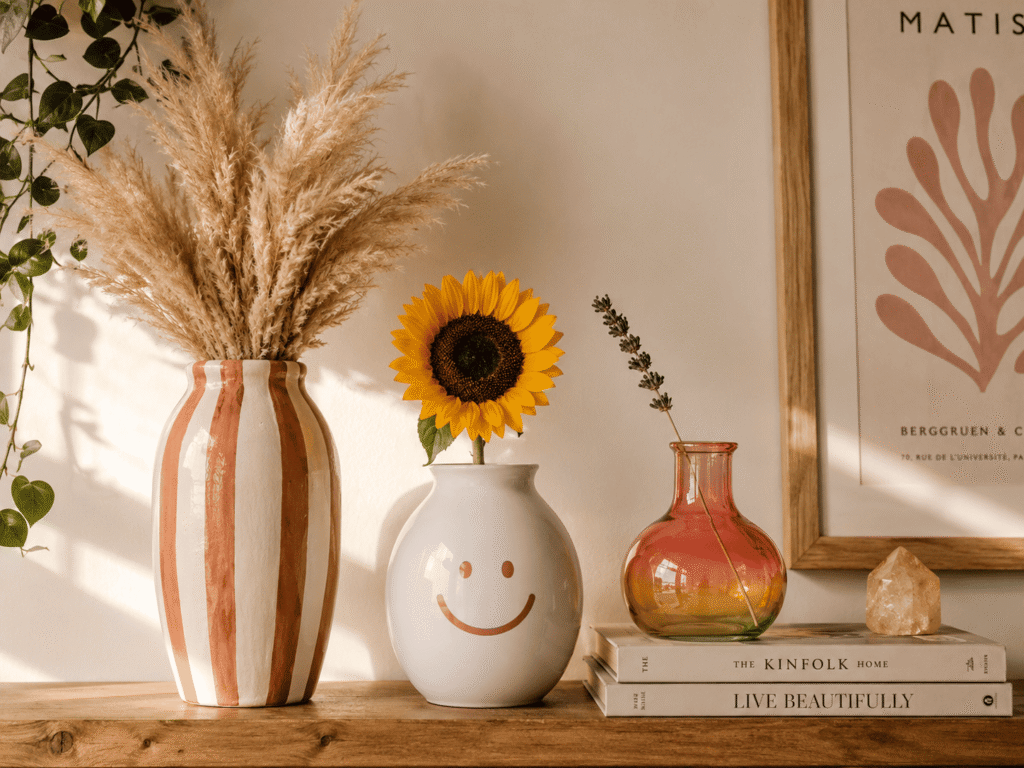
Classic smiley face ceramic vase — a white or cream ceramic vase with a classic yellow smiley face printed, painted, or embossed on the front. The most immediately recognisable format and the most photographed. Works equally well with flowers or as an empty display piece.
3D smiley face relief vase — a vase with a raised, three-dimensional smiley face moulded into the ceramic surface. These have more sculptural presence than flat-printed versions and catch light differently, making them genuinely interesting objects from every angle.
Customisable smiley face vase — personalised smiley face ceramic vases, custom engraved, available for fresh or dried flowers. These are available from Etsy makers and allow for bespoke text or design alongside the smiley motif.
Coloured smiley face vases — smiley face vases in yellow, pastel pink, mint green, or other palette-specific colours rather than the standard white. These integrate more naturally into colour-coordinated shelf displays while maintaining the joyful character of the motif.
Styling the Smiley Face Vase
The smiley face vase is a statement piece — treat it as one. Place it as the focal point of a shelf display rather than hiding it among other objects. The face should be visible from the room’s entrance point. Keep the surrounding display relatively simple so the vase gets the attention it deserves.
A single bright flower in a smiley face vase — a sunflower, a gerbera, or a bold dahlias in a vivid colour — creates a composition that is simultaneously funny and genuinely beautiful. A handful of dried wildflowers in a softer, more muted arrangement works for a more subdued shelf display while maintaining the vase’s playful character.
Best aesthetics: Y2K, kawaii, indie, art hoe, danish pastel, coquette, dopamine decor.
You can also read Aesthetic Clocks & Desk Accessories: The Complete Guide to Retro Flip Clocks, Daisy Clocks & More
The Striped Vase: Graphic, Versatile, Genuinely Elegant
The striped vase is the most versatile of all the aesthetic vase types — because stripes are a graphic language that translates across multiple aesthetics simultaneously. A hand-painted striped ceramic vase in cream and terracotta reads as cottagecore. The same form in black and white reads as modern or indie. In pastel blue and white it reads as coastal or danish pastel.
Why Stripes Work on Vases
Stripes are one of the oldest and most enduring decorative motifs in ceramic design — they appear in ancient pottery traditions and in contemporary design alike. The soft pastel handmade striped vintage glass tower vase, available as a soft pastel handmade striped vintage glass tower, can be used with artificial flowers, dried flowers, and more. The combination of the handmade quality of the striping with the vintage glass format creates a specific aesthetic that reads as both artisanal and contemporary.
Types of Striped Vases
Ceramic striped vases — the most common format. Hand-painted or glazed horizontal stripes around a simple cylindrical or bottle-shaped ceramic body. The quality of the stripe — precise or slightly irregular, uniform or varied in width — determines whether the vase reads as artisanal or industrial.
Striped glass vases — clear or coloured glass with stripe details achieved through coloured glass layers, sandblasting, or applied enamel paint. These have a lighter, more contemporary quality than ceramic versions and work particularly well in displays where you want the botanical inside to be partially visible.
Multicolour striped vases — stripes in three or more colours in a coordinated palette. These create more visual energy than two-colour versions and work well in maximalist aesthetic displays (kawaii, art hoe, dopamine decor) while potentially overwhelming more restrained schemes.
Wide versus narrow stripes — wide stripes create a bolder, more graphic statement; narrow stripes create a more refined, textile-like quality. Choose based on whether the vase needs to be a statement piece or a supporting element in a display.
What Goes in a Striped Vase
Striped vases work with almost any botanical because the visual interest of the stripe pattern means the vase itself carries the display. Simple works best: a single stem, a small bunch of dried grasses, or three stems of eucalyptus all allow the vase to remain the focal point while providing the organic contrast that makes any vase display more interesting.
Best aesthetics: Danish pastel, cottagecore, indie, modern aesthetic, ocean theme, light academia.
The Rainbow Vase: Light, Colour, and Pure Joy
The rainbow vase sits at the intersection of the aesthetic candle trend, the dopamine decor movement, and the specific visual culture of Y2K and contemporary aesthetic room design. It is a vase that creates colour and light as much as it displays botanicals — because the best rainbow vases catch natural and artificial light and refract it into rainbow effects across the surrounding surfaces.
What Makes a Rainbow Vase
A rainbow vase achieves its effect through one of several material approaches:
Holographic glass — the most dramatic rainbow vase format. Clear or slightly tinted glass with a surface treatment that creates an iridescent, rainbow-shifting quality in different lights. These vases catch sunlight from a window and cast rainbow reflections across nearby walls and surfaces — a genuinely magical effect at very low cost.
Prismatic or ribbed glass — vases with deep ribbing, faceting, or surface texture that refracts light into colour spectrums. The effect is more subtle than holographic glass but creates beautiful light play that is particularly effective in naturally bright rooms.
Multicolour glass layers — vases made from multiple layers of coloured glass in rainbow sequence. These have a visual impact even in flat light and create more saturated colour effects than surface-treatment versions.
Clear glass with coloured water — not technically a “rainbow vase” as a product but a styling technique: fill a clear glass vase with coloured water (using a few drops of food colouring in a rainbow hue) and place in natural light. The coloured water turns the vase into a glowing colour element at almost zero cost.
How to Use a Rainbow Vase
Position a holographic or prismatic rainbow vase on a windowsill where it will catch morning or afternoon light. The rainbow reflections it casts across the room change with the sun’s position throughout the day — creating a constantly evolving light display that no other decorating element can replicate.
For shelf displays away from natural light, use a ribbed or faceted rainbow vase with a warm LED strip light positioned to catch its surface — the effect is less dramatic than sunlight but still creates interesting light play.
Best aesthetics: Y2K, kawaii, danish pastel, galactic, indie, dopamine decor, crystal and witchy rooms.
You can also read Modern Gothic Home Decor: How to Create a Dark, Contemporary Interior
Hydroponic Flower Pots: Growing Beauty Without Soil
The hydroponic flower pot is the most contemporary and most design-forward item in this guide — and the one that most directly sits at the intersection of plants-as-decor and aesthetic room design.
What Is a Hydroponic Flower Pot?
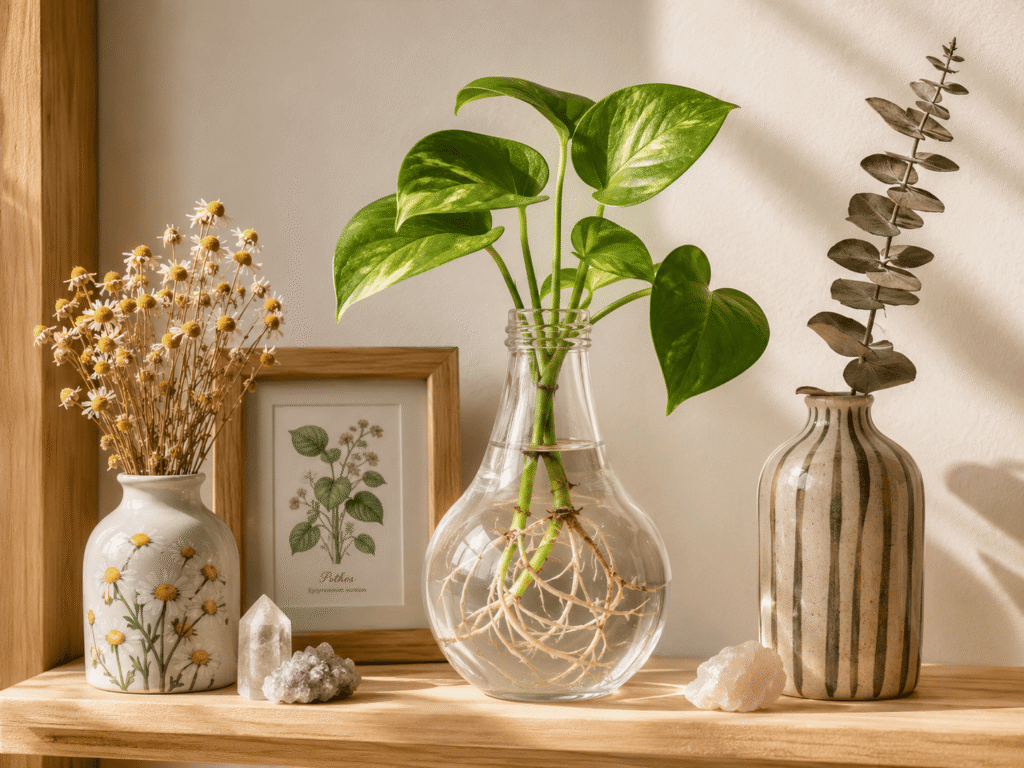
A hydroponic pot grows plants in water rather than soil. The plant’s roots are suspended in water (with optional nutrient solution) inside a clear or translucent container, with the plant itself growing from the top. The result is both a functional growing medium and a beautiful display piece — because the visible root system growing through the water creates a genuinely striking visual effect that soil-based pots cannot replicate.
Why Hydroponic Pots Are Aesthetic
The appeal of the hydroponic flower pot in aesthetic room design comes from several qualities:
The visible root system. Watching roots grow through clear water is both scientifically interesting and visually beautiful. The white or pale root tendrils against the transparency of the water create a delicate, organic visual that is completely unique.
The water element. A pot of clear water with a growing plant inside has a specific quality — calm, fresh, slightly scientific — that adds a different dimension to a shelf display than any dry plant or vase.
The minimalist aesthetic. Hydroponic pots are inherently minimal — a clear container, clean water, and a single plant. This quality aligns perfectly with the more restrained aesthetic aesthetics (danish pastel, light academia, chill room) where cluttered displays would be out of place.
The ongoing activity. A hydroponic pot is always changing — the roots grow visibly over time, the plant develops, and the water level drops and needs to be topped up. This ongoing interaction with the object is a quality that static decorations cannot provide.
Best Plants for Hydroponic Display Pots
Pothos cuttings — the most popular hydroponic aesthetic plant. A cutting from a pothos plant placed in water will develop visible white roots within one to two weeks and can continue growing hydroponically indefinitely. Absolutely free if you already own or can access a pothos plant.
Tradescantia (spiderwort) — particularly the purple or variegated varieties, which develop striking coloured roots alongside their foliage. Very fast-growing and very effective in a clear hydroponic pot.
Lucky bamboo — traditionally grown in water and genuinely striking when displayed in a tall, clear hydroponic vessel. One of the most effective hydroponic displays available.
Hyacinth and bulb forcing — seasonal but spectacular. Hyacinth, narcissus, and tulip bulbs grown in purpose-made hydroponic bulb vases are a spring display that is simultaneously beautiful and a functional growing project.
Herb cuttings — basil, mint, and rosemary cuttings root readily in water and provide both visual interest and practical function. A row of three small hydroponic pots with herb cuttings on a kitchen windowsill is one of the most effective small-scale aesthetic plant displays available.
Types of Hydroponic Flower Pots
Clear glass bulb vases — the classic hydroponic vase format. A clear glass sphere or elongated bulb shape with a narrow neck that supports the bulb or cutting above the water line. Elegant, simple, and genuinely effective.
Test tube planters — sets of small test tubes mounted on a wooden or metal stand, each holding a single cutting or small plant. These have a slightly scientific, slightly art hoe quality that works beautifully in aesthetic desk setups.
Clear acrylic pots — the most contemporary format. A clear acrylic container with a separate insert that holds the plant above the water. Modern, clean, and particularly effective in minimal aesthetic rooms.
Coloured glass hydroponic vases — the same concept as clear glass but in tinted colours — soft blue, amber, sage green. The coloured glass adds a tonal quality to the water inside that creates a more decorative effect at the cost of slightly reduced root visibility.
You can also read Gothic Home Decor on a Budget: The Complete Affordable Dark Aesthetic Guide
Vase Styling by Aesthetic
Different aesthetic rooms call for different vase styles. Here is the quick reference guide:
| Aesthetic | Best Vase Type | Best Botanical |
|---|---|---|
| Danish pastel | Daisy vase, striped pastel ceramic, hydroponic bulb | Fresh daisies, dried lavender, pothos cutting |
| Kawaii | Smiley face vase, character-shaped vase, daisy vase | Single bright flower, small dried wildflowers |
| Cottagecore | Daisy ceramic, vintage glass, striped terracotta | Dried florals, wildflowers, dried herbs |
| Indie | Striped ceramic, vintage glass, thrifted unusual shapes | Dried grasses, pampas grass, sunflower |
| Y2K | Rainbow/holographic vase, smiley face vase | Iridescent stems, dried grasses, bold single flower |
| Dark academia | Dark ceramic, stoneware, earthy glazed vase | Dried botanicals, single dark rose, dried ferns |
| Ocean theme | Sea glass coloured vase, white ceramic | Dried pampas, eucalyptus, dried grasses |
| Art hoe | Sculptural unusual ceramic, test tube planters | Bold single blooms, dried wildflowers |
| Coquette | White ceramic with floral detail, pastel ribbed glass | Fresh peonies, dried roses, dried lavender |
| Galactic | Rainbow glass, holographic vase, dark iridescent | Dried black grasses, holographic stems |
Where to Buy Aesthetic Vases
Etsy — the best source for unique, handmade, and character aesthetic vases. Personalised smiley face vases, hand-thrown daisy ceramics, custom-painted striped vases, and unusual sculptural pieces all come from independent Etsy makers. Best for: anything you want to be genuinely one-of-a-kind.
Amazon — widest selection of affordable aesthetic vases at all price points. Best for: daisy print ceramics, holographic rainbow glass, smiley face emoji vases, and test tube plant stands. Quality varies — read reviews carefully.
Aestheticroomcore, Roomtery, and The Other Aesthetic — specialist aesthetic room retailers stock curated selections of striped glass vases, daisy vases, and character-shaped vases specifically for the aesthetic room market.
H&M Home and Zara Home — regularly produce seasonal aesthetic vases aligned with current trends. Good for: ribbed glass vases, ceramic with minimal motifs, and seasonal special shapes.
IKEA — affordable base vases that are excellent for DIY customisation (painting, decoupage, or adding motifs with ceramic paint markers). The BEGYNNA and SMYCKA ranges offer versatile shapes at very low prices.
Charity shops and vintage markets — for unusual vintage glass, mid-century ceramics, and genuinely interesting shapes at very low prices. The best daisy vases and character ceramics regularly appear in charity shops from house clearances.
You can also read Kawaii Furniture Guide: How to Choose and Style Cute Room Furniture