Introduction
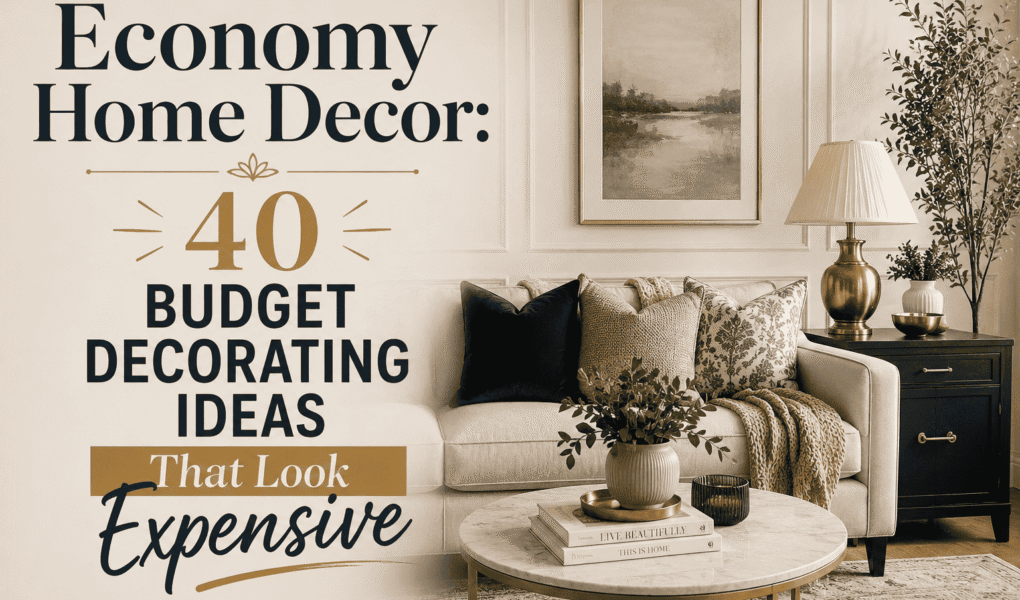
A beautiful home is not defined by how much you spend. It is defined by how intentionally you decorate.
This is not a consolation prize for people who cannot afford better. It is a genuine design principle — one that the most visually compelling homes consistently demonstrate. The most beautifully decorated rooms in the world are not necessarily the most expensively furnished. They are the most thoughtfully curated. And thoughtful curation costs nothing except attention.
Economy home decor is the art of achieving the highest possible visual impact at the lowest possible cost. Not cheap-looking rooms. Not sparse, apologetic spaces where the budget is visible in every bare wall and empty corner. Beautiful, intentional rooms that happen to have been created without significant financial investment — because the person who made them understood that intention beats budget every single time.
In 2026, economy home decorating has never been more relevant. Rising costs have pushed homeowners and renters to search for ideas that balance style with savings. The search for economy home decor ideas has increased dramatically — because people are realising that creating a beautiful home is a skill, not a purchase. And like any skill, it can be learned.
This guide covers 40 economy home decor ideas organised by room, by budget tier, and by aesthetic — plus the shopping guide, the DIY projects, and the honest answers to every question people are asking on Reddit and Quora about decorating beautifully on a real budget.
🔗 Want to find your decorating style first? Use our Free Renovation Tool and read our romantic bedroom ideas guide for inspiration at every budget.
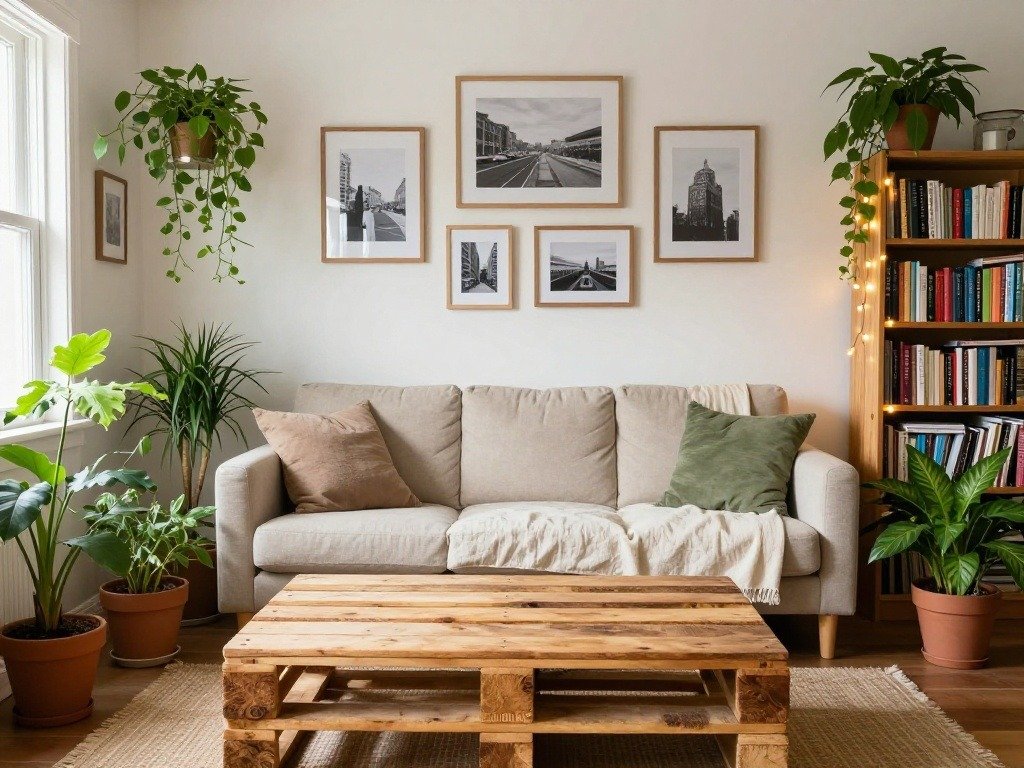
What Is Economy Home Decor?
Economy home decor is decorating your home with maximum style on minimum spend. It is not minimalism (though minimalism can be economical). It is not emptiness (empty rooms are not economy decor — they are just undecorated rooms). And it is not about looking like you have no money.
Economy home decor is about:
- Making intentional choices rather than impulse purchases
- Understanding which changes have the highest visual impact per dollar
- Shopping smartly — thrift stores, Facebook Marketplace, sales, DIY
- Working with what you already have before buying anything new
- Understanding that one right thing is always better than ten mediocre things
Many designers say that a cluttered room feels cheap, however a thoughtfully edited room feels luxurious. This is your powerful, completely free starting point.
The Economy Home Decor Mindset — Before You Buy Anything
The single most important economy home decor principle is this: look at what you already have before you buy anything new.
Most rooms that feel undecorated are not under-furnished — they are over-cluttered and under-edited. The first economy home decor project in any room is always the same:
Step 1: Remove everything that is not furniture from the room Step 2: Clean the empty room thoroughly Step 3: Put back only the items you actively love or actively need Step 4: Look at what is left — this is your starting point Step 5: Identify the one or two things that would make the biggest difference Step 6: Only then consider buying anything
This process costs nothing. It consistently produces rooms that feel better than they did before. And it means that when you do spend money, you spend it on exactly the right thing rather than adding to a collection of things that are individually okay but collectively cluttered.
Budget Tiers — What Is Achievable at Every Level
Free — The Zero-Budget Transformation
These economy home decor ideas cost nothing except time and attention:
1. Rearrange your furniture Moving your sofa away from the wall, positioning furniture in a conversation-facing arrangement rather than a TV-facing one, or simply rotating what faces the room’s focal point costs nothing and changes everything. Many professional interior designers say that furniture arrangement is more impactful than new furniture.
2. Edit your shelves and surfaces Remove two thirds of what is currently on display. Keep only what you actively love. The space around objects is what makes them visible — overcrowded shelves make everything invisible.
3. Change what is on your walls Rearrange existing artwork. Move a picture from one room to another. Take down things that are there by habit rather than intention. An empty wall is better than a wall covered in things you are indifferent to.
4. Clean your windows Clean windows let in dramatically more light. Natural light is the most powerful and most affordable room transformer available. It costs nothing to maximise it.
5. Move your plants Reposition plants to where they have the most visual impact — typically corners, shelves, and windowsills. A plant that has been in the same corner for two years becomes invisible. Move it and it becomes decoration again.
You can also read Small Kitchen Remodel Ideas: 20 Budget-Friendly Transformations (Before & After)
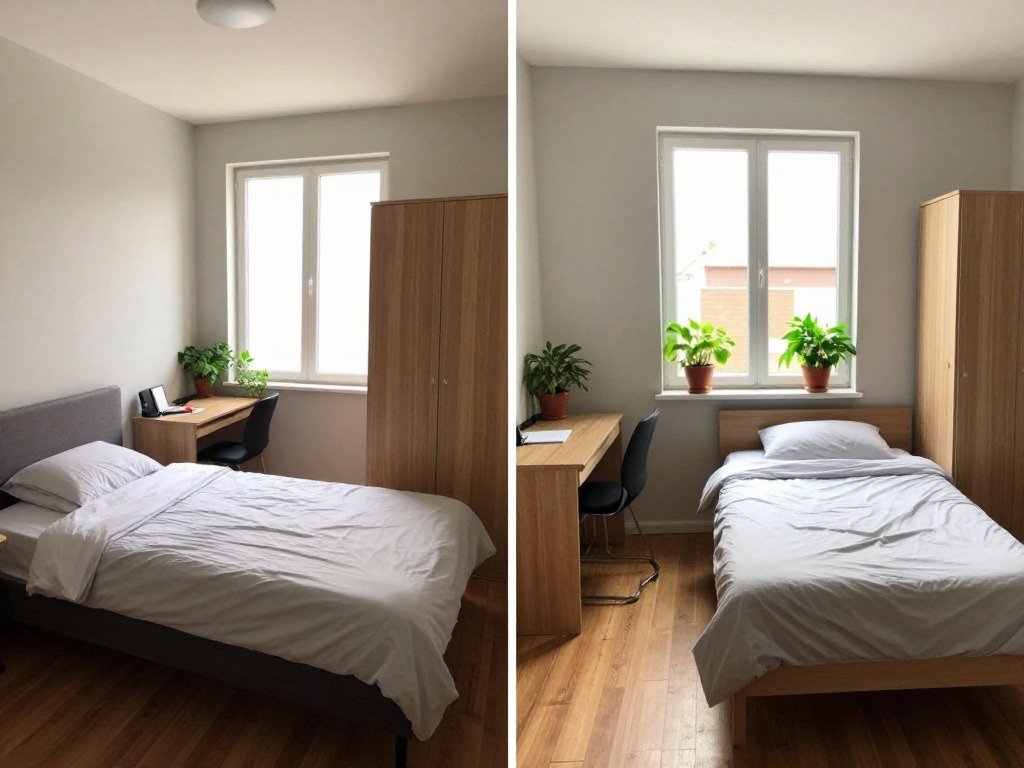
Under $50 — High Impact at Minimal Cost
These economy home decor upgrades cost under $50 each and produce visible, immediate results:
6. New throw pillows ($8–$25 each) Throw pillows are the fastest, most affordable way to change the colour story of any room. Two or three new pillows in a considered colour palette transform a sofa or bed without touching anything else.
7. A throw blanket ($15–$35) A chunky knit or textured throw draped over a sofa arm or folded at the end of a bed adds warmth, colour, and the specific quality of a room that feels lived-in and comfortable.
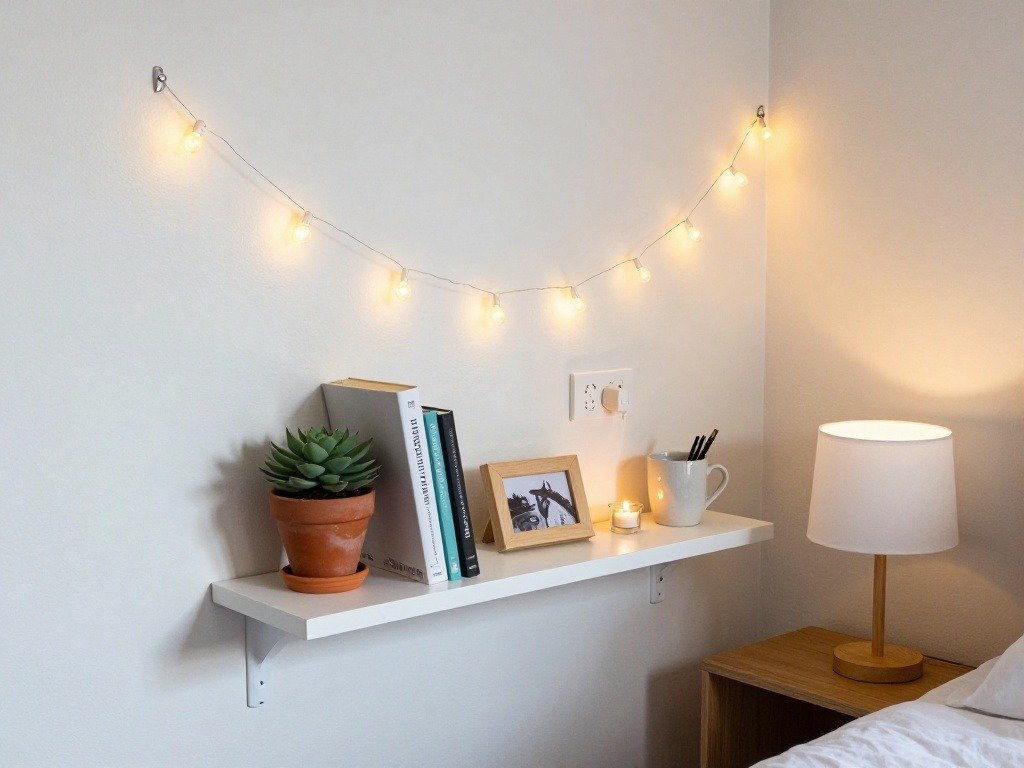
8. String lights or fairy lights ($8–$20) The single highest-impact per-dollar economy home decor purchase available. String lights in a bedroom, around a mirror, along a bookshelf, or draped over a window transform the atmosphere of any room at night for under $20.
9. A plant or bunch of flowers ($3–$15) A single plant on a windowsill or a bunch of flowers on a table adds life and colour that no manufactured decoration can replicate. A supermarket bunch of flowers costs $4–$8 and makes a kitchen table look beautiful for a week.
10. New candles ($5–$20) Two or three candles grouped together on a tray, a windowsill, or a coffee table add warmth and the specific quality of a room that has been thought about. Unscented pillar candles are the most elegant economy home decor choice — they look expensive and cost very little.
11. A new light bulb ($5–$15) Replacing cool white or daylight bulbs with warm white 2700K LEDs throughout a room costs under $15 and changes the entire atmosphere. The colour temperature of a bulb affects how everything in the room looks — warm white makes colours richer, spaces cosier, and evenings more beautiful.
12. Peel-and-stick wallpaper panel ($15–$40) A single peel-and-stick wallpaper panel on one wall — behind a bed, behind a sofa, on a bathroom wall — creates a feature wall effect at a fraction of the cost of real wallpaper. Removable, so perfect for renters.
13. A mirror ($15–$45 from thrift stores) A mirror doubles the perceived size of any room by reflecting light and creating visual depth. A large mirror leaned against a wall rather than hung — a single large floor mirror in a bedroom or living room — is one of the most effective economy home decor investments available.
14. New hardware ($15–$40 for a room’s worth) Replacing the handles and knobs on kitchen or bedroom cabinets transforms every cabinet door simultaneously. Brass, matte black, or ceramic hardware from Amazon or a hardware store costs $2–$5 per piece and makes cheap cabinets look considered.
You can also read Mobile Home Kitchen Remodel Ideas: The Complete Transformation Guide
Under $200 — The Room Refresh
At this budget level you can genuinely refresh the character of a room:
15. A new rug ($40–$180) A rug is the most impactful single purchase in any room. It defines the space, adds colour and texture, makes the floor feel intentional rather than default, and immediately warms a room. A well-chosen rug on a hard floor transforms a room more than any other single item at its price point.
16. A gallery wall of printed photos ($30–$80 for frames) Print your favourite photographs at a pharmacy or online printing service — typically $0.10–$0.50 per print. Buy matching frames from a dollar store or IKEA. Arrange them as a gallery wall. This is a deeply personal, highly visual, completely affordable wall treatment.
17. Curtains from a charity shop or IKEA ($15–$60) Good curtains make a room look finished. The IKEA LILL sheer curtain is $4.99 for a pair. Charity shops often have barely-used curtains for $5–$20 per pair. Curtains that pool slightly on the floor look more expensive than curtains that stop at the sill.
18. A statement lamp ($20–$80 from thrift stores) A thrift store table lamp in an interesting shape — a vintage ceramic base, a rattan shade, an unusual colour — adds more character than a new lamp from a chain store at three times the price.
19. Floating shelves ($15–$50 for a set) Floating shelves add storage, display space, and architectural detail to bare walls simultaneously. Available from IKEA, Amazon, and hardware stores. Style them with books, plants, and a few curated objects.
20. A new duvet cover ($20–$60) The duvet cover is the largest visual element in a bedroom. A new duvet cover in a considered colour — sage green, dusty rose, warm cream, deep navy — changes the bedroom’s entire aesthetic for under $60.
Under $500 — The Significant Transformation
21. Paint one wall ($20–$60 for paint) A single painted feature wall — the wall behind the bed, the wall behind the sofa, the bathroom wall — is the highest-impact per-dollar room transformation available at any budget. One litre of paint covers approximately 12 square metres. The whole project takes one afternoon.
22. Replace the main light fixture ($40–$150) A builder-grade flush-mount ceiling light replaced with a rattan pendant, a simple chandelier, or a sculptural ceiling light changes the character of a room more than almost any other single change. It is the first thing the eye goes to in any room.
23. A secondhand sofa ($50–$200 from Facebook Marketplace) The Facebook Marketplace and Craigslist are the most underused economy home decor resources available. Sofas that cost $800–$1,500 new are regularly available for $50–$200 secondhand. A cream linen throw ($20) over a slightly tired sofa makes it look intentional rather than second-hand.
24. A full set of matching frames ($30–$80) Mismatched frames on a gallery wall look eclectic or chaotic depending on how they are arranged. Replacing all frames in a room with matching ones — all black, all white, all natural wood — creates an immediate sense of cohesion and intention that reads as professionally designed.
25. New bedside tables ($30–$100 from thrift stores) Mismatched bedside tables feel accidental. Matching ones — even if they are painted crates or identical IKEA stools — feel designed.
You can also read Coquette Room Aesthetic & Romantic Bedroom Ideas: The Complete Guide
Room-by-Room Economy Home Decor Guide
Bedroom Economy Decor
The bedroom is where economy home decor has the most personal impact — because it is the first room you see every morning and the last room you see every night.
The highest-impact bedroom economy decor changes:
- New duvet cover — the largest visual element in the room
- String lights around the headboard or mirror — transforms the room at night for under $15
- Plants on the windowsill — adds life and morning light catches them beautifully
- Edit the surface of every bedside table — one lamp, one candle, one book, one plant. Nothing else.
- A mirror leaned against the wall — makes the room feel twice as large
- A throw at the end of the bed — adds texture and a finished quality
- Curtains that touch or pool on the floor — makes the ceiling feel higher
Bedroom economy decor by aesthetic:
- Romantic aesthetic: Rose-toned throw pillows, a candle or two, fairy lights, dried flowers in a vase on the windowsill. Total cost: $25–$60.
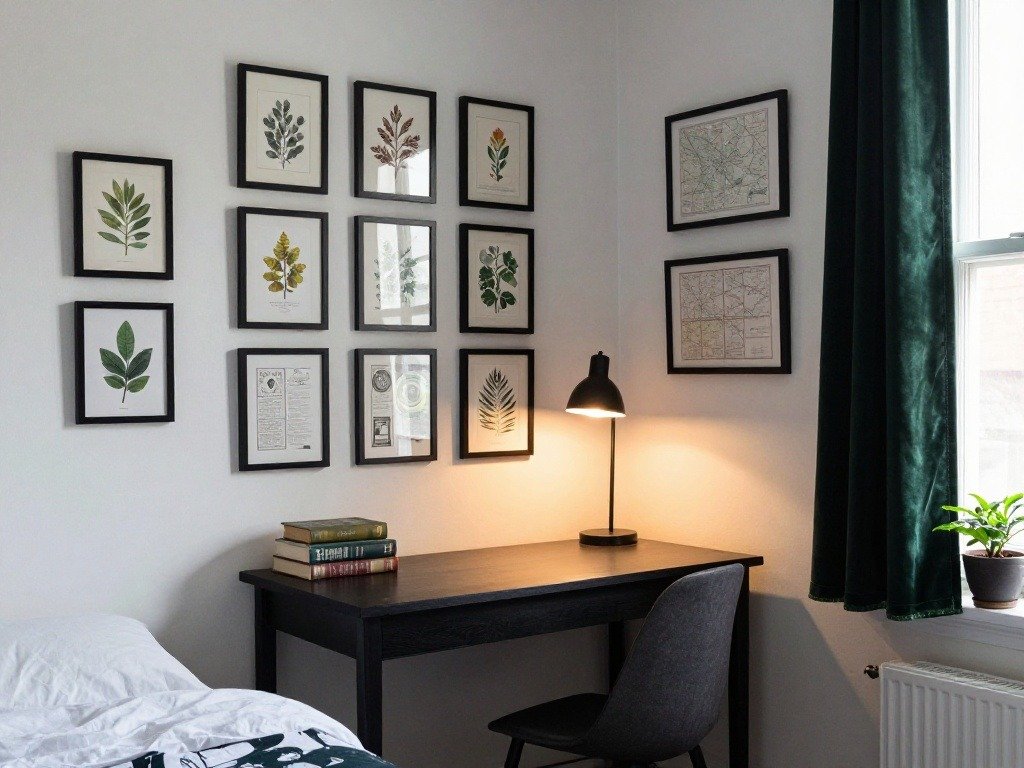
- Dark academia: A stack of hardcover books on the bedside table, a desk lamp with a warm bulb, a world map or botanical print in a simple frame. Total: $15–$40.
- Kawaii: Pastel throw cover, a string of star lights, a small stuffed animal on the pillow, pastel-toned plants in matching pots. Total: $20–$50.
- Gothic: Black throw, dark pillow covers, battery-operated candles (safe for bedrooms), a skull or dark botanical print in a black frame. Total: $30–$70.
- Coquette: Pink throw, bow-print pillowcase, a small vase of dried pink peonies, a vintage-style mirror. Total: $25–$60.
- Boho: Macramé wall hanging (DIY or $15–$30), terracotta plant pots, layered rugs, warm fairy lights. Total: $40–$80.
Living Room Economy Decor
The living room is the room most people spend the most time decorating — and the room where economy choices have the most visibility.
The highest-impact living room economy changes:
- A rug — defines the seating area and adds warmth
- Throw pillows in a considered palette — refreshes the sofa without replacing it
- Plants in corners — fills dead space with life for $5–$15
- A gallery wall — covers a large bare wall for $30–$80
- String lights or a floor lamp — creates evening atmosphere
- A new light bulb — the cheapest living room upgrade available
- Candles grouped on a tray — the easiest way to make a coffee table look styled
The one thing to do first in any living room: Move the sofa away from the wall by 6–12 inches. Rooms where furniture floats rather than clings to walls feel larger, more designed, and more expensive. This costs nothing.
Kitchen Economy Decor
The kitchen is where economy home decor is most often neglected — because kitchens feel functional rather than decorative. The best economy kitchen decor uses functional items as decoration.
The highest-impact kitchen economy changes:
- Herbs on the windowsill — fresh basil, rosemary, and mint in terracotta pots. Costs $3–$8. Adds green, scent, and the specific quality of a kitchen someone cooks in with care.
- Matching containers for dry goods — decanting flour, pasta, and coffee into matching glass jars makes any kitchen shelf or worktop look styled for under $30.
- A new tap — one of the highest-impact single purchases in a kitchen. A brass or matte black tap costs $40–$80 and transforms the sink area completely.
- New cabinet hardware — replacing chrome handles with brass or matte black. $2–$5 per handle. One afternoon’s work.
- A small rug or mat in front of the sink — adds warmth and colour to a kitchen floor instantly for $15–$40.
- Peel-and-stick backsplash tiles — transforms the wall behind the hob for $20–$50.
You can also explore Living Room Ideas
Bathroom Economy Decor
The bathroom is the most affordable room to transform because it is the smallest — meaning small changes cover a proportionally larger percentage of the total visible surface.
The highest-impact bathroom economy changes:
- New towels in a matching colour ($15–$30 for a set) — matching towels folded neatly make a bathroom look like a hotel for very little money
- A plant that tolerates humidity — pothos, spider plant, or a small fern on the windowsill or shelf
- A soap dispenser and toothbrush holder that match ($8–$20) — replacing mismatched plastic dispensers with matching ceramic or glass ones makes a bathroom look finished
- Candles on the bath edge — grouped pillar candles at one end of the bath transform a bathroom for under $10
- A mirror upgrade — a new mirror frame (painted with leftover paint, or replaced with a thrift store find) changes the bathroom’s focal point completely
- Peel-and-stick wallpaper on one wall — transforms a small bathroom dramatically and removes cleanly for renters
Where to Shop for Economy Home Decor — The Complete Guide
Free / Near-Free Sources:
- Facebook Marketplace — the single best source for high-quality secondhand furniture and decor. Sofas, rugs, mirrors, lamps, and art are available at 5–15% of their original retail price. Search your local area daily for new listings.
- Freecycle and local community groups — people genuinely give away good furniture. A free solid wood side table needs only sanding and painting.
- Your own home — moving objects between rooms is the most overlooked economy home decor resource. A lamp that is wrong in the bedroom might be perfect in the living room.
- Nature — a jam jar of wildflowers, a branch of autumn leaves, pinecones in a bowl, pebbles from a beach. Free and beautiful.
Under $20 Sources:
- Dollar stores — frames, candle holders, glass jars, baskets, and small decorative objects at genuinely low prices
- Charity shops / thrift stores — the best economy home decor source for unique pieces with genuine character. Visit regularly — stock changes daily.
- IKEA — the LACK side table ($9.99), the RIBBA frame ($4.99), the LILL curtain ($4.99). The most affordable reliable new-purchase home decor source available.
- Amazon — string lights, peel-and-stick wallpaper, throw pillows, and basic decor items at competitive prices with fast delivery.
- Garden centres — plants are significantly cheaper than home decor stores. A 6-inch pothos or spider plant costs $3–$8.
Mid-Range Sources (where to invest when you do spend money):
- Etsy — for unique, handmade pieces that are unavailable at chain stores. A handmade ceramic vase, a custom print, a macramé wall hanging. Worth paying slightly more for something genuinely individual.
- Wayfair sales — rugs, curtains, and mirrors at significant discount during sale periods
- IKEA — the KALLAX shelving unit, the DRÖNA boxes, and the FADO lamp are economy home decor classics for good reason
DIY Economy Home Decor Projects
Project 1 — The Gallery Wall ($20–$50)
What you need: Photos printed at a pharmacy (10 cents each), frames from the dollar store ($1–$3 each), a level, command strips (no holes in walls for renters)
Process: Print 10–15 photos in the same size. Frame them all identically. Arrange on the floor first until happy with the layout. Transfer to the wall using command strips. Cost: $20–$50 total.
Result: A deeply personal wall treatment that looks professionally curated and costs a fraction of purchased art.
Project 2 — The Painted Feature Wall ($20–$40)
What you need: 1 litre of paint in your chosen colour, a roller and tray ($5–$8), painter’s tape, a brush for edges
Process: Tape edges, cut in with a brush, roll the main area. Two coats. One afternoon.
The best economy paint colours for 2026:
- Sage green — the most broadly beautiful choice, works in every room and every aesthetic
- Warm terracotta — earthy, warm, and distinctly 2026
- Deep navy — dramatic, grounding, works in small rooms more than people expect
- Dusty rose — soft, warm, and beautiful in bedrooms
- Dark charcoal — the most gothic and dramatic economy paint choice
Project 3 — The Upcycled Furniture Piece ($10–$50)
What you need: A secondhand piece from a thrift store or Facebook Marketplace, sandpaper, primer, and paint
Best pieces to upcycle:
- A wooden side table or coffee table — sand, prime, and paint in a bold colour
- A wooden chair — painted in a statement colour becomes a room’s focal point
- A picture frame — painted gold, black, or white becomes premium
- A lamp base — spray painted in a new colour completely changes the lamp’s character
Project 4 — The DIY Macramé Wall Hanging ($10–$25)
What you need: Macramé cord ($8–$15 for a 3mm natural cotton cord), a wooden dowel ($2–$5), scissors, and a YouTube tutorial
A basic macramé wall hanging takes 3–4 hours to make and costs $10–$25 in materials. The result is a handmade piece that sells for $60–$150 in home decor stores.
You can also explore Bedroom Ideas
Economy Home Decor by Aesthetic
| Aesthetic | Key Economy Items | Total Budget | Where to Buy |
|---|---|---|---|
| Romantic | Rose throw, fairy lights, dried flowers, candles | $30–$70 | Amazon, charity shops, garden centre |
| Dark academia | Books displayed as decor, warm lamp, botanical prints, dark green curtains | $20–$60 | Charity shops, print at home |
| Kawaii | Pastel bedding, star lights, small plushies, pastel plant pots | $25–$60 | Amazon, dollar store |
| Gothic | Black throw, dark candles, skull or moon print, dark curtains | $30–$80 | Amazon, thrift store |
| Coquette | Pink throw, bow accessories, dried pink flowers, vintage mirror | $25–$70 | Charity shops, Amazon |
| Boho | Terracotta pots, macramé (DIY), layered textiles, warm lights | $30–$80 | Garden centre, DIY, thrift store |
| Danish pastel | Soft coloured throw, simple plants, matching frames, pastel candles | $30–$70 | IKEA, Amazon |
| Indie aesthetic | Vintage finds, warm fairy lights, record as wall art, plants | $20–$60 | Thrift store, charity shop |
2026 Economy Home Decor Trends
Trend 1 — Practical maximalism. Practical maximalism is the way to go in 2026 — the perfect mix of abundant, personalised decoration and sustainability. Economy home decor in 2026 is not about having less. It is about choosing more intentionally and making each item count. Thrift store finds with genuine character beat new chain-store items at three times the price.
Trend 2 — Earth tones replacing grey. Cool grey is out. Earthy colours — terracotta, sage green, warm ochre, dusty rose — are taking over in 2026. The economy implication: one gallon of paint in an earthy tone transforms any room for $25–$40.
Trend 3 — Plants as primary decor. Plants have moved from accent to primary decoration in 2026. An economy home decorated with five or six well-placed plants looks richer and more alive than the same room with expensive manufactured decor and no plants. And plants cost $3–$15.
Trend 4 — Sustainability driving secondhand shopping. The secondhand economy for home decor is growing faster than the new goods market in 2026. Facebook Marketplace, Craigslist, charity shops, and Freecycle are mainstream economy home decor shopping channels — not last resorts.
Trend 5 — Lighting as the primary mood creator. String lights, candles, warm bulbs, and floor lamps are the 2026 economy home decor investments that deliver the most atmosphere per dollar. Rooms lit only by a harsh overhead light feel cheap regardless of what is in them. Rooms with layered warm light feel considered regardless of what is in them.
Frequently Asked Questions — Economy Home Decor
Q: What is the single most impactful economy home decor change?
A: Changing your light bulbs to warm white 2700K LEDs is the single highest-impact-per-dollar change in any room — it costs $5–$15 for a room and immediately changes how everything in the room looks and feels. After that, rearranging your existing furniture costs nothing and changes more than most purchases. If you have $30 to spend on one item, a string of warm fairy lights transforms the evening atmosphere of any room more than any other single purchase at that price.
Q: How do I make my apartment look expensive on a $200 budget?
A: Spend it in this order: $40 on a rug that defines the living area, $30 on matching throw pillows in a considered colour, $20 on warm white LED bulbs throughout the apartment, $15 on three plants from a garden centre, $20 on candles grouped on a tray, $30 on curtains from IKEA that touch the floor, and $45 on a secondhand mirror from Facebook Marketplace or a charity shop. These seven changes consistently produce apartments that look significantly more expensive than they are because they address the most visible elements simultaneously.
Q: What are the best free economy home decor ideas?
A: The most impactful free economy home decor changes: rearrange furniture (move everything away from the walls by 6 inches), edit shelves and surfaces (remove two thirds of what is there), clean windows (maximises natural light immediately), move plants to better positions, and swap artwork between rooms. None of these cost anything and collectively they produce a room that looks genuinely different and better.
Q: Is it better to buy one good piece or several cheap ones?
A: One right piece is always better than several mediocre ones. This is the most consistently validated economy home decor principle. A single secondhand rug that is exactly right for the room is more valuable than six cheap decorative items that are individually okay. The discipline of economy home decor is buying only things you genuinely love and genuinely need — and waiting until you find the right thing rather than filling space with the available thing.
Q: Where is the best place to buy economy home decor?
A: Facebook Marketplace is the best source for large items — sofas, rugs, mirrors, lamps — at 5–15% of retail price. Charity shops and thrift stores are the best source for unique individual pieces with genuine character. IKEA is the best source for affordable new basics that are reliable in quality. Amazon is the best source for small items — fairy lights, throw pillows, peel-and-stick wallpaper — where price comparison and fast delivery matter. Dollar stores are the best source for frames, candle holders, and small glass items.
Q: How do I decorate a rental without losing my deposit?
A: Command strips and hooks instead of nails for everything hung on walls. Peel-and-stick wallpaper (completely removable) for feature walls. Freestanding furniture and shelving rather than fixed installations. Rugs over existing flooring. Curtains on tension rods rather than curtain rails. Plants rather than painted features. The best economy home decor for renters uses layered textiles, lighting, and furniture arrangement — none of which damage walls or floors — to create maximum visual impact within the constraints of a rental agreement.
Q: What economy home decor items make the biggest difference in a bedroom?
A: In order of visual impact per dollar: new duvet cover ($20–$50, changes the entire room), fairy lights ($8–$15, transforms the room at night), new throw pillows ($8–$20 each, refreshes the sofa or bed), a plant on the windowsill ($3–$8, adds life), and candles on the bedside table ($5–$15, adds warmth). These five changes together cost $44–$108 and transform a bedroom’s character completely.
Q: How do I find my decorating aesthetic on a budget?
A: Take our free What’s Your Decor Style quiz — it identifies your specific aesthetic in 2 minutes and gives you a clear direction that prevents buying things that do not fit together. Then read the specific aesthetic guide for your result — romantic, dark academia, kawaii, gothic, coquette, boho, indie, or danish pastel — for specific economy ideas tailored to that aesthetic. Having a clear aesthetic direction is itself an economy home decor strategy because it prevents impulse purchases that do not fit.
Q: Can economy home decor look genuinely beautiful or does it always look cheap?
A: Economy home decor can look — and consistently does look — genuinely beautiful. The distinction is between random cheap purchases and intentional economy choices. A room furnished randomly with cheap items looks cheap. A room furnished intentionally with a clear aesthetic direction, good lighting, and a few carefully chosen pieces — regardless of where they came from or what they cost — looks beautiful. Intention beats budget every time. The rooms in this guide all prove that.
🔗 Ready to find your aesthetic? Take our free decor style quiz. Then read our romantic bedroom ideas guide, our dark academia bedroom guide, our kawaii room decor guide, or our gothic home decor guide for aesthetic-specific economy decor ideas.