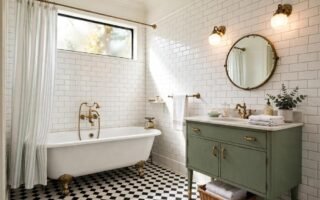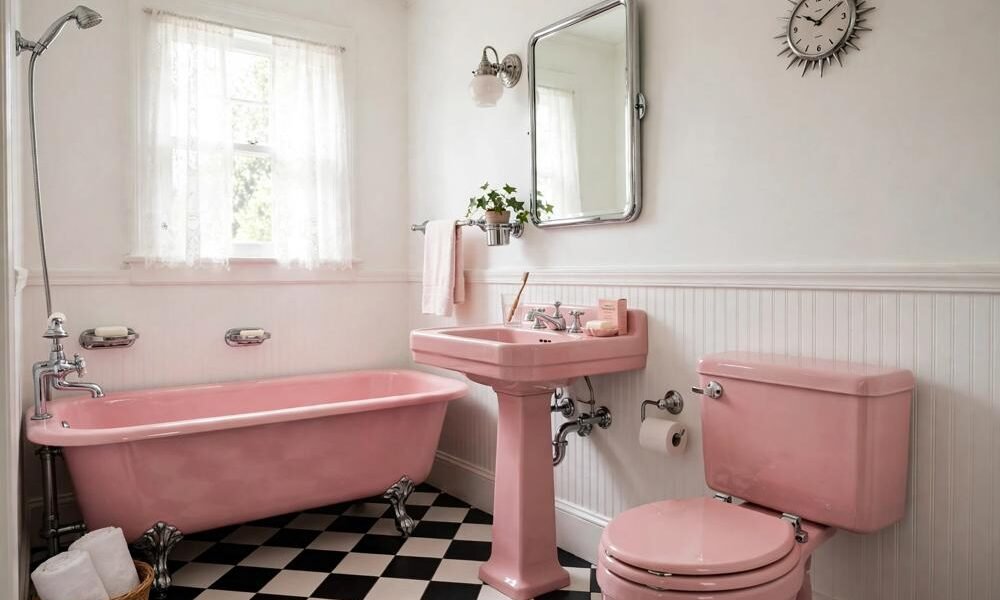
Yes, a 1950s bathroom with pink, mint or aqua fixtures can feel charming and intentional today. The trick is to treat the pastel fixtures as the design, not as a problem to hide: keep the walls calm, choose towels and metals that suit the pastel, and keep the rest of the room simple and clean.
Key takeaways
- Treat the pastel fixtures as the lead colour, and keep everything else calm.
- Pink fixtures suit soft white, warm grey and cream walls, with brass or chrome.
- Mint fixtures suit cream, soft white and warm wood, with chrome or brass.
- Aqua fixtures suit soft white, pale grey and cream walls, with chrome.
- Keep the pattern count low, the metal finishes to one or two, and the towels mostly white or cream.
1. What Makes a Bathroom 1950s?
A 1950s bathroom is pastel, glossy and cheerful. The fixtures are pink, mint green, aqua blue, or soft yellow, in glossy porcelain. The tile is often pastel too, sometimes with a darker border or a simple pattern. The shapes are smooth and rounded, with simple chrome or brass fittings.
The era also loved a little glamour: a large mirror, a vanity with a tiled top, and a shower curtain in a simple pattern. The key today is to keep that cheerful pastel feeling without turning the room into a candy shop. One pastel colour, used on the fixtures and echoed in one or two accessories, is enough.
2. Keeping Original Pastel Fixtures
If your bathroom still has its original pink, mint or aqua tub, sink and toilet, keeping them is usually the best choice, if they are sound and watertight. Original pastel fixtures in good condition are increasingly rare, and matching replacements are hard to find and expensive.
Clean them well, replace the seals and washers, and polish the fittings. A deep clean, new grout, new towels and a new mirror can transform a 1950s bathroom without replacing a single fixture. If a fixture is cracked, chipped beyond repair, or leaking, replace it with a simple white modern fixture. One white fixture does not ruin a 1950s bathroom, as long as the remaining pastel pieces and the tile carry the era.
Check the plumbing too. Old pipes and old sealant may need professional attention, even if the room looks fine. Get a plumber to check anything you are unsure about, especially around the tub and the toilet.
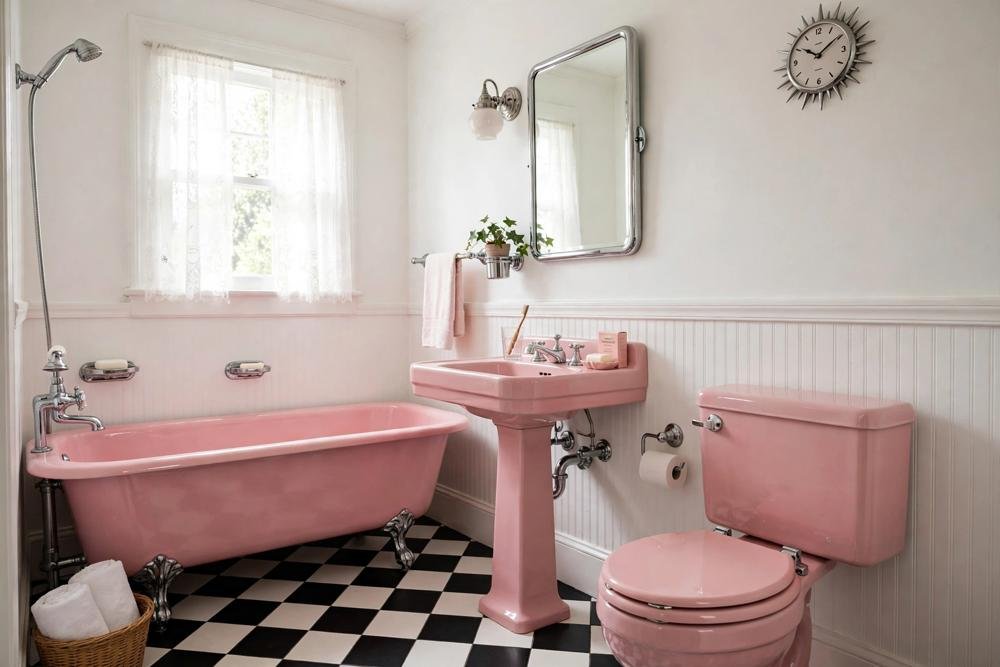
3. Pink 1950s Bathrooms: Walls, Towels and Metals
Pink is the most famous 1950s bathroom colour, and it is also the easiest to style well.
Best wall colours for pink fixtures: soft white, warm cream, pale warm grey, and a very soft blush lighter than the fixtures. A wall lighter than the fixtures keeps the room bright, while a darker wall can make a small pink bathroom feel closed in.
Best towel colours for pink fixtures: white, cream, soft grey and pale blush. White towels are the safest choice, because they freshen pink without adding another colour. Avoid bright red towels, which can make pink fixtures look harsh.
Best metals for pink fixtures: chrome gives a classic 1950s look, while brass warms pink beautifully. Pick one and use it for the taps, towel rail and mirror frame.
What to avoid with pink fixtures: do not add a second strong pink, do not add a busy floral pattern in a different pink, and do not paint the walls a strong colour that fights the fixtures.
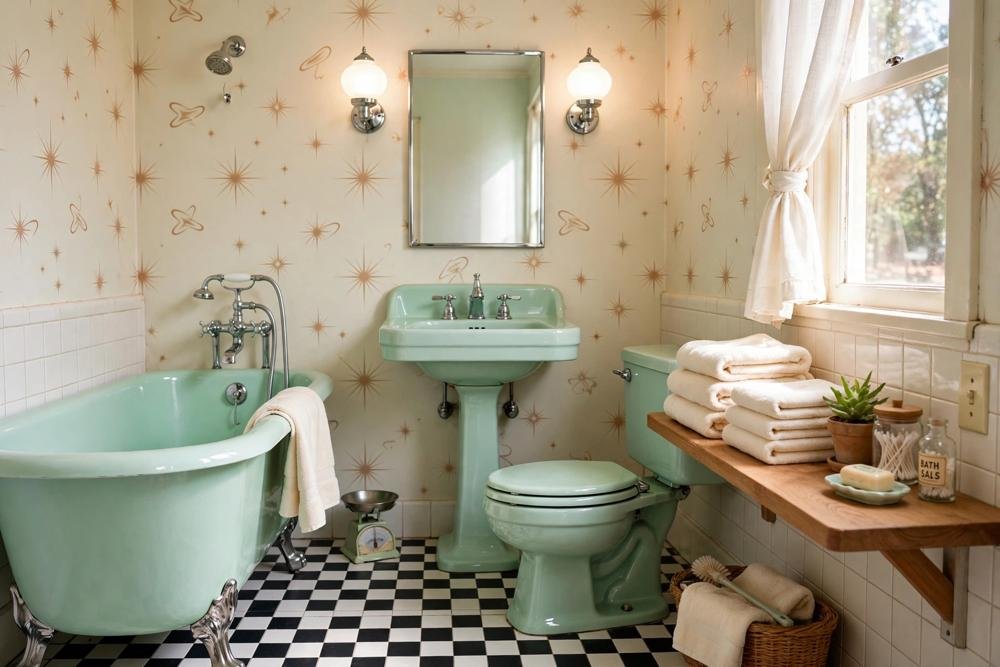
4. Mint 1950s Bathrooms: Walls, Towels and Metals
Mint is the softest 1950s pastel, and it suits a calm, fresh bathroom well.
Best wall colours for mint fixtures: cream, soft white, warm white and pale sage lighter than the fixtures. Warm cream walls and wood tones make mint feel natural and warm, while cooler white walls keep it fresh.
Best towel colours for mint fixtures: white, cream, sage and soft beige. White towels brighten mint, and sage towels echo it softly. Avoid very bright green towels, which can make the room feel like a green tunnel.
Best metals for mint fixtures: chrome suits mint well, giving a clean 1950s look, while brass warms it. Wood tones, such as a wooden shelf or a wooden mirror frame, also suit mint and warm the room.
What to avoid with mint fixtures: do not add a second strong green, do not add a busy tropical pattern, and do not paint the walls a strong green darker than the fixtures in a small room.
5. Aqua 1950s Bathrooms: Walls, Towels and Metals
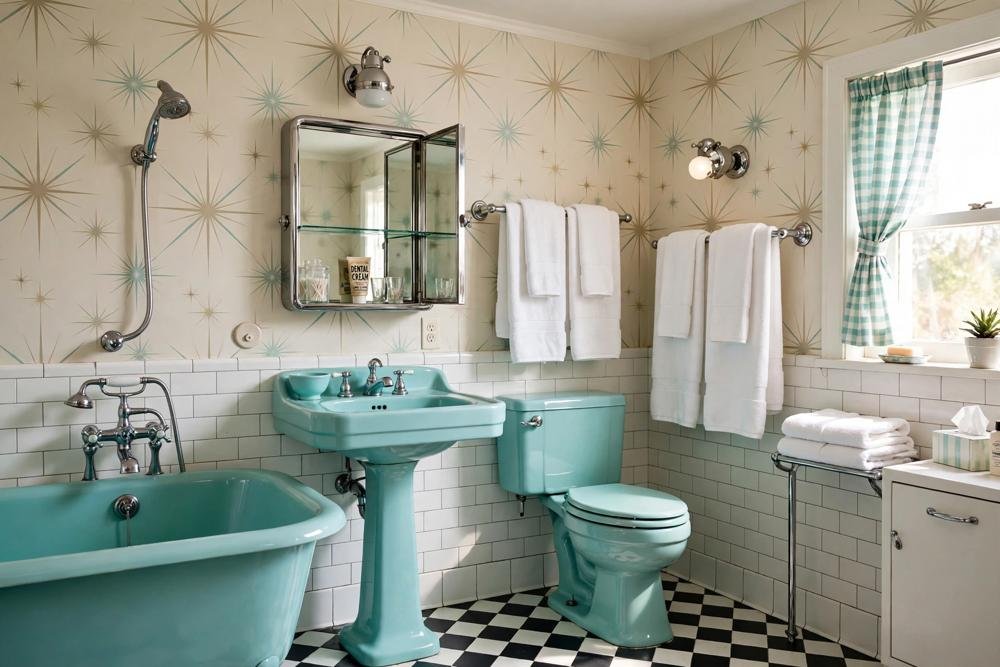
Aqua is the boldest 1950s pastel, and it needs the calmest walls and towels to balance it.
Best wall colours for aqua fixtures: soft white, pale grey and cream. Soft white is the safest choice, because it lets the aqua be cheerful without overwhelming the room. Pale grey cools aqua nicely, while cream warms it.
Best towel colours for aqua fixtures: white, cream, pale grey and soft navy for a single accent towel. White towels freshen aqua, and a single navy hand towel can add a classic contrast. Avoid bright orange towels, which can clash with aqua.
Best metals for aqua fixtures: chrome suits aqua best, because it cools it slightly and reads as classic 1950s. Brass can warm aqua further, but it needs a calmer wall colour to balance it.
What to avoid with aqua fixtures: do not add orange, do not add a busy blue pattern, and do not paint the walls a strong colour that competes with the fixtures.
6. Tile, Floors and Shower Curtains
Tile in a 1950s bathroom is usually pastel, glossy and simple. If your tile matches your fixtures, keep it and keep the walls and floors calm. If your tile is a different pastel from your fixtures, keep the walls white or cream, so the two pastels do not fight.
Floors work best in a simple colour: white, cream, soft grey, or a simple black-and-white pattern in small doses. A busy patterned floor next to pastel fixtures can make a small bathroom feel chaotic.
The shower curtain should be simple: plain white, cream or soft grey, or a very small pattern in white and one soft colour. A bold patterned curtain plus pastel fixtures is usually too much in a small room.
A tiled vanity top is a very 1950s detail worth keeping if you have one. A pastel or white tiled vanity top, with a simple chrome edge trim, is a genuine period feature, and it is often better made than a modern laminate top. Clean the grout, replace only cracked tiles with matching sizes, and keep the rest of the vanity simple, so the tiled top can be the detail people notice. If the vanity top is damaged beyond repair, a plain white or cream top in a simple material keeps the era intact without trying to fake a pastel match that will not quite work. The same rule applies to a tiled border or a decorative tile strip: keep it if it is sound, because it is part of the room’s original character, and keep the surrounding walls plain, so the border reads as a deliberate detail rather than as clutter.
7. Mirrors, Lighting and Small Details
A large mirror suits a 1950s bathroom well, because it reflects the pastel fixtures and makes a small room feel larger. A simple rectangular or oval mirror with a chrome or wooden frame reads as 1950s, while a very modern frameless mirror can feel out of place.
Lighting should be warm and simple: a pair of wall lights beside the mirror, or a simple ceiling light with a glass shade, in chrome or brass. Warm bulbs suit pastel colours better than very cool white bulbs, which can make pink and mint look washed out.
Small details finish the look: a ceramic soap dish, a simple toothbrush holder, a glass shelf, and plain white towels. Keep the details few and period-appropriate, so the pastel fixtures remain the stars.
8. Small Bathroom, 1950s Style
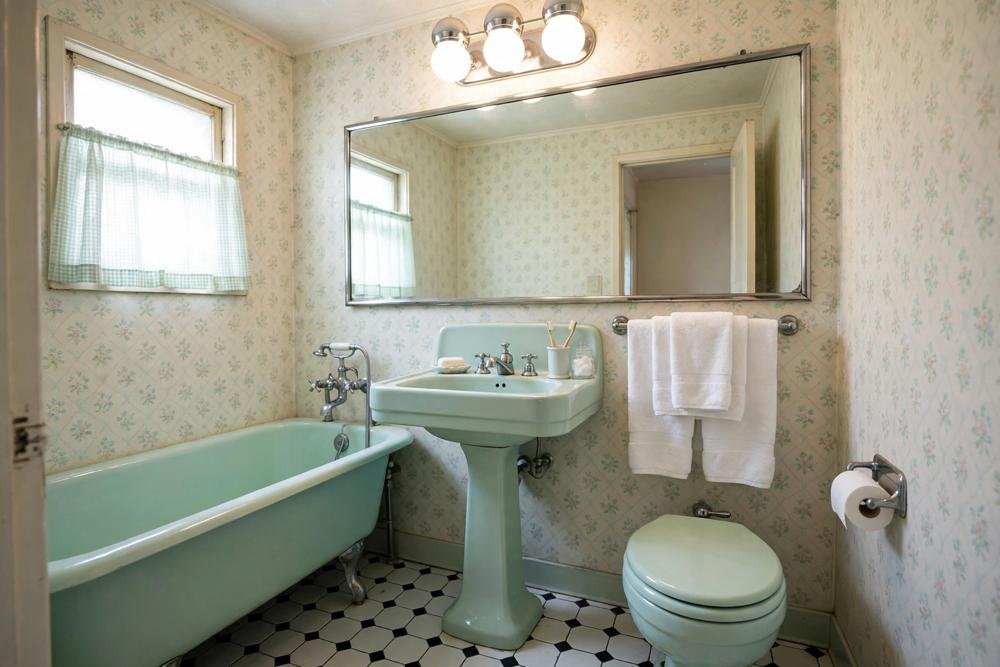
Pastel fixtures suit a small bathroom well, because pastel colours are light and reflective. White or cream walls, a large mirror, plain towels and a simple curtain all help a small 1950s bathroom feel larger.
Keep the strongest pastel to the fixtures and one accessory, and keep the rest of the room calm. Avoid a bold patterned floor, a bold patterned curtain and bold wallpaper all in one small room. Pick one pattern, keep the ceiling pale, and leave clear floor space.
What to Avoid
- Do not hide pastel fixtures behind a busy pattern or a strong wall colour. Let the fixtures lead.
- Do not mix three metal finishes in one room. Pick one, or at most two, and use them consistently.
- Do not add a second strong pastel that fights the fixtures. One pastel colour is enough.
- Do not replace sound original pastel fixtures just because the colour feels dated. Clean them and decorate around them first.
- Do not use very cool white bulbs that wash out pink and mint. Warm light suits pastel colours better.
- Do not ignore plumbing in an original 1950s bathroom. Old pipes and seals need checking, even if the room looks good.
Costs: Three 1950s Budgets
Prices are estimates only and vary by location and product choice. Check current prices before you buy.
Under $150: deep clean, new grout, white or cream towels, a plain shower curtain, a simple mirror and a few period accessories. This often transforms an original 1950s bathroom on its own.
Under $500: add paint for the walls, a wooden shelf or vanity update, swapped hardware in one metal finish and a simple rug. This is where the room starts to look planned rather than inherited.
Over $500: add tile work, a fixture change, or a vanity replacement, with professional help for plumbing work. This is a renovation, not a refresh, and it needs quotes and a clear plan before you start.
Conclusion
A 1950s bathroom works today when the pastel fixtures are treated as the design, not as a problem. Keep the walls lighter than the fixtures, choose white or cream towels, use one metal finish, and keep floors and curtains simple. Clean and repair original pink, mint or aqua fixtures before you replace them, and if you are recreating the look, pick one pastel and keep the rest calm. The result is a bathroom that feels cheerful, retro and genuinely liveable, with the pastel fixtures as its best feature.
FAQs
How do I style a pink 1950s bathroom without it looking dated?
Keep the walls soft white, warm cream or pale warm grey, use white or cream towels, and pick one metal finish, chrome or brass. Let the pink fixtures lead, and keep patterns and other colours calm.
What wall colour suits mint bathroom fixtures?
Cream, soft white or warm white, all lighter than the fixtures. Warm cream and wood tones make mint feel natural, while cooler white keeps it fresh. Avoid a strong green wall darker than the fixtures in a small room.
Can aqua fixtures work in a small bathroom?
Yes, if the walls are soft white or pale grey, the towels are white or cream, the curtain is plain, and the mirror is large. Keep the aqua to the fixtures and one accessory, and keep everything else calm.
Should I keep original 1950s pastel fixtures?
Keep them if they are sound, watertight and cleanable, because matching replacements are rare and expensive. Replace a fixture only if it is cracked, chipped beyond repair or leaking. One white replacement does not ruin a 1950s bathroom.
What metal finish is best for a 1950s bathroom?
Chrome is the classic 1950s choice, especially for mint and aqua, while brass warms pink beautifully. Pick one finish and use it for the taps, towel rail and mirror frame where possible.
How do I keep a pastel bathroom from feeling like a candy shop?
Use one pastel colour only, keep the walls lighter than the fixtures, use white or cream towels, and keep patterns to a minimum. A plain shower curtain and a simple mirror help the room feel calm rather than sugary.