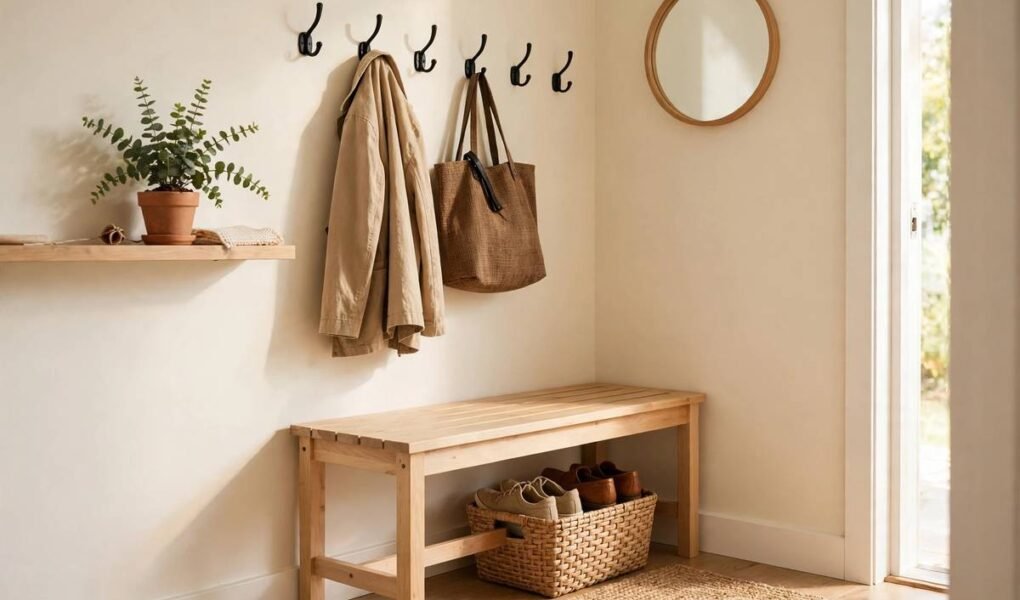
A tight corner can become a real entryway if you measure it first and choose one layout that fits the space you actually have. Hooks only, hooks plus a bench, or a tall hall tree or corner shelf will each work in a different size of corner, and the right choice depends on how much wall you have, how the door swings, and what you need to store every day.
Key takeaways
- Measure both walls, the door swing, and the clear walkway before you buy anything.
- Hooks only suits the smallest corners, at approximately 60 to 90 cm of wall.
- Hooks plus a bench needs approximately 90 to 120 cm of wall and room to sit down.
- A tall hall tree, corner shelf, or console needs the most room and must be anchored.
- Keep the exit route and door swing clear, and do not block a fire safety route.
- Store only what you use daily in the corner, and move the rest elsewhere.
- Renters can start with adhesive hooks and a freestanding bench, with landlord permission before drilling.
Measure the Corner First
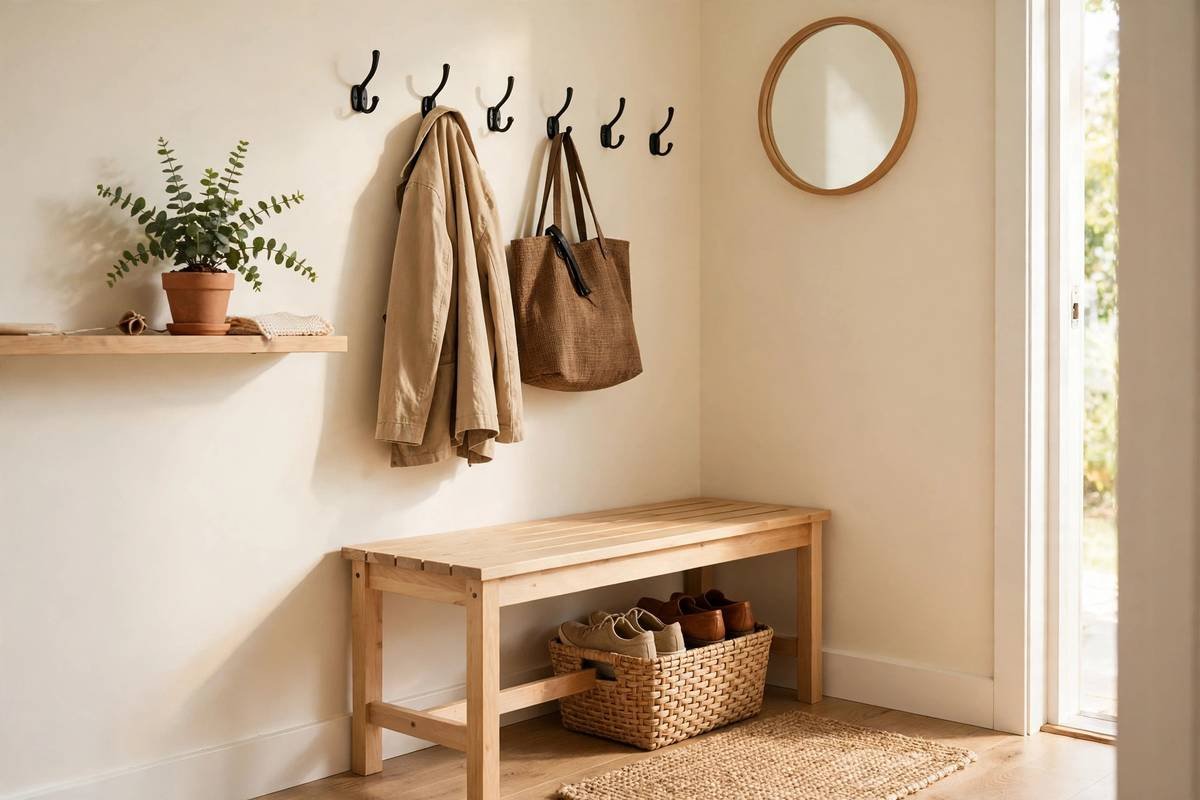
Start with a tape measure, not a shopping list. Measure both walls that meet in the corner, from the corner outwards, and write both numbers down. Then measure the height at several points, because walls are not always straight, and note any skirting board, door trim, light switch, radiator, or plug socket that will get in the way. A hook or shelf that looks perfect online can fail at home because a door frame sits 10 cm closer than expected, or because a skirting board pushes a bench away from the wall.
Next, measure the door swing. Open the front door fully and mark, in your head or with masking tape on the floor, the arc it sweeps. Nothing fixed should sit inside that arc, and nothing should force you to squeeze past a door that is half open. Also measure the clear walkway you need to pass through comfortably. As a general comfort guide, not a building code, aim to leave approximately 75 to 90 cm of clear walking width where people pass every day. If your corner is in a hallway rather than a wide entrance, that clear width matters even more, because a bench that sticks out too far will turn a hallway into an obstacle course.
Finally, list what must be stored. Count the coats that are actually worn this week, the pairs of shoes that are worn daily, and the small items that get lost, such as keys, a bag, and a dog lead. Be honest about the list. A corner that has to hold four winter coats, three pairs of boots, and two school bags needs a different layout from a corner that holds one coat and a pair of trainers. Write the list before you choose a layout, and let the list, not a photograph, decide how much storage you need.
At a Glance: Three Layouts Compared
Comparison table:
| Layout | Wall needed | Seating | Shoes | Best for | Cost |
|---|---|---|---|---|---|
| Hooks only | approximately 60 to 90 cm | none | on the floor or in a small basket | the smallest corners and renters | typically lowest |
| Hooks plus bench | approximately 90 to 120 cm | for one person to sit and put shoes on | under the bench or in baskets | families and daily shoe changes | typically mid range |
| Tall hall tree, corner shelf, or console | approximately 90 to 150 cm depending on the piece | depends on the design, often a small bench built in | on a rack, shelf, or inside a cupboard | larger corners that need closed storage | typically highest, and anchoring is essential |
Sizes vary by product, so always check the listing before you order. The numbers here are approximate ranges to help you shortlist, not exact measurements for a specific piece of furniture.
Layout 1: Hooks Only
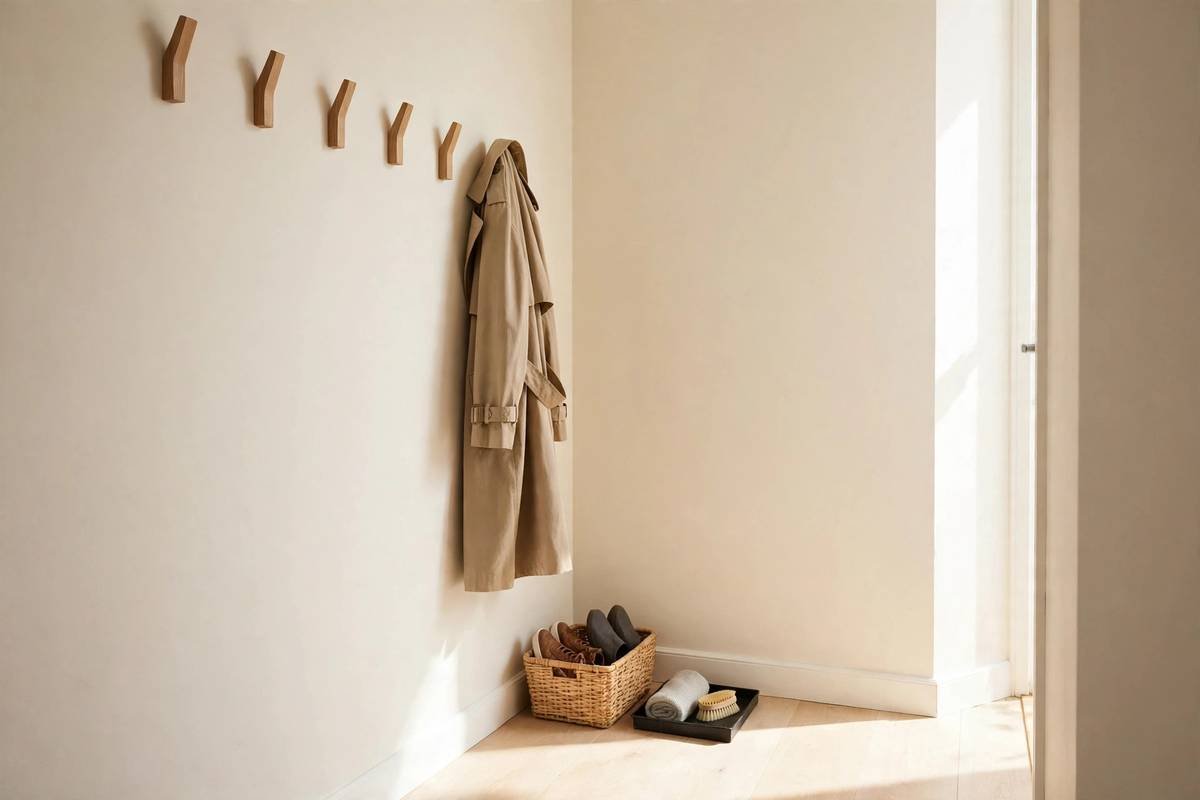
Hooks only is the simplest corner entryway, and for a very tight corner it is often the best one. You need only a short stretch of wall, approximately 60 to 90 cm, and a row of hooks at a height everyone in the household can reach. Put the most used coats at the easiest height, and keep a single hook free for a guest coat or a bag. If children use the corner, add one lower hook for them, rather than expecting them to reach adult height every day.
Shoes are the weak point of a hooks only layout, because there is no bench and no closed storage. Solve it with one small, lidded basket or a slim shoe tray on the floor beside the hooks, not a row of shoes spread across the walkway. A tray also protects the floor from wet shoes in winter, and it gives shoes a clear home, which makes tidying a one minute job rather than a daily argument.
Hooks only works best when you are strict about what lives there. One coat per person, one bag, and one pair of daily shoes is a realistic limit for this layout. Anything more will look crowded and will start to spill into the walkway. If you need more storage than that, move to the next layout rather than adding more hooks until the wall is covered. For renters, adhesive hooks can work well here, but check the weight limit on the packaging first, test one hook before you load it, and get landlord permission before drilling into a wall.
Layout 2: Hooks Plus Bench
Hooks plus a bench is the most useful layout for most households, because it gives you somewhere to sit while you put shoes on, and somewhere to hide shoes underneath. You will need approximately 90 to 120 cm of wall, and enough depth in front of the bench to sit down without blocking the walkway. A bench depth of approximately 35 to 45 cm is a typical range, but check the product listing, and leave clear space in front of it for your knees and feet.
Under the bench, use one or two open baskets or a low shoe rack, rather than leaving shoes loose on the floor. Baskets hide the mess, they are easy to pull out and put back, and they stop shoes from migrating across the hallway. Above the bench, a row of hooks at approximately 165 to 175 cm from the floor suits most adults, with a lower hook for children if needed. A small shelf above the hooks can hold keys and sunglasses, but keep it shallow, approximately 15 to 20 cm deep, so it does not become a place where clutter piles up.
This layout suits families, people who change shoes daily, and anyone with a dog, because the bench doubles as a place to sit while you dry paws or sort a lead. It also suits a corner that is used as the main entrance, because the bench signals that this is a place to pause, not just a wall to hang things on. The trade off is space: if your clear walkway drops below approximately 75 cm once the bench is in place, the bench is too deep for that corner, and hooks only will serve you better.
Layout 3: Tall Hall Tree, Corner Shelf, or Console
A tall hall tree, a corner shelf unit, or a console gives you the most storage, but it also takes the most room and needs the most care. A hall tree typically needs approximately 90 to 120 cm of wall and a depth of approximately 40 to 50 cm, while a corner shelf unit fits into the corner itself and uses vertical space rather than wall length. A console, which is a narrow table against the wall, works when you need a surface for keys and post, plus a shelf or baskets underneath, but it does not give you hanging space unless you add hooks above it.
Whichever tall piece you choose, anchor it to the wall. Tall furniture can tip, especially in a home with children or pets, and a corner unit is often leaned on when people sit down or reach up. Follow the instructions that come with the piece, use the fixings suited to your wall type, and get landlord permission before drilling if you rent. If you cannot anchor a tall unit safely, choose a lower, wider piece instead, or a freestanding bench with a separate hook rail that can be fixed properly.
Closed storage is the advantage here. A hall tree with a cupboard or drawers can hide out of season coats, hats, and gloves, while open shelves are better for things you grab every day. Do not buy closed storage and then fill it with daily items you need in a hurry, because you will stop opening the doors and the coats will end up on the bench instead. Use closed storage for the overflow, and keep daily coats and shoes open and easy to reach.
What to Store, and What to Skip
A corner entryway works when it holds daily items only. Coats worn this week, daily shoes, keys, a bag, sunglasses, and a dog lead belong here. Out of season coats, spare shoes, sports kit, and bags of shopping do not, and they will make even a good layout feel crowded. Move the rest to a wardrobe, a bedroom cupboard, or a storage box elsewhere in the home, and rotate the corner with the seasons.
Skip anything that needs a large footprint for a small benefit. A full length mirror is useful, but a very large mirror in a tight corner can dominate the space; a smaller mirror at head height, or a mirror on the wall beside the corner, gives you the same check before you leave without taking floor space. Skip a tall plant in a very narrow corner, because it will be knocked every day, and skip a console with drawers you never open, because it will become a junk drawer by the door. One basket for odd items, such as gloves and hats in winter, is enough. If the basket is full, something needs to leave, not a second basket to arrive.
Lighting a Dark Corner
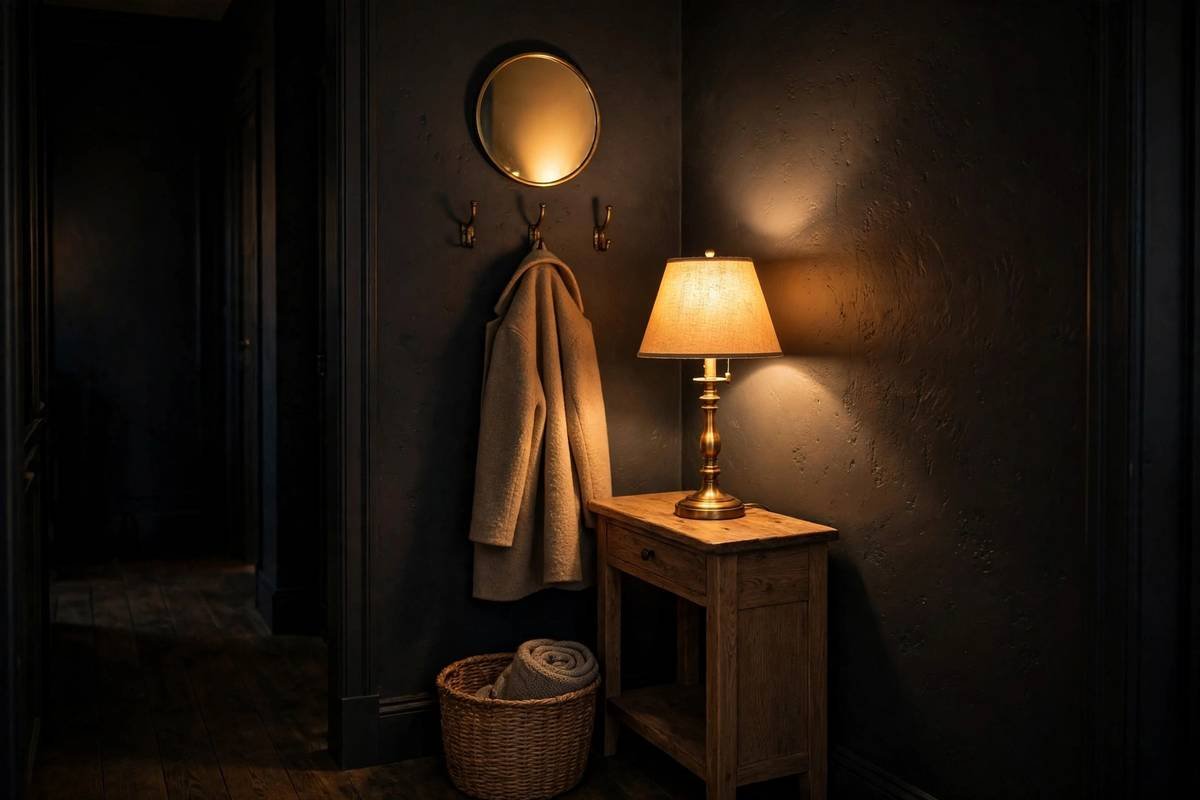
Many corners are dark, because they sit away from a window or behind a door. A dark corner will not be used, no matter how good the hooks are, because people will not stop in a gloomy spot. You do not need a rewiring job to fix this. A small plug in lamp on a console, a battery operated light with a timer, or a light on the wall beside the corner can all work, as long as the light is warm and steady, not harsh and flickering.
A mirror helps here too, because it bounces whatever light there is back into the corner. Put the mirror where it catches light from a window or a hallway light, not facing a blank wall. Keep fabric, dried flowers, and paper away from any light that gets hot, and use LED or low heat lights near fabric and dried material. If you use a plug in light, keep the cable tidy and out of the walkway, so it does not become a trip hazard in the dark. A light on a timer is a simple win in winter, because the corner will already be lit when you come home.
Styling at Small Scale
Styling a small corner is about restraint. Choose one colour for the main pieces, such as natural wood, black metal, or cream, and let the coats and bags add the colour. If the hooks, bench, and baskets all match, the corner will look calm even when it is in use. If every piece is a different colour and material, the corner will look busy before you add anything to it.
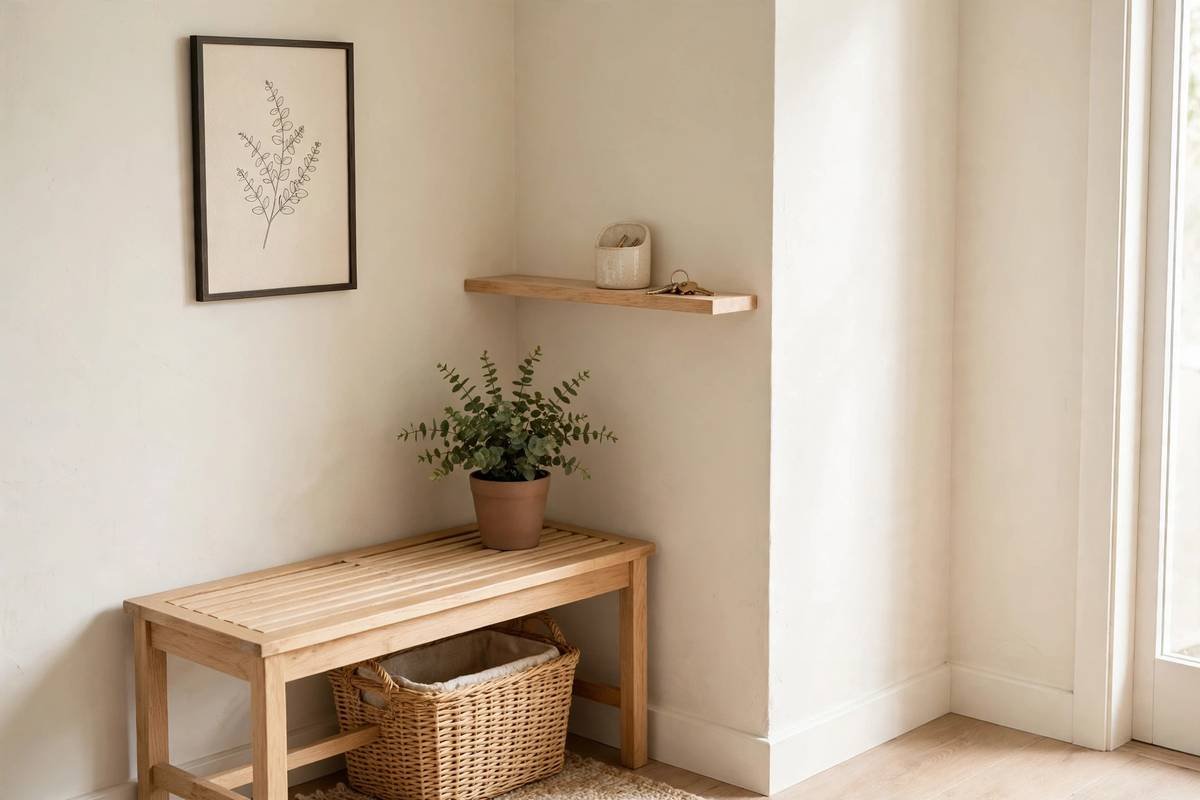
Add one or two personal touches, not a collection. A small framed print, a tray for keys, or a plant on a high shelf is enough. A plant works best on a shelf or a console, where it will not be knocked, and a trailing plant can soften a tall unit without taking floor space. Keep the floor clear except for the shoe basket or tray, because a clear floor makes the corner feel larger and makes cleaning easy. A washable runner in front of the bench can protect the floor and define the entry area, but choose one that lies flat and does not curl at the edges, so it does not trip anyone.
Renter friendly styling follows the same rule. A freestanding bench, a leaning mirror, and adhesive hooks can change a corner without drilling, and everything can move with you. If you do drill, with landlord permission, fill and touch up the holes when you leave, and keep the fixings and instructions for any piece you anchor, so the next person can use it safely.
Checklist: Before You Buy
- Measure both walls from the corner, and note skirting, trim, switches, and sockets.
- Mark the door swing arc and the clear walkway you need to keep.
- List daily coats, shoes, keys, and bags, and count them honestly.
- Choose one layout: hooks only, hooks plus bench, or a tall hall tree, shelf, or console.
- Check the product size against your measurements, including depth and height.
- Check adhesive hook weight limits, or get landlord permission before drilling.
- Plan anchoring for any tall unit, and keep the exit route and door swing clear.
- Add lighting if the corner is dark, and keep fabric away from hot lights.
- Put shoes in one basket, tray, or rack, and keep the floor otherwise clear.
- Live with the layout for a week, then adjust one thing, rather than buying more storage.
Conclusion
A tight corner does not need a large budget or a renovation to work as an entryway. It needs a tape measure, an honest list of daily items, and one layout that fits the wall and the door swing you actually have. Hooks only will suit the smallest corners, hooks plus a bench will suit most households, and a tall hall tree, corner shelf, or console will suit a larger corner that needs more storage, as long as it is anchored and the exit route stays clear.
Start with the layout that fits today, keep daily items only in the corner, and add lighting if the corner is dark. That simple system will make coming home and leaving home easier, and it will keep the corner tidy without a daily battle. The next guides in this series cover the details in turn, in plain text for now until they publish: Mini Mudroom, Corner Storage, and Winter Entryway Organization, followed by Hallway Corner, Renter-Friendly Corner, Size Guide, and Budget Makeover, then Open Entryway, Functional Zones, Entryway Corner Decor, and Pets and Kids Storage.
Related reading
The following guides are the next articles in this Corner Entryway series, listed in publishing order. They are not yet live, so they are listed in plain text here and will be linked once each one publishes: Mini Mudroom, Corner Storage, Winter Entryway Organization, Hallway Corner, Renter-Friendly Corner, Bench and Hall Tree Size Guide, Budget Makeover, Open Entryway, Functional Zones, Entryway Corner Decor, and Pets and Kids Storage.
Frequently Asked Questions
How much space do I need for a corner entryway?
Hooks only can work with approximately 60 to 90 cm of wall. Hooks plus a bench typically needs approximately 90 to 120 cm of wall, plus room in front of the bench to sit down. A tall hall tree or console typically needs approximately 90 to 150 cm, depending on the piece. Always check the product listing, and keep approximately 75 to 90 cm of clear walkway as a general comfort guide.
Can I make a corner entryway without drilling?
Yes. Use adhesive hooks, a freestanding bench, a leaning mirror, and baskets on the floor. Check adhesive hook weight limits first, test one hook before loading it, and get landlord permission before drilling. If a tall unit cannot be anchored safely, choose a lower piece instead.
Which layout is best for a very narrow corner?
Hooks only is usually best for a very narrow corner, because it takes no floor depth except for a small shoe basket or tray. A bench will only work if the clear walkway stays comfortable once it is in place. If the walkway would drop below approximately 75 cm, stay with hooks only.
How do I keep a corner entryway from looking cluttered?
Store daily items only, and move out of season coats and spare shoes elsewhere. Use one basket or tray for shoes, one tray for keys, and matching hooks, bench, and baskets in one main colour. If a basket is full, remove something rather than adding another basket.
How do I light a dark corner entryway?
Use a small plug in or battery lamp with warm, steady light, and add a mirror where it can catch light from a window or hallway. Keep fabric and dried material away from hot lights, use LED or low heat lights near fabric, and keep cables out of the walkway. A timer can help in winter, so the corner is lit when you come home.
Do I need a bench, or are hooks enough?
Hooks are enough if you rarely sit down to change shoes, and if your corner is very small. A bench is worth it if you change shoes daily, have children, or use the corner as the main entrance, because it gives you a place to sit and a place to hide shoes underneath. Choose the layout that fits your wall and your daily routine, not the one in the photograph.