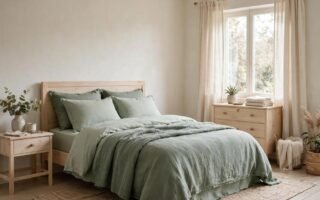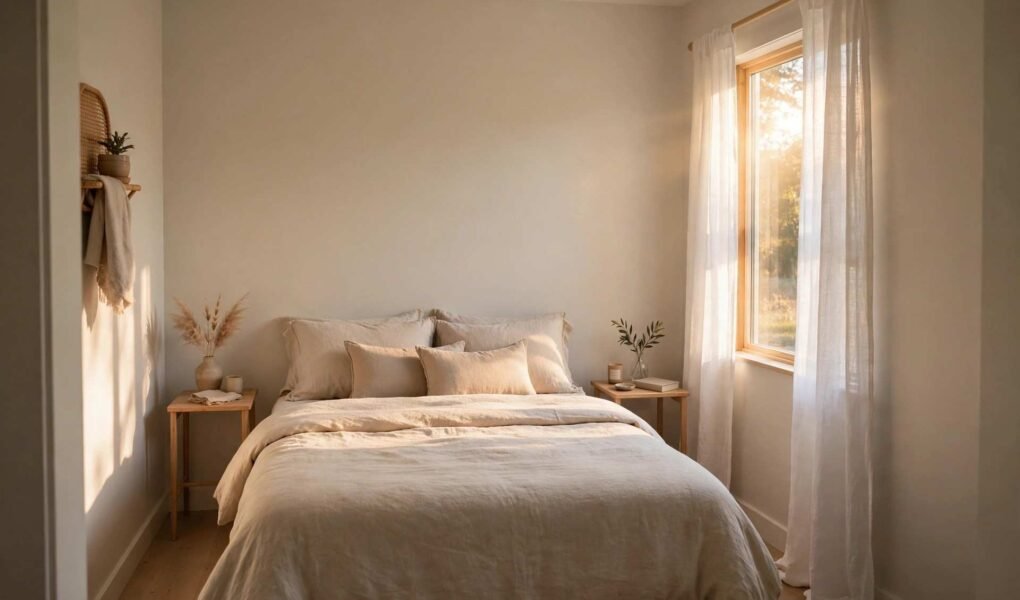
A 10 by 10 bedroom is not a tiny box, but it is a room where every inch has a job. At 100 square feet, it is big enough for a queen bed, storage, and even a small desk, yet small enough that one wrong piece of furniture can block a door, trap a drawer, or leave you climbing over the bed to reach the window. The good news is that a 10 by 10 room rewards planning more than spending. Get the layout right first, and the room feels calm, open, and easy to live in. Get it wrong, and even expensive furniture will feel cramped.
This guide gives you four tested layouts for a 10 by 10 bedroom, the measurements that make each one work, and a simple footprint audit you can do before you buy anything. Whether you are furnishing a first apartment, a guest room, or a spare room that has to work hard, these ideas will help you fit what you need without the room feeling crowded.
Key takeaways
- A queen bed fits a 10 by 10 room if it is centred on the main wall or pushed into a corner, with clear walkways kept.
- Measure door swing, window position, and walkway clearances before buying furniture.
- A small desk can fit, but only in a layout planned around the bed and storage wall.
- Storage should go vertical or on one wardrobe wall, not spread across the floor.
Start With the Numbers, Not the Shopping List
Before you fall in love with a bed frame or a dresser, measure the room the way a layout actually works. A queen bed is 60 inches wide and 80 inches long. In a 10 by 10 room, that is 120 inches wall to wall, so a queen bed centred on one wall leaves about 30 inches on each side and 40 inches at the foot of the bed. That is workable, but it leaves very little room for anything else.
A full bed, at 54 by 75 inches, gives you a little more breathing room: about 33 inches on each side and 45 inches at the foot. A twin bed, at 38 by 75 inches, frees up far more space, but it is a real compromise for couples. The point is not that one size is right for everyone. The point is that the bed is the biggest object in the room, so its size decides everything else.
Do a footprint audit before you buy. Add up the floor area of each piece: a queen bed covers about 33 square feet, two nightstands about 4 square feet, a six drawer dresser about 8 square feet, and a small desk and chair about 8 square feet. Together, that is more than half the room before you count walkways. If your plan pushes past about 60 percent of the floor covered by furniture, the room will feel full no matter how light the colours are. Something has to go, get taller, or get wall mounted.
Finally, do the tape on the floor test. Mark the bed outline on the floor with masking tape, then mark the door swing, the drawer pull out, and the chair pull out. Walk the room as if you were getting dressed, making the bed, and opening every drawer. This ten minute test catches problems that a floor plan on paper hides, like a dresser drawer that hits the bed frame or a door that only opens halfway.
Idea 1: The Queen Bed Centred on the Main Wall
The classic layout, and still the best starting point for most people, is a queen bed centred on the longest clear wall, with a slim nightstand on each side. It looks balanced, it gives both sleepers equal access, and it leaves a clear path from the door to the window. If your room has a door on one wall and a window on another, put the headboard on the solid wall between them, never blocking either one.
Keep the nightstands slim, no more than 18 to 20 inches wide, and choose a height close to the top of your mattress. A nightstand that is much lower than the bed makes it hard to reach a lamp or a glass of water, and a very tall one looks out of proportion. Wall mounted lamps or plug in sconces free up nightstand space and keep the bedside clear, which matters when the nightstand is small.
The trade off with this layout is storage. With about 30 inches on each side of the bed and 40 inches at the foot, a wide dresser will not fit comfortably. Choose a tall chest of drawers on the wall opposite the bed instead, or use under bed storage for out of season clothes. Keep the foot of the bed clear: a bench looks nice in photos, but in a 10 by 10 room it often becomes the thing you bump into every morning.
This layout suits couples, guest rooms, and anyone who wants the room to feel symmetrical and calm. If you can live with one tall chest instead of a wide dresser, it is the layout most people will be happiest with long term.
Idea 2: The Queen Bed in the Corner
If you need more usable floor space, push the queen bed into a corner. You lose easy access on one side, so this layout suits a single sleeper, a guest room, or a couple where one person does not mind sliding in from the foot of the bed. What you gain is a whole open zone on the other side of the room, big enough for a desk, a reading chair, or a proper wardrobe.
With the bed in the corner, you only need one nightstand, and a floating nightstand works brilliantly here. A wall mounted shelf or drawer beside the bed holds a phone, a book, and a lamp without taking any floor space at all. On the wall above the floating nightstand, a small shelf gives you a second level of storage for books or a plant.
Be honest about the corner compromise before you commit. Making a corner bed every morning is harder, and changing the sheets takes more effort. If that will annoy you daily, the centred layout is a better choice. But if floor space matters more than two sided access, for example in a room that also has to hold a desk, the corner bed is the layout that makes everything else possible.
A tall, narrow chest of drawers fits well on the remaining wall in this layout. It holds as much as a wide dresser in less floor space, and because it draws the eye upward, it makes the room feel taller rather than fuller.
Idea 3: The 10 by 10 Bedroom With a Desk
Working from home in a 10 by 10 bedroom is possible, but only if the desk is treated as part of the layout, not squeezed in afterwards. The best spot is usually beside the bed, against the same wall as the headboard or on the wall beside the window, so the desk does not block the main walkway from the door. Read How to Fit a Desk in a Small Bedroom for desk sizes and placement tips.
Choose a desk that is 40 to 48 inches wide and no more than 20 to 24 inches deep. That is enough for a laptop, a notebook, and a lamp, without swallowing the room. A floating desk or a wall mounted fold down desk saves even more space, and a chair that tucks fully under the desk keeps the walkway clear when you are not working. Count the chair pull out space, not just the desk: you need about 30 inches behind the chair to sit down and stand up comfortably.
Light matters as much as size. Sit side on to the window if you can, so daylight falls across your work instead of glaring into your screen or your back. A warm desk lamp for evening work stops the room feeling like an office at night. When work is done, close the laptop, clear the desk surface, and put work items in one box or drawer. In a small bedroom, a tidy desk is what lets the room feel like a bedroom again in the evening.
Idea 4: The Wardrobe Wall Layout
Clothes storage is where most 10 by 10 bedrooms fail. A freestanding wardrobe eats floor space, a wide dresser blocks a walkway, and an open rack can look messy fast. The wardrobe wall layout solves this by putting all the clothes storage on one full wall, floor to ceiling, with the bed on the opposite or adjoining wall. If the floor is already spoken for, see Small Bedroom Storage Ideas That Do Not Use Floor Space for options that skip floor furniture entirely.
A wardrobe that is 24 inches deep is standard, and in a 10 by 10 room that depth is affordable on one wall only. Use the full height: a top shelf for out of season items, a hanging rail at eye level, and drawers or baskets below. Sliding doors, or no doors at all with matching baskets, work better than hinged doors in a small room, because hinged doors need swing space that you do not have.
Keep the wardrobe wall in a light colour, or match it to the wall colour, so it reads as part of the room rather than a giant box. If the wardrobe wall faces the bed, leave at least 30 inches between the wardrobe doors and the foot of the bed so you can open drawers and stand back to choose clothes. One open section with folded knitwear and baskets breaks up a long run of doors and gives you easy access to everyday items.
What to Avoid in a 10 by 10 Bedroom
A few common mistakes make a 10 by 10 room feel much smaller than it is. First, avoid a bed frame with a very tall, very wide headboard that dominates the wall and pushes the bed forward into the room. A low or medium headboard, or a simple upholstered panel, keeps the proportions right.
Second, avoid two bulky nightstands plus a wide dresser plus a desk. Pick your priorities. In most 10 by 10 rooms, you can have three of those four things comfortably, but not all four at full size. Make one piece slim, tall, or wall mounted, and the rest will fit.
Third, avoid a rug that is too small. A rug that floats in the middle of the floor, with bare floor all around the bed, makes the room look unfinished. If you cannot fit an 8 by 10 rug, use two bedside runners or a rug that sits under the lower two thirds of the bed and extends about 18 inches on each side. For more on sizing, see our guide to bedroom rug sizes when it is published in this cluster. Before you buy, run your measurements through our rug calculator.
Fourth, avoid blocking the window with tall furniture. Natural light is the cheapest way to make a small room feel bigger, so keep the window wall as clear as you can. If the bed must go under a window, keep the headboard low and the curtains light.
Finally, avoid dark, heavy curtains and too many small decorations. One or two larger pieces of wall decor, a mirror, and a plant will calm the room more than a dozen small objects competing for attention. For evening light, layered lamps beat a single harsh overhead light, and our post on Cozy Bedroom Lighting Ideas Without an Overhead Light shows how to get that warm, layered feel.
Small Room Rules That Make Any Layout Work
Whichever layout you choose, a few rules help every 10 by 10 bedroom. Keep walkways at 24 to 30 inches at minimum, and 36 inches on the main path from the door if you can. That is enough to walk comfortably, open drawers, and make the bed without shuffling sideways.
Choose furniture with legs where possible, since visible floor makes a room feel larger. Use vertical space deliberately: shelves above a desk, a tall chest instead of a wide dresser, and hooks on the back of the door all add storage without adding floor footprint. Keep the colour palette calm, with light warm neutrals and a single accent colour. You can browse more ideas in our Bedroom category. For the bigger picture, see Small Bedroom Ideas: The Complete Guide to Layout, Storage, Light and Style.
Frequently Asked Questions
Can a queen bed fit in a 10 by 10 bedroom?
Yes, a queen bed fits in a 10 by 10 bedroom, with about 30 inches of space on each side and 40 inches at the foot when it is centred on a wall. It works best with slim nightstands and a tall chest instead of a wide dresser, because a queen bed plus full sized furniture on every wall will crowd the room.
Where should the bed go in a 10 by 10 bedroom with a door and a window?
Put the headboard on a solid wall that does not block the door swing or the window. In most rooms, that means the wall between the door and the window, or the wall opposite the window. Avoid placing the bed so the door hits it when opened, or so the headboard covers the lower half of the window.
Is a full bed better than a queen bed in a 10 by 10 room?
A full bed gives you about 6 inches more width in total and 5 inches more length than a queen, which helps if you also need a desk or a dresser. For a single sleeper, a full bed is often the smarter choice. For couples, a queen is usually worth the tighter clearances, because a full bed can feel cramped for two adults night after night.
How much walkway space do I need around a bed in a small bedroom?
Aim for at least 24 inches on the sides you use to get in and out of bed, and 30 inches if you can manage it. The main path from the door to the window or wardrobe should ideally be 30 to 36 inches wide. Anything less than 24 inches will feel like squeezing past furniture every day.
What furniture should I buy first for a 10 by 10 bedroom?
Buy in this order: bed and mattress, one nightstand or a floating shelf, clothes storage (a tall chest or wardrobe), then a desk only if you still have a clear 30 inch walkway and chair pull out space. Buying the bed first and measuring around it stops you ending up with a dresser or desk that does not fit.
Can I fit a desk in a 10 by 10 bedroom?
Yes, if you choose a desk no more than 48 inches wide and 24 inches deep, place it beside the bed or by the window, and use a chair that tucks underneath. A corner bed layout or a desk that doubles as a nightstand makes a desk much easier to fit. If the desk blocks the main walkway, switch to a floating or fold down desk instead.
Conclusion
A 10 by 10 bedroom works when you plan around the bed, not around a shopping list. Measure first, tape the layout on the floor, and choose one clear priority: a centred queen bed for balance, a corner bed for floor space, a desk zone for working from home, or a wardrobe wall for clothes storage. Keep walkways clear, go tall instead of wide for storage, and let light and calm colours do the rest.
Start with the layout that matches how you actually live in the room, not the one that looks best in a photo. A room you can walk through, dress in, and sleep in comfortably will always feel bigger than a room that is beautifully furnished but hard to move around in. Pick your layout, measure twice, and the small room will stop feeling like a compromise.