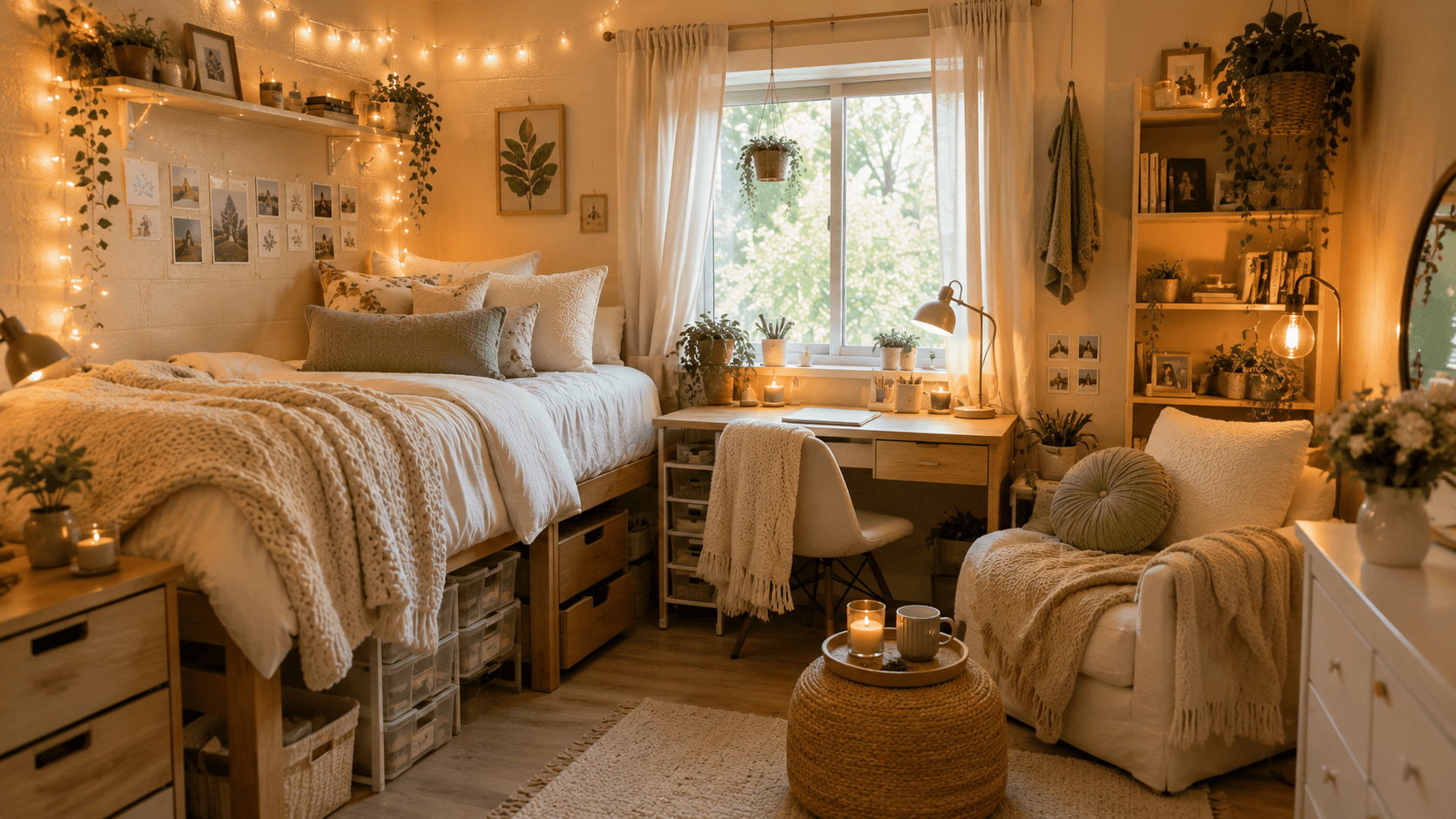
Opalescent and iridescent decor can add a soft, shifting glow to a small home without a big budget, as long as you keep the shimmer to a few pieces. The trick is to choose one or two iridescent accents per room, pair them with plain matte surfaces, and let daylight or warm lamplight do the work.
Key takeaways
- Opalescent means a soft, milky shimmer like opal; iridescent means a surface that shifts colour as light and viewing angle change.
- One or two shimmering pieces per room is enough. More than that can look busy, especially in a small space.
- Matte walls, plain bedding, and simple wood or cotton keep iridescent pieces looking calm rather than flashy.
- Most of the best budget finds are small: vases, candle holders, cushion covers, trays, and art prints.
- Check the price and the size before you buy, because iridescent finishes can look very different in bright shop light and in a dim room at home.
1. What Opalescent and Iridescent Actually Mean
Opalescent and iridescent are often used as if they mean the same thing, but they describe slightly different effects. An opalescent surface has a soft, milky glow, often with pale pink, blue, and green tones that blend rather than flash. Think of an opal stone, a pearl, or the inside of a shell. An iridescent surface changes more obviously as you move: a vase might look blue from one side and pink from another, or a cushion might shift from silver to lilac in lamplight.
That difference matters when you shop. If you want a calm, almost neutral glow, look for opalescent glass, pearl-finish ceramics, and pale mother-of-pearl style trays. If you want a piece that catches the eye, look for iridescent glass, holographic-style foil prints, and oil-slick metal finishes. Both can work under $50, but they should not both fight for attention in the same corner. Pick the softer opalescent look for a bedroom or a calm living room, and save the stronger iridescent look for one statement piece, such as a vase on a side table or a single art print.
2. Start With One Shimmering Piece Per Room
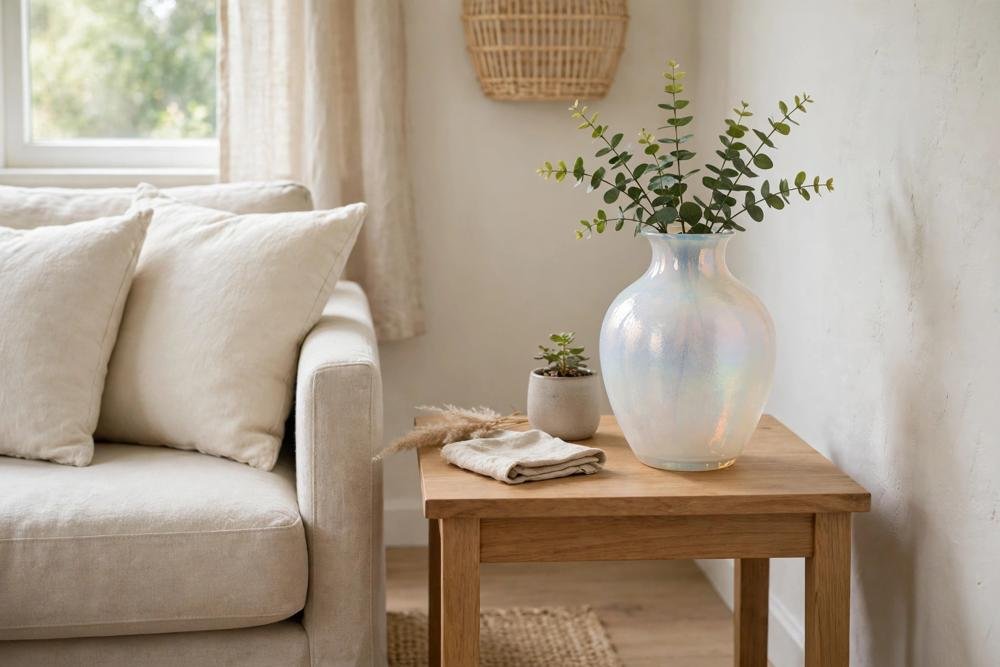
The easiest budget rule for this look is simple: one shimmering piece per room, plus at most one small companion. In a living room, that might be an opalescent vase on a bookshelf. In a bedroom, it might be two iridescent cushion covers on an otherwise plain bed. In a bathroom, it might be a single pearl-finish soap dish or tray, kept well away from heavy splashing unless the maker says it is safe for wet use.
This restraint does two things. First, it keeps the cost down, because you are buying one good piece rather than a whole set. Second, it keeps a small room calm. Iridescent surfaces reflect light in many directions, and a room full of them can feel restless. A single piece, by contrast, reads as a deliberate accent. If you already own a shimmering piece and want to add another, put the second one in a different room, or in a different corner where the two do not reflect each other.
A useful test before you buy a second piece: take a photo of the room in daylight and in lamplight, and ask whether the shimmer still feels soft. If the room looks busy in the photo, it will look busier in person.
3. The Best Budget Finds Under $50
You do not need a designer budget to try this look. The pieces below are types that are commonly available under $50, though prices vary by shop, size, and material, so check the current price before you buy.
An opalescent or iridescent glass vase is the safest first buy. Small and medium sizes suit a side table, a bookshelf, or a windowsill, and they look good with or without flowers. A pearl-finish or iridescent candle holder is another easy start, especially in a living room or bedroom where candlelight makes the finish glow. Keep candles away from curtains, bedding, and anything flammable, and never leave a lit candle unattended.
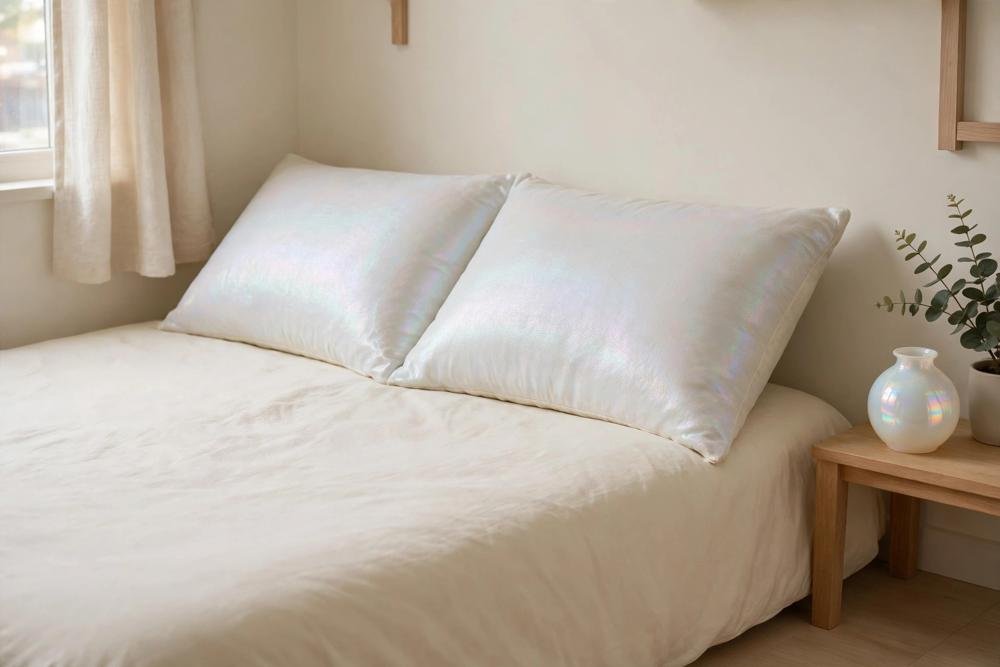
Iridescent cushion covers are a good renter-friendly option, because they change a sofa or a bed without paint or new furniture. Choose one pair in a pale, shifting tone and keep the rest of the cushions plain. A small tray in a pearl or iridescent finish works on a coffee table, a dressing table, or a bathroom counter, and it gives loose items a tidy home. Finally, an iridescent art print or a framed foil poster is an affordable way to test the look on a wall. One print, in a simple frame, is usually enough.
4. Pair Shimmer With Matte and Plain Surfaces
Iridescent finishes look best against matte, plain surfaces. A glossy wall, a shiny sofa, and a shimmering vase together can feel too bright, while a matte cream wall, a plain cotton throw, and the same vase look calm and intentional. If your walls are already glossy, balance them with matte textiles: a cotton cushion, a linen curtain, or a plain wool throw.
Colour matters too. Pale iridescent pieces suit cream, soft grey, pale sage, and warm white walls. Stronger iridescent pieces, with blue, purple, or pink shifts, suit darker plain backgrounds, such as a deep green cushion or a charcoal throw, because the plain colour gives the shimmer something to sit against. Avoid pairing a strongly iridescent piece with a busy pattern. A floral curtain, a patterned rug, and an iridescent vase in the same view will compete, and none of them will stand out.
Wood is a helpful partner for this look. Warm wood, rattan, and plain cotton soften the cool, glassy feel of opalescent surfaces. A wooden side table under an opalescent vase, or a rattan tray holding a pearl-finish candle holder, keeps the room feeling like a home rather than a display.
5. Light It Well, or It Will Look Flat
Opalescent and iridescent finishes depend on light, so lighting is part of the styling. In daylight, a vase near a window will shift colour as the sun moves. In the evening, a warm lamp nearby will bring out pink and gold tones, while cool white light can make the same piece look flat or grey. If a piece looks dull at home, try moving it closer to a lamp or a window before you decide you do not like it.
Avoid placing a strongly iridescent piece directly opposite a bright window or a bare bulb, because the glare can be harsh. A sheer curtain, a lampshade, or a spot a little to the side of the window gives softer, more flattering light. In a bedroom, a bedside lamp with a warm white bulb is usually the kindest light for an opalescent vase or tray. In a living room, a table lamp beside the piece works better than a single bright ceiling light.
If you use fairy lights, keep them low and warm, and keep them away from fabric, dried flowers, and anything flammable. Battery-operated lights with a timer are a simple, renter-friendly option, and they let you test the glow in the evening without new wiring.
6. Opalescent Decor by Room
In a living room, start with a vase, a tray, or a single print. Keep the sofa cushions plain, add one iridescent cushion only if the rest of the room is calm, and let a wooden coffee table or bookshelf ground the look. A small iridescent bowl on a side table can hold keys or remote controls, so the piece is useful as well as decorative.
In a bedroom, softness matters most. Pale opalescent cushion covers, a pearl-finish tray on a dressing table, or a small vase on a bedside table all work. Avoid a strongly shifting finish on a large item such as a duvet cover unless the rest of the room is very plain, because a large shimmering surface can dominate a small bedroom and make sleep feel less restful.
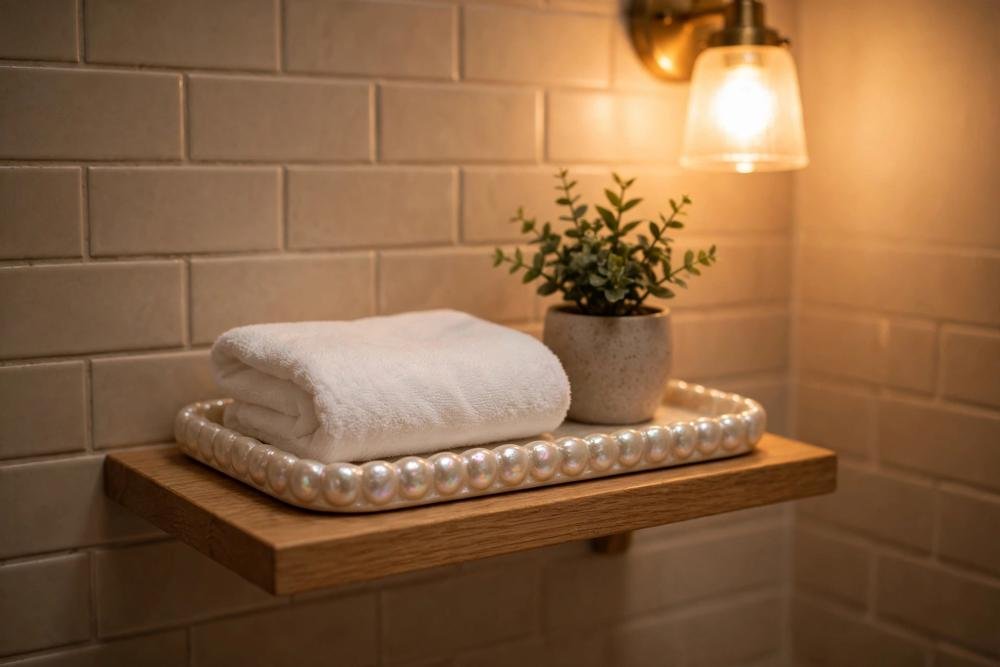
In a bathroom, keep it small and practical. A pearl-finish soap dish, a small tray, or a single vase with a faux plant can lift a plain bathroom. Check whether the piece is made for wet areas before you place it where it will be splashed every day, and wipe it dry after use to keep the finish looking good. In a kitchen, a small iridescent tray, a vase on a windowsill, or a single decorative bowl is enough. Keep shimmering pieces away from the stove, the sink splash zone, and anywhere they could be knocked into hot or wet work.
7. What to Avoid
Do not buy a whole matching set in one go. A set of iridescent vases, cushions, trays, and curtains in the same room will look like a theme park rather than a home. Buy one piece, live with it for a week, and then decide whether you want more.
Do not mix too many shifting colours. An iridescent piece that shifts blue to purple, a second that shifts pink to gold, and a third that shifts green to silver will clash, even if each one is pretty on its own. Stick to one colour family per room, such as pale pink and silver, or blue and lilac.
Do not place iridescent pieces where they will be knocked over easily. Glass vases and trays are often the most affordable finds, but they are also fragile. A hallway console that gets bumped, a low shelf near a pet, or a bedside table in a narrow walkway is not the best home for a glass piece. Choose a sturdier ceramic or a framed print for those spots.
Finally, do not expect the finish to look the same in every light. That shifting quality is the point of the look, but it also means a piece can look wonderful in the shop and quieter at home, or the other way round. If you buy online, check the return policy, read the size carefully, and look for photos in real rooms rather than only studio photos.

8. A Small-Room Plan Under $50
If you want to try this look for under $50 in total, here is a simple plan. Spend the largest share on one piece you will see every day, such as a vase or a pair of cushion covers. Spend the rest on nothing, or on one small companion, such as a candle holder or a tray, only if the first piece still feels lonely after a week.
A living room example: one opalescent vase on a bookshelf, plain cream cushions, a wooden side table, and warm lamplight. A bedroom example: two pale iridescent cushion covers on plain bedding, a small pearl tray on a dressing table, and nothing else shimmering. A bathroom example: one pearl tray and a plain white towel, with the rest of the room kept simple.
Keep the receipt and the packaging until you have lived with the piece in daylight and lamplight. If the colour shift feels too strong, move the piece to a room with softer light, or swap it for a paler opalescent version. The goal is a gentle glow that makes a small room feel special, not a shine that takes over the room.
Conclusion
Opalescent and iridescent decor works best under $50 when you keep it small, calm, and well lit. Choose one shimmering piece per room, pair it with matte and plain surfaces, and let warm light bring out the glow. Check prices and sizes before you buy, keep glass pieces out of busy walkways, and live with one piece before you add another. Done that way, a little shimmer can make a small home feel lighter and more special, without a big spend or a full redecoration.
Related reading
- Rattan Accent Chair Styling for a Small Living Room
- Bamboo Beaded Curtain Ideas for Doorways and Closets
- Circus Inspired Decor Done Tastefully
Frequently Asked Questions
What is the difference between opalescent and iridescent decor?
Opalescent decor has a soft, milky glow with pale blended tones, like an opal or a pearl. Iridescent decor shifts colour more obviously as light and viewing angle change, for example from blue to pink. Opalescent pieces usually feel calmer, while iridescent pieces catch the eye more strongly.
Is iridescent decor too much for a small room?
Not if you keep it to one or two pieces per room and pair them with plain, matte surfaces. A single iridescent vase, tray, or pair of cushion covers can lift a small room. A whole set of shimmering pieces in the same view can feel busy, so start with one piece and add more only if the room still feels calm.
What colours go well with opalescent decor?
Cream, soft grey, pale sage, and warm white are safe partners for pale opalescent pieces. For stronger iridescent pieces, a plain dark colour such as deep green or charcoal can give the shimmer a calm background. Avoid pairing a strongly iridescent piece with a busy pattern in the same view.
Can I use iridescent decor in a bedroom?
Yes, if you keep it soft. Pale opalescent cushion covers, a small pearl tray, or a vase on a bedside table work well. Avoid a large, strongly shifting surface such as a full duvet cover unless the rest of the room is very plain, because it can dominate a small bedroom.
How do I clean opalescent and iridescent glass?
Wipe it gently with a soft, dry cloth, and use a damp cloth only if the maker says it is safe. Avoid harsh cleaners and rough sponges, which can dull the finish. In a bathroom, wipe the piece dry after splashing to keep it looking good.
Where can I find opalescent decor under $50?
Small pieces such as vases, candle holders, cushion covers, trays, and art prints are commonly available under $50, though prices vary by shop and size. Check the current price, the size, and the return policy before you buy, and look for photos in real rooms as well as studio photos.