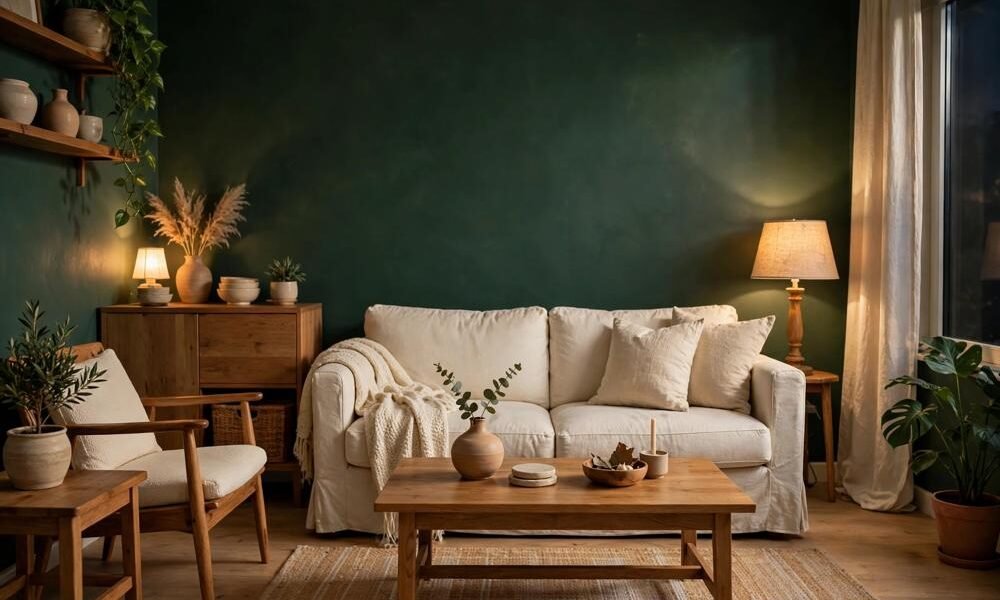
Forest home decor brings the calm of the woods indoors through deep greens, warm wood, soft light, and natural textures, and you do not need a cabin, a remodel, or dark painted walls to get it. The best version for a small home is layered: start with colour and texture you can change easily, add warm light and plants, and keep one natural material as the thread that ties every room together.
Key takeaways
- Forest decor is built from five changes: colour, light, texture, plants, and accessories. You do not need all five at once.
- A light version uses accessories only, a medium version adds paint and textiles, and a full version changes furniture and lighting too.
- Keep dark green to one wall or a few large pieces in a small room, and balance it with pale wood, cream, and mirrors.
- Warm light matters as much as colour. Cool white light can make forest green look cold and flat.
- Small rooms suit the look well, because wood, plants, and soft light make a tight space feel sheltered rather than cramped.
1. The Forest Palette: Greens, Wood, and Warm Neutrals
The heart of forest decor is a palette drawn from a walk in the woods: moss green, deep forest green, warm wood brown, bark, stone grey, and cream. Use cream or soft white as the base in a small home, so the room stays bright, then add green as the main accent and wood as the warm counterpoint. A room that is green on every wall can feel like a cave, especially with low ceilings or a single small window. A room with cream walls, one deep green accent wall or a green sofa, and warm wood furniture feels like a forest clearing instead.
Here is a simple palette chart to start from. Each row is one complete look, not a rule you must follow exactly.
Palette chart:
- Misty morning: pale sage green, cream, pale wood, soft grey. Best for bedrooms and small rooms that need light.
- Deep forest: dark forest green, warm walnut wood, cream, brass. Best for a living room with good daylight or a large mirror.
- Sunny woodland: moss green, honey wood, warm white, terracotta. Best for kitchens and family rooms.
- Moss and stone: moss green, stone grey, pale wood, cream. Best for bathrooms and calm, neutral rooms.
When you choose a green, test it in your own light. North-facing rooms and small windows make greens look cooler and darker, so pick a warmer, lighter green there. South-facing rooms can carry a deeper green, because strong daylight keeps it from feeling gloomy. Paint a large sample on card, move it around the room at different times of day, and live with it for a few days before you commit. Do not rely on a paint name alone, and do not invent or copy a brand code from a photo: check the actual sample in your room.
2. Materials and Textures That Make It Feel Like a Forest
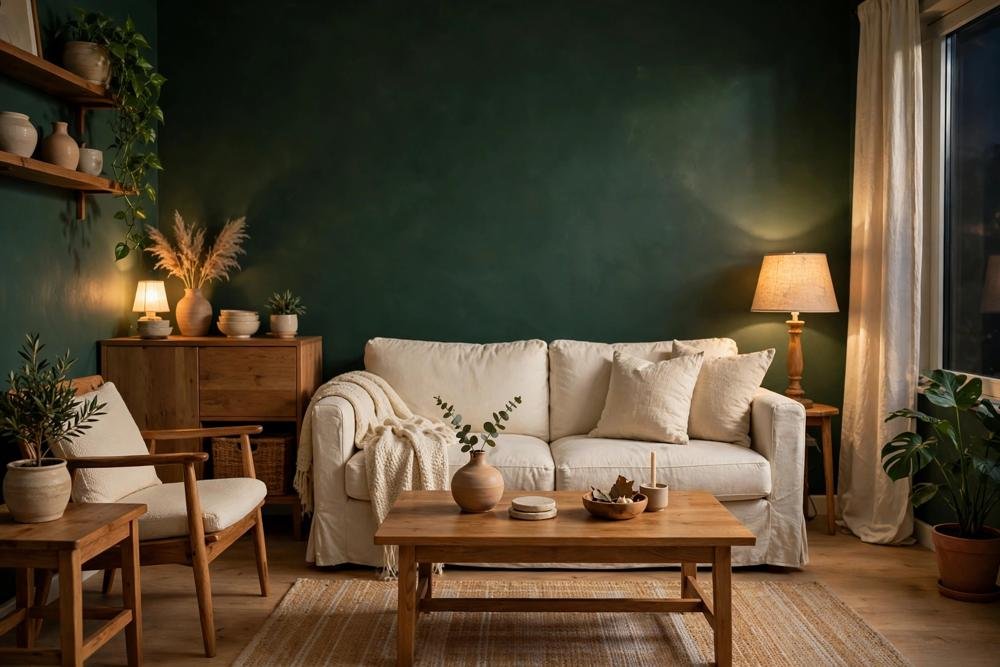
Colour alone will not make a room feel like a forest. Texture does most of the work, and it is also the easiest part to change without drilling or painting. Start with wood in a warm, visible grain: a wooden coffee table, a rattan basket, a wooden frame, or a butcher block board in the kitchen. Add natural fibres next: linen curtains, a cotton throw, a wool rug, or a jute runner. Then add one or two rougher textures for contrast, such as bark, cork, stone, or a woven basket.
A useful material list for a small home:
- Wood: warm oak, walnut, or pine for furniture, frames, and trays. Pale wood suits small rooms; dark wood suits one hero piece.
- Natural fibres: linen, cotton, wool, jute, and rattan for curtains, throws, rugs, and baskets.
- Stone and ceramic: plain stone, terracotta, and matte ceramic for pots, vases, and candle holders.
- Glass: clear or pale green glass for vases and lamps, which keeps the look light.
- Metal: brass or warm bronze for small accents, such as a lamp, a frame, or a tray handle. Keep metal to a few pieces so it reads as warm, not shiny.
Avoid plastic that imitates wood too closely, because it often looks flat next to real wood and real plants. One real wooden piece, even a small tray or stool, will do more for the look than several imitation pieces. The same applies to plants: one healthy real plant beats a shelf of dusty artificial ones, though a good faux plant is fine in a dark corner where a real plant would not survive.
3. Light, Medium, and Full Versions
Not every home needs the same level of change, and the forest look works at three levels. Choose the level that fits your budget, your landlord rules, and how long you plan to stay.
The light version uses accessories only, and it is fully renter-friendly. Add green cushion covers, a forest-green throw, a few wooden trays, a plant or two, and warm lamps. Nothing is painted, nothing is drilled, and everything can move with you. This version is ideal if you rent, if you are testing the look, or if you share a home and want a change that is easy to reverse.
The medium version adds paint and textiles. Paint one accent wall in a forest or moss green, or use peel-and-stick wallpaper on one wall, change the curtains to linen in a natural tone, and add a larger rug in wool or jute. This version suits owners and long-term renters with permission. Keep the other walls cream, so the room stays bright, and keep the furniture you already own.
The full version changes furniture and lighting too. Add a wooden sideboard or bookshelf, a statement pendant lamp in wood or brass, a larger plant collection, and layered lighting with a floor lamp and table lamps. This is the version for a home you plan to stay in, and it is worth doing slowly, one piece at a time, so the room grows into the look rather than being redecorated in a weekend.
4. Lighting: Warm, Layered, and Low
Forest rooms need warm, layered light. A single bright ceiling light flattens green walls and makes wood look harsh. Instead, use three layers: a soft main light, a task light where you read or cook, and a low, warm accent light in the evening. Warm white bulbs, rather than cool white, bring out the warmth in wood and the depth in green. In the evening, a table lamp beside a sofa or a bed does more for the mood than any overhead light.
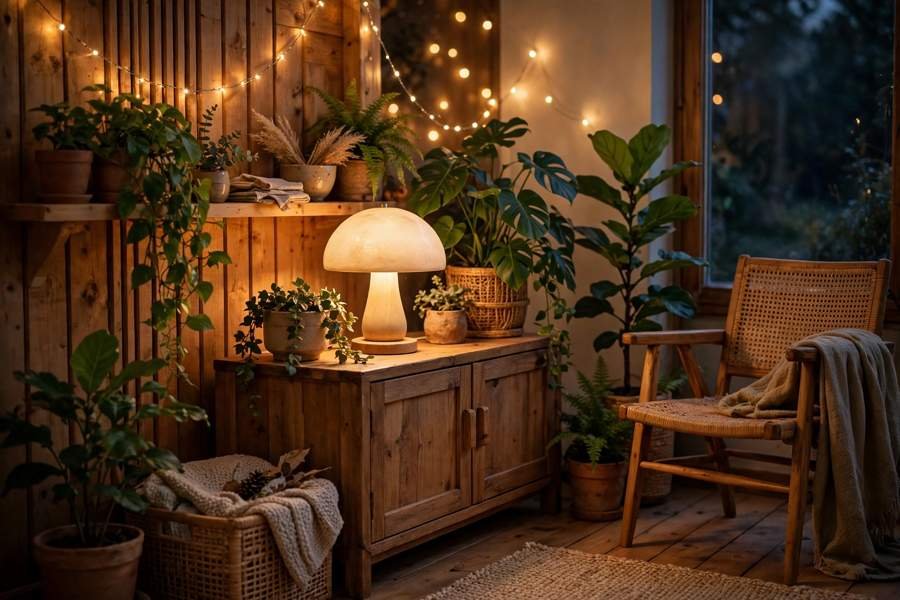
String lights and fairy lights suit this look, but use them safely. Choose LED fairy lights and low-heat bulbs, keep them away from fabric, dried plant material, and curtains, and never leave them on unattended or overnight. A mushroom lamp or a wooden lamp with a warm bulb can be a beautiful accent, but keep it as one piece, not a collection, so the room stays calm. In a bathroom or kitchen, follow the fixture rating and keep lights suitable for damp areas where they are needed. If you are unsure about wiring or a fixture, ask a qualified professional rather than improvising.
Mirrors help in small forest rooms. A mirror opposite a window bounces daylight into a dark green corner, and a mirror beside a lamp doubles its warmth in the evening. Keep the mirror simple, in wood or brass, so it fits the palette rather than fighting it.
5. Plants, Branches, and Natural Accessories
Plants are the most honest part of forest decor, and they also clean up the look of a room faster than any accessory. Start with plants that suit your light. Low-light rooms suit snake plants, pothos, and ZZ plants. Bright rooms suit ferns, monstera, and fiddle-leaf figs, if you have the space. Put larger plants on the floor in a corner, medium plants on a side table or shelf, and trailing plants on a high shelf where they can soften a hard edge.
Branches, pinecones, and bark pieces can add a forest feel, but use them lightly and safely. A single branch in a tall vase, a small bowl of pinecones on a coffee table, or a bark-textured tray is enough. If you collect pinecones or branches yourself, check local rules first, never take from protected land, and clean or bake them first to remove insects, following a reliable method before you use any temperature or time. Keep dried material away from candles, fairy lights, and the stove. In a kitchen, use fresh herbs and wooden accessories instead of dried decor near heat.
Mushroom lamps, hanging mushroom planters, and pinecone garlands are part of the current forest trend, and they can be charming in small doses. Use one mushroom lamp as an accent, not three, and keep garlands to one shelf or doorway rather than every wall. The goal is a room that feels like a forest, not a themed display.
6. Forest Decor in a Small Room
Small rooms suit forest decor, but they need a few adjustments. First, keep the largest surfaces light: cream walls, a pale rug, and light curtains, with green on cushions, throws, one chair, or one accent wall. Second, choose furniture with visible legs and open space underneath, so the floor is not hidden and the room does not feel crowded. Third, use vertical space: a tall plant in a corner, a high shelf with trailing plants, and a mirror that draws the eye up.
Scale matters. A huge dark green sofa can overwhelm a 10 by 10 room, while a green armchair or green cushions on a cream sofa give the same colour without the weight. A large patterned rug can shrink a small room, while a plain wool rug in a natural tone grounds it. A single large piece of art, such as a forest print, works better than many small frames scattered across a wall.
Storage should stay natural too. Woven baskets, wooden boxes, and rattan trays hide clutter while fitting the palette. Avoid shiny plastic storage in a forest room, because it breaks the natural texture story. If you must use plastic boxes, hide them inside a basket or behind a wooden door.

7. Room by Room: Where to Start
Each room below will have its own full guide in this series. Use this section as a map, and start with the room you spend the most time in.
Bedroom: a calm, grown-up forest bedroom with sage or deep green bedding, warm wood, layered lamps, and a canopy or curtain detail if you want softness. Renter options include peel-and-stick wallpaper and removable shelving.

Living room: green walls or a green sofa, warm wood furniture, a wool or jute rug, and soft light. Keep dark green to one wall or a few pieces, and use mirrors and pale wood to keep a small room bright.
Kitchen: decor without a remodel, with painted or wrapped cabinets in owner and renter versions, butcher block, wood accessories, herbs, and plants. Keep dried decor away from the stove and open flames.
Cottage: a warmer, softer forest cottage look with florals, gingham, wicker, and vintage pieces, explained as a distinct style from a log cabin.
Style comparison: a clear guide to forestcore, cottagecore, cabincore, goblincore, and mushroomcore, with a simple way to choose which one fits your home.
Colour palettes: five tested green and moss palettes with undertone advice, finish advice, and a sampling method, so you can choose a green with confidence.
Budget finds: woodsy pieces under $30, grouped by room, with thrift and do-it-yourself options.
Mushroom decor: lamps, planters, and accents used as one adult-friendly accent, with scale and colour rules.
Lighting: a practical three-layer lighting plan with warm bulbs, no-drill string light ideas, and safety notes.
Wallpaper and murals: removable forest wallpaper and mural options for renters, with measuring and testing advice.
Do-it-yourself projects: pinecone garlands, branch art, and moss projects with materials, time, cost, and safe preparation.
8. What to Avoid
Do not paint every wall dark green in a small room, and do not combine dark walls, dark furniture, and dark floors in the same space. One dark element is a statement; three dark elements can feel like a cave.
Do not buy a full themed set at once. A forest duvet, forest curtains, forest cushions, forest art, and forest ornaments in one room will look like a costume rather than a home. Add one element, live with it, and then add the next.
Do not use dried plants, pinecones, or garlands near candles, fairy lights, or the stove. Dried material catches fire easily, and a beautiful garland is not worth a fire risk. Use LED lights, keep dried decor away from heat, and follow fixture ratings in kitchens and bathrooms.
Do not copy photos or wording from other sites, and do not present generated images as real rooms. Use your own photos where you can, and treat illustrations as illustrations. Finally, do not chase every trend at once. Forestcore, mushroomcore, and goblincore overlap, but a room that tries to be all three will feel confused. Pick one direction, keep the palette calm, and let the room grow slowly.
Conclusion
Forest home decor works best when it is practical, warm, and a little restrained. Start with a palette of green, wood, and cream, add natural textures and plants, layer warm light, and choose a light, medium, or full version that fits your home and your budget. Keep dark green to one strong element in a small room, keep dried decor away from heat, and let one natural material tie the rooms together. Done that way, the woods come indoors as a calm, lived-in feeling, not as a theme, and the room guides in this series will help you take each room one step further.
Related reading
- Sage Green Bedroom Ideas and Paint Colours That Work in Real Light
- Warm Neutral Bedroom Colour Schemes With Beige and Greige
- Rattan Accent Chair Styling for a Small Living Room
Frequently Asked Questions
What is forest home decor?
Forest home decor is a style built around deep and moss greens, warm wood, natural fibres, plants, and warm light, inspired by woodland colours and textures. It ranges from a light accessories-only version to a full version with painted walls and wooden furniture, and it suits small rooms when dark green is kept to one strong element.
Do I need to paint my walls dark green for a forest look?
No. A light version with green cushions, throws, plants, and wooden accessories gives the forest feel without paint. If you do paint, one accent wall in forest or moss green, with cream on the other walls, usually works better in a small room than painting every wall dark.
What colours go with forest green walls?
Cream, soft white, pale wood, warm walnut, brass, and terracotta all pair well with forest green. Pale sage and moss green suit lighter rooms, while deep forest green needs cream and pale wood nearby to stay bright. Test a large sample in your own light before you commit.
Is forest decor renter-friendly?
Yes, in its light version. Green cushion covers, throws, plants, wooden trays, and warm lamps need no drilling or painting. Peel-and-stick wallpaper, removable shelving, and tension-rod canopies are renter options for a medium version, but check your lease and get landlord permission before drilling.
Which plants are best for a forest themed room?
Choose plants that suit your light. Low-light rooms suit snake plants, pothos, and ZZ plants. Bright rooms suit ferns, monstera, and larger leafy plants if you have space. Start with one or two healthy plants, and add trailing plants on a high shelf to soften hard edges.
Is forest decor the same as cottagecore or mushroomcore?
No, though they overlap. Forest decor is the broad woodland look. Cottagecore is warmer and softer, with florals and vintage pieces. Mushroomcore focuses on mushroom lamps, planters, and accents as one theme. A comparison guide in this series explains each style and helps you choose which one fits your home.