Introduction
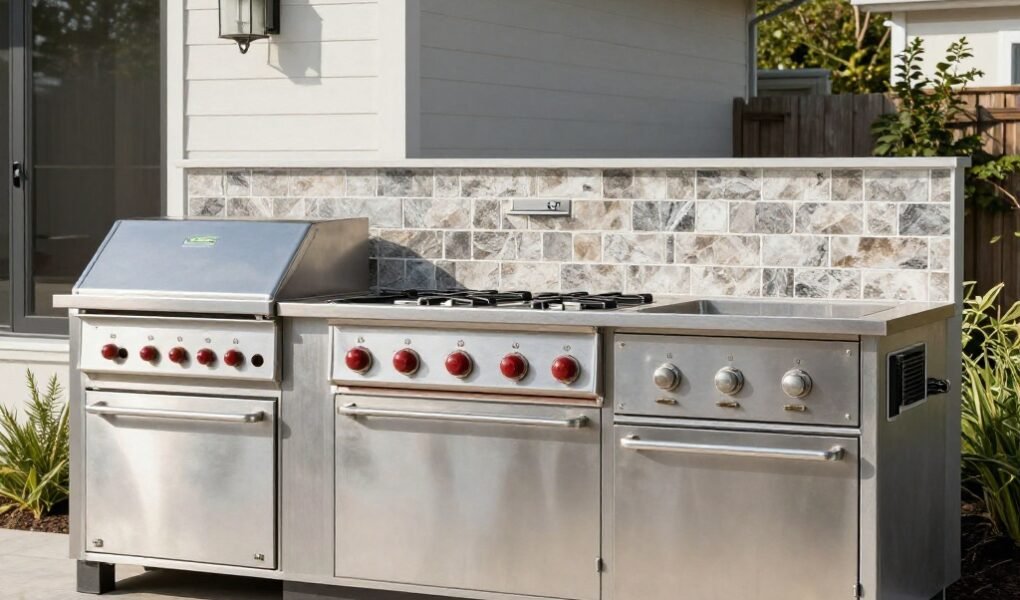
An outdoor kitchen backsplash does two things simultaneously — one of them practical, one of them transformative.
The practical job: protecting the wall behind your grill, side burners, and prep area from heat, grease, smoke, water, and the general intensity of outdoor cooking. Without a proper backsplash, outdoor kitchen walls stain, discolour, and deteriorate rapidly — no matter what they are built from.
The transformative job: defining the visual identity of the entire outdoor kitchen. More than the countertop colour, more than the cabinet material, more than the appliance finish — the backsplash is the backdrop against which everything else is seen. It is the wall that faces you while you cook and the wall that guests see when they look at your outdoor kitchen from the garden. Get it right and it makes the whole kitchen look designed. Get it wrong and even expensive appliances and countertops look somehow incomplete.
In 2026, outdoor kitchen backsplash design has evolved significantly. Trends lean toward durable low-maintenance materials like frost-resistant porcelain, UV-stable glass mosaics, and natural stone that handle heat, rain, humidity, and temperature swings — while the design direction moves away from purely functional and toward genuinely beautiful. The backsplash is no longer just a protective surface. It is a design statement.
This guide covers every material, every design style, the critical weatherproofing requirements, installation guidance, cost estimates, and the specific 2026 trends that are reshaping outdoor kitchen backsplash design.
🔗 Building your complete outdoor kitchen? Read our L-shaped outdoor kitchen ideas guide and our Kitchen Island Size Guide for more.
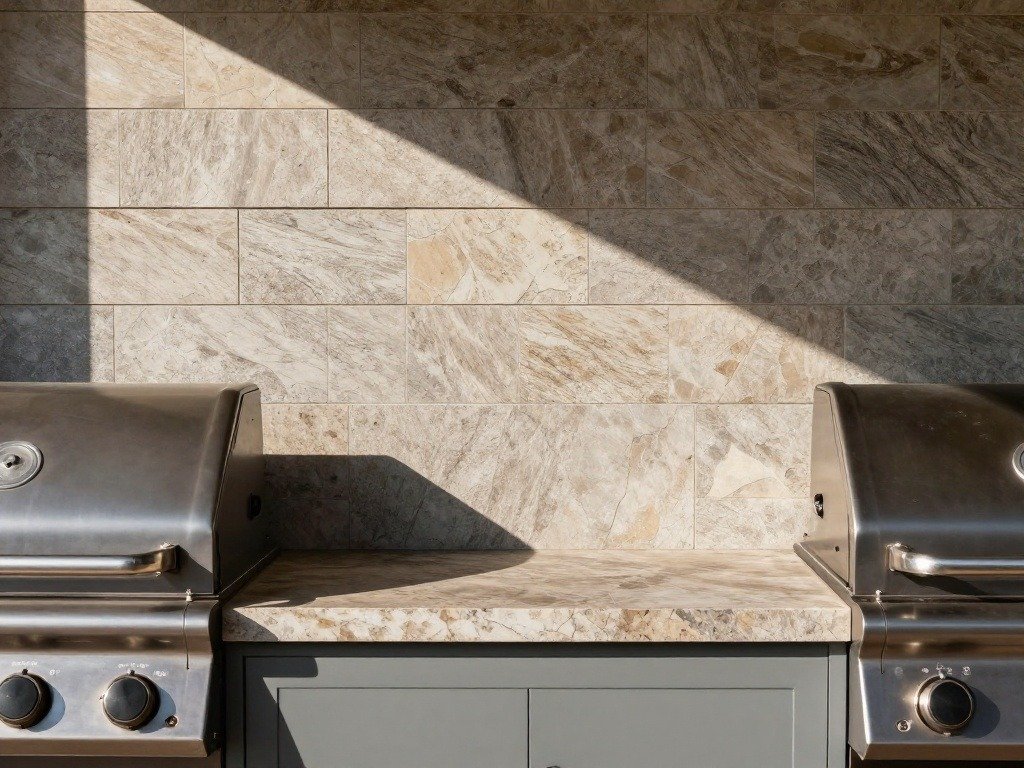
Why Outdoor Kitchen Backsplashes Are Different From Indoor Ones
The most important principle in outdoor kitchen backsplash design: materials that work indoors do not necessarily work outdoors. The outdoor environment introduces stresses that no indoor kitchen will ever face:
Temperature variation: Outdoor backsplash materials must survive the full range of outdoor temperature — from summer heat that can exceed 100°F directly behind a grill to winter freezes that contract and expand materials repeatedly. Materials must be frost-resistant for any climate that sees below-freezing temperatures.
UV exposure: Direct sunlight bleaches, fades, and degrades many materials over time. Colours that look rich and saturated in a showroom can look washed-out and tired after two Florida summers of direct UV exposure. UV-stable materials are essential for any outdoor application.
Moisture and humidity: Outdoor backsplashes face rain, sprinklers, pool splash, humidity, and condensation. Materials with high water absorption rates will crack in freeze-thaw cycles. Non-porous or properly sealed materials are essential.
Grease and heat: The area directly behind the grill faces the same grease and heat challenges as an indoor backsplash — but in an environment where cleaning may be less frequent and conditions more extreme.
The IP/frost rating to look for: Any outdoor kitchen backsplash tile should have:
- Water absorption rate below 0.5% (vitrified porcelain meets this standard)
- A frost resistance rating if the climate sees freezing temperatures
- A slip resistance rating of R10 or higher if the backsplash extends to the floor
The 12 Best Outdoor Kitchen Backsplash Materials
Material 1 — Large-Format Porcelain Tile
The best all-round outdoor kitchen backsplash material in 2026. Frost-resistant porcelain dominates outdoor kitchen backsplash specifications because it combines everything an outdoor kitchen needs: near-zero water absorption, UV stability, heat resistance, complete ease of cleaning, and availability in an extraordinary range of designs — from stone effects indistinguishable from real granite or marble to geometric patterns and solid colours.
The 2026 direction: Large-format porcelain tiles — 24×12 inches, 24×24 inches, or larger — with minimal grout lines create a seamless, high-end look that reads as significantly more expensive than it is.
Frost resistant: ✅ Yes — vitrified porcelain has water absorption below 0.5% UV stable: ✅ Yes Heat resistant: ✅ Yes — to approximately 400°F Ease of cleaning: ✅ Excellent — non-porous surface, no sealing required Cost: $3–$12 per square foot for tile; $8–$25 installed
You can also read Mobile Home Kitchen Remodel Ideas: The Complete Transformation Guide
Material 2 — Natural Stone
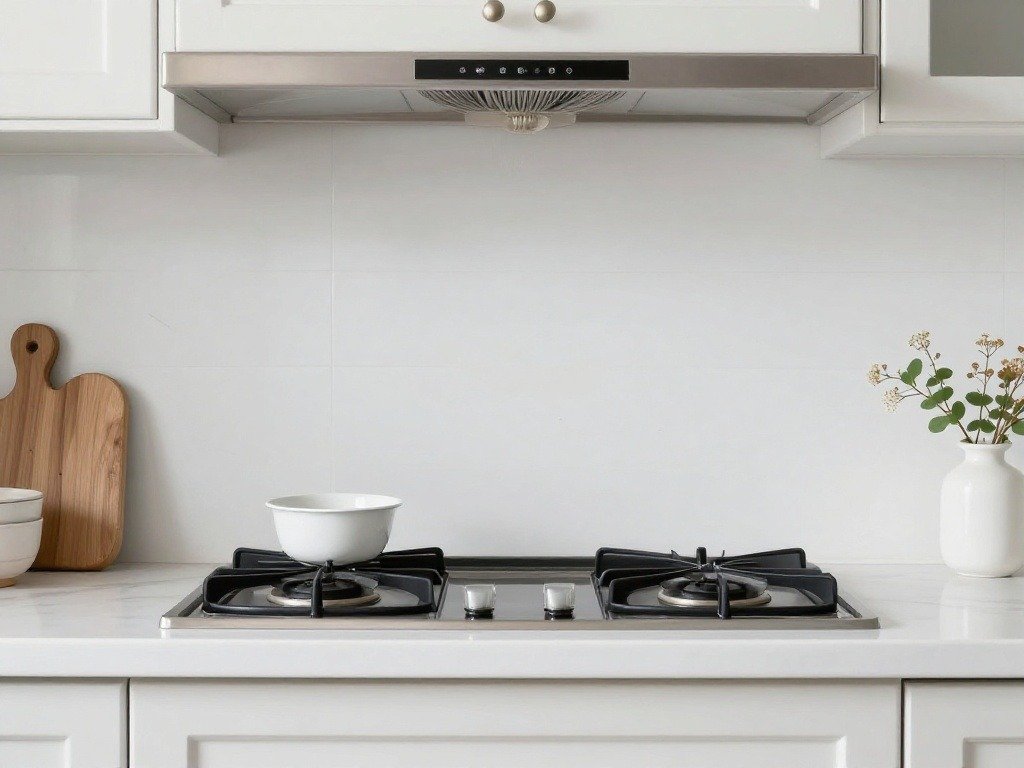
The most beautiful outdoor kitchen backsplash material. Natural stone — granite, slate, quartzite, travertine, limestone — brings a material richness and authenticity to an outdoor kitchen that no manufactured tile fully replicates.
The considerations specific to outdoor use:
- Granite: The best natural stone choice for outdoor kitchen backsplashes. Hard, dense, UV stable, and seals effectively against moisture. Choose darker granites for the area directly behind the grill — they hide heat discolouration better.
- Slate: Naturally non-slip, frost-resistant, and UV stable. The most rugged natural stone for outdoor use. Dark slate creates a dramatic, moody backdrop.
- Quartzite: Harder than granite and naturally more resistant to staining. Beautiful veining similar to marble without marble’s maintenance requirements.
- Travertine: Beautiful and widely used outdoors but requires sealing and is susceptible to freeze-thaw damage in cold climates. Limit to climates that do not freeze.
- Limestone: Soft and susceptible to acid etching from cooking. Not recommended directly behind the grill.
- Marble: Not recommended for outdoor kitchen backsplashes. Etches from acidic foods, stains readily, and does not perform well in outdoor conditions.
Frost resistant: Varies by stone — granite and slate yes, travertine and limestone only in mild climates UV stable: ✅ Yes for all natural stone Heat resistant: ✅ Yes Ease of cleaning: ⚠️ Requires sealing — sealed stone is easy to clean; unsealed stone stains Cost: $15–$60 per square foot installed depending on stone type
Material 3 — Glass Tile
The most luminous outdoor kitchen backsplash material. Glass tile reflects light in a way that no other material matches — it creates depth, movement, and a visual richness that changes with the light throughout the day.
Glass tile isn’t new, but the way designers are using it in 2026 is different. Place glass tile behind cooktops for an easy-to-wipe splash-resistant surface that feels luxurious. In outdoor kitchens, UV-stable glass tile is now specified rather than standard glass tile — the UV stabilisation prevents the colours from fading or the backing from yellowing after years of direct sun exposure.
Important: Not all glass tile is suitable for outdoor use. Specify UV-stable, frost-resistant glass mosaic tile for any outdoor kitchen application. Standard indoor glass tile will yellow, crack in frost, or delaminate within 1–2 outdoor seasons.
The most popular glass tile applications in outdoor kitchens:
- Deep blue or aqua glass mosaic behind the grill area in coastal outdoor kitchens
- White or silver glass tile for a bright, reflective backsplash in shaded outdoor kitchens
- Mixed colour glass mosaic as a feature panel flanked by larger format stone tiles
Frost resistant: Only if specified as frost-resistant — always check before purchasing UV stable: Only UV-stable grade glass tile — always specify Cost: $12–$40 per square foot installed
You can also read Log Home Kitchen Ideas: The Complete Guide to Rustic Kitchen Design
Material 4 — Brick
The most characterful outdoor kitchen backsplash material. A real brick or reclaimed brick backsplash in an outdoor kitchen creates a warmth and authenticity that no tile can replicate — it reads as permanent, considered, and deeply connected to the outdoor environment.
Brick is naturally frost-resistant and UV stable — it is an outdoor material by nature and performs excellently in outdoor kitchen applications. The brick’s texture and slight variation in colour from piece to piece is its greatest visual asset.
The two brick options:
- New brick: Consistent colour and texture, frost-resistant, very durable. Choose an outdoor-rated brick (engineering brick or similar) with low water absorption.
- Reclaimed brick: The more beautiful and more characterful option. Variable colour and texture from previous use. Ensure reclaimed brick is clean, structurally sound, and properly sealed before use as a backsplash.
Application note: Brick backsplashes are more challenging to clean than tile — the mortar joints absorb grease over time. Apply a penetrating masonry sealer before use and reseal annually.
Cost: $8–$20 per square foot installed
Material 5 — Stainless Steel
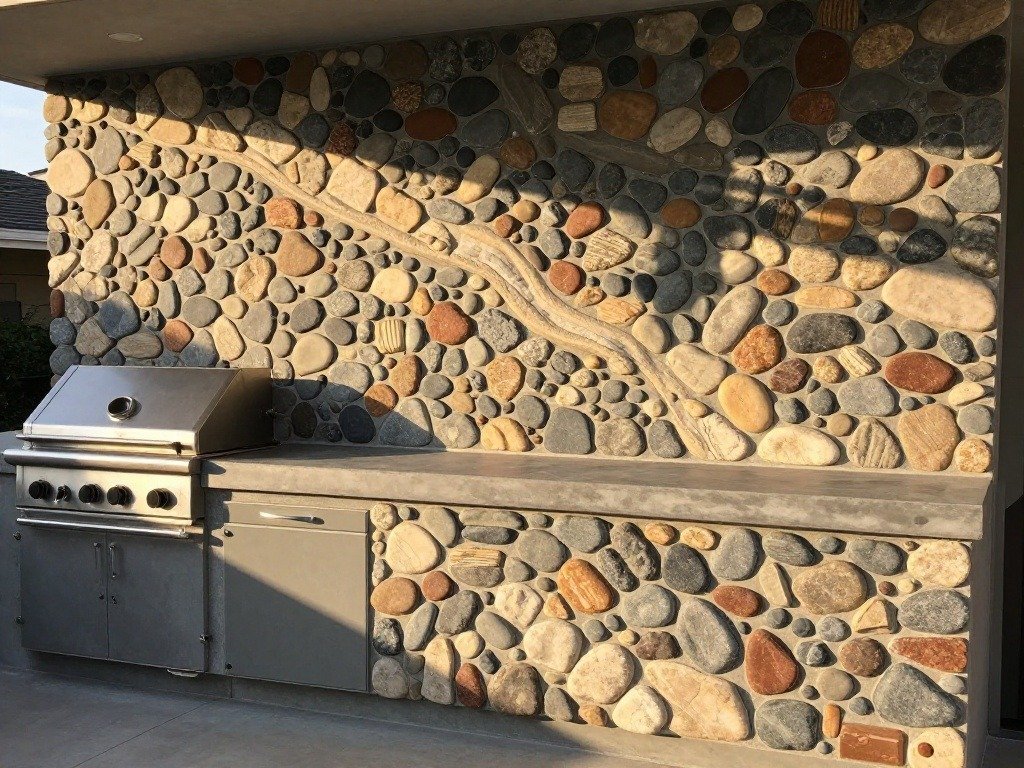
The most professional and most practical outdoor kitchen backsplash material. Stainless steel backsplash panels — typically 304 grade (316 marine-grade within 5 miles of the ocean) — are the most heat-resistant, most grease-proof, and easiest to clean of all outdoor kitchen backsplash materials.
They are the industry-standard backsplash material in commercial kitchens for exactly this reason — and in outdoor kitchens where serious cooking happens regularly, stainless steel behind the grill and side burners is the most functional choice.
The visual consideration: Stainless steel can feel cold and industrial as a primary backsplash material. In 2026 the design direction is to use stainless steel strategically — as the grill-zone backsplash panel flanked by more characterful materials (stone, tile, brick) rather than as the full backsplash.
Textures available: Mirror finish (highly reflective, shows every mark), brushed (the most practical — hides fingerprints and minor marks), hammered (the most decorative — adds visual texture), perforated (ventilation and visual interest).
Cost: $25–$60 per square foot for panel and installation
Material 6 — Zellige Tile
The most artisanal and most visually distinctive outdoor kitchen backsplash option. Zellige tile — handmade Moroccan terracotta tiles with a hand-applied glaze that creates slight colour variation and irregular surfaces — has been rising in popularity and continues to gain momentum in 2026.
Zellige tile is known for its handmade look and slight colour changes. Its imperfect edges add warmth, depth, and a real feel to kitchen design. In an outdoor kitchen, the variation in each tile’s glaze catches light differently throughout the day — creating a backsplash that is genuinely different at 8am, at noon, and at 9pm under string lights.
Important outdoor specification note: Zellige tile has relatively high water absorption compared to vitrified porcelain — it must be properly sealed for outdoor use and is not suitable for climates with severe frost. In mild climates, a properly sealed zellige backsplash performs well outdoors.
Best for: Boho, Moroccan, Mediterranean, and coastal outdoor kitchen aesthetics Cost: $20–$60 per square foot
Material 7 — Mosaic Tile
The most expressive outdoor kitchen backsplash option. Mosaic tiles — small tiles in glass, ceramic, stone, or mixed materials — allow for patterns, images, and colour combinations that larger tiles cannot achieve.
Mosaic tile backsplashes offer unlimited creative potential. They can mix colours, textures, finishes, and materials to create a surface that feels more like art than just a background.
In outdoor kitchens, mosaic tiles work particularly well as:
- A decorative panel feature behind the grill flanked by simpler material
- A border or accent strip running along the top of the backsplash
- A full backsplash in a covered outdoor kitchen where weather exposure is limited
Frost resistance: Varies significantly. Stone mosaic: generally frost-resistant. Glass mosaic: only if UV-stable and frost-rated. Ceramic mosaic: check water absorption rating.
Cost: $15–$50 per square foot installed depending on material and pattern
You can also read Small Kitchen Remodel Ideas: 20 Budget-Friendly Transformations (Before & After)
Material 8 — Concrete
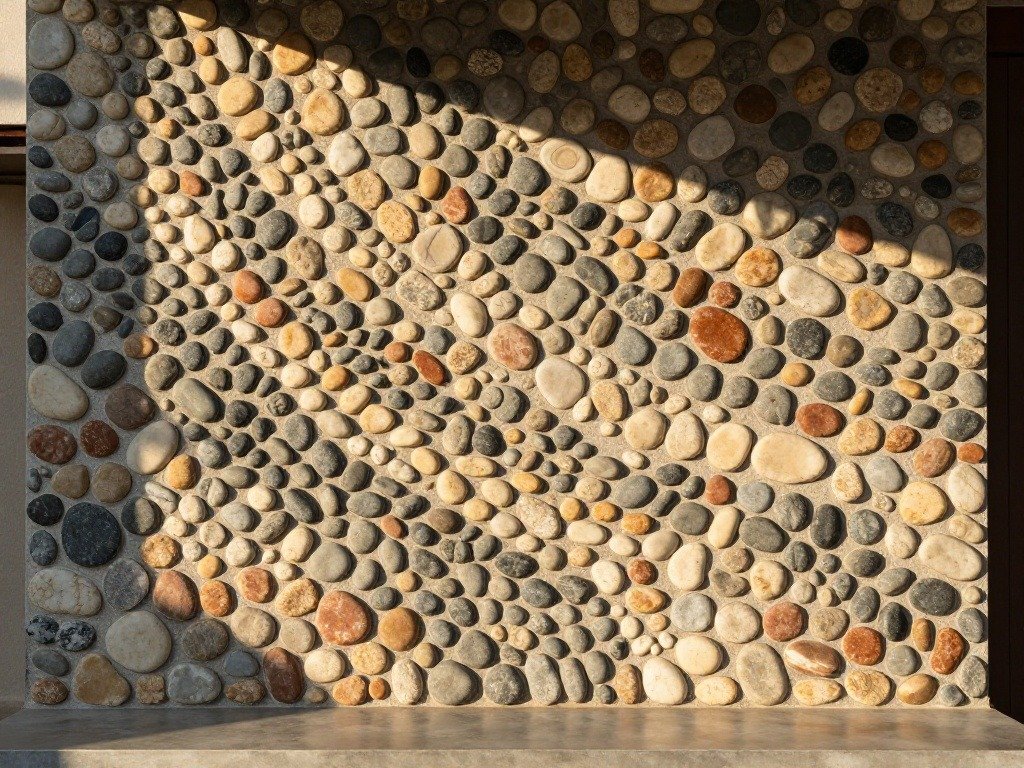
The most contemporary and most customisable outdoor kitchen backsplash material. Poured or panel concrete backsplashes — particularly board-formed concrete that shows the impression of timber formwork — create an architectural quality that works beautifully in modern and industrial outdoor kitchen designs.
The outdoor concrete backsplash options:
- Poured in place: A concrete wall formed and poured as part of the kitchen structure. The most seamless and most permanent option.
- Concrete panels: Pre-cast concrete panels in standard sizes applied to an existing wall structure. More accessible than poured-in-place.
- Concrete-look porcelain: The most practical option — porcelain tiles in a convincing concrete look that provides concrete aesthetics with porcelain performance.
Maintenance for real concrete outdoors: Seal with a penetrating concrete sealer before use and reseal annually. Clean with pH-neutral cleaner — avoid acidic cleaners that etch the surface.
Cost: $15–$40 per square foot for concrete panels; $5–$15 for concrete-look porcelain
Outdoor Kitchen Backsplash Design by Aesthetic
Modern Outdoor Kitchen Backsplash
Best choice: Large-format porcelain in a warm grey or stone effect with minimal grout lines
The modern outdoor kitchen backsplash prioritises seamlessness. Large format tiles (24×24 inches or larger) with matching grout create a wall that reads as a continuous surface — no pattern, no ornamentation, just the material quality of the tile itself. Paired with stainless steel appliances and a dark quartz countertop, the result is an outdoor kitchen that looks like a considered design decision at every level.
2026 direction for modern outdoor kitchens: Extending the backsplash material beyond the traditional zone — running it up to the underside of the pergola or shade structure — makes the kitchen feel larger and more architecturally resolved.
Farmhouse Outdoor Kitchen Backsplash
Best choice: White subway tile with warm grey grout, or brick veneer
The farmhouse outdoor kitchen backsplash is the most classic and most broadly wearable choice. White subway tile with warm grey grout behind the grill creates a clean, practical surface that references the farmhouse kitchen tradition without feeling dated. Brick veneer — or genuine reclaimed brick — creates a warmer, more characterful alternative that reads as even more authentically farmhouse.
2026 direction: Elongated subway tile (4×12 inch or 3×12 inch format) rather than the standard 3×6 creates a more contemporary farmhouse look — still classic but unmistakably current.
Coastal Outdoor Kitchen Backsplash
Best choice: Deep blue or aqua glass mosaic, or natural stone in cream and grey tones
The coastal outdoor kitchen backsplash brings the colours and textures of the ocean and beach into the cooking space. Deep blue UV-stable glass mosaic tiles create a shimmering, luminous backsplash that catches light differently throughout the day. Natural stone in cream limestone or pale grey slate creates a more subtle coastal reference.
The grout consideration for coastal backsplashes: Use white or light grey grout with coastal tile choices — dark grout competes with the tile’s colour. Apply marine-grade grout sealer to protect from salt air.
Rustic Outdoor Kitchen Backsplash
Best choice: Natural slate, reclaimed brick, or river stone mosaic
The rustic outdoor kitchen backsplash should look like it belongs to the landscape — as if the material was gathered or quarried nearby and placed there with minimal intervention. Natural slate, raw quartzite, or a river stone mosaic all achieve this quality. The common thread: visible variation, natural texture, and materials that look better with time rather than requiring perfection.
Mediterranean Outdoor Kitchen Backsplash
Best choice: Hand-painted terracotta tile, zellige tile, or vibrant encaustic cement tile
The Mediterranean outdoor kitchen backsplash is the most expressive and most colourful. Hand-painted terracotta tiles in blue, white, and yellow — the colours of Greek islands and Spanish courtyards — or zellige tiles in jewel tones create a backsplash that is clearly the design centrepiece of the outdoor kitchen.
You can also use Free Renovation Tool
Installation Guide — What You Need to Know
The Right Adhesive for Outdoor Backsplashes
Standard indoor tile adhesive is not suitable for outdoor kitchen backsplashes. Outdoor tile applications require:
- Polymer-modified thin-set mortar — flexible enough to accommodate the temperature variation of outdoor applications without cracking
- Large and heavy tile mortar for tiles larger than 15×15 inches
- Never use mastic adhesive outdoors — it softens in heat and breaks down with moisture
Grouting for Outdoor Kitchen Backsplashes
- Use epoxy grout for the area directly behind the grill — it is non-porous, stain-resistant, and requires no sealing
- Use unsanded polymer-modified grout for joints under 1/8 inch
- Use sanded polymer-modified grout for joints 1/8 inch or wider
- Seal all non-epoxy grout with a penetrating grout sealer before use — and reseal annually in outdoor applications
Waterproofing the Substrate
Before tiling, the wall substrate behind an outdoor kitchen backsplash must be waterproofed:
- Apply a waterproofing membrane (RedGard, Schluter KERDI, or similar) to the substrate
- Allow to cure fully before tiling
- Pay particular attention to corners and the junction between the backsplash and the countertop — these are the most common water infiltration points
Dealing With the Grill Zone
The area directly behind the grill requires additional consideration:
- Maintain a minimum 6-inch clearance between the grill grates and the backsplash surface
- Use heat-resistant tile adhesive in this zone — standard thin-set is rated to approximately 300°F; some adhesives are rated to 500°F
- Consider using stainless steel panel for the grill zone and transitioning to decorative tile outside the heat zone
Outdoor Kitchen Backsplash Cost — 2026 Guide
| Material | Cost Per Sq Ft (tile only) | Installed Cost Per Sq Ft | 10 sq ft backsplash total |
|---|---|---|---|
| Basic ceramic tile | $1–$4 | $8–$15 | $80–$150 |
| Standard porcelain | $3–$8 | $10–$20 | $100–$200 |
| Large-format porcelain | $5–$15 | $15–$30 | $150–$300 |
| Natural stone (granite/slate) | $10–$30 | $20–$50 | $200–$500 |
| Glass mosaic | $12–$40 | $20–$55 | $200–$550 |
| Zellige tile | $20–$60 | $30–$80 | $300–$800 |
| Stainless steel panel | $25–$60 | $35–$80 | $350–$800 |
| Brick or brick veneer | $5–$15 | $15–$30 | $150–$300 |
| Concrete panels | $15–$40 | $25–$55 | $250–$550 |
A typical outdoor kitchen backsplash: 8–12 square feet of backsplash area (behind grill plus prep counter). Budget $300–$600 for a mid-range porcelain backsplash installed; $600–$1,500 for natural stone or premium tile.
2026 Outdoor Kitchen Backsplash Trends
Trend 1 — Large format tiles with minimal grout. The once-ubiquitous white subway tile is gradually stepping off the main stage. In 2026 the direction is toward large-format tiles — 24×12, 24×24, or larger — with grout lines as fine as 1/16 inch. The result is a backsplash that reads as a continuous material surface rather than a grid of individual tiles.
Trend 2 — Natural stone slab backsplashes. In 2026 natural stone slab backsplashes continue to dominate high-end outdoor kitchen design. A stone slab backsplash — a single continuous piece of granite, quartzite, or slate rather than individual tiles — creates the most seamless and most luxurious outdoor kitchen backsplash possible. No grout lines, no pattern interruption, just the continuous material.
Trend 3 — Warm neutrals replacing cool greys. The cool grey palette that dominated outdoor kitchen design in 2018–2023 is giving way to warmer tones. Warm beige, sandy limestone, terracotta, and warm grey stone effects are the leading backsplash directions in 2026.
Trend 4 — Mixed material backsplashes. Using more than one tile material for an outdoor kitchen backsplash is a strong 2026 trend — a stainless steel panel directly behind the grill transitioning to natural stone for the prep zone, or a mosaic tile feature panel flanked by large-format porcelain. The combination reads as more considered and more custom than a single material throughout.
Trend 5 — Extended backsplash height. One advanced design move gaining significant traction in 2026 is extending the outdoor kitchen backsplash beyond the standard zone behind the countertop — running the tile up to the underside of the pergola or the full height of the outdoor kitchen wall. This makes the kitchen feel larger and more architecturally complete.
You can also read Small Kitchen Decor Ideas: 25 Ways to Make Your Tiny Kitchen Look Stunning
Frequently Asked Questions — Outdoor Kitchen Backsplash
Q: What is the best material for an outdoor kitchen backsplash?
A: Large-format vitrified porcelain tile is the best overall material for an outdoor kitchen backsplash in 2026. It is frost-resistant, UV stable, heat-resistant to approximately 400°F, completely non-porous (no sealing required), and available in a wide range of designs from stone effects to concrete looks. Natural stone — particularly granite and slate — is the most beautiful option but requires annual sealing. For the area directly behind the grill, stainless steel is the most practical choice. For coastal and Mediterranean style kitchens, UV-stable glass mosaic and zellige tile are beautiful options with appropriate specification.
Q: Does an outdoor kitchen need a backsplash?
A: Yes — an outdoor kitchen without a backsplash behind the grill and cooking area will suffer significant wall damage from heat, grease, and moisture within one to two cooking seasons. The backsplash protects the wall structure and makes the cooking area dramatically easier to clean. Beyond the practical function, the backsplash is the most visible design element in an outdoor kitchen — it defines the visual character of the entire cooking space more than any other single element.
Q: Can I use regular indoor tile for an outdoor kitchen backsplash?
A: Standard indoor tiles are not suitable for outdoor kitchen backsplashes in most climates. Indoor tiles typically have higher water absorption rates that make them vulnerable to frost damage and humidity deterioration. For outdoor use, specify vitrified porcelain with a water absorption rate below 0.5%, or natural stone that has been confirmed as frost-resistant. Glass tile must be specified as UV-stable and frost-rated. Always check the tile’s technical specifications before purchasing for an outdoor application.
Q: What size tile is best for an outdoor kitchen backsplash?
A: Large-format tiles — 12×24 inches or larger — are the most popular and most visually effective choice for outdoor kitchen backsplashes in 2026. Large tiles create a more seamless appearance with fewer grout lines, which is both more beautiful and more practical (less grout to clean and seal). The minimum practical tile size for an outdoor kitchen backsplash is 4×4 inches — smaller mosaic tiles can be used effectively but require more frequent grout cleaning and more careful grout sealing.
Q: How do I clean an outdoor kitchen backsplash?
A: For porcelain and glass tile: wipe down after each cooking session with a damp cloth while the surface is still warm — grease wipes away easily when warm and becomes more difficult when it cools and hardens. For a deeper clean, use a pH-neutral kitchen degreaser diluted in warm water. Avoid acidic cleaners on natural stone and zellige tile. For stainless steel: wipe with the grain of the steel using a cloth dampened with warm water and a drop of washing-up liquid — wiping against the grain leaves visible scratches. For brick: a solution of warm water and a small amount of washing-up liquid applied with a stiff brush, rinsed thoroughly. For all materials, clean grout lines with a soft brush rather than an abrasive pad.
Q: How high should an outdoor kitchen backsplash be?
A: The standard height for an outdoor kitchen backsplash is 18–24 inches above the countertop — covering the wall from the countertop surface to the base of any overhead cabinets or the underside of the countertop overhang. If there are no overhead cabinets (which is common in outdoor kitchens), the backsplash can extend to any height — and in 2026 the trend is toward taller backsplashes of 36–48 inches or even full-height coverage to the underside of the pergola or outdoor kitchen roof structure. A taller backsplash makes the outdoor kitchen look more complete and more architecturally resolved.
Q: Can I DIY an outdoor kitchen backsplash?
A: Yes — tiling an outdoor kitchen backsplash is achievable as a DIY project for a homeowner with basic DIY skills. The key requirements: use polymer-modified thin-set mortar (not mastic), waterproof the substrate before tiling, use outdoor-rated tile, apply grout sealer before first use, and take particular care at the junction between the backsplash and the countertop. Large-format tiles are harder to lay without lippage (uneven tile edges) and are better installed by a professional. Mosaic tiles on mesh backing are one of the most DIY-friendly backsplash options.
Q: What grout should I use for an outdoor kitchen backsplash?
A: Use epoxy grout for the area directly behind the grill — it is completely non-porous, stain-resistant, and requires no sealing. For the rest of the backsplash, use polymer-modified sanded or unsanded grout (depending on joint width) rated for outdoor use. Seal all non-epoxy grout with a penetrating grout sealer before the first use and reseal annually in outdoor conditions. Choose grout colour carefully — in 2026 the trend is toward grout that closely matches the tile colour for visual continuity, or a warm grey that works with a wide range of tile materials.