Introduction
A plain wall is one of the most common decorating problems people tolerate for years because nothing they try seems to actually solve it — art feels too small, paint feels too flat, wallpaper feels too committed. Decorative metal panels solve this problem in a way that most other wall treatments cannot, because metal creates shadow, depth, and surface variation that changes with the light rather than sitting static against the wall.
In 2026, decorative metal panels have moved well beyond the cold industrial applications most people picture and into genuinely warm, domestic settings — perforated brass panels in living rooms, corten steel accents in entryways, mixed metal and wood feature walls in bedrooms. The material is more flexible and more accessible than it looks from a distance, and the results tend to be the kind that make a room feel designed rather than simply decorated.
This guide covers the materials worth knowing, the rooms where decorative metal panels work best, how to install them without professional help, and the current design directions that make the difference between a panel that looks considered and one that looks like an afterthought..
🔗 Using metal panels in your outdoor space? Read our Mobile Home Kitchen Remodel Ideas and our Log Home Kitchen Ideas for more.
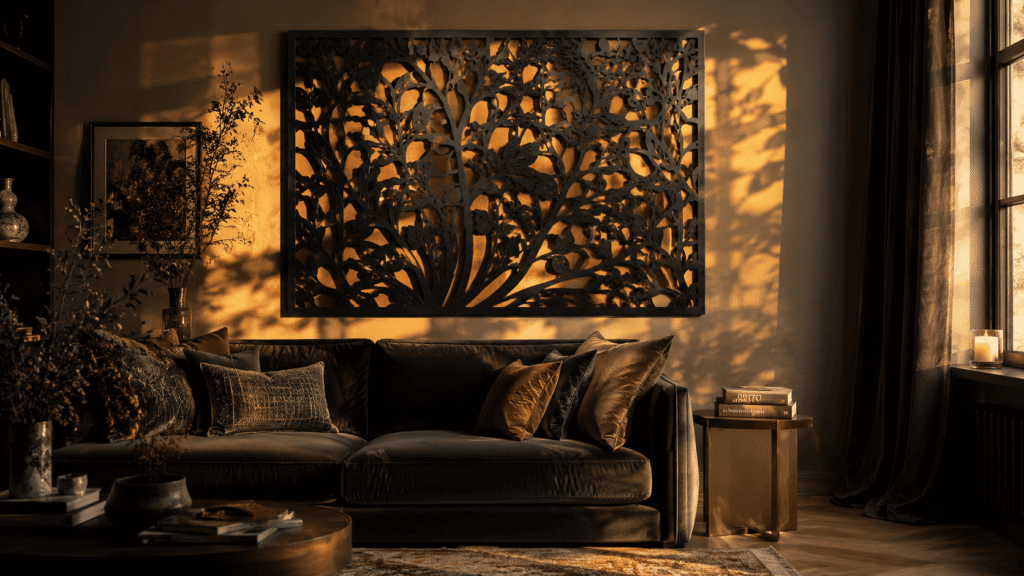
What Are Decorative Metal Panels?
Decorative metal panels are sheets or panels of metal — steel, aluminium, copper, brass, iron, or zinc — that have been shaped, cut, pressed, perforated, or finished in a way that makes them suitable for decorative use in interior and exterior spaces.
They are different from functional metal panels (which serve a structural or weatherproofing purpose) in that their primary function is visual — to add texture, pattern, light play, and material richness to a space.
The main types:
Laser-cut metal panels — sheets of steel or aluminium with intricate patterns cut through the metal using a laser. The cut-through creates shadow play and allows light or backlit colour through the panel. The most versatile and most popular type in 2026.
Pressed or embossed metal panels — sheets of metal with a three-dimensional pattern pressed into them. Tin ceiling tiles are the most familiar example. Create texture without cutting through the metal.
Perforated metal panels — sheets with small holes punched in a regular or irregular pattern. Used for screening, as room dividers, and as cabinet door inserts.
Solid decorative metal sheets — flat or minimally textured sheets used for their material quality — the warmth of brass, the depth of patinated copper, the industrial quality of raw steel.
Metal mesh panels — woven or interlocked metal wire in various gauges and patterns. Used as room dividers, cabinet inserts, and decorative wall coverings.
The 8 Best Materials for Decorative Metal Panels
Choosing the right metal is as important as choosing the right pattern. Each metal has its own character, its own maintenance requirements, and its own aesthetic associations.
1. Corten Steel (Weathering Steel)
The most dramatically beautiful outdoor decorative metal panel material. Corten steel is designed to rust — but in a controlled, stable way that produces a rich orange-brown patina that stabilises and protects the metal underneath. Corten decorative fence panels and garden screens are among the most widely searched and most visually striking outdoor metal panel applications.
Best for: Outdoor decorative fence panels, garden screens, exterior wall art Aesthetic match: Industrial, rustic, natural, dark academia outdoor spaces Maintenance: None — the rust patina is the finish. Allow 6–12 months for the patina to fully develop. Cost: $50–$200 per square foot for laser-cut corten panels
You can also read How to Make a Mobile Home Look Like a House: The Complete 2026 Guide
2. Powder-Coated Steel
Steel panels finished with a powder coat are the most versatile and most cost-effective decorative metal panel material. Powder coating is applied electrostatically and cured under heat — it produces a finish that is harder than standard paint, resistant to chipping and scratching, and available in any RAL colour.
Best for: Indoor wall panels, room dividers, headboards, cabinet inserts Aesthetic match: Every aesthetic — black powder coat for gothic and industrial, white for Scandinavian and Danish pastel, olive green for cottagecore and boho Maintenance: Wipe clean with damp cloth Cost: $30–$120 per square foot
3. Brass
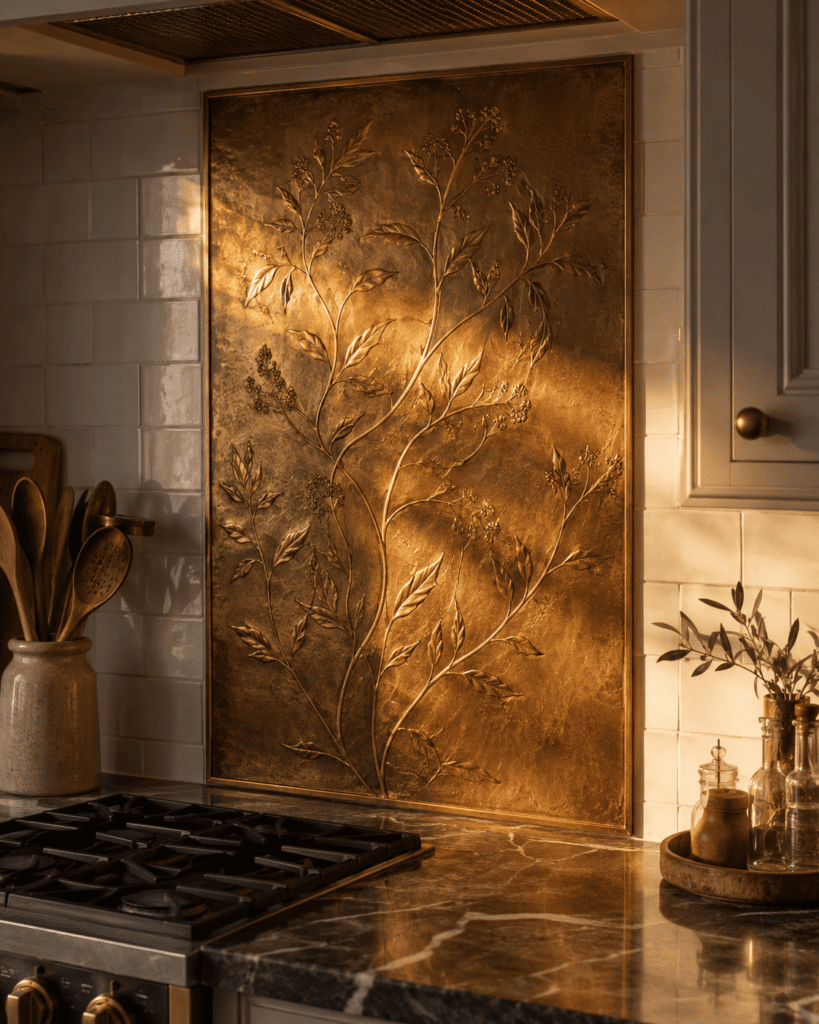
The warmest and most luxurious decorative metal panel material for interior use. Brass panels — whether laser-cut, solid sheet, or mesh — bring a richness and warmth that instantly elevates any room. Unlacquered brass develops a natural patina over time that many designers consider more beautiful than the original bright finish.
Best for: Kitchen backsplash panels, bathroom accent walls, headboards, cabinet door inserts Aesthetic match: Romantic, art deco, dark academia, coquette, maximalist Maintenance: Polish with brass cleaner to maintain shine, or leave to develop natural patina Cost: $60–$250 per square foot depending on thickness and pattern
4. Copper
The most characterful and most distinctive decorative metal panel material. Copper starts bright orange-pink and develops — through oxidation — a green-blue patina (verdigris) that is unique, beautiful, and completely irreproducible synthetically. No two copper panels age identically.
Best for: Kitchen backsplash, bathroom accent, outdoor garden art, fireplace surround Aesthetic match: Gothic, bohemian, industrial, rustic, cottagecore Maintenance: Polish to maintain bright finish, or allow to develop natural patina. Apply beeswax to stabilise at any stage of patination. Cost: $80–$300 per square foot
5. Aluminium
The lightest and most affordable decorative metal panel material. Aluminium is easy to cut, shape, and finish — making it the most versatile material for laser-cut patterns. It does not rust, is lightweight enough to hang with standard picture hanging hardware, and is available in a wide range of powder coat finishes.
Best for: Large decorative wall panels, room dividers, fence screens (powder-coated for outdoor use) Aesthetic match: Modern, minimalist, coastal, Scandinavian Maintenance: Wipe clean — no sealing or polishing required Cost: $20–$80 per square foot
6. Tin (Pressed Tin Ceiling Tiles)
The most historically significant decorative metal panel type in home design. Pressed tin ceiling tiles were the standard ceiling finish in Victorian and Edwardian commercial buildings — and their revival in home interiors is one of the most consistent design trends of the last decade.
Best for: Ceilings, feature walls, kitchen backsplashes, wainscoting Aesthetic match: Dark academia, Victorian, gothic, farmhouse, industrial, vintage Maintenance: Paint or leave raw. Wipe clean. Cost: $3–$15 per square foot for pressed tin tiles
7. Cast Iron and Wrought Iron
The most traditional and most weighty decorative metal panel material. Cast iron and wrought iron panels — typically in Gothic arch, fleur-de-lis, or classical relief patterns — have the specific quality of things that were made to last centuries.
Best for: Feature walls, headboards, fireplace surrounds, garden screens Aesthetic match: Gothic, dark academia, Victorian, maximalist, French country Maintenance: Apply rust-inhibiting paint or wax annually for outdoor use. Indoor panels require minimal maintenance. Cost: $40–$150 per square foot
You can also read Living Room Rug Size Guide: How to Choose the Right Rug for Your Sofa Layout
8. Zinc
The most understated and most contemporary decorative metal panel material. Zinc has a distinctive blue-grey tone — cooler than steel, warmer than aluminium — that ages to a consistent, beautiful matte grey that requires no maintenance and never looks wrong.
Best for: Modern kitchen backsplash, bar fronts, contemporary feature walls Aesthetic match: Industrial, Japandi, modern minimalist, Danish pastel Maintenance: None — zinc is naturally corrosion-resistant Cost: $60–$180 per square foot
Room-by-Room Decorative Metal Panel Ideas
Bedroom — Where Metal Becomes Personal
The bedroom is where decorative metal panels make their most personal statement. The choice of metal, pattern, and finish in a bedroom reveals something specific about the person who sleeps there.
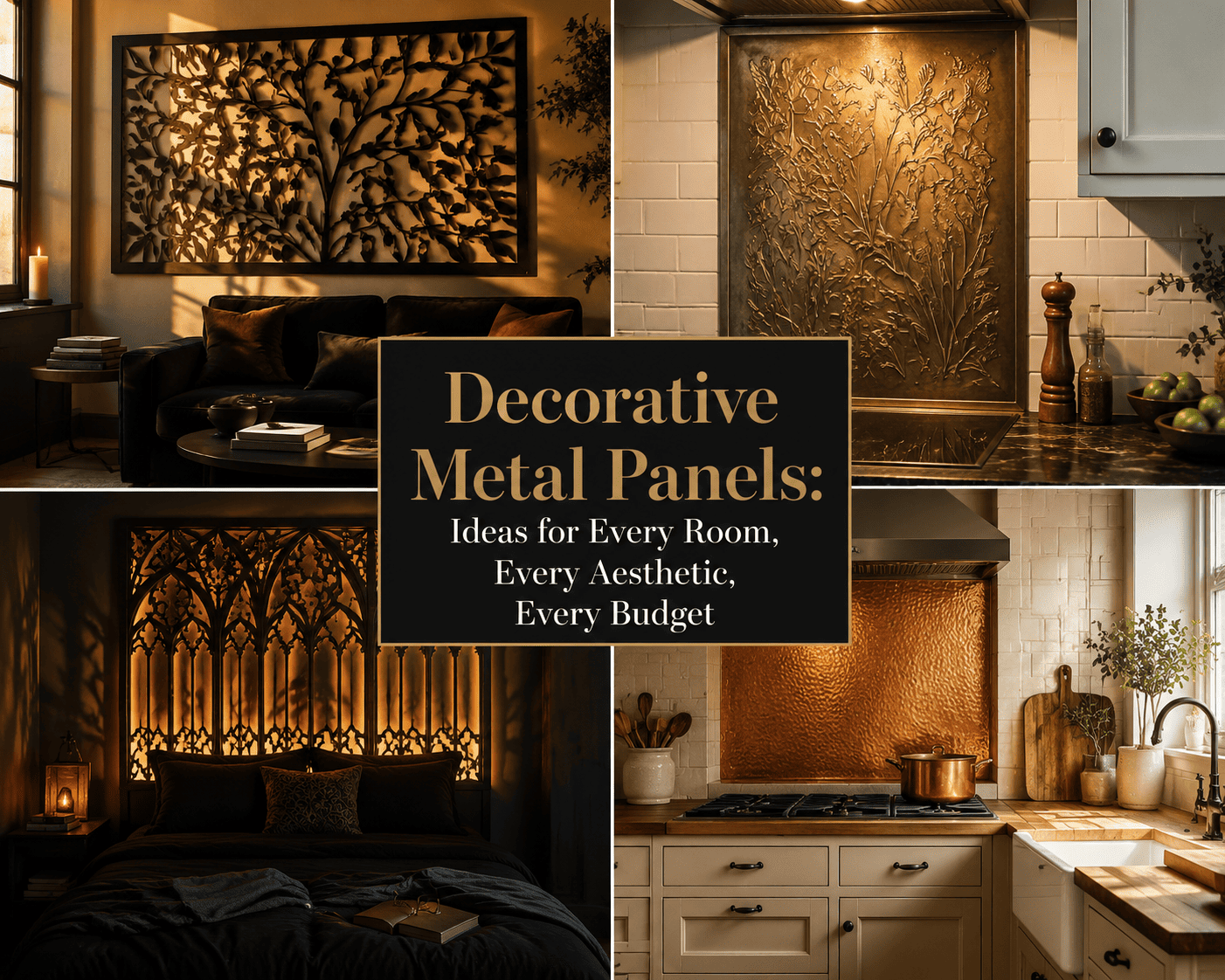
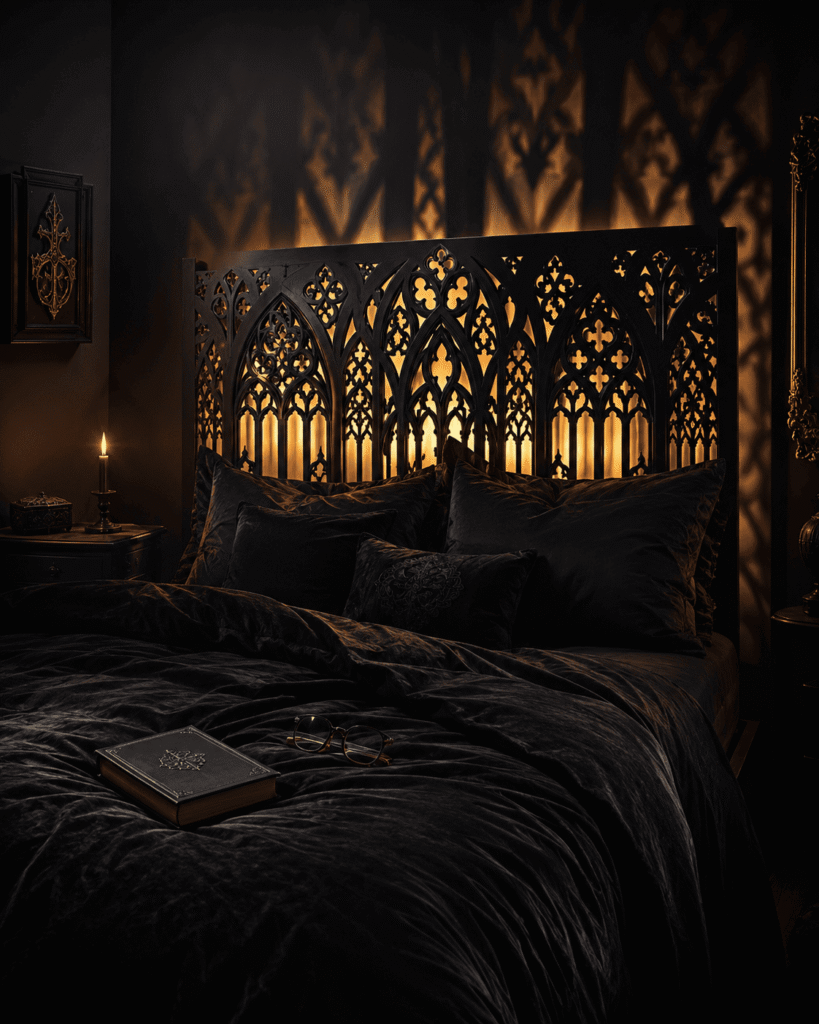
Gothic bedroom: A large laser-cut steel panel in a Gothic arch or cathedral window pattern, powder-coated matte black, mounted as a headboard or above the bed. The laser-cut pattern throws dramatic shadows on the ceiling when backlit with a warm amber LED strip mounted behind the panel. This is one of the most visually striking bedroom statements available in any material at any price point.
Dark academia bedroom: Pressed tin ceiling tiles — painted in a deep Oxford navy or left in their raw pewter finish — applied to a feature wall behind the bed. Combine with dark wood furniture, stacked books, and warm lamplight. The pressed tin adds the specific quality of a Victorian library or gentleman’s study.
Romantic bedroom: A laser-cut brass panel in a delicate botanical or damask pattern, mounted above the headboard or as a room divider panel beside the bed. The warm gold of the brass and the delicate nature of the pattern creates an intimate, luxurious atmosphere that velvet and silk alone cannot achieve.
Boho bedroom: Raw copper sheet panels — aged to a warm verdigris — used as an accent wall section or as part of a gallery wall arrangement. The organic, unpredictable quality of copper’s patination is the most bohemian quality of any material in home decor.
Living Room — Statement Walls and Room Dividers
The living room is where decorative metal panels make their most public statement — seen by every visitor, present in every photograph of the space.
As a feature wall panel: A large format laser-cut aluminium panel — 4×6 feet or larger — mounted flush on the main living room wall as the room’s centrepiece. In a neutral-toned living room, this panel becomes the only thing you need. Everything else can stay simple.
As a room divider: A free-standing laser-cut panel or a series of panels hung from a ceiling track divides an open-plan living space into defined zones without closing the space visually. The open pattern of a laser-cut divider allows light and air movement to continue between zones.
As a fireplace surround: A steel or iron decorative panel mounted as the fireplace surround or mantel facing — particularly effective in a dark academia or gothic living room where the fireplace is already a focal point.
As a gallery wall element: Mixed with artwork, mirrors, and plants, a smaller decorative metal panel — 24×36 inches — works beautifully as the centrepiece of a gallery wall arrangement. The metal’s reflective quality catches light differently from paper prints and adds material contrast.
Kitchen — Backsplash and Cabinet Inserts
The kitchen is one of the most practical and most beautiful applications for decorative metal panels.
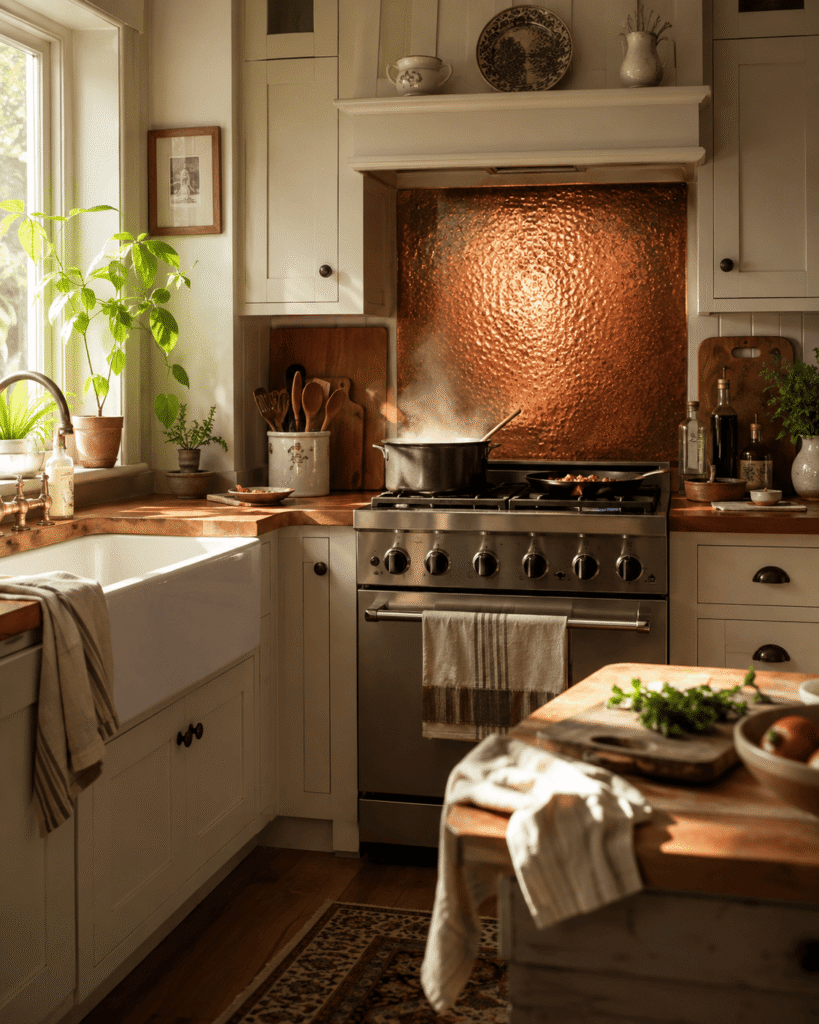
As a backsplash: A solid brass, copper, or stainless steel sheet behind the hob is both decorative and highly practical — it is easy to wipe clean, heat resistant, and adds a material richness that tile cannot replicate. A brushed stainless steel backsplash in a modern kitchen. A hammered copper panel in a farmhouse kitchen. A pressed tin tile backsplash in a dark academia kitchen. All three are visually distinctive and functionally superior to standard tile in terms of heat resistance and cleaning ease.
As cabinet door inserts: Perforated metal or metal mesh panels inserted into cabinet door frames — replacing glass or solid panels — give kitchen cabinets a distinctive industrial or vintage quality while still allowing the contents to be partially visible.
As a kitchen island feature: A decorative metal panel applied to the front face of a kitchen island — in a hammered copper, pressed tin, or laser-cut steel finish — transforms a standard island into a statement piece that anchors the entire kitchen’s design.
You can also read Mobile Home Kitchen Remodel Ideas: The Complete Transformation Guide
Outdoor Spaces — Fence Panels and Garden Screens
The most rapidly growing application for decorative metal panels in 2026 is outdoor use — particularly decorative metal fence panels and garden privacy screens.
Decorative metal fence panels replace standard timber or vinyl fence sections with panels that provide privacy while adding significant visual interest. The most popular patterns are geometric (diamond, hexagonal, interlocking circles), botanical (leaves, grasses, tree silhouettes), and abstract. Corten steel is the most popular material for outdoor fence panels — it requires zero maintenance and develops a beautiful rust patina that integrates with garden plantings.
Garden privacy screens are free-standing panels used to define outdoor zones, create privacy from neighbours, screen utility areas, or simply add a decorative element to a garden that currently has none. Positioned behind an outdoor kitchen, beside a seating area, or at the end of a garden path, a decorative metal screen transforms an outdoor space from generic to distinctive.
Pergola and shade structure infill panels: Decorative metal panels fitted between pergola posts or as infill panels in shade structures add both privacy and visual interest to outdoor kitchen and dining areas.
Bathroom — The Most Unexpected Application
The bathroom is where decorative metal panels are used least often and perhaps where they make the most surprising and most luxurious impression.
As a feature wall section: A brass or copper decorative panel above the bath or behind the vanity — waterproofed and properly sealed — creates a warm, rich accent that transforms a functional bathroom into something spa-like and intentional.
As a shower niche insert: A small laser-cut metal panel mounted as the back of a shower niche — the recessed shelf area in a tiled shower — is an elegant and unexpected detail that most visitors notice without being able to identify what makes the shower feel different.
As a vanity panel: A decorative metal panel applied to the front of a vanity cabinet — replacing the painted or tiled front — adds material richness in a position that is highly visible.
How to Install Decorative Metal Panels — The Complete Guide
Installation method depends on the panel type, size, weight, and mounting surface. Here is the complete guide:
Method 1 — Direct Wall Mount (Most Common)
Best for: Lightweight aluminium and steel panels under 20 lbs
What you need:
- Stud finder
- Level
- Appropriate wall anchors for your wall type (drywall anchors for plasterboard, masonry anchors for brick or concrete)
- Screws with washers (to prevent the screw head pulling through the panel)
- Or adhesive standoffs that create a floating gap between panel and wall
The process:
- Find and mark the stud positions behind the mounting area
- Mark the desired panel position on the wall — use a level
- Drill pilot holes through the panel at mounting points
- Mount the panel using screws into studs where possible, drywall anchors where not
- For a professional floating effect, use metal standoffs (available from hardware stores for $2–$5 each) to create a 10–20mm gap between panel and wall
Pro Tip: Mounting a panel with standoffs and adding a warm LED strip behind the panel creates a backlit glow effect that is one of the most dramatic decorative metal panel applications available.
Method 2 — Z-Clip System (For Heavier Panels)
Best for: Steel and iron panels over 20 lbs, or any panel where easy removal or repositioning is desired
Z-clips (interlocking metal clips) are mounted to both the wall and the back of the panel. The panel slides onto the wall-mounted clips and hangs securely without visible fixings. Easy to remove and rehang.
Method 3 — Adhesive Mount (For Lightweight Panels and Tiles)
Best for: Individual pressed tin tiles, small aluminium panels under 5 lbs
Construction adhesive applied to the back of the panel bonds directly to the wall surface. No visible fixings. Not recommended for heavy panels or areas that may experience moisture.
Method 4 — Frame and Panel System (For Large Installations)
Best for: Full wall coverage, ceiling tile installations, large feature walls
A timber or metal framework is built on the wall first. Individual panels are then clipped, screwed, or bonded to the framework. This method allows large installations to be completed with individually manageable panel sizes.
You can also read Ocean Theme Decor: How to Create a Coastal Bedroom & Feminine Living Room
Decorative Metal Panels — Cost Guide 2026
| Material | Indoor Cost per sq ft | Outdoor Cost per sq ft | Where to Buy |
|---|---|---|---|
| Powder-coated aluminium | $20–$80 | $30–$100 | Online, metal art retailers |
| Powder-coated steel | $30–$120 | $40–$150 | Online, metalwork fabricators |
| Corten steel | N/A | $50–$200 | Specialist outdoor art retailers |
| Brass (solid sheet) | $60–$250 | Not recommended | Metal suppliers, specialist retailers |
| Copper (solid sheet) | $80–$300 | $100–$350 (sealed) | Metal suppliers |
| Pressed tin tiles | $3–$15 | Not recommended | Home improvement stores, specialty retailers |
| Cast/wrought iron | $40–$150 | $60–$200 | Architectural salvage, specialist retailers |
| Zinc | $60–$180 | $80–$220 | Metal suppliers |
Where to buy decorative metal panels:
- Amazon — widest selection of ready-made laser-cut aluminium and steel panels. Search “decorative metal wall panel” for the largest range
- Etsy — the best source for custom and handmade decorative metal panels, particularly corten steel garden panels and brass wall art
- Wayfair and Living Spaces — good selection of ready-made indoor metal wall panels
- Local metal fabricators — for custom sizes and patterns, a local laser-cutting fabricator can produce panels to your exact specifications — often at lower cost than specialist retailers
2026 Decorative Metal Panel Trends
Trend 1 — Backlit panels are everywhere. Mounting a laser-cut panel in front of a LED strip creates a glowing, dramatic effect that photographs beautifully and transforms a room at night. The backlighting trend is driving significant growth in laser-cut panel sales in 2026.
Trend 2 — Botanical and nature-inspired patterns dominate. The most popular laser-cut patterns in 2026 are botanical — leaves, grasses, trees, flowers — reflecting the broader biophilic design trend that is shaping all of home decor. Geometric patterns remain popular but botanical has overtaken them as the leading style.
Trend 3 — Corten steel for outdoor spaces. The outdoor decorative metal panel market is growing faster than the indoor market in 2026, driven by the growth in outdoor kitchen and garden room investment. Corten steel fence panels and garden screens are the fastest-growing product category within decorative metal panels.
Trend 4 — Mixed metal in a single room. Where 2020–2023 design advice consistently said “pick one metal finish and stick to it,” 2026 designers are celebrating mixed metals — brass alongside raw steel alongside copper — as a more authentic and more interesting approach than single-metal consistency.
Trend 5 — Large format panels replacing gallery walls. Instead of multiple small framed prints arranged as a gallery wall, a single large decorative metal panel — 4×6 feet or larger — is increasingly chosen as the main wall statement. The scale change is dramatic and the effect is significantly more contemporary.
You can also read Guest Bedroom Ideas That Make Your Visitors Never Want to Actually Leave
Decorative Metal Panels by Aesthetic — Quick Reference
| Aesthetic | Best Metal | Best Pattern | Best Finish |
|---|---|---|---|
| Gothic | Steel or cast iron | Gothic arch, tracery, skull, bat | Matte black powder coat |
| Dark academia | Pressed tin, brass | Classical, botanical, medallion | Raw or aged brass |
| Romantic | Brass or copper | Floral, damask, botanical | Polished or satin brass |
| Kawaii | Aluminium | Stars, flowers, cloud shapes | Pastel powder coat |
| Boho | Copper, corten | Mandala, geometric, botanical | Raw or patinated |
| Industrial | Raw steel, zinc | Geometric, abstract, minimal | Raw or clear coat |
| Farmhouse | Copper, pressed tin | Botanical, simple geometric | Hammered, raw |
| Dark academia outdoor | Corten | Gothic arch, botanical | Natural rust patina |
| Coastal | Aluminium | Geometric, wave, shell | White or coastal blue powder coat |
| Japandi | Zinc, brushed steel | Minimal geometric | Brushed or satin |
Frequently Asked Questions
Q: What are decorative metal panels made of?
A: Decorative metal panels are made from a range of metals including steel, aluminium, brass, copper, cast iron, zinc, and tin. Steel and aluminium are the most common materials for laser-cut decorative panels due to their workability and cost-effectiveness. Brass and copper are popular for their warmth and patina. Corten steel is the most popular material for outdoor applications due to its self-protecting rust patina. Each material has different aesthetic qualities, maintenance requirements, and price points.
Q: How do you hang decorative metal wall panels?
A: Lightweight aluminium and steel panels (under 20 lbs) can be hung using standard picture hanging hardware, wall anchors, or metal standoffs for a floating effect. Heavier panels should use a Z-clip system — interlocking metal clips mounted to both the wall and back of the panel — which provides secure hanging without visible fixings. For the most dramatic effect, mount the panel using standoffs and add a warm LED strip behind the panel to create a backlit glow. Always check the panel weight and use appropriate fixings for your wall type — drywall anchors for plasterboard, masonry anchors for brick or concrete.
Q: Are decorative metal panels suitable for outdoor use?
A: Yes — but the metal choice matters significantly. Corten steel is the best material for outdoor decorative panels because it develops a stable rust patina that protects the metal underneath and requires zero maintenance. Powder-coated aluminium and steel are also suitable for outdoor use if the powder coat finish is intact. Standard steel without a weather-resistant finish will rust uncontrollably outdoors. Brass and copper can be used outdoors but develop a patina that some find beautiful and others find unattractive — apply marine-grade lacquer or beeswax if you want to slow the patination process.
Q: What is the best decorative metal panel for a bedroom?
A: For a gothic or dark aesthetic bedroom, a large laser-cut steel panel in matte black powder coat — used as a headboard or feature wall panel — is the most dramatic and most appropriate choice. For a romantic bedroom, a laser-cut brass panel in a botanical or floral pattern creates warmth and luxury. For a dark academia bedroom, pressed tin tiles in a classical pattern applied to the feature wall behind the bed reference Victorian and Edwardian interior design. For a boho bedroom, a raw copper or corten panel with an organic or mandala pattern adds warmth and character.
Q: How much do decorative metal panels cost?
A: Pressed tin ceiling tiles start at $3–$15 per square foot — the most affordable decorative metal panel option. Powder-coated aluminium laser-cut panels range from $20–$80 per square foot. Steel panels cost $30–$120 per square foot. Brass and copper panels range from $60–$300 per square foot depending on thickness and pattern complexity. Custom-fabricated panels from a local laser-cutting service can sometimes be cheaper than retail prices for simple geometric patterns. Amazon and Etsy both offer ready-made decorative metal panels starting from $30–$80 for a standard 24×36 inch panel.
Q: Can decorative metal panels be used as a kitchen backsplash?
A: Yes — and they work exceptionally well. Stainless steel, brass, copper, and pressed tin are all suitable kitchen backsplash materials. They are heat resistant, easy to wipe clean, and provide a material richness that tile cannot replicate. For a backsplash application, choose a metal with a relatively smooth or hammered surface — intricate laser-cut patterns are harder to clean in a cooking area where grease and steam are present. Seal copper and brass backsplashes with a food-safe sealant and wipe clean after cooking.
Q: What is the difference between decorative metal panels and decorative metal wall art?
A: Decorative metal wall art typically refers to individual sculptural pieces — a metal tree, a set of metal birds, a geometric metal circle — that are hung as single art objects. Decorative metal panels refer to flat or low-relief sheet panels that cover a defined area of wall — either as a feature panel, a backsplash, a ceiling tile installation, or a full-wall application. Metal panels tend to be more architectural in their application — they change the character of a surface rather than adding a decorative object to it.
Q: Are decorative metal fence panels worth it?
A: Yes — decorative metal fence panels deliver significantly more visual impact than standard timber or vinyl fence sections, require less maintenance over time (particularly corten steel, which is completely maintenance-free), and add genuine kerb appeal and property value. The initial cost is higher than standard fencing — expect to pay $50–$200 per square foot for decorative corten or powder-coated steel fence panels compared to $15–$40 per square foot for standard timber — but the lifespan (50+ years for corten, 20–30 years for powder-coated steel) and visual quality justify the premium significantly.
Q: What patterns are most popular for laser-cut decorative metal panels in 2026?
A: Botanical patterns — leaves, grasses, tree silhouettes, flower forms — are the most popular laser-cut metal panel patterns in 2026, reflecting the broader biophilic design trend. Geometric patterns — hexagonal, diamond, interlocking circles — remain consistently popular. Gothic arch and tracery patterns are the most popular choice for gothic and dark academia aesthetics. Mandala patterns are the most popular boho choice. Abstract flowing patterns are the most popular contemporary choice for minimalist and Japandi interiors.
🔗 Explore related ideas — read our gothic bedroom decor guide, our dark academia bedroom guide, and our outdoor kitchen ideas guide for more ways to use metal in your home.
Meta Title: Decorative Metal Panels — Ideas for Every Room and Aesthetic 2026 Meta Description: The complete guide to decorative metal panels — wall panels, fence panels, laser cut designs, room by room ideas for every aesthetic, installation guide, material comparison and 2026 trends. Slug: /decorative-metal-panels/ Pinterest Description: Decorative Metal Panels — ideas for every room and every aesthetic ✨ Gothic, boho, dark academia, farmhouse, outdoor kitchen and more. Installation guide, material comparison and 2026 trends. Save this!