Introduction
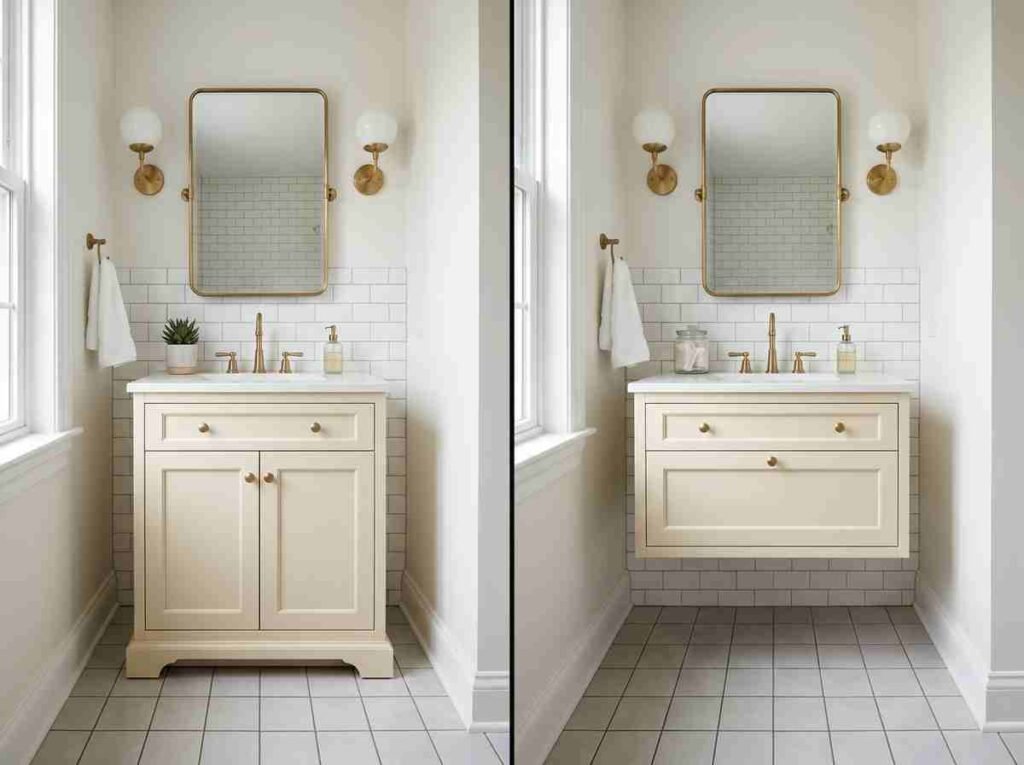
What’s actually the difference between a free standing bathroom vanity and a wall-mounted one, and which one should I choose? A free standing vanity rests directly on the floor, fully supported by its own base or legs, while a wall-mounted (or floating) vanity hangs entirely from the wall with no contact with the floor at all. Free standing vanities are generally easier to install, offer more storage since the full cabinet space down to the floor is usable, and tend to suit traditional or transitional bathrooms particularly well. Wall-mounted vanities create a more open, modern look and make cleaning the floor beneath easier, but they require stronger wall support and a more involved installation.
This is one of the most fundamental decisions in planning any bathroom vanity, and it’s worth settling before getting into style, wood type, or finish, since it affects the installation itself, the available storage, and how the whole room feels day to day. A free standing vanity is, in the simplest terms, exactly what it sounds like: a self-supporting cabinet that stands on the floor on its own, requiring no wall-mounted brackets or hidden structural support to hold its weight.
This guide covers what genuinely separates free standing from wall-mounted vanities, the honest pros and cons of each, installation basics, and the specific placement scenarios — against a wall, in an alcove, in a corner, or paired with open shelving — that come up most often when planning a real bathroom.
🔗 Choosing a style next? Read our Split Level House Kitchen Remodel Ideas and our antique style bathroom vanity guide for more.
Free Standing vs. Wall Mounted — The Honest Comparison
Free Standing Vanities
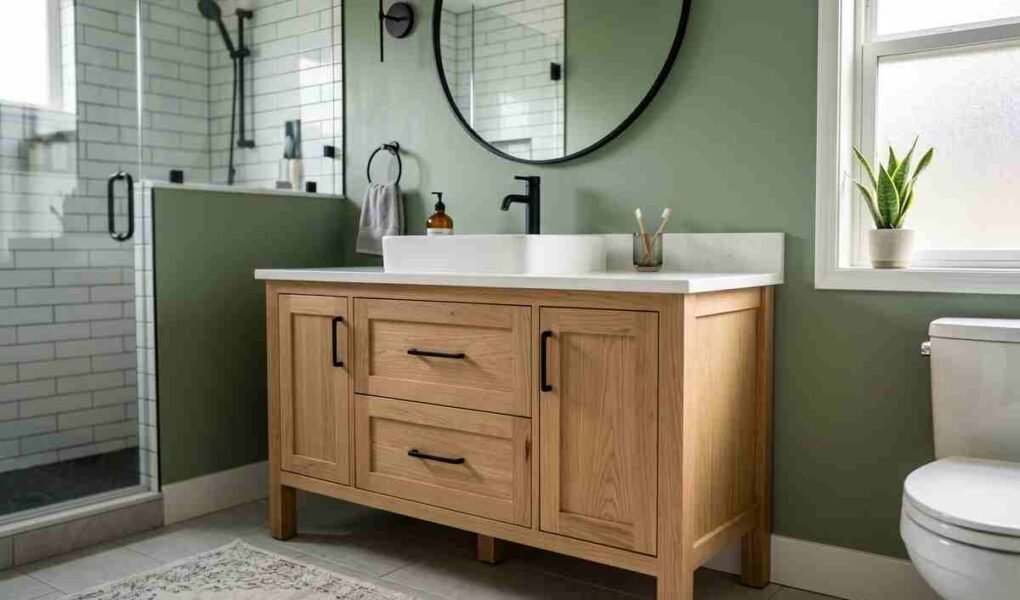
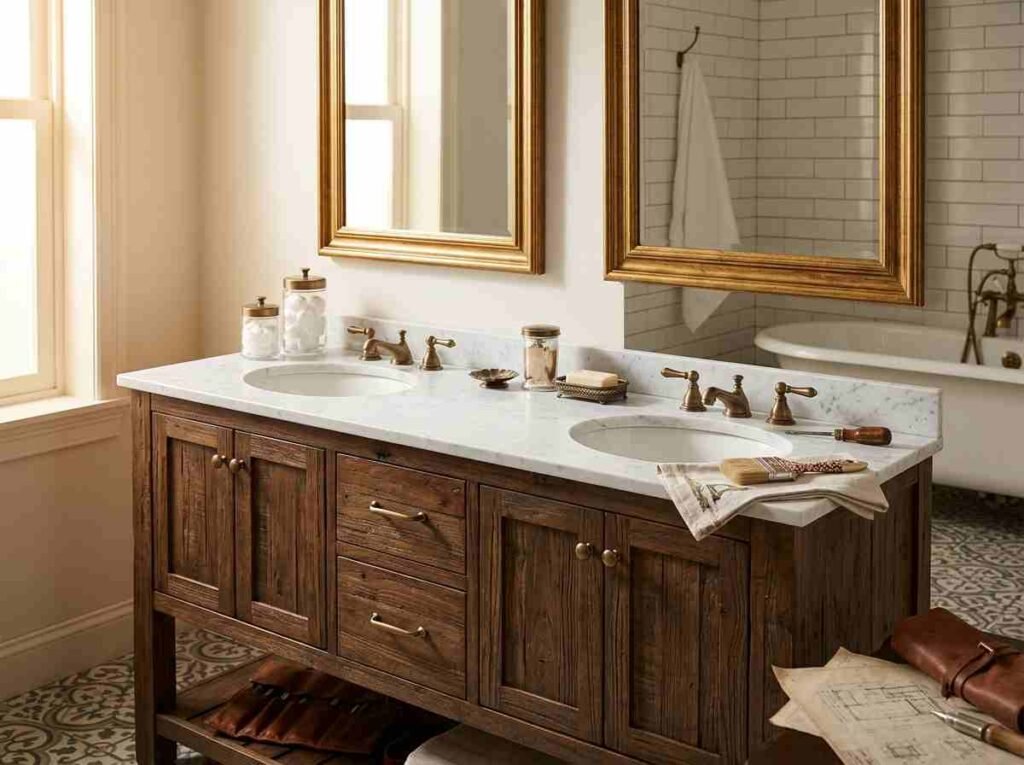
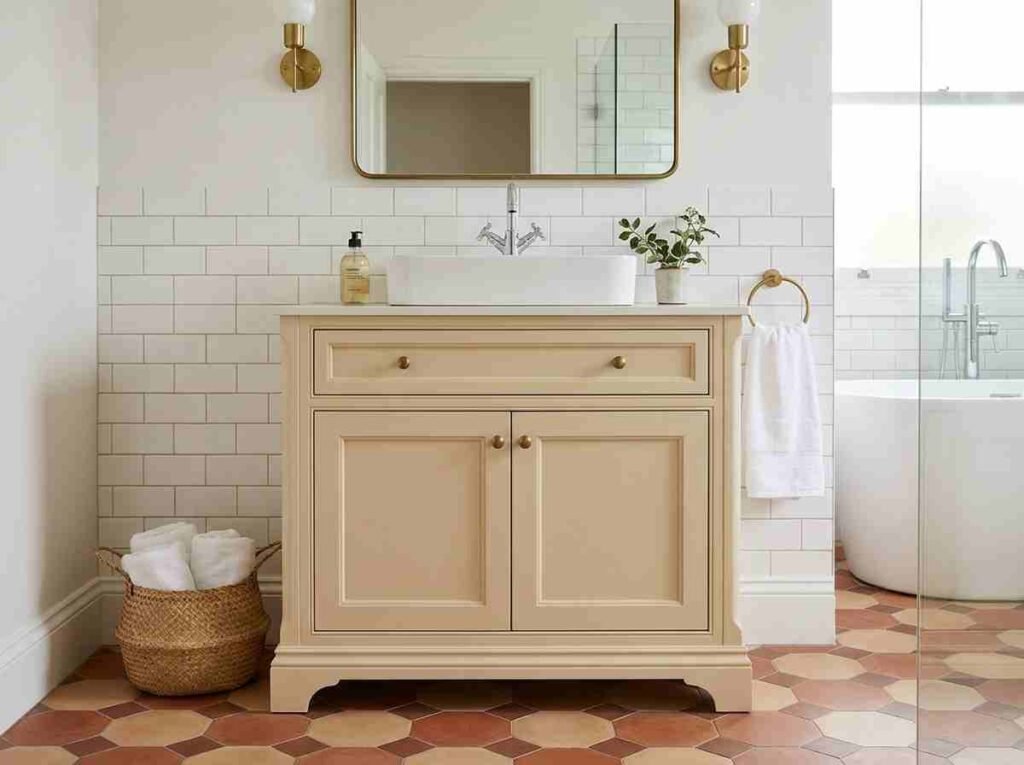
What they are. A self-supporting cabinet that rests on the floor on its own base or legs, requiring no hidden wall bracket or significant structural reinforcement to bear its weight.
The advantages. Installation is generally simpler and more forgiving, since the vanity doesn’t depend on precise wall blocking or a wall structure strong enough to carry its full weight. Storage tends to be more generous, since the entire cabinet down to the floor is usable space rather than being limited by a wall-mounting bracket’s load capacity. Free standing vanities also suit a wider range of bathroom styles particularly well, including traditional, transitional, and furniture-style designs where a substantial, grounded cabinet presence is part of the look.
The trade-offs. The floor beneath and around a free standing vanity needs regular cleaning, since dust and moisture can collect in the same way they would around any other floor-standing furniture. A free standing vanity also doesn’t offer the same illusion of additional floor space that a wall-mounted unit can create in a small bathroom.
You can also read Common Bathroom Vanity Sizes: The Complete Reference Guide
Wall-Mounted (Floating) Vanities
What they are. A vanity cabinet mounted entirely to the wall, with no part of the cabinet touching the floor, supported by a bracket system anchored into the wall structure.
The advantages. The visible floor space beneath the cabinet makes a bathroom, particularly a small one, feel more open and spacious, since the eye reads the uninterrupted floor as additional room. Cleaning beneath the vanity becomes a quick wipe rather than navigating around a floor-standing cabinet base.
The trade-offs. Installation is considerably more involved, requiring solid wall blocking installed at the correct height and location, ideally planned before the wall finish goes up, to safely support the vanity’s weight along with anything placed on top of it. Storage capacity is sometimes slightly reduced compared to an equivalent free standing cabinet, since the mounting bracket and wall connection take up some of the available internal space.
You can also read Standard Bathroom Vanity Depth: The Complete Dimension Guide
How to Install a Free Standing Bathroom Vanity
While considerably simpler than a wall-mounted installation, a free standing vanity still requires a few important steps to install properly and safely.
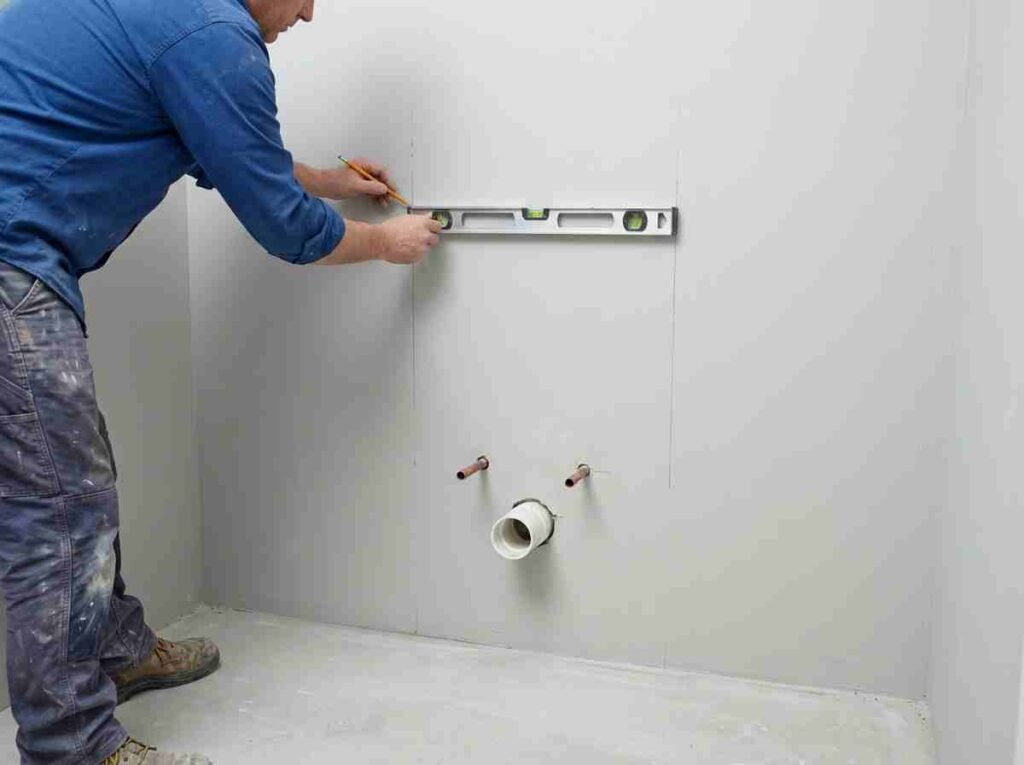
Step 1 — Confirm the floor is level. An uneven floor can cause a free standing vanity to rock or sit unevenly, which affects both its stability and how well doors and drawers operate over time. Use a level to check, and add shims beneath the base if needed to correct any unevenness before final placement.
Step 2 — Plan plumbing connections before final positioning. Confirm the water supply lines and drain are positioned correctly for the specific vanity and sink combination being installed, since free standing vanities still need to align precisely with existing or planned plumbing.
Step 3 — Secure the vanity to the wall for stability, even though it’s “free standing.” Most free standing vanities still benefit from a simple anti-tip bracket or a few screws securing the back of the cabinet to the wall, primarily to prevent the unit from shifting or tipping forward when drawers are opened or weight is placed unevenly on the countertop.
Step 4 — Install the countertop and sink, following the specific instructions for the chosen sink type, whether that’s a drop-in, undermount, or vessel configuration.
Step 5 — Connect the plumbing and check for leaks before considering the installation finished, running water through the supply lines and drain to confirm everything is properly sealed and functioning.
Placement Scenarios for Free Standing Vanities
Against a Standard Wall
The most common and most straightforward placement, requiring the vanity’s depth plus appropriate clearance space in front of it for comfortable use, in line with standard vanity clearance guidance.
In an Alcove or Recessed Space
A free standing vanity fitted into an existing alcove or recessed wall space can make excellent use of an otherwise awkward area, provided the alcove’s width and depth genuinely accommodate the vanity’s full dimensions, including any countertop overhang. Measuring carefully before purchase is particularly important here, since an alcove placement leaves far less room for adjustment than an open wall.
In a Corner
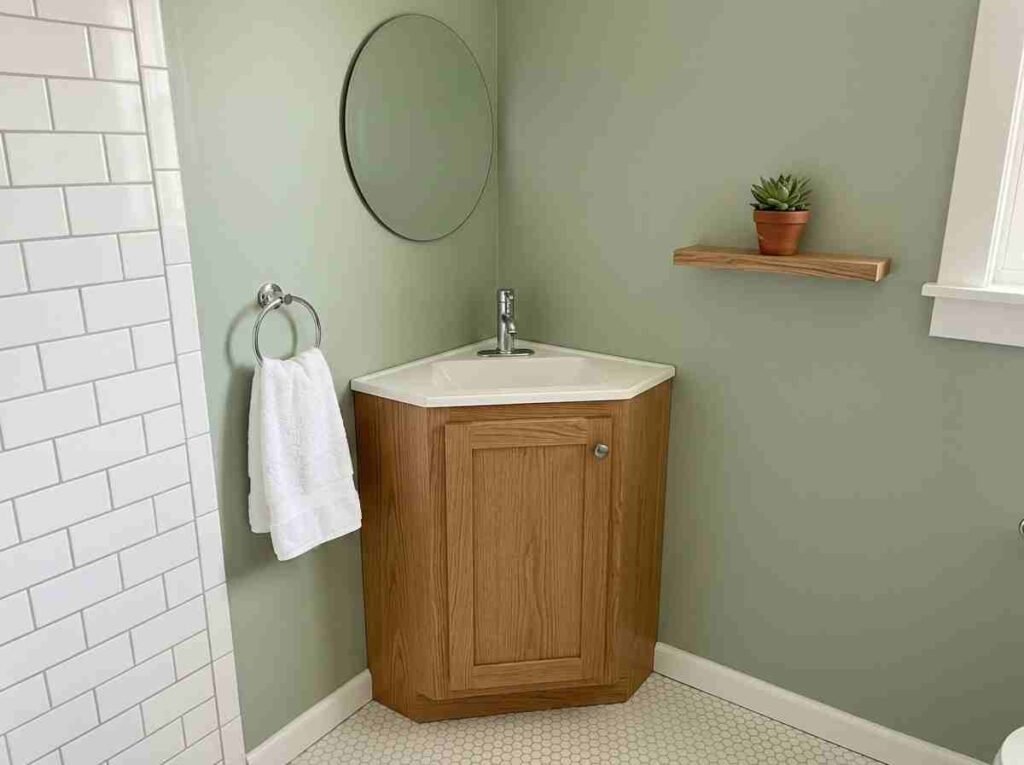
A vanity specifically designed with an angled or corner-oriented cabinet shape can make efficient use of a bathroom’s corner space, which is often otherwise wasted or awkward to furnish. This placement works particularly well in smaller bathrooms where a standard rectangular vanity wouldn’t fit comfortably along any single wall.
Paired With Open Shelving Beneath or Beside It
Even though a free standing vanity is, by definition, supported on the floor rather than mounted to the wall, many designs incorporate open shelving either within the cabinet itself or as an adjacent feature, providing visible storage for folded towels or baskets without sacrificing the floor-supported stability that defines the free standing category.
You can also read Gothic Bathroom Decor: The Complete Guide to Dark, Dramatic Elegance
Frequently Asked Questions
Q: What is the difference between a free standing and a wall-mounted bathroom vanity?
A: A free standing vanity rests directly on the floor on its own base or legs, while a wall-mounted, or floating, vanity hangs entirely from the wall with no floor contact at all. Free standing vanities are generally easier to install and offer more usable storage space, while wall-mounted vanities create a more open, spacious feeling in the room and make cleaning the floor beneath easier, at the cost of a more involved installation requiring solid wall support.
Q: Can a free standing bathroom vanity be placed against any wall?
A: In most cases, yes, as long as the wall has standard plumbing access and the floor is level or can be levelled with shims. The main consideration is ensuring adequate clearance space in front of the vanity for comfortable use, and confirming the wall and floor area can accommodate the vanity’s full footprint, including any countertop overhang.
Q: How do I install a free standing bathroom vanity?
A: Start by confirming the floor is level, using shims to correct any unevenness if needed. Plan and confirm plumbing connections align with the vanity and sink combination being installed. Most free standing vanities still benefit from being secured to the wall with a simple anti-tip bracket or a few screws for added stability, even though they’re primarily floor-supported. Finish by installing the countertop and sink, then connect the plumbing and check thoroughly for leaks before considering the installation complete.
Q: Is a free standing or wall-mounted vanity better for a small bathroom?
A: A wall-mounted vanity generally makes a small bathroom feel more open, since the visible floor space beneath it creates a sense of additional room that a floor-standing cabinet can’t replicate. However, a free standing vanity with a compact footprint, or one specifically designed for a corner placement, can also work very well in a small bathroom, particularly if the room’s layout doesn’t suit the more involved wall-mounting installation a floating vanity requires.
Q: Do free standing vanities still need to be secured to the wall?
A: Yes, in most cases. While a free standing vanity is primarily supported by the floor rather than the wall, securing the back of the cabinet to the wall with a simple bracket or a few screws is still good practice, primarily to prevent the unit from tipping or shifting when drawers are opened or weight is placed unevenly on the countertop surface.