Dark Academia Bedroom Furniture
Introduction
Walk into any dark academia bedroom that actually works, and the lighting and the colour palette are not what you notice first. It is the furniture — the bed frame that looks genuinely heavy, the desk that looks like someone actually uses it for serious work, the bookshelf that is full in the way that only happens over years rather than in an afternoon. Everything else in the room is atmosphere layered on top of those pieces. The dark academia bedroom furniture is the foundation, and everything decorative sits on it.
Most dark academia room guides spend the majority of their space on candles, maps, globes, and ambient lighting — treating the furniture as a passing bullet point about choosing dark wood. But a room with the right atmospheric lighting and the correct wall colour will still feel wrong if the bed frame is the wrong material, the desk is flimsy, or there is nowhere for the books that define the entire aesthetic to actually live. This guide is specifically about the furniture: what to choose, what to look for in vintage versus new pieces, the four furniture types that matter most, and what to prioritise when the budget is limited.
🔗 Looking for the full room concept? Read our feng shui home decorating guide and our economy home decor guide for more.
The Bed Frame — Where to Start
The bed is the single largest piece of furniture in any bedroom, and in a dark academia bedroom it sets the tone for everything else in the room more than any other single item.
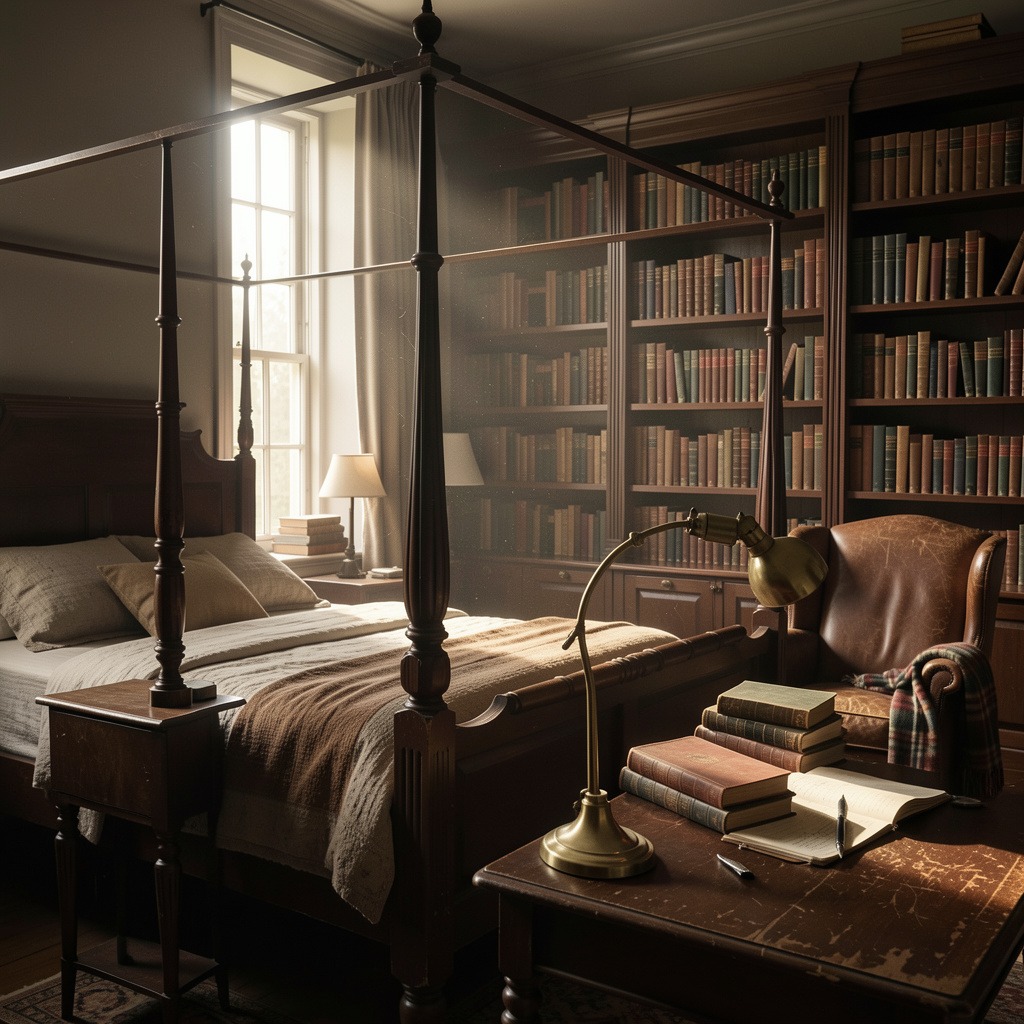
Material: Solid dark wood — mahogany, walnut, dark oak — is the defining choice. These woods carry genuine weight and presence, and their natural grain and colour deepen the room’s atmosphere without requiring anything else to be added. Avoid light woods (pine, birch, light oak) and avoid metal frames entirely; both undercut the aesthetic regardless of what else is in the room.
Frame style: A four-poster bed frame is the most immersive and most immediately recognisable dark academia choice, evoking dormitories in centuries-old institutions of learning. A four-poster doesn’t need a full canopy to work — even bare posts add the right scale and silhouette to the room. For smaller bedrooms where a full four-poster is impractical, a substantial sleigh bed or a simple panelled headboard in dark wood achieves a similar grounded, weighty feeling without the same footprint.
Dark academia canopy beds: A canopy — heavy fabric draped across the top of a four-poster frame — is the most dramatic version of this look. Deep burgundy, forest green, or charcoal canopy fabric in velvet or heavy cotton creates an enclosed, cocoon-like sleeping space that feels genuinely transportive. This is a striking choice but works best in bedrooms with adequate ceiling height and floor space; in smaller rooms a canopy can feel overwhelming rather than atmospheric.
Imperfection is an asset, not a flaw. Pieces with some wear actually make the room feel more authentic — perfectly polished new furniture can feel suspiciously new in a style built entirely on the suggestion of age and history. A few scratches or a slightly uneven patina on a wood frame are not flaws to hide; they are part of what makes the piece convincing.
You can also read Gothic Home Decor on a Budget: The Complete Affordable Dark Aesthetic Guide
Dark Academia Bedding — Building the Layers
Once the frame is settled, the bedding is what makes the bed itself feel cozy, layered, and inviting rather than simply dark.
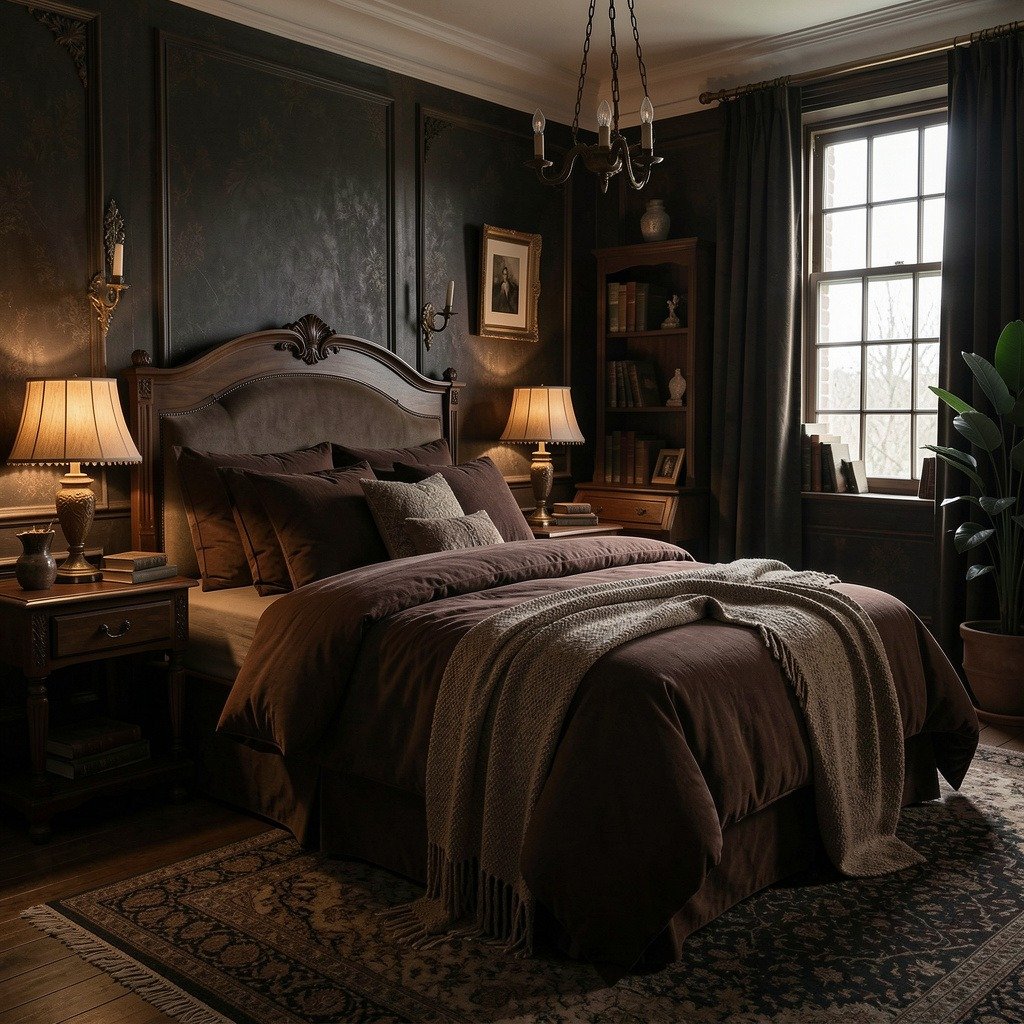
The base layer: A neutral or warm-toned fitted sheet and duvet cover — ivory, warm beige, or taupe — gives the bed somewhere to start that won’t fight with darker accent layers. Pairing neutral bedding with darker accent pillows and vintage-inspired throws is a popular and effective modern approach, since it prevents the bed from reading as one flat block of darkness.
The accent layer: This is where the deep, signature dark academia colours come in — burgundy, forest green, charcoal, or deep brown — through a duvet cover, a folded blanket at the foot of the bed, or a cluster of cushions. Textured fabrics (velvet, corduroy, heavy-weave cotton) read as considerably more dark-academia than smooth, glossy fabrics.
The texture layer: Layering different textures is what makes the bed feel cozy and genuinely lived-in rather than simply styled. A knit throw, a velvet cushion, and a leather-look bolster together create depth that a single matching bedding set cannot achieve alone.
Dark academia bed sheets specifically: Look for sheets in a heavier weight cotton or a cotton-linen blend rather than the lightest, glossiest options — a slightly heavier, more textured weave suits the aesthetic’s overall sense of substance and age far better than anything that reads as crisp or modern.
You can also read Preppy Living Room Ideas: How to Get the Look (Even on Zero Budget)
The Desk — A Non-Negotiable Piece
No dark academia bedroom is complete without a proper desk, since the aesthetic is fundamentally about the suggestion of serious study and intellectual pursuit — and a desk is where that suggestion becomes physically real in the room.
Material and style: A solid wood desk, ideally with some visible age or at least the appearance of it, is far more effective than anything sleek or modern. Old wooden desks with worn surfaces or original brass hardware are exactly what to look for at flea markets and antique stores, where genuinely vintage pieces are often more affordable than new furniture trying to imitate the same look.
Size: The desk does not need to be large — a narrow secretary desk or a compact writing table works perfectly in smaller bedrooms, and a smaller desk that’s genuinely used reads as more authentic than an oversized one that’s purely decorative.
Desk hardware and styling: Decorate the desk with vintage-inspired accessories — a desk lamp with a fabric or glass shade, a fountain pen, a small stack of books, a leather blotter — so it looks like a place where someone actually works rather than a styled prop.
You can also read Gothic Furniture Guide: The Best Dark & Dramatic Pieces for Every Room
The Bookshelf — The Heart of the Room
A bookshelf acts as the heart of a dark academia bedroom, and a full shelf instantly creates the intellectual, library-like atmosphere the entire aesthetic is built around.
What to look for: A tall, solid wood bookshelf — ideally floor-to-ceiling or close to it — in the same dark wood family as the bed frame and desk. Open shelving (rather than glass-fronted cabinets) is essential, since the visible spines of the books themselves are doing much of the aesthetic work.
Quantity matters more than arrangement: No dark academia space exists without the hallowed presence of more books than you could read in a lifetime. A half-empty shelf undermines the whole look regardless of how good the shelf itself is; a genuinely full shelf works even if the shelf itself is simple and inexpensive.
Where books fit if you don’t have many yet: Stack a smaller starting collection horizontally in groups rather than spreading them thinly across a large shelf, and fill the remaining space with the other small objects associated with the aesthetic — vintage globes, small framed prints, a clock — until the collection grows.

Seating — The Reading Chair
Every dark academia bedroom benefits from a proper chair — a place to lose oneself in literature, distinct from the bed itself.
Best materials: Worn leather is the most iconic choice, evoking old study and library furniture more directly than any other material. A leather wingback chair, even a modestly sized one, anchors a corner of the room with genuine presence. Where leather isn’t practical or affordable, a dark velvet or corduroy upholstered armchair achieves a similar weight and warmth.
Placement: Position the chair near the window where possible, so it doubles as a reading spot during the day with natural light, and add a small side table beside it for a lamp, a candle, and whatever book is currently being read.
The finishing layer: A tartan or knit throw draped over one arm, and a small stack of books on the floor beside the chair, complete the look far more convincingly than the chair alone.
You can also read Gothic Bathroom Decor: The Complete Guide to Dark, Dramatic Elegance
Materials Guide — What to Actually Look For
| Material | Best Use | Why It Works |
|---|---|---|
| Walnut / mahogany | Bed frame, desk, bookshelf | Deep, rich tone; reads as substantial and aged |
| Worn leather | Reading chair, desk accessories | Iconic library/study association; ages beautifully |
| Brass | Lamps, desk hardware, frames | Warm metal tone; doesn’t compete with dark wood |
| Velvet | Curtains, cushions, canopy fabric | Absorbs rather than reflects light; excellent texture |
| Heavy cotton / cotton-linen | Bed sheets, throws | Substantial weight and texture over modern glossy fabrics |
| Aged parchment tones | Globes, maps, prints | Genuine vintage character without needing true antiques |
Where to Buy — Vintage vs New
For genuine vintage furniture: Estate sales, flea markets, and antique stores consistently offer better character and often better prices than big box retailers trying to imitate the look. A well-worn desk or chair found this way typically has more convincing presence than a brand-new piece designed to look old. Mixing different eras thoughtfully — rather than buying an entire matching “dark academia” furniture set — creates a more eclectic, genuinely collected feeling.
For new furniture built for the look: Most major furniture retailers now carry dark wood bed frames, desks, and bookshelves with traditional detailing that work well for this aesthetic, even if they aren’t marketed specifically as “dark academia.” Look for solid wood construction rather than veneer, and avoid anything with very clean, minimal modern lines regardless of the wood tone.
For bedding specifically: Dark academia bedding sets are now widely available from both large retailers and smaller Etsy sellers specialising in the aesthetic, ranging from affordable printed sets to higher-end solid velvet and cotton options.
Budget guidance for new vintage-look reproduction furniture vs genuine vintage:
| Piece | New (reproduction) | Genuine Vintage / Estate Sale |
|---|---|---|
| Bed frame (queen, solid wood) | $400–$1,200 | $150–$600 |
| Desk | $150–$500 | $40–$250 |
| Bookshelf (floor-to-ceiling) | $200–$600 | $60–$300 |
| Reading chair (leather or velvet) | $300–$900 | $80–$400 |
| Bedding set | $50–$150 | N/A (buy new for hygiene) |
Modern Dark Academia Bedroom Furniture
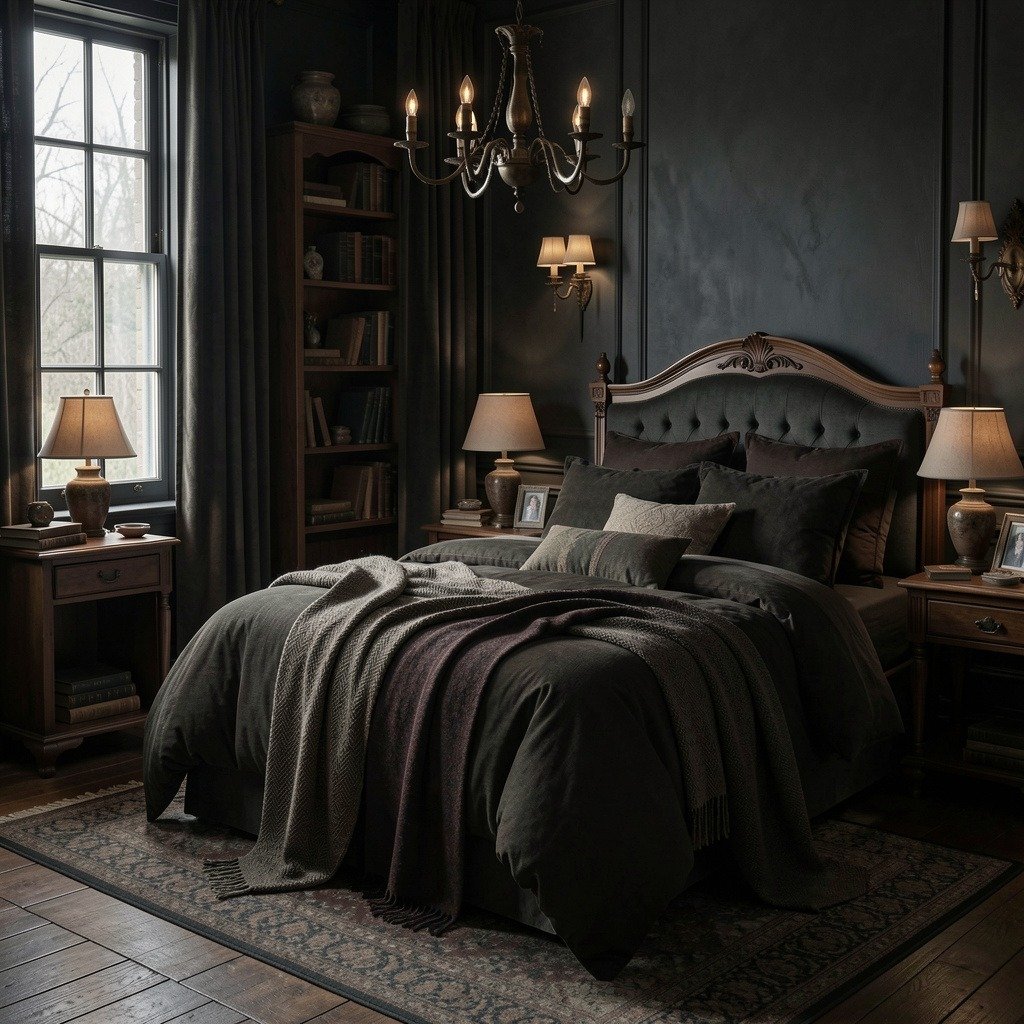
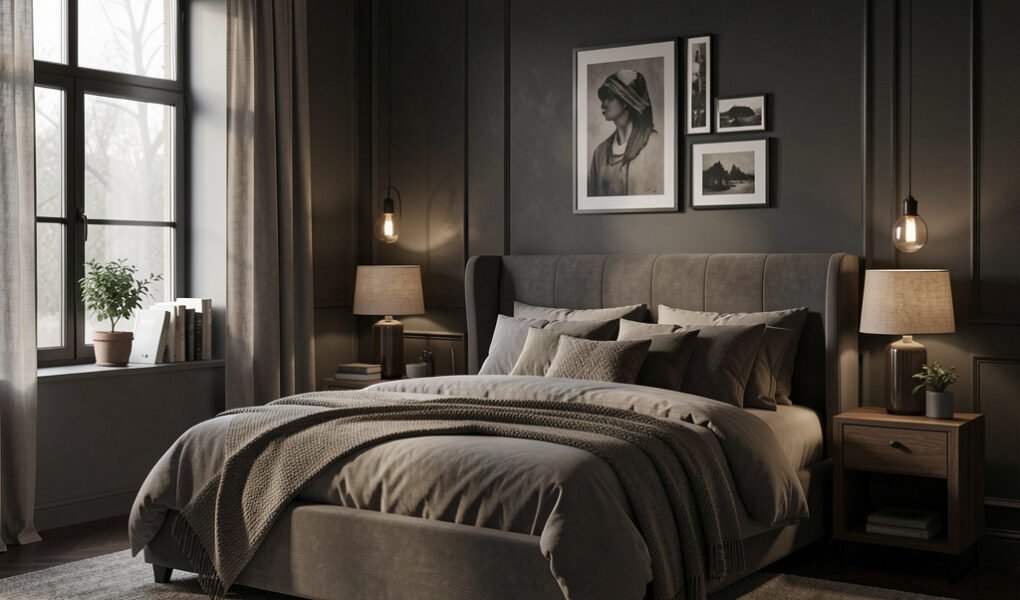
For a modern dark academia bedroom rather than a fully maximalist, antique-filled one, the furniture principles stay the same but the execution is more restrained: clean dark walls, soft lighting, and one strong piece of furniture or artwork rather than many competing objects. A single substantial wood bed frame, one well-chosen chair, and a smaller, more curated bookshelf can achieve the aesthetic without the room feeling busy or overly dense — this works well in smaller bedrooms where a fully maximalist version would feel cramped rather than cozy.
You can also read Light Academia vs Dark Academia Bedroom: The Complete Decor Guide
Frequently Asked Questions
Q: What furniture do I need for a dark academia bedroom?
A: At minimum, four pieces: a substantial dark wood bed frame, a writing desk, a bookshelf large enough to look genuinely full, and one upholstered reading chair, ideally in leather or dark velvet. These four pieces establish the room’s foundation; decorative details like candles, globes, and vintage frames are layered on top once the furniture itself is right.
Q: What is the best bed frame for a dark academia bedroom?
A: A four-poster bed frame in solid dark wood — mahogany, walnut, or dark oak — is the most immersive and recognisable choice, evoking old university dormitories. For smaller bedrooms, a sleigh bed or a substantial panelled headboard in the same dark wood achieves a similar grounded feeling without the same footprint. Avoid light woods and metal frames, which undercut the aesthetic regardless of styling.
Q: Should I buy vintage or new furniture for a dark academia bedroom?
A: Genuine vintage furniture from estate sales, flea markets, and antique stores often has more convincing character and is frequently more affordable than new furniture designed to imitate the same look. That said, well-made new furniture in solid dark wood with traditional detailing works perfectly well, particularly for the bed frame and bookshelf. Many people achieve the best result by mixing a few genuine vintage pieces (a desk, a chair) with new furniture for larger items like the bed.
Q: What colours should dark academia bedding be?
A: A neutral or warm-toned base (ivory, warm beige, taupe) for the sheets and duvet cover, layered with accent pieces — a cushion, a folded throw — in the signature dark academia colours of burgundy, forest green, charcoal, or deep brown. This combination prevents the bed from reading as one flat block of darkness while still delivering the aesthetic’s signature colour palette through texture and layering.
Q: Can a small bedroom still achieve the dark academia furniture look?
A: Yes. Choose a smaller-scale sleigh bed or panelled headboard instead of a full four-poster, a compact writing desk or secretary desk instead of a large table, and a more curated, smaller bookshelf rather than a floor-to-ceiling one. The same materials and colour principles apply regardless of room size — what changes is simply the scale of each piece, not the underlying approach.
🔗 Continue building your dark academia space — read our Dark Boho Bedroom Ideas That Are Moody, Cozy and Budget Friendly and our Cozy Farmhouse Bedroom Ideas That Feel Like a Warm Hug Every Single Morning for more.