There is a particular kind of frustration that comes from a drawer that starts sticking after eighteen months, or a mirror that develops a slight wobble at the mounting point, or a surface that chips at the corner from nothing more than a hairbrush being set down the same way it has been set down every morning for two years. Budget makeup vanities do all of these things. Solid wood ones almost never do.
The difference is not just about material quality in the abstract — it is about what a makeup vanity actually goes through in daily use. Drawers opened and closed hundreds of times a year. A mirror that needs to stay firmly mounted under its own weight. A surface that gets products set on it, wiped down, and leaned on every single morning without exception. Particleboard and thin veneer handle this kind of repetitive mechanical stress poorly over time. Solid wood handles it almost without complaint, and can be sanded, refinished, or repaired if something does go wrong, rather than simply replaced.
A makeup vanity also sits in a bedroom rather than a bathroom, which changes the wood selection criteria entirely. Moisture resistance — the primary concern for a bathroom vanity — barely matters here. What matters instead is structural strength, drawer construction quality, and the kind of finish that stays looking good under daily handling rather than one that photographs well and deteriorates quickly.
This guide covers the wood types that actually suit this application, lighting and mirror options worth knowing, how to size a vanity for a bedroom or dressing area, drawer and storage configurations, and where in a room a makeup vanity works best.
Why Wood Choice Is Different for a Makeup Vanity Than a Bathroom Vanity
A bathroom vanity has to survive genuine, repeated exposure to splashing water, steam, and ongoing humidity. A makeup vanity, sitting in a bedroom or dressing room, faces none of that — which changes the priority list for wood selection considerably.
Moisture resistance matters far less here than in a bathroom. This opens up a wider, often more affordable range of wood choices, since species that would be a poor bathroom choice perform perfectly well in a dry bedroom environment.
Durability under daily mechanical use matters more. Drawers opening and closing thousands of times over the life of the piece, the weight of a mounted mirror, and the vanity surface itself being leaned on and used constantly are the real stresses a makeup vanity needs to handle well, rather than water exposure.
Aesthetic consistency with bedroom furniture matters more too. Since a makeup vanity typically lives in or near a bedroom rather than a bathroom, matching or complementing existing bedroom furniture finishes becomes a bigger consideration than it would be for a standalone bathroom fixture.
The Best Woods for a Solid Wood Makeup Vanity
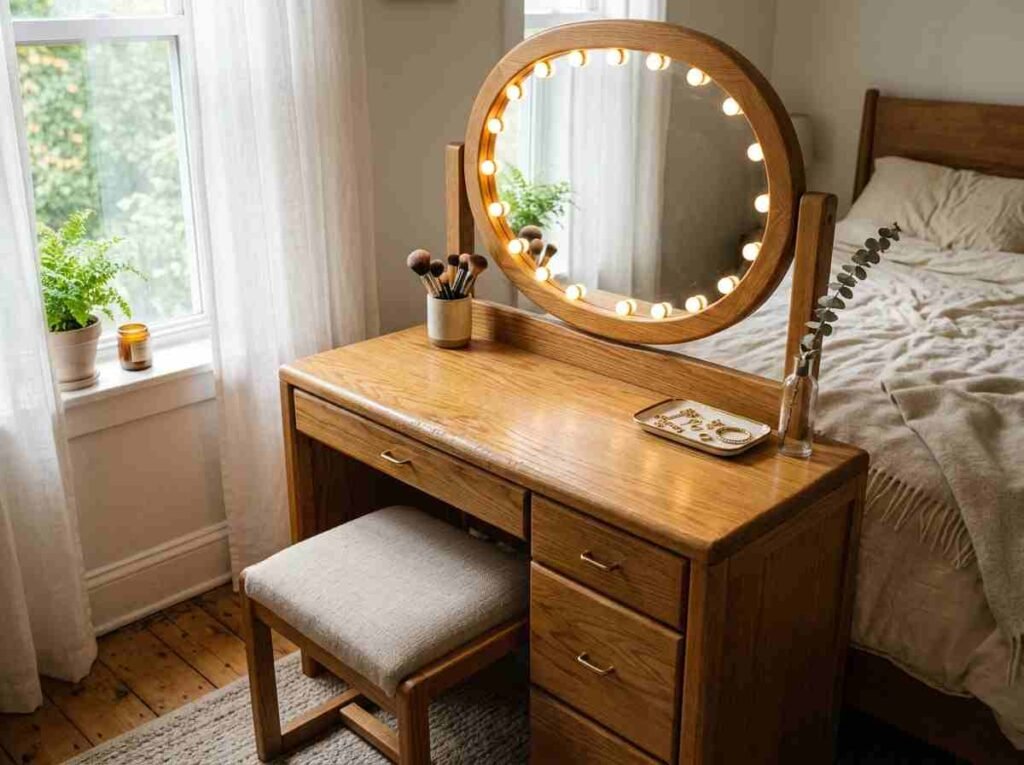
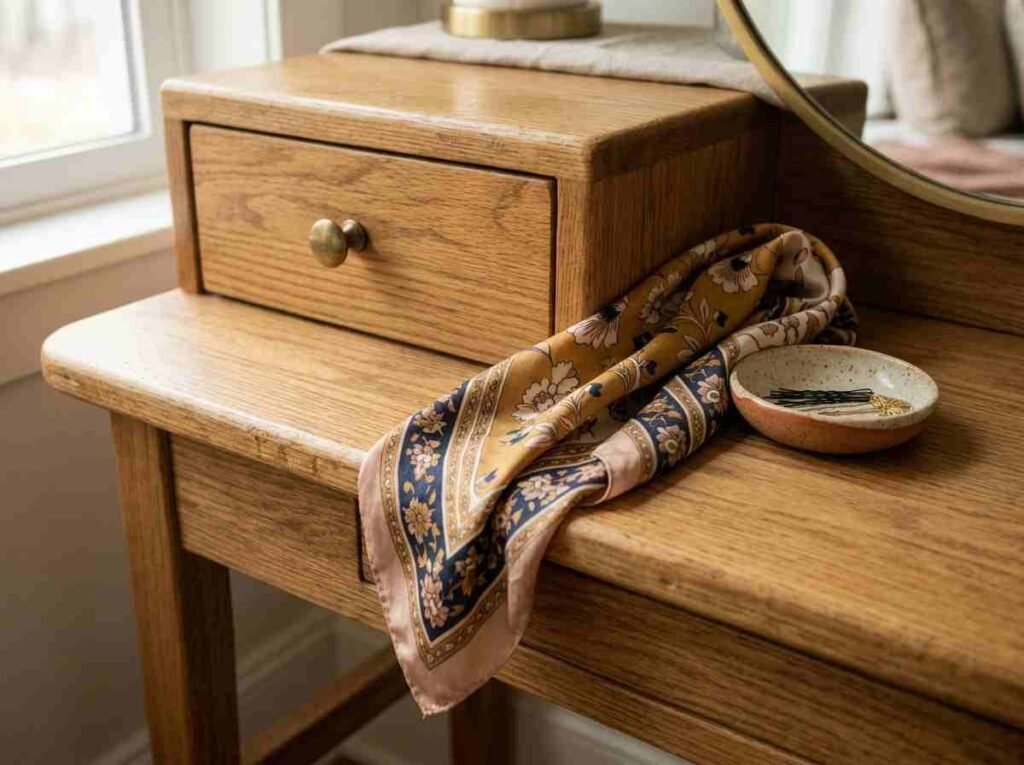
Oak. A widely available, durable hardwood with a distinctive, often prominent grain pattern, oak is one of the most popular choices for makeup vanities specifically because it pairs easily with a huge range of bedroom furniture styles, from traditional to contemporary.
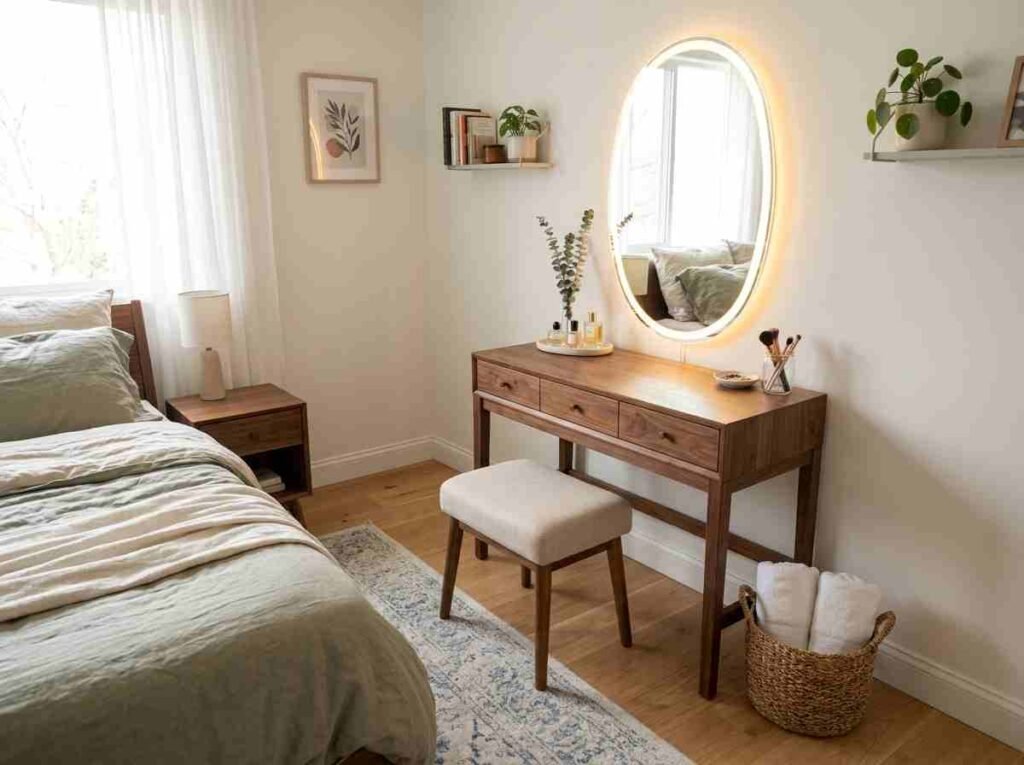
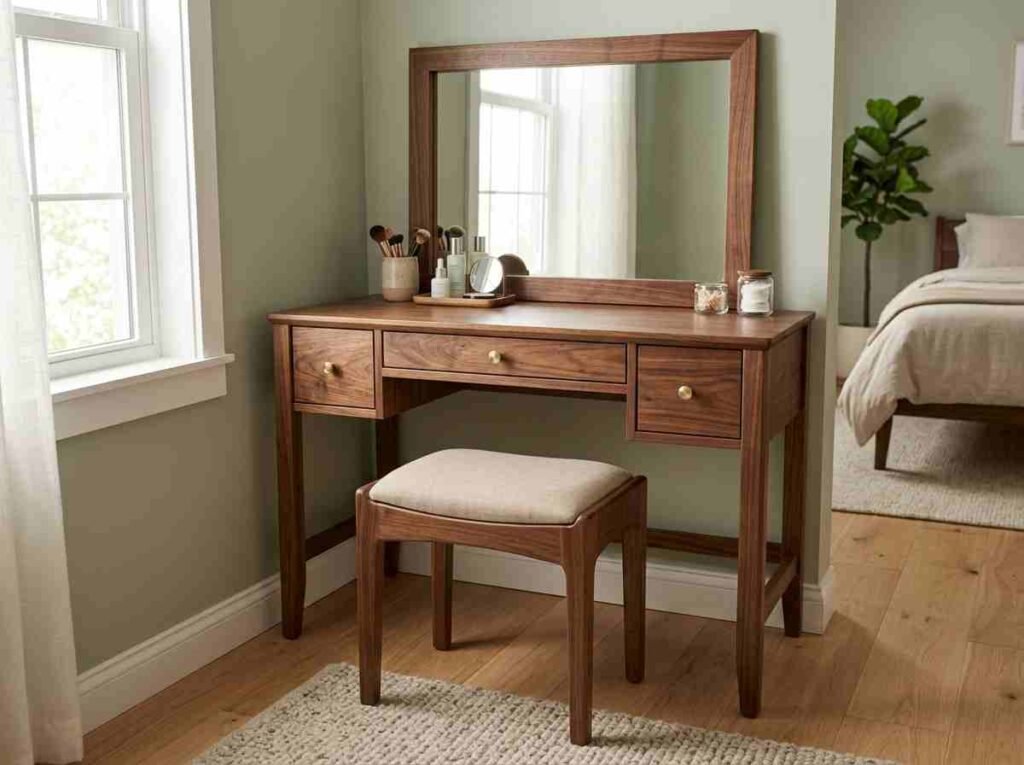
Walnut. A rich, dark-toned wood that brings warmth and a sense of quality to a dressing area, walnut is a particularly popular choice for a more formal or luxurious-feeling vanity, and its dark tone hides everyday marks and dust well between cleanings.
Maple. A pale, fine-grained hardwood that suits a lighter, more contemporary bedroom aesthetic. Maple is also notably strong and resistant to wear, making it a sound practical choice beneath its lighter visual appearance.
Pine. A more affordable softwood option, pine is workable and takes paint or a light stain well, though it marks and dents somewhat more easily than the hardwoods above under heavy daily use. A reasonable choice for a more rustic or farmhouse-style vanity where some surface character over time is part of the appeal rather than a flaw.
Birch. A pale, smooth-grained hardwood that offers a clean, contemporary look at a typically lower cost than oak or walnut, performing well under regular use in a dry bedroom environment.
Lighting is arguably the single most important functional feature of a makeup vanity, since accurate, even light is essential for applying makeup well, and it’s worth treating as seriously as the wood and construction quality of the piece itself.
Built-In Lighted Mirrors
A vanity with a lighted mirror built directly into its frame — typically a row of small bulbs running around the mirror’s edge — provides the most consistent, even illumination directly where it’s needed, without requiring a separate lamp or additional furniture.
Bulb colour temperature matters enormously. Warm white bulbs (around 2700–3000K) are generally most flattering and most similar to how makeup will actually appear under typical indoor lighting elsewhere, while cooler, bluer light can distort how colours read on the skin.
Dimmable options offer real practical value, allowing the light level to be adjusted depending on the time of day and the natural light already available in the room.
Standalone Mirror With Separate Lighting
For a vanity without a built-in lighted mirror, a separate mirror — either freestanding, wall-mounted, or supplied with the vanity as an attached but unlit panel — paired with table lamps positioned on either side provides a similar quality of even, flattering light, achieved through furniture and lighting choices made independently of the vanity itself.
Mirror Shape and Size
A larger mirror, generally at least 24 to 30 inches in either dimension, provides a more complete view for makeup application and hair styling than a small mirror designed mainly for a quick check. Oval and round mirror shapes are particularly popular pairings with solid wood vanities, softening the otherwise rectangular lines of the desk and drawers beneath.
Sizing for a Bedroom or Dressing Area
Standard desk height. Most solid wood makeup vanities sit at a standard desk height of around 28 to 30 inches, comfortable for use with a coordinating stool or chair.
Width considerations. Compact vanities start around 24 to 30 inches wide, suitable for a smaller bedroom corner, while more generous vanities with additional drawer space commonly run 40 to 48 inches or more, providing a fuller working surface and more storage.
Depth. A genuinely useful working surface typically needs at least 16 to 18 inches of depth, enough to comfortably hold makeup, brushes, and any styling tools without feeling cramped, while still leaving knee clearance beneath for a stool.
Clearance for the stool or chair. Beyond the vanity’s own footprint, allow enough floor space in front of it, generally a minimum of 24 to 30 inches, for a stool or chair to be pulled out and used comfortably.
Single wide drawer. The simplest configuration, offering one shallow drawer beneath the desk surface, suited to a smaller vanity or someone with relatively few makeup and styling items to store.
Multiple stacked drawers. Two or three drawers stacked on one or both sides of the desk provide considerably more organised storage, useful for separating makeup, hair tools, and jewellery into distinct, easily accessible sections.
Drawers with built-in organisers. Some solid wood vanities include drawers fitted with dividers specifically sized for makeup palettes, brushes, and smaller items, reducing the need for separate storage trays or organisers placed inside a plain drawer.
Open shelving alongside drawers. A vanity combining drawers with an open shelf, either beneath the desk or to one side, offers a place for items used daily and wanted within easy reach, such as a hairdryer or a frequently used skincare product, without needing to open a drawer.
Where a Makeup Vanity Fits Best
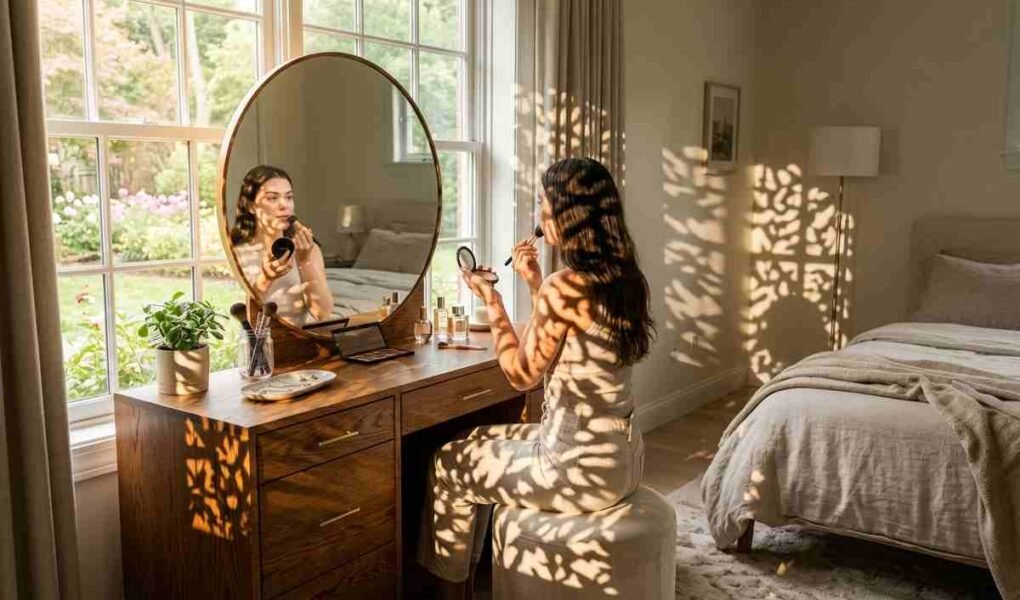
Bedroom corner. The most common placement, typically positioned near a window to take advantage of natural light during the day, supplemented by the vanity’s own lighting in the evening.
A dedicated dressing room or walk-in closet. Where space allows, positioning the vanity within a dressing room keeps the getting-ready routine separate from the rest of the bedroom, and allows the vanity to sit alongside wardrobe storage for a more complete dressing area.
A converted nook or alcove. An underused corner, an awkward alcove, or even a section of a hallway with adequate space can work well for a compact vanity, making productive use of space that might otherwise go unused.
Q: Is solid wood worth it for a makeup vanity, or is veneer fine?
A: For a piece of furniture used daily over many years, solid wood generally holds up better to the repeated mechanical stress of drawers opening and closing, the weight of a mounted mirror, and ongoing surface use than veneer over particleboard or MDF. Since a makeup vanity doesn’t face the same humidity challenges as a bathroom vanity, the decision comes down primarily to durability and longevity rather than moisture resistance, and solid wood reliably wins on both fronts for a piece intended to last.
Q: What is the best wood for a makeup vanity?
A: Oak and walnut are the two most popular choices, offering durability and a grain or tone that pairs easily with a wide range of bedroom furniture styles. Maple is a strong, pale alternative suited to lighter, more contemporary bedrooms, while birch offers a similar clean look at a typically lower cost. Pine is a more affordable softwood option that works well for a rustic or farmhouse-style vanity but marks more easily under heavy daily use than the hardwood options.
Q: What size makeup vanity do I need for a small bedroom?
A: A compact vanity in the 24 to 30 inch width range suits most small bedroom corners, paired with a stool that can be tucked fully underneath when not in use to minimise the overall footprint. Ensure at least 24 to 30 inches of clear floor space in front of the vanity for the stool to be pulled out and used comfortably, even in a tight space.
Q: Should I choose a vanity with a built-in lighted mirror?
A: A built-in lighted mirror is generally the most convenient option, providing consistent, even illumination directly where it’s needed without requiring separate lamps or additional furniture. Warm white bulbs in the 2700 to 3000K range tend to be the most flattering and the most representative of how makeup will look under typical indoor lighting elsewhere, and a dimmable option adds useful flexibility for different times of day.
Q: How many drawers does a makeup vanity actually need?
A: This depends entirely on how much you need to store, but two to three drawers is a common and practical middle ground, enough to separate makeup, hair tools, and smaller accessories like jewellery into distinct sections without requiring an oversized piece of furniture. A single wide drawer can suffice for someone with a more minimal collection, while drawers with built-in organisers are worth considering for anyone with a larger makeup collection who wants everything to stay genuinely organised rather than jumbled together.
Meta Title: Solid Wood Makeup Vanity — The Complete Buying Guide 2026 Meta Description: The complete guide to choosing a solid wood makeup vanity — wood types, lighting and mirror options, sizing for a bedroom, drawer configurations, and where it fits best. Slug: /solid-wood-makeup-vanity/ Pinterest Description: Solid Wood Makeup Vanity — the complete buying guide 💄 Best wood types, lighting and mirror options, sizing for a bedroom, and drawer configurations. Save this!
Sufian Ahmed
Home decor enthusiast and founder of astheticdecor.com. Passionate about helping people create beautiful, personalised aesthetic rooms on any budget. Covering romantic, dark academia, kawaii, gothic, coquette and every aesthetic in between.