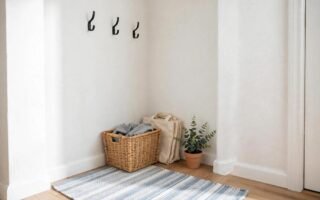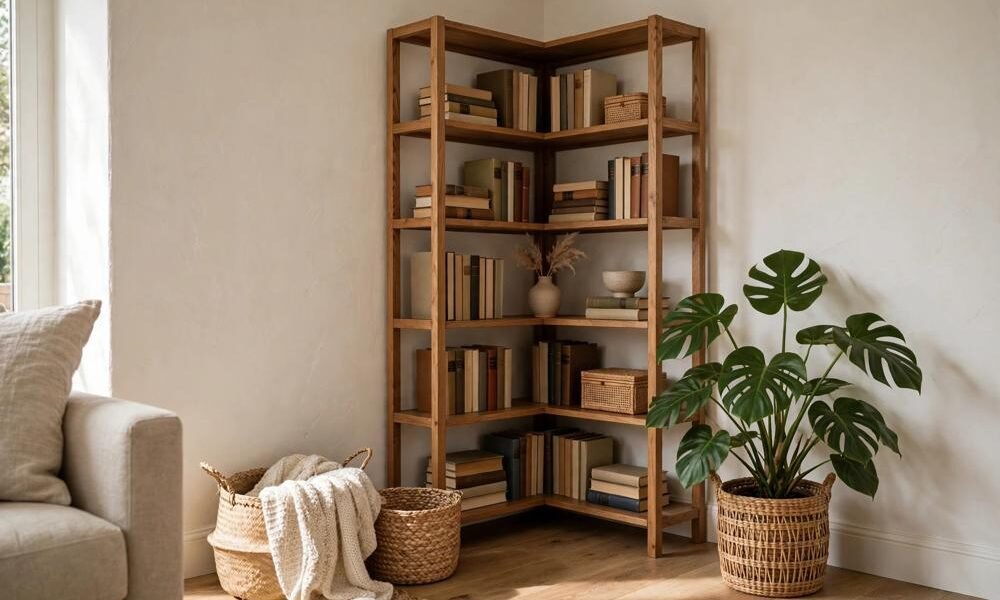
Corner storage for each room, in a small home, means choosing a different corner solution, for each room, rather than forcing one solution, into every room, because each room, has a different job, a different number of items, and a different amount of space, and a solution, that works, in a living room, may not work, in a kitchen, or a bathroom, however good it looks, in a photograph, and a solution, that works, in a bedroom, may not work, in a hallway, or a children’s room, however good it looks, in a photograph. This guide does not repeat the corner bookshelf guide, or the shelf styling guide, which are linked below, and which should not be repeated, here, because those guides, already cover bookshelves, and shelf styling, in detail, for a corner, and this guide, covers each room, as a whole, with a corner solution, that matches the room, its job, and its items, rather than a solution, that is cheapest, or that looks best, in a photograph, but does not match, the room, job, or items. For a corner entryway, see the corner entryway pillar, which is linked below, and which covers entryway corners, in detail, for a tight corner, rather than repeating it, here. All measurements in this guide are in inches and cm, as approximate ranges only, and sizes vary by product, so check listings before you buy, and measure your corner first, as in the measuring guide in this series.
Key takeaways
- Choose a corner solution, by room, not by product, so a living room, a bedroom, a kitchen, a bathroom, a hallway, and a children’s room, each get a solution, that matches the room, its job, and its items.
- Use a corner unit, with a width, approximately 24 to 36 inches, 60 to 90 cm, per side, for most small rooms, and with a depth, approximately 12 to 24 inches, 30 to 60 cm, so a unit, fits, without blocking a walkway, a door, or a seating area.
- Keep heavy items low, light items high, and display items at eye level, approximately 48 to 60 inches, 120 to 150 cm, from the floor, for most adults, so a unit is stable, not top heavy, and easy to use.
- Anchor a tall corner unit, safely, using manufacturer hardware and weight limits, with studs or rated anchors, and with landlord permission before drilling, because a tall unit tips more easily than a wide low unit.
- Keep exits, door swings, and walkways clear at all times, with a walkway, of approximately 30 to 36 inches, 75 to 90 cm, as a comfort guide, not a building code, so you can walk past, easily, even when baskets are pulled out, and doors are open.
- Measure width, depth, height, door swing, and walkway, in inches and cm, with tape on the floor, before you buy, and live with a layout for a week, then adjust one thing at a time.
Living Room and Bedroom Corner Storage
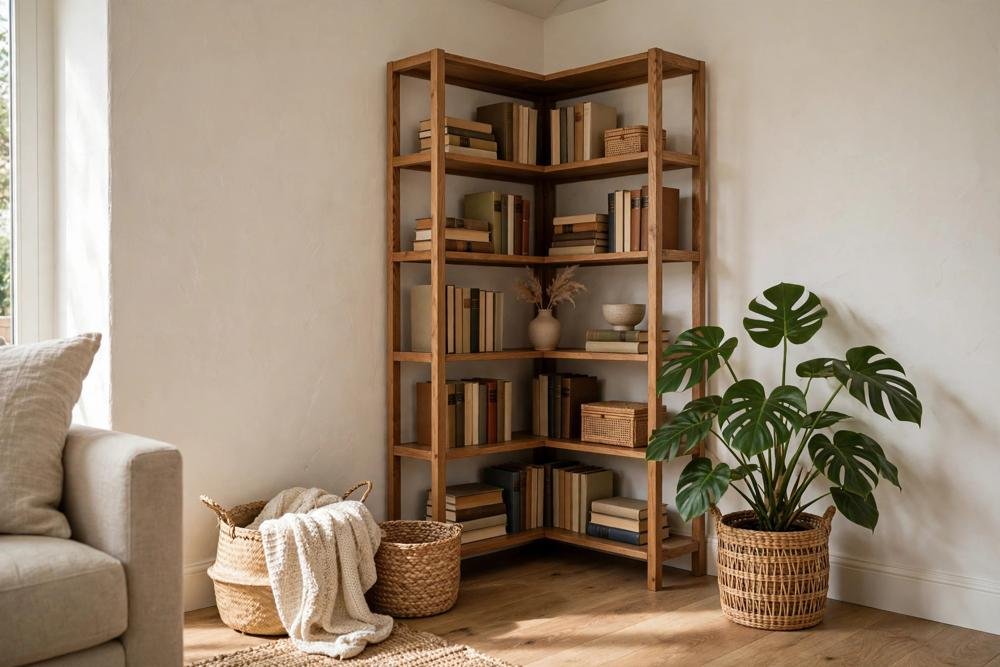
Living room corner storage, for a small home, uses a corner bookshelf, a narrow storage unit, a floating shelf, or a cube unit, in a corner, with books, baskets, and display, so a living room, can hold books, games, and media, without a wide unit, blocking the room, every day, and without a pile, on a coffee table, or a sofa, where items will be forgotten, rather than in a corner unit, where they can be found, quickly, without searching. Use a corner bookshelf, for books, and display, as in the corner bookshelf guide, and as in the shelf styling guide, which keep heavy low, and light high, so the unit is stable, not top heavy, and use a cube unit, for baskets, one per cube, labelled, so each person, or each type of item, has a place, and so cubes can be rearranged, without moving a whole unit, as in the cube layouts guide, and use a floating shelf, for display, as in the floating shelves versus bookcases guide, which anchors floating shelves, safely, using manufacturer hardware and weight limits, with studs or rated anchors, and with landlord permission before drilling, and use a narrow storage unit, for a corner, that is too narrow, for a wide unit, as in the narrow storage guide, which fits a tall narrow unit, in a corner, without blocking a walkway, a door, or a seating area.
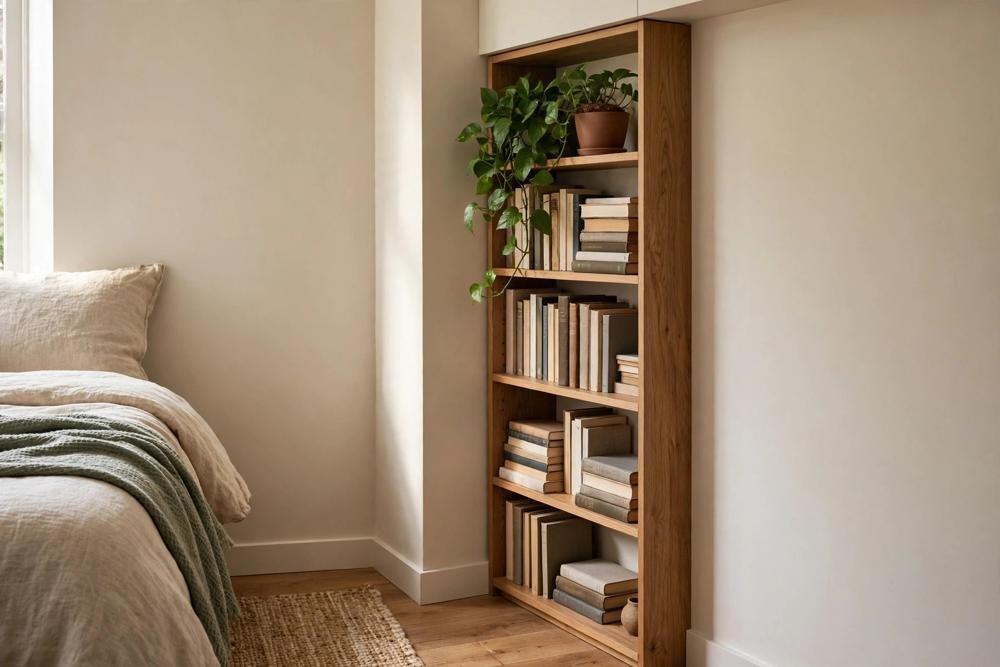
Bedroom corner storage, for a small home, uses a narrow storage unit, a cube unit, or a floating shelf, in a corner, with clothes, books, and supplies, so a bedroom, can hold clothes, books, and supplies, without a wide unit, blocking the room, every day, and without a pile, on a bed, a chair, or a floor, where items will be forgotten, rather than in a corner unit, where they can be found, quickly, without searching, in the morning, when time is short, and at night, when light is low. Use a narrow storage unit, for a bedroom corner, that is too narrow, for a wide unit, with baskets, for clothes, books, and supplies, labelled, so each person, or each type of item, has a place, and use a cube unit, for baskets, one per cube, labelled, so a child, or an adult, can find a basket, by label, or by picture, for children, who cannot read, yet, as in the cube layouts guide, and use a floating shelf, for display, as in the floating shelves versus bookcases guide, which anchors floating shelves, safely, using manufacturer hardware and weight limits, with studs or rated anchors, and with landlord permission before drilling, and use a corner desk, for a bedroom, only as in the bedroom desk guide, which is linked below, and which should not be repeated, here, because a bedroom desk, has a different job, a different room, and a different checklist, than a living room desk, as in the corner desk guide, which is linked below, and which covers a living room corner desk, in detail.
Avoid a living room, or bedroom, corner unit, that is too wide, too deep, or too tall, for the corner, because it will block a walkway, a door, or a seating area, and it will make the room feel cramped, even if it is tidy, and avoid a tall unit, that is not anchored, safely, because it will fall, and hurt a child, a pet, or an adult, however sturdy it looks, and avoid a unit, with baskets, that have no label, because baskets, that have no label, will become a pile, of small items, that are never found, because they are hidden, in a basket, that has no label, and no job, and avoid a unit, that blocks a walkway, a door swing, or an exit route, when it is used, or when baskets are pulled out, because it is a safety problem, not just a tidy problem, and it must be moved, however tidy it looks, and however much you want it, in that corner.
Kitchen, Bathroom, and Hallway Corner Storage
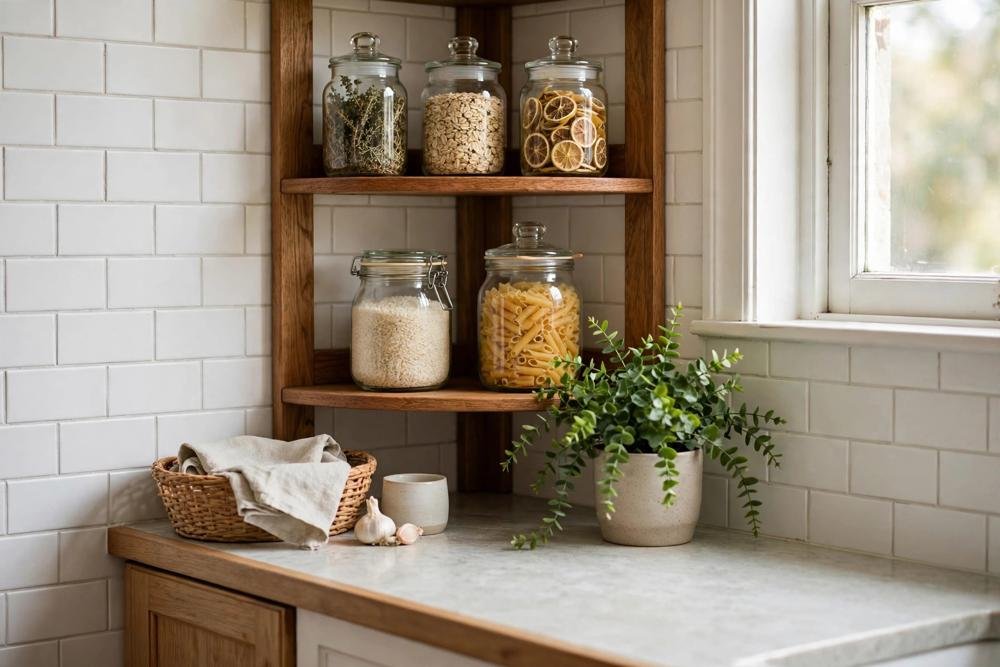
Kitchen corner storage, for a small home, uses a corner shelf, a narrow storage unit, or a wall mounted shelf, in a corner, with jars, spices, and supplies, so a kitchen, can hold jars, spices, and supplies, without a wide unit, blocking the room, every day, and without a pile, on a counter, or a table, where items will be forgotten, rather than in a corner unit, where they can be found, quickly, without searching, when cooking, when time is short, and when hands are busy. Use a corner shelf, for jars, spices, and supplies, with a shelf, that is easy to clean, because a kitchen shelf, gets dirty, from cooking, and from spills, and a shelf, that is hard to clean, will become dirty, however tidy it starts, and use a narrow storage unit, for a kitchen corner, that is too narrow, for a wide unit, with baskets, for supplies, labelled, so each type of item, has a place, and use a wall mounted shelf, for display, as in the floating shelves versus bookcases guide, which anchors floating shelves, safely, using manufacturer hardware and weight limits, with studs or rated anchors, and with landlord permission before drilling, and keep a kitchen corner unit, away from a stove, a sink, a socket, or a walkway, because a unit, that is too close, to a stove, a sink, a socket, or a walkway, is a safety problem, not just a tidy problem, and it must be moved, however tidy it looks.
Bathroom corner storage, for a small home, uses a corner shelf, a narrow storage unit, or a wall mounted shelf, in a corner, with towels, toiletries, and supplies, so a bathroom, can hold towels, toiletries, and supplies, without a wide unit, blocking the room, every day, and without a pile, on a sink, a toilet, or a floor, where items will be forgotten, rather than in a corner unit, where they can be found, quickly, without searching, in the morning, when time is short, and at night, when light is low. Use a corner shelf, for towels, toiletries, and supplies, with a shelf, that is easy to clean, and that can handle moisture, because a bathroom shelf, gets wet, from showers, and from splashes, and a shelf, that cannot handle moisture, will warp, stain, or fail, however tidy it starts, and use a narrow storage unit, for a bathroom corner, that is too narrow, for a wide unit, with baskets, for towels, toiletries, and supplies, labelled, so each type of item, has a place, and use a wall mounted shelf, for display, as in the floating shelves versus bookcases guide, which anchors floating shelves, safely, using manufacturer hardware and weight limits, with studs or rated anchors, and with landlord permission before drilling, and keep a bathroom corner unit, away from a socket, a switch, a walkway, or a door swing, because a unit, that blocks a socket, a switch, a walkway, or a door swing, is a safety problem, not just a tidy problem.
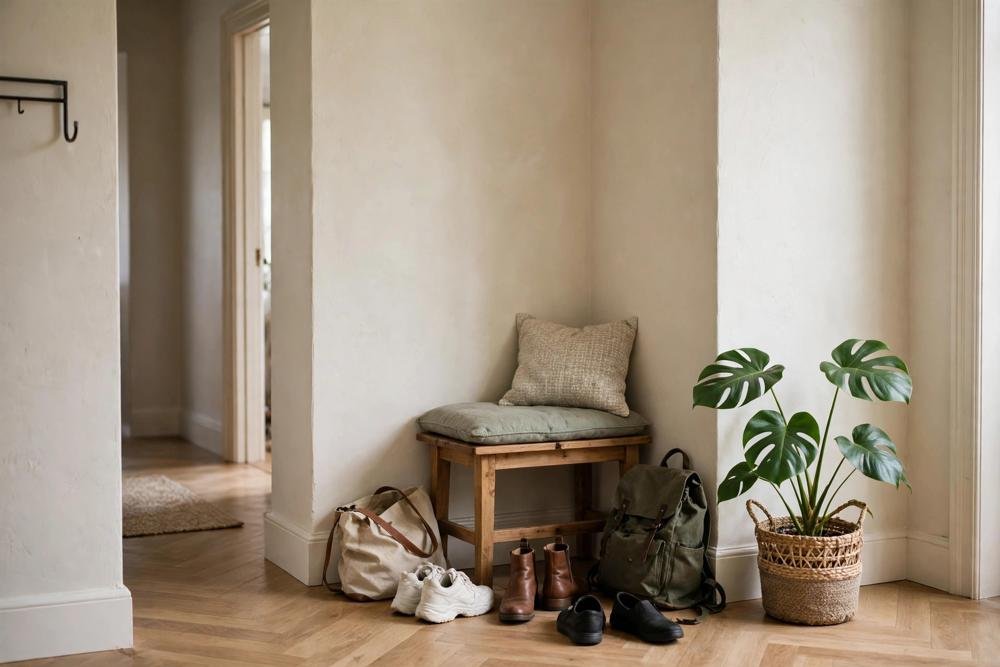
Hallway corner storage, for a small home, uses a low cube unit, a narrow storage unit, or a corner bench, in a hallway corner, with shoes, bags, and keys, so a hallway, can hold shoes, bags, and keys, without a pile, on a floor, and without a wide unit, blocking the walkway, and with a walkway clear, approximately 30 to 36 inches, 75 to 90 cm, as a comfort guide, so you can walk past, easily, even when bags are on a unit, and shoes are in baskets, underneath, and so you can get out, easily, even in the dark, and so a door can open fully, without hitting the unit, or a basket, as in the corner entryway pillar, which covers entryway corners, in detail, for a tight corner, and as in the cube layouts guide, which uses a low cube unit, as a bench, in a corner, or entryway, with a cushion, on top, so the unit, can be sat on, when putting on shoes, or bags, and with baskets, underneath, for shoes, bags, or toys, so a corner, can be a seat, and storage, at the same time, without a separate bench, and a separate storage unit, blocking the room, every day.
Kids, Dining, and Work Corner Storage
Kids corner storage, for a small home, uses a cube unit, a low bench, or a narrow storage unit, in a children’s corner, with toys, books, and supplies, so a children’s room, can hold toys, books, and supplies, without a wide unit, blocking the room, every day, and without a pile, on a bed, a chair, or a floor, where items will be forgotten, rather than in a corner unit, where they can be found, quickly, without searching, when a child, wants a toy, a book, or a light, without help. Use a cube unit, for baskets, one per cube, labelled, by picture, for children, who cannot read, yet, so a child, can find a basket, by picture, rather than by word, and so a basket, that is labelled, by picture, will be used, by a child, every day, rather than ignored, because a child, cannot read, the label, as in the cube layouts guide, and use a low bench, for a children’s corner, with a cushion, on top, so the unit, can be sat on, when putting on shoes, or bags, and with baskets, underneath, for toys, books, or supplies, and anchor a tall unit, safely, using manufacturer hardware and weight limits, with studs or rated anchors, and with landlord permission before drilling, because a tall unit, that is not anchored, will fall, and hurt a child, a pet, or an adult, however sturdy it looks, and place a unit, with climbing, in mind, especially in a family home, because a unit, that can be climbed, is a risk, not just a storage unit, and it must be anchored, and placed, with climbing, in mind, as in the anchoring guide, in this series, to follow, when it is published.
Dining corner storage, for a small home, uses an expandable dining table, a space saving table, or a narrow storage unit, in a corner, with tableware, and supplies, so a dining corner, can hold tableware, and supplies, without a wide unit, blocking the room, every day, and without a pile, on a table, or a floor, where items will be forgotten, rather than in a corner unit, where they can be found, quickly, without searching, when setting a table, for a meal, or for guests. Use an expandable dining table, for a dining corner, as in the expandable dining tables guide, which expands, when needed, for guests, and folds, when not needed, for daily use, and use a space saving table, for a dining corner, as in the tables compared guide, which compares space saving tables, for small homes, and corners, and use a narrow storage unit, for a dining corner, that is too narrow, for a wide unit, with baskets, for tableware, and supplies, labelled, so each type of item, has a place, and use a corner shelf, for display, as in the floating shelves versus bookcases guide, which anchors floating shelves, safely, using manufacturer hardware and weight limits, with studs or rated anchors, and with landlord permission before drilling.
Work corner storage, for a small home, uses a corner desk, a wall mounted desk, or a fold down desk, in a corner, with a laptop, a notebook, and a lamp, so a work corner, can hold a laptop, a notebook, and a lamp, without a wide unit, blocking the room, every day, and without a pile, on a coffee table, or a sofa, where items will be forgotten, rather than at a desk, where they can be found, quickly, without searching, when work, or study, is needed. Use a corner desk, for a living room work corner, as in the corner desk guide, which covers a living room corner desk, in detail, with sizes, chair space, storage, lighting, cable safety, and renter options, and use a bedroom desk, for a bedroom work corner, as in the bedroom desk guide, which is linked below, and which should not be repeated, here, because a bedroom desk, has a different job, a different room, and a different checklist, than a living room desk, and use storage, above, or beside, the desk, with floating shelves, or cube storage, so a desk, stays tidy, without a pile, on the desk, and without a pile, on a sofa, or a floor, where items will be forgotten, as in the cube layouts guide, and as in the floating shelves versus bookcases guide.
What to Avoid With Corner Storage per Room
Avoid a corner unit, that is too wide, too deep, or too tall, for the corner, because it will block a walkway, a door, or a seating area, and it will make the room feel cramped, even if it is tidy, and avoid a corner unit, that is not anchored, if it is tall, or narrow, because it will fall, and hurt a child, a pet, or an adult, however sturdy it looks, and avoid a corner unit, that is overloaded, because a corner unit, that is overloaded, will sag, bow, or fail, and items, that are overloaded, will fall, when a basket is pulled, or a unit is moved, and avoid a corner unit, with baskets, that have no label, because baskets, that have no label, will become a pile, of small items, that are never found, because they are hidden, in a basket, that has no label, and no job.
Avoid a corner solution, that is forced, into every room, because each room, has a different job, a different number of items, and a different amount of space, and a solution, that works, in a living room, may not work, in a kitchen, or a bathroom, however good it looks, in a photograph, and avoid a corner solution, that repeats a bookshelf guide, or a shelf styling guide, in full, because those guides, already cover bookshelves, and shelf styling, in detail, for a corner, and this guide, covers each room, as a whole, with a corner solution, that matches the room, its job, and its items, rather than a solution, that is cheapest, or that looks best, in a photograph, but does not match, the room, job, or items, and avoid a corner solution, that blocks a walkway, a door swing, or an exit route, when it is used, or when baskets are pulled out, because it is a safety problem, not just a tidy problem, and it must be moved, however tidy it looks, and however much you want it, in that corner, when it is used, or when baskets are pulled out, for use, and avoid a corner solution, that is placed, in a corner, where a child can climb it, to reach a window, a shelf, or a light, without supervision, because a corner unit, that can be climbed, is a risk, not just a storage unit, and it must be anchored, and placed, with climbing, in mind, especially in a family home.
Checklist: Corner Storage per Room Without Waste
- Measure the corner, the wall, and the walkway, width, depth, height, door swing, and walkway, in inches and cm, with tape on the floor, for the unit, and for the walkway, before you buy.
- Choose a corner solution, by room, not by product, so a living room, a bedroom, a kitchen, a bathroom, a hallway, and a children’s room, each get a solution, that matches the room, its job, and its items.
- Use a corner unit, with a width, approximately 24 to 36 inches, 60 to 90 cm, per side, for most small rooms, and with a depth, approximately 12 to 24 inches, 30 to 60 cm, so a unit, fits, without blocking a walkway, a door, or a seating area.
- Use one basket, per cube, labelled, so each person, or each type of item, has a place, and so cubes can be rearranged, without moving a whole unit.
- Keep heavy items low, light items high, and display items at eye level, approximately 48 to 60 inches, 120 to 150 cm, from the floor, for most adults, so a unit is stable, not top heavy, and easy to use.
- Anchor a tall corner unit, safely, using manufacturer hardware and weight limits, with studs or rated anchors, and with landlord permission before drilling, and check anchoring regularly, especially after moving furniture.
- Keep exits, door swings, and walkways clear at all times, with a walkway of approximately 30 to 36 inches, 75 to 90 cm, as a comfort guide, and check at night and in daylight, with doors open and baskets pulled out.
- Use baskets, that are easy to carry, easy to clean, and easy to label, with a handle, that is easy to grip, so a basket can be taken out, used, and put back, without help.
- Live with the layout for a week, then adjust one thing at a time, rather than buying a full storage set on day one, and avoid a solution, that is too wide, too deep, too tall, or too small, for the corner, or the job.
Conclusion
Corner storage for each room, in a small home, works when you choose a corner solution, by room, not by product, so a living room, a bedroom, a kitchen, a bathroom, a hallway, and a children’s room, each get a solution, that matches the room, its job, and its items, use a corner unit, with a width, approximately 24 to 36 inches, 60 to 90 cm, per side, for most small rooms, and with a depth, approximately 12 to 24 inches, 30 to 60 cm, so a unit, fits, without blocking a walkway, a door, or a seating area, keep heavy items low, light items high, and display items at eye level, anchor a tall corner unit, safely, using manufacturer hardware and weight limits, with studs or rated anchors, and with landlord permission before drilling, and keep exits, door swings, and walkways clear at all times. A corner unit, that is chosen, by room, with baskets, one per cube, labelled, will feel intentional, not crammed, and will make items easy to find, without pulling out a whole unit, and will make a corner feel like a tidy corner, not just a storage unit, and will be used, every day, without worry, and without tipping, even if a child pulls on it, or a pet jumps on it, because the unit is anchored, and balanced, with heavy low, and light high.
Use the guides in this series for each type and job: awkward corner pillar, corner bookshelf, expandable dining tables, measuring a corner, shelf styling, tables compared, narrow storage, anchoring, floating shelves versus bookcases, cube layouts, and corner desk, each with its own measurements, safety, and styling, so you can choose the right type for each corner, rather than forcing one type into every corner, and so you can choose, a solution, that matches your corner, your job, and your room, rather than a solution, that is cheapest, or that looks best, in a photograph, but does not match, your corner, job, or room. Done that way, corner storage will feel intentional, tidy, and easy to use, in a living room, a bedroom, a kitchen, a bathroom, a hallway, or a children’s room, without waste, damage, or a large piece that does not fit. For a corner entryway, which is a different job, in a different corner, see the corner entryway pillar, linked below, rather than repeating it, here.
Related reading
- Awkward Corner Ideas for Every Room in a Small Home
- Corner Bookshelf Ideas for Small Spaces and Awkward Corners
- Expandable Dining Tables for Small Spaces and Corners
- How to Measure a Corner for Furniture in a Small Home
- Corner Shelf Styling Ideas for Small Spaces and Bookshelves
- Space Saving Tables Compared for Small Homes and Corners
- Narrow and Slim Storage Ideas for Small Corners
- Floating Shelves vs Bookcases for Small Corners
- Cube Storage Layouts for Small Corners and Rooms
- Corner Desk and Work Nook Ideas for Small Living Rooms
- Desk in a Small Bedroom
- Corner Entryway Ideas for a Tight Corner
- Rug Calculator
- How to Anchor Bookshelves Safely, in this series, to follow.
Frequently Asked Questions
What corner storage works best for a living room?
Use a corner bookshelf, for books, and display, as in the corner bookshelf guide, and as in the shelf styling guide, which keep heavy low, and light high, so the unit is stable, not top heavy, and use a cube unit, for baskets, one per cube, labelled, so each person, or each type of item, has a place, and so cubes can be rearranged, without moving a whole unit, as in the cube layouts guide, and use a floating shelf, for display, as in the floating shelves versus bookcases guide, which anchors floating shelves, safely, using manufacturer hardware and weight limits, with studs or rated anchors, and with landlord permission before drilling, and use a narrow storage unit, for a corner, that is too narrow, for a wide unit, as in the narrow storage guide, which fits a tall narrow unit, in a corner, without blocking a walkway, a door, or a seating area.
What corner storage works best for a bedroom?
Use a narrow storage unit, for a bedroom corner, that is too narrow, for a wide unit, with baskets, for clothes, books, and supplies, labelled, so each person, or each type of item, has a place, and use a cube unit, for baskets, one per cube, labelled, so a child, or an adult, can find a basket, by label, or by picture, for children, who cannot read, yet, as in the cube layouts guide, and use a floating shelf, for display, as in the floating shelves versus bookcases guide, which anchors floating shelves, safely, using manufacturer hardware and weight limits, with studs or rated anchors, and with landlord permission before drilling, and use a corner desk, for a bedroom, only as in the bedroom desk guide, which is linked below, and which should not be repeated, here, because a bedroom desk, has a different job, a different room, and a different checklist, than a living room desk.
What corner storage works best for a kitchen?
Use a corner shelf, for jars, spices, and supplies, with a shelf, that is easy to clean, because a kitchen shelf, gets dirty, from cooking, and from spills, and a shelf, that is hard to clean, will become dirty, however tidy it starts, and use a narrow storage unit, for a kitchen corner, that is too narrow, for a wide unit, with baskets, for supplies, labelled, so each type of item, has a place, and use a wall mounted shelf, for display, as in the floating shelves versus bookcases guide, which anchors floating shelves, safely, using manufacturer hardware and weight limits, with studs or rated anchors, and with landlord permission before drilling, and keep a kitchen corner unit, away from a stove, a sink, a socket, or a walkway, because a unit, that is too close, to a stove, a sink, a socket, or a walkway, is a safety problem, not just a tidy problem.
What corner storage works best for a bathroom?
Use a corner shelf, for towels, toiletries, and supplies, with a shelf, that is easy to clean, and that can handle moisture, because a bathroom shelf, gets wet, from showers, and from splashes, and a shelf, that cannot handle moisture, will warp, stain, or fail, however tidy it starts, and use a narrow storage unit, for a bathroom corner, that is too narrow, for a wide unit, with baskets, for towels, toiletries, and supplies, labelled, so each type of item, has a place, and use a wall mounted shelf, for display, as in the floating shelves versus bookcases guide, which anchors floating shelves, safely, using manufacturer hardware and weight limits, with studs or rated anchors, and with landlord permission before drilling, and keep a bathroom corner unit, away from a socket, a switch, a walkway, or a door swing, because a unit, that blocks a socket, a switch, a walkway, or a door swing, is a safety problem, not just a tidy problem.
Can renters use corner storage without drilling?
Yes, renters can use a floor unit, or a fold down desk, with adhesive, only where the manufacturer allows it, and only within the adhesive weight limit, and should check the adhesive, regularly, because adhesive, that is overloaded, or old, will fail, and a unit, that is held, by adhesive, alone, will fall, when adhesive fails, however good it looks, on day one. Renters should get landlord permission, before drilling, in any rented home, because drilling, without permission, can breach a tenancy, and can cause a charge, for repair, when you move out, however small the hole looks, and however good the unit looks.
What should I avoid with corner storage per room?
Avoid a corner unit, that is too wide, too deep, or too tall, for the corner, because it will block a walkway, a door, or a seating area, and avoid a corner unit, that is not anchored, if it is tall, or narrow, and avoid a corner unit, that is overloaded, or with baskets, that have no label, because baskets, that have no label, will become a pile, of small items, that are never found, because they are hidden, in a basket, that has no label, and no job. Avoid a corner solution, that is forced, into every room, because each room, has a different job, a different number of items, and a different amount of space, and avoid a corner solution, that blocks a walkway, a door swing, or an exit route, because it is a safety problem, not just a tidy problem.