Introduction
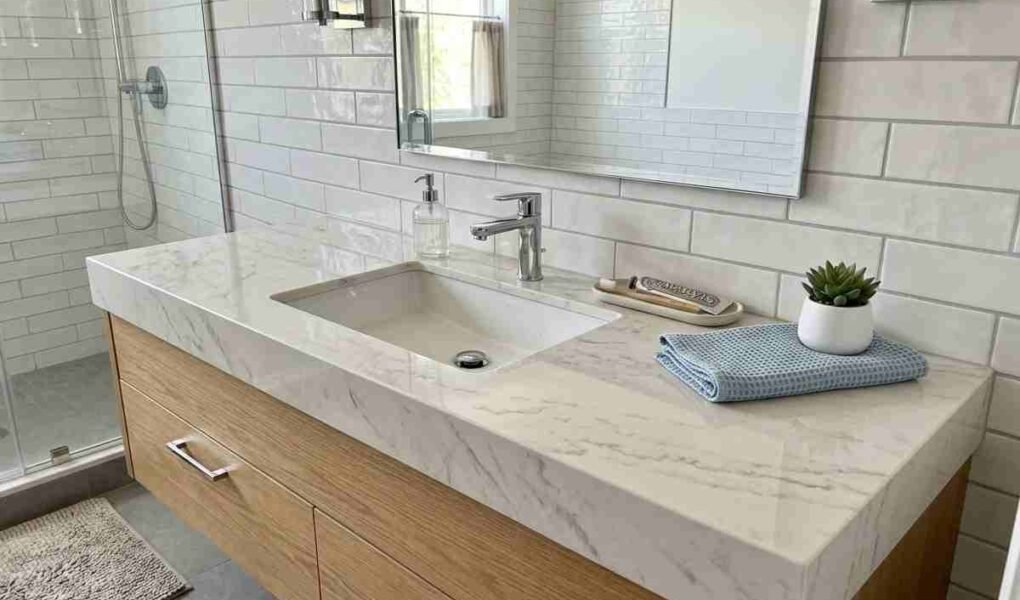
What actually is a cultured marble vanity top, and is it a good choice for a bathroom? Cultured marble is a man-made composite material, produced by mixing crushed natural marble or limestone with polyester resin, then casting it into a mould and coating the surface with a clear gel coat for shine and protection. It is not a natural stone like granite or quartzite, despite the name — it’s a manufactured product designed to imitate the look of polished marble at a significantly lower cost. For a bathroom vanity specifically, cultured marble is a genuinely solid, budget-friendly choice, particularly valued for being available with an integral sink moulded as a single seamless piece with the countertop, eliminating the seam and grout line that exist where a separate sink meets a different countertop material.
The honest trade-off worth knowing upfront: cultured marble is more vulnerable to scratching, chipping, and yellowing over time than natural stone or quartz, and it’s more sensitive to heat and harsh chemical cleaners. But it also has one genuine advantage that harder, more expensive materials don’t: it can be sanded, polished, and refinished in place when it does become damaged or dull, restoring much of its original appearance without full replacement, something that’s far more difficult to do with granite or engineered quartz.
This guide covers exactly what cultured marble is and how it’s made, how it compares to granite, quartz, and solid surface alternatives, the cleaning and care routine that keeps it looking its best, how to repair scratches, stains, and chips, whether it can be cut or drilled, and what integral sink configurations are available.
🔗 Planning your full vanity? Read our standard bathroom vanity depth guide and Common Bathroom Vanity Sizes
What Cultured Marble Actually Is — And How It’s Made
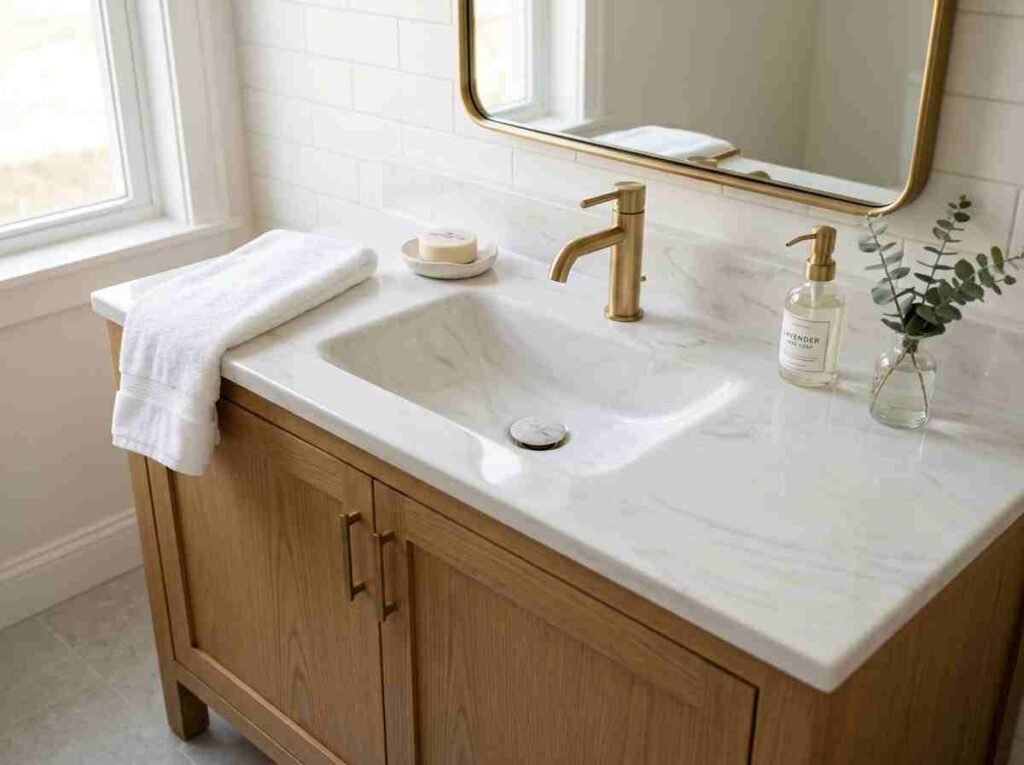
The manufacturing process. Cultured marble is produced by combining crushed natural marble or limestone aggregate with a polyester resin binder, then pouring the mixture into a custom mould shaped to the desired countertop and, often, integral sink form. Once cured, the surface receives a clear gel coat, which provides the glossy shine and the protective layer against moisture that defines the material’s finished appearance.
Why the integral sink matters so much. Because the countertop and sink are cast together in the same mould as a single continuous piece, there is no seam where a separately installed sink meets the countertop surface around it. This eliminates one of the most common sources of grime buildup and potential water damage in a bathroom vanity, since there’s no joint line for moisture, soap residue, or mildew to collect in over time.
Why it’s so widely used in budget and mid-range bathroom remodels. Cultured marble is significantly less expensive than natural stone or engineered quartz, while still delivering a polished, marble-inspired appearance, which is exactly why it has remained such a common choice across decades of bathroom vanity manufacturing, particularly for builder-grade and value-focused renovations.
You can also read Gothic Bathroom Decor: The Complete Guide to Dark, Dramatic Elegance
Cultured Marble vs. Granite vs. Quartz vs. Solid Surface
| Material | Cost | Durability | Maintenance | Repairability |
|---|---|---|---|---|
| Cultured marble | Lowest | Moderate — vulnerable to scratching, chipping, yellowing | Requires gentle cleaners, periodic polishing | Can be sanded and refinished in place |
| Granite (natural stone) | High | Very high — resistant to scratching and heat | Requires periodic sealing | Difficult and costly to repair; chips often need professional filling |
| Quartz (engineered stone) | High | Very high — resistant to scratching and staining | Low maintenance, no sealing needed | Difficult to repair; damage often requires replacement |
| Solid surface (e.g. Corian) | Mid-range | Good — resistant to staining | Low maintenance | Can be sanded and repaired similarly to cultured marble |
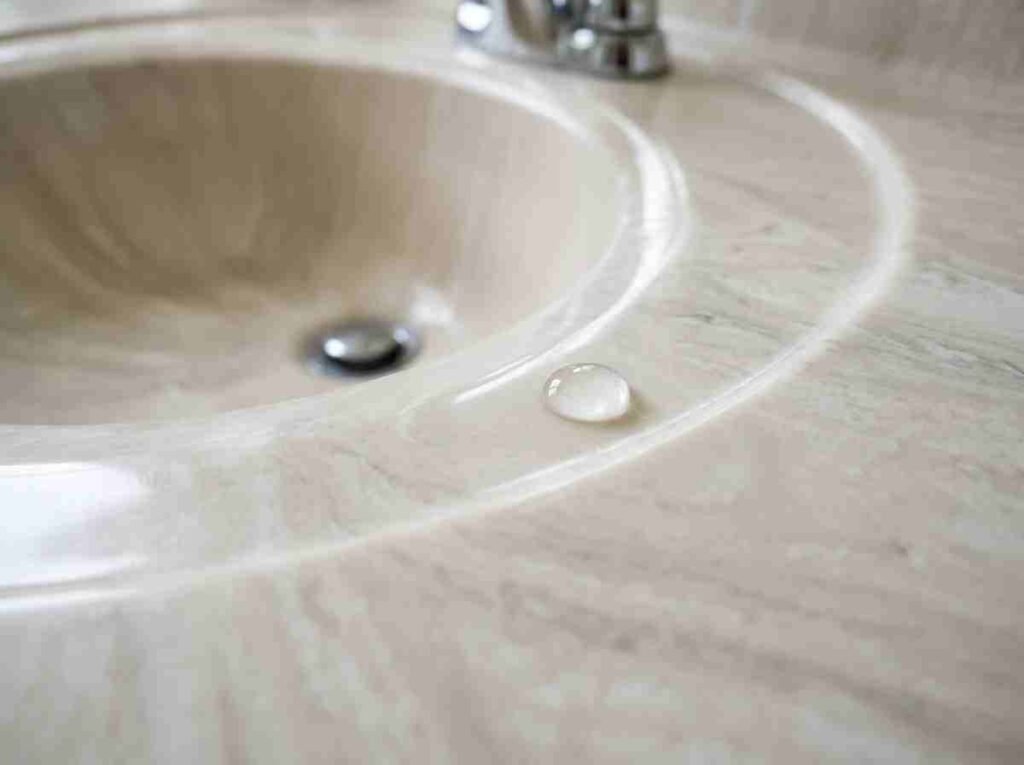
The honest summary: cultured marble is the most affordable option and offers the unique advantage of an integral, seamless sink along with genuine repairability if it’s ever scratched or dulled. Granite and quartz are more durable and more resistant to everyday wear, but cost considerably more and are harder to repair if damage does occur. Solid surface sits closer to cultured marble in terms of repairability while offering somewhat improved durability.
How to Clean and Care for Cultured Marble
Use only gentle, non-abrasive cleaners. A mild dish soap diluted in warm water, applied with a soft cloth, is the safest everyday cleaning approach. Avoid abrasive scouring powders, steel wool, or harsh scrub brushes, all of which can scratch the gel coat surface and dull its shine over time.
Avoid harsh chemical cleaners specifically. Bleach, ammonia-based cleaners, and other strong chemicals can degrade the gel coat finish and contribute to yellowing over time, even when used in small amounts repeatedly.
Wipe up standing water and product spills promptly. Cultured marble’s gel coat is generally water-resistant, but prolonged standing water, particularly from hair products, toothpaste, or other bathroom products left sitting on the surface, can contribute to staining or dulling over time if not cleaned up reasonably soon.
Apply a non-abrasive polish periodically. A polish specifically formulated for cultured marble or fibreglass surfaces, applied every few months, helps maintain the surface’s original shine and provides a small additional layer of protection against everyday wear.
Avoid placing hot items directly on the surface. Cultured marble is more heat-sensitive than natural stone or quartz, and items like curling irons or hair straighteners left resting directly on the surface can cause localised damage to the gel coat.
You can also read Gothic Kitchen & Dining Room Decor: The Complete Dark Elegance Guide
Common Problems and How to Fix Them
Yellowing
Cultured marble can yellow over time, particularly in older installations or where harsh cleaners have been used repeatedly. This is generally a surface-level discolouration of the gel coat rather than a structural problem with the material itself, and it’s often improvable through polishing and, in more significant cases, professional refinishing.
Scratches
Light surface scratches can often be reduced or removed using a fine rubbing compound specifically designed for gel coat or fibreglass surfaces, applied with a soft cloth in a circular motion, followed by a protective polish once the scratch has been minimised.
Stains
Most surface stains respond well to a paste made from baking soda and a small amount of water, applied gently and left for a short period before rinsing, avoiding any abrasive scrubbing that could scratch the surface in the process of removing the stain.
Chips and Cracks
Small chips can typically be repaired using a cultured marble or fibreglass repair kit, which includes a coloured filler compound that can be matched reasonably closely to the surrounding surface and cured to a hard, smooth finish. Larger cracks or more significant structural damage generally require professional repair or, in severe cases, full replacement of the affected section.
Full Refinishing
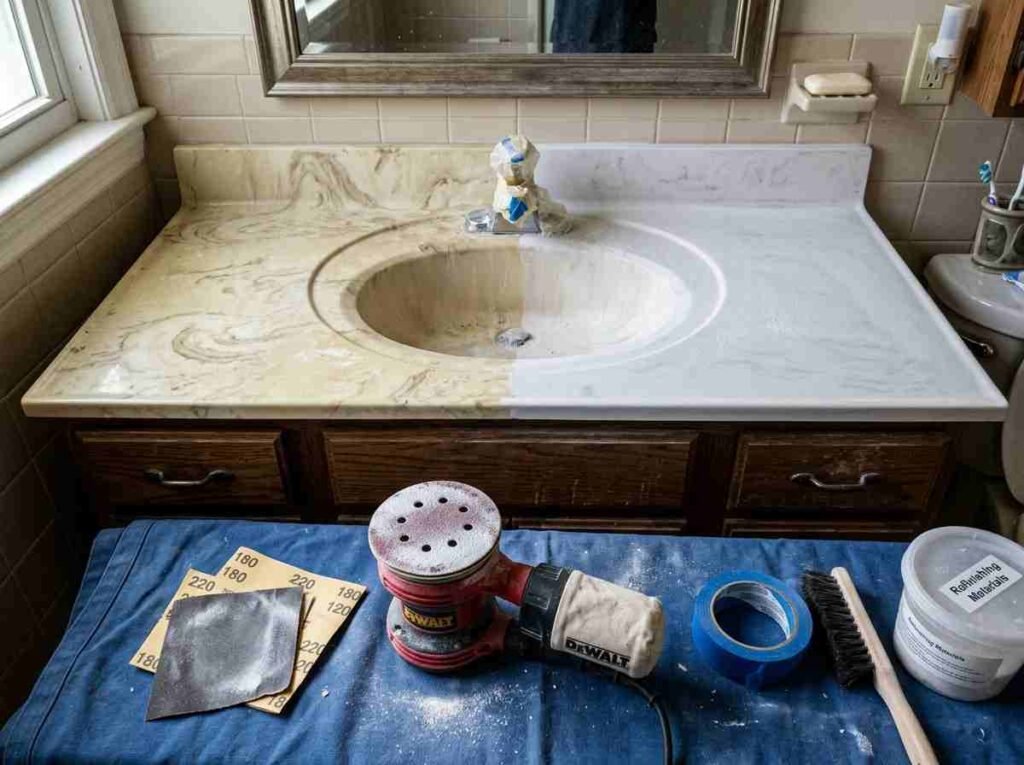
For a cultured marble top that has become extensively yellowed, scratched, or dulled beyond what spot repairs and polishing can address, full refinishing — sanding back the existing gel coat and applying a fresh coat — can restore much of the surface’s original appearance. This is typically a job for a professional refinishing service, since achieving an even, properly cured new gel coat layer requires specific equipment and technique, but it remains considerably more affordable than replacing the vanity top entirely.
You can also read Rustic Basement Design: The Complete Guide
Can You Cut, Drill, or Paint Cultured Marble?
Can you cut a cultured marble vanity top? Yes, cultured marble can be cut using a circular saw fitted with a fine-tooth blade suitable for cutting fibreglass or composite materials, ideally with the cut line scored first to reduce chipping along the edge. This is a job that benefits from some genuine comfort with power tools and careful technique, since a poorly executed cut can chip or crack the surrounding material.
Can you drill a hole in a cultured marble vanity top? Yes, using a appropriately sized drill bit suited to composite or fibreglass materials, ideally starting with a smaller pilot hole before widening it to the final size, which reduces the risk of cracking around the drilled area.
Can you paint a cultured marble vanity top? Painting cultured marble directly is generally not recommended as a long-term solution, since standard paint doesn’t adhere well to the glossy gel coat surface and tends to chip or peel relatively quickly. A specialised countertop refinishing kit, rather than ordinary paint, is the more reliable way to change or restore the surface’s colour and finish.
Cultured Marble Vanity Top With Integral Sink — What to Know
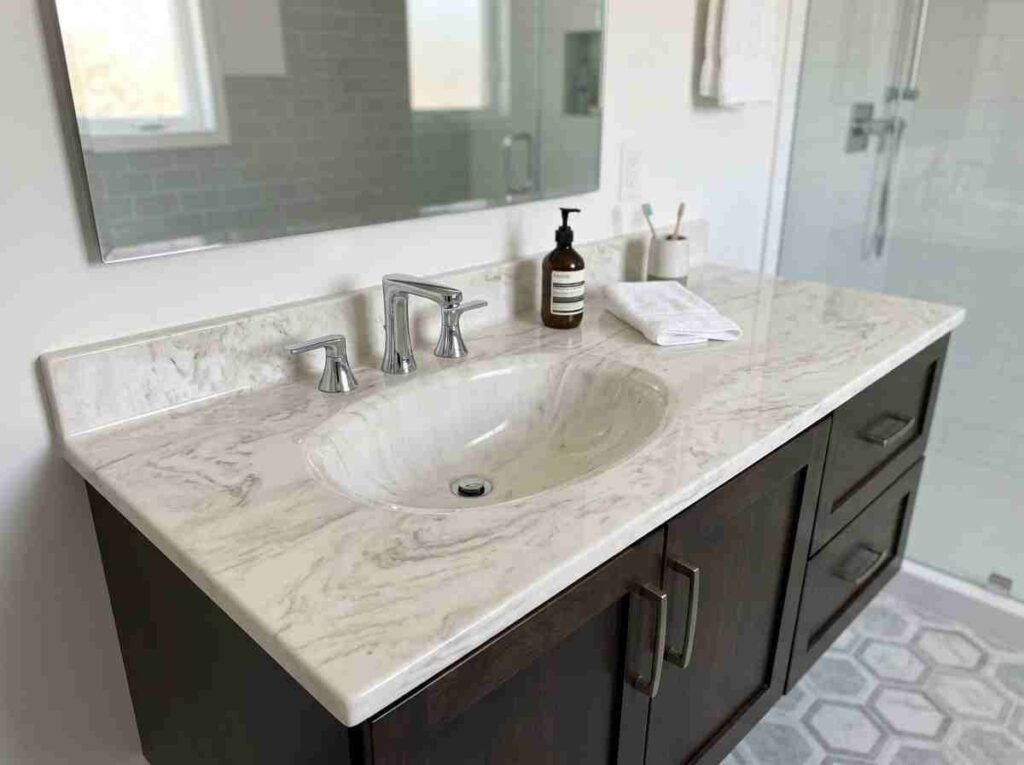
Sizing is typically standardised around common vanity widths, with integral sink tops commonly available in dimensions matching standard single vanity widths (such as 25, 31, 37, 49, and 61 inches) and double vanity widths (such as 60, 72, and 73 inches), simplifying replacement or new installation to match existing or planned vanity cabinetry.
Colour options extend beyond plain white. While white is the most common and most classic choice, cultured marble is also available in a range of veined patterns intended to mimic natural marble more closely, along with solid colour options for a more contemporary, minimalist look.
Installation is generally straightforward, with the integral top typically secured to the vanity cabinet with a bead of adhesive caulk along the top edge of the cabinet, then connected to the existing or new plumbing for the integral sink basin.
You can also use Free Renovation Tool
Frequently Asked Questions
Q: What is cultured marble made of?
A: Cultured marble is made by combining crushed natural marble or limestone with a polyester resin binder, casting the mixture in a mould, and finishing the surface with a clear gel coat for shine and protection. Despite the name, it is a man-made composite material rather than natural stone, designed to replicate the appearance of polished marble at a significantly lower cost.
Q: Is cultured marble a good choice for a bathroom vanity top?
A: Yes, for many bathrooms it’s a genuinely solid choice, particularly valued for its affordability and the availability of integral sink configurations that eliminate the seam between a separate sink and countertop. The trade-off is that it’s more vulnerable to scratching, chipping, and yellowing over time compared to natural stone or engineered quartz, and it requires gentler cleaning products. It also offers one advantage harder materials don’t: it can be sanded and refinished in place if it becomes damaged or dulled.
Q: How do I clean a cultured marble vanity top without damaging it?
A: Use a mild dish soap diluted in warm water, applied with a soft cloth, for everyday cleaning, avoiding abrasive scouring pads, steel wool, and harsh chemical cleaners like bleach or ammonia, all of which can scratch or yellow the gel coat surface over time. Wipe up standing water and product spills promptly, and apply a non-abrasive polish formulated for cultured marble or fibreglass surfaces every few months to maintain its shine.
Q: Can a cultured marble vanity top be refinished if it’s yellowed or scratched?
A: Yes, this is one of cultured marble’s genuine advantages over harder materials like granite or quartz. Light scratches can often be reduced with a fine rubbing compound, and more significant yellowing or dulling can be addressed through full refinishing, which involves sanding back the existing gel coat and applying a fresh one. This is typically a job for a professional refinishing service but is considerably more affordable than replacing the vanity top entirely.
Q: Can you cut or drill a cultured marble vanity top?
A: Yes, cultured marble can be cut using a circular saw with a fine-tooth blade suited to fibreglass or composite materials, ideally scoring the cut line first to reduce chipping. It can also be drilled using an appropriately sized bit, starting with a smaller pilot hole to reduce the risk of cracking around the drilled area. Both tasks benefit from careful technique and some comfort with power tools.
Q: How does cultured marble compare to granite or quartz?
A: Cultured marble is significantly more affordable than both granite and quartz, and it’s the only one of the three that can be realistically refinished in place if damaged. However, it’s also less durable overall, more prone to scratching and yellowing, and more heat-sensitive than either natural granite or engineered quartz, both of which require less day-to-day care but are considerably more expensive and harder to repair if damage does occur.