Afrohemian decor, also called Afrobohemian, blends warm, earthy, bohemian comfort with patterns, colours, and textures inspired by African design traditions. It is rich, layered, and personal, and it works well in a small space, because it uses colour, texture, and plants, rather than large furniture, to make a room feel alive. Here is a starter guide, with how to build the look respectfully, and how to choose pieces that honour the makers behind them.
Key takeaways
- Afrohemian decor is warm and layered: earth tones, natural wood, rattan, plants, and bold patterns, with space to breathe.
- Start with one or two statement pieces, a patterned textile, a wooden stool, or a piece of art, and build around them, rather than buying everything at once.
- Choose pieces respectfully: buy from makers, fair-trade shops, and Black-owned businesses where you can, and avoid mass-produced copies presented as authentic craft.
- Do not use sacred, ceremonial, or religious items as decoration, and do not copy a specific community’s patterns without understanding them.
- In a small space, use colour and texture on textiles and walls, and keep furniture simple, so the room feels warm, not crowded.
1. What Afrohemian Decor Is
Afrohemian decor draws on African-inspired patterns, colours, and materials, combined with bohemian layering: many textures, plants, and personal objects, in a relaxed, lived-in room. Warm earth tones, terracotta, ochre, deep brown, and cream, are common, with bold accents, such as black, gold, or a bright pattern, for contrast.
Natural materials are central: wood, rattan, woven baskets, cotton, linen, and clay. Plants, especially large leafy plants, add life and soften the room. Art, textiles, and objects made by hand, rather than mass-produced, give the room its character, because they carry the maker’s skill and story.
Afrohemian decor is not one single style, and it is not a costume. African design traditions are diverse, across many countries, communities, and makers, and they vary widely. This guide describes a general, respectful starting point, not a specific community’s tradition, and it encourages you to learn about the pieces you choose, and the makers who made them.
2. Starting With Colour and Texture in a Small Space
In a small space, colour and texture do more work than large furniture. Start with a warm, neutral base: cream, warm white, or light terracotta walls, and a simple sofa or bed, in a plain fabric. Then add Afrohemian colour and texture through textiles and accessories, which are easier to change and do not crowd the room.
A patterned throw, a set of cushions in earth tones and bold patterns, a woven rug, and a basket, can change a room’s feeling without new furniture. Add one bold pattern, such as a mudcloth-style print or a geometric pattern, and keep the other patterns simpler, so the room does not feel busy.
If you love bold colour, use it on one wall, one piece of furniture, or one large textile, and keep the rest calm. A terracotta accent wall, or a deep ochre sofa cushion set, with cream walls and wood furniture, gives warmth without overwhelming a small room.

3. Furniture: Simple, Natural, and Low
Afrohemian furniture is usually simple, natural, and low, rather than ornate or oversized. A wooden coffee table, a rattan chair, a low wooden stool, and a woven basket for storage, suit a small space well, because they are light, movable, and they do not block light or movement.
Choose wood with a warm tone, teak, walnut, or acacia, rather than very dark or very light wood, because warm wood suits the earth-tone palette. Rattan and woven pieces add texture and lightness, which helps a small room feel airy, even with layered textiles.
Avoid oversized, heavy furniture in a small Afrohemian room, because it will crowd the space and fight the relaxed, layered feeling. A few good, natural pieces, with space around them, look more intentional than a room full of furniture.
4. Textiles and Patterns: Choosing Respectfully
Textiles are where Afrohemian decor shines, and where respectful choosing matters most. Patterns inspired by African textiles, such as mudcloth-style prints, wax prints, and geometric patterns, are widely available, but they vary in origin, quality, and authenticity.
Where you can, buy textiles from makers, fair-trade shops, and Black-owned businesses, and ask about the origin of a piece, if you can. A handwoven or handmade textile, made by a named maker or community, carries a story and a skill, and it supports the maker directly. A mass-produced copy, presented as authentic craft, does not, and it can undercut makers.
Avoid using patterns or objects that are sacred, ceremonial, or religious, as decoration, and avoid copying a specific community’s patterns without understanding them. If you are unsure about a piece, ask the seller, or choose a general geometric or earth-tone textile, rather than a specific ceremonial pattern.
For a small space, use one or two patterned textiles, a throw and a cushion set, or a rug, and keep the rest plain, so the patterns stand out without overwhelming the room.
5. Plants, Art, and Personal Objects
Plants are essential in Afrohemian decor. Large leafy plants, such as a monstera, a fiddle-leaf fig, or a palm, add life, soften hard furniture, and suit the natural, earthy palette. In a small space, choose one or two larger plants, rather than many small ones, so the room feels lush, not cluttered, and place them where they get the light they need.
Art should be personal and respectful. Choose art by Black artists and makers, where you can, and display it at eye level, with space around it, so it can be seen. Avoid mass-produced art that copies a specific community’s work without credit, and avoid displaying art or objects whose meaning you do not understand, as mere decoration.
Personal objects, books, photos, travel pieces, and handmade objects, make an Afrohemian room feel lived in, rather than styled. Display a few that matter to you, with space between them, rather than filling every shelf, so the room feels curated, not crowded.
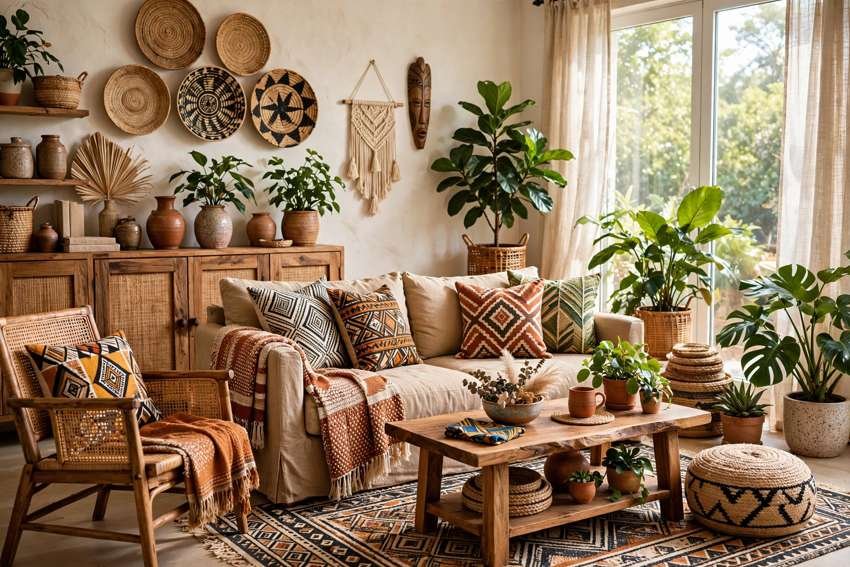
6. Small-Space Afrohemian Plan
Here is a simple plan for a small Afrohemian living room.
Base: cream or warm white walls, a simple sofa in a plain fabric, and a wooden coffee table. Textiles: one patterned throw, two or three cushions in earth tones and one bold pattern, and a woven rug. Furniture: a rattan chair or a wooden stool, and a woven basket for storage.
Plants: one large leafy plant in a terracotta or woven pot, and one smaller plant on a shelf, if you have space. Art: one piece by a Black artist or maker, at eye level, with space around it. Accessories: a clay vase, a candle, and a book or two, on the coffee table, with space to breathe.
This plan uses colour, texture, and plants, rather than large furniture, to make the room feel Afrohemian, and it leaves space for movement and light, which a small room needs.
7. Budget and Where to Buy Respectfully
Afrohemian decor can be built on a budget, if you start slowly and choose a few good pieces, rather than buying everything at once. Thrift shops, flea markets, and second-hand shops can have wooden furniture, baskets, and textiles, at low prices, and they are a good place to start.
For new pieces, look for makers, fair-trade shops, and Black-owned businesses, in your area and online, and ask about the origin and making of a piece, if you can. A handmade textile or basket, bought directly from a maker, may cost more than a mass-produced copy, but it lasts longer, carries a story, and supports the maker.
It also helps to keep a note of where each piece came from, especially for textiles and art, so you can tell visitors about it honestly, and so you can buy from the same maker again. A room built this way grows over time, with pieces that have a story, rather than a room bought in one shopping trip, with pieces that look the same in every home. That slow, personal growth is part of what makes Afrohemian decor feel warm and lived in, rather than styled for a photo.
Avoid shops that present mass-produced copies as authentic craft, or that use a community’s name or pattern without credit or context. If a listing does not say who made a piece, where it was made, or what it is, ask, or choose a different piece, from a seller who does.

8. What to Avoid in Afrohemian Decor
- Do not use sacred, ceremonial, or religious items as decoration, and do not copy a specific community’s patterns without understanding them.
- Do not buy mass-produced copies presented as authentic craft, when a maker-made piece is available.
- Do not fill a small room with too many patterns, colours, and objects at once. One bold pattern, and the rest simpler, is the rule.
- Do not use oversized, heavy furniture in a small Afrohemian room. Simple, natural, low furniture works better.
- Do not display art or objects whose meaning you do not understand, as mere decoration. Learn about a piece, or choose a different one.
- Do not rush. Build an Afrohemian room slowly, piece by piece, so each piece earns its place and its story.
Conclusion
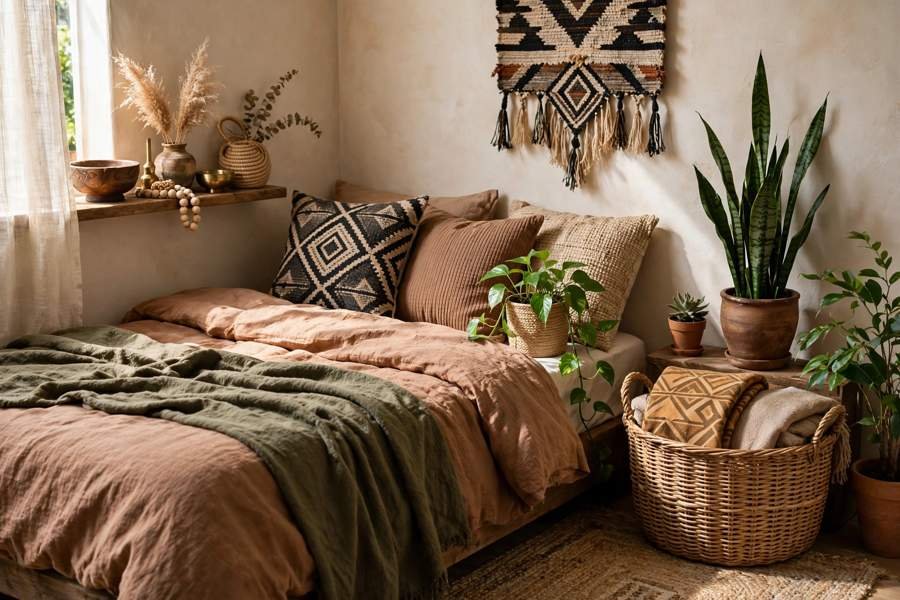
Afrohemian decor for small spaces is about warmth, texture, and personal meaning, built slowly, with earth tones, natural wood, rattan, plants, and bold patterns, and with respect for the makers and traditions behind the pieces. Start with a calm base, add one or two statement textiles or pieces, choose furniture that is simple and natural, and display art and objects that matter to you, with space to breathe. Buy from makers, fair-trade shops, and Black-owned businesses where you can, avoid sacred or ceremonial items as decoration, and learn about the pieces you choose. The result is a small room that feels rich, warm, and personal, not crowded or copied.
FAQs
What is Afrohemian decor?
Afrohemian decor, also called Afrobohemian, blends warm, earthy, bohemian comfort with patterns, colours, and textures inspired by African design traditions. It uses earth tones, natural wood, rattan, plants, and bold patterns, in a relaxed, layered room, and it is diverse, not one single style.
How do I start Afrohemian decor in a small space?
Start with a calm base, cream walls and simple furniture, then add colour and texture through textiles, a patterned throw, cushions, and a woven rug, plus one large plant and one piece of art. Build slowly, piece by piece, rather than buying everything at once.
Where should I buy Afrohemian decor respectfully?
Buy from makers, fair-trade shops, and Black-owned businesses where you can, and ask about the origin and making of a piece. Avoid mass-produced copies presented as authentic craft, and avoid shops that use a community’s name or pattern without credit.
Can I use African-inspired patterns if I am not African?
Yes, if you choose respectfully: buy from makers where you can, learn about the pieces you choose, avoid sacred or ceremonial items as decoration, and avoid copying a specific community’s patterns without understanding them. General geometric and earth-tone textiles are a safer starting point than specific ceremonial patterns.
What colours suit Afrohemian decor?
Warm earth tones, terracotta, ochre, deep brown, and cream, with bold accents, such as black, gold, or a bright pattern, suit Afrohemian decor well. Keep the base calm, and use bold colour on one wall, one piece of furniture, or one large textile, in a small space.
How many plants suit a small Afrohemian room?
One or two larger leafy plants, rather than many small ones, suit a small Afrohemian room best, because they add lushness without clutter. Place them where they get the light they need, in terracotta or woven pots.


