Introduction
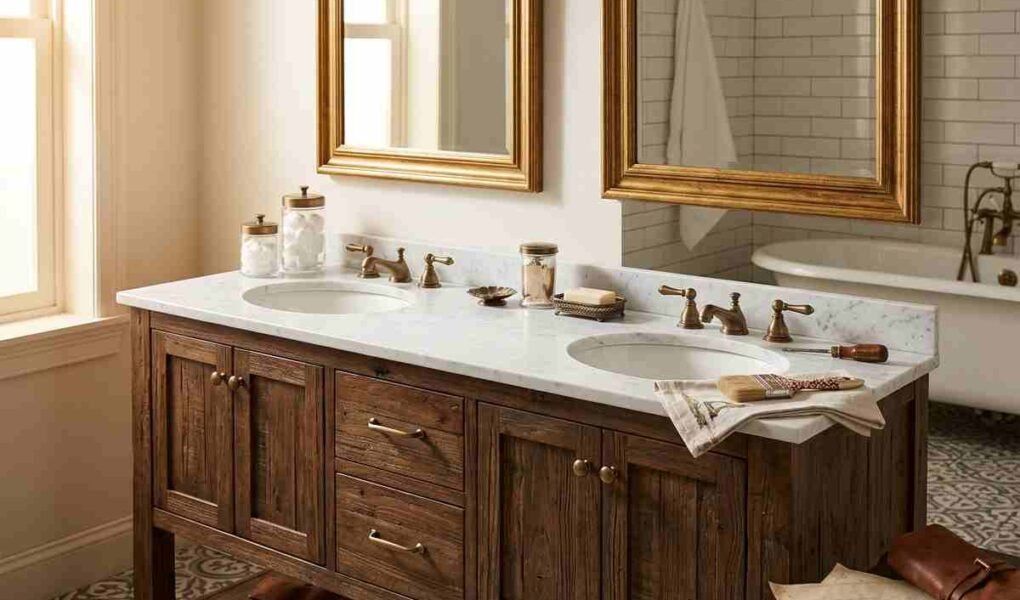
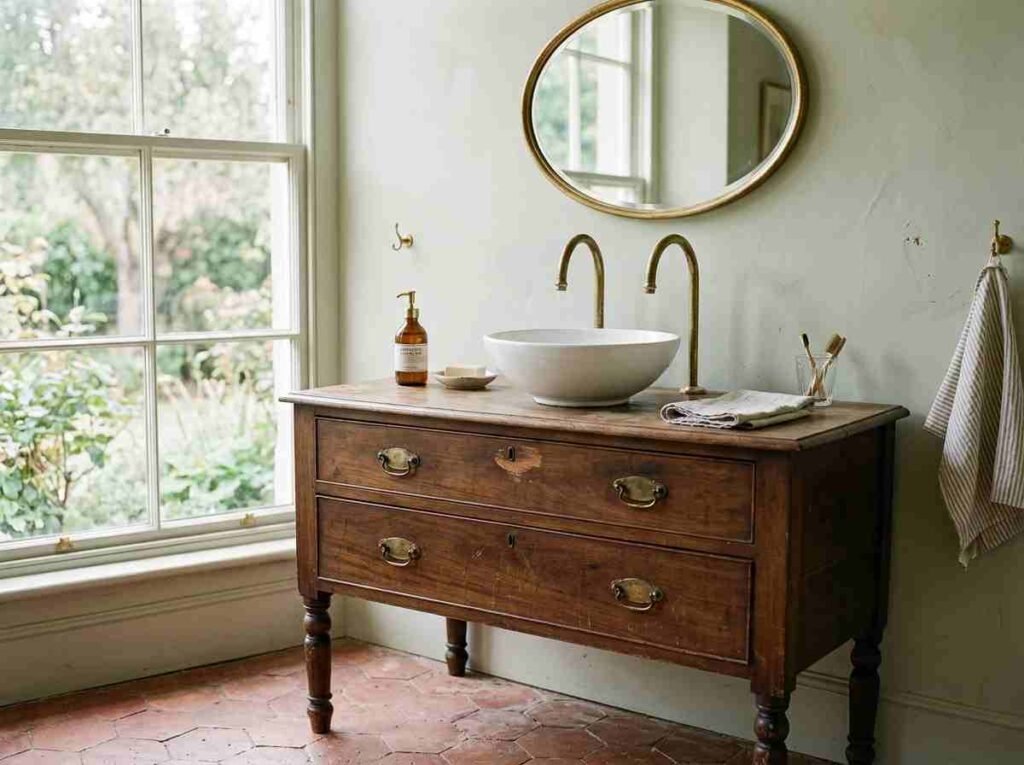
Is an antique style bathroom vanity the same as a real antique vanity, or is it something else entirely? It can be either, and the distinction matters before you spend any money. An “antique style” vanity most often refers to a newly manufactured cabinet designed to look old — with ornate detailing, turned legs, and a distressed or aged finish built in from the factory. A genuine antique vanity, by contrast, is an actual period piece, often a converted dresser, washstand, or sideboard repurposed to hold a sink. Both paths lead to a similarly characterful result, but they involve completely different buying decisions, costs, and practical considerations.
This is also one of the best-timed trends in bathroom design right now. Furniture-style vanities — pieces that read as genuine furniture rather than a standard bathroom fixture — are widely named as one of the defining bathroom directions, representing a real shift toward interiors with longevity and meaning, where a vanity can age with you, develop patina, and become part of your home’s story rather than something replaced every decade.
This guide covers both routes to the look: buying a manufactured antique-style vanity (what to look for, sizes, materials, and the style sub-categories worth knowing) and converting a genuine antique piece of furniture into a working vanity (what to check before you buy, how to handle the plumbing and waterproofing, and the mistakes that ruin an otherwise beautiful piece).
🔗 Planning your full bathroom? Read our standard bathroom vanity depth guide and our southwestern desert bathroom decor guide for more.
Two Paths to the Same Look
Before any specific buying advice, it’s worth being clear about the two genuinely different routes available, since the right choice depends on your budget, your patience for a DIY project, and how important true authenticity is to you.
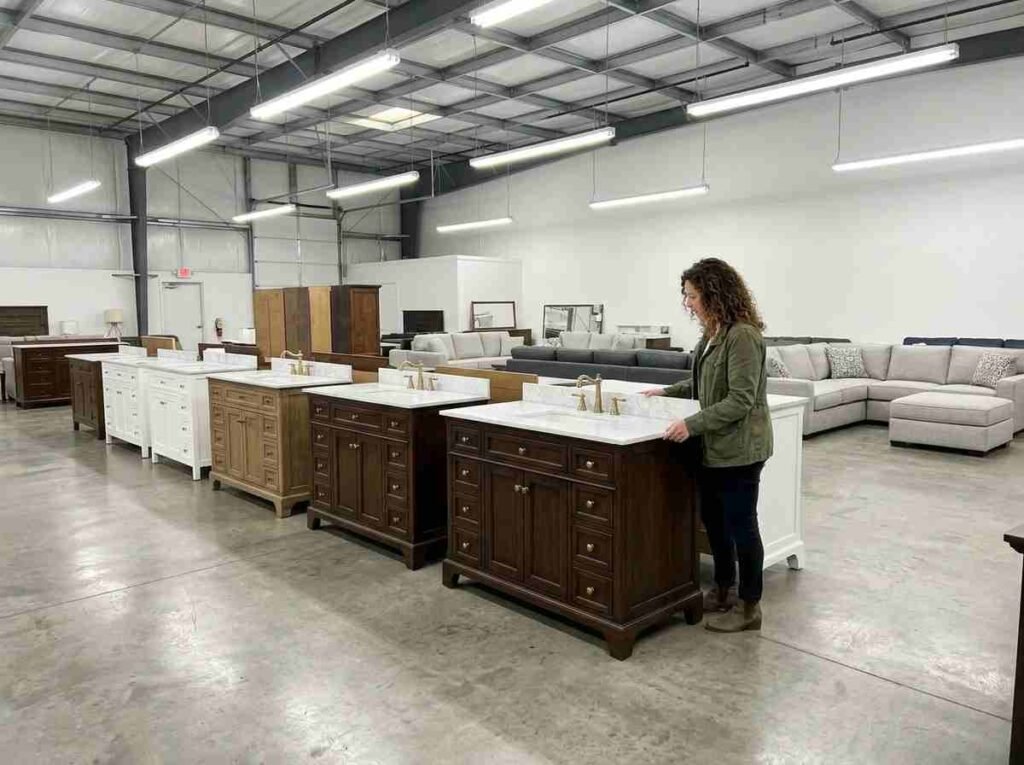
Path 1 — A manufactured antique-style vanity. A newly built cabinet, designed from the outset with ornate trim, turned or cabriole legs, and a finish (often antique white, cherry, or walnut) intended to evoke an older era. These are sold complete, ready to install with standard plumbing connections, and require no conversion work.
Path 2 — A converted genuine antique. An actual period dresser, washstand, sideboard, or console table, sourced secondhand and adapted to hold a sink, either by cutting an opening for a drop-in or undermount sink or by placing a vessel sink on top of the existing surface with minimal alteration to the piece itself.
Buying a Manufactured Antique-Style Vanity
Sizes to Expect
Antique-style vanities are manufactured across the same general size range as standard bathroom vanities, though they skew toward the larger end of the spectrum since much of their visual appeal comes from substantial scale and presence.
Common widths: 24, 30, 36, 42, 48, 60, and 72 inches, with single-sink vanities typically in the 24 to 42 inch range and double-sink vanities in the 60 to 78 inch range.
Depth: Most antique-style vanities follow the same standard depth range as conventional vanities, commonly 18 to 24 inches, though furniture-style pieces with decorative front detailing can occasionally run slightly deeper to accommodate the trim.
Materials and Finishes Worth Knowing
Solid wood (oak, cherry, walnut, mahogany). The most authentic-feeling choice, offering genuine wood grain and the ability to develop real character over time. Solid wood vanities command a higher price but deliver the most convincing antique impression.
Wood veneer over engineered wood. A more budget-friendly way to achieve a similar appearance, using a thin layer of real wood over a more stable, less expensive core material. Quality varies significantly between manufacturers, so checking the veneer’s thickness and finish quality in person, where possible, is worth the effort.
Antique white and painted finishes. A popular alternative to wood-tone finishes, particularly effective for a softer, more cottage or French-country-leaning antique look rather than a darker, more formal one.
Marble, granite, and engineered stone tops. Most manufactured antique-style vanities pair their cabinet with a stone or stone-look countertop, with marble offering classic elegance and a cool, polished surface, while granite and engineered quartz provide similar visual richness with somewhat easier maintenance.
Hardware and Detailing to Look For
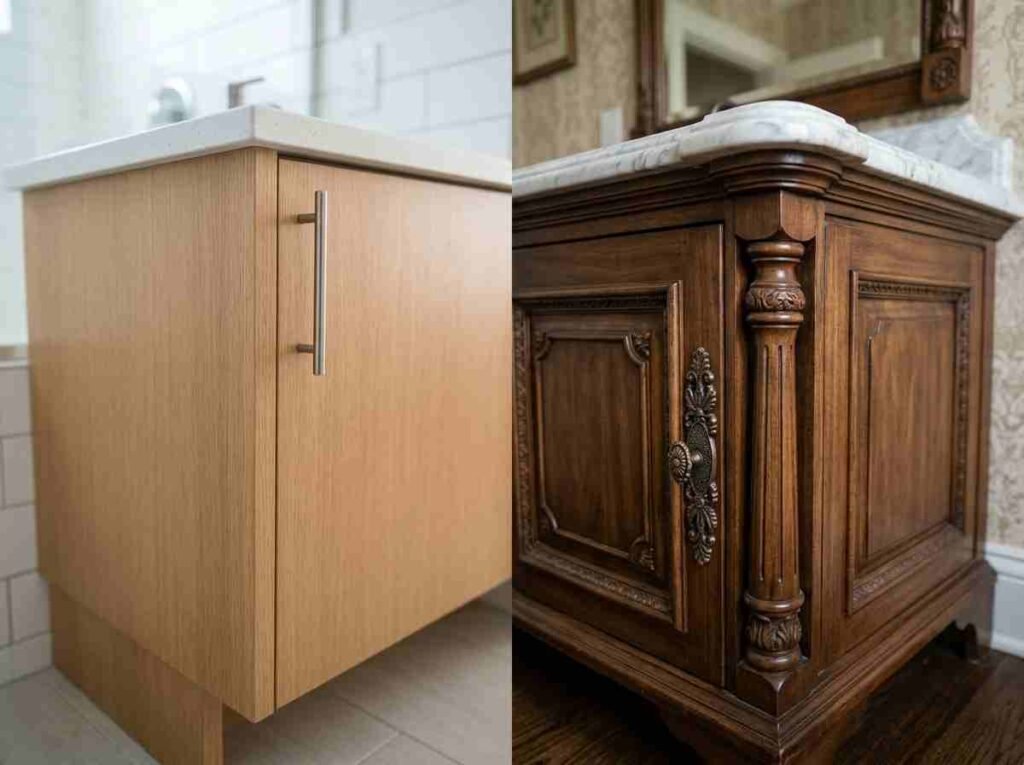
The details that separate a convincing antique-style piece from a generic one are almost always in the hardware and trim: ornate cabinet door styles with detailed trim rather than plain flat-panel fronts, turned or cabriole legs rather than a simple boxy base, and aged-look hardware finishes such as oil-rubbed bronze, antique brass, or weathered nickel rather than bright, modern chrome.
You can also read Common Bathroom Vanity Sizes: The Complete Reference Guide
Style Sub-Categories Worth Knowing
Victorian. The most ornate and most heavily detailed antique style, characterised by elaborate carving, dark wood tones (mahogany and walnut especially), and substantial, formal proportions. Best suited to a bathroom that can support a genuinely traditional, heirloom-feeling aesthetic throughout.
French country / French provincial. A softer, lighter take on antique style, typically finished in white or a pale painted colour, with more delicate, curved cabriole legs and gentler ornamentation than the Victorian direction. Pairs particularly well with marble countertops and brass hardware.
Farmhouse antique. A more rustic interpretation, often using reclaimed or distressed wood, simpler hardware, and a less formal silhouette overall. This direction sits closer to the broader farmhouse aesthetic than to a strictly period-accurate antique look.
Mid-century antique-adjacent. Tapered legs, walnut or white oak finishes, and a cleaner, less ornate silhouette than Victorian or French styles, appealing to anyone wanting a sense of vintage character without heavy ornamentation.
You can also read Cultured Marble Vanity Top: The Complete Guide
Converting a Genuine Antique Into a Vanity
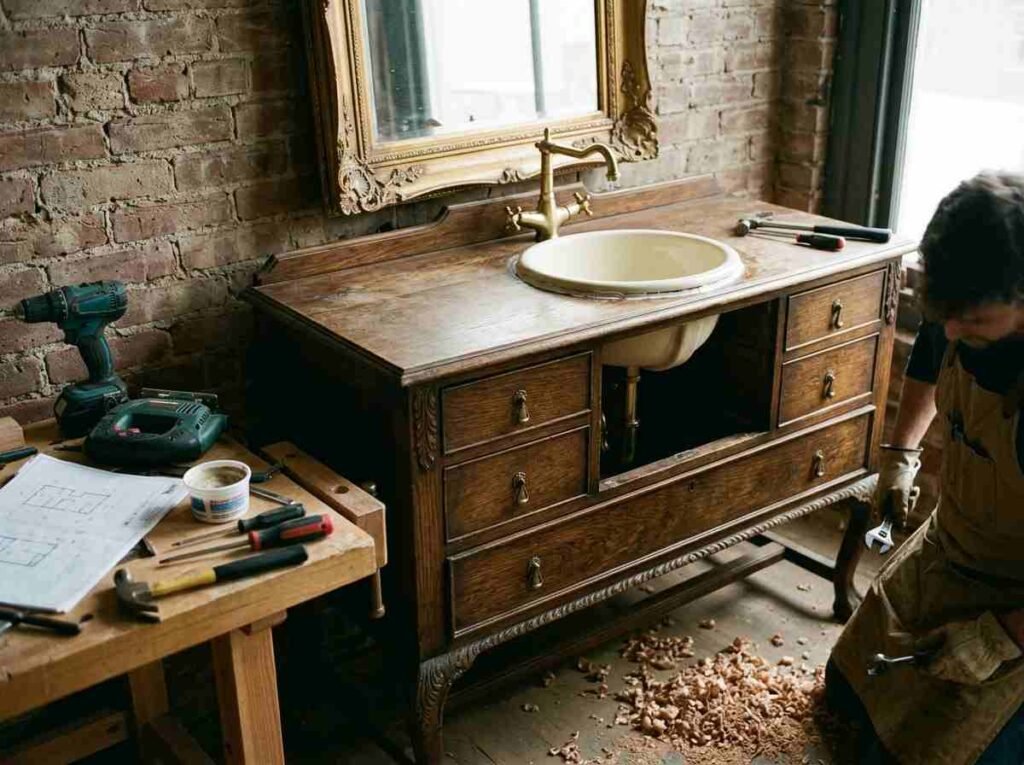
This is the path that delivers the most one-of-a-kind result, and it’s also the path with the most practical pitfalls if approached without proper planning.
What to Look For When Sourcing the Piece
Solid wood construction is essential. A genuine antique made from solid wood will tolerate the conversion process, and the bathroom environment afterward, far better than a piece built from particleboard or thin veneer over a hollow core.
Check joinery quality before buying. Vanities and furniture pieces with dovetail joints are specifically sought after for their strength and resilience, since dovetail joints don’t loosen over time the way dowel joints can — a meaningful consideration for a piece that will face daily use and the additional stress of supporting a sink and plumbing.
Consider the piece’s structural depth and height. A washstand or low dresser, originally designed at a height and depth somewhat similar to a modern vanity, requires far less structural modification than a tall chest or an oddly proportioned piece, which may need significant cutting down to function comfortably as a vanity.
Sink Options for a Converted Piece
Vessel sink on top. The simplest conversion approach — a vessel sink sits directly on the original surface of the dresser or washstand, requiring only a hole drilled through the top for the drain and supply lines, with no cutting into the piece’s visible surface at all. This preserves the most original material and is the most reversible option if you ever want to return the piece to its original use.
Drop-in or undermount sink. A more involved conversion that requires cutting an opening into the top of the piece to house the sink basin, offering a more seamless, built-in appearance at the cost of permanently altering the original furniture.
Waterproofing — The Step That Cannot Be Skipped
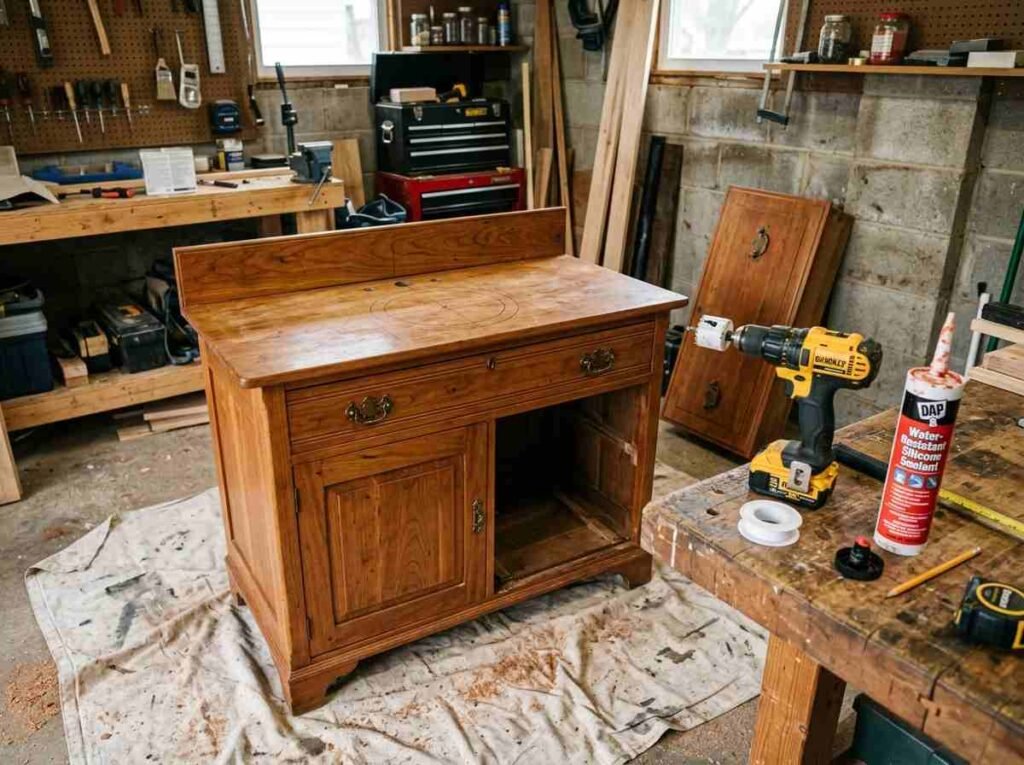
The bathroom’s humid environment can damage antique furniture pieces that were never intended for use there, which makes proper sealing the single most important practical step in any conversion. Apply a high-quality, water-resistant sealant to all exposed wood surfaces, paying particular attention to any areas near the sink itself where splashing is inevitable. Multiple coats, allowed to cure fully between applications, offer meaningfully better long-term protection than a single thin coat.
If the piece itself is genuinely fragile or valuable, it may be more practical to preserve it for use elsewhere in the home — a bedroom or hallway — rather than risk it in a bathroom’s humidity, regardless of how visually perfect it would be as a vanity.
Plumbing Considerations
The piece will need to be modified to allow pipes through, typically by cutting an access opening in the back or through a drawer that’s been fixed in place to provide clearance for the supply lines and drain. This is generally a straightforward job for a plumber experienced with furniture conversions, but it’s worth discussing the specific piece with them before purchase if at all possible, since some furniture shapes accommodate this far more easily than others.
Decide in advance whether drawers will remain functional. Many conversions sacrifice one or more drawers, or fix them in a closed, non-functional position, to make room for the plumbing running up from the floor or wall behind the piece. Knowing this trade-off before falling in love with a particular piece avoids disappointment later.
You can also read Standard Bathroom Vanity Depth: The Complete Dimension Guide
Antique Style Bathroom Vanity Cost Guide
| Option | Typical Cost Range |
|---|---|
| Manufactured antique-style vanity, veneer finish | $350–$700 |
| Manufactured antique-style vanity, solid wood | $700–$1,500 |
| Manufactured antique-style double vanity | $1,500–$3,000+ |
| Genuine antique furniture piece (unconverted) | $100–$800, depending on age, condition, and source |
| Professional conversion (cutting, sealing, plumbing) | $400–$1,200, depending on complexity |
| Full custom conversion of a high-value antique | $2,000+ |
Frequently Asked Questions
Q: What’s the difference between an antique style bathroom vanity and an antique bathroom vanity?
A: An antique style vanity is a newly manufactured cabinet designed to look old, with ornate detailing and an aged-look finish built in from the factory, while a genuine antique bathroom vanity is typically a real period piece of furniture, such as a converted dresser or washstand, that has been adapted to hold a sink. Both deliver a similarly characterful, vintage appearance, but they differ significantly in cost, the work involved, and the level of true authenticity behind the final result.
Q: Can I really turn an old dresser into a bathroom vanity?
A: Yes, and it’s a well-established way to bring genuine character into a bathroom. The dresser needs to be made from solid wood, properly sealed with a water-resistant finish to protect it from the bathroom’s humidity, and modified to accommodate plumbing, either by cutting an opening for the sink and pipework or by placing a vessel sink on top with only a small drilled hole for the drain and supply lines. A piece with dovetail joinery will hold up to this process better than one with weaker dowel joints.
Q: Will a wood antique vanity be damaged by bathroom humidity?
A: It can be, if not properly protected. Bathrooms are genuinely more humid than most other rooms in a home, and untreated antique wood furniture can suffer water damage over time as a result. A thorough, multi-coat application of a quality water-resistant sealant significantly reduces this risk. For an especially fragile or sentimentally valuable antique, it may be wiser to use the piece elsewhere in the home, such as a bedroom, rather than risk it in a bathroom regardless of how well it would suit the space visually.
Q: What size antique style vanity should I get?
A: Antique-style vanities are available in the same general size range as standard vanities, with single-sink models commonly running from 24 to 42 inches wide and double-sink models from about 60 to 78 inches wide. Depth typically falls in the standard 18 to 24 inch range. Because furniture-style antique vanities often have a substantial visual presence, it’s worth measuring your bathroom carefully and accounting for clearance space in front of the vanity, not just the cabinet’s own footprint, before choosing a size.
Q: What wood finish looks most authentically antique?
A: Solid wood in cherry, walnut, or mahogany tones is generally considered the most authentic-looking choice, since real wood grain develops genuine depth and character that’s difficult to fully replicate with veneer or painted finishes. For a lighter, softer antique look — particularly suited to French country or cottage-style bathrooms — a painted antique white finish is a popular and effective alternative, trading some of the wood-grain authenticity for a brighter, more versatile colour palette.