Introduction
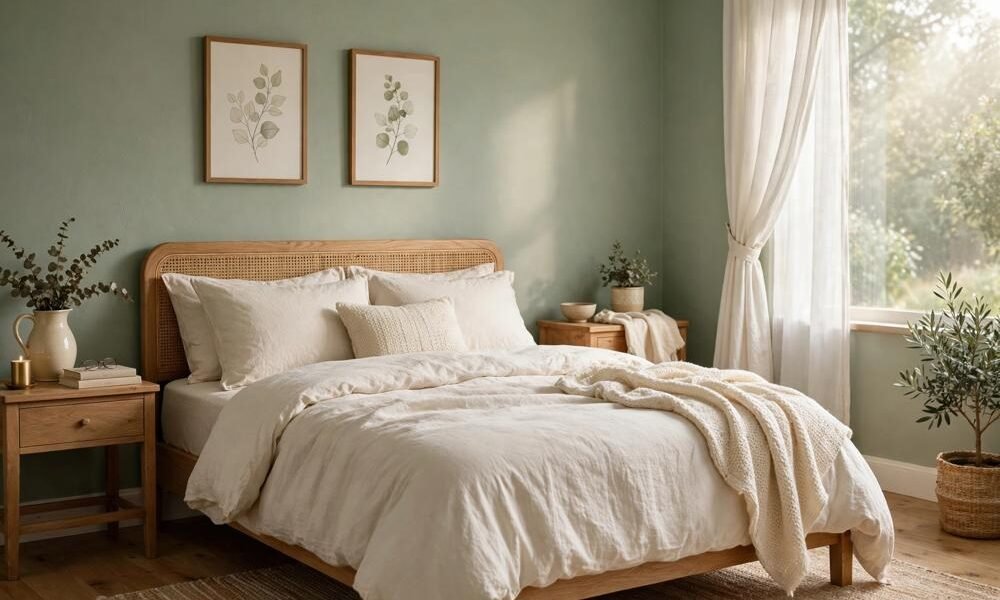
Sage green is one of those colours that looks perfect in a photo and then surprises you on your own wall. In a bright showroom it can look fresh and soft. In a north facing bedroom it can turn grey. In a small room with one window it can look darker than you expected. The difference is rarely the colour itself. It is the light in your room, the shade you choose, and how much sage you use.
This guide is built around that real life problem. Instead of giving you a long gallery of pretty rooms, it helps you choose a sage shade that works in your light, pair it with colours that keep it warm, and test it before you commit to painting a whole room. You will learn three named shades worth sampling, how sage behaves in north facing, south facing, and small dark rooms, and a budget friendly order for building the look: bedding first, paint last. For the full playbook on layout, storage, light, and style, see Small Bedroom Ideas: The Complete Guide to Layout, Storage, Light and Style.
If you have been putting off a bedroom colour change because you are afraid of choosing the wrong green, start here. With a few samples, a little patience, and the right pairings, sage can be one of the most forgiving colours you will ever paint a bedroom.
Key takeaways
- Sage green looks different in real light than in photos, so test shades in your own room before painting.
- Pair sage with cream and warm neutrals to keep a small bedroom calm, not cold.
- Decide how much sage to use first: an accent wall, bedding, or a full room each give a different result.
- Build in budget order, starting with paint and bedding, and add decor last.
Idea 1: Test Three Sage Shades in Your Real Light
The first idea is also the most important one: do not choose sage from a screen. Choose it from samples on your own wall, in your own light, at different times of day.
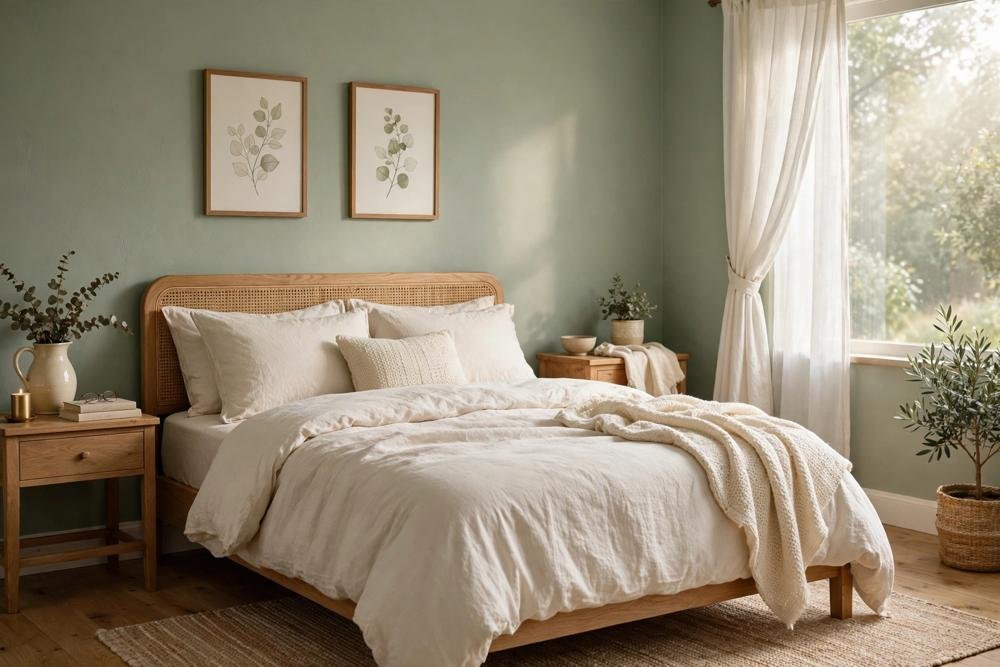
Three shades give you a useful range to test. Evergreen Fog, Sherwin Williams 9130, is a deeper, moodier sage with a light reflectance value of about 30. That means it reflects less light and will look richer and more dramatic. It is a good choice for a bright room, a large bedroom, or an accent wall where you want depth.
October Mist, Benjamin Moore 1495, sits in the middle. Its light reflectance value is about 49, so it feels lighter and fresher than Evergreen Fog while still clearly reading as sage. It is often the safest starting point for an average bedroom with decent daylight.
Softened Green, Sherwin Williams 6177, is the lightest of the three, with a light reflectance value of about 53. It works well in a small room, a north facing room, or a room where you want sage to feel like a soft neutral rather than a strong colour statement.
Here is how to test them properly. Paint large swatches, at least two feet square, on the wall behind your bed and on a side wall. Do not test them on a tiny card held against the wall, because the white border around a card changes how your eye reads the colour. Leave the swatches up for at least three days. Look at them in morning light, afternoon light, and evening lamplight. Check them next to your bedding, your curtains, and your wood furniture, because all of those will change how the green looks.
Idea 2: Pair Sage With Cream and Warm Neutrals
Sage rarely looks its best on its own. It needs a warm partner to stop it from feeling flat, and cream is the easiest and most reliable choice.
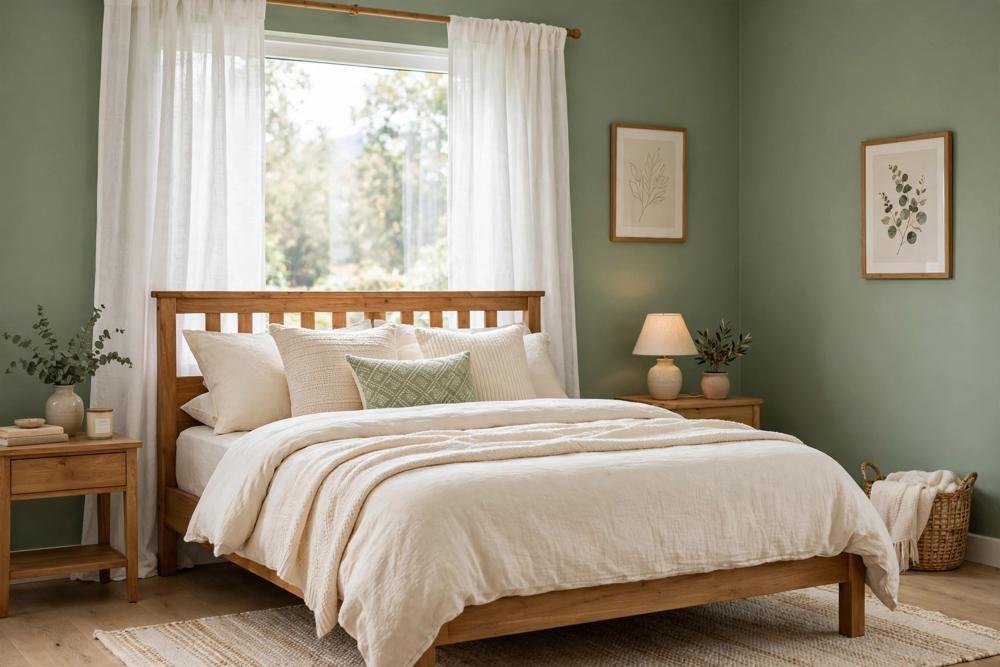
A sage green and cream bedroom feels calm, clean, and timeless. Use cream for bedding, curtains, and lampshades, and let sage take the walls or the main bedding layer. Warm white trim also helps, because a bright, cold white can make sage look grey by contrast. A soft, warm white keeps the whole room feeling gentle. For ready-made warm-neutral palettes, see Warm Neutral Bedroom Colour Schemes With Beige and Greige.
Natural wood is the second pairing to get right. Light oak, warm walnut, and rattan all sit beautifully against sage. A wooden bed frame, a simple wooden nightstand, or a rattan basket adds warmth and texture that paint alone cannot give you. If your furniture is dark wood, sage still works, but keep your bedding light so the room does not feel heavy.
For contrast, add one or two small accents rather than a whole new colour scheme. Brass or brushed gold hardware, a black picture frame, or a charcoal throw can give the room definition. Dusty pink works as a soft accent in pillows or art, and it keeps the room feeling warm without turning it into a themed pink room. Muted terracotta can work in the same way, especially in a bright, south facing room where a little warmth is welcome. Keep seasonal touches calm and minimal, as in Christmas Bedroom Decor Ideas That Stay Cosy Not Cluttered.
Idea 3: Decide How Much Sage to Use
You do not have to paint every wall sage to get a sage bedroom. In fact, in many rooms, less sage looks better. The right amount depends on your room size, your light, and how bold you want the room to feel.
A full sage room works best in a bright room with good daylight, white or warm white ceilings, and light bedding. In that setting, sage wraps the room in a calm colour without closing it in. Keep the ceiling light, keep curtains light, and let the floor stay visible. If the room starts to feel dark, add a lighter rug and lighter bedding before you decide the paint is wrong.
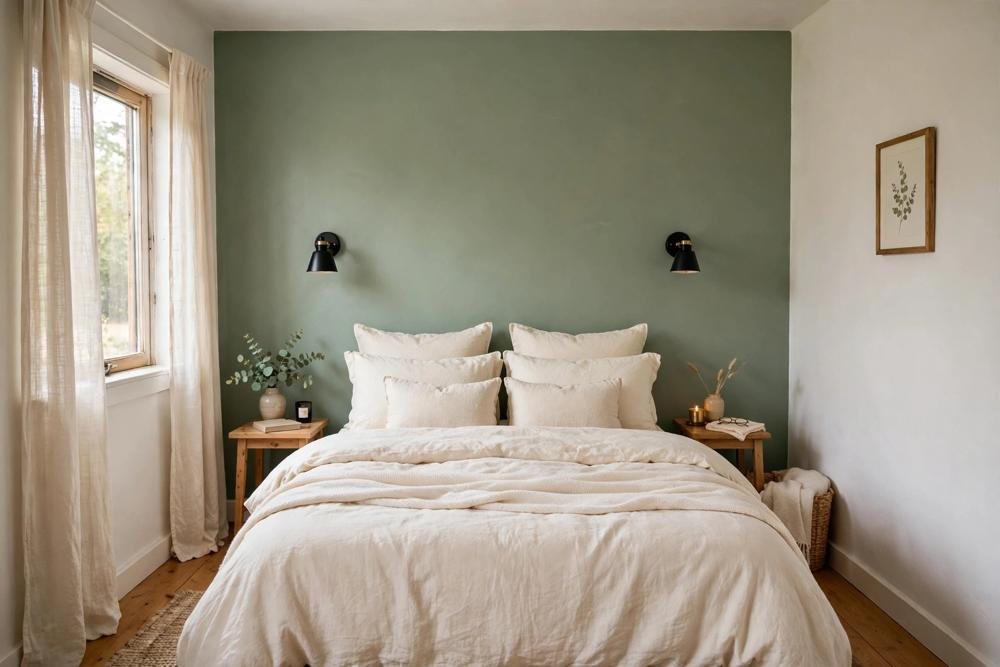
A sage accent wall behind the bed is often the best choice for a small bedroom or a north facing bedroom. It gives you the colour where it matters most, behind the bed, while the other walls stay warm white or cream and keep the room feeling open. This is also the cheapest and least risky option, because repainting one wall is easy if you change your mind.
The third option is bedding only. If you rent, if you are not ready to paint, or if you want to test sage for a season, start with sage bedding, sage pillows, and a sage throw. Pair them with cream sheets and a warm white room. You will get the feeling of a sage bedroom without touching a paintbrush, and you will learn whether you love living with the colour before you commit to it on the walls.
Whichever amount you choose, keep the ceiling and trim consistent. A warm white ceiling and trim will tie a full sage room, an accent wall, and a bedding only room together. It also makes it easier to change the sage later, because you are only changing one element at a time.
Idea 4: Build Your Sage Bedroom in Budget Order
The smartest way to build a sage bedroom is in this order: bedding first, paint last. That order protects your budget and your confidence.
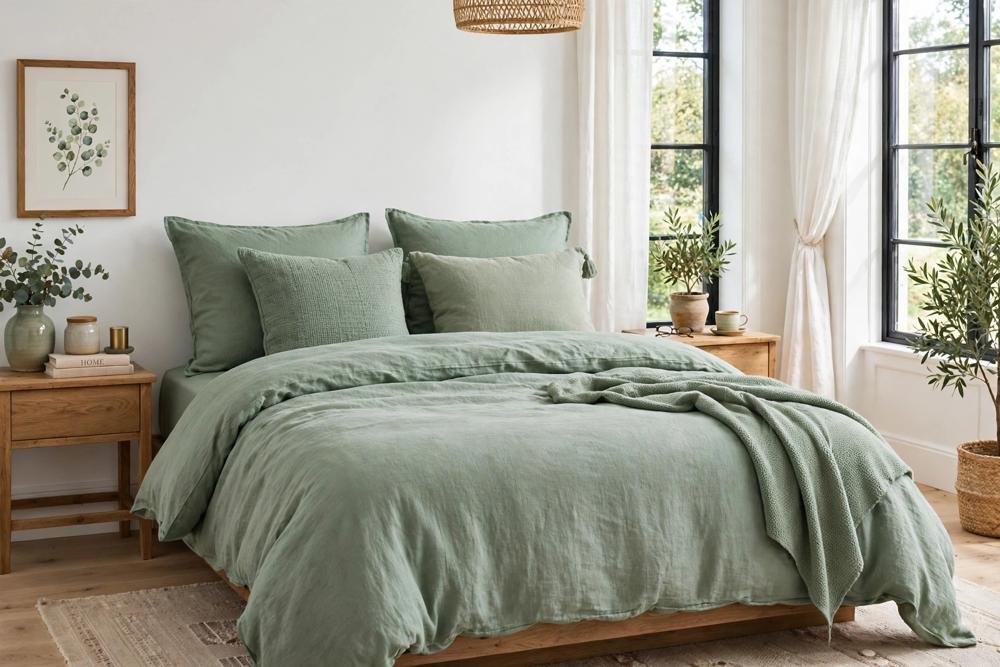
Start with bedding because it covers the largest area of colour in the room after the walls, and it is easy to return or swap. Choose sage sheets, a sage duvet cover, or sage pillow covers in a fabric you love. Live with them for a week. Notice how they look in morning light and evening light, and how they feel next to your existing curtains and rug. If you love the bedding, you have proof that sage suits your room.
Next, add texture and warmth. A cream throw, a linen cushion, a woven basket, and a wooden tray cost little but change how the room feels. This is also the stage to fix lighting. Warm bulbs, around 2700K, will make sage feel softer in the evening. Cool white bulbs can make sage look grey and clinical, so check your bulbs before you judge your paint samples.
Only then should you paint. By this point you know which shade family you like, you know how much sage you want, and you have bedding that already matches. Paint the accent wall first if you are unsure, live with it for a few days, and then decide whether to continue around the room. This step by step approach means you never spend a full paint budget on a guess.
Sage Green in North Facing Rooms
North facing rooms get cooler, softer light for most of the day, and that light can push sage toward grey. That does not mean sage cannot work in a north facing bedroom. It means you need to choose and pair it more carefully.
Choose a lighter, warmer sage in a north facing room. Softened Green and October Mist are better starting points than Evergreen Fog, unless you are only painting an accent wall and the rest of the room is very light. Keep bedding cream rather than white, because cream adds warmth that cool northern light does not. Add warm wood, warm bulbs, and a soft rug beside the bed to stop the room feeling cold.
Test your samples on the wall opposite the window as well as the wall behind the bed, because the light will be different on each wall. A shade that looks perfect on a sunny wall can look dull on a shadowed wall in the same room. If one wall looks too grey, that wall may be better in warm white, with sage kept to the bed wall and bedding. If you want greenery, choose varieties that tolerate shade, like those in Best Bedroom Plants for Low Light Rooms.
What to Avoid
Sage is forgiving, but a few common mistakes can spoil it. Avoid these and your room will stay on track.
Do not choose sage from a phone screen alone. Screens change colour, and shop lighting changes it again. Always test large samples in your own room.
Do not pair sage with bright white trim and cool white bulbs if your room is already cool and north facing. That combination can make sage look grey and cold. Warm white trim and warm bulbs are safer in most bedrooms.
Do not use too many greens at once. Sage bedding, mint curtains, olive cushions, and forest green art will compete with each other and make the room feel confused. Pick one green, sage, and let cream, wood, and one accent do the rest.
Do not paint a small dark room in a deep sage on all four walls without testing it first. Deep sage can be beautiful, but in a small dark room it can also make the walls feel closer. Start with an accent wall or bedding, and build up only if the room still feels open.
Do not buy a full matching sage bedroom set in one go. Matching sets often look flat, and they leave no room for texture or personality. Build the room piece by piece, starting with bedding and one wall, and let the details grow over time.
FAQs
Which sage green paint colour is best for a bedroom?
October Mist is a good middle ground for most bedrooms because it is light enough to feel fresh but still clearly sage. Softened Green is better for small or north facing rooms, while Evergreen Fog suits bright rooms or accent walls where you want more depth. Test all three as large samples in your own light before deciding.
Does sage green work in a small bedroom?
Yes, if you use it in the right amount. In a small bedroom, try sage bedding first, then a sage accent wall behind the bed, and keep the other walls warm white. Lighter sages like Softened Green will keep the room feeling open, while deep sage on all walls can make a small room feel smaller.
What colours go with sage green in a bedroom?
Cream is the easiest partner for sage, followed by warm white, natural wood, linen, and brass. Dusty pink, muted terracotta, charcoal, and soft black can work as small accents. Keep the palette tight: sage, one warm neutral, one wood tone, and one accent is usually enough.
Is sage green warm or cool?
Sage can lean either way depending on the shade. Warmer sages have a yellow undertone and feel cosy. Cooler sages lean grey and can feel flat in low light. Check the undertone against your flooring, wood furniture, and bedding, and choose a warmer sage if your room already feels cool.
Should sage green walls match sage green bedding?
They do not need to match exactly, and in fact a slight difference usually looks better. If your walls are sage, use cream bedding with sage pillows or a sage throw. If your bedding is sage, warm white or cream walls will let the bedding stand out. Exact matching can make the room feel flat, while layered tones of sage and cream feel more natural.
How do I test sage green paint before painting a whole room?
Paint large swatches, at least two feet square, on the bed wall and a side wall. Leave them for three days and check them in morning, afternoon, and evening light, next to your bedding and furniture. Start with bedding first if you want an even safer test, then paint one accent wall before committing to the whole room.
Conclusion
A sage green bedroom does not need to be a gamble. When you choose your shade in your own light, pair it with cream and warm wood, decide how much sage your room can handle, and build it bedding first and paint last, sage becomes one of the easiest colours to live with.
Start with samples. Test October Mist, Softened Green, and Evergreen Fog on your own walls. Live with sage bedding for a week. Paint one wall before you paint four. Those small, patient steps are what turn a colour you liked in a photo into a bedroom you love waking up in every day.
Sage is calm, natural, and timeless. In the right light, with the right pairings, it will make your bedroom feel softer, warmer, and more restful, without ever feeling themed or dated. That is exactly why it keeps coming back, and why it is worth getting right.