Introduction
Flooring is the largest surface in a kitchen, so it has a huge effect on how big a small kitchen feels. A dark, busy, or broken up floor makes a small kitchen feel smaller, while a light, continuous floor makes it feel open and connected. This guide focuses on small kitchens: light colours, larger formats, waterproof materials, and budget options that are easy to clean after cooking.
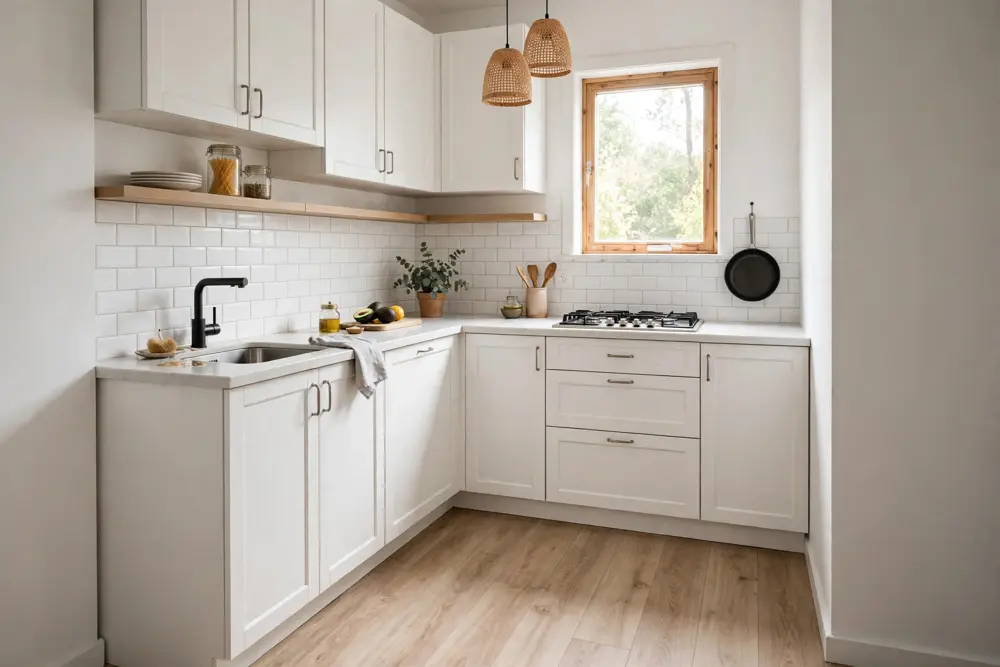
Idea 1: Light wood look floors.
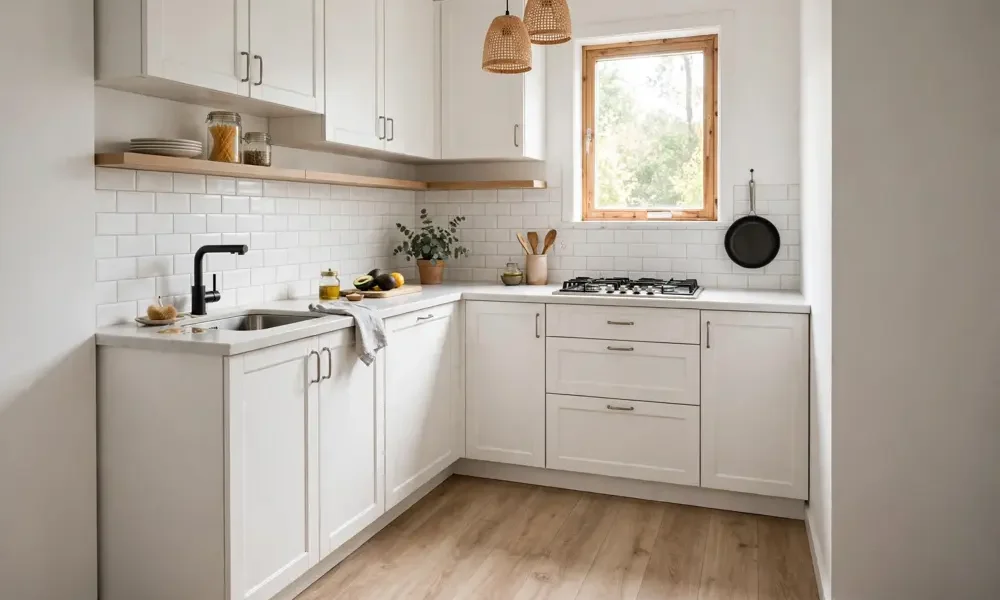
Light wood look flooring, in laminate, luxury vinyl plank, or engineered wood, warms a small kitchen without darkening it. Light oak, pale birch, and whitewashed tones reflect light and pair well with white cabinets. Choose wider planks, 7 inches or more, and longer lengths, because fewer seams make a small floor feel less busy. Lay planks in the same direction as the longest wall, to draw the eye through the room. Luxury vinyl plank is often the best small kitchen choice: waterproof, softer underfoot than tile, and easier to install than real wood.
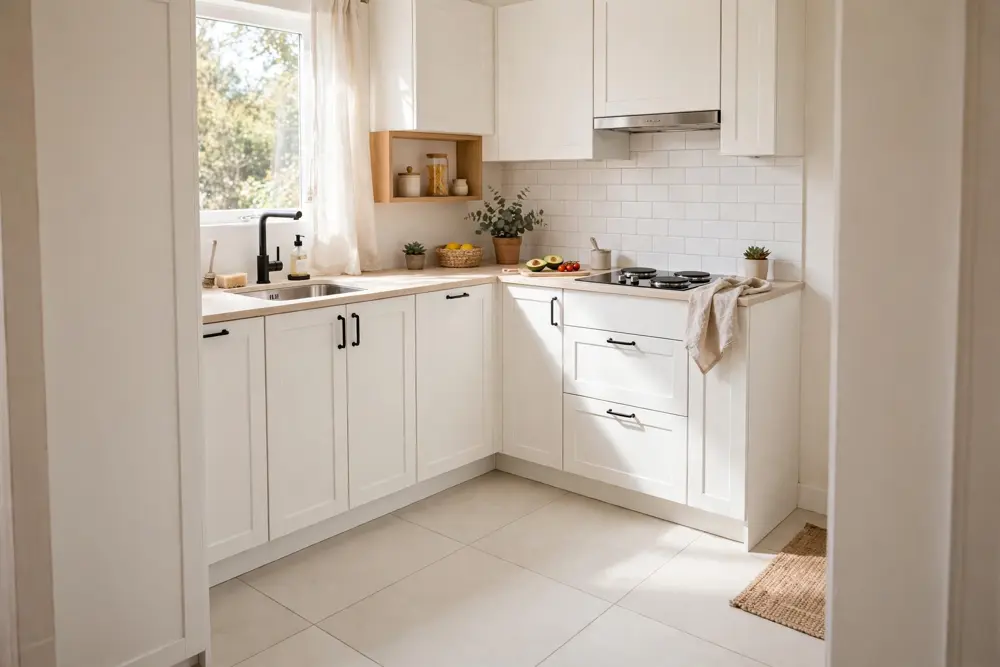
Idea 2: Large format tile in light colours.
Large format tile, 12 by 24 inches or larger, in light grey, cream, or soft stone look, makes a small kitchen floor feel seamless. Fewer grout lines mean less visual break up and less cleaning. Porcelain tile is waterproof, stain resistant, and heat resistant, which is ideal for a busy kitchen. Choose a matte finish for grip, especially if you cook barefoot or have children, and use light grout to keep the floor looking continuous. Avoid small mosaic tiles on a whole small kitchen floor, they create a busy pattern that can make the room feel smaller.
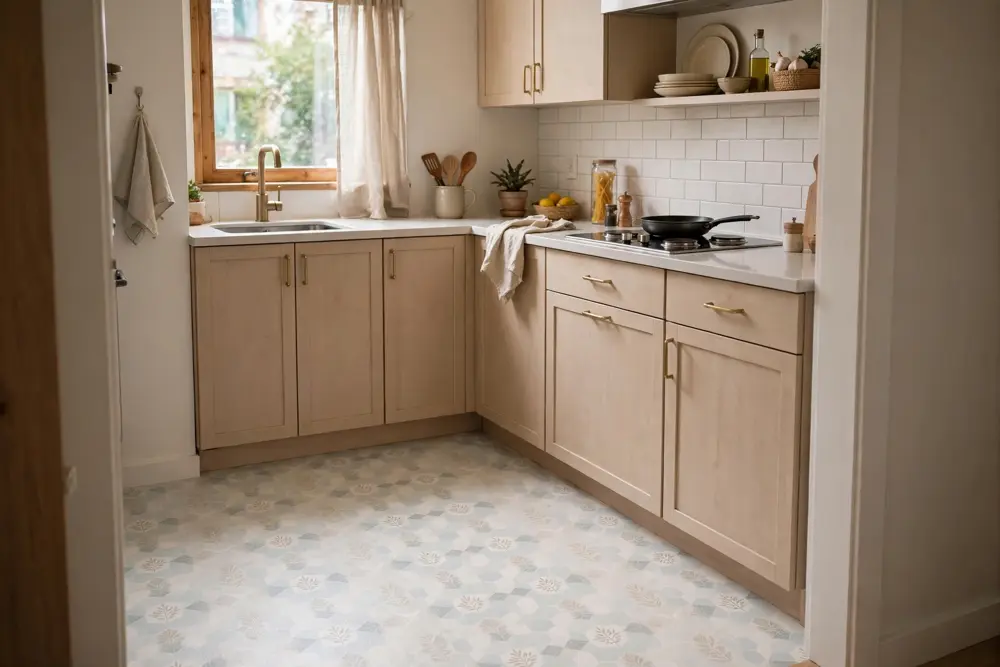
Idea 3: Waterproof vinyl and sheet flooring on a budget.
For a budget small kitchen, waterproof sheet vinyl or luxury vinyl tile gives a clean, continuous look for much less than tile or wood. Modern vinyl mimics wood, stone, and concrete convincingly, and it is soft, warm, and easy to clean. Sheet vinyl has almost no seams, so water cannot get underneath, which is a big advantage near the sink and dishwasher. Luxury vinyl tile and plank are easier to replace one piece at a time if one section is damaged. Choose a light, simple pattern, not a bold checker or dark stone, for a small kitchen, so the floor does not compete with cabinets and countertops.

Idea 4: Continuous flooring into the next room.
The simplest trick to make a small kitchen feel bigger is to use the same flooring in the kitchen and the adjoining room, with no threshold strip or colour change. Continuous flooring removes a visual boundary, so the eye reads both rooms as one larger space. This works best with waterproof luxury vinyl plank or tile that is suitable for both kitchen and living areas. If you cannot change the next room, use a floor colour that is close in tone to it, and avoid a dark kitchen floor next to a light living floor. Keep rugs small and light, or skip them in a very small kitchen, because a large dark rug breaks up the floor and makes the room feel smaller.
Choosing flooring for pets, kids, and busy cooks.
If you have pets, choose a floor that resists scratches and does not show every paw print. Luxury vinyl plank with a thick wear layer, 20 mil or more, and porcelain tile with a matte finish both handle claws well, while soft engineered wood scratches more easily and shows dents from dropped pans. For pets, avoid very dark floors, which show hair, and very light glossy floors, which show mud, and choose a mid light wood tone with some grain variation, which hides both. For children, grip and softness matter more than luxury. A matte vinyl plank or a textured tile gives grip when little feet run through with wet shoes, and vinyl is softer to fall on than porcelain. Keep a washable runner by the sink, not a thick rug, so spills can be cleaned quickly and the runner can go in the washing machine. For busy cooks who stand for long periods, underfoot comfort is a real factor. Vinyl plank, cork, and sheet vinyl are softer and warmer than tile, and they are easier on knees and backs during long prep sessions. If you love tile, add a cushioned anti fatigue mat at the sink and stove, in a light colour that matches the floor, so comfort does not break up the visual flow.
Underlay, subfloor, and installation.
A good floor starts with a flat, clean subfloor. Check for dips, loose boards, and old adhesive before you install anything new, because a new floor over an uneven subfloor will creak, crack, or show seams within months. For vinyl plank, use the underlay recommended by the manufacturer, which usually provides sound dampening and a small amount of cushioning, and do not add extra thick underlay unless the manufacturer allows it, because too much cushioning can cause planks to flex and unlock. For tile, a cement backer board and a level subfloor are essential, especially in an older home where floors may not be perfectly flat. Tile installation is slower and dustier than vinyl, and it usually needs a pro for cutting around cabinets, pipes, and doorways, while click lock vinyl plank is a popular DIY option for a small kitchen, often finished in a weekend. Leave expansion gaps around edges, as the manufacturer instructs, and cover them with skirting or beading, not with sealant alone. This gap lets wood look floors expand and contract with temperature and humidity, which is especially important in a kitchen where steam and heat change daily.
Cleaning and maintenance by material.
Maintenance is where small kitchen flooring either stays beautiful or starts to look tired. For vinyl plank and sheet vinyl, sweep daily, damp mop weekly with a mild cleaner, and wipe spills quickly, especially tomato, turmeric, and oil, which can stain light floors if left for days. Avoid steam mops on vinyl, which can loosen adhesive and warp planks, and avoid harsh bleach, which can dull the wear layer. For porcelain tile, sweep daily, mop weekly, and seal grout lines every one to two years, because grout stains even when tiles do not. Use a soft brush for grout, not a metal brush, and choose a light grout sealer that matches the grout colour, so sealed grout does not look darker than unsealed grout. For laminate and engineered wood in a kitchen, wipe spills immediately, never leave standing water, and use a barely damp mop, not a wet mop. Wood look floors in a kitchen need more care than vinyl, but they reward it with warmth, and a small kitchen with a light wood floor and white cabinets feels bright for years if spills are not left to soak.
Budget comparison and where to spend.
Budget is not just the price per square foot, it is the total cost: material, underlay, installation, skirting, and waste. Sheet vinyl is usually cheapest overall, luxury vinyl plank is mid range and often DIY friendly, laminate is similar to vinyl but less waterproof, and porcelain tile is higher, especially with pro installation and backer board. Where to spend: spend on a thicker wear layer for vinyl, on a matte finish for tile grip, and on proper subfloor preparation, which prevents expensive repairs later. Where to save: save on pattern, by choosing a simple light pattern instead of a premium designer pattern, and on brand, by choosing a reputable mid range product instead of the most expensive brand, because in a small kitchen the total area is small, so a mid range product still fits a modest budget. Always buy 10 percent extra for cuts, waste, and future repairs, and keep one spare box or a few spare planks in a closet. In a small kitchen, one damaged plank or tile is much easier to replace if you have the exact same batch and colour stored, rather than trying to match it years later when the product may be discontinued.
What to avoid.
- Dark floors in a very small, low light kitchen.
- Small, busy patterns on the whole floor.
- Non waterproof wood in a kitchen with frequent spills.
- Many different floor materials in one small space.
- Glossy tile that is slippery when wet.
Frequently Asked Questions
- What flooring makes a small kitchen look bigger? Light colours, large planks or large tiles, and continuous flooring into the next room. Light wood look vinyl, light porcelain tile, and pale laminate all help a small kitchen feel open.
- What is the best waterproof kitchen flooring? Porcelain tile and luxury vinyl plank or sheet vinyl. Both are waterproof, easy to clean, and durable for cooking spills, sink splashes, and pet traffic.
- Is vinyl flooring good for a small kitchen? Yes, especially luxury vinyl plank. It is waterproof, softer and warmer than tile, budget friendly, and available in light wood and stone looks that suit small kitchens.
- Should kitchen flooring match the living room floor? If possible, yes. Continuous flooring makes a small kitchen and living area feel like one larger space. If you cannot match exactly, choose a similar light tone.
- How do I clean kitchen flooring easily? Sweep daily, mop weekly with a damp mop and mild cleaner, and wipe spills quickly. Avoid harsh chemicals on vinyl and wood look floors, and seal grout on tile floors.
- What flooring is best on a budget for a small kitchen? Sheet vinyl and luxury vinyl plank, usually much cheaper installed than tile or real wood, and easier to replace in sections if damaged.
Conclusion
For a small kitchen, choose a light floor, a large format, and a waterproof material, and run it continuously if you can. Light wood look vinyl, large light tile, and simple sheet vinyl all make a small kitchen feel brighter, bigger, and easier to clean. Pick one light, simple floor, keep patterns calm, and let cabinets and countertops be the stars. That one choice can change how spacious your small kitchen feels, and it links naturally to the next parts of your kitchen cluster: colour schemes, island seating, hardware, and appliances.