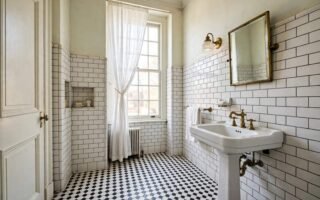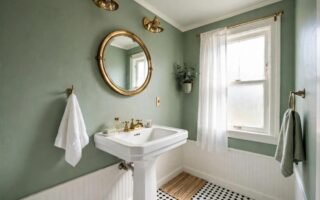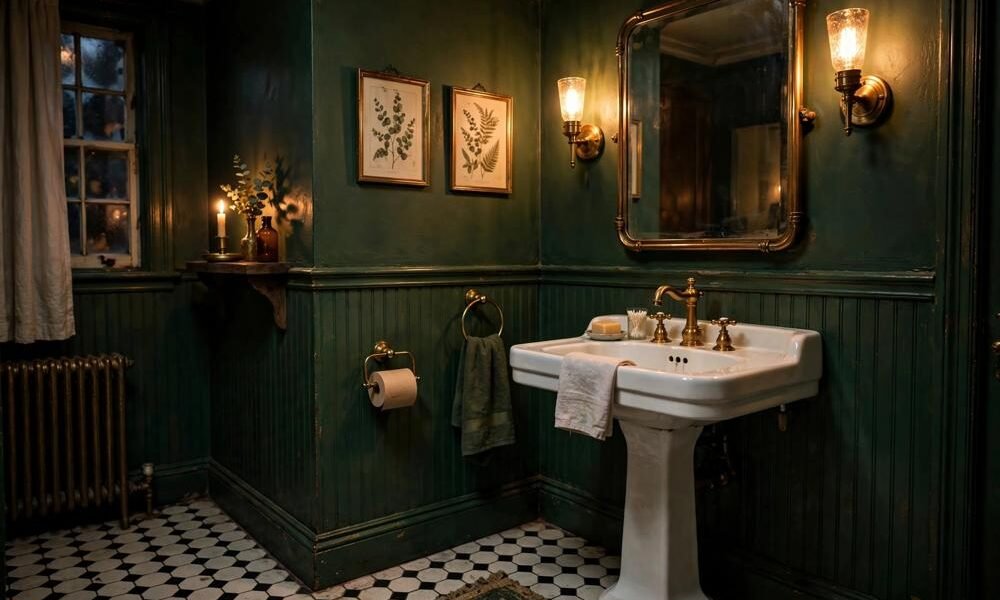
Yes, a moody vintage bathroom can feel rich and cosy rather than dark and cave-like. The trick is layered lighting, well-placed mirrors, and a mix of matte and gloss finishes, so the deep colour has something to reflect and the room still feels open.
Key takeaways
- Pick one deep colour as the lead, and keep the rest of the palette warm and simple.
- Layer the light: face-level vanity light, a ceiling light, and a soft extra source, rather than one harsh overhead bulb.
- Place mirrors opposite or beside the light, not in a dark corner, so they bounce light around the room.
- Mix matte walls with gloss tile or brass, so the dark room has shine and depth.
- In a bathroom with no window, light matters even more: use lighter grout, a pale ceiling and a large mirror.
1. Choose Your Deep Colour First
Deep green, burgundy, navy and charcoal all suit a moody vintage bathroom, but they feel very different. Deep green reads calm and botanical, burgundy reads warm and dramatic, navy reads classic, and charcoal reads modern-vintage. Pick the one you actually like living with, not just the one that photographs best.
Test the colour in your own bathroom before you commit. Paint a large board, move it around the room at different times of day, and check it against your tile, towels and brass. A colour that looks perfect in a shop can look muddy under a warm bathroom bulb, so a test board saves an expensive repaint.
2. Five Colour Palettes That Work
Here are five moody vintage palettes, each with a paint finish suggestion. Treat paint names as colour ideas, not as exact brand codes, and always test a sample in your own light.
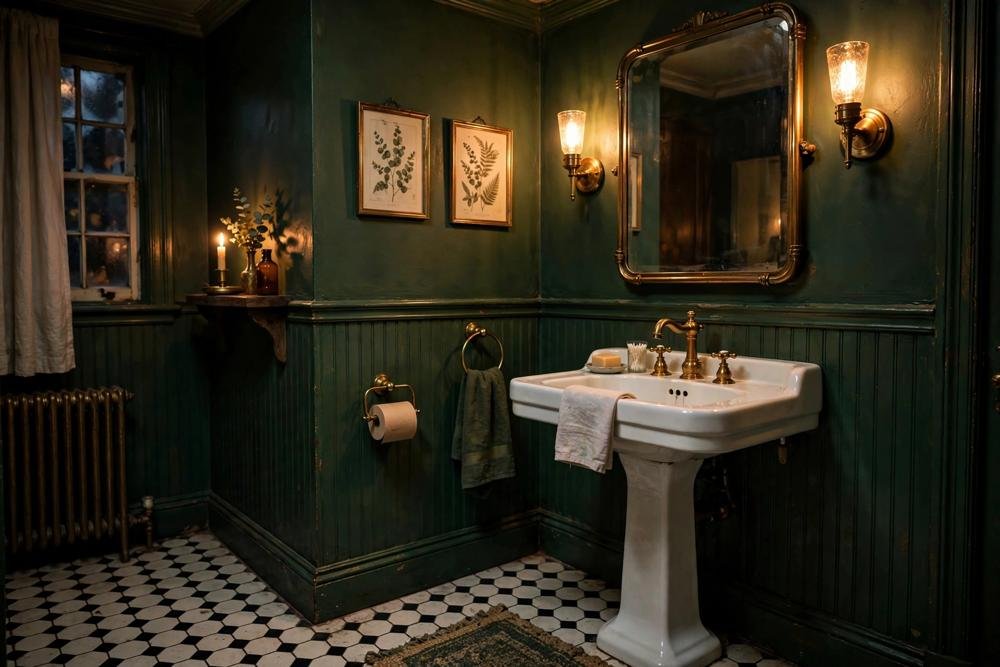
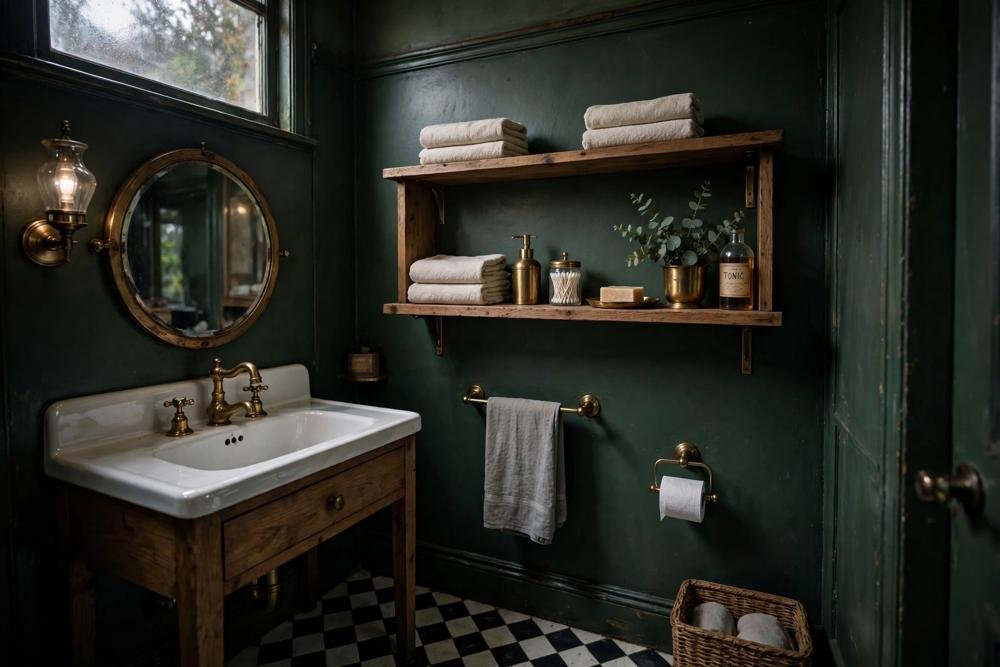
Deep green with cream and brass: green walls in a soft matte or eggshell finish, cream ceiling and towels, brass taps and mirror frame. This is the safest moody palette, and it suits both small and large bathrooms.
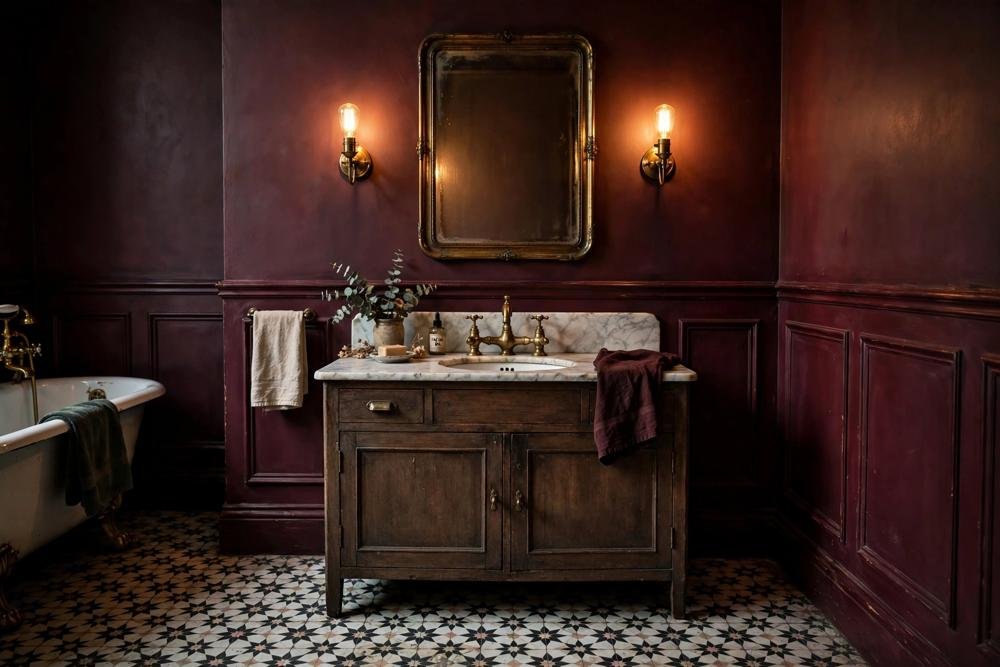
Burgundy with blush and gold: burgundy on one wall or below a rail, blush towels and a cream ceiling, gold or brass hardware. Keep the burgundy to one or two walls in a small room, so it warms the room without shrinking it.
Navy with white and nickel: navy walls, white tile and ceiling, nickel or chrome hardware. This reads classic rather than gloomy, especially with white grout and a large mirror.
Charcoal with wood and brass: charcoal walls, warm wood shelf or vanity, brass light and taps. The wood stops the charcoal from feeling cold, and the brass adds the vintage shine.
Plum with sage and cream: plum on a feature wall, sage towels, cream ceiling and tiles. This is the softest moody option, and it works well if you want drama without a very dark room.
3. Layer the Lighting, Do Not Rely on One Bulb
A single overhead light is the main reason dark bathrooms feel like caves. It lights the top of the room, casts shadows on faces, and leaves the corners dark. A moody bathroom needs at least three layers.
Start with face-level light beside or above the mirror, for getting ready. Add a ceiling light for general brightness. Then add a soft third source, such as a small wall light, a plug-in lamp on a shelf, or a dimmable light, for baths and evenings. A dimmer on the main light is one of the best small upgrades for a moody bathroom, because it lets you switch between bright mornings and soft evenings.
4. Place Mirrors to Bounce Light
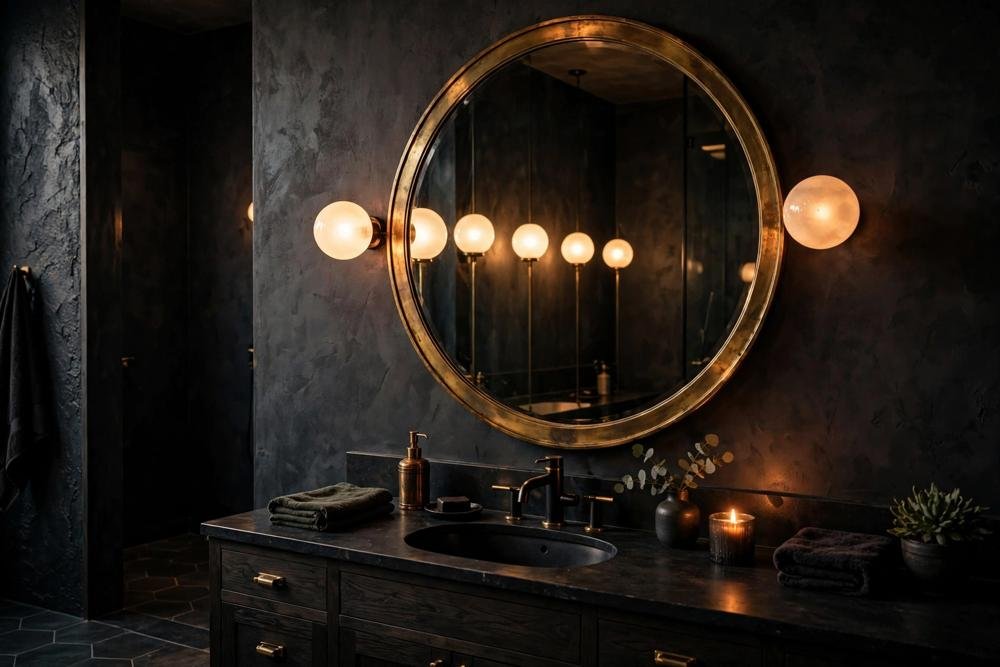
Mirrors are even more important in a dark bathroom than in a light one. A large mirror above the sink, placed where it catches the vanity light, doubles the light in the room. A second small mirror on a side wall can catch light from a window or a wall light and send it deeper into the room.
Avoid a small mirror lost on a large dark wall. In a moody bathroom, the mirror should be generous, with a frame that matches the room: brass for warmth, black for drama, or wood for a softer vintage feel. Keep the mirror clean, because a spotted mirror in a dark room shows every mark.
5. Mix Matte and Gloss on Purpose
A room that is all matte dark paint can feel flat. A room that is all gloss can feel harsh. The vintage moody look works best when matte and gloss are mixed: matte or eggshell paint on the walls, gloss tile on part of the wall or floor, and shiny brass or glass accessories.
Gloss subway tile, a glossy ceramic soap dish, or a glass shelf all catch light and give the dark room depth. If you are renting, a glossy shower curtain or a shiny tray can do the same job without changing the tile.
6. Keep the Ceiling and Grout Light
Two small choices make a big difference in a dark bathroom: a pale ceiling and light grout. A white or cream ceiling lifts the room, even when the walls are deep green or burgundy, and it reflects the ceiling light back down.
Light grout on dark or patterned tile also helps. Dark grout can make a tile wall look like one solid dark block, while light grout breaks the pattern into individual tiles and lets the eye move around the room. If your grout is already dark, a lighter rug, towels and ceiling can still lift the room.
7. Add Pattern Without Overwhelming the Room
Pattern is part of vintage style, but a moody bathroom needs pattern in moderation. A patterned floor, a patterned shower curtain, or a floral wallpaper on one wall is usually enough. Two bold patterns in a dark room can feel chaotic rather than cosy.
Choose one pattern that includes your deep colour, so it ties the room together. A floral curtain with deep green leaves, for example, links the walls, the towels and the accessories into one palette. Keep the other textiles plain, so the pattern has room to breathe.
8. Lighting Tips for a Bathroom With No Window
A no-window bathroom is the hardest place to go moody, but it can still work. Use brighter face-level light than you think you need, because there is no daylight to help. Choose a large mirror, a pale ceiling, and light towels and accessories to balance the dark walls.
Ventilation matters too. A dark, steamy bathroom with poor ventilation feels closed in, while a well-ventilated one feels fresh. Run the fan, open the door after a shower, and wipe down surfaces that stay damp. A moody bathroom should feel like a cosy retreat, not a damp cave.
9. Choose Brass That Warms, Not Shouts
Brass is the classic moody vintage metal, because it warms a dark room. Brushed brass reads softer and more vintage than very shiny gold, and it shows fewer water marks. Match the brass across the main pieces: taps, towel rail, mirror frame and light fitting.
If brass feels too much, mix it with one other finish, such as black or nickel, but keep the mix to two finishes total. Too many metal finishes in a dark room look scattered, while two finishes look intentional.
10. Keep Storage Tidy and Closed Where Possible
A dark bathroom shows clutter more than a light one, because every light-coloured bottle stands out against the dark wall. Closed storage, a vanity with doors, or baskets with lids keep the room calm.
If you love open shelves, limit them to a few beautiful things: rolled towels, a glass jar, a small plant that suits a bathroom. Put everyday bottles behind a door or in a basket, so the dark walls and the vintage details are what you notice, not a crowd of products.
11. Small Room, Dark Colour: The Rules That Help
Dark colour in a small bathroom works when you follow a few rules. Keep the darkest colour to the walls, not the ceiling. Use one large mirror, not several small ones. Keep the floor lighter than the walls, or use a light rug to break up a dark floor. And leave clear space in front of the sink and toilet, because a cramped dark room feels smaller than a cramped light room.
If you are unsure, start with one dark wall and live with it for a few weeks. You can always paint more walls later, but repainting a whole dark room back to light is a bigger job.
A final check before you commit is worth the time. Look at the room in the morning, in the evening, and with only the vanity light on, because a moody bathroom is used at all three times and the colour will shift in each light. Check the colour against your towels, your rug and your brass, and check that the mirror still catches enough light to be useful for getting ready. If the room feels rich and calm in all three lights, the palette is right. If it feels gloomy in even one of them, lighten the ceiling, add a second light source, or choose a slightly softer deep colour before you paint the whole room.
What to Avoid
- Do not rely on a single overhead light in a dark bathroom. Layer the light or the room will feel like a cave.
- Do not paint every surface dark, including the ceiling. A pale ceiling lifts the whole room.
- Do not mix three bold patterns in a small dark room. Pick one pattern and keep the rest calm.
- Do not use only matte finishes. Add gloss tile, glass or brass so the room has shine and depth.
- Do not ignore ventilation, especially in a no-window bathroom. Steam and damp undo a moody look fast.
- Do not buy a dark fixture or tile without testing the colour under your own bathroom light first.
Costs: Three Moody Budgets
Prices are estimates only and vary by location and product choice. Check current prices before you buy.
Under $150: paint for one or two walls, a shower curtain, towels and a brass-look tray or accessories. This gives the moody feeling without changing tile or fixtures.
Under $500: add a new mirror, a vanity light, swapped hardware and a rug. This is where the lighting layers and the mirror placement really start to work.
Over $500: add tile, a new vanity light fitting or a fixture change, with professional help for plumbing or electrical work. This is the full moody renovation, and it is worth getting quotes before you start.
Conclusion
A moody vintage bathroom works when deep colour is balanced by layered light, well-placed mirrors, and a mix of matte and gloss. Pick one deep colour, keep the ceiling pale, layer the lighting, and let brass and pattern do the warming. Start with paint and accessories, live with the dark walls for a few weeks, and only commit to tile or fixtures once you know the mood suits your room and your light.
FAQs
How do I keep a dark bathroom from feeling like a cave?
Layer the lighting, use a large mirror where it catches the light, keep the ceiling pale, and mix matte walls with gloss tile or brass. Those four choices together keep a deep-coloured bathroom feeling rich rather than closed in.
What is the best colour for a moody vintage bathroom?
Deep green is the safest choice for most bathrooms, because it reads calm and suits brass and cream. Burgundy is warmer and more dramatic, navy is more classic, and charcoal suits a modern-vintage look. Test a sample in your own bathroom light before you commit.
Can a small bathroom handle dark walls?
Yes, if you keep the darkest colour to the walls, keep the ceiling pale, use one large mirror, and leave clear floor space. Starting with one dark wall and living with it for a few weeks is a good test before painting the whole room.
What lighting works best in a moody bathroom?
Face-level vanity light, a ceiling light, and a soft third source, ideally on a dimmer. Globe vanity lights suit vintage style well, and warm bulbs suit moody colours better than very cool white bulbs.
How do I light a moody bathroom with no window?
Use brighter face-level light than you would in a bathroom with a window, a large mirror, a pale ceiling, and light towels and accessories to balance the dark walls. Good ventilation also matters, so the room feels fresh rather than closed in.
Is brass or black hardware better for a dark vintage bathroom?
Brass usually warms a dark room better, especially brushed brass, which reads softer and more vintage. Black hardware can also work for a bolder look. Keep the mix to two metal finishes total, so the room looks intentional rather than scattered.