The kitchen island is no longer just an extra countertop. In 2026 it is the heart of the modern home — a place for cooking, eating, working, gathering, and living. Getting its size right is one of the most important decisions in any kitchen design.
Choose an island that is too large and it becomes an obstacle course — a piece of furniture that dominates the room and makes every cooking session feel like navigation. Choose one that is too small and it fails at the tasks you bought it for: not enough seating, not enough prep space, not enough storage.
The right kitchen island size is not a single number. It is a calculation — one that takes into account your kitchen’s total square footage, the clearance you need to move freely around it, how many people you want to seat, whether you want a sink or cooktop in it, and what height works for how you actually cook.
This guide covers every dimension: the standard sizes, the minimum sizes, the clearance rules, the stool and seating charts, the pendant light sizing guide, and the specific size considerations for every island use case — from a small apartment island to a large entertaining kitchen.
Before any specific dimensions, the single most important kitchen island sizing principle:
Your island should occupy no more than 10% of your kitchen’s total square footage.
This is the rule that professional designers and kitchen planners use consistently — and it is the one that most people ignore when they fall in love with an island in a showroom and then discover it does not fit their kitchen.
How to calculate your maximum island size
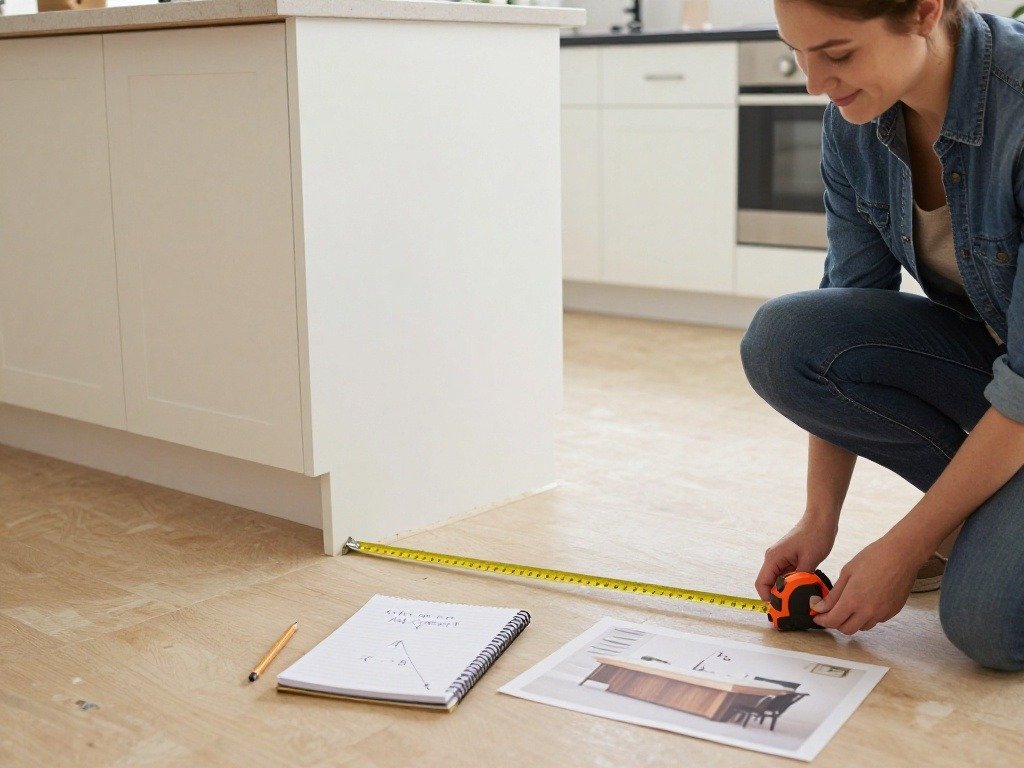
Step 1: Measure your kitchen from wall to wall in both directions Step 2: Multiply length × width to get total square footage Step 3: Multiply by 0.10 to get your maximum island footprint Step 4: Choose an island within that footprint
Example:
Kitchen: 12 feet × 14 feet = 168 square feet
Maximum island footprint: 168 × 0.10 = 16.8 square feet
An island of 4 feet × 4 feet = 16 square feet ✅
An island of 4 feet × 5 feet = 20 square feet ❌ Too large
The clearance rule that works alongside the 10% formula:
There must be at least 36 inches of clearance between every side of the island and any surrounding cabinets, walls, or appliances. 42 inches is preferred — particularly on the side where the dishwasher or oven door opens. 48 inches is ideal for kitchens where multiple people cook simultaneously.
Standard Kitchen Island Sizes — The Complete Reference Table
These are the most common kitchen island dimensions in 2026 — referenced by kitchen size:
Kitchen Size
Kitchen Sq Ft
Recommended Island Size
Max Island Footprint
Very small
Under 100 sq ft
No island — use a rolling cart
—
Small
100–150 sq ft
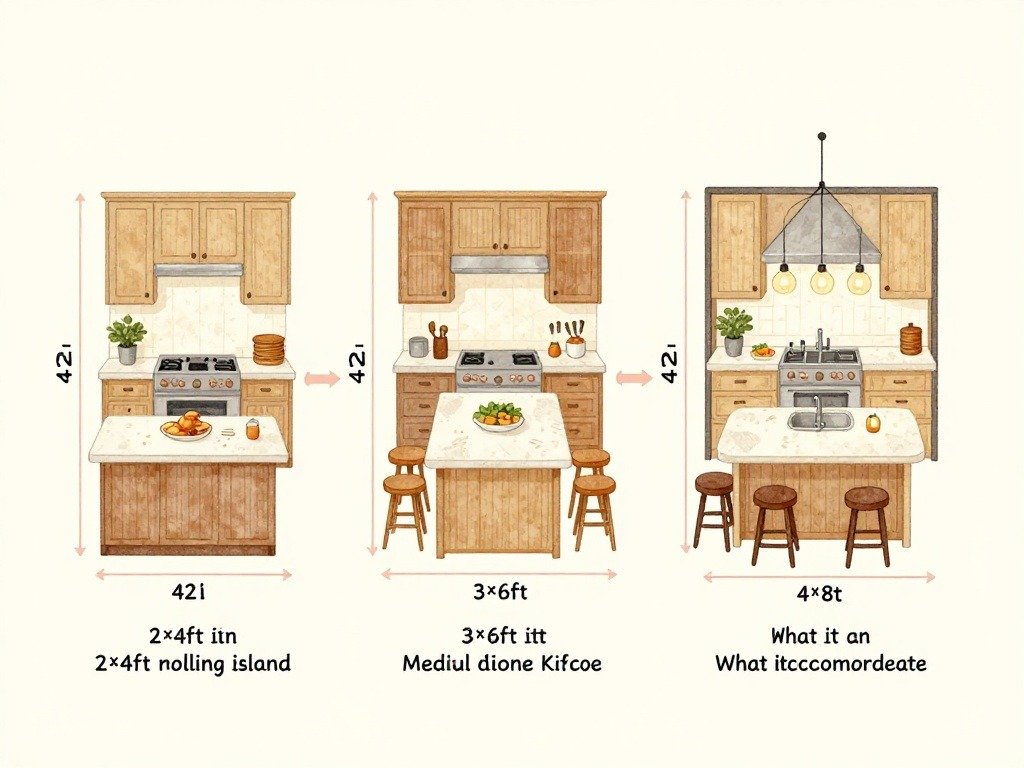
24″ × 48″ (2′ × 4′)
10–15 sq ft
Compact
150–200 sq ft
30″ × 60″ (2.5′ × 5′)
15–20 sq ft
Medium
200–300 sq ft
36″ × 72″ (3′ × 6′)
20–30 sq ft
Large
300–400 sq ft
36″–48″ × 84″–96″ (3–4′ × 7–8′)
30–40 sq ft
Very large
400+ sq ft
48″+ × 96″–120″ (4’+ × 8–10′)
40+ sq ft
The most popular kitchen island size in 2026: 36 inches × 72 inches (3 feet × 6 feet). This size works in medium kitchens, accommodates 3–4 bar stools, allows for both prep space and seating, and can incorporate a small sink or appliance.
Minimum Kitchen Island Size — What Is the Smallest That Works?
The minimum functional kitchen island size depends entirely on what you want the island to do.
Minimum size for storage and prep only (no seating)
24 inches × 36 inches (2 feet × 3 feet)
This is the absolute minimum for a fixed kitchen island that adds meaningful prep space. At this size you can use the island for food preparation and storage — but not seating, not a sink, and not a cooktop. It works in small galley kitchens and studio apartments where any additional counter space is genuinely useful.
Rolling kitchen islands can be even smaller — 18 inches × 30 inches — because they can be moved out of the way when not needed.
Minimum size for seating (bar stools on one side)
24 inches × 48 inches (2 feet × 4 feet)
The minimum island size that allows for seating on one side. At this size you can accommodate 2 bar stools but the seating area is tight. There is limited prep space on the non-seating side.
For comfortable seating for 2 people: 24 inches × 60 inches (2 feet × 5 feet)
Minimum size for a sink
36 inches × 60 inches (3 feet × 5 feet)
A kitchen island with a sink requires significantly more space than a simple prep island. The sink itself requires approximately 24–30 inches of the island’s length, plus at least 12 inches of clear space on each side of the sink for usability. Add plumbing access requirements and the minimum functional island with a sink is 36 inches × 60 inches.
Minimum size for a cooktop
42 inches × 72 inches (3.5 feet × 6 feet)
A cooktop in an island requires even more space than a sink due to safety clearance requirements. The cooktop needs a minimum 12-inch clearance to any edge, plus adequate ventilation above (which affects ceiling height requirements). Minimum functional island with cooktop: 42 inches wide × 72 inches long.
Kitchen Island Height — What Height Is Right for You?
Most people think of kitchen island size as a two-dimensional question — length and width. But height is the third dimension that is equally important for how the island feels to use.
Height
Best For
Standard Stool Height
34–36 inches
Cooking and food preparation — matches standard counter height
Counter stool 24–26 inches
36 inches
The most common kitchen island height — works for both prep and casual dining
Counter stool 24–26 inches
42 inches
Bar height — creates a visual separation between kitchen and living area
Bar stool 28–30 inches
Two-tier
Both prep (lower) and bar seating (higher) — the most versatile island design
Bar stool 28–30 inches for raised section
The practical advice: Match height to your primary use. If you cook seriously — making pastry, chopping large quantities, preparing complex dishes — the standard 36-inch counter height is what you want. If the island is primarily for casual dining, coffee, and socialising, the 42-inch bar height creates the right atmosphere and naturally separates the kitchen from the dining zone.
Two-tier islands solve the problem of wanting both — a lower prep surface on the working side, a raised bar surface on the seating side. If you want both a prep area and bar seating, a two-tier island is a smart solution. The raised bar section hides kitchen clutter from the dining area.
Kitchen Island Seating — How Many Stools Fit at What Size?
This is one of the most searched questions in the entire kitchen island size cluster — and the answer requires knowing two things: how much space each stool needs, and whether the island has seating on one side or two.
The standard space allocation per stool:
Each bar stool needs 24 inches minimum of island length
28 inches is comfortable — allows movement in and out without disturbing neighbours
30 inches is generous — comfortable for adults of all sizes
The Kitchen Island Stool Chart
Island Length
Stools (24″ each, tight)
Stools (28″ each, comfortable)
Stools (30″ each, generous)
4 feet (48″)
2 stools
1 stool
1 stool
5 feet (60″)
2 stools
2 stools
2 stools
6 feet (72″)
3 stools
2–3 stools
2 stools
7 feet (84″)
3 stools
3 stools
2–3 stools
8 feet (96″)
4 stools
3–4 stools
3 stools
10 feet (120″)
5 stools
4 stools
4 stools
Kitchen Island Size for 3 Stools
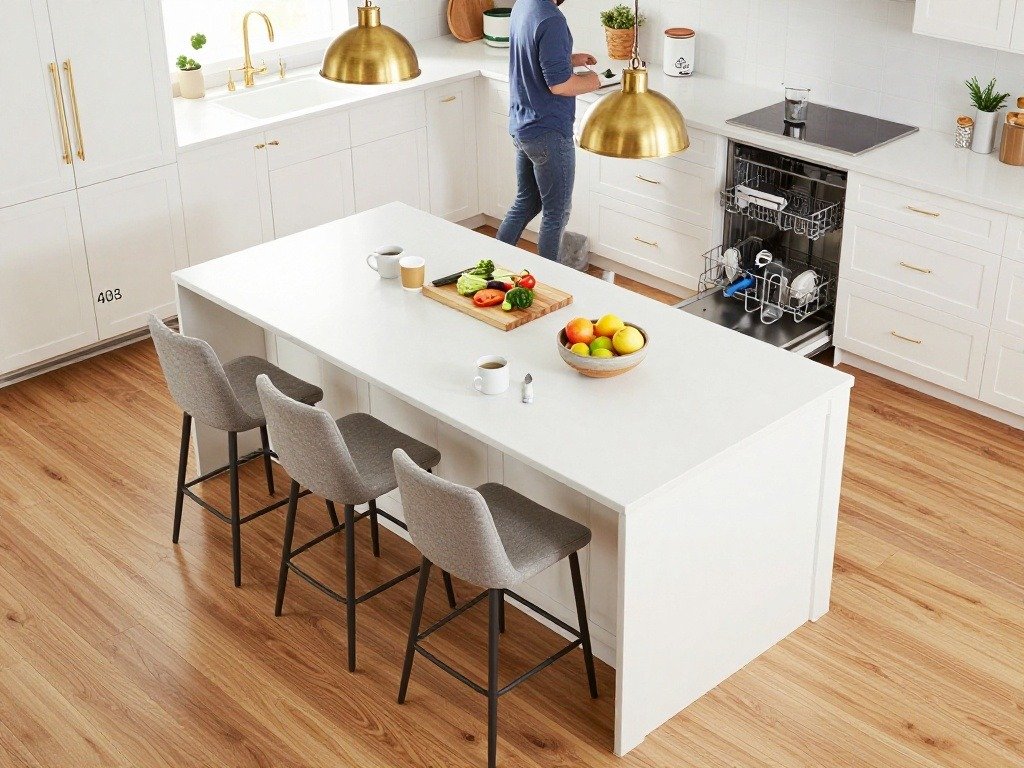
For comfortable seating for 3 people at a kitchen island, you need a minimum island length of 72 inches (6 feet).
At 6 feet, three stools at 24 inches each fill the full seating side — tight but usable. For comfortable 3-stool seating, a 78–84 inch (6.5–7 foot) island is better, allowing 26–28 inches per stool.
The minimum island depth for stool seating: 12 inches of overhang beyond the cabinet face is the minimum for stool seating. 15–18 inches of overhang is comfortable — allows knees to tuck under the counter naturally.
Kitchen Island Size for 4 Stools
For comfortable seating for 4 people at a kitchen island, you need a minimum island length of 96 inches (8 feet).
At 8 feet, four stools at 24 inches each fit exactly. For comfortable 4-stool seating — where people can get on and off their stools without disturbing each other — a 96–108 inch (8–9 foot) island is the recommended size.
Important: A 4-stool island requires a kitchen large enough to accommodate the island itself plus the 42-inch minimum clearance on all sides. The total kitchen space required for a comfortable 4-stool island is typically 300+ square feet.
The width (depth) of your kitchen island determines how much prep surface you have and whether the island can include under-counter storage, a dishwasher, or other appliances.
Island Width
What It Can Accommodate
24 inches
Storage only — no appliances, tight prep space
30 inches
Light prep and storage — still quite narrow
36 inches
Standard width — storage, prep, and can incorporate a small appliance
42 inches
Comfortable — can incorporate a dishwasher (24 inches wide) plus storage
48 inches
Generous — allows two-sided storage, dishwasher, and ample prep space
The most common kitchen island width: 36 inches. This matches standard base cabinet depth and works with standard countertop overhangs for seating.
For a sink island: 36–42 inch width minimum. The sink cabinet requires specific width (typically 30–33 inches for a standard undermount sink) and the surrounding island needs to be wide enough to accommodate it plus plumbing access below.
Size of Kitchen Island With Sink — The Specific Guide
Adding a sink to your kitchen island requires more careful size planning than any other island feature — because the sink affects both the island’s dimensions and the kitchen’s plumbing.
Minimum island size for a sink: 36 inches wide × 60 inches long
Recommended island size for a sink: 36–42 inches wide × 72 inches long
Why you need more length with a sink:
The sink itself occupies 24–36 inches of the island’s length
You need 12 inches minimum of clear counter space on each side of the sink
If you want seating alongside the sink island, add 24–28 inches per stool to the non-sink end
The practical sink island sizing calculation: Sink width (30″) + clearance each side (12″ × 2 = 24″) + seating for 2 (48″) = 102 inches minimum for a sink island that also seats 2 people comfortably.
Plumbing consideration: A sink in a kitchen island requires a drain line run under the floor — not through a wall. This is significantly more expensive than a standard wall-positioned sink (typically $500–$2,000 additional cost for the drain run) and must be planned before the island is installed.
Kitchen Island Clearance — The Rules That Most People Get Wrong
The clearance around your kitchen island is not a preference — it is a functional requirement. Getting it wrong means a kitchen that is frustrating to cook in every single day.
The Clearance Rules
36 inches: The minimum. Building codes in most jurisdictions require a minimum 36-inch clearance between a kitchen island and surrounding cabinets or walls. At 36 inches, one person can pass comfortably but two people working simultaneously will constantly be in each other’s way.
42 inches: The recommendation. Most kitchen designers recommend 42 inches as the practical minimum. This allows one person to work at the counter while another passes behind them without contact.
48 inches: The ideal. In a kitchen used by two or more cooks simultaneously, 48-inch clearance is the minimum that allows both people to work comfortably without constantly navigating around each other.
42 inches minimum — door must open fully while someone passes
Refrigerator
36 inches minimum — drawer refrigerators need less than French door models
Oven door
42 inches minimum — oven door plus person bending to remove items
Cooktop
No specific clearance opposite — but 42″ beside for traffic flow
What Size Pendant Lights for Kitchen Island?
Pendant light sizing for kitchen islands is one of the most searched questions within this cluster — and one of the most consistently under-answered. Here is the complete guide:
Pendant Size
Single pendant above a small island (under 4 feet): A single pendant with a diameter of 10–12 inches. Position centred above the island.
Two pendants above a medium island (4–6 feet): Each pendant should have a diameter of 8–10 inches. Position each pendant approximately one third of the island’s length in from each end.
Three pendants above a large island (6 feet+): Each pendant should have a diameter of 6–8 inches. Space evenly across the island’s length, with equal spacing between pendants and between the outer pendants and the island’s ends.
The general rule: The total diameter of all pendants combined should equal approximately 70–80% of the island’s length.
Pendant Height
Hang pendants 30–36 inches above the island countertop surface. This provides adequate task lighting for cooking and prep while keeping the pendants at a height where they do not obstruct sightlines across the island.
In kitchens with high ceilings (10 feet or more), you can hang pendants slightly lower — down to 28 inches above the counter — to prevent them from looking lost in the ceiling height.
What Size Linear Light Over Kitchen Island?
For linear pendant lights (a single long bar pendant rather than multiple individual pendants):
The linear pendant should be approximately 75% of the island’s length
Example: 6-foot island → 54-inch (4.5-foot) linear pendant
Hang 30–36 inches above the countertop surface
Cost: Linear pendants for kitchen islands range from $80–$400 for mid-range options, $400–$1,500+ for premium designs.
Kitchen Island Size by Aesthetic — The Style-Specific Guide
This is the section no competitor provides — the right island size for each kitchen aesthetic style:
Modern Minimalist Kitchen Island
Recommended size: Exactly right for the space — not a millimetre too large. Modern minimalist kitchens are defined by proportion. The island should be visually centred in the kitchen with equal clearance on all sides if possible.
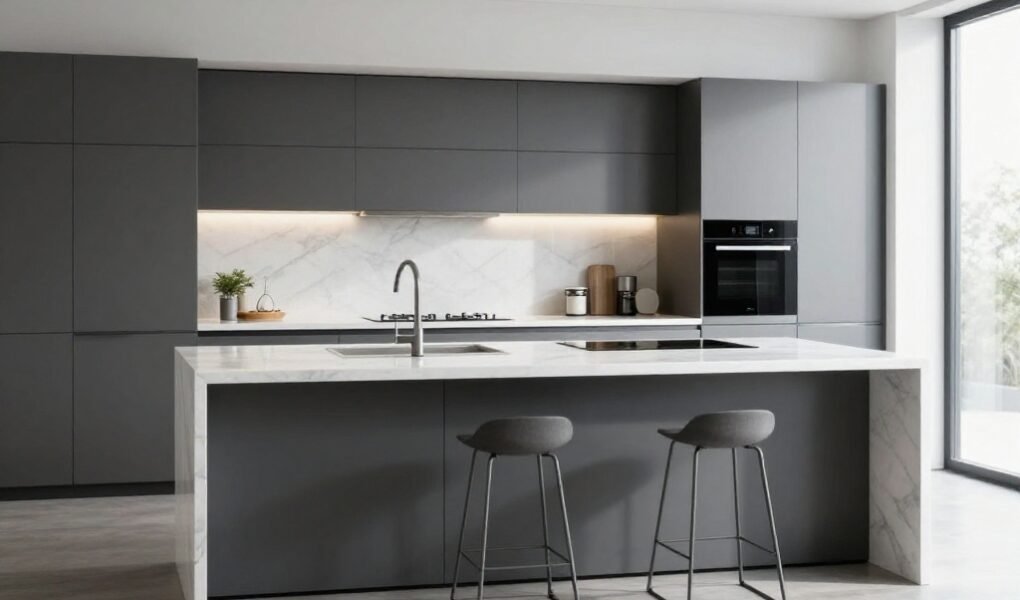
Best dimensions: 36 inches wide × 60–84 inches long, depending on kitchen size Height: Standard 36 inches with no overhang — seating on bar-height stools at the end only, not the long side Material: Waterfall quartz or concrete — the countertop extends over the ends of the island to the floor
Farmhouse Kitchen Island
Recommended size: Generous — farmhouse kitchens are designed for cooking and gathering. A farmhouse island should be large enough to roll pastry, knead bread, and have three children sitting on stools doing homework simultaneously.
Best dimensions: 36–48 inches wide × 72–96 inches long Height: Standard 36 inches Material: Butcher block or honed granite — warm, workmanlike, beautiful with use marks
Dark Academia Kitchen Island
Recommended size: Substantial and architectural — the dark academia island is a piece of furniture as much as a functional surface. It should look like it belongs in a Victorian kitchen or a country house scullery.
Best dimensions: 36–42 inches wide × 60–84 inches long Height: 36 inches Material: Dark soapstone, dark granite, or a painted wood island in deep navy or forest green
Romantic Kitchen Island
Recommended size: Not too large — romantic kitchens are intimate rather than grand. The island should be proportioned for two people cooking together, not a catering operation.
Best dimensions: 30–36 inches wide × 48–72 inches long Height: 36 inches with a 15-inch overhang for two stools on one side Material: Marble or marble-effect quartz — white with grey or gold veining
Boho Kitchen Island
Recommended size: A rolling butcher block cart rather than a fixed island — it can be moved for spontaneous gatherings and rearranged when the mood changes. Boho kitchens resist permanence.
Best dimensions: 24–30 inches wide × 36–48 inches long (rolling cart format) Height: 36 inches Material: Butcher block or tiled top in a Moroccan or encaustic pattern
Kitchen Island Size — Room-by-Room Application Guide
Small Kitchen Island Size (Kitchen under 150 sq ft)
In a small kitchen, any island must be approached with extreme care — the risk of getting it wrong and ending up with a kitchen that is impossible to cook in is significant.
Options for small kitchens:
Rolling island cart ($80–$300): The safest choice for small kitchens. A rolling cart with a butcher block top provides extra prep space and storage that can be moved when floor space is needed. Minimum footprint: 18 inches × 30 inches. Not permanently installed — no clearance rule applies.
Fixed narrow island (24 inches × 48 inches): For a small kitchen of 120–150 square feet with good clearance (at least 42 inches on all sides), a narrow fixed island of 24 inches × 48 inches can work. Provides storage and prep space but not seating.
Peninsula instead of island: In a truly small kitchen, a peninsula — an extension of the existing cabinetry that projects into the room — provides island-like function with clearance required on only two sides rather than four.
Medium Kitchen Island Size (Kitchen 150–250 sq ft)
The medium kitchen is where most people’s island ambitions and kitchen realities meet. At 150–250 square feet, you have enough space for a genuine island — but the dimensions need to be calculated rather than assumed.
Recommended island for a 12×15 foot kitchen (180 sq ft): Maximum island footprint: 18 square feet Best island dimensions: 36 inches × 60 inches (15 square feet) Clearance: This leaves 42–48 inches on the long sides and 48–54 inches on the short ends — comfortable for a medium kitchen.
Recommended island for a 12×18 foot kitchen (216 sq ft): Maximum island footprint: 21 square feet Best island dimensions: 36 inches × 72 inches (18 square feet) Clearance: 42+ inches on all sides — ideal for a 3-stool island with prep space.
Large Kitchen Island Size (Kitchen 250+ sq ft)
In a large kitchen, the island can be genuinely generous — but scale still matters. An oversized island in a large kitchen does not look wrong because of the 10% rule being violated — it looks wrong because the proportional relationship between the island and the room feels off.
Recommended island for a 15×20 foot kitchen (300 sq ft): Maximum island footprint: 30 square feet Best island dimensions: 42 inches × 84 inches (24.5 square feet) This size comfortably seats 3 stools, includes a sink, and provides generous prep space.
Recommended island for a 20×25 foot kitchen (500 sq ft): Maximum island footprint: 50 square feet Best island dimensions: 48 inches × 120 inches (40 square feet) A 10-foot island with 4 stools, a sink, a dishwasher, and generous prep space. The large kitchen statement island.
2026 Kitchen Island Trends — Size and Style
Trend 1 — The kitchen island is the heart of the home. In 2026 the kitchen island is no longer just an extra countertop — it is a place for cooking, eating, working, and socialising. This shift toward multifunctional island use is driving demand for larger islands with more thoughtful size planning.
Trend 2 — Two-tier islands are mainstream. The two-tier island — with a lower prep surface and a raised bar surface — has moved from luxury custom kitchens to mainstream in 2026. The raised bar section hides kitchen clutter from the dining area while providing comfortable bar stool seating.
Trend 3 — Waterfall countertops on islands. The countertop material extending over the ends of the island to the floor — the waterfall edge — is one of the most popular island design details of 2026. It adds to the perceived size of the island and creates a sculptural quality.
Trend 4 — Pendant lighting as statement. Oversized single pendant lights above kitchen islands — one large statement fixture rather than multiple smaller ones — are increasingly popular in 2026. Sizing: the pendant diameter should equal approximately 25–30% of the island’s width for this statement look.
Trend 5 — Islands with integrated charging and technology. Pop-up USB outlets and wireless charging pads integrated into island surfaces are standard in premium 2026 kitchen islands — reflecting the island’s role as the home’s social and working hub.
A: The most common standard kitchen island size is 36 inches wide × 72 inches long (3 feet × 6 feet). This size works in medium kitchens of 150–250 square feet, accommodates 3 bar stools comfortably on one long side, provides adequate prep space on the opposite side, and can incorporate a small sink or under-counter appliance. The standard height is 36 inches — matching standard counter height. A good rule of thumb is that the island should not exceed 10% of your kitchen’s total square footage.
Q: What is the minimum size for a kitchen island?
A: The minimum size for a fixed kitchen island that adds meaningful function is 24 inches × 48 inches (2 feet × 4 feet). At this size, the island provides extra prep space and storage but cannot comfortably accommodate seating on the long side — only at the ends. For a kitchen island with seating for 2 people, the minimum is 24 inches × 60 inches. For a sink island, the minimum is 36 inches × 60 inches. For a 3-stool island, the minimum is 36 inches × 72 inches. Regardless of island size, you must maintain a minimum 36-inch clearance (42 inches recommended) between the island and surrounding cabinets on all sides.
Q: What size kitchen island fits 4 stools?
A: A kitchen island that comfortably seats 4 people needs to be at least 96 inches (8 feet) long. This provides 24 inches per stool — the minimum comfortable allocation. For more comfortable seating where people can get on and off without disturbing their neighbours, a 108-inch (9-foot) island providing 27 inches per stool is better. The island also needs a minimum 12-inch overhang beyond the cabinet face for knees to tuck under — 15–18 inches is more comfortable. A 4-stool island requires a kitchen of at least 250–300 square feet to accommodate the island plus 42-inch clearance on all sides.
Q: What size kitchen island fits 3 stools?
A: A kitchen island that comfortably seats 3 people needs to be at least 72 inches (6 feet) long. At 6 feet, three stools at 24 inches each fill the full seating side with no room to spare — functional but tight. For comfortable 3-stool seating, a 78–84 inch (6.5–7 foot) island is better, allowing 26–28 inches per stool. The island depth needs a minimum 12-inch overhang for seating, with 15–18 inches being more comfortable for adults.
Q: How much clearance does a kitchen island need?
A: A minimum of 36 inches of clearance between the island and any surrounding cabinets, walls, or appliances is required by most building codes. However 36 inches is tight — most kitchen designers recommend 42 inches as the practical working minimum, which allows one person to work while another passes behind them. 48 inches is ideal for kitchens where two or more people cook simultaneously. Pay particular attention to clearance opposite the dishwasher, oven, and refrigerator — these doors need to open fully while someone stands at the island.
Q: How do I calculate the right kitchen island size for my kitchen?
A: Use the 10% rule — your island footprint should not exceed 10% of your kitchen’s total square footage. Measure your kitchen (length × width), multiply by 0.10, and that is your maximum island area in square feet. Then subtract 42 inches from each side of your kitchen for clearance — the remaining central space tells you the maximum island dimensions. Choose an island within both constraints. If you want seating, add 24 inches per stool to your minimum length calculation. If you want a sink, add a minimum of 60 inches to your length calculation.
Q: What size island do I need for a 10×10 kitchen?
A: A 10×10 foot kitchen (100 square feet) is at the absolute lower limit for a fixed kitchen island. The maximum island footprint using the 10% rule is 10 square feet — approximately 24 inches × 60 inches. After subtracting 42-inch clearance on all sides, you have very limited central space. In a 10×10 kitchen, a rolling island cart (18–24 inches × 30–36 inches) is a more practical choice than a fixed island — it provides the function without permanently reducing the kitchen’s working space.
Q: What size pendant lights work over a kitchen island?
A: For two pendants over a standard 6-foot island, use pendants with a diameter of 8–10 inches, positioned one third of the island’s length in from each end, hung 30–36 inches above the countertop. For three pendants over a larger island, use 6–8 inch diameter pendants spaced evenly. For a single linear pendant, choose a fixture approximately 75% of the island’s length. The general sizing rule: the total combined diameter of all pendants should equal approximately 70–80% of the island’s length.
Q: Should a kitchen island be the same height as the counter?
A: Standard kitchen islands match counter height at 36 inches — this is the most versatile height for both food preparation and casual dining with counter stools. Bar height islands at 42 inches are better for pure seating and create a visual separation between the kitchen and adjacent living areas, but are less comfortable for food prep requiring downward pressure (rolling pastry, kneading bread). Two-tier islands solve the problem — a 36-inch prep surface on the working side and a 42-inch bar surface on the seating side.
Q: Is a 4-foot by 2-foot island too small?
A: A 4-foot by 2-foot island (48 inches × 24 inches) is the minimum functional fixed island size. At this size you can use the island for prep and storage but seating on the long sides is too tight — only end seating (one stool at each end) is practical. If your kitchen has the clearance for a 4×2 island, it is worth having — extra prep space is always valuable. But if you want genuine seating capacity, you need to go longer (5 feet minimum for 2 stools, 6 feet for 3 stools).
Home decor enthusiast and founder of astheticdecor.com. Passionate about helping people create beautiful, personalised aesthetic rooms on any budget. Covering romantic, dark academia, kawaii, gothic, coquette and every aesthetic in between.