Introduction
A kitchen island is the focal point of the kitchen, and also its main workspace, so styling it is a balance. Too much decor makes cooking hard, too little makes the island feel cold and bare. This guide is not about island size, which your site already covers. It is about styling: how to make an island look intentional, stay useful, and change with the seasons without buying a whole new set of decor every time.
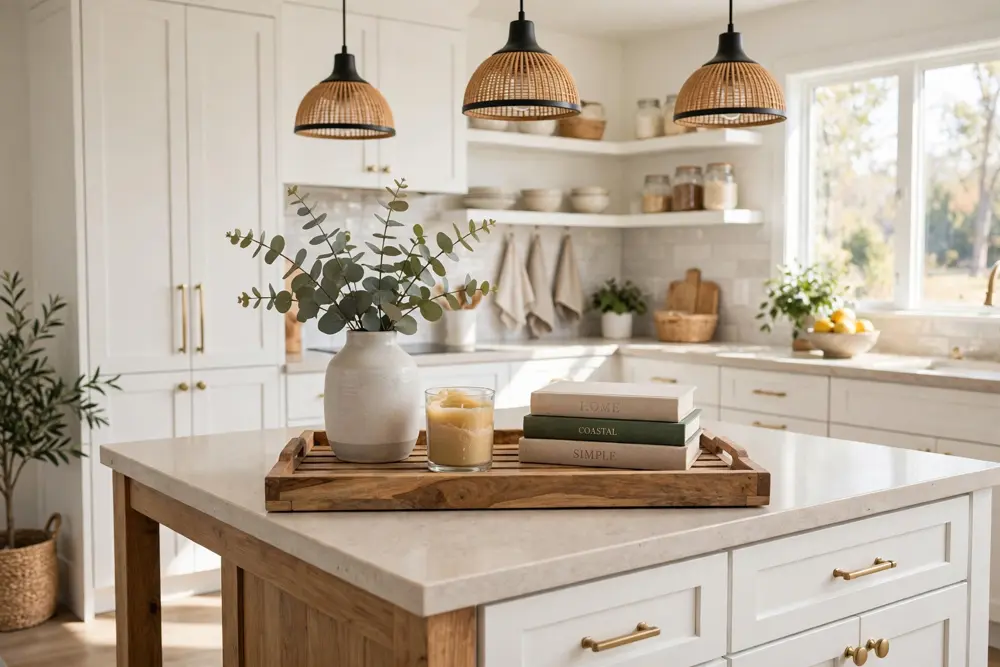
Idea 1: Use a tray as a boundary
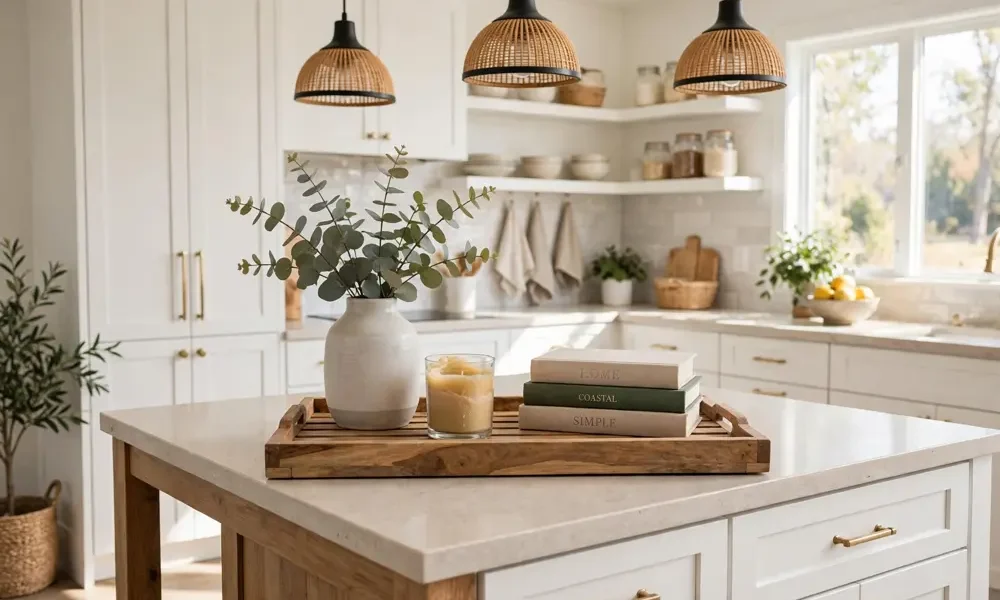
A tray defines a zone on the island, corralling small items so they do not spread across the whole surface. Choose a tray in a neutral material, wood, bamboo, stone, or metal, with a simple rectangular or round shape. The tray itself is the decor, what goes inside it is secondary. Use the tray for daily items that would otherwise clutter the island: a salt cellar, a small bottle of oil, a pepper mill, a jar of utensils. Limit contents to three or four pieces, so the island reads as organised rather than busy. A tray also works as a landing spot, but keep it near the edge, not in the middle, because the island is primarily a workspace. If you need a drop zone for keys or mail, a wall mounted hook nearby is better than a tray full of paper in the centre.
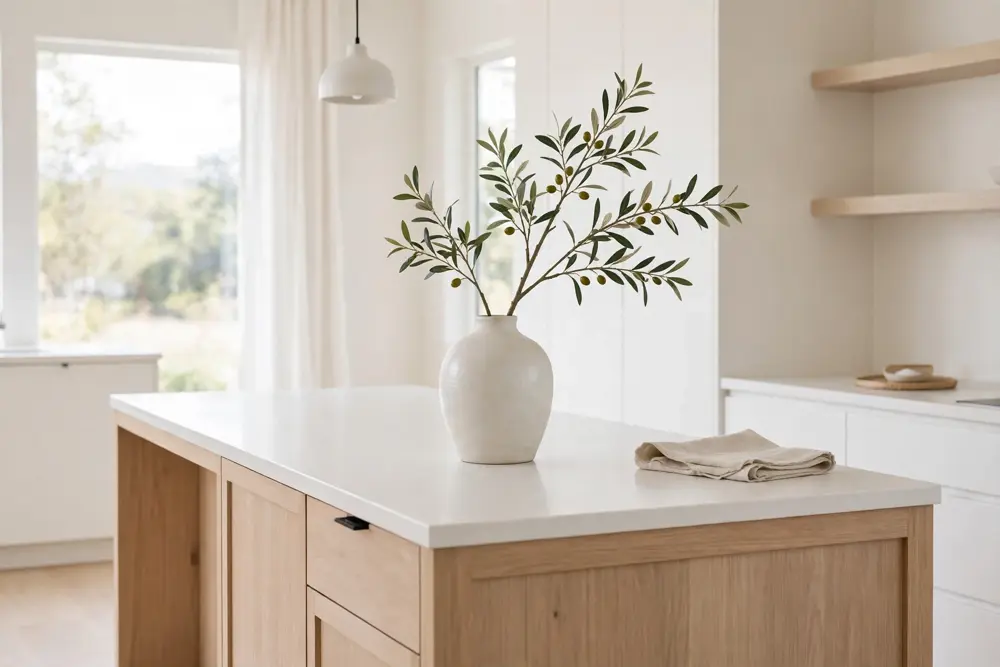
Idea 2: Style with a single vessel
The single vessel is the foundation of minimalist island styling: one bowl, one vase, or one tray placed off centre. Choose a piece with a simple shape and a natural material, ceramic, stone, wood, or matte metal, and avoid busy patterns. Fill it sparingly. A ceramic bowl can hold three or four pieces of fruit, a vase can hold a single branch or a small bunch of stems. The point is negative space, both inside and around the object. If you find yourself adding more to make it look finished, stop, the emptiness is the design. Place the vessel at one end of the island, not the centre, to leave the middle clear for work and create an asymmetrical, intentional composition. For a larger island, two vessels at opposite ends can work, but keep them similar in weight and material.
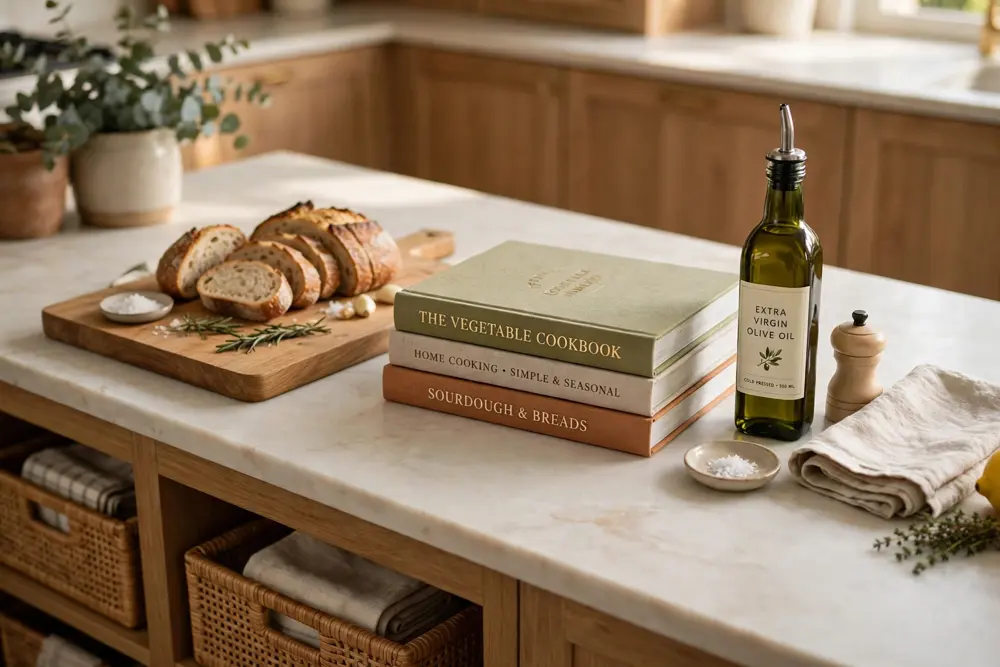
Idea 3: Make daily items beautiful
The best island decor is decor you use. Functional tools, cutting boards, salt cellars, olive oil bottles, and cookbooks, can be beautiful everyday decor, and they keep the island ready for cooking instead of just for looking at. Layer textures: a wooden cutting board, a linen towel, a textured ceramic bowl, and a small plant. Warm minimalism thrives on tactile variety, far more than on colour variety. Group objects in odd numbers, three is classic, vary heights, and stick to two or three colours. Start with one anchor piece, like a large bowl or vase, then add smaller elements around it: a stack of two or three books, a small plant, or a candle. Keep everything within the footprint of the tray or a rough oval shape, and leave empty space around the grouping. For entertaining, the same tray can hold appetiser plates, napkins, and coasters in marble or stone, so the island becomes a gathering spot without a full restyle.
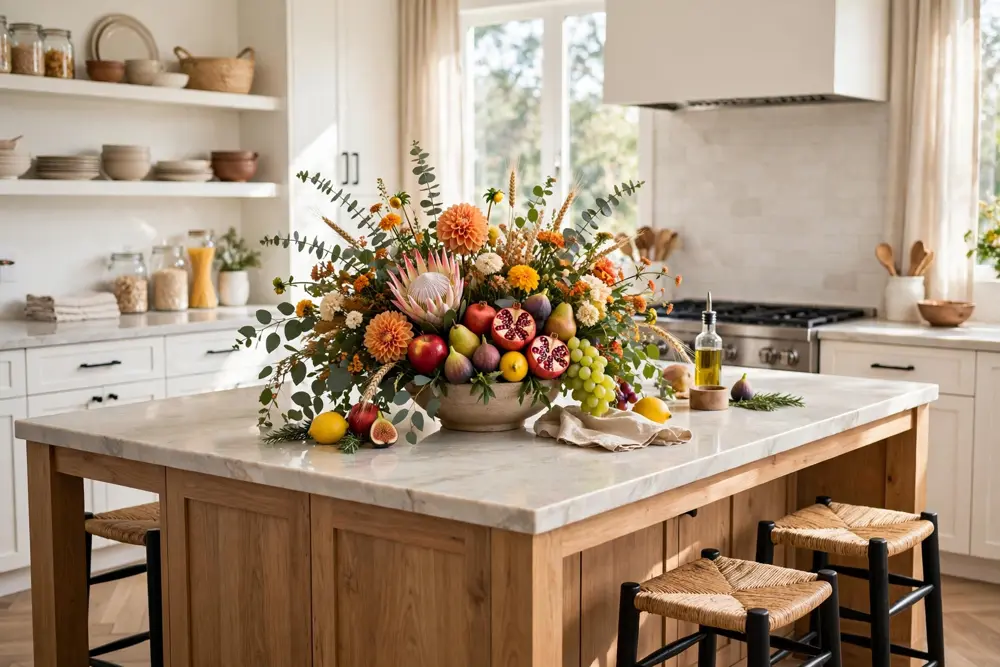
Idea 4: Swap seasonally, change only one or two pieces
You do not need to update a centrepiece every season, but a small seasonal swap keeps the kitchen feeling fresh. Change only one or two elements, not the entire arrangement, so you are not constantly buying new decor. Spring and summer: lighter materials, woven seagrass, pastel ceramics, fresh flowers, a bowl of lemons or limes. Fall: darker wood, brass, dried branches, a small pumpkin or gourds, cinnamon sticks. Winter: evergreens, a simple candle arrangement, pine branches, faux snowberries. Summer: a bowl of limes, a cheerful runner, fresh herbs. Store seasonal decor in a labelled bin in a closet or cabinet, so changeover takes under ten minutes. Avoid themed decor that feels kitschy, like plastic pumpkins or glittery snowmen, and use natural materials and colours that hint at the season instead. For a year round base, choose a neutral tray and vessel that work in every season, and just swap a small accent like a candle or a bowl of fruit.
What to avoid
Overcrowding, the most common island mistake, which creates visual chaos and makes the island less functional. Leaving the island completely bare, which can feel cold and institutional. Many small items clustered together, which creates visual noise. Tall arrangements that block sightlines across the island. Delicate fabrics or deep crevices that cannot be wiped clean after cooking splatters.
Frequently asked questions
What should I put on my kitchen island?
A tray, one tall element, one low element, and one organic item, like a small potted herb, a vase with one branch, or a bowl of fruit. Keep it to three or four pieces, in two or three colours, with empty space around it.
How do I style a kitchen island without clutter?
Group objects in odd numbers, vary heights, and keep everything within a tray footprint or a rough oval. Use one anchor piece, then smaller elements around it, and leave 30 to 40 percent of the tray empty.
Should a kitchen island centrepiece change with the seasons?
It does not have to, but a small swap helps. Change only one or two elements, not the whole arrangement, and store seasonal pieces in a labelled bin so changeover takes under ten minutes.
How do I keep island decor clean from cooking splatters?
Use durable, easy to clean materials: sealed wood trays, ceramics, and glass for vases and bowls. Avoid deep crevices and delicate fabrics that cannot be wiped, and keep the main display zone away from the direct stove splash area.
What is the best tray size for a kitchen island?
A tray that fills about 60 to 70 percent of your island length, for example a 16 inch round tray on a 4 foot island. It should be large enough to hold a centrepiece and a few accents, but not so big that it overwhelms the workspace.
Can I style a small island?
Yes, even more simply. Use one vessel at one end, a small tray for daily oil and salt, and leave the rest clear. For a small island, one beautiful bowl or one vase is often better than a full vignette.
Conclusion
Style your island like you cook in it: one tray to define the zone, one vessel to anchor it, daily items that are beautiful because you use them, and a seasonal swap of just one or two pieces. Clear the island, place one intentional grouping, and leave the rest empty for work. That calm, purposeful look is what makes an island feel both styled and lived in, and it links naturally to the next parts of your kitchen cluster: open shelving, flooring, colour schemes, and island seating.