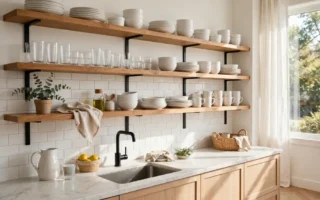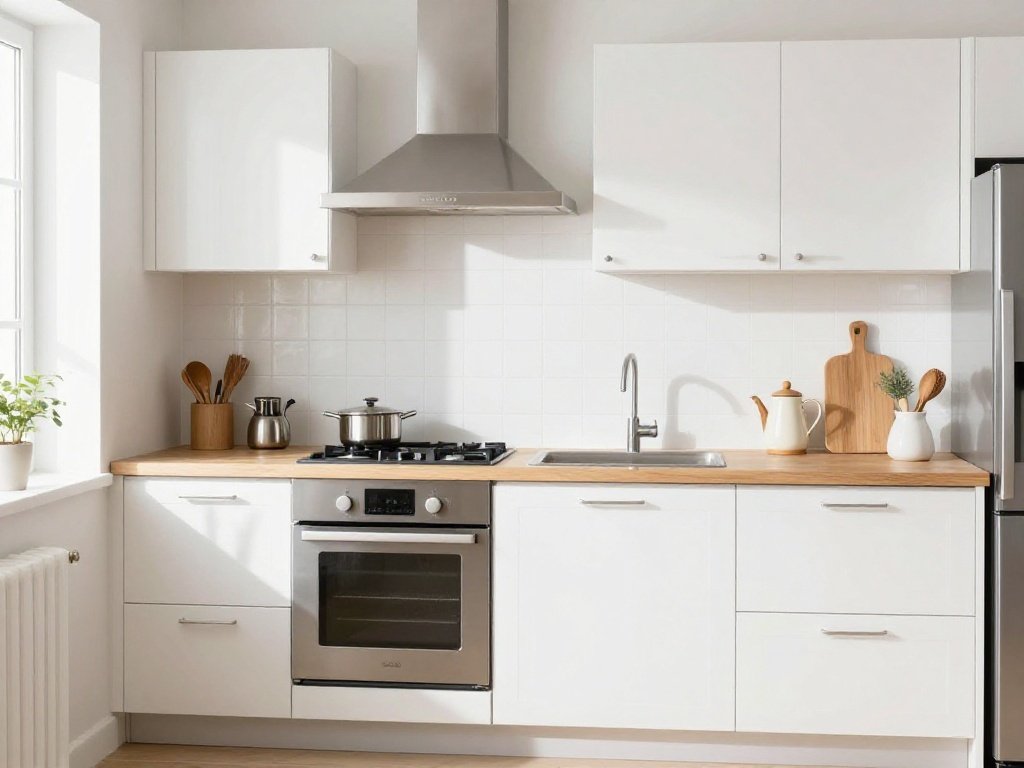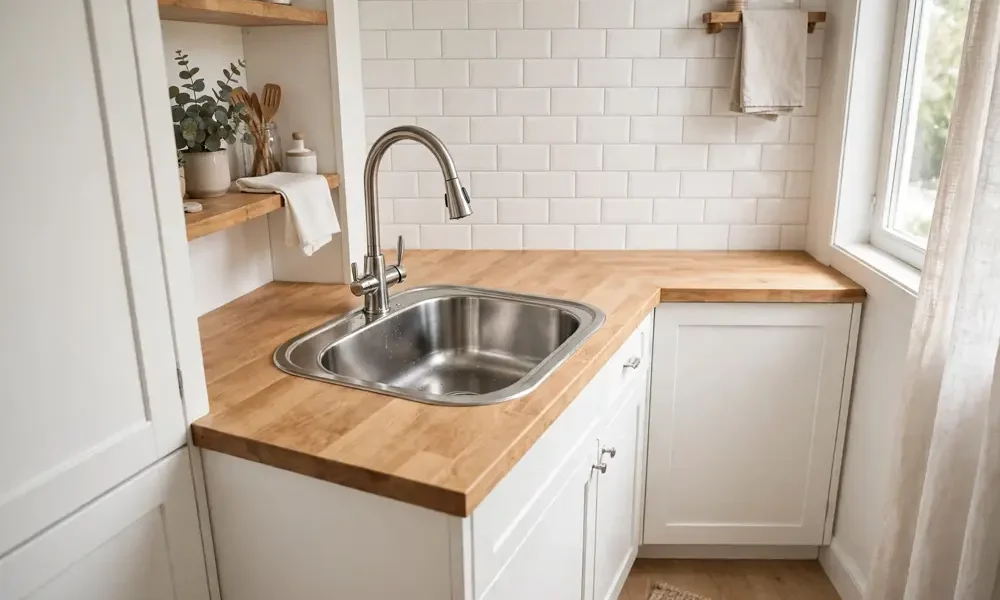
The sink is where a kitchen actually works, so a wrong sink and faucet choice is felt every day. Too big a faucet on a tiny sink splashes everywhere, too small a sink cannot fit a baking tray, and a finish that shows every water spot will look tired in weeks.
Most guides just list faucet types. This guide matches sink and faucet together, for small kitchens, busy families, and renters, with size, height, reach, and finish explained in plain terms.
Idea 1: Single bowl sink for small kitchens
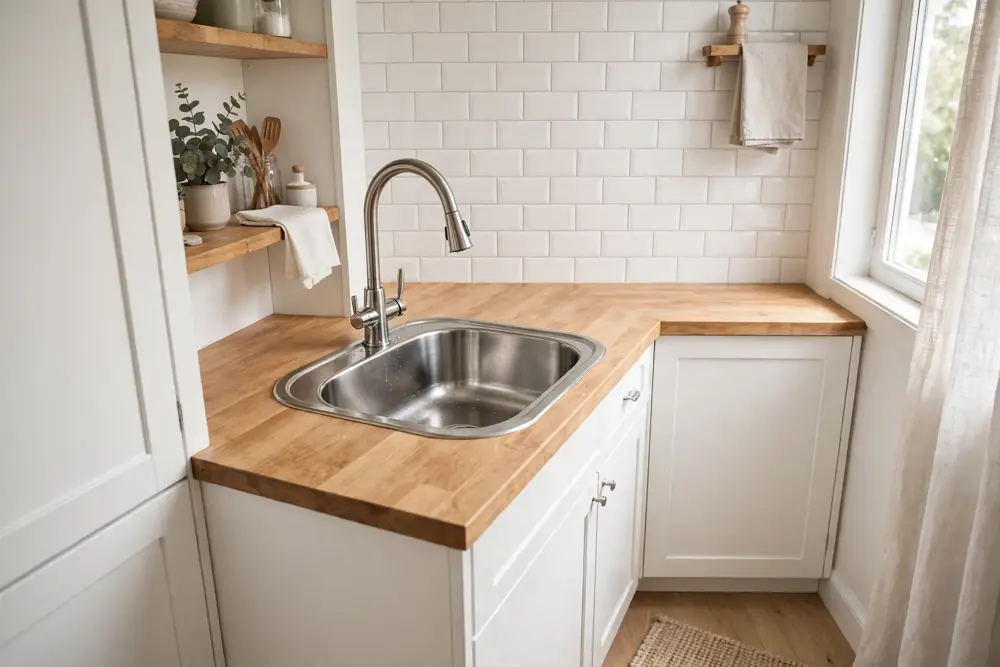
For most small kitchens, a single bowl sink is the smartest choice. One large bowl fits pots, baking trays, and cutting boards that a split double bowl cannot, and it is easier to clean because there is no divider in the way.
Choose 16 or 18 gauge stainless steel, 304 grade, for durability and noise reduction. A deeper bowl, 9 to 10 inches, forgives splashing and hides dirty dishes, while a shallower 7 inch bowl is better if you are shorter or want easier reach.
Undermount sinks look clean and let you wipe crumbs straight into the sink, while top mount sinks are easier to install and replace, which matters for renters and budget kitchens.
Idea 2: Pull down faucet for everyday cooking
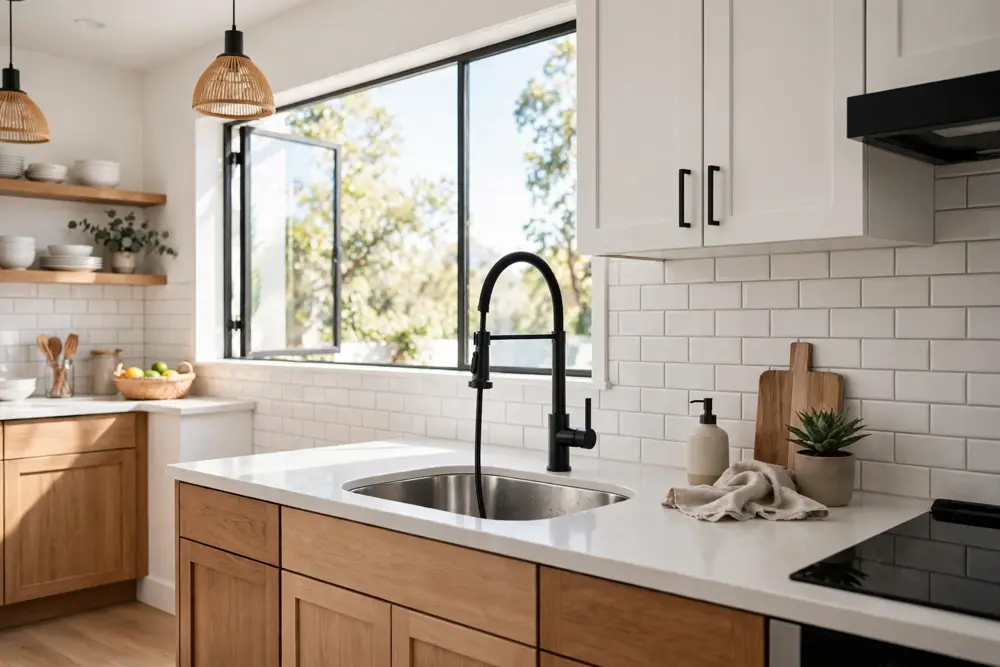
A pull down faucet is the best all rounder for a busy kitchen. The spray head pulls straight down, gives excellent clearance for tall pots, and reaches every corner of a single bowl sink with a 360 degree swivel and a retractable hose.
Look for:
- Flow rate 1.5 to 1.8 GPM, enough pressure to rinse well without wasting water
- Two or three spray modes: stream for filling, spray for rinsing, pause for soapy hands
- A spray head that docks securely, so it does not droop or leak over time
- A single handle for one handed use, especially when hands are greasy
For a small sink, avoid oversized pro style spring coil faucets, 18 to 24 inches tall, which dominate a tiny sink and splash. A compact pull down, about 14 to 16 inches tall, is ample for pots and low enough to avoid clashing with upper cabinets.
Idea 3: Low arc and pull out faucets for tight spaces
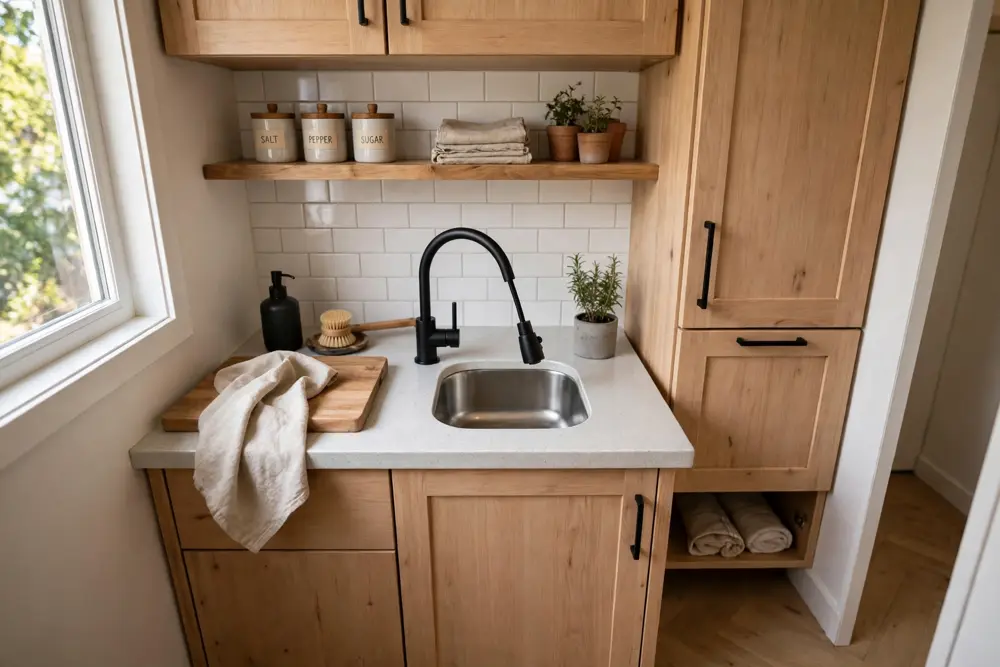
If your sink sits under a window, a low shelf, or upper cabinets, a low arc or pull out faucet is better than a tall gooseneck. A pull out head extends horizontally, which suits smaller sinks and limited vertical space, while a straight spout is simple, classic, and easy to clean.
For a small bar or prep sink, about 15 to 18 inches wide, aim for a faucet roughly 10 to 12 inches tall with a slim body and compact pull down head. Check that the spout reach lands in the centre of the bowl, not on the back wall, and that you have a few inches from the top of the faucet to the underside of the cabinet for cleaning.
A touchless faucet can also help in a busy kitchen, because you can start water with a wave when hands are covered in raw meat or dough, but in hard water areas sensor electronics wear faster than a simple brass faucet, so weigh convenience against long term maintenance.
Idea 4: Finishes and farmhouse style that last
Finish is where cheap decisions show fast. Brushed or satin stainless and nickel hide smudges and water spots better than mirror polished chrome, which looks dingy in hard water within weeks without daily wiping.
Matte black can look sharp in a modern kitchen, but only from a top brand with proven finish durability. Cheap matte black chips, fades, and highlights every dried water spot in under a year.
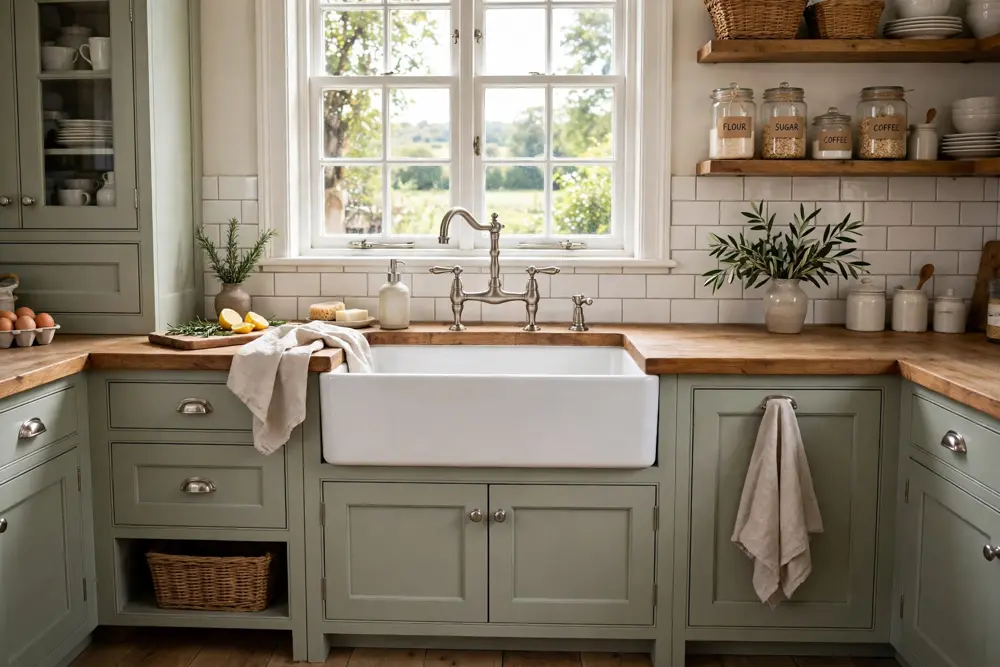
For farmhouse style, a deep apron front sink pairs well with a bridge faucet, with two handles at 8 inch centres and a side sprayer, or with a gooseneck pull down for easier daily use. A bridge with a pull down spout is the honest middle: classic look, modern spray, about 16 inches tall and 9 inch reach.
Check hole count before you buy: a single hole faucet needs a deck plate to cover a three hole sink, a bridge needs two holes plus a sprayer hole, and a farmhouse sink with no holes needs a deck or wall mount faucet.
What to avoid
- A giant industrial faucet on a tiny sink, which looks out of proportion and splashes
- A faucet whose spout does not reach the centre of the bowl
- High pressure jets for routine rinsing in a shallow sink, which cause splashing and noise
- Cheap painted finishes that peel, especially matte black from unknown brands
- Buying a faucet without checking sink holes, cabinet clearance, and water pressure
Frequently asked questions
What size sink is best for a small kitchen?
A single bowl sink, about 25 to 30 inches wide, 9 to 10 inches deep, in 16 or 18 gauge stainless steel. It fits large pots and trays, is easier to clean than a double bowl, and works with most pull down faucets.
What is the best faucet for a small kitchen sink?
A compact pull down or pull out faucet, 14 to 16 inches tall, with 1.5 to 1.8 GPM flow, a 360 degree swivel, and a spray head that docks securely. For very tight vertical space, choose a low arc or pull out model instead of a tall gooseneck.
How tall should a kitchen faucet be?
For most kitchens, 14 to 16 inches overall is ample for pots while staying low enough for upper cabinets. For a small bar sink, 10 to 12 inches is better. Always leave a few inches between the top of the faucet and the underside of the cabinet.
Which faucet finish hides water spots best?
Brushed or satin stainless and nickel, and spot resistant stainless finishes. They diffuse reflections and hide smudges better than mirror chrome. Avoid cheap matte black if you have hard water, unless it is from a proven brand.
Can I replace just the faucet without replacing the sink?
Yes, in most cases. Match the new faucet to your existing hole count, using a deck plate to cover unused holes, and check spout reach and height against your sink size. Single hole deck mounted faucets are usually the simplest retrofit.
Is a farmhouse sink good for a small kitchen?
It can be, if you choose a single bowl apron sink that fits your cabinet width, usually 30 inches or less for a small kitchen, and pair it with a faucet that reaches the centre of the bowl. A deep apron bowl hides dishes and fits large items, but it needs sturdy cabinet support.
Conclusion
Match sink and faucet as a pair, not as separate purchases. Choose a single bowl sink that fits your largest pot, a pull down or low arc faucet that reaches its centre without dominating the space, and a brushed finish that will still look good in a year of hard water.
Measure your sink width, hole count, and cabinet clearance first, then pick the faucet that fits those numbers. That one careful match makes washing, cooking, and cleaning feel easier every day, and it links naturally to the next parts of your kitchen cluster: islands, open shelving, flooring, and colour schemes.