Introduction
Cabinet colour is the biggest colour decision in a kitchen, because cabinets cover most of the wall. A good cabinet colour makes a small kitchen feel bright and calm, while a wrong one can make it feel dark, busy, or dated, even with new hardware and countertops.
This guide gives colour schemes that actually work, with cabinet, wall, and countertop pairings, so you do not have to guess.
Idea 1: White and Warm White Cabinets
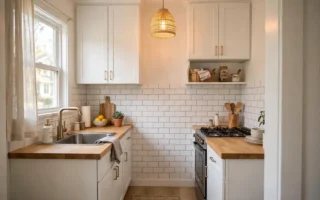
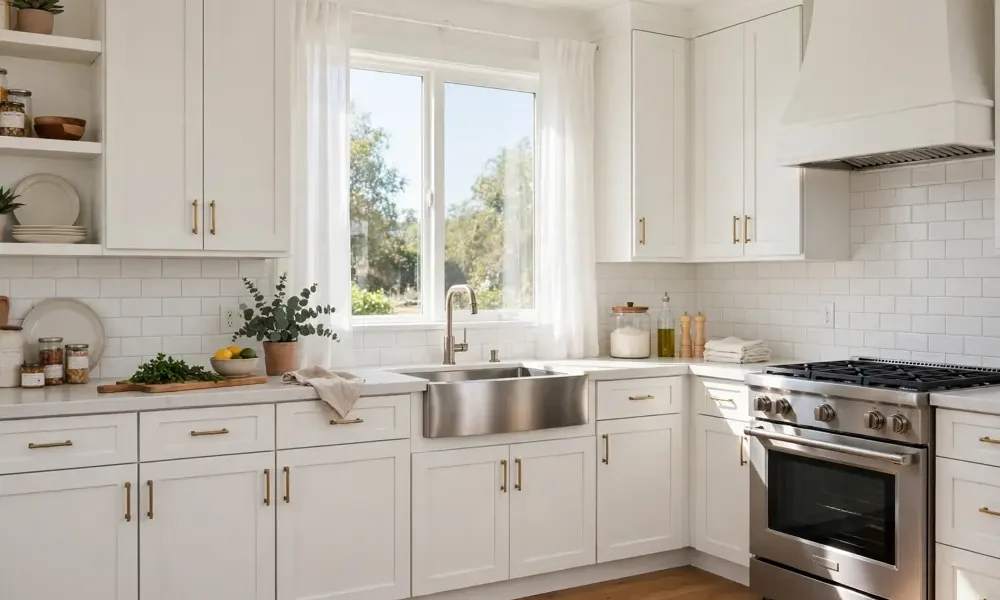
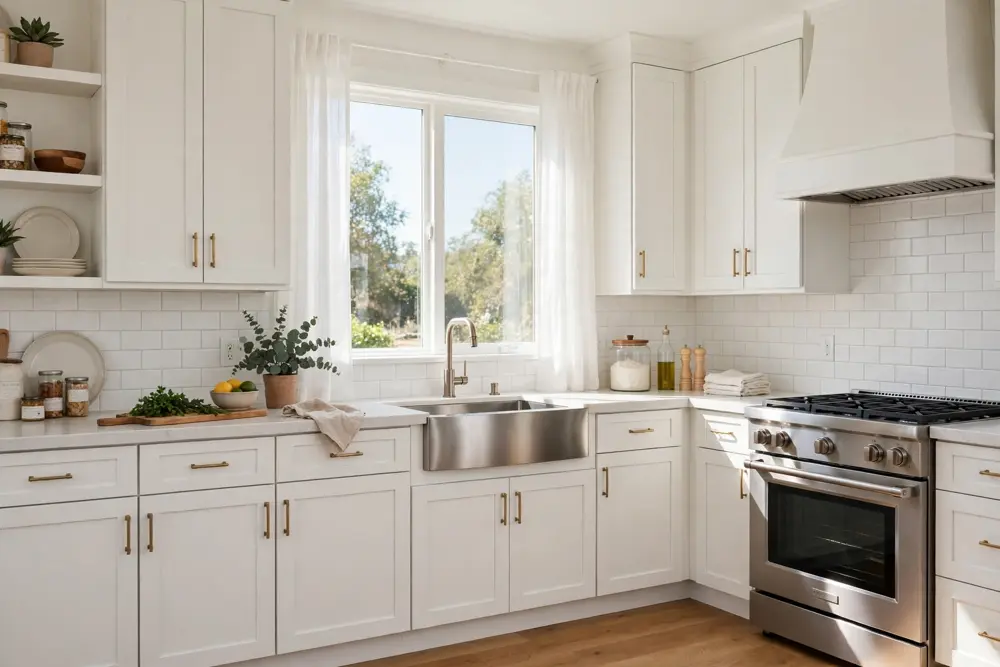
White cabinets are still the safest choice for a small kitchen, because they reflect light, pair with any countertop, and never date quickly. Warm white, with a hint of cream, is softer than bright white and works better with wood floors and warm lighting.
Pair white cabinets with light walls, a light countertop, and brushed nickel or chrome hardware for a clean, timeless look. Add warmth with wood cutting boards, a wooden tray, or light wood stools, so the kitchen does not feel cold.
If your kitchen gets little natural light, choose warm white over cool white, which can look grey in low light.
Idea 2: Sage Green and Soft Grey Green Cabinets
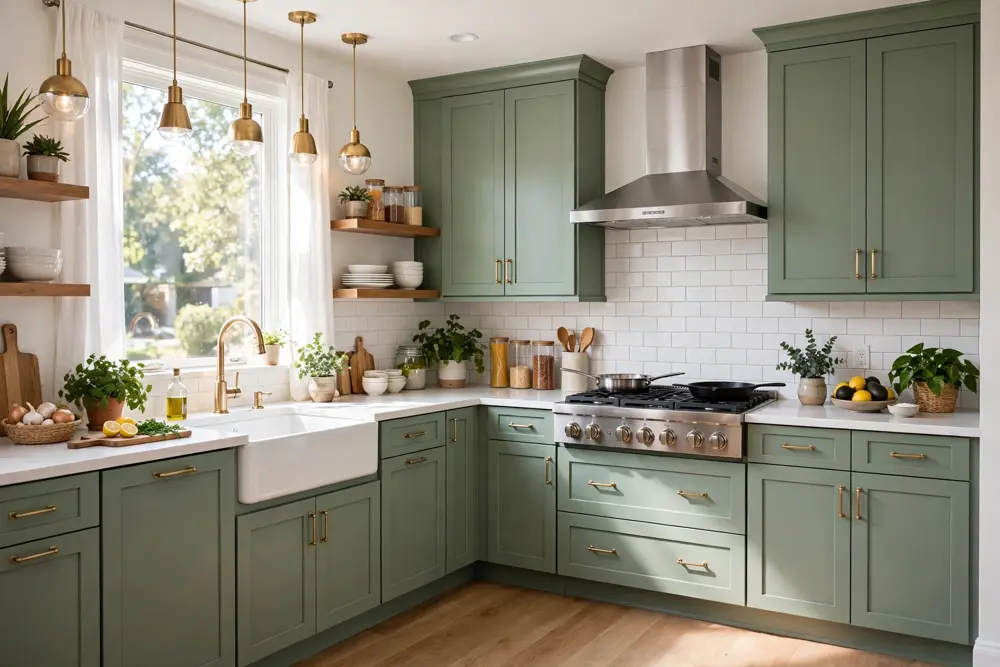
Sage green is the most popular soft colour for cabinets right now, because it adds colour without darkening a kitchen. It pairs beautifully with white countertops, brass hardware, and light wood floors, and it works in both modern and farmhouse kitchens.
Use sage on all cabinets for a calm look, or on lower cabinets only, with white uppers, for a two tone effect that keeps the upper part of the kitchen light.
Sage also hides small marks better than white, which is useful in a busy family kitchen.
Idea 3: Navy and Deep Blue Cabinets
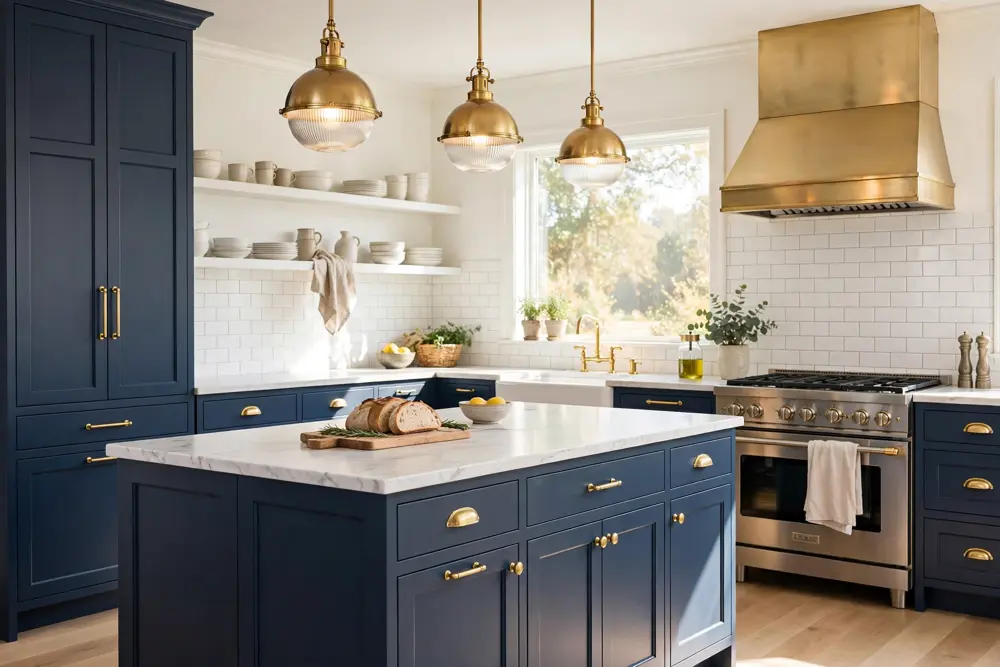
Navy cabinets add drama and depth, but they need light to work. Use navy on lower cabinets or on an island, with white uppers and a light countertop, so the kitchen does not feel dark.
Pair navy with brass or gold hardware, white or marble look countertops, and warm lighting. In a very small, low light kitchen, use navy as an accent, on an island or a single run, rather than on every cabinet.
Navy pairs well with wood floors and white walls, and it makes a kitchen feel more expensive without a full remodel.
Idea 4: Two Tone Cabinets and Greige
Two tone cabinets are the best way to add colour while keeping a small kitchen bright. Common pairings are white uppers with sage, navy, or greige lowers, or light wood lowers with white uppers.
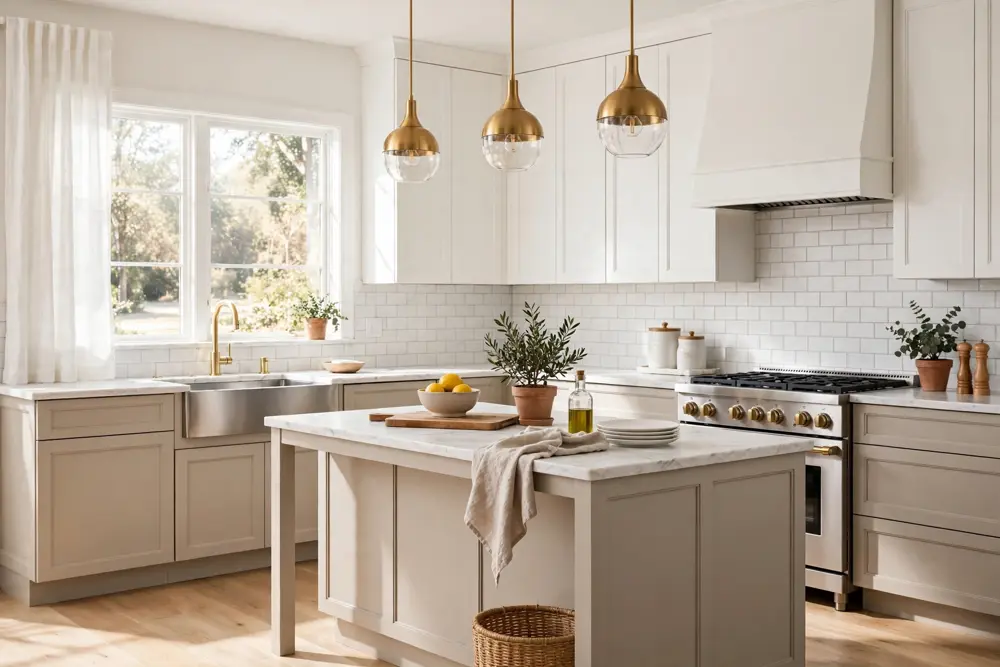
Greige, a mix of grey and beige, is a soft neutral that works with both warm and cool countertops, and it is more forgiving than pure grey, which can look cold.
When painting cabinets, use a durable cabinet paint, clean and sand first, and use a primer. Two coats of a satin or semi gloss finish are easier to clean than matte, which shows fingerprints and grease.
Choosing a Scheme by Light, Size, and Style
Light is the first test for any cabinet colour. In a north facing or low light kitchen, choose warm white, pale sage, or light greige, and keep walls and countertops light, because dark cabinets absorb what little light there is. In a bright, south facing kitchen, you can use navy, deep green, or charcoal on lower cabinets or an island, while keeping uppers white to balance the room.
Size matters too. In a galley or very small kitchen, one main colour, with a second colour only on an island, looks calmer than three colours competing. In a larger open plan kitchen, a two tone scheme helps define the kitchen zone: coloured lowers anchor the kitchen, white uppers keep it open, and a wood island or wood stools add warmth without adding another paint colour.
Style should guide finish and hardware, not just colour. A farmhouse kitchen suits sage or cream with brass and wood, a modern kitchen suits white or greige with chrome and clean lines, and a traditional kitchen suits navy or deep green with brass and marble look countertops. Choose a scheme that fits your home, not just a trend photo, because you will live with cabinets for years.
How to Test Colours Before You Paint
Never choose a cabinet colour from a phone screen alone. Paint large test swatches, at least A4 size, on cabinet doors or on boards you can move around the kitchen, and look at them in morning light, evening light, and under your kitchen lights, because a colour that looks sage in daylight can look grey at night.
Test colours against your actual countertop, backsplash, floor, and hardware, not against a white background. Hold the swatch next to the countertop edge and the floor, and check it from the doorway, where you will see the kitchen most often. If a colour looks too dark or too cool from the doorway, it will feel that way every day.
Live with the top two or three swatches for at least a weekend before you decide, and ask family members who cook in the kitchen to look at them too. A colour that everyone likes, even if it is not the trendiest, is the right choice for a kitchen you use daily.
Painting Steps, Prep, and Durability
Preparation is what makes painted cabinets last. Remove doors and hardware, label each door, clean with a degreaser, sand lightly, and prime with a cabinet primer, especially if you are painting over dark or glossy cabinets. Skipping primer is the most common reason painted cabinets peel within a year.
Use a high quality cabinet paint, not wall paint, in a satin or semi gloss finish, and apply two thin coats, not one thick coat, with a brush for details and a foam roller or sprayer for flat doors. Thin coats dry smoother and chip less, and they are easier to touch up later.
Let doors cure fully, usually a few days, before you reinstall hardware and use cabinets heavily. During curing, avoid hanging towels on doors and avoid cleaning with harsh chemicals. After curing, clean cabinets with a damp cloth and mild soap, and keep a small pot of touch up paint for chips, which are normal in a busy kitchen and easy to fix if you have the exact colour saved.
Pairing Cabinets with Backsplash, Countertop, and Floor
A good scheme is a system, not just a cabinet colour. Pair white cabinets with a light countertop and a simple backsplash, so the kitchen feels clean, and add warmth with wood floors and brass hardware. Pair sage cabinets with a white or marble look countertop, a simple subway backsplash, and light wood floors, for a calm, natural look.
Pair navy lowers with white uppers, a white countertop, and a light backsplash, so the navy feels like an accent, not a dark room. Pair greige cabinets with both warm and cool countertops, because greige bridges warm wood floors and cool grey tiles, and it works with both nickel and brass hardware if you keep one finish consistent.
Avoid a backsplash, countertop, and floor that are all busy patterns at once. Choose one star, usually cabinets or countertop, and keep the other surfaces simple, so the kitchen feels intentional, not crowded.
What to Avoid
- Very dark cabinets on every wall in a small, low light kitchen
- Too many colours at once, cabinets, walls, backsplash, and floor all competing
- Pure bright white in a warm, low light kitchen, which can look stark
- Matte cabinet paint in a busy kitchen, which is hard to clean
- Trendy colours on all cabinets if you plan to sell soon, use them as accents instead
Frequently Asked Questions
What cabinet colour makes a small kitchen look bigger?
White, warm white, light grey, and pale sage. Light colours reflect light and keep the upper part of the kitchen bright, especially when paired with light countertops.
What is the most popular cabinet colour now?
White is still most popular, followed by sage green, navy for islands and lower cabinets, and greige as a soft neutral. Two tone cabinets are also very popular.
Should upper and lower cabinets be the same colour?
They do not have to be. Two tone cabinets, white uppers with a coloured lower, keep a kitchen bright while adding personality, and they are a good choice for small kitchens.
What paint finish is best for kitchen cabinets?
Satin or semi gloss. Both are durable and easy to wipe clean, unlike matte, which shows grease and fingerprints, and high gloss, which shows every imperfection.
Can I paint cabinets without replacing them?
Yes, if cabinets are structurally sound. Clean, sand, prime, and paint with cabinet paint, or use a cabinet painting kit. Painting is much cheaper than replacing, and it is the focus of the cabinet ideas article in this cluster.
What wall colour goes with sage cabinets?
White, warm white, light cream, and pale grey. Keep walls light so sage cabinets stand out without darkening the room.
Conclusion
Start with light for a small kitchen: white, warm white, or pale sage for all cabinets, or white uppers with a coloured lower for a two tone look. Add navy or greige as an accent, not as a full dark kitchen, unless you have plenty of light.
Choose a durable satin finish, pair cabinets with a light countertop, and let hardware and wood accents add warmth. That colour scheme will feel calm, bright, and timeless, and it links naturally to the next parts of your kitchen cluster: island seating, hardware, appliances, and organisation zones.