Introduction
A kitchen that looks the same all year can start to feel tired, even when it is clean and well organised. Seasonal decor fixes that feeling, but only when it is simple. The kitchens that look best through the year are not the ones with a new theme every month. They are the ones with a few pieces that change with the season, while the cabinets, counters, and main colours stay the same.
This guide is about a year round system, not a shopping list for every holiday. You will find four ideas that work across the seasons, a simple calendar for spring, summer, autumn, and winter, and practical advice on storage, budget, and small kitchens. The goal is a kitchen that feels fresh in January and in July, without boxes of decor taking over a cupboard and without spending money every time the weather changes.
Start with what never changes. Choose a neutral base for your kitchen, such as white, wood, cream, or soft grey, and let seasonal decor be the accent. A tea towel, a plant, a bowl of fruit, and one centrepiece can change the whole feeling of the room, while the expensive parts of the kitchen stay untouched.
Idea 1: A seasonal swap system for textiles and small accents
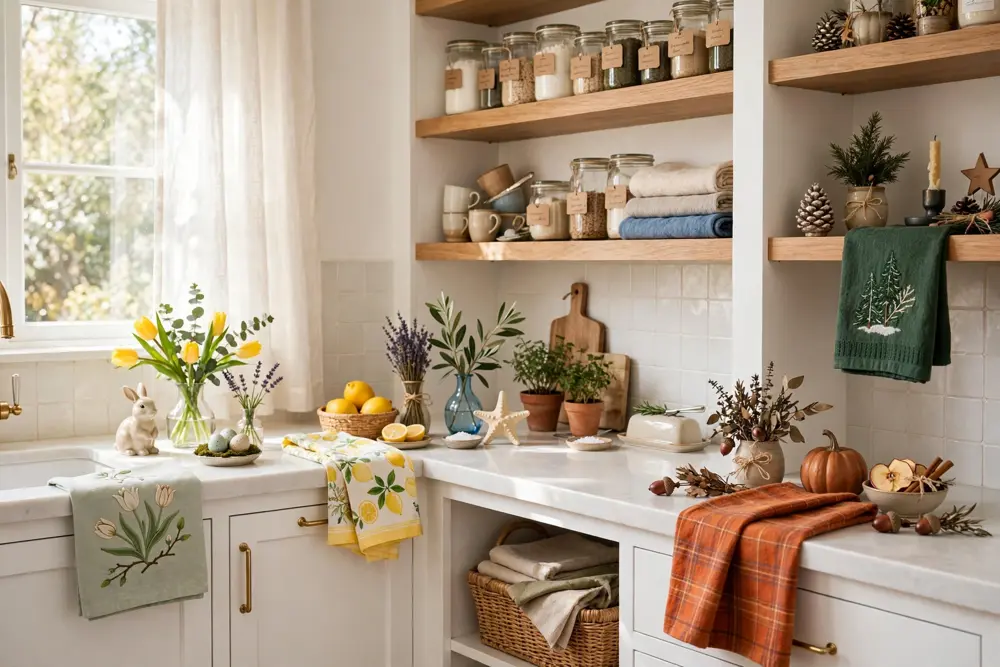
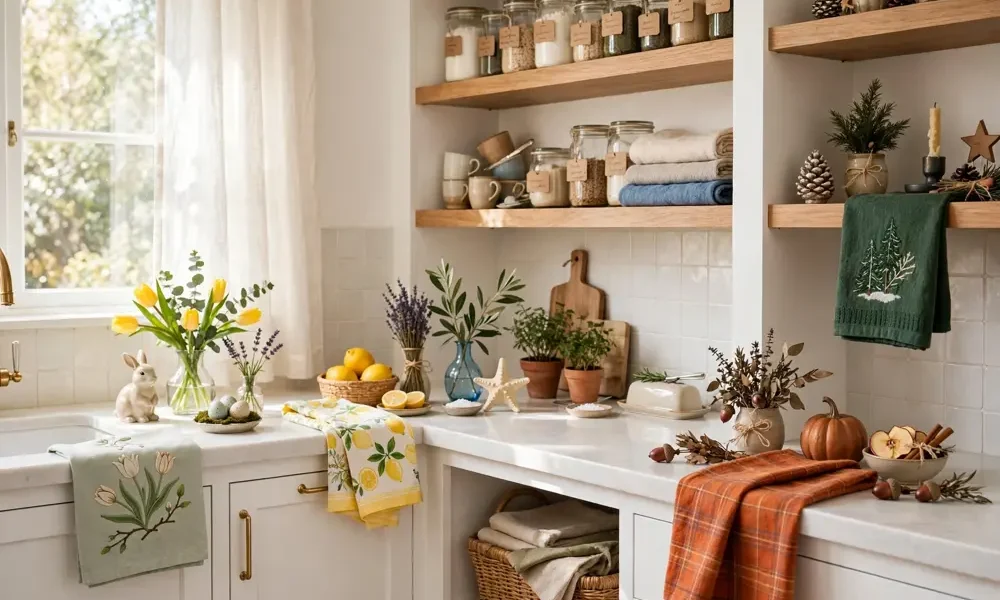
The easiest seasonal system is a swap box. Keep one small box, or one shelf, with seasonal textiles and small accents, and change only those items when the season changes. Tea towels, oven mitts, a table runner, placemats, and a small vase are enough. When spring arrives, swap in light colours and floral or green patterns. In summer, use bright, fresh colours and linen. In autumn, switch to warm tones such as rust, mustard, and deep green. In winter, use cosy textures, deeper colours, and simple metallic touches.
This system works because it limits the change. You are not redecorating the kitchen. You are changing five or six small things, which takes about fifteen minutes and makes the room feel different straight away. It also keeps costs down, because you reuse the same seasonal pieces year after year instead of buying new decor each season.
Keep the swap box labelled by season, and store it where you can reach it easily, such as on top of a cupboard or in a hall cupboard. If seasonal decor is buried in the loft or garage, you will not bother to change it. A box you can lift down in two minutes is a system you will actually use. At the end of each season, wash the textiles before you put them away, so they are clean and ready next year.
Idea 2: A seasonal centrepiece that changes with what is in season
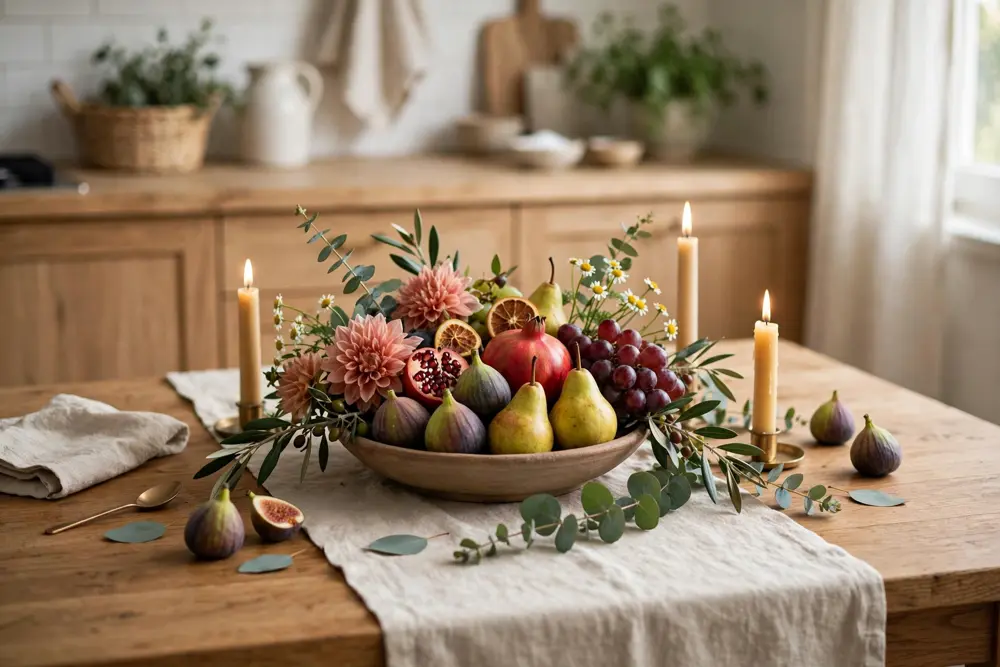
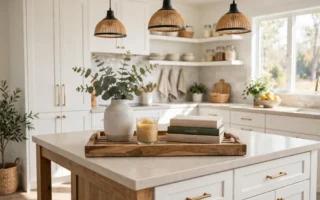
A centrepiece is the focal point of a kitchen table or island, and it is the best place for seasonal decor because it is visible but contained. Instead of buying a new centrepiece for every season, use one tray, bowl, or board as the base, and change only what sits on it. A wooden tray, a ceramic bowl, or a marble board works in every season, and the contents do the seasonal work.
In spring, fill the bowl with lemons, fresh flowers, or green branches. In summer, use berries, herbs in small pots, or a jug of fresh flowers from the garden. In autumn, switch to pumpkins, apples, pinecones, or dried leaves, keeping the arrangement low so people can still talk across the table. In winter, use candles, evergreen branches, oranges, and cinnamon sticks, but keep candles away from curtains and never leave them burning unattended.
The rule for a centrepiece is height and size. It should be low enough to see over, small enough to leave room for plates and cooking, and easy to move when you need the table for prep. A centrepiece that blocks conversation or gets in the way of cooking will be moved to a corner and forgotten, no matter how pretty it looks in a photo.
Idea 3: Seasonal wall, window, and shelf touches
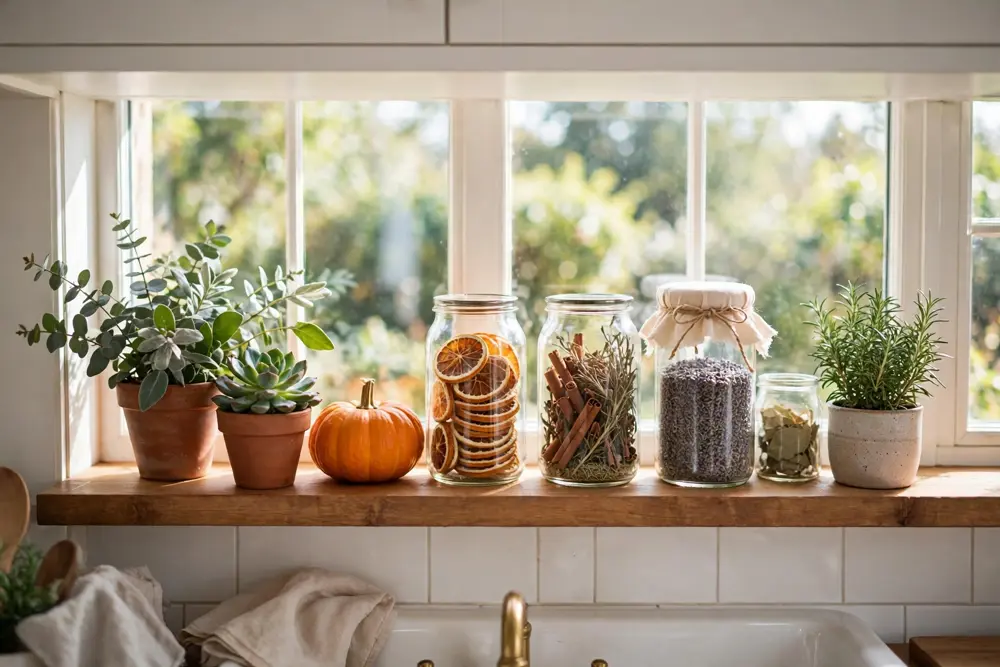
Walls, windows, and open shelves are the next places where seasonal decor works well, because they are visible but do not take up counter space. A window shelf with a plant that changes through the year, a small wreath on a wall or door, or a few seasonal jars on an open shelf can mark the season without cluttering the kitchen.
In spring, a small potted herb or a vase of blossom on a windowsill brings the season inside. In summer, a bright print, a woven basket, or a jar of dried citrus on a shelf adds colour. In autumn, a simple wreath made from dried leaves or a garland above a doorway adds warmth. In winter, fairy lights along a shelf, a simple evergreen wreath, or a few baubles in a bowl add festivity without needing a full Christmas display in the kitchen.
Keep these touches to one or two spots. A wreath on a door, a plant on a windowsill, and one seasonal item on a shelf are enough. If every wall, window, and shelf has a seasonal item, the kitchen will feel busy and the seasonal pieces will lose their impact. Choose the spot you see most often when you walk into the kitchen, and focus your seasonal decor there.
Idea 4: Seasonal colour, scent, and light through the year
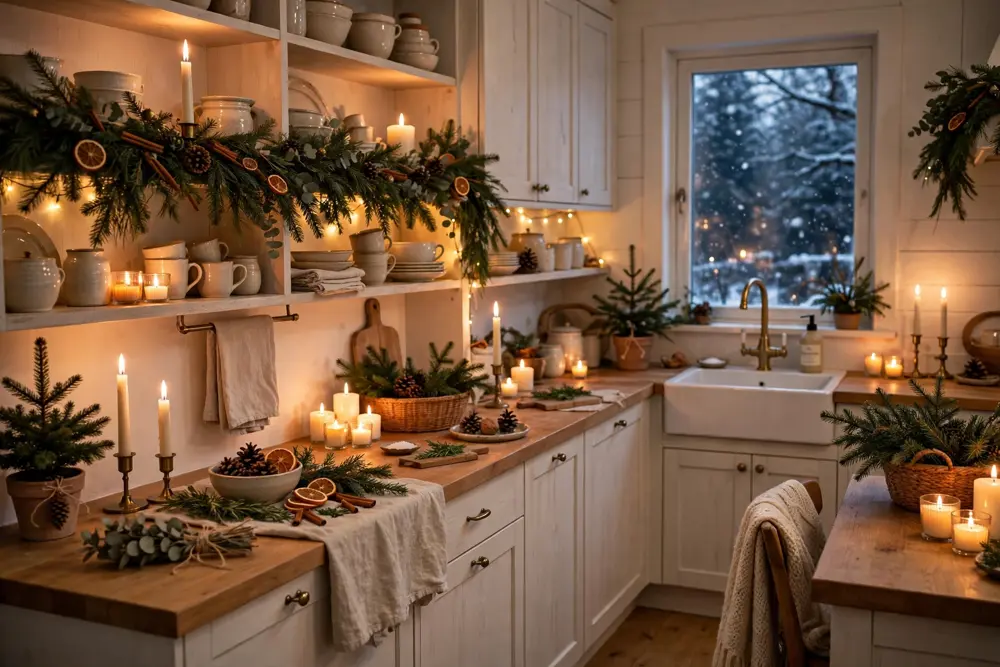
Colour, scent, and light are seasonal decor that costs almost nothing and changes how a kitchen feels more than objects do. In spring, open windows, light colours, and fresh flowers make a kitchen feel clean and bright. In summer, bright fruit, green plants, and natural daylight do most of the work. In autumn, warm light, wood tones, and the scent of baking or cinnamon make a kitchen feel cosy. In winter, candles, warm lamps, and evergreen scent make a dark evening feel welcoming.
Use scent carefully in a kitchen. A candle, a simmer pot, or fresh herbs should complement cooking, not compete with it. Avoid strong plug in scents near food preparation, and never use scented candles near a cooker. Light is safer and more effective: a warm bulb in a pendant light, a small lamp on a counter, or fairy lights on a shelf can change a kitchen from cold to cosy in seconds, especially in winter when daylight is short.
Colour can come from food itself. A bowl of oranges in winter, a bunch of herbs in spring, or a plate of berries in summer is seasonal decor that you will eat, not store. This is the cheapest and most practical form of seasonal decor, and it keeps a kitchen feeling alive without any extra clutter.
A simple calendar for the four seasons
Spring is about light and fresh growth. Swap in light textiles, add fresh flowers or herbs, open windows when you can, and clear away heavy winter items. A spring clean of one cupboard or shelf, as well as the seasonal swap, makes the kitchen feel new without a big project.
Summer is about brightness and outdoor feeling. Use linen and cotton textiles, keep counters clear for salads and cold drinks, add plants that like light, and use fruit as decor. Avoid heavy fabrics and dark colours that make a warm kitchen feel hotter.
Autumn is about warmth and harvest. Swap in warm textiles, add a centrepiece with apples, pumpkins, or dried leaves, use warm light in the evening, and bring in wood and natural textures. Autumn is also a good time to check storage, because winter decor will be needed soon.
Winter is about cosiness and light. Use deeper colours, warm lamps and candles, evergreen branches, and simple festive touches. Keep the kitchen practical for holiday cooking by leaving counters clear, even when decor is at its most festive. A small, well chosen winter display beats a large display that gets in the way of cooking.
Storage and budget for seasonal decor
Seasonal decor only works year after year if you can store it well. Use one box per season, or one box divided into four sections, and label it clearly. Store fragile items wrapped in tissue, keep textiles clean and dry, and throw away broken or faded pieces at the end of each season instead of storing them for another year.
Budget for seasonal decor by buying less, but buying better. One good tray, one good bowl, and a set of quality textiles that you reuse will cost less over three years than buying cheap seasonal items every season. Shop after a season ends, when items are reduced, for next year, and avoid impulse buys that do not match your kitchen colours. If a seasonal item does not fit your base colours, it will look out of place even when it is in season.
For small kitchens, seasonal decor must be even simpler. One swap box, one centrepiece tray, and one wall or window touch are enough. Do not store four large boxes of decor if you have no space for them. Choose textiles and food based decor, which take up almost no storage space, over large ornaments that need a cupboard of their own.
Renter friendly seasonal decor
Renters can enjoy seasonal decor without drilling, painting, or permanent changes. Textiles, centrepieces, plants, candles, and fairy lights all work in a rental, and they can all be removed without damage. Use adhesive hooks for a wreath or garland, but check weight limits and remove them properly at the end of the season.
Avoid seasonal wallpaper, painted features, or fixed garlands in a rental, unless your landlord agrees. A seasonal look that can be packed into one box at move out time is the safest approach. Keep original items, such as light bulbs and hooks, so you can return the kitchen to its original state quickly.
Seasonal decor in a rental should also be flexible. If you move in summer, start with summer pieces and build your collection slowly, one season at a time, rather than buying a full year of decor at once. This spreads the cost and ensures every piece you buy suits the kitchen you actually live in.
What to avoid
- Buying new decor for every holiday, which fills cupboards and costs money without making the kitchen look better
- Making a centrepiece so tall or so large that it blocks conversation or cooking space
- Putting seasonal decor on every wall, window, and shelf, which makes the kitchen feel cluttered
- Leaving candles burning unattended, or placing them near curtains, paper, or a cooker
- Storing dirty, broken, or faded seasonal items for another year instead of replacing them
- Choosing seasonal colours that clash with your kitchen base colours, which makes decor look out of place
- Using strong scents near food preparation that compete with cooking smells
Frequently asked questions
How can I decorate my kitchen for each season without spending a lot?
Use a swap system with textiles, a centrepiece tray, and food based decor such as fruit, herbs, and flowers. Reuse the same seasonal pieces each year, buy after a season ends when items are reduced, and change only five or six small items per season.
What is the easiest seasonal decor for a kitchen?
Tea towels, a table runner, and a centrepiece bowl. Changing these three things takes fifteen minutes and changes the whole feeling of the room. Add a plant or flowers for spring and summer, and warm light for autumn and winter.
How do I store seasonal kitchen decor?
Use one labelled box per season, or one box divided into four sections. Wash textiles before storing, wrap fragile items in tissue, keep boxes dry and easy to reach, and throw away broken pieces at the end of each season.
What seasonal decor works in a small kitchen?
One swap box, one centrepiece tray, and one wall or window touch. Choose textiles and food based decor, which need almost no storage space, and avoid large ornaments that need a cupboard of their own.
Can renters use seasonal kitchen decor?
Yes. Textiles, centrepieces, plants, candles, and fairy lights all work without permanent changes. Use adhesive hooks for wreaths, check weight limits, and keep everything in one box that can be removed at move out time.
How do I decorate a kitchen for winter without cluttering it?
Use warm light, deeper textiles, a simple evergreen wreath, and a low centrepiece with candles, oranges, or evergreen branches. Keep counters clear for holiday cooking, and choose one or two festive spots rather than decorating every surface.
Conclusion
Kitchen seasonal decor works best when it is simple, repeatable, and practical. Keep a neutral base, change only textiles, a centrepiece, and one or two wall or window touches each season, and let colour, scent, light, and seasonal food do most of the work. Store your seasonal pieces in labelled boxes, reuse them year after year, and buy less but better.
Start with one season. Put together a small swap box, set up a centrepiece tray, and change those items when the next season arrives. If the change takes fifteen minutes and makes your kitchen feel fresh, you have a system that will last all year. A kitchen that changes gently with the seasons feels cared for and welcoming, without ever feeling cluttered or expensive.