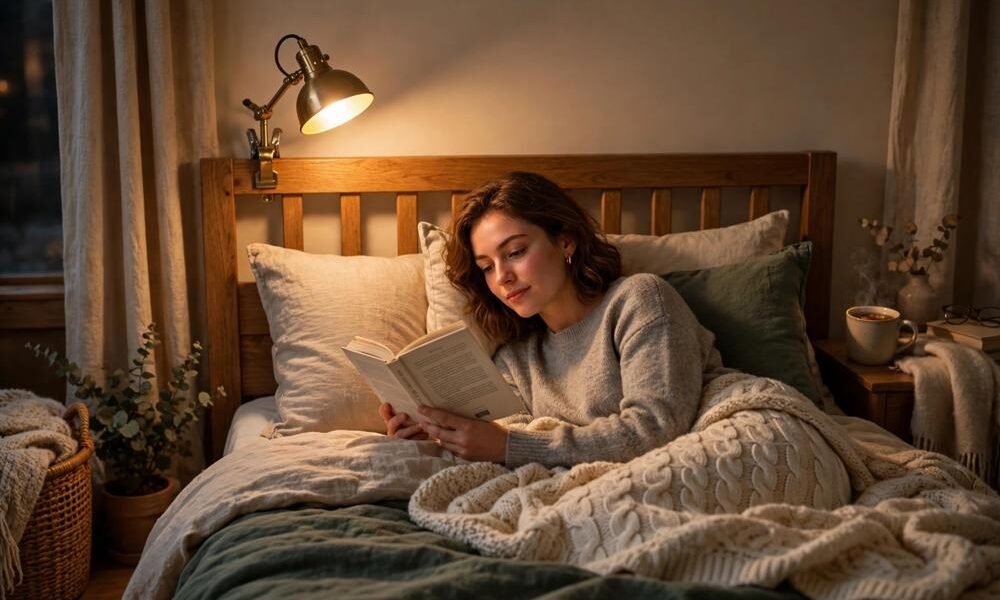
Reading in bed fails when the light is wrong: too bright and it wakes a partner, too dim and your eyes strain, too high and it glares, too low and it lights the whole room. The best reading light is not the brightest lamp you own. It is a warm, focused light, placed close to the book, aimed down at the page, with a dimmer or a low setting, so the rest of the room stays dark.
This guide covers the four practical options: headboard and clip-on lights, wall swing-arm lights, small bedside lamps, and low-light setups for shared beds. It also covers brightness, colour temperature, placement, and what to avoid, so you can read comfortably without ruining sleep for yourself or anyone else.
Key takeaways: use warm light, 2700K or lower, focused on the page; place the light behind or above your shoulder, not in front of your eyes; use a dimmer or a low setting; keep the rest of the room dark; and switch the light off at least 30 minutes before you want to sleep, or use the lowest setting that still lets you read.
Idea 1: Headboard and Clip-On Lights for Focused Reading
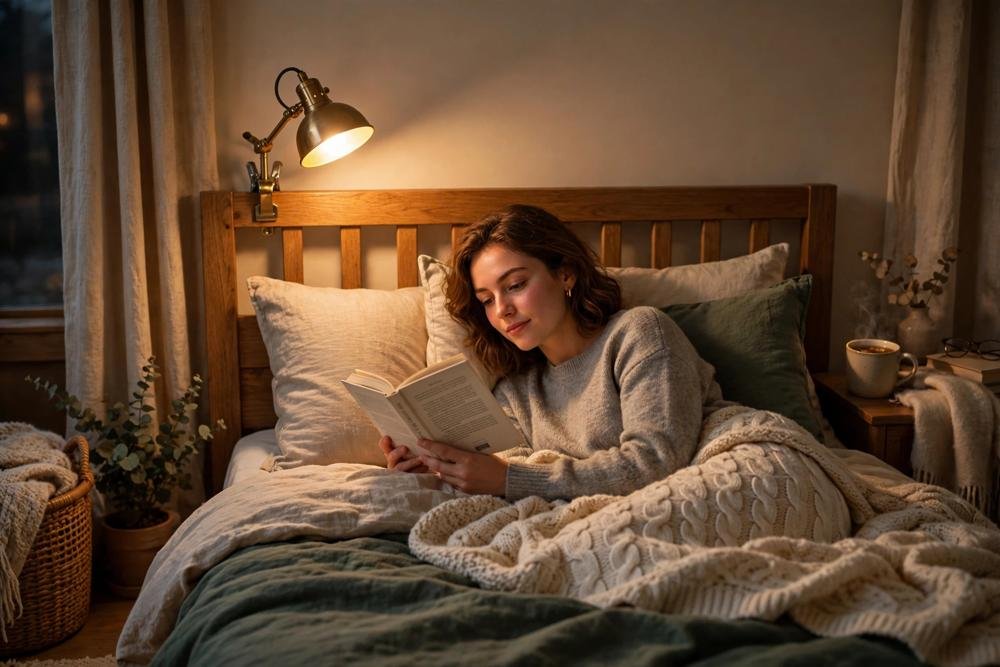
A headboard light or a clip-on book light gives you the most focused light with the least spill, because the light sits close to the book and aims down. A clip-on light attaches to the book or to a headboard, runs on battery or USB, and can be moved from bed to chair. A headboard-mounted light, fixed to the headboard or the wall just above it, is more stable and usually brighter, and it does not need charging every night.
Choose a light with adjustable brightness and a warm colour. A single bright white setting will glare and wake a partner, while a dim warm setting lets you read without lighting the room. Look for a light with at least two brightness levels, a flexible neck or arm so you can aim it at the page and not at your eyes, and a stable clip or fixing that does not slip when you turn a page.
Place the light behind or above your shoulder, on the side you read from, so the light falls on the page and not into your eyes. If you read lying flat, a light above the headboard works better than a clip-on light on the book, because the book angle changes as you move. If you read sitting up, a clip-on light on the book or a small headboard light at shoulder height works well.
Clip-on lights are best for renters and for travel, because they need no fixing and can move with you. Headboard lights are best for a permanent setup, because they are brighter, more stable, and do not need charging, but they need a fixing and a power point nearby.
Idea 2: Wall Swing-Arm Lights That Free the Nightstand
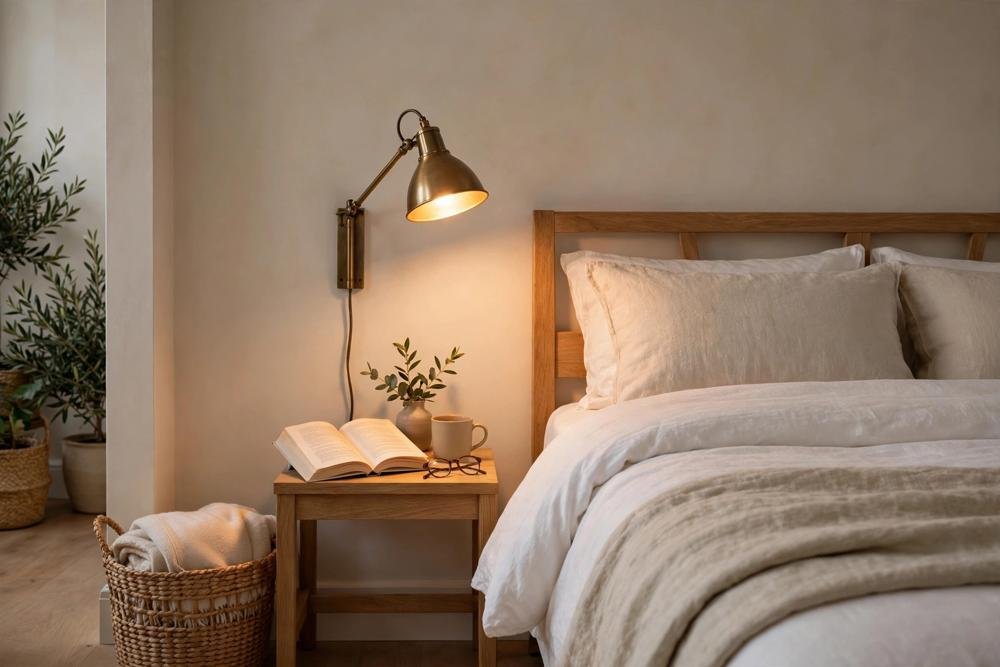
A wall swing-arm light mounts on the wall beside the bed, swings out when you read, and folds back when you sleep. It frees the nightstand, because it needs no table space, and it gives you a stable, mains-powered light that can be aimed precisely at the page. It is the best option for a small bedroom, a tiny nightstand, or a bed against a wall where a lamp would crowd the space.
Mount the light at shoulder height when sitting up, usually 120 to 140 centimetres from the floor, and 30 to 45 centimetres to the side of where your head rests, so the arm can reach over the book without shining in your eyes. Use a light with a shade that directs light down, not a bare bulb that spreads light across the room, and choose a warm bulb, 2700K, with a dimmer if possible.
For renters, use a plug-in swing-arm light with a wall bracket that uses removable fixings rated for the weight, or a clamp-on wall light that attaches to a headboard or a shelf, rather than hardwiring. Check that the cable does not run across a walkway, and use a cable clip to keep it tidy and out of the way.
A swing-arm light also works well for two readers, because each side can have its own light, aimed at its own book, without lighting the other side. Pair it with a separate switch or a touch dimmer on each light, so each person can control their own light without reaching across.
Idea 3: Small Bedside Lamps With Warm Dim Light
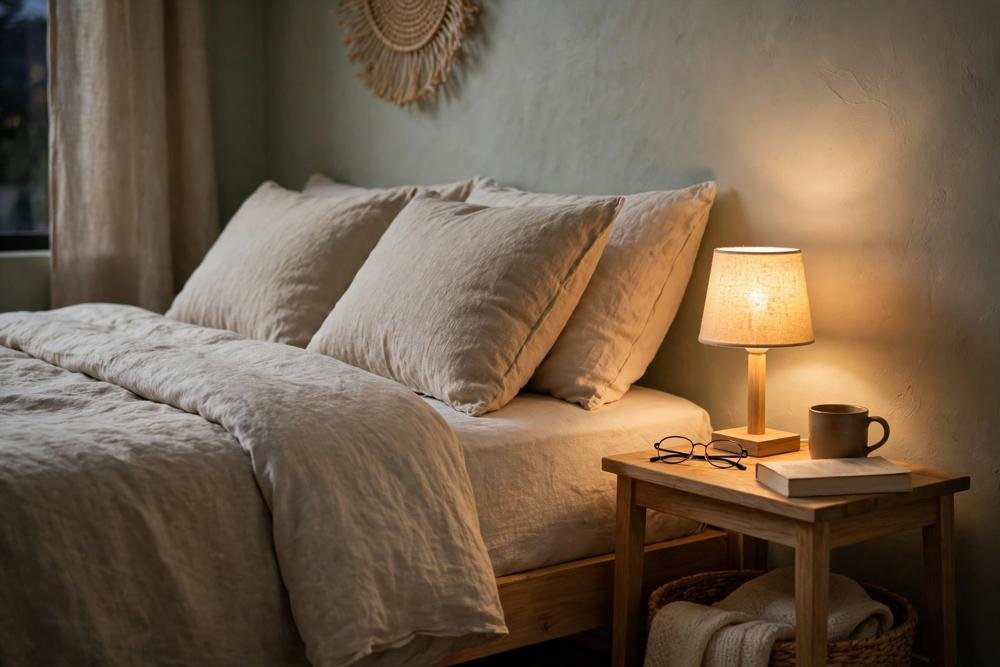
A small bedside lamp is the simplest reading light, and it works well if you choose the right shade, bulb and height. Use a lamp with a shade that directs light down and to the side, not a shade that spreads light up to the ceiling, and use a warm bulb, 2700K or lower, on a dimmer or with a low-wattage bulb. A lamp that is too tall will shine in your eyes when you lie down, and a lamp that is too short will light the nightstand, not the book.
Place the lamp on the nightstand on the side you read from, at a height where the bottom of the shade is at or slightly above shoulder height when sitting up. This puts the light on the page, not in your eyes, and keeps the glow close to the bed. If the lamp is on a low nightstand, use a taller lamp or a small riser, and if it is on a high nightstand, use a shorter lamp or a shade that sits lower.
Use a dimmer plug, a smart bulb, or a lamp with a built-in dimmer, so you can lower the light as you get sleepy, rather than switching from bright to dark in one step. A sudden switch from bright to dark can make it harder to fall asleep, while a gradual dimming helps your eyes adjust. Keep the lamp on the lowest setting that still lets you read comfortably, not the brightest setting that looks good in a photo.
A bedside lamp also provides ambient light for the room, which a clip-on light does not, so it is a good choice if you also use the bedroom for getting ready or for a partner who is not reading.
Idea 4: Low-Light Reading When You Share a Bed
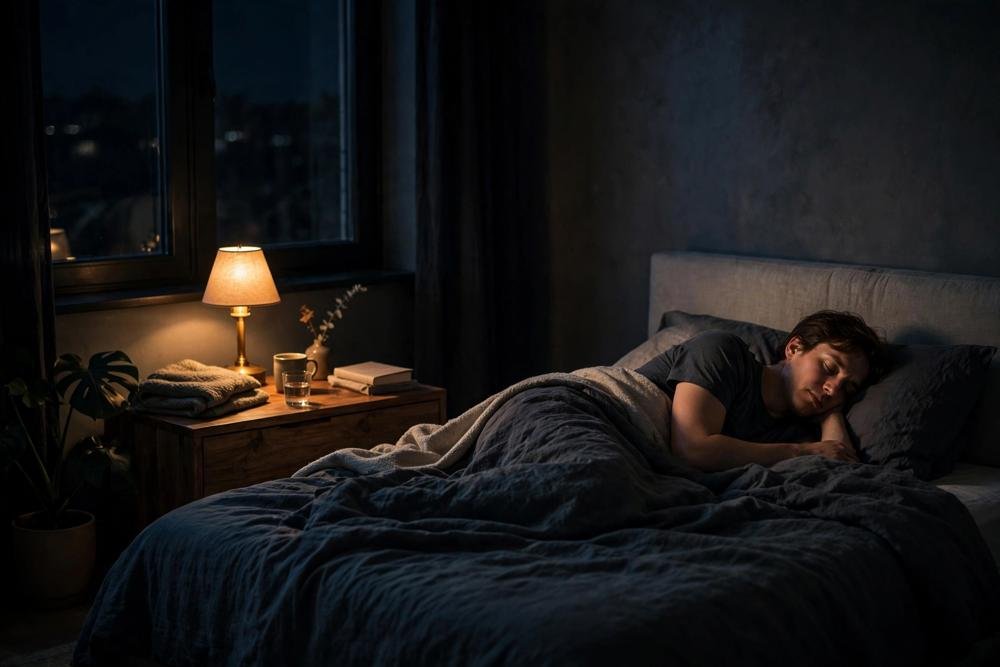
Reading when a partner is sleeping needs a different setup: the light must be focused, dim, warm, and shielded, so it does not spill across the bed or onto the partner’s face. Use a clip-on light with a narrow beam, a headboard light with a shade that blocks side spill, or a small lamp with a shade that faces your side only. Avoid overhead lights, bright bedside lamps with open shades, and phone or tablet screens at full brightness, because they light the whole room and can wake a partner.
Shield the light with a shade, a book light with a hood, or a small barrier, such as a pillow or a book stand, that blocks the direct line from the light to the partner’s eyes. Aim the light down at the page, not across the bed, and keep the brightness as low as you can read with. If you use an e-reader, use its built-in warm light on the lowest comfortable setting, and use a case that shields the screen edges.
Agree on a reading cut-off time, or a light rule, with your partner, such as reading until a set time, or using only a clip-on light after a certain hour. This is not just about light, it is about sleep routine: a partner who is woken by light every night will sleep worse, even if they do not fully wake. Keep the room otherwise dark, with blackout curtains closed and no other lights on, so the reading light is the only light source and it stays focused.
If you both read, use two separate focused lights, one per side, rather than one bright lamp in the middle, because two dim focused lights spill less than one bright central light.
What to Avoid
Do not use a bright white overhead light for reading in bed, because it lights the whole room, glares, and delays sleep. Do not use a lamp with a bare bulb or an open shade that spreads light in all directions. Do not place a light in front of your eyes, or at eye level when lying down, because it will glare and strain your eyes. Do not read on a phone or tablet at full brightness in a dark room, because the screen light is blue-rich and can delay sleep more than a warm book light. And do not keep the light on at full brightness right up to sleep; dim it gradually, or switch to the lowest setting for the last few pages.
FAQs
What colour light is best for reading in bed?
Warm light, 2700K or lower, with a dimmer or a low setting. Warm light is less likely to delay sleep than cool white or blue-rich light, and it feels more comfortable in a dark room.
How bright should a reading light be?
Bright enough to read comfortably without squinting, but no brighter. For most people, a small focused light on a low to medium setting is enough. If you need to squint, increase it one step; if the room is lit up, decrease it.
Is a clip-on book light better than a bedside lamp?
For focused reading and for not waking a partner, yes, because it lights only the page. For ambient light and for a room you also use for other things, a bedside lamp is better. Many people use both: a lamp for getting ready, a clip-on light for reading.
Can I read in bed without waking my partner?
Yes, with a dim, warm, focused light aimed down at the page, shielded from the partner’s eyes, and the rest of the room dark. A clip-on light or a headboard light with a shade works best, plus an agreed cut-off time.
Where should I place a reading light in bed?
Behind or above your shoulder, on the side you read from, with the light falling on the page and not into your eyes. For a wall light, mount it at shoulder height when sitting up, 30 to 45 centimetres to the side of your head.
Should I use a phone or tablet to read in bed?
A dedicated e-reader with a warm front light is better than a phone or tablet, because it is less bright and less blue-rich. If you use a phone or tablet, use night mode, warm colour, and the lowest brightness you can read with, and avoid it in the last 30 minutes before sleep if you can.
Conclusion
The best bedroom lighting for reading in bed is warm, focused, dimmable, and placed close to the page. A clip-on or headboard light is best for focused reading and for shared beds, a wall swing-arm light frees the nightstand and gives stable mains light, and a small bedside lamp works if you choose a warm dim bulb and the right height. Keep the rest of the room dark, aim the light down at the page, and dim it as you get sleepy. Done that way, you can read comfortably, without glare, without waking anyone, and without ruining your own sleep.