Introduction
A small reach in closet can feel impossible to organise, especially when the door is narrow, the depth is shallow, and the single rod is already full. The problem is rarely that you own too much. More often, the closet was set up for one kind of clothing, while your real wardrobe needs hanging space, folded storage, shoe storage, and a place for seasonal items.
The good news is that a reach in closet does not need a full renovation to work better. It needs a plan based on real measurements, a hanging system that matches what you actually wear, and a routine that stops the closet from filling up again. When every section has a clear job, you can find clothes faster, keep the bedroom tidier, and avoid buying storage that does not fit.
This guide walks through four practical ideas for a small reach in closet. Each idea builds on the last, so you can start with measuring, improve the hanging space, use the door and floor well, and finish with a seasonal rotation that keeps the closet calm all year. If you are planning the whole room as well, start with Small Bedroom Ideas: The Complete Guide to Layout, Storage, Light and Style.
Key takeaways
- Measure first and plan around what you actually wear.
- Use a double hang system for shirts and trousers.
- Make the door and floor work harder.
- Rotate seasonally so the closet never overflows.
Idea 1: Measure First and Plan Around What You Actually Wear
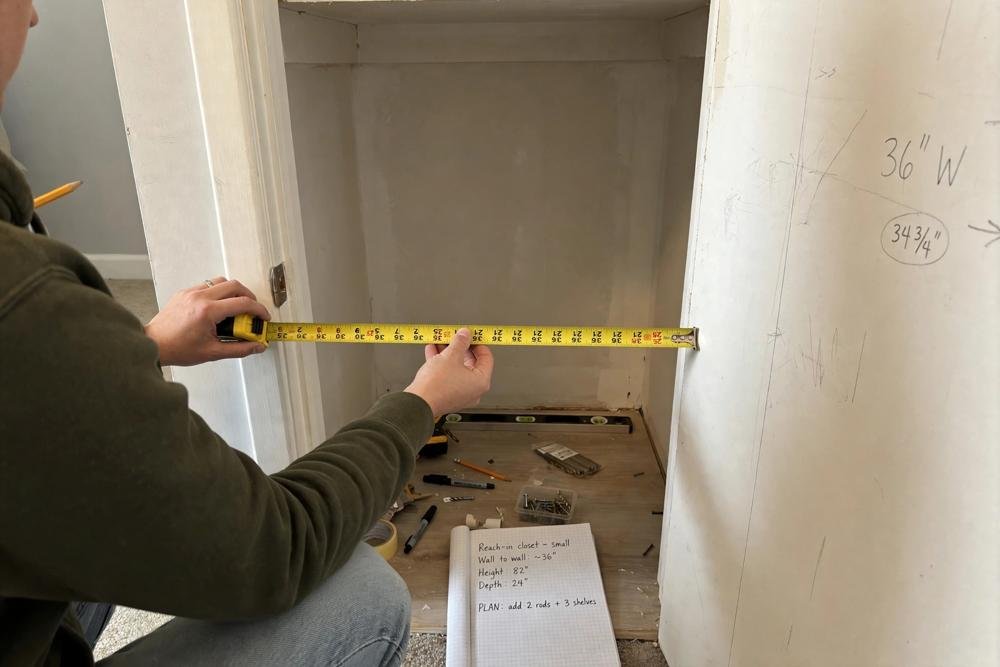
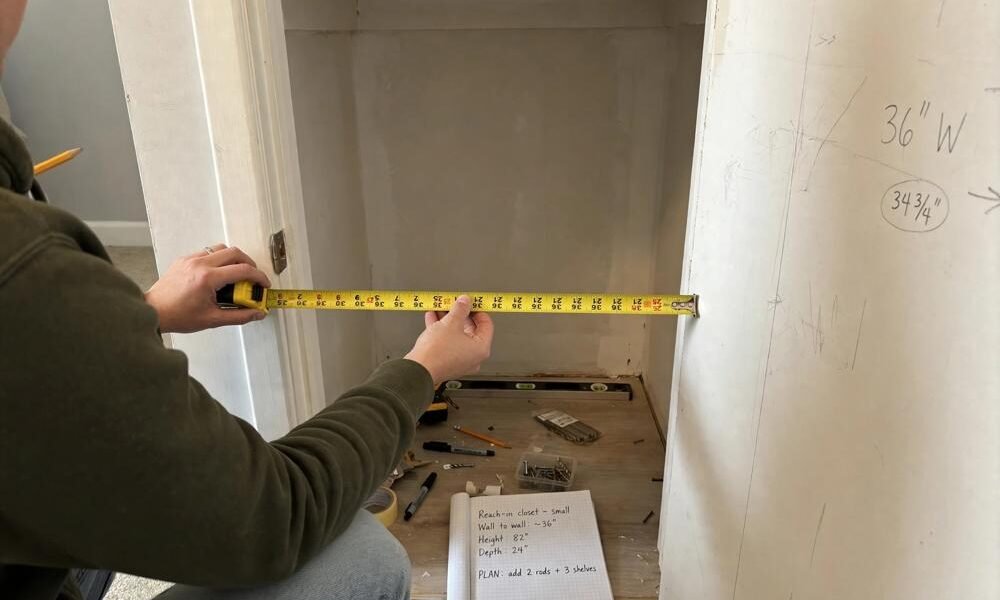
Before you buy a single rod, shelf, or box, measure the closet. This step saves money and prevents the most common small closet mistake, which is installing a system that looks good online but does not fit your clothes, your door, or your reach.
Start with the width from wall to wall, the depth from the back wall to the door frame, and the height from the floor to the top shelf or ceiling. Then measure the door opening, because a wide basket or rolling cart is useless if it cannot pass through the door. Also check for obstacles such as hinges, trim, light switches, vents, and sloped ceilings. A few centimetres can decide whether a drawer unit fits or blocks the door.
Next, measure your clothes by type. Shirts and folded trousers usually need about 100 centimetres of hanging length. Longer dresses, coats, and long skirts can need 130 to 170 centimetres. This is why one long rod often wastes space. If most of your wardrobe is short, you can use two levels of hanging and gain a whole extra row. If you own many long items, keep one taller section and use the rest of the closet for double hanging.
Count what you need to store before you plan the layout. Count hanging shirts, trousers, dresses, coats, and jackets. Then count folded items such as knitwear, T-shirts, and gym clothes. Add shoes, bags, accessories, and bulky items such as spare bedding. This count becomes your shopping list. Instead of guessing, you will know how many metres of rod, how many shelves, and how many boxes you need.
Sketch the plan on paper, even if it is rough. Draw the back wall, mark the door, and divide the space into zones. A simple plan might include a double hang section on one side, a long hang section on the other side, a shelf above each rod, and a floor zone for shoes. Leave space to reach items at the back. In a shallow closet, items pushed too far back are quickly forgotten, so keep daily clothes near the front and seasonal clothes higher up or in a separate box.
Idea 2: Use a Double Hang System for Shirts and Trousers

A double hang system is the single most useful change for most small reach in closets. It turns one wasted vertical space into two useful rows. The top rod holds shirts, blouses, and jackets. The bottom rod holds trousers, skirts, and shorter tops. Together, they can almost double your hanging capacity without making the closet deeper or wider.
To set it up, place the upper rod high enough for shirts to hang freely, usually about 180 centimetres from the floor, depending on your ceiling and shelf height. Place the lower rod about 100 centimetres below the upper rod, so shirts above do not crush trousers below. Leave enough clearance at the bottom for shoes or a low storage box. If your closet is very short, you can still use a shorter double hang section for children’s clothes, folded trousers on clip hangers, or shorter tops.
Keep one long hang section if you need it. This section is for dresses, long coats, and jumpsuits that cannot be folded neatly. Put it on the side where the door opens least, or at one end of the closet, so long items do not block access to the rest of the wardrobe. A single long section is often enough, because most daily outfits are made from shorter pieces.
Use slim, matching hangers for the double hang rows. Thick wooden hangers look beautiful, but they take up valuable width in a small closet. Slim velvet or plastic hangers keep clothes from slipping and leave more room for extra items. Keep the same hanger direction and spacing. When hangers face the same way and clothes are grouped by type, the closet looks calmer and is much easier to scan in the morning.
If you share the closet, divide the double hang system fairly. Give each person a clear section, even if one side is slightly larger because of longer clothes. Use a small label on the shelf above, or a different coloured hanger set, to mark each side. Fair, visible zones reduce arguments and stop one person’s clothes from slowly taking over the whole closet.
Idea 3: Make the Door and Floor Work Harder
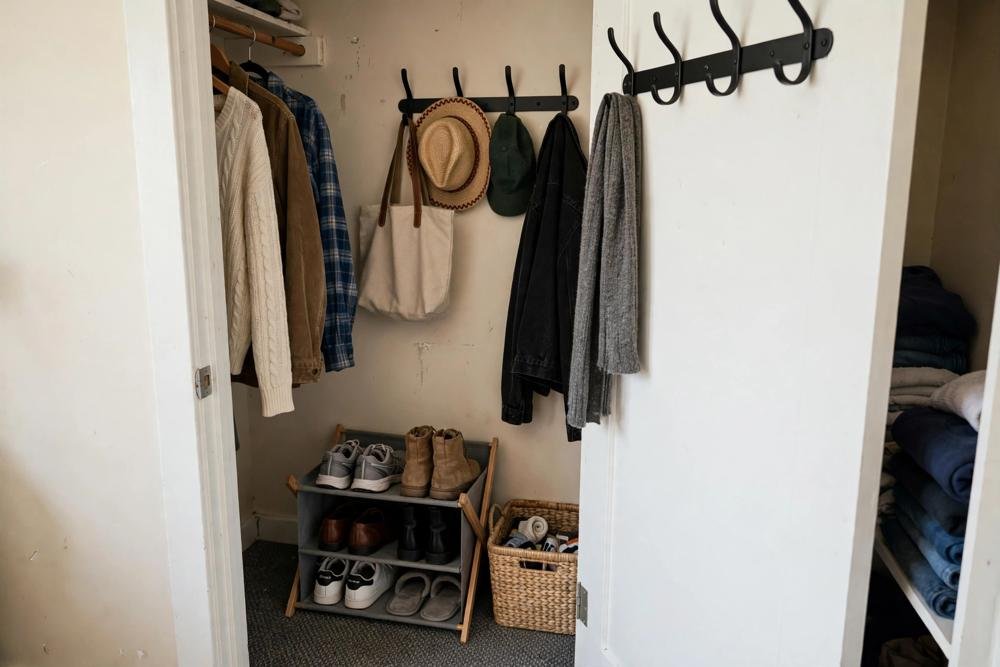
In a small reach in closet, the door and floor are often wasted. The door is a useful surface for daily items, while the floor can hold shoes and heavier items that should not be stacked high. Used well, these two areas can free up rod and shelf space for clothes.
Start with the door, but use it only for light, daily items. Over door hooks are good for a bag, a dressing gown, tomorrow’s outfit, or a scarf. A slim over door organiser with clear pockets can hold accessories, belts, and small items, but avoid overloading it. A heavy door organiser can stop the door from closing properly and can damage hinges over time. Choose one that fits your door thickness and does not scrape the frame.
The floor needs a clear plan too. Shoes are the most common floor problem in a small closet. A low shoe rack, a row of shoe boxes, or a slim rolling cart can keep shoes in pairs and off the carpet. Avoid stacking shoes in a tall pile, because the pair at the bottom is hard to reach and easy to damage. If floor space is very tight, keep only daily shoes in the closet and move seasonal or formal shoes to another storage spot.
Use the floor for heavy items that are awkward on a shelf. A small basket for laundry, a box for handbags, or a container for sports gear can sit on the floor without blocking the rods above. Keep the floor zone shallow and tidy. Leave a clear path to reach clothes at the back, and do not let boxes creep out into the bedroom. If the whole room is tight, these small bedroom layout ideas for a 10 by 10 room show how to plan a compact bedroom.
Idea 4: Rotate Seasonally So the Closet Never Overflows
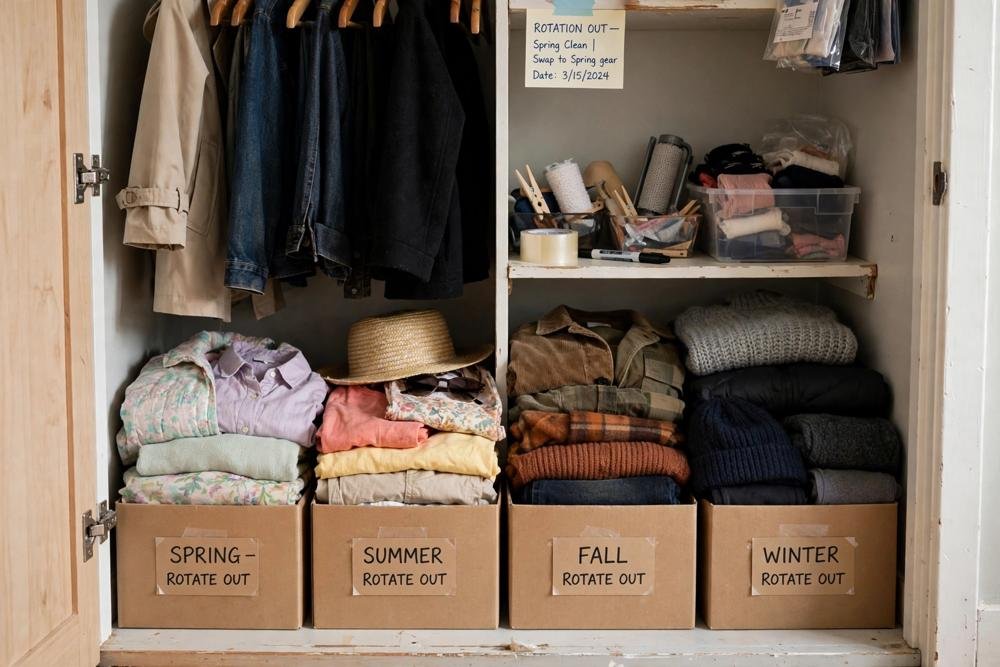
A small closet cannot hold every season at once without becoming crowded. Seasonal rotation solves this by keeping only current clothes in the closet and storing off season clothes somewhere else. This makes daily choices easier and protects clothes from being crushed.
Do the rotation twice a year, in spring and autumn, or whenever the weather changes clearly in your area. Take everything out of the closet, or at least take out one section at a time. Try on anything you have not worn in a year, and be honest about fit, condition, and whether you still like it. Clothes that are damaged, uncomfortable, or no longer worn can be repaired, donated, or recycled.
Wash or clean off season clothes before storing them. Dirt and body oil can stain fabric over time, and clean clothes are ready to wear when the season returns. Fold knitwear rather than hanging it, because hanging can stretch shoulders. Use breathable boxes or bags, and label each box clearly with the season and contents, such as winter knitwear or summer dresses.
Store off season boxes in a place that is easy to reach twice a year but out of the daily path. Good options include the top shelf of the closet if there is room, under the bed, on top of a wardrobe, or in a spare room. Avoid damp garages or attics if possible, because moisture can damage fabric. A dry, clean, and protected spot is best. See also: storage ideas for under the bed.
When the new season arrives, swap the boxes. Put current clothes in the closet first, starting with daily items, then work clothes, then occasion wear. Keep the system simple. If the swap takes more than an hour, the system is too complicated. A simple twice a year routine is easier to maintain than a perfect system that feels like a chore.
How to Make a Small Closet Work for Two People
Sharing a small reach in closet needs clear rules, even between people who get along well. Without zones, clothes mix, laundry gets confusing, and one person’s storage slowly expands into the other’s space.
Start by measuring together and agreeing on the split. One person may need more long hanging space for dresses or coats, while the other needs more folded shelf space for knitwear. A fair split is not always an exact half. It is a split that fits both wardrobes and feels fair to both people. If your bedroom has no closet at all, start with our guide on how to organise a bedroom without a closet.
What to Avoid
Avoid installing a system before measuring. A rod at the wrong height, a shelf that blocks the door, or a drawer unit that is too deep can waste a whole weekend and still leave the closet harder to use.
Avoid keeping everything in the closet all year. A small reach in closet is not a warehouse. Off season clothes, spare bedding, and rarely used bags need another home, even if that home is just a labelled box under the bed. For more ways to store bulky items, see these small bedroom storage ideas that do not use floor space.
Avoid overloading the door. Heavy door organisers can damage hinges, stop the door from closing, and hide clothes behind them. Use the door for light daily items only.
Avoid matching storage that looks good but hides what you own. Closed boxes without labels, stacked bins with no system, and piles of folded clothes that topple when you pull one item out all make the closet harder to use. Clear labels, simple zones, and easy access matter more than a perfect look.
Avoid buying storage before decluttering. New bins can organise clutter, but they cannot fix an overfull closet. Remove what you do not wear first, then buy storage for what remains.
FAQs
How do I maximise a small reach in closet?
Measure first, then use a double hang system for short clothes, keep one long hang section for dresses and coats, use the door for light daily items, and store off season clothes elsewhere. A clear zone for hanging, folding, shoes, and accessories makes the most of a small space.
Should I use double hanging rods in a small closet?
Yes, if most of your clothes are short. Double rods work well for shirts, blouses, trousers, and shorter tops. Keep one long section for dresses and coats, and leave enough clearance so upper clothes do not crush lower clothes.
How do I organise a small closet shared by two people?
Agree on a fair split based on what each person owns, use visual markers such as different hangers or shelf labels, and keep shared items in one spot. A twice a year check helps both people remove clothes they no longer wear and keeps the split balanced.
What should I store on the floor of a small closet?
Keep daily shoes, a small basket, or heavy items that are awkward on a shelf on the floor. Avoid tall piles of shoes or boxes that block access to hanging clothes. If floor space is tight, move seasonal shoes to another storage spot.
How often should I rotate clothes in a small closet?
Twice a year is enough for most people, usually in spring and autumn. Wash off season clothes before storing them, label each box, and store boxes in a dry place. A simple routine is easier to maintain than a complicated system.
Can I organise a small closet without drilling or built in units?
Yes. Freestanding rods, tension rods where suitable, stackable shelves, over door hooks, and rolling carts can improve a small closet without permanent changes. This is especially useful for renters. Check weight limits and door fit before buying, and keep heavy items low.
Conclusion
A small reach in closet works best when it is planned around real clothes, real measurements, and a simple routine. Measure first, use double hanging for short clothes, make the door and floor work for daily items, and rotate seasonally so the closet never has to hold everything at once.
Start with one change, such as measuring and adding a double hang section, and see how much easier mornings become. Once the main zones work, add labels, better hangers, and a seasonal routine. A small closet may never become a walk in wardrobe, but with the right system, it can be calm, easy to use, and easy to keep that way.