Introduction
January and February bedrooms can feel flat after Christmas. The tree is gone, the fairy lights are packed away, and the room suddenly looks bare, cold, and a little grey. That does not mean you need to keep festive decoration up for two more months, or buy a whole new bedroom set. A good winter bedroom after Christmas is calm, warm, and easy to live in. It should help you sleep better on dark mornings, stay warm without overheating at night, and look restful when you walk in after a long day.
The trick is to change the feeling of the room, not the whole room. Swap heavy festive colour for soft winter neutrals. Add warmth through bedding, light, and texture rather than through lots of extra objects. Fix the small things that make a bedroom feel cold, such as thin curtains, a draughty window, or harsh white bulbs. Then keep surfaces clear so the room feels peaceful instead of cluttered.
This guide gives you four practical ideas that work together. You can do all four in one weekend, or spread them out over January. Each idea is simple, budget friendly, and easy to reverse when spring arrives. There is no Christmas decor here, no red and gold, and no glitter. Just a warm, lived in winter bedroom that feels right for January and February.
Key takeaways
- Keep the calm after Christmas by removing the festive layer first.
- Swap bedding layers for warmth without overheating.
- Fix light and drafts for dark mornings and cold nights.
- Use a January colour palette of cream, taupe, soft grey, and sage.
Idea 1: Keep the Calm After Christmas and Remove the Festive Layer
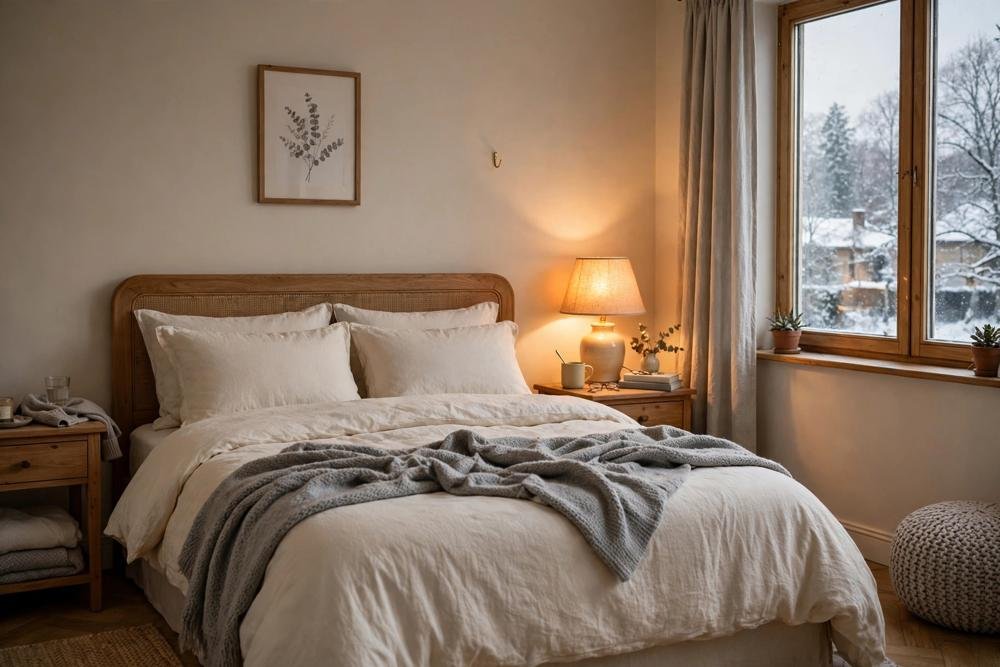
Start by taking down everything that only made sense in December. Remove Christmas bedding, red cushions, glittery ornaments, festive garlands, and anything with a Christmas pattern. Keep the things that were actually making the room feel cosy, even if they were not festive. Warm lamps, a soft throw, bare branches in a vase, a plain candle, and one calm corner for reading are all worth keeping.
Once the festive layer is gone, look at the room with fresh eyes. Many bedrooms feel empty in January because the bed was the main decoration. Make the bed the focus again. Use clean, freshly washed bedding in cream or soft white. Add one or two cushions in taupe or soft grey, not five or six novelty cushions. Fold a throw neatly across the foot of the bed. That simple reset often makes the whole room feel cleaner and more intentional.
Clear one surface completely, such as the top of a dresser or a bedside table. A clear surface makes a winter bedroom feel calm, especially when the light outside is low. Put back only what you use every day: a lamp, a book, a glass of water, and perhaps a small plant. If you have a chair that has become a pile of clothes, clear it too. Winter rooms feel smaller when every surface is covered, so space is part of the cosiness.
Finally, keep one winter touch that is not festive. A bowl of pinecones, a wooden tray, a woven basket, or a simple vase with dried stems can add texture without shouting Christmas. The goal is a room that looks good in a photo in February, not a room that looks like December is still hanging on.
Idea 2: Swap Your Bedding Layers for Warmth Without Overheating

Winter bedding is not about adding the thickest duvet you can find and hoping for the best. Too much warmth leads to waking up hot, kicking covers off, and then feeling cold again. A better winter bed uses layers you can adjust through the night. Start with brushed cotton or flannel sheets, which feel warm on contact and are much more comfortable than cold, crisp cotton on a January night.
Add your usual duvet, then add a waffle or quilt layer on top. This middle layer traps warmth and looks beautifully textured, but it is easy to fold back if you get warm. Finish with a throw at the foot of the bed. A wool blend, chunky knit, or fleece throw adds warmth for reading in bed, and you can pull it up without disturbing the whole bed.
Think about pillows too. In winter, a slightly firmer pillow and a pillow protector can feel more supportive and fresher. Keep decorative pillows to two or three, and store the rest during the night in a basket or on a bench. A bed that takes only seconds to get into is a bed you will actually enjoy. If you sleep hot, choose breathable cotton and wool layers rather than heavy synthetic blankets that trap heat. If you sleep cold, add a thin extra blanket between the sheet and duvet, rather than one very heavy cover.
Wash and air bedding regularly in winter. Rooms are closed up more in January and February, so bedding can feel stuffy faster. A fresh sheet change, aired pillows, and a quick shake of the duvet outside on a dry day can make the bed feel new again. This is also a good time to check your mattress protector and pillow protectors, and replace anything that has gone flat or lumpy.
Idea 3: Fix Light and Drafts for Dark Mornings and Cold Nights

Light makes the biggest difference to a winter bedroom. In January, natural light is weak and days are short, so harsh ceiling lights can make a room feel cold and flat. Use warm bulbs instead, ideally around 2700K or warmer, in bedside lamps. A lamp on each side of the bed gives soft, even light and helps the room feel balanced. If you only have one lamp, add a small plug in light or a battery lamp on the other side for balance.
Curtains matter just as much as lamps. Heavy curtains, or curtains with a thermal lining, help keep cold air out and make the room feel enclosed and safe at night. Close them as soon as it gets dark, and open them fully in the morning to let in as much daylight as possible. If your curtains are thin, add a second layer. A sheer curtain behind a heavier curtain gives privacy in the day and warmth at night, without needing new curtain poles.
Check for drafts around windows and doors. A simple draft excluder, a rolled towel at the bottom of a door, or a door seal can make a surprising difference. Put a rug beside the bed, especially if you have hard floors. Stepping onto a cold floor first thing in the morning makes the whole room feel colder, while a soft rug makes mornings much more bearable. A rug also helps with sound and makes the room feel softer overall.
For reading in bed, a warm, focused light is better than a bright overhead light. A clip on reading light, a small wall light, or a lamp with a warm bulb lets one person read without waking the other. Keep light low in the last hour before sleep. Bright, cool white light in the evening can make it harder to wind down, while warm, dim light helps your body prepare for sleep.
Idea 4: Use a January Colour Palette of Cream, Taupe, Soft Grey and Sage
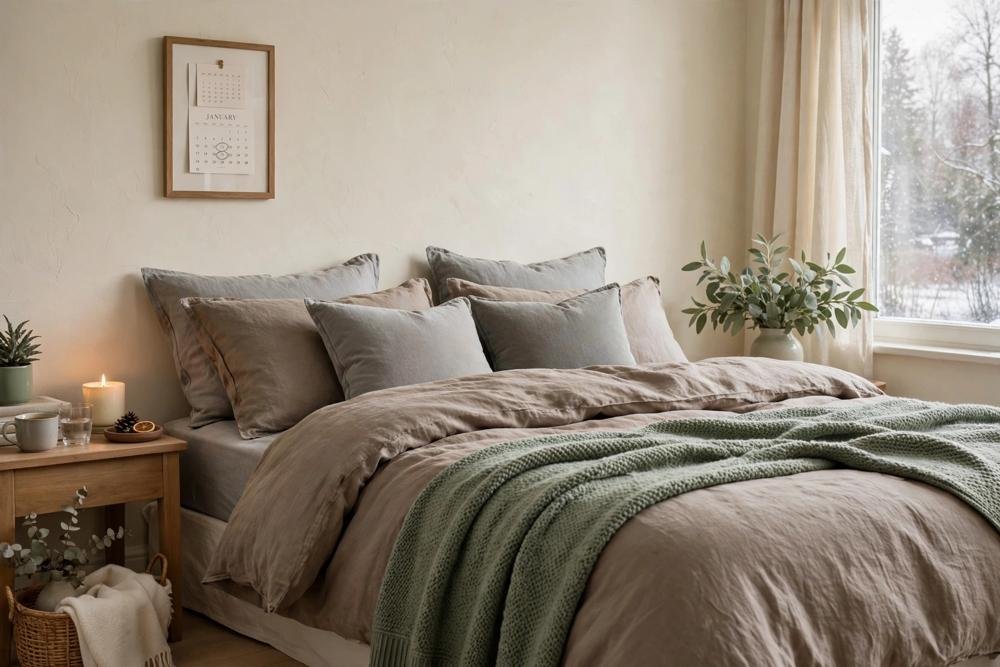
January colour should feel soft, not festive and not stark. Start with cream as your base. Cream walls, cream bedding, or cream curtains warm up a room without making it look yellow. Add taupe for depth. Taupe bedding, a taupe throw, or taupe cushions give the room a grounded, calm feeling that works well in low light.
Soft grey is your cool balance. Use it in cushions, a rug, or a knitted throw, but keep it soft and warm toned rather than cold blue grey. A cold grey can make a winter bedroom feel even colder. Sage is the fresh accent that stops the palette feeling dull. A sage cushion, a sage throw, or a small sage plant pot adds a gentle touch of nature without looking like Christmas green.
Add one warm accent to finish the palette. This could be a warm wood tone, a brass lamp, a terracotta pot, a caramel throw, or a honey coloured wooden frame. One warm accent is enough. If you add red, gold, glitter, or lots of bright colour, the room will start to feel festive again, which is exactly what you want to avoid in January.
You do not need to repaint to use this palette. Bedding, cushions, throws, curtains, and a rug can carry the whole scheme. If you do want to paint, test samples in your own light first. North facing rooms need warmer creams and taupes, while south facing rooms can handle slightly cooler greys. Paint a large test patch, look at it in morning and evening light, and live with it for a few days before committing.
Choose Textures That Actually Feel Warm
Colour alone does not make a bedroom feel warm. Texture does most of the work. In January, mix soft, tactile materials: brushed cotton, wool, knit, velvet, linen, and wood. A velvet cushion, a knitted throw, a wool rug, and wooden bedside tables together feel warmer than a room full of smooth, shiny surfaces.
How to Make a Small Winter Bedroom Feel Cosy, Not Cluttered
Small bedrooms need winter warmth most, but they also show clutter fastest. In a small room, choose fewer, larger items rather than many small ones. One good throw is better than three thin ones. One rug that fits beside the bed is better than two tiny rugs. One basket for extra blankets is better than piles on chairs and floors. For a complete plan, see Small Bedroom Ideas: The Complete Guide to Layout, Storage, Light and Style.
A Simple January Weekend Refresh Plan
You can refresh a winter bedroom in one weekend without spending much. On Saturday morning, remove festive items, wash bedding, and clear surfaces. In the afternoon, swap in winter bedding layers, change bulbs to warm tones if needed, and put heavy curtains back up or add thermal lining. On Sunday, add your January palette with cushions and a throw, place a rug beside the bed, and set up one reading corner with a lamp and a small shelf or basket for books.
What to Avoid
Avoid keeping Christmas decoration up just to fill empty space. It makes January feel stuck in December and stops you enjoying a fresh winter look. Avoid very heavy, synthetic bedding that makes you overheat, and avoid lots of small decorative pillows that end up on the floor every night. Avoid cool white bulbs in the evening, thin curtains on cold windows, and bright festive colours that clash with a calm January palette.
Avoid buying a matching bedroom set just because it looks cosy in a shop. A matching set can look flat and impersonal, especially in a small room. Mix textures and tones instead, and let the bed, light, and rug do the work. Avoid overfilling the room with winter accessories. A cosy winter bedroom should feel easy to clean, easy to sleep in, and easy to relax in, not like a display that needs constant tidying.
FAQs
How do I make my bedroom cozy in winter without Christmas decor?
Focus on warmth through bedding, light, and texture rather than festive items. Use layered bedding, warm lamps, heavy curtains, a rug beside the bed, and a soft palette of cream, taupe, soft grey, and sage. Remove Christmas patterns and colours, and keep only calm, non festive touches such as a throw, a plant, or bare branches.
What bedding is warmest for winter?
Layered bedding is usually warmer and more comfortable than one very thick duvet. Brushed cotton or flannel sheets, a duvet, a waffle or quilt layer, and a throw at the foot of the bed let you adjust warmth through the night. Wool and cotton layers breathe better than heavy synthetic blankets, so they are less likely to make you overheat.
How do I keep a bedroom warm in winter without heating all night?
Close heavy or thermally lined curtains as soon as it gets dark, seal obvious drafts around windows and doors, and use a rug on hard floors. Layered bedding and a throw help you stay warm in bed without heating the whole room all night. Keep the room cool but not cold, and use warm light and soft textures to make it feel warmer.
What colours work best for a bedroom in January?
Cream, taupe, soft grey, and sage work well together in January because they feel calm and soft in low light. Add one warm accent, such as warm wood, brass, or caramel, to stop the room feeling cold. Avoid festive red and gold, glitter, and bright Christmas patterns if you want a fresh, non festive winter look.
How can I refresh my bedroom in January on a budget?
Start with free changes: remove festive items, wash and remake the bed, clear surfaces, and move furniture if needed. Then add low cost changes in order: warm bulbs, a throw, pillow covers in your January palette, and a rug beside the bed if you do not already have one. Bedding and light usually make the biggest difference for the least money.
Conclusion
A cosy winter bedroom in January and February does not need Christmas decor, a renovation, or a big budget. It needs a clear reset after the festive season, bedding layers you can adjust, warm light, protection from drafts, and a soft colour palette that feels calm in low light. Cream, taupe, soft grey, and sage, with one warm accent, give you that calm winter feeling without looking festive.
By February, your bedroom should feel like a place you look forward to at the end of the day: warm, quiet, soft, and restful, long after Christmas is over.