A retro bathroom makeover can cost under $200, or it can cost as much as a full renovation. The difference is not just how much you spend, but what you change: accessories only, surfaces and fixtures, or the whole room. Here are three retro bathroom budgets, what each one includes, and how to choose the right one for your room.
Prices in this article are estimates only, based on typical retail prices, and they vary by location, product choice, room size and labour rates. Always get current quotes for your area before you commit to a budget, especially for plumbing, tiling and electrical work.
Key takeaways
- Under $200 buys a retro refresh: accessories, a curtain, towels and paint, with no plumbing or tiling changes.
- Under $1,000 buys a surface makeover: paint, peel-and-stick tile, a vanity update, lighting and accessories.
- A full renovation, over $1,000 and often much more, buys real tile, fixture changes, plumbing moves and professional help.
- The biggest cost drivers are plumbing moves, real tile work, and fixture replacement, not accessories.
- Always get quotes, check your room’s plumbing and floor, and keep a small contingency for surprises, especially in older bathrooms.
1. What Drives Retro Bathroom Costs?
Before the budgets, it helps to know what makes a retro bathroom expensive, and what does not.
Cheap: accessories, towels, a shower curtain, a rug, paint, peel-and-stick tile, a mirror swap, and lighting swaps that do not move wiring. These are reversible, and they are where a small budget goes furthest.
Mid-range: a vanity replacement, a pedestal sink swap, real paint work on walls, peel-and-stick or simple tile work, and lighting that needs an electrician. These change the room more, but they do not move plumbing or walls.
Expensive: moving plumbing, replacing a tub or toilet, real tile work on floors and walls, rewiring, and any structural work. These need professionals, permits in some areas, and they can uncover surprises in older bathrooms, such as old pipes or uneven floors.
A good rule is to spend your budget where it shows most, and to avoid spending on things that are hidden or hard to reverse, unless you are doing a full renovation.
2. Budget 1: Under $200, the Retro Refresh
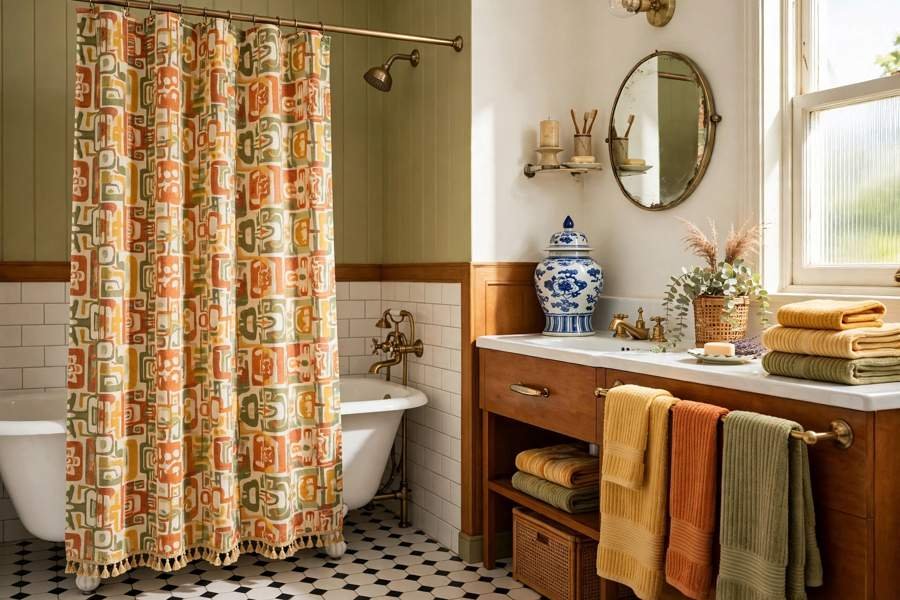
The under $200 budget is for a retro refresh: no plumbing, no tiling, no electrical moves, just accessories, colour and one or two swaps that change the feeling of the room.
What it includes: a floral or patterned shower curtain and liner, a towel set in your chosen decade’s palette, a washable rug or bath mat, a ginger jar or two, a soap dish, and a small mirror frame swap if you can do it yourself. If your walls need it, a tin of paint for one accent wall can fit in this budget too, if you paint it yourself.
What it does not include: new tile, a new vanity, a new tub or toilet, or any professional labour. Those are for the next budgets.
Who it suits: renters, anyone testing a retro style, and anyone who wants a quick change without a renovation. It is also the best budget if you have original vintage tile, because accessories and towels that match the tile can make the whole room feel intentional, without touching the tile at all.
3. Budget 2: Under $1,000, the Surface Makeover
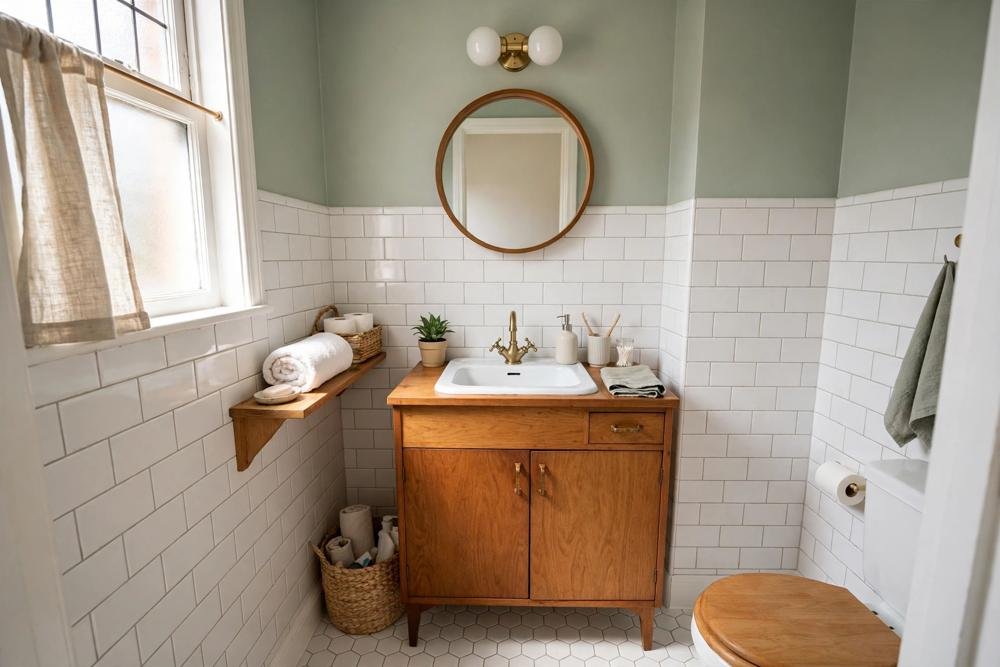
The under $1,000 budget is for a surface makeover: paint, peel-and-stick tile, a vanity update, lighting and accessories, with no plumbing moves and no structural work.
What it includes: paint for the walls, peel-and-stick tile or a patterned rug for the floor, a vanity or pedestal sink swap if the plumbing already fits, a mirror swap, globe vanity lights or a pendant if the wiring already exists, and all the accessories from Budget 1. It can also include a skirted sink, a wooden shelf, and a few classic details, such as a brass towel ring or a vintage-style tap, if the fittings already match.
What it does not include: moving plumbing, a new tub or toilet in a new position, real tile work on the whole room, or rewiring. If a vanity or sink swap needs new plumbing, or a light needs new wiring, get a quote first, because that can push you over $1,000 quickly.
Who it suits: homeowners who want a real change, renters who can use reversible peel-and-stick tile and a skirted sink, and anyone with a small bathroom where surface changes make a big difference. It is the sweet spot for most retro bathrooms, because it changes the room without the cost and disruption of a full renovation.
4. Budget 3: Full Renovation, Over $1,000
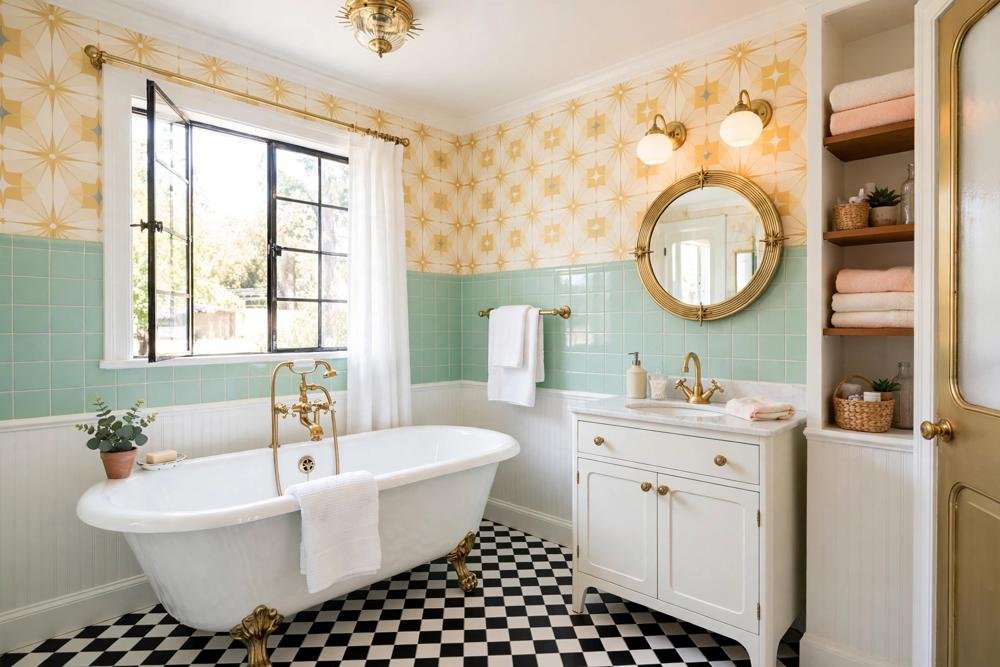
A full retro renovation is over $1,000, and in many cases it is several thousand dollars, depending on room size, tile choice, fixture choice and labour rates in your area. It is for a bathroom that needs real work, not just a refresh.
What it includes: real tile on floors and walls, a new tub or toilet, a new vanity, new taps and fittings, new lighting with any wiring changes, and professional labour for plumbing, tiling and electrical work. It can also include a floor check for a heavy clawfoot tub, a ventilation upgrade, and any repairs to old pipes or uneven floors that are found during the work.
What to watch out for: surprises in older bathrooms, such as old pipes, hidden water damage, or floors that need strengthening, can add cost. Get a detailed quote, ask what is included and what is not, and keep a contingency, a small extra amount, for surprises. And check local rules: plumbing and electrical work may need a professional and, in some areas, a permit.
Who it suits: homeowners planning to stay in the home, bathrooms that need plumbing or tile work anyway, and anyone who wants a full period look, such as a real 1920s tile room or a full 1950s pastel bathroom, rather than a surface refresh.
5. Cost Table: Three Retro Budgets at a Glance
Here is a summary table, with prices as estimates only, varying by location and product choice.
Under $200, retro refresh: shower curtain and liner, towels, rug, ginger jars, soap dish, small accessories, and one accent wall of paint if you do it yourself. No plumbing, tiling or professional labour. Best for renters and for testing a retro style.
Under $1,000, surface makeover: paint, peel-and-stick tile or a patterned rug, vanity or sink swap if plumbing fits, mirror swap, lighting swap if wiring exists, and all refresh accessories. No plumbing moves or structural work. Best for most retro bathrooms.
Over $1,000, full renovation: real tile, new tub or toilet, new vanity, new taps, new lighting with wiring changes, and professional plumbing, tiling and electrical labour. Contingency for surprises in older bathrooms. Best for a full period look or a bathroom that needs real work.
6. How to Save Without Losing the Retro Look
You can save on a retro bathroom without losing the look, if you spend where it shows and save where it does not.
Save on accessories: thrift shops, discount shops and sales are good for ginger jars, mirrors and towels, because accessories do not need to be new to look vintage. Save on paint by painting yourself, if you are confident, and by painting one accent wall rather than the whole room.
Spend on the hero: if you have one retro hero, tile, tub, vanity or lighting, spend on that, and keep the rest simple. A good hero plus simple basics looks intentional, while cheap everything looks cheap.
Save on labour by avoiding plumbing moves and wiring moves. A vanity swap that fits existing plumbing, and a light swap that fits existing wiring, are much cheaper than moving pipes or wires. And always get at least two quotes for professional work, so you know the going rate in your area.
7. Renters: What Each Budget Means for You
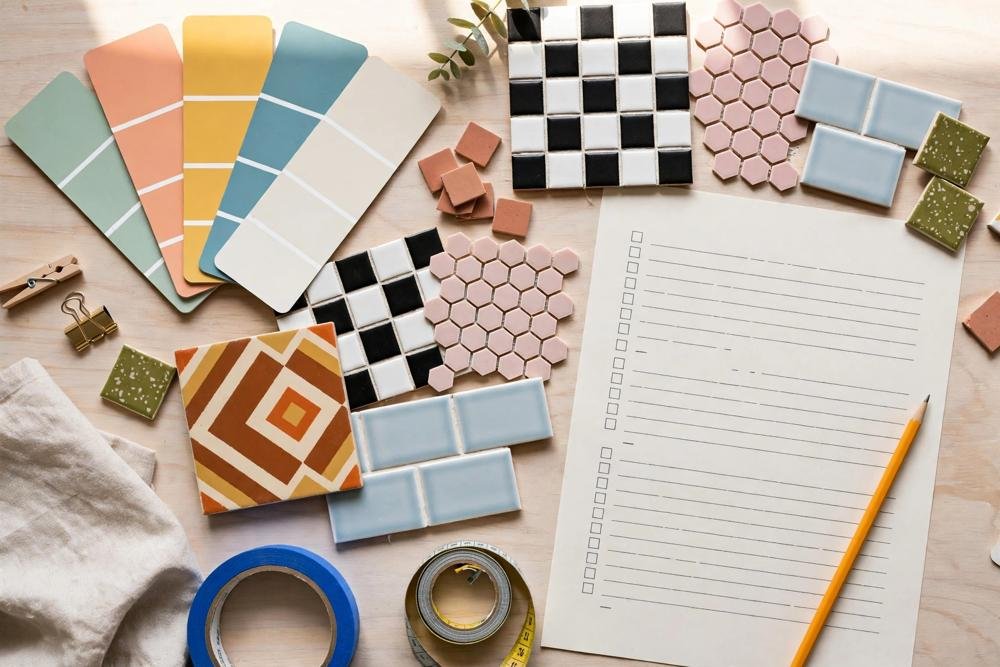
Renters can do Budget 1 fully, because it is all reversible: curtain, towels, rug, accessories and paint only if your landlord allows it. Budget 2 is partly possible for renters, with peel-and-stick tile, a skirted sink, a mirror swap and lighting swaps that do not move wiring, but check your lease and your landlord first, especially for anything that sticks to walls or floors.
Budget 3, a full renovation, is usually not for renters, because it involves plumbing, tiling and fixtures that belong to the landlord. If you are a renter and you love a full retro look, focus on Budget 1 and the reversible parts of Budget 2, and use accessories, towels and a curtain to carry the retro style, rather than changing the room itself.
8. Older Bathrooms: What to Check Before You Budget
Older bathrooms can hide surprises that affect cost, especially if you are doing Budget 2 or Budget 3. Before you commit, check the plumbing, the floor, and the ventilation.
Check for leaks, old pipes, and water damage around the tub, sink and toilet. Check the floor for soft spots or uneven areas, especially if you plan a heavy tub. Check the ventilation, because a bathroom without a working fan will damage paint, wallpaper and fabrics, however much you spend on them.
If you find problems, get a professional to quote the repair before you budget the makeover, because repairs come first. A beautiful retro bathroom on top of a leaking pipe or a soft floor will not last, and it will cost more to fix later.
What to Avoid
- Do not budget without quotes. Prices vary by location, product and labour, and a guess can be far from the real cost.
- Do not move plumbing or wiring without a professional quote first. Those are the biggest cost drivers, and they can push a small budget over quickly.
- Do not spend on a full renovation if a refresh will do. Test the style with Budget 1 first, especially if you are unsure about a decade’s palette.
- Do not forget a contingency for older bathrooms. Surprises, old pipes, hidden damage, uneven floors, are common, and they cost money.
- Do not buy fixtures or tile without checking the plumbing, door width and floor strength first, especially for a heavy tub.
- Do not use non-washable fabrics or paper wallpaper in a wet bathroom, however cheap they are, because they will not last.
Conclusion
A retro bathroom makeover does not have to cost a fortune. Under $200 buys a refresh that changes the feeling of the room, under $1,000 buys a surface makeover that changes how the room looks, and a full renovation, over $1,000, buys a complete period room with professional work. The right budget is the one that matches your room, your tenure, and your plans: renters and testers start with a refresh, most homeowners will find the surface makeover is the sweet spot, and a full renovation is for a bathroom that needs real work or a full period look. Whatever your budget, get quotes, check the plumbing and floor, test your colours, and keep a little contingency for surprises. The result is a retro bathroom that looks intentional, feels comfortable, and costs what you planned.
FAQs
How much does a retro bathroom makeover cost?
It depends on what you change. A refresh with accessories, a curtain, towels and paint can be under $200. A surface makeover with paint, peel-and-stick tile, a vanity update and lighting is under $1,000. A full renovation with real tile, new fixtures and professional labour is over $1,000, often several thousand dollars. Prices are estimates and vary by location.
What is the cheapest way to make a bathroom look retro?
The cheapest way is accessories and colour: a patterned shower curtain, towels in a vintage palette, a rug, a ginger jar, and paint on one accent wall if your landlord allows it. Matching accessories to original vintage tile, if you have it, makes the whole room feel retro without touching the tile.
Is a retro bathroom makeover worth it for renters?
Yes, if you stick to reversible changes: curtain, towels, rug, accessories, peel-and-stick tile where allowed, and a skirted sink. Avoid plumbing moves, real tile work and fixture changes that belong to the landlord, and check your lease before you start.
What costs the most in a retro bathroom renovation?
Plumbing moves, real tile work, and fixture replacement cost the most, especially a tub or toilet in a new position, or a heavy clawfoot tub that needs floor work. Professional labour for plumbing, tiling and electrical work is also a major cost. Accessories and paint are the cheapest parts.
Should I get quotes before I start a retro bathroom makeover?
Yes, especially for Budget 2 and Budget 3. Get at least two quotes for plumbing, tiling and electrical work, ask what is included, and keep a contingency for surprises in older bathrooms. A quote is the only way to know the real cost in your area.
Can I do a retro bathroom makeover in stages?
Yes, and it is a good idea. Start with a refresh, live with it for a few weeks, then add surface changes, and only do a full renovation later if you still love the style and the room needs it. Staging spreads the cost and lets you test the look before you commit.