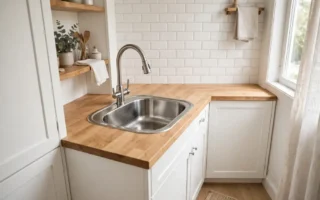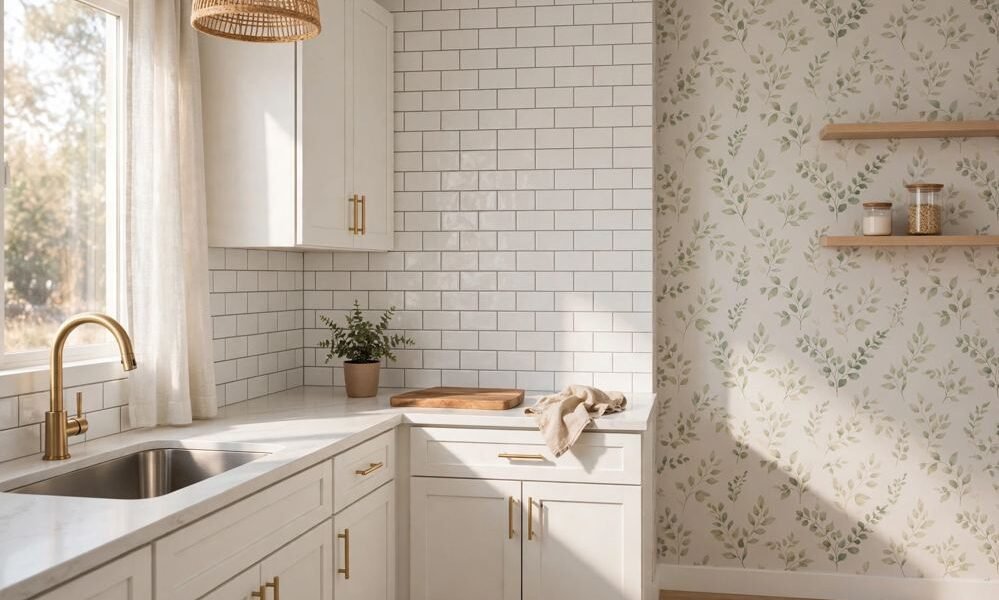
Renting does not mean living with a kitchen you dislike. With renter kitchen decor that is truly no drill and no damage, you can change how the room looks, how it works, and how it feels, without risking holes in the walls, ruined paint, or a deposit deduction at move-out. The secret is to choose products that are made to come off cleanly, to use furniture and freestanding pieces for the heavy lifting, and to plan your exit on the same day you plan your makeover.
This complete guide explains the four ideas that make the biggest difference in a rental kitchen: peel-and-stick surfaces, adhesive storage, freestanding furniture, and plug-in lighting with soft textiles and plants. It also covers what to avoid, how to test a product before you commit to a whole wall, and a simple move-out checklist to help protect your deposit. Every idea below is reversible, budget-friendly, and easy to repeat in your next home.
Start With the Lease, the Walls, and a Few Photos
Before you buy anything, read your lease for rules about adhesive products, removable wallpaper, and changes to fixtures. Many landlords allow peel-and-stick products but not paint, nails, or screws, while others ask you to return the kitchen to its original condition. Take dated photos of every wall, cabinet, countertop, and appliance, and keep the photos with your lease. If a mark was already there, you want proof that you did not cause it.
Next, test every adhesive in a hidden spot. Stick a small piece behind the fridge, inside a cabinet, or low on a wall, leave it for 24 to 48 hours, then remove it slowly and check for paint lift, residue, or discoloration. Surfaces matter: smooth tile, glass, laminate, and painted drywall in good condition usually work best, while textured walls, flaking paint, and very hot areas near a hob need extra care. Clean the surface first with a mild cleaner, let it dry completely, and never apply adhesive to dust, grease, or damp paint.
Finally, set a simple budget and a stopping point. A rental kitchen looks best when a few strong changes are done well, rather than when every surface is covered. Choose one focal wall, one storage problem to solve, one lighting improvement, and a few soft layers. That focus keeps costs down, keeps the kitchen calm, and makes removal much faster later.
Idea 1: Peel and Stick Backsplash and Removable Wallpaper
A peel-and-stick backsplash is often the fastest way to transform a rental kitchen. It adds colour, pattern, and a sense of intention, without tile adhesive, grout, or a drill. Choose a design that works with your existing cabinets and worktops, whether that is a clean subway look, a soft marble effect, a warm terracotta tile, or a simple geometric pattern. Measure carefully, order a little extra for mistakes and pattern matching, and start in the least visible corner so you can practise alignment.
Preparation makes the difference between a finish that looks professional and one that peels within a week. Clean the wall, remove any grease near the hob, and dry it fully. Cut panels one at a time, line up the pattern before you press firmly, and smooth from the centre outward to push out air bubbles. A plastic card or smoothing tool helps, but do not stretch the material, because stretched vinyl can shrink back and leave gaps. Around sockets and corners, trim slowly with a sharp blade and leave a neat, small margin rather than forcing the sheet into a tight fold.
Removable wallpaper works the same way on a larger scale. Use it on one accent wall, inside open shelving, on the side of a fridge panel, or behind a small breakfast nook. A single patterned wall can make an ordinary rental kitchen feel designed, while keeping the rest of the room light and easy to clean. Avoid placing removable wallpaper directly above a hob or in a spot that stays steamy for long periods, and check that the product is labelled removable rather than simply self-adhesive.
For more budget-friendly backsplash inspiration, read Indoor Kitchen Backsplash Ideas on a Budget. It will help you compare colours, finishes, and layouts before you choose a pattern for your own kitchen.
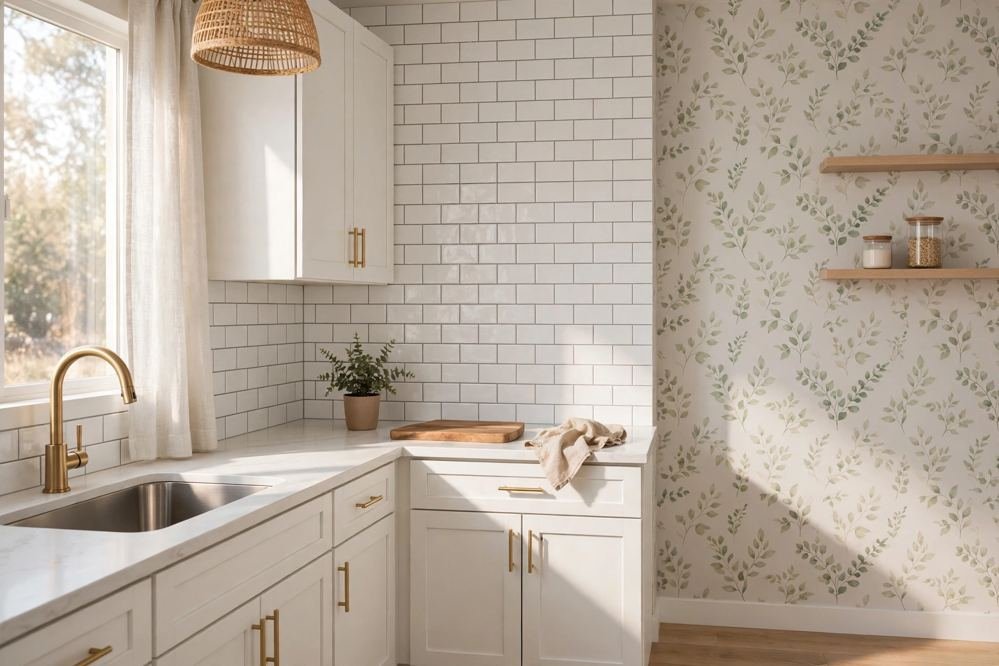
When you move out, removal should be slow and patient. Warm the edge gently with a hair dryer on a low setting, peel at a low angle, and clean any light residue with warm soapy water. If a piece resists, stop and warm it again rather than pulling hard. A calm removal is what protects both the wall and your deposit.
Idea 2: Adhesive Hooks, Racks, and Shelves With No Drilling
Adhesive storage solves one of the most common rental kitchen frustrations: nowhere to put the things you use every day. Well-chosen hooks, racks, and shelves keep utensils, mugs, towels, and spices within reach, free up counter space, and make a small kitchen feel much larger. The key is to respect weight limits, choose the right adhesive for the surface, and spread the load across several fixings instead of hanging everything from one hook.
Start with the inside of cabinet doors. Adhesive hooks are ideal for measuring cups, small pans, and cleaning tools, and they keep clutter out of sight. On a smooth tile wall or the side of a fridge, use adhesive racks for spices, foil, and cling film. Over-door hooks and racks are another no-drill option for towels and aprons, provided they do not rub the door frame or stop the door closing properly. For mugs and light utensils, a rail with adhesive mounts can look tidy, but only if the total weight stays well below the stated limit.
Adhesive shelves need the most care. They work best for light items such as small jars, a plant, or a few mugs, and they should be placed on clean, smooth, dry surfaces. Avoid hanging heavy cast iron, full spice collections, or large appliances from adhesive fixings. Wait the full curing time stated by the manufacturer before loading a shelf, usually at least 24 hours, and check the fixings after the first few days. If a hook starts to slip, remove the load and replace the adhesive strip rather than adding more weight and hoping it holds.
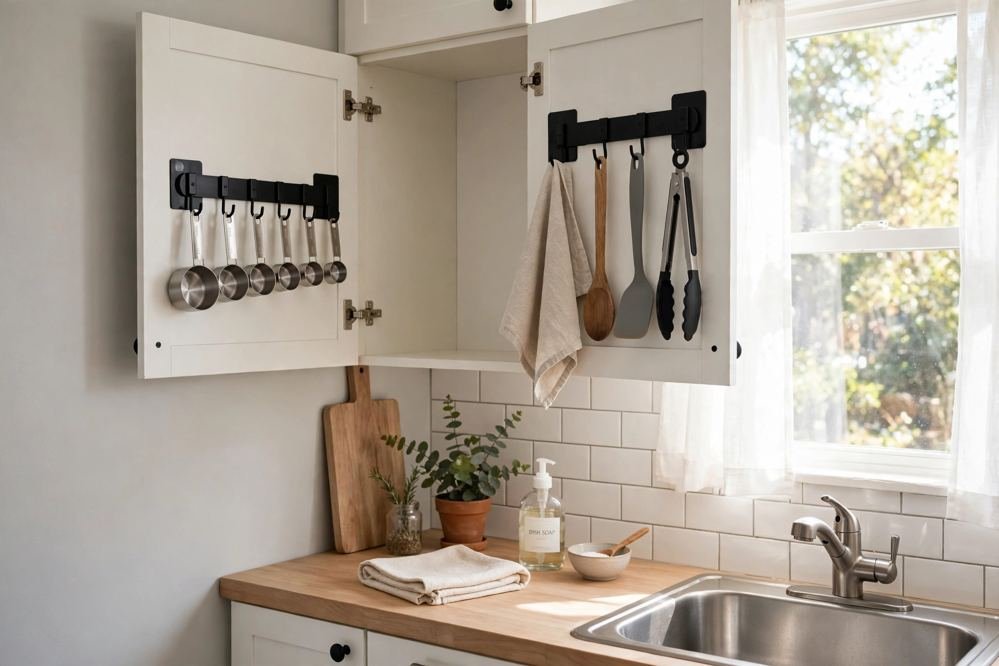
Think in zones rather than adding hooks everywhere. Keep cooking tools near the hob, prep tools near the main worktop, and cleaning items near the sink. A simple zone plan stops the kitchen looking busy and means you reach for things without opening five cupboards. It also makes it easier to remove everything at move-out, because each zone can be cleared and cleaned in turn.
Idea 3: Freestanding Storage, Carts, and Shelf Units
Freestanding storage is the renter’s best friend, because it adds capacity without touching the walls at all. A rolling kitchen cart can hold a microwave, a coffee station, baking trays, or everyday ingredients, and it can move out of the way when you need floor space. A tall, open shelf unit can act as a pantry, a display shelf, and a room divider in an open-plan flat. A small island or butcher-block table adds prep space and a place to eat, without any permanent change.
Choose pieces that fit the kitchen you actually have, not the kitchen you wish you had. Measure doorways, walkways, and the space between the fridge and the counter before ordering. Leave enough room to open the oven, dishwasher, and fridge doors fully. In a small kitchen, a narrow cart, a slim shelf unit, and stackable bins often work better than one large piece that blocks movement. Wheels are useful, but lock them when the cart is in use so it does not roll while you chop or pour.
Inside your freestanding storage, clear containers and labels make the biggest visual difference. Matching jars for rice, pasta, flour, and snacks look calm, help you see what needs replacing, and reduce half-open packets falling over. For small kitchens without a built-in pantry, read Kitchen Storage and Pantry Ideas for Small Kitchens with No Pantry and Kitchen Pantry Organisation Labels and Containers for practical layouts and labelling ideas that keep a freestanding pantry easy to use.
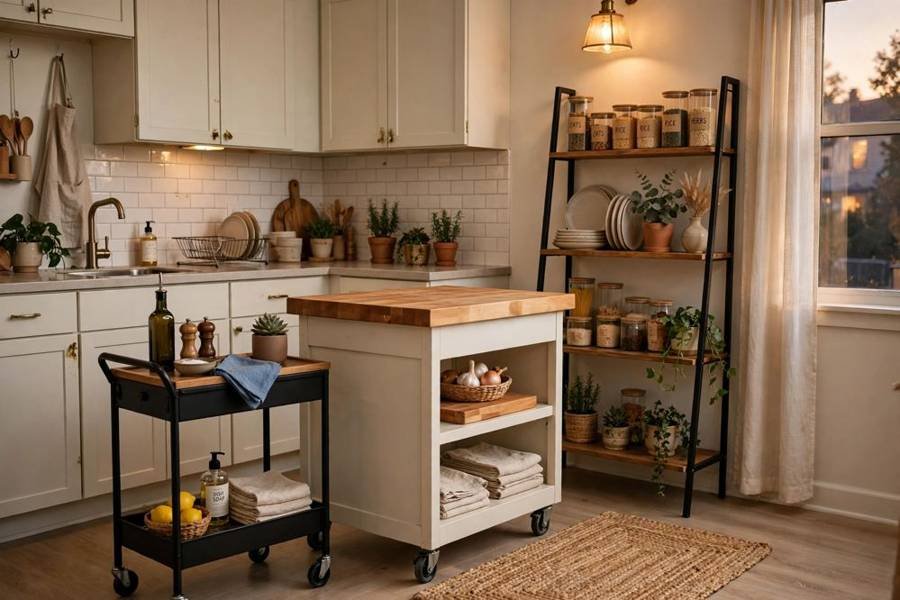
Style freestanding shelves with a mix of useful and beautiful items. Keep everyday dishes and glasses at hand height, heavier items low down, and lighter decorative pieces higher up. Leave some empty space so the shelves do not look crowded, and use baskets for small items that would otherwise look messy. Because freestanding furniture moves with you, it is also a smart long-term investment: buy well once, and it can serve several kitchens over several years.
Idea 4: Plug-In Lighting, Textiles, and Plants
Lighting changes how a kitchen feels more than almost any other single change, and renters do not need an electrician to improve it. Battery-powered or plug-in under-cabinet lights brighten worktops, make food preparation safer, and make the kitchen feel warm in the evening. Plug-in pendant lights, a counter lamp, or a small rechargeable light can add a focal point without any wiring. Choose warm white light for most kitchens, and keep cables tidy with adhesive cable clips that remove cleanly.
For under-cabinet lighting ideas that work without rewiring, see Kitchen Lighting Ideas Under Cabinet. It covers brightness, colour temperature, and placement, so you can light the worktop you use most rather than lighting the whole room harshly from above.
Textiles soften a hard, practical room. A washable runner protects the floor, adds colour, and makes standing at the counter more comfortable. A café curtain or a tension-rod curtain adds privacy and warmth without screws, and it can be changed with the seasons. Tea towels, oven gloves, and a simple tablecloth or placemats in one coordinated palette tie the kitchen together for very little money. Choose washable fabrics, because kitchen textiles need regular cleaning.
For window ideas that suit rentals, including tension rods and no-drill options, read Kitchen Window Treatments Curtains and Blinds. A well-chosen window treatment can soften bright light, add privacy, and make the whole kitchen feel finished.

Plants are the final, low-cost layer. Herbs such as basil, mint, and parsley are useful as well as attractive, while trailing plants soften high shelves and a small potted plant brightens a windowsill. Use saucers or trays under every pot to protect worktops and sills from water marks, and choose plants that suit your light and watering habits. If you are often away, choose hardy plants rather than delicate ones that need daily care.
What to Avoid in a Rental Kitchen
Some changes look tempting but cause the most damage and cost. Avoid drilling into tile, plaster, or cabinets unless your lease clearly allows it in writing. Avoid nails and screws in walls you cannot repair invisibly. Avoid painting over cabinets, tiles, or worktops without written permission, because a poor paint job is expensive to reverse. Avoid strong adhesives, foam tape, and products that are not labelled removable, especially on painted walls and wallpaper.
Also avoid overloading adhesive fixings, hanging items above the hob where heat can weaken adhesive, and placing removable products on damp, dusty, or flaking surfaces. Do not stick anything to a surface that is already damaged, and do not cover vents, smoke alarms, or electrical panels. Finally, avoid buying a whole kitchen’s worth of decor before testing one product. A small test saves money, time, and a difficult conversation with your landlord.
Move-Out Checklist to Help Protect Your Deposit
Start removal a few days before your final inspection, not on the last morning. Remove adhesive products slowly, using gentle warmth where needed, and clean each surface as you go. Take down freestanding furniture, return any original fixtures you changed, and check inside cabinets, drawers, and on top of cupboards for forgotten items. Clean the hob, oven, sink, and worktops thoroughly, and replace any light bulbs you changed.
Take a second set of dated photos that match your move-in photos, and walk through the kitchen with the same care you used at the start. Note any small marks honestly, and fix only what you are confident you can repair invisibly. Keep receipts for cleaning products and any replacement items, and return keys and manuals together. A calm, documented handover is the best way to protect your deposit and leave a good impression.
Frequently Asked Questions
Can I use peel-and-stick tiles in a rental kitchen?
Yes, in most rentals, provided the product is labelled removable and your lease does not forbid it. Test a small piece first on a hidden area, apply it to a clean, smooth, dry surface, and remove it slowly with gentle warmth. Avoid very hot areas directly above the hob and surfaces with flaking paint.
Will adhesive hooks damage the walls?
Good-quality removable adhesive hooks should not damage sound paint or tile when used within their weight limit and removed correctly. Problems usually come from overloading, applying adhesive to damaged paint, or pulling sharply. Follow the manufacturer’s curing time, stay well below the weight limit, and peel slowly at a low angle.
What is the best no-drill storage for a small rental kitchen?
A combination works best: a narrow rolling cart for extra worktop and storage, a slim freestanding shelf for pantry items, adhesive hooks inside cabinet doors for tools, and clear labelled containers to keep everything visible. This mix adds capacity without drilling and can move with you to your next home.
How can I improve kitchen lighting without an electrician?
Use battery-powered or plug-in under-cabinet lights, a plug-in pendant or counter lamp, and warm white bulbs. Keep cables tidy with removable clips, and focus light on the worktop where you prepare food. This approach improves safety and atmosphere without any wiring changes.
Can I use removable wallpaper in a kitchen?
Yes, removable wallpaper works well on an accent wall, inside shelving, or in a breakfast nook, as long as it is not placed in a constantly steamy or very hot area. Choose a product clearly labelled removable, test it first, and smooth it carefully to avoid bubbles. Removal should be slow and gentle to protect the wall underneath.
How do I get my deposit back after decorating a rental kitchen?
Remove all no-drill decor carefully, clean every surface, return fixtures to their original condition, and take dated move-out photos that match your move-in photos. Keep your lease, photos, and receipts together, and report any pre-existing marks honestly. Returning the kitchen clean and close to its original condition gives you the strongest case for a full deposit return.
Conclusion
A beautiful rental kitchen does not require drilling, painting, or permanent changes. With a peel-and-stick backsplash or removable wallpaper, well-chosen adhesive storage, freestanding furniture, and plug-in lighting with textiles and plants, you can create a kitchen that feels personal, practical, and welcoming. Start with one wall, one storage problem, and one lighting improvement, test products before you commit, and plan your move-out from the beginning.
That approach protects your walls, your time, and your deposit, while still letting you enjoy cooking, gathering, and everyday life in a space that truly feels like home. Choose reversible products, respect weight limits, keep cables and clutter tidy, and your rental kitchen can look thoughtfully designed today and return cleanly tomorrow.