Introduction
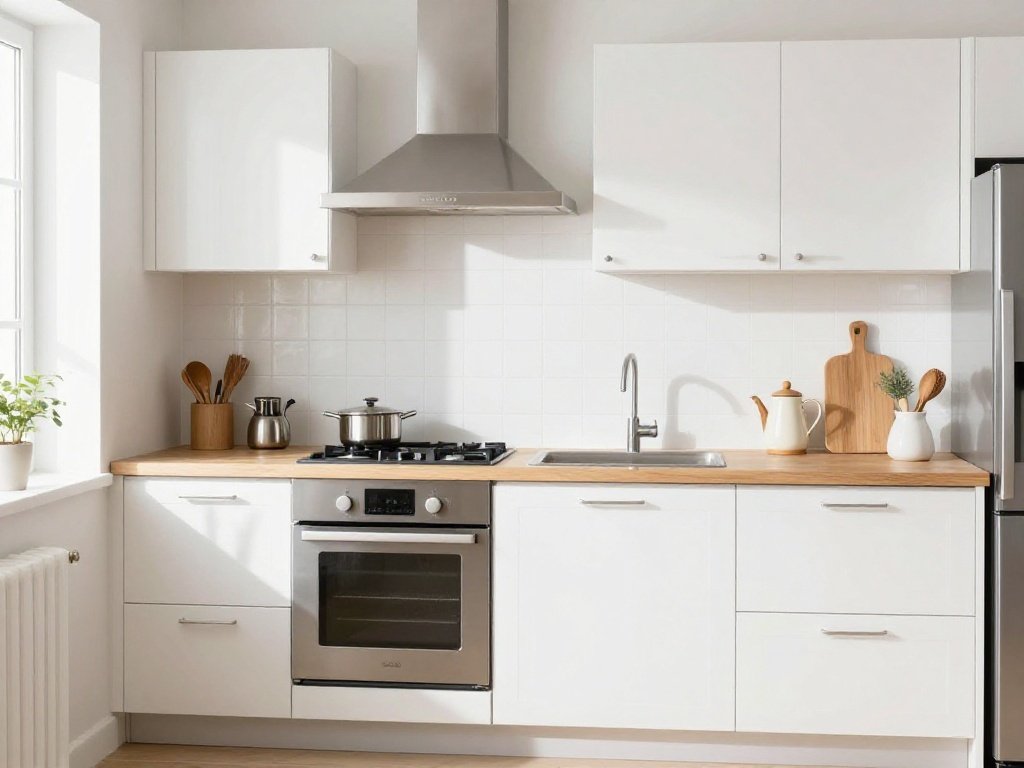
You do not need a walk in pantry to have a working pantry. In a small kitchen with no pantry at all, the pantry is not a room, it is a system: one cabinet, a few pull outs, clear containers, and zones for how you actually cook.
Most guides assume you have a pantry to organise. This guide is for the opposite case: no pantry, small cabinets, and a kitchen that still has to work every day.
Idea 1: Turn one cabinet into a pull out pantry

The single best upgrade for a no pantry kitchen is a pull out pantry in one base cabinet. A 24 to 30 inch base cabinet with drawers or roll out shelves for cans, jars, and dry goods gives you pantry function without building a pantry.
A narrow pull out beside the fridge is even better for bottles, oils, and baking supplies, because it uses a slim gap that would otherwise be wasted.
Tips:
- Measure your cabinet and door clearance before you buy a pull out
- Put heavy cans low, light snacks high
- Group by cooking zone, not just by type: breakfast together, pasta night together, baking together
- Leave a small gap, a cabinet packed to the edges will go back to chaos quickly
If you cannot fit a full pull out, a two tier pull out basket under the sink or in a lower cabinet still makes deep cabinets act like drawers.
Idea 2: Double cabinet space with risers, turntables, and door racks
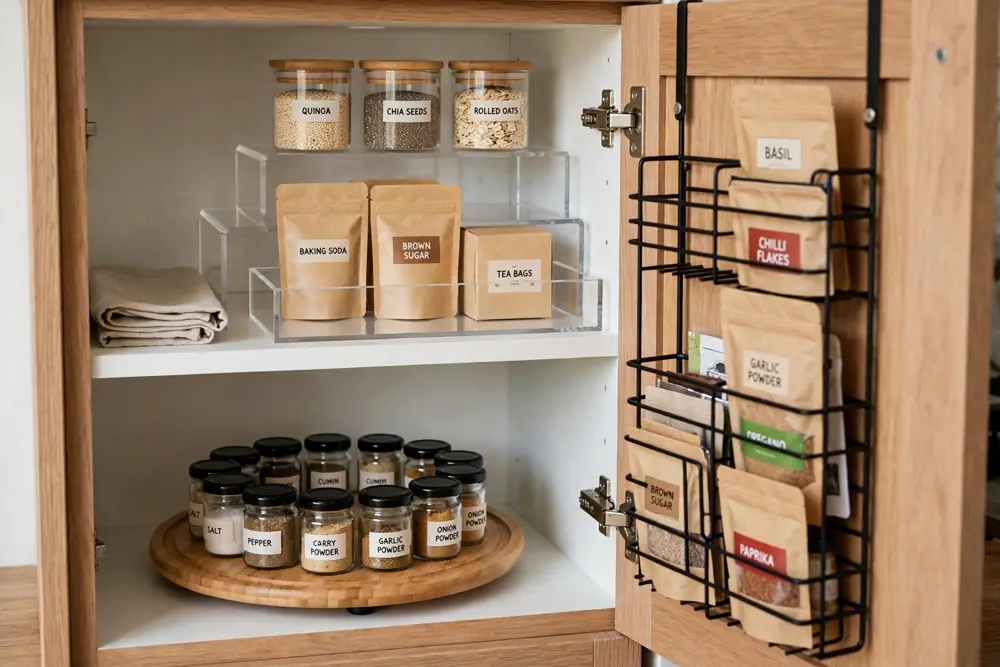
Inside the cabinets you already have, you are almost certainly wasting half the vertical space. Shelf risers split one tall shelf into two usable levels, perfect for cans and spice jars that do not need the headroom.
Under shelf baskets clip on and hang down into empty air below a shelf, giving you a whole extra row for wraps, tea, or snack bags, with no tools and for a few dollars.
Add:
- A lazy Susan in a deep or corner cabinet, so cans in the back become a quick spin away
- Clear bins, grouped by baking, breakfast, snacks, and cans, so you pull out a whole bin instead of digging
- A door rack on the inside of a cabinet door for spices, foil, wraps, and measuring cups
These three cheap buys, risers, dividers, and hooks, often cost under $30 total and make the biggest difference.
Idea 3: Use walls, doors, and a rolling cart as your pantry

When cabinets are full, go to the walls and to wheels. Open shelves on an empty wall, a wall rail with hooks, and a magnetic strip for knives and spice tins free up cabinets and keep daily items within reach.
A rolling cart is an instant pantry, coffee station, or baking centre. Store small appliances, mixing bowls, pantry staples, oils, and cutting boards on it, and roll it to where you need extra workspace, then tuck it beside the fridge or cooker when you are done.
Other no pantry tricks:
- Use the sides of the fridge for magnetic spice tins
- Use a slim rolling trolley in the gap beside the cooker for oils and condiments
- Hang pots and pans on a rail or pegboard, instead of stacking them in a cabinet
- Use a freestanding pantry cabinet or a tall narrow larder if you have one wall free, a 300mm wide full height pull out holds more than two standard base cupboards
Open storage works best when it looks calm: matching jars, clear containers, and one colour family, not a jumble of packets.
Idea 4: Clear containers, zones, and a weekly reset
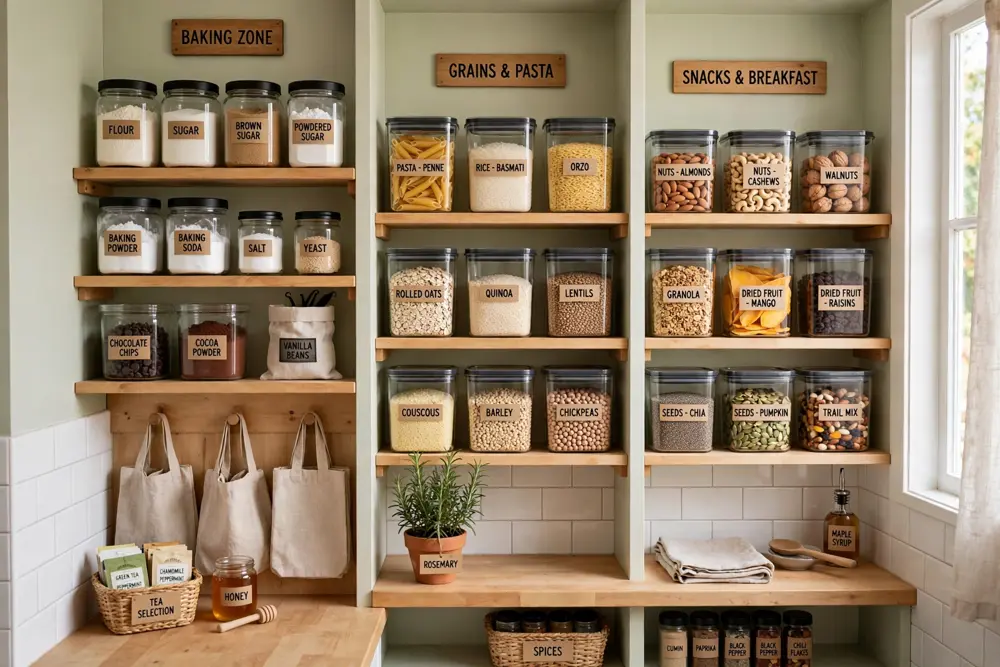
A system only works if you can see what you have. Decant dry goods into uniform square jars for flour, sugar, rice, pasta, oats, beans, and cereal. They stack neatly, show at a glance what is running low, and use less space than bulky packets.
Zone your kitchen:
- Prep zone: cutting board, knives, oils
- Cooking zone: pots, pans, spices near the stove
- Baking zone: flour, sugar, baking trays together
- Daily zone: coffee, breakfast, snacks at eye level
Then keep it with two habits:
- A 10 minute nightly reset, dishes away, prep counter wiped, everything back to its zone
- One in, one out, a new jar or gadget means an old one leaves
Borrow overflow space if you need it: a hall closet or a nearby coat closet can hold bulk buys and canned goods you do not need at arm’s reach, labelled clearly so you do not buy duplicates.
What to avoid
- Buying baskets and containers before you declutter, a tight kitchen cannot carry dead weight
- Packing every shelf to the edge, with no room for new items
- Storing everything in opaque containers, so you cannot see what is running low
- Putting daily items on high shelves and rarely used items at eye level
- Mixing zones, so breakfast, baking, and cleaning supplies all end up in the same cabinet
Frequently asked questions
How do I organise a small kitchen with no pantry?
Dedicate one cabinet or shelf section purely to dry goods and treat it as your pantry. Clear stackable containers, a can organiser, and a door mounted spice rack replicate pantry function in a single cabinet.
Where should I store pots and pans in a small kitchen?
Near the stove, in the cooking zone. Use a wall mounted rack, pegboard, or the cabinet directly beside the stove. Avoid stacking them directly, it scratches non stick pans and wastes time unstacking.
What is the best pull out pantry for a small kitchen?
A narrow full height pull out larder, about 300mm wide, or a pull out in a 24 to 30 inch base cabinet. It holds more than two standard base cupboards and takes less floor space than a bin or a full pantry cabinet.
How can I organise my small kitchen on a budget?
Start free: declutter, then move things by zone. The highest impact cheap buys are shelf risers, drawer dividers, and adhesive hooks, usually under $30 total for all three.
How do I keep small kitchen counters clear?
Keep only daily use items out: coffee setup, knife strip, cutting board. Everything else gets a home in a cabinet, drawer, or on the wall, and keep a landing zone outside the prep area.
How do I stop food expiring in a deep cabinet?
Use pull out baskets, turntables, and clear bins so nothing hides in the back. Group by zone, label containers with the food name and date opened, and do a quick check when you restock.
Conclusion
No pantry does not mean no storage. Turn one cabinet into a pull out pantry, double the space inside your cabinets with risers and turntables, use walls and a rolling cart for overflow, and keep it all visible with clear containers and zones.
Start with decluttering, then one cabinet, then one zone at a time. That system, not a bigger kitchen, is what makes a small kitchen without a pantry actually work, and it links naturally to the next parts of your kitchen cluster: lighting, sinks, islands, and open shelving.