Introduction
Trash and recycling are the least glamorous part of a kitchen, which is exactly why they cause the most daily frustration. A bin that is too small overflows, a bin that is too large takes over the room, recycling piles up on the counter, and food waste starts to smell before bin day. Most kitchens are not designed around waste, so waste ends up wherever there is a spare corner, and that corner slowly becomes the messiest spot in the house.
This guide focuses on the gap most kitchen organisation guides skip: a waste system that fits how your household actually cooks, shops, and recycles. You will find ideas for pull out bins, sorting stations, compost, and small kitchens with no spare cabinet, plus the habits that stop smells and keep sorting easy. The goal is not a perfect zero waste kitchen. It is a system where every item has a place, sorting takes seconds, and taking out the trash is not a chore you put off.
Start by watching your waste for one week: what fills up fastest, what smells first, and what ends up on the counter because there is no bin for it? Those answers decide which bins you actually need.
Idea 1: A pull out bin cabinet that hides waste
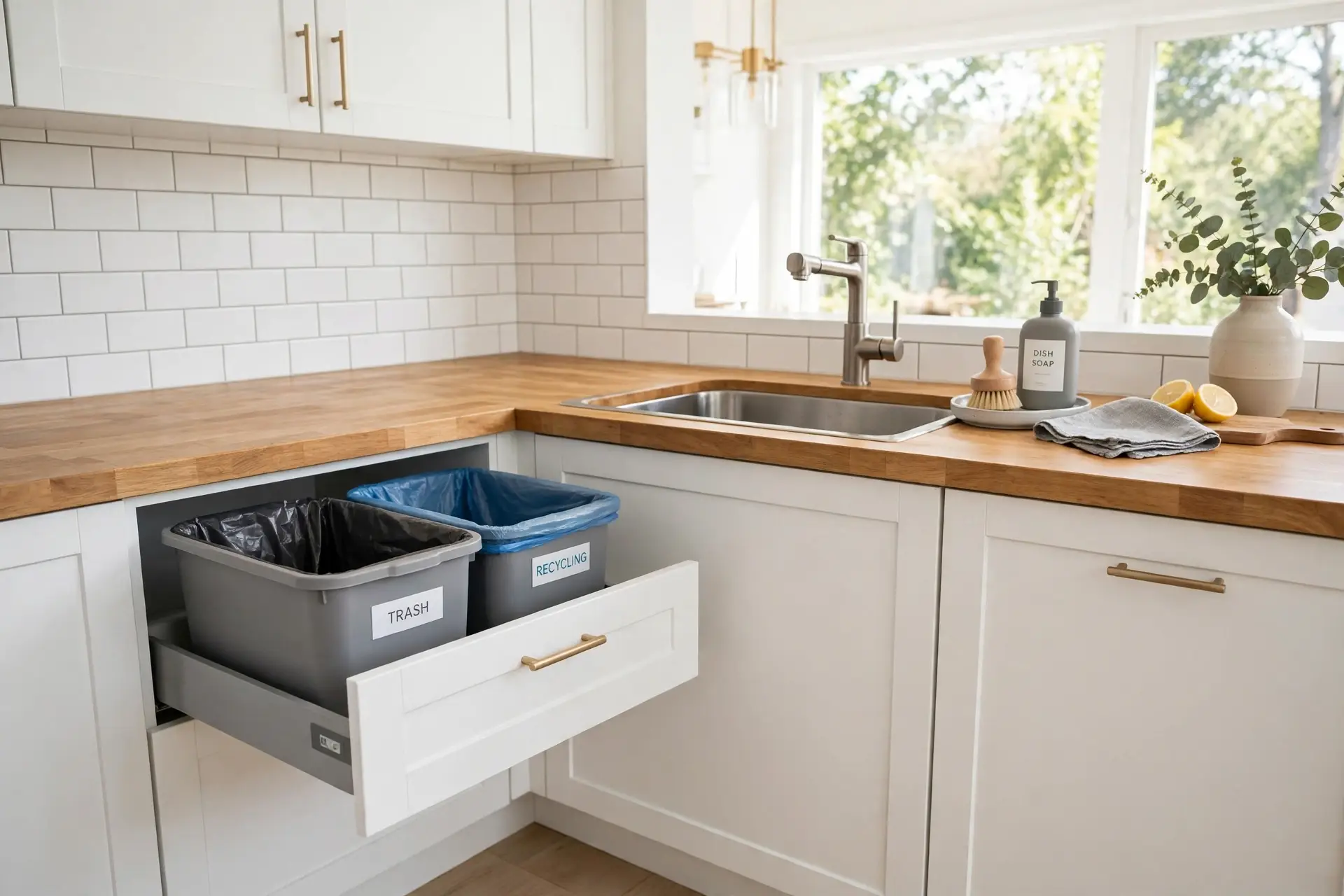
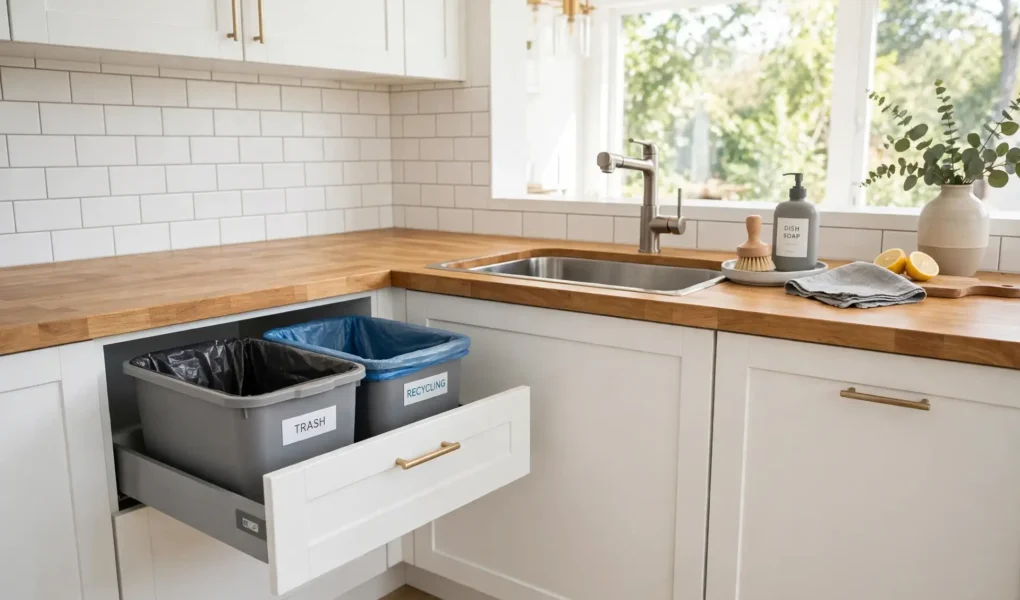
A pull out bin cabinet is the cleanest waste solution for most kitchens, because it hides bins, keeps them close to where you prep food, and stops pets and children getting into trash. A cabinet near the sink or the main prep counter works best, because that is where most waste is created. When you chop vegetables, you can sweep peelings straight into the bin without walking across the kitchen with a handful of scraps.
Choose a pull out system with two bins if you can, one for general waste and one for recycling, or three bins if your local collection separates food waste as well. Soft close runners matter more than they sound, because a bin drawer that slams shut will spill crumbs and splash liquids. A full extension runner matters too, because it lets you reach the back bin without pulling the whole unit out and crouching on the floor.
Size the bins to your household, not to the cabinet. A single person might manage with two 15 litre bins, while a family of four usually needs two 30 litre bins or more. Measure the cabinet height carefully, because tall bins will not fit under a sink with pipes, and shallow bins will fill up too fast. If you are retrofitting, measure twice and check the door swing, because a pull out bin that hits a dishwasher door or an oven handle will annoy you every day.
Idea 2: A sorting station for recycling, glass, and food waste
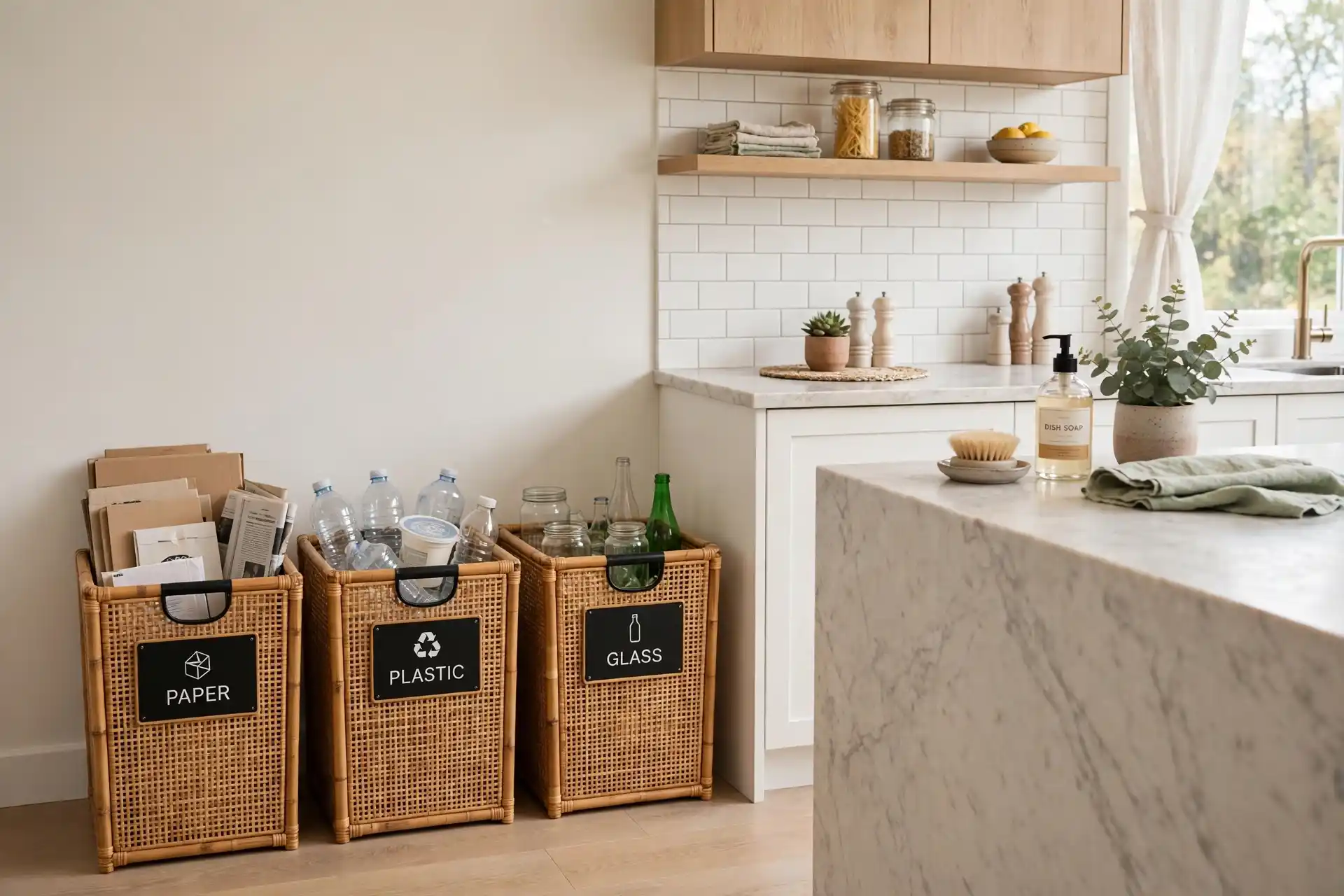
Recycling only works if sorting is easy, and sorting is only easy if each material has a clear, labelled place. A sorting station, whether it is a row of bins in a cupboard, a set of stacked boxes in a utility corner, or a dedicated drawer, should follow the same order as your local collection. If your council collects paper, plastic, and glass separately, your station should have three spots, in that order, so you do not have to think each time.
Labels help more than colour alone, especially in a shared household. Use simple words, Paper, Plastic, Glass, Food, and General, on the front of each bin, and put a small picture or example on each label for children and guests. A station with no labels will drift into one mixed bin within a week, no matter how good your intentions are.
Keep the sorting station close to where recycling is unpacked, near the back door, pantry, or sink, not in a garage you only visit on bin day. Empty it little and often and rinse containers first, so it does not smell or attract flies.
Idea 3: A small compost and food waste system that does not smell
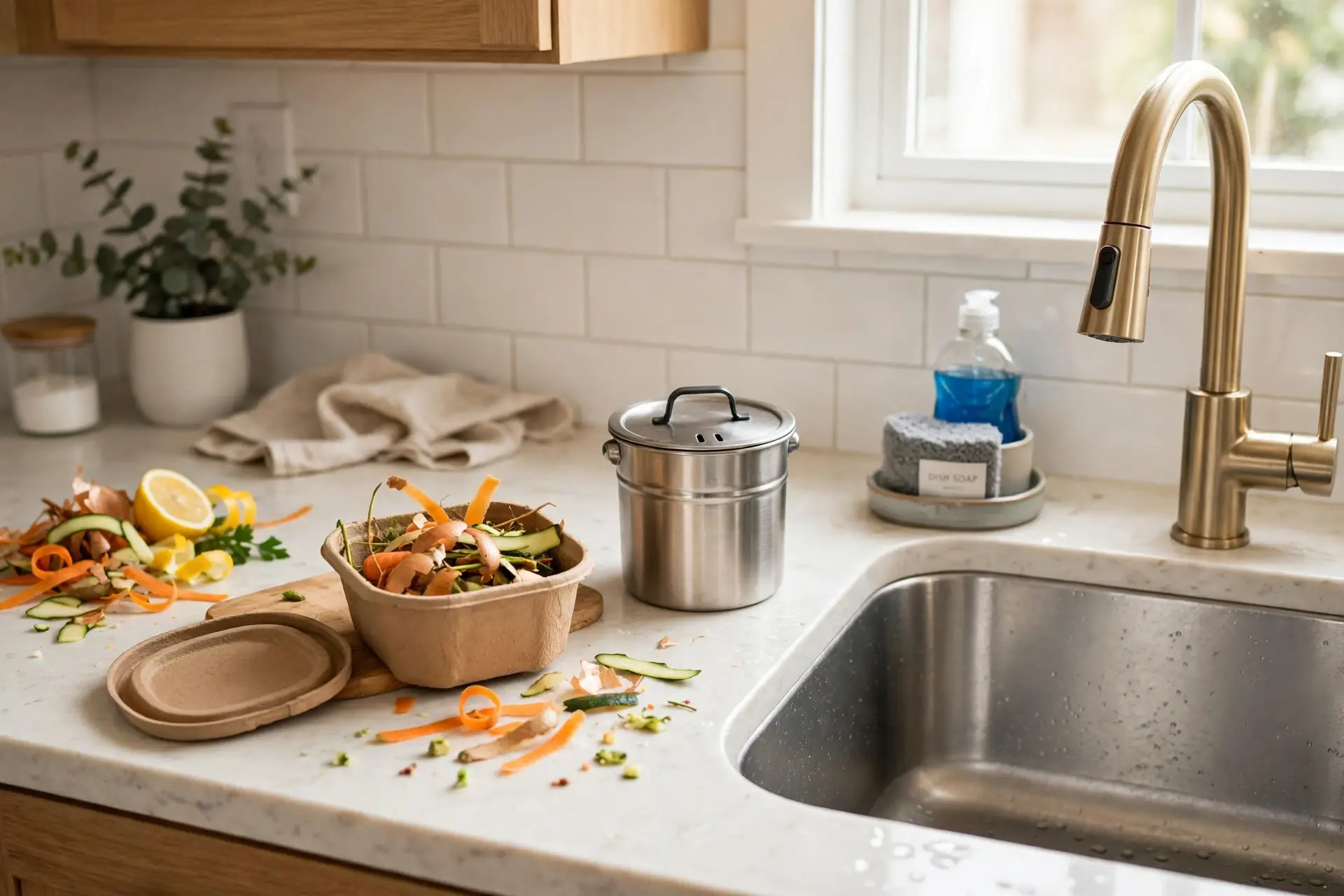
Food waste is the main cause of kitchen bin smells, because wet food breaks down quickly in a warm kitchen. A small compost caddy, with a lid and compostable liners, kept on the counter or in a cupboard near the sink, solves most of the problem, as long as it is emptied often. A caddy that is emptied every two to three days will not smell. A caddy that is left for a week will, no matter what liner you use.
If you have a garden, a counter caddy can feed an outdoor compost bin or a wormery. If you do not, many councils collect food waste separately, and the same caddy works for that collection. Keep the caddy small, about five to seven litres, because a large caddy encourages you to leave food waste longer. Line it with newspaper or a compostable bag, keep it dry by draining wet food first, and wash it with hot soapy water each time you empty it.
If you have no garden and no food waste collection, a bokashi bin or countertop composter can help, but a simple caddy emptied often is enough for most small kitchens, and it keeps the main bin drier and less smelly.
Idea 4: Waste solutions for small kitchens with no spare cabinet
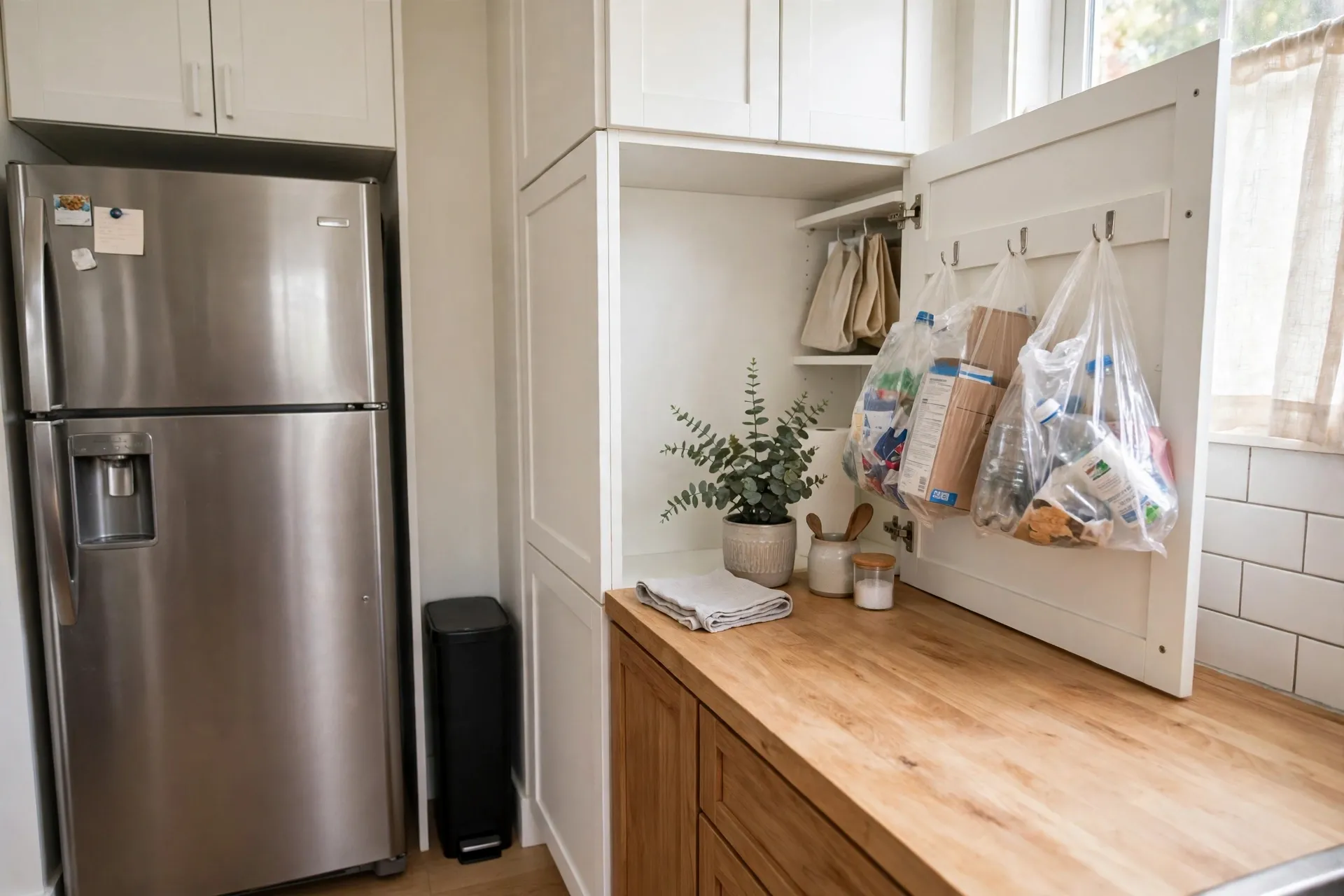
Small kitchens often have no spare cabinet for a pull out bin, but that does not mean waste has to live on the floor in a carrier bag. A slim bin, about 20 centimetres wide, can fit between a fridge and a counter, or at the end of a run, without blocking a walkway. A bin that hangs on a cabinet door, or hooks over a cupboard door, holds a small bag for prep waste and can be emptied daily, which is ideal for a small kitchen where a large bin would dominate the room.
Door mounted recycling bags are another small kitchen trick. A set of bags that hang inside a cupboard door, one for recycling and one for general waste, uses dead space and keeps bins off the floor. They hold less than a pull out system, so they need emptying more often, but that is actually an advantage in a small kitchen, because waste does not sit and smell.
For very small kitchens, use the wall as well as the floor. A small wall mounted bin near the prep area, a magnetic bin on a fridge, or a slim recycling stack in a hallway cupboard just outside the kitchen can all work, as long as the system is close enough that you will actually use it. The best small kitchen waste system is the one you empty without thinking about it, not the biggest system you can fit in.
Choosing bin sizes and liners that fit your household
Bin size should match how often you are willing to take out trash, not how much trash you wish you made. If you take out trash daily, a small bin is fine and will smell less. If you only take it out on bin day, you need a larger bin, and you need to manage smells more carefully. A family that cooks at home most nights will fill a 30 litre general waste bin in about three to four days, while a single person might take a week.
Liners matter too. Use a liner that fits the bin, not a bag that is too small and slips down, or too large and bunches up. For recycling, many collections prefer no liner, or a clear liner, so check your local rules before lining a recycling bin. For food waste, use compostable liners only if your collection accepts them, otherwise use newspaper. Keep a roll of liners in the same cabinet as the bins, so replacing a bag takes seconds, not a search through another room.
If you have pets or small children, choose a pull out system with a locking or soft close lid, rather than a freestanding bin they can open or tip over.
Stopping smells, flies, and leaks
Smells in a kitchen bin usually come from food waste, liquids, and bins that are not cleaned. Rinse containers before recycling, drain wet food before it goes in the food caddy, and never put hot liquids or greasy liquids straight into a bin bag, because they will leak and soak the bottom of the bin. Double bag very wet waste, and keep a small bottle of white vinegar and bicarbonate of soda near the bins for a quick clean.
Clean bins regularly, not just when they smell. Wash a general waste bin monthly with hot soapy water, wash a food caddy every time you empty it, and wipe a pull out bin cabinet weekly, because crumbs and drips collect on runners and in corners. Dry bins fully before putting a new liner in, because a damp bin will smell again within a day.
Flies usually mean food waste has sat too long or recycling was not rinsed. Empty food waste every two to three days in warm weather, keep bins lidded, and check for leaks or food stuck in bin runners.
Waste habits that make sorting automatic
A good waste system is mostly habit. Put a small prep bowl on the counter while you cook, and tip peelings into the bin in one go at the end, instead of walking to the bin with every scrap. Flatten boxes and squash plastic bottles before they go in recycling, because flat recycling takes up half the space and means fewer trips to empty the station. Keep a pair of scissors or a box cutter near the recycling station, so boxes are opened and flattened straight away, not left whole on the counter.
Teach the system to everyone in the household with labels and a simple rule: if unsure, rinse it and check the bin label. A system only one person understands will fail when that person is away.
On bin day, empty all indoor bins the night before collection, so you avoid rushing and missed collections.
What to avoid
- Buying the biggest bin you can find, which dominates a small kitchen and encourages waste to sit and smell
- Using a bin with no lid, no liner, or a liner that slips down, which leads to leaks and mess
- Leaving food waste in a caddy for a week, which causes smells and flies no matter what liner you use
- Putting recycling in a mixed bin with no labels, which means sorting fails within a week
- Placing bins far from where waste is created, so recycling piles up on the counter instead
- Using a thick, loose bin in front of a cooker or in a walkway, which is a trip risk
- Forgetting to clean bins and runners, where crumbs and drips breed smells and flies
- Lining a recycling bin with the wrong bag type for your local collection, which can mean it is not collected
Frequently asked questions
How many bins do I need in a kitchen?
Most households need at least two, general waste and recycling, plus a small food waste caddy if your council collects food waste or you compost. Add a separate glass bin only if your collection requires it, or if glass regularly piles up on your counter.
What size kitchen bin is best?
For a family, two 30 litre bins, one for waste and one for recycling, plus a five to seven litre food caddy, is a good starting point. For a single person, two 15 litre bins are often enough. Size should match how often you empty bins, not just how much waste you make.
How do I stop my kitchen bin from smelling?
Empty food waste every two to three days, rinse recycling containers, drain wet food before binning it, clean bins regularly with hot soapy water, and dry them fully before relining. A small caddy emptied often smells far less than a large bin left for a week.
Can I compost in a small kitchen with no garden?
Yes, with a small counter caddy for a council food waste collection, or with a bokashi bin or countertop composter if you want to reduce waste at home. A simple caddy emptied often is enough for most small kitchens, and it keeps the main bin drier and less smelly.
Where should kitchen bins go?
Close to where waste is created, usually near the sink or main prep counter, in a pull out cabinet if you have space, or as a slim bin at the end of a run in a small kitchen. Bins far from the prep area lead to waste piling up on counters.
How do I organise recycling in a small kitchen?
Use door mounted bags inside a cupboard door, a slim bin at the end of a run, or a small sorting stack just outside the kitchen. Label each spot clearly, flatten boxes, rinse containers, and empty little and often, so recycling does not take over the room.
Conclusion
Kitchen trash and recycling organisation does not need to be complicated, it needs to be close, clear, and cleaned often. Hide bins in a pull out cabinet near the sink, set up a labelled sorting station for recycling, use a small food caddy emptied every two to three days, and choose slim or door mounted solutions if space is tight. Size bins to how often you empty them, use the right liners, clean bins regularly, and build simple habits like flattening boxes and rinsing containers.
Start this week by watching your waste for a few days, then fix the biggest problem first. If smells are the issue, start with a food caddy. If recycling piles up, start with labels and a sorting station. If bins take over the room, start with a pull out or slim bin. One clear change, used every day, will make your kitchen feel tidier, smell fresher, and work better, and that is the real point of organising trash and recycling.